Quick Info
At a glance
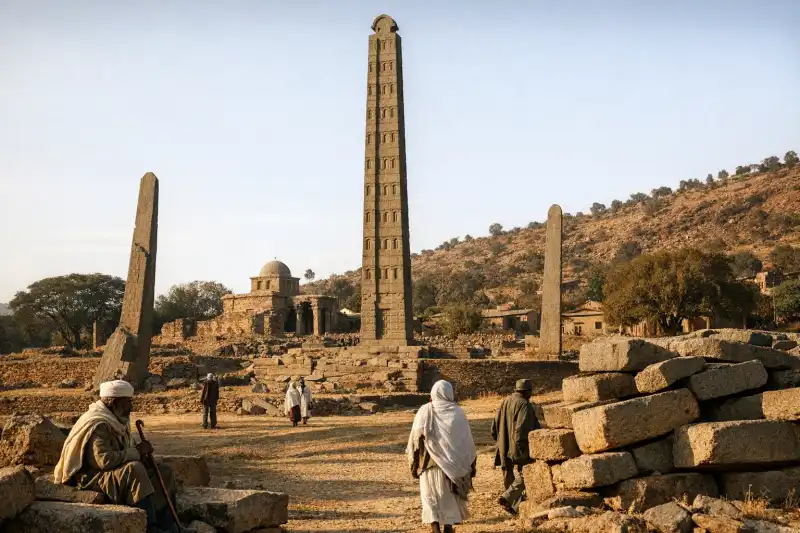
Aksum in Ethiopia is one of Africa’s great ancient capitals, a place where broken stone, open sky, and living faith still meet in unusually powerful ways. Arriving here, travelers find not a single ruin isolated from modern life, but an entire historic landscape where obelisks rise from the earth, churches preserve centuries of devotion, and the memory of an empire lingers in carved granite and buried tombs. The town sits on a high plateau in northern Ethiopia, and that elevated setting gives Aksum a particular atmosphere: bright air, broad horizons, and a sense of calm that contrasts with the immense historical weight of the site.
This was once the center of the Aksumite Kingdom, one of the most influential powers of the ancient world, connected by trade to the Red Sea, Arabia, the Nile Valley, and beyond. Today, visitors come to see the famous stelae field, the underground tombs associated with kings, inscriptions, palace remains, and the sacred traditions linked to the Church of St. Mary of Zion. Yet Aksum’s appeal is not only in famous monuments. It lies equally in the way the town preserves continuity. Archaeology, legend, religion, and local identity are all present at once. To walk through Aksum is to move through a landscape where imperial ambition, early Christianity, and Ethiopian memory remain closely intertwined, making it one of the most compelling ancient destinations anywhere on the continent.
History
Early settlement and the rise of Aksum
Long before Aksum emerged as an imperial capital, the highlands of northern Ethiopia were home to organized communities shaped by agriculture, trade, and regional exchange. The area benefited from relatively fertile uplands and routes leading east toward the Red Sea coast. By the late first millennium BCE and the early centuries BCE, settlement patterns in this part of Ethiopia were already becoming more complex. These early societies laid the foundations for what would later become the Aksumite state.
By the first centuries CE, Aksum had grown into a major urban and political center. Its rise was driven by geography as much as by leadership. Positioned between the African interior and maritime networks tied to the Red Sea, Aksum was well placed to profit from long-distance trade. Goods moved through its sphere from Africa to Arabia and the Mediterranean world, including ivory, gold, animal products, and agricultural resources. In return came luxury goods, ideas, and diplomatic contacts. Classical sources from outside Africa even recognized Aksum as a significant power, evidence of its unusually wide reach.
Imperial expansion and international prestige
Between roughly the third and sixth centuries CE, Aksum reached the height of its influence. The kingdom developed into a centralized and ambitious state with royal authority expressed through architecture, inscriptions, and coinage. Aksumite rulers issued coins in gold, silver, and bronze, a remarkable sign of economic sophistication and international engagement. These coins, some carrying Greek inscriptions, show that the kingdom was not isolated but active in a wider commercial world.
The giant stelae for which Aksum is famous largely belong to this era of royal display. These massive carved monuments marked elite burials and projected the power of kings who wished to memorialize themselves in stone on a grand scale. At the same time, Aksum was expanding militarily and politically, at moments projecting authority across parts of present-day Eritrea and into South Arabia. The kingdom’s influence across the Red Sea was especially important, linking the African highlands to Arabian trade and politics.
Conversion to Christianity
One of the most defining moments in Aksum’s history came in the fourth century CE, when the kingdom adopted Christianity under King Ezana. This transformation made Aksum one of the earliest major states in the world to embrace Christianity officially. The shift did not erase older traditions overnight, but it profoundly shaped architecture, inscriptions, royal ideology, and the religious identity of the region.
Ezana’s reign is particularly important because inscriptions from his time document both political achievements and religious change. His conversion connected Aksum to broader Christian networks while also helping establish a distinct Ethiopian Christian tradition that would endure for centuries. Churches, crosses, and sacred narratives gradually became central to the city’s identity. This legacy remains visible today in the importance of Aksum as a pilgrimage center and in the continuing reverence attached to its holy sites.
Decline and enduring memory
From around the seventh century onward, Aksum’s dominance began to diminish. Historians point to several overlapping causes: shifts in international trade routes, changes in Red Sea commerce, environmental pressures, and political transformations in the wider region. As maritime patterns changed, Aksum’s strategic advantage weakened. Power gradually moved elsewhere within the Ethiopian highlands.
Yet decline did not mean disappearance. Aksum remained a place of memory, sanctity, and political symbolism long after its imperial peak. Ethiopian rulers continued to associate themselves with Aksum’s prestige, and religious traditions preserved the city’s sacred importance. Medieval and later Ethiopian history repeatedly looked back to Aksum as a source of legitimacy and spiritual authority. That continuity is one reason the site feels so different from many ancient ruins: it is not simply abandoned. It survived as both a historic capital and a living center of belief.
Key Features
The most iconic sight in Aksum is the northern stelae field, where monumental granite shafts rise or lie broken across the landscape. These stelae are often called obelisks, but their carved façades make them distinct. Many were designed to resemble multistory buildings, complete with false doors and window-like details. Even toppled, they convey astonishing ambition. Their scale suggests a society capable of sophisticated quarrying, transport, and ceremonial display. Standing among them, visitors can appreciate both the technical achievement and the symbolic purpose of these monuments: they were funerary markers, but also statements of royal prestige meant to dominate the skyline.
Nearby are the subterranean tombs associated with elite rulers, including those traditionally linked with King Kaleb and King Gebre Meskel. These spaces reveal another side of Aksumite monumental culture. If the stelae projected power above ground, the tombs created a hidden architecture of commemoration below it. Corridors, chambers, and massive stone construction reflect the importance of burial ritual and dynastic memory. For modern travelers, the tombs are among the most evocative places in Aksum, because they combine engineering, ritual, and mystery in a single experience.
The archaeological zone also includes the ruins of ancient palatial structures, among them remains traditionally identified with the Palace of the Queen of Sheba. The name reflects local and biblical traditions more than certain archaeological attribution, but the site is still significant for understanding how royal architecture once functioned in the city. Foundations, stonework, and layout offer clues to an urban center that was once far more extensive than the visible ruins suggest. Much of ancient Aksum remains buried, so every exposed structure represents only part of a larger historical city.
Aksum’s inscriptions are another major attraction, especially for visitors interested in language, religion, and state formation. Royal inscriptions in Ge’ez, Greek, and South Arabian script reveal a cosmopolitan kingdom capable of communicating with multiple audiences. They document victories, dedications, and political authority, while also reflecting religious change over time. These carved texts help bridge the gap between monumental ruins and historical narrative, allowing Aksum’s rulers to speak, however distantly, in their own voice.
The religious heart of the town lies around the Church of St. Mary of Zion. This sacred complex is deeply important in Ethiopian Christianity and is closely linked with national traditions concerning kingship and the Ark of the Covenant. Whatever one’s views on the tradition itself, there is no doubt that this is one of the most symbolically charged places in Ethiopia. Visitors should expect an atmosphere very different from that of the archaeological fields. Here the experience is shaped not only by ancient history but by prayer, ritual, and strict local custom. Dress modestly, observe restrictions carefully, and understand that some areas are open only to certain visitors.
The site museum helps bring the wider landscape into focus. Artifacts, inscriptions, and interpretive displays provide useful context for what can otherwise feel like a dispersed collection of monuments. For many travelers, beginning or ending at the museum makes the rest of Aksum much easier to understand. Rather than seeing isolated stelae and tombs, visitors begin to perceive a capital city that once stood at the center of trade, kingship, and faith.
Getting There
Aksum is in northern Ethiopia’s Tigray region, and the most practical way to reach it is usually by air or by road from larger cities when conditions permit. The town has an airport serving domestic flights, typically connecting through Addis Ababa. Airfares vary by season and booking time, but one-way domestic tickets often fall in the approximate range of ETB 4,000 to ETB 9,000. Flight schedules can change, so checking current availability well in advance is essential.
Overland travel is possible from Mekelle and other northern Ethiopian hubs, though road conditions, security advisories, and transport frequency should always be confirmed locally before departure. Shared minibuses are usually the cheapest option and can cost roughly ETB 300 to ETB 800 depending on route length and current fuel prices, while private car hire is significantly more expensive but far more comfortable, often starting around ETB 6,000 to ETB 12,000 per day with driver. Distances in the highlands can take longer than expected because of road conditions and mountain terrain.
Within Aksum itself, most major monuments are accessible by foot, short tuk-tuk rides, or local taxis. A tuk-tuk trip around town is usually inexpensive, often in the ETB 100 to ETB 300 range depending on distance and negotiation. Hiring a local guide for the archaeological zone is highly recommended, both for orientation and for historical context. Entrance fees and guide rates can change, so carry cash in local currency and allow some flexibility in your budget.
When to Visit
The best time to visit Aksum is generally during the drier months from October to February. At this time, the skies are often clearer, daytime temperatures are comfortable, and walking between monuments is easier. The highland setting means that Aksum is rarely oppressively hot, but strong sun at altitude can still be tiring, especially around midday. Morning and late afternoon are usually the most pleasant times for exploring the stelae fields and open archaeological areas.
The period from June to September tends to be wetter, and rain can make travel more complicated, particularly if you are combining Aksum with longer overland journeys in northern Ethiopia. Landscapes may look greener during or after the rains, but cloud cover and muddy conditions can affect both photography and comfort. If you do travel in these months, build extra flexibility into your schedule.
Religious festivals can make Aksum especially memorable. Timkat in January and other major Orthodox celebrations bring added color, ceremony, and local energy. These periods are excellent for travelers interested in living religious tradition, but accommodations may fill more quickly and the town can feel busier than usual. Outside festival dates, Aksum is quieter and better suited to visitors who want time for reflective exploration. In any season, modest clothing, sun protection, and up-to-date local travel advice are essential.
| Quick Facts | Details |
|---|---|
| Location | Aksum, Tigray Region, northern Ethiopia |
| UNESCO Status | Aksum Archaeological Site, inscribed in 1980 |
| Best Known For | Monumental stelae, royal tombs, early Christian heritage |
| Ancient Civilization | Aksumite Kingdom |
| Peak Period | c. 3rd-6th centuries CE |
| Religious Importance | Major center of Ethiopian Orthodox tradition |
| Time Needed | 1 full day minimum, 2 days ideal |
| Best Season | October to February |
| Nearest Major Hub | Mekelle, with connections onward to Addis Ababa |
| On-Site Experience | Archaeological ruins, sacred churches, museum, inscriptions |
Guided tours: worth it?
Self-guided works here, but a guide can add real value if you want the ruins explained as a living place rather than just a sequence of monuments.
Best for
- First-time visitors who want context, not just photos
- Short visits where a planned route saves time
When to go self-guided
Go independently if you prefer setting your own pace, reading as you go, and checking official hours or ticket rules directly before you arrive.
What I’d avoid
Skip paid tours that bundle unrelated stops you do not actually want. The best option should either save meaningful planning time or add historical context you would miss on your own.
Aksum Ethiopia Tours
Useful when: you want to compare guided formats before deciding
Northern Ethiopia Historical Tours
Useful when: you want to compare guided formats before deciding
Tigray Cultural Tours
Useful when: you want to compare guided formats before deciding
Some tour links are affiliate links, which may earn Ancient Travel a small commission at no extra cost to you. I try to surface options that make practical sense for the site—not just anything bookable.
Frequently Asked Questions
What is Aksum best known for?
Aksum is best known for its monumental stone stelae, royal tombs, archaeological remains of the Aksumite Kingdom, and its central place in Ethiopian Christian tradition.
Where is Aksum located?
Aksum is in northern Ethiopia in the Tigray region, close to the Eritrean border.
How much time do I need to visit Aksum?
Most travelers need one full day to see the main stelae field, tombs, museum, and church area, though two days allows a more relaxed visit and time for nearby sites.
Is Aksum a UNESCO World Heritage Site?
Yes. Aksum Archaeological Site is listed as a UNESCO World Heritage Site for its importance as the center of the ancient Aksumite civilization.
Can visitors enter the Church of St. Mary of Zion?
Visitors can access parts of the church complex, but some sacred areas are restricted. Rules may differ for men and women, and local guidance should always be followed.
What is the best time of year to visit Aksum?
The best time to visit is generally during the dry months from October to February, when skies are clearer and travel conditions are easier.
Nearby Ancient Sites
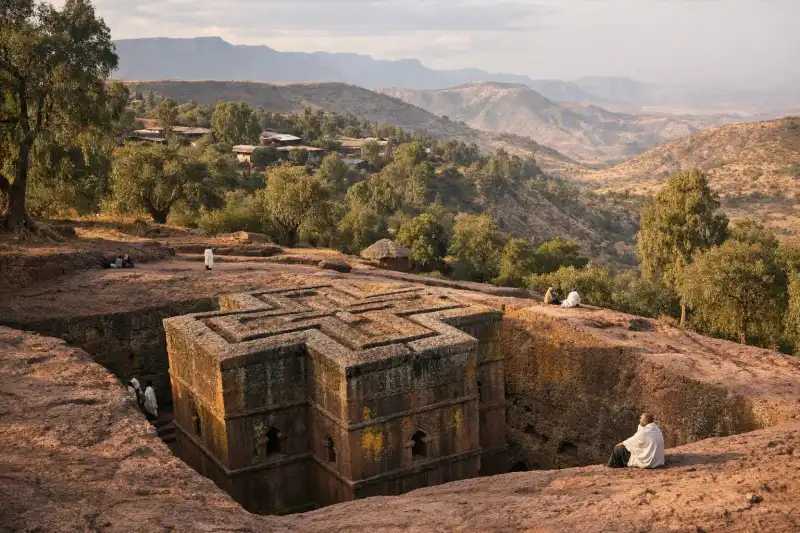
Lalibela
Medieval EthiopianDiscover Lalibela in Ethiopia, famed for its monolithic rock-hewn churches, living pilgrimage tradit...
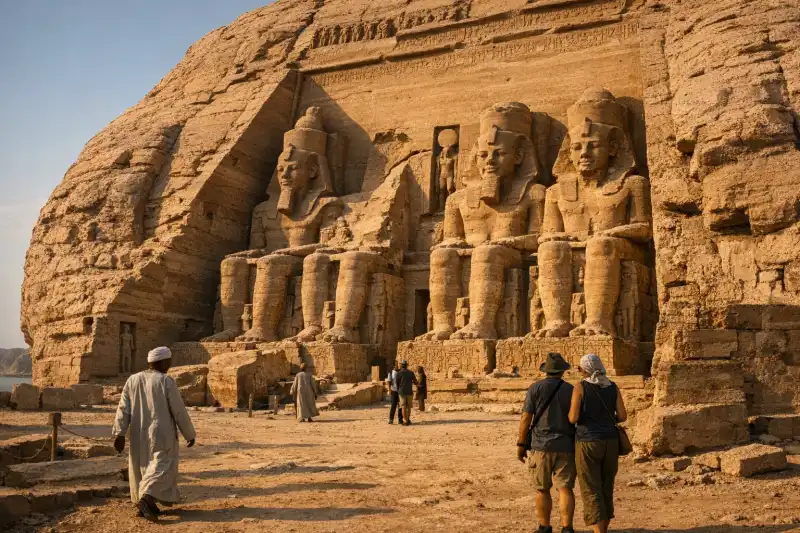
Abu Simbel
Ancient EgyptianDiscover Abu Simbel in Egypt, where colossal rock-cut temples of Ramses II rise above Lake Nasser ne...
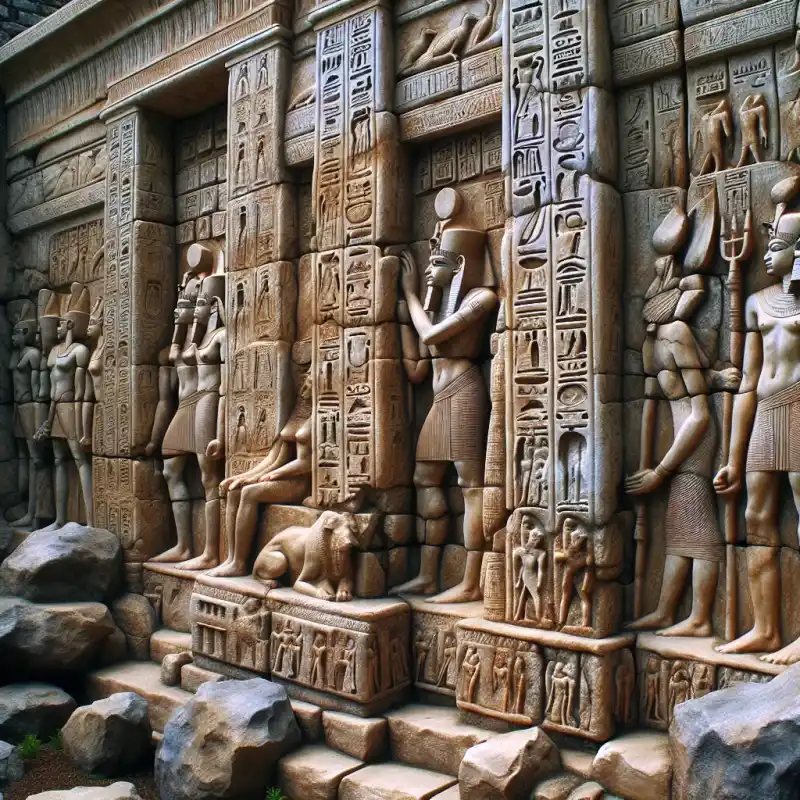
Abydos Temple Egypt Guide 2026: Temple of Seti I & King List
New Kingdom-PtolemaicAbydos Temple near Luxor: magnificent Temple of Seti I with war reliefs, ancient king list, and vibr...