Quick Info
At a glance
Altamura, Italy, rises across the limestone uplands of inland Apulia with a presence that feels older than any single monument. Set on the Murge plateau not far from Bari and within easy reach of Matera, this historic town combines deep prehistory, medieval ambition, and a living urban culture shaped by bread ovens, church bells, and pale stone streets. Many travelers first hear of Altamura because of its celebrated loaf, one of southern Italy’s most famous traditional breads, but the town’s appeal reaches much further. Here, archaeology and architecture meet in a place where traces of early humans, classical landscapes, and a carefully ordered medieval center all remain part of everyday life.
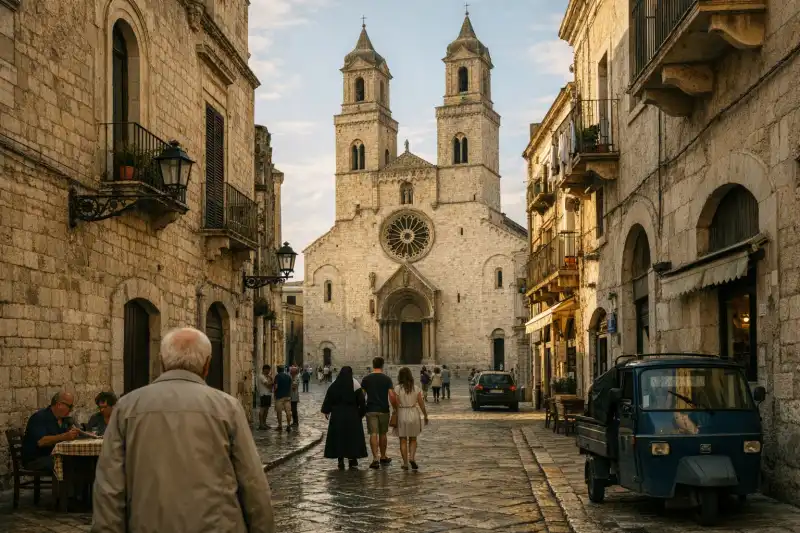
Walking through Altamura, you notice how the town reveals itself gradually. The streets narrow and then open onto piazzas; heavy stone portals suggest noble residences; small courtyards known as claustri hint at the social life of earlier centuries. Above them all stands the Cathedral of Santa Maria Assunta, a commanding Romanesque monument associated with Emperor Frederick II. Yet Altamura is not only a medieval town. Its territory has produced some of the most important prehistoric evidence in Italy, including the famous remains known as the Altamura Man, discovered in a karst cave nearby. That unusual blend of sacred architecture, urban history, and scientific importance gives Altamura a character all its own. It is a destination for travelers who enjoy places where local identity still feels strong and where the past is not isolated in ruins, but woven into daily life.
History
Prehistoric origins on the Murge
The story of Altamura begins long before the medieval town took shape. The wider Murge plateau has been inhabited since prehistory, thanks to its elevated position, natural caves, and strategic access to grazing land and seasonal water sources. Archaeological evidence from the area points to human presence in the Paleolithic and Neolithic periods, when communities used the karst landscape for shelter and ritual as well as daily survival. The most famous discovery connected with Altamura is the so-called Altamura Man, a remarkably well-preserved Neanderthal skeleton found in the Lamalunga Cave in 1993. Although the cave itself is not generally open to casual visitors, the find transformed scholarly understanding of prehistoric Europe and placed Altamura firmly on the map of major paleoanthropological sites.
The territory also preserves traces of later prehistoric settlement, including defensive walls and habitation evidence from indigenous peoples of southern Italy. These early communities took advantage of the plateau’s natural resources while developing cultural links with neighboring regions across Apulia and Basilicata.
Peucetians and the Roman world
Before Rome consolidated control over the region, Altamura’s area belonged to the Peucetians, one of the ancient Iapygian peoples of Apulia. Their settlements occupied strategic inland zones, balancing agriculture, pastoralism, and exchange with Greek colonies along the coast. Archaeological discoveries around Altamura suggest that the region was already integrated into a wider Mediterranean world before formal Roman rule.
Under Rome, inland Apulia became increasingly connected by road systems, agricultural estates, and market exchange. While Altamura itself did not emerge as one of the great urban centers of Roman Italy, the surrounding landscape was transformed by Roman administration and land use. The proximity of long-distance routes, including links that fed into broader communication networks such as the Appian corridor, tied the Murge into imperial structures. Farms, small rural settlements, and ecclesiastical continuity in later centuries helped preserve occupation in the area even as political power shifted.
Decline, continuity, and medieval refoundation
Like many towns in southern Italy, Altamura’s early medieval history is marked by partial obscurity. The collapse of Roman imperial power, changing military pressures, and the ruralization of many settlements altered the region’s urban map. Yet continuity in the area did not disappear. Religious communities, agricultural patterns, and scattered settlements endured across the uplands.
The decisive turning point came in the 13th century under Frederick II, the Holy Roman Emperor and King of Sicily, whose building and administrative programs left a strong mark across southern Italy. Altamura is traditionally associated with his refoundation or major reorganization of the settlement. In this period, the town acquired a more formal urban identity, and the cathedral became its dominant symbol. Frederick’s policies often aimed to strengthen royal authority, stimulate settlement, and create loyal urban centers in strategic inland zones. Altamura fit that pattern well.
Angevin, Aragonese, and early modern development
After the Hohenstaufen era, Altamura passed through the changing dynastic politics of southern Italy, including Angevin and Aragonese control. During these centuries, the town consolidated its role as a regional center. Its cathedral chapter, noble families, religious institutions, and local trades all contributed to a stable civic identity. The urban fabric developed through houses, monasteries, workshops, and the network of claustri that still characterize the historic center.
By the early modern period, Altamura was known not only for its religious significance but also for agriculture and grain production, foundations of the bread culture for which it remains famous today. Like many southern Italian communities, it experienced phases of privilege, taxation, political unrest, and adaptation to larger state structures.
From the modern era to today
Altamura took part in the turbulent transformations of the 18th and 19th centuries, including the spread of Enlightenment ideas, Napoleonic influence, and eventually the unification of Italy. In the modern period it expanded beyond its older walls, but the historic core remained central to local identity. The rediscovery and study of archaeological materials, together with the international importance of the Altamura Man, added a new scientific dimension to the town’s reputation.
Today, Altamura is both a working city and a heritage destination. It attracts visitors interested in Romanesque architecture, local food traditions, and prehistoric research, while also serving as a gateway to the inland landscapes of Apulia. Its history is unusually layered: prehistoric cave, classical countryside, medieval cathedral town, and living center of regional culture.
Key Features
The heart of Altamura is its cathedral, officially the Cathedral of Santa Maria Assunta. It dominates the town with the kind of authority that medieval builders intended: not merely as a place of worship, but as a civic statement in stone. The façade is one of the most memorable in Apulia, with twin bell towers framing an elaborate entrance and a richly carved portal that rewards close attention. Romanesque in its essential character yet touched by later modifications, the building reflects both imperial ambition and local craftsmanship. Inside, the atmosphere is more restrained than the exterior might suggest, but that contrast is part of the cathedral’s appeal. The building has accumulated centuries of devotion, restoration, and artistic additions, creating an interior that speaks to continuity rather than a single moment of design.
Around the cathedral, Altamura’s old town unfolds in a pattern that is especially pleasant for slow exploration. One of its defining features is the claustri, small enclosed courtyards or intimate urban spaces connected by narrow lanes. These are not grand squares meant for spectacle; they are the lived-in geometry of a medieval and early modern town, shaped by neighborhood life, practical needs, and social proximity. As you walk through them, Altamura feels less like an open-air museum and more like a place where historical urbanism still functions on a human scale. Laundry lines, doorways, worn paving stones, and modest shrines all help preserve that sense of continuity.
Another major attraction is Altamura’s connection to prehistory. The story of the Altamura Man gives the town an intellectual significance far beyond its size. Because the original remains are preserved within Lamalunga Cave under controlled conditions, the experience for most visitors comes through interpretation rather than direct access. Yet this does not lessen the impact. Exhibits and museum materials help explain why the discovery matters: the skeleton, embedded in calcite formations, offered scientists a rare opportunity to examine Neanderthal anatomy in exceptional condition. For travelers with even a slight interest in archaeology or human origins, this association gives Altamura a depth that many historic towns cannot match.
Altamura is also inseparable from bread. Pane di Altamura is not just a local specialty sold to tourists; it is one of Italy’s best-known traditional loaves, protected by DOP status and rooted in long-standing grain cultivation across the Murge. The bread’s thick crust, fragrant crumb, and distinctive shape reflect local wheat varieties and enduring baking methods. In practical terms, this means that part of visiting Altamura involves the senses as much as the monuments. The smell of baking bread drifting through old streets is one of the town’s defining impressions. Bakeries are therefore not incidental stops but part of the cultural landscape, evidence of how agricultural history survives in everyday form.
The town’s architecture beyond the cathedral deserves attention too. Noble palaces, convent complexes, churches, and sturdy town houses create an ensemble of pale limestone surfaces that change color with the light. Morning can make Altamura look bright and severe; late afternoon gives it warmth and softness. Details matter here: carved balconies, coats of arms, heavy wooden doors, and interior courtyards glimpsed from the street. The result is a town best appreciated on foot and at an unhurried pace.
Finally, Altamura’s setting contributes strongly to its appeal. The Murge plateau is not dramatic in the same way as alpine or coastal Italy, yet its open horizons, rocky ground, and agricultural patterns provide a powerful context. This inland landscape explains much about the town’s history, from prehistoric cave use to wheat cultivation and strategic settlement. Altamura is therefore not just a monument destination. It is a place where geology, food, science, and architecture are all tied to the same upland environment.
Getting There
Altamura is one of the easiest inland heritage towns in Apulia to reach, especially from Bari. From Bari, regional rail services and the Ferrovie Appulo Lucane network connect travelers to Altamura in roughly 1 hour 10 minutes to 1 hour 30 minutes, depending on the service and transfer pattern. One-way fares are usually in the range of €4 to €7. Buses can be similarly priced, often around €4 to €8, and may be a practical option if train times are inconvenient.
If you are arriving by air, Bari Karol Wojtyła Airport is the most convenient gateway. From the airport, you can take a shuttle or train into Bari city center and continue onward to Altamura. Combined public transport costs often total around €8 to €15. A taxi or private transfer from Bari Airport to Altamura is faster and more direct, but usually costs about €80 to €120 depending on time of day and luggage.
Travelers based in Matera can also reach Altamura fairly easily by road in around 25 to 35 minutes. By car, Altamura is straightforward to access via regional roads across the Murge, and driving is particularly useful if you want to explore surrounding rural sites. Rental cars from Bari generally start from around €35 to €60 per day, not including fuel. Parking is easier on the edges of the historic center than within it, as many old streets are limited traffic zones. The best strategy is to park outside the center and walk in.
When to Visit
Spring is one of the best times to visit Altamura. From April through June, temperatures are usually mild, often ranging from about 15°C to 26°C, and the town is comfortable for walking. This is also when the surrounding Murge landscape can feel freshest, with greener fields and clearer air. For travelers interested in combining urban exploration with regional drives or countryside stops, spring offers an excellent balance.
Early autumn, especially September and October, is equally appealing. The intense heat of midsummer begins to ease, yet days are often sunny and bright. Average temperatures frequently sit between 18°C and 28°C, making it a good season for long walks through the old town, lingering meals, and day trips to nearby destinations. Harvest season also deepens the agricultural atmosphere of inland Apulia.
Summer, particularly July and August, brings more heat, often pushing daytime temperatures above 30°C. Altamura is still visitable, but you will want to sightsee in the morning and late afternoon rather than in the hottest part of the day. On the positive side, summer evenings can be lively, with people filling streets and piazzas after sunset. Winter is quieter and can be atmospheric, especially for travelers who prefer fewer crowds, though temperatures are cooler and some days may feel damp or windy on the plateau.
In practical terms, the best months for most visitors are May, June, September, and early October. These periods combine manageable weather, good light for photography, and pleasant conditions for exploring the cathedral, bakeries, museums, and historic lanes without rushing.
| Quick Facts | Details |
|---|---|
| Location | Altamura, Apulia, southern Italy |
| Best known for | Romanesque cathedral, Pane di Altamura, Altamura Man |
| Nearest major city | Bari |
| Recommended visit length | Half day to full day |
| Best seasons | Spring and early autumn |
| Terrain | Limestone plateau on the Murge |
| Main travel style | Walking in the historic center |
| Local specialty | DOP Altamura bread |
| Cultural significance | Medieval urban center with major prehistoric importance |
| Closest airport | Bari Karol Wojtyła Airport |
Guided tours: worth it?
Most travelers can visit Altamura independently. Compare a tour only if you want a tighter history-focused visit, easier logistics, or a guide who can answer questions on the spot.
Best for
- Short visits where a planned route saves time
When to go self-guided
Go independently if you prefer setting your own pace, reading as you go, and checking official hours or ticket rules directly before you arrive.
What I’d avoid
Skip paid tours that bundle unrelated stops you do not actually want. The best option should either save meaningful planning time or add historical context you would miss on your own.
Altamura Italy walking tour
Useful when: you want to compare guided formats before deciding
Altamura and Matera day tour
Useful when: you want to compare guided formats before deciding
Puglia heritage tour from Bari to Altamura
Useful when: transport or pickup logistics matter
Some tour links are affiliate links, which may earn Ancient Travel a small commission at no extra cost to you. I try to surface options that make practical sense for the site—not just anything bookable.
Frequently Asked Questions
What is Altamura best known for?
Altamura is best known for its impressive Romanesque cathedral, its famous DOP bread, and the discovery of the Altamura Man, one of Europe's most important prehistoric human skeletons.
Is Altamura worth visiting as a historic destination?
Yes. Altamura offers a rich mix of medieval urban character, religious architecture, archaeology, and food heritage, making it an excellent stop in inland Apulia.
How far is Altamura from Bari?
Altamura is about 45 to 50 kilometers from Bari, and the trip usually takes around 50 to 70 minutes by train, bus, or car depending on the route and service.
Can you visit the Altamura Man site?
The original skeleton remains in Lamalunga Cave and access is restricted for conservation reasons, but visitors can learn about the discovery through museum displays and interpretive exhibits in Altamura.
How much time do you need in Altamura?
A half day is enough to see the cathedral and historic center, but a full day allows time for museums, local food experiences, and nearby landscapes on the Murge plateau.
When is the best time to visit Altamura?
Spring and early autumn are ideal, with mild temperatures, fewer crowds, and pleasant conditions for walking through the old town and surrounding countryside.
Nearby Ancient Sites
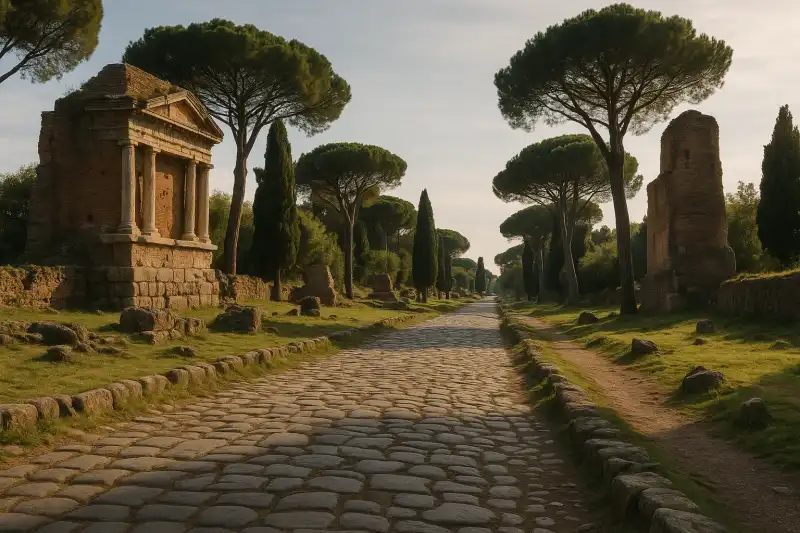
Appian Way Rome Guide 2026
RomanPlan a smart visit to the Appian Way with route choices, catacomb logistics, bike-vs-walk strategy, ...
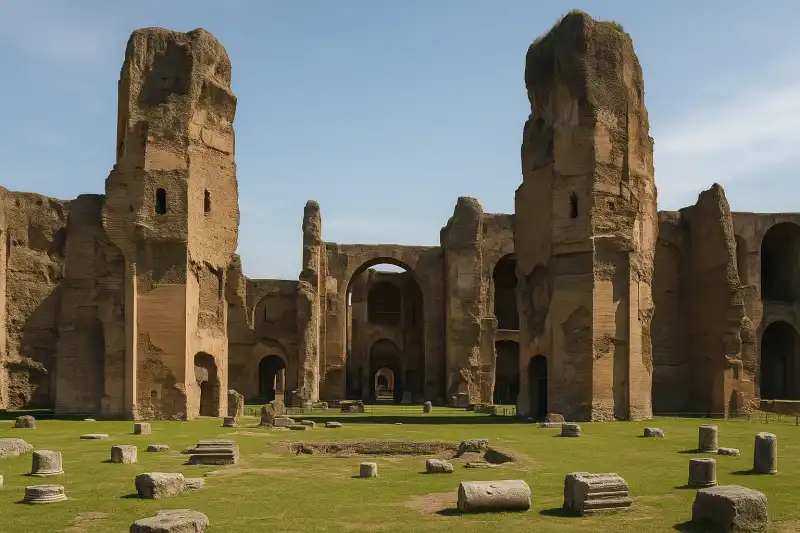
Baths of Caracalla Rome Guide 2026
RomanPlan your visit to the Baths of Caracalla with practical route advice, history context, timing, and ...
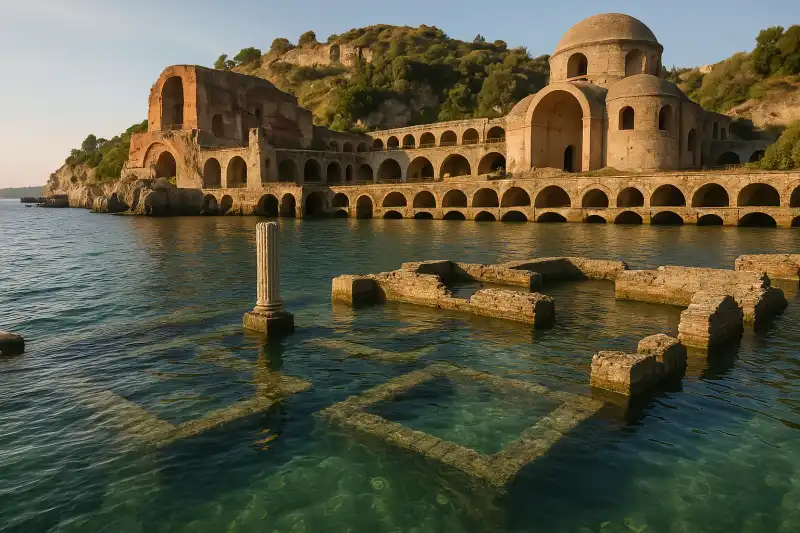
Baia Archaeological Park Guide 2026: Underwater Ruins, Thermal History, and Smart Visit Planning
RomanPlan a focused visit to Baia Archaeological Park near Naples with route strategy, what to prioritize...