Quick Info
At a glance
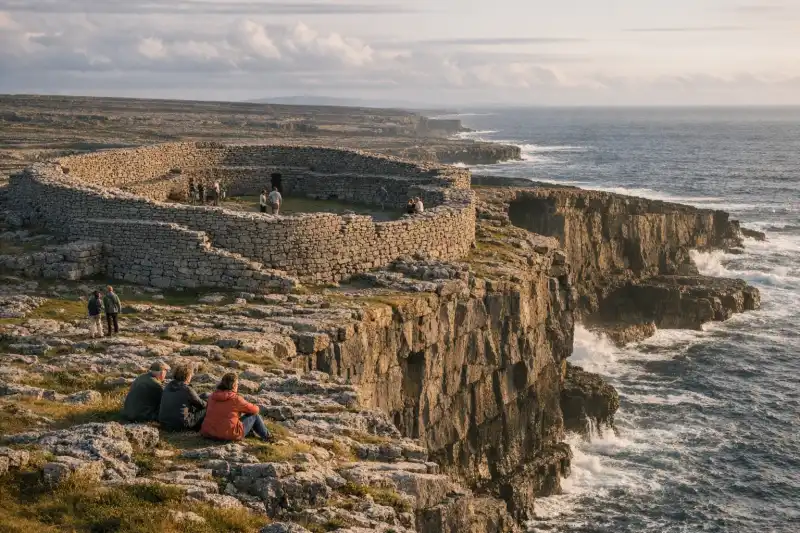
The Aran Islands Stone Forts in Ireland stand at the very edge of Europe, where limestone terraces meet the force of the Atlantic in a landscape that feels both severe and timeless. Scattered across the islands, and most famously on Inis Mór, these drystone enclosures are among the most striking ancient monuments in the country. They are not urban ruins or temple complexes in the continental sense. Instead, they are works of local stone, human labor, and strategic placement, built into a stark island world shaped by wind, sea spray, thin soils, and generations of resilience.
For many visitors, the first encounter with the Aran Islands is visual: low gray walls crisscrossing green plots, white surf below black cliffs, and roads narrowing into tracks that seem to lead back into prehistory. The forts rise naturally from this environment, as if the islands themselves had folded their limestone into rings of defense. Yet these were carefully planned structures, built and rebuilt over long spans of time, likely serving as protected settlements, status symbols, ritual places, and refuges in uncertain eras. To visit them is to see ancient Ireland not as a distant abstraction, but as something tactile and immediate. The stones are still there, fitted without mortar, enduring weather that tests every surface. In that endurance lies much of their fascination.
History
Prehistoric beginnings
The origins of the Aran Islands Stone Forts stretch deep into later prehistory, with some of the best-known sites believed to have their earliest phases in the Late Bronze Age or Iron Age. Dating on these monuments is often complex because stone fortifications were reused, repaired, and altered over centuries. Unlike a neatly dated inscription, a drystone wall does not always reveal a single moment of construction. Archaeologists instead rely on associated finds, structural analysis, and comparison with similar Irish forts to build a probable chronology.
What is clear is that the island communities who created these enclosures understood both the strategic and symbolic value of place. The most dramatic example, Dún Aonghasa, occupies a cliff-edge position of extraordinary power. It was not placed there by accident. The builders selected naturally defensible sites and amplified them with concentric walls, terraces, and restricted access points. Such locations would have offered surveillance of sea approaches and command over surrounding land, but they may also have had social meaning. A fort looming over the ocean was an unmistakable statement of control, identity, and permanence.
The labor involved was immense. On islands where soil was thin and arable land precious, gathering and setting so much stone represented a serious communal investment. The builders worked with the island’s native limestone, shaping broad defensive circuits from material available in abundance but difficult to move and stack in quantity. Their accomplishment remains impressive even before one considers the climatic conditions under which they built.
Iron Age development and fortified communities
During the Iron Age, the forts of the Aran Islands likely became central points in local life. Though the word “fort” suggests purely military use, many Irish stone forts and defended enclosures served mixed purposes. They could have housed elite families, sheltered livestock, functioned as seasonal centers, or provided refuge during conflict. On islands connected to mainland exchange networks, these sites may also have played roles in overseeing movement and trade through Atlantic waters.
Dún Aonghasa developed into a large, multi-walled enclosure with a commanding situation and sophisticated defenses. One of its most discussed features is the outer field of upright stones, often called chevaux-de-frise, intended to slow or disrupt attackers. This arrangement, rare in such scale, demonstrates deliberate defensive planning and supports the idea that the fort was more than a simple domestic enclosure. Nearby forts such as Dún Duchathair and others across the islands show that fortified places were part of a broader cultural landscape rather than isolated experiments.
The density of walls across the Aran Islands is itself historically important. These islands preserve a pattern of stone-built land division unlike almost anywhere else in Ireland. The forts belonged to societies that organized and protected limited resources in a difficult environment. Their architecture reflects not only fear of attack, but also the need to define land, status, and belonging in a place where every cultivated patch mattered.
Early Christian era and continued use
By the early medieval period, the Aran Islands had become associated not only with forts but also with monastic and ecclesiastical life. Christian communities flourished here, and the islands developed a reputation for sanctity and learning. This did not erase the older landscape. Instead, prehistoric and Iron Age structures continued to exist within a changing cultural world. Some may have remained in use, whether as dwellings, stock enclosures, assembly places, or landmarks. Others probably acquired new meanings as visible remnants of an ancestral past.
Throughout Ireland, ancient monuments were often folded into later memory. A stone fort could be treated as a place of former kings, warriors, saints, or supernatural beings, depending on local tradition. On the Aran Islands, where settlement continuity was strong and the physical environment limited expansion, older structures were rarely far from later life. Even when not actively occupied, they remained present and legible in the landscape.
This layering is one reason the Aran Islands Stone Forts feel so compelling today. They are prehistoric in origin, but they never entirely vanished from human use or awareness. Medieval islanders, early modern travelers, antiquarians, and modern archaeologists all encountered the same walls and assigned them fresh interpretations.
Antiquarian interest to modern heritage
From the eighteenth and nineteenth centuries onward, the dramatic Atlantic setting of the Aran forts drew increasing attention from scholars, artists, and travelers. Dún Aonghasa in particular became one of the most celebrated ancient sites in western Ireland. Early descriptions often mixed careful observation with romantic speculation, but they helped establish the fort as a monument of national importance.
In the twentieth century, archaeology brought more systematic study, though many questions of exact chronology and function remain open. Conservation also became vital. The forts face relentless weather exposure, foot traffic, and the challenges of preserving drystone architecture in a harsh marine environment. Today they are protected heritage sites and major cultural attractions, but they still retain a starkness that resists over-interpretation. They remain partly mysterious, and that mystery is part of their power.
Key Features
The most famous of the Aran Islands Stone Forts is Dún Aonghasa on Inis Mór, and it is easy to see why. Its great semicircular plan hugs the edge of a sheer Atlantic cliff, creating one of the most unforgettable settings of any ancient monument in Ireland. The fort’s stone ramparts rise in heavy curving bands, enclosing space while also directing the eye outward toward open sea. Visitors often arrive expecting a ruin and leave feeling they have encountered a place of theater as much as archaeology. The combination of architecture and landscape is inseparable. Remove the cliff, and the fort would still be notable; place it over the Atlantic void, and it becomes extraordinary.
The fort’s concentric walls are among its defining architectural features. These rings of drystone construction create depth and complexity rather than a single boundary. They suggest phases of expansion or reinforcement and indicate a sophisticated concern with controlled access. The surviving masonry, though weathered, still conveys mass and intention. There is no mortar to soften the impression. Each block depends on balance, placement, and cumulative craftsmanship. In this way the walls embody the practical intelligence of their builders.
Another remarkable element at Dún Aonghasa is the defensive stone field outside parts of the enclosure. The upright slabs create a rough, obstructive zone that would have made approach difficult. Whether interpreted strictly as military defense or more broadly as a barrier marking status and restricting movement, this feature gives the site a distinctive archaeological character. It is one of the clearest reminders that these monuments were designed experiences, not merely piles of stone on naturally strong ground.
Beyond Dún Aonghasa, the wider network of forts across the islands enriches the story. Dún Duchathair, sometimes called the Black Fort, has a more remote and brooding atmosphere. Also positioned near cliffs, it feels less formalized for tourism and more embedded in the rugged island terrain. Reaching it can be part of the appeal. The journey itself reveals the Aran landscape of limestone pavement, narrow tracks, low walls, and sea views, helping visitors understand why these forts were built where they were. Dún Eochla, inland by comparison, offers another variation: a circular stone fort whose elevated location provides broad views across Inis Mór. It demonstrates that island fortification was not limited to cliff drama but included oversight of internal routes and cultivated land.
One of the most important “features” of the Aran Islands Stone Forts is actually the surrounding cultural landscape. The islands are layered with drystone field walls, old roads, churches, holy wells, and traces of long settlement. The forts do not stand alone in empty countryside; they belong to one of Europe’s most coherent historic environments. The same limestone that forms the forts also shapes the fields. The same pressures of weather and isolation that affected prehistoric builders influenced later island farmers and communities. This continuity allows visitors to read the monuments not as detached relics but as anchors in a living historical setting.
The visual language of the islands also matters. Light shifts quickly here. Under bright sun, the gray stone can appear silver against green grass and blue water; under cloud, the same walls darken and merge with the austere plateau. Wind adds movement to everything around the forts except the forts themselves. That contrast between the changing atmosphere and the enduring stone leaves a lasting impression.
Finally, there is the experiential feature that no photograph fully captures: scale. The walls are large enough to command respect but human enough to invite close observation. You can see the individual stones, the careful layering, the choices made by builders who had no modern machinery and yet shaped places of extraordinary presence. This intimacy is one reason the Aran forts reward slow visits. They are grand from a distance, but they become even more compelling at arm’s length.
Getting There
Most visitors reach the Aran Islands Stone Forts from Galway, the main gateway to the islands. The usual route is by ferry from Rossaveel, a harbor about 38 kilometers west of Galway City. Bus connections often run from central Galway to meet sailings, and combined bus-ferry tickets are commonly available. Expect round-trip ferry fares to Inis Mór to be roughly €30-€40 for adults, with seasonal variation, while bus add-ons from Galway can bring the total to around €40-€50.
A faster but more expensive option is to fly from Connemara Airport near Inverin to Inis Mór. The flight is short, scenic, and especially useful for travelers with limited time. Return fares often range from about €60 to €90 or more depending on season and availability. Once on the island, you can hire a bicycle, take a minibus tour, use seasonal shuttle services, or arrange a pony-and-trap tour. Bike rental commonly costs about €15-€25 per day, while shared minibus sightseeing tours are often around €20-€30.
Dún Aonghasa is the easiest fort to visit on a standard day trip because it is well known and clearly signposted. From Kilronan, the main settlement and ferry arrival point on Inis Mór, the site is about 7 kilometers away. Cycling is popular, though island winds can make the return ride challenging. Admission to Dún Aonghasa is usually modest, often around €5-€8 for adults, but check current official rates before travel.
If you want to explore multiple forts, an overnight stay on Inis Mór is worth considering. It removes the pressure of ferry times and allows for a quieter experience in the late afternoon after many day visitors have left.
When to Visit
The best time to visit the Aran Islands Stone Forts is generally from late spring to early autumn, especially May through September. During these months, ferry schedules are fuller, daylight is long, and the islands are at their most accessible. Grass is greener, roads are busier with cyclists, and visitor facilities are more reliably open. Summer offers the warmest temperatures, but “warm” on the Atlantic edge is relative: windproof layers are useful in every season.
June and September are often ideal. In June, days are long and the islands feel lively without always reaching peak midsummer pressure. September can bring softer light and slightly fewer crowds while sea conditions are still often favorable. July and August provide the strongest tourist infrastructure, but they are also the busiest months, particularly around Dún Aonghasa in the middle of the day.
Spring and autumn can be rewarding for travelers who prefer a quieter atmosphere. The stone forts suit moody weather well, and cloud over the Atlantic can make the landscape even more dramatic. The trade-off is unpredictability. Ferries may be disrupted by rough seas, and strong winds make cycling harder. Winter visits are possible but require flexibility. Some services reduce frequency, and weather can quickly reshape plans.
Whenever you go, try to start early or stay late if your schedule permits. Morning light can be beautiful on the limestone landscape, and later in the day the forts often regain a sense of isolation. Always bring waterproof clothing, sturdy shoes, and water. Surfaces can be uneven, and cliffside areas demand caution, especially after rain or in gusty conditions.
| Quick Facts | Details |
|---|---|
| Location | Aran Islands, mainly Inis Mór, County Galway, Connacht, Ireland |
| Best-known fort | Dún Aonghasa |
| Site type | Prehistoric and early medieval drystone forts |
| Main setting | Limestone island landscape above Atlantic cliffs |
| Approximate date | Late Bronze Age/Iron Age origins with later reuse |
| Nearest city | Galway |
| How to reach | Ferry from Rossaveel or flight from Connemara Airport |
| Time needed | Half day for one fort; full day or overnight for multiple sites |
| Typical transport on island | Bicycle, minibus tour, shuttle, pony trap, walking |
| Visitor caution | Uneven ground, strong winds, exposed cliff edges |
Guided tours: worth it?
A guide can be genuinely useful at Aran Islands Stone Forts, especially if you want help with transport, timing, tickets, or understanding a large site without losing half the day to logistics.
Best for
- Travelers who want transport, timing, or entry logistics handled
- Short visits where a planned route saves time
When to go self-guided
Go independently if you already have transport and tickets sorted, enjoy moving at your own pace, and are comfortable checking the latest official rules before you arrive.
What I’d avoid
Skip paid tours that bundle unrelated stops you do not actually want. The best option should either save meaningful planning time or add historical context you would miss on your own.
Aran Islands day tours
Useful when: you want to compare guided formats before deciding
Galway to Aran Islands tours
Useful when: you want to compare guided formats before deciding
Inis Mor and Dun Aonghasa tours
Useful when: you want to compare guided formats before deciding
Some tour links are affiliate links, which may earn Ancient Travel a small commission at no extra cost to you. I try to surface options that make practical sense for the site—not just anything bookable.
Frequently Asked Questions
What are the Aran Islands Stone Forts?
The term usually refers to the group of ancient drystone forts on the Aran Islands, especially on Inis Mór, including Dún Aonghasa, Dún Duchathair, and other early defended enclosures.
Which island has the most famous fort?
Inis Mór has the best-known monument, Dún Aonghasa, a spectacular prehistoric stone fort set above Atlantic cliffs.
Do I need a ticket to visit the forts?
Some major sites, especially Dún Aonghasa, usually require an admission ticket, while access arrangements for smaller forts and surrounding paths can vary by season and management.
How do I get to the Aran Islands Stone Forts from Galway?
Most visitors travel by ferry from Rossaveel near Galway or by small plane from Connemara Airport, then continue by bike, shuttle, pony trap, or minibus on the islands.
How much time should I allow for a visit?
A day trip is enough to see a major fort such as Dún Aonghasa, but an overnight stay allows more time to explore multiple forts, cliff paths, and early Christian remains.
Are the cliffside forts suitable for children?
They can be visited by families, but great care is essential because some forts stand near exposed cliff edges and surfaces may be uneven, rocky, and slippery in wet weather.
Nearby Ancient Sites
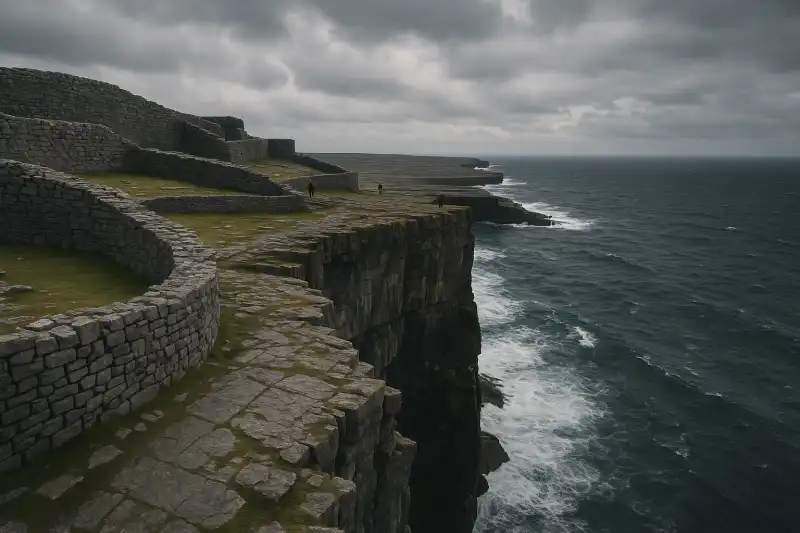
Dún Aonghasa Travel Guide 2026: Aran Islands Cliff Fort History, Highlights, and Visit Planning
Iron Age Atlantic communitiesPlan a first visit to Dún Aonghasa on Inis Mór with practical ferry timing, cliff-fort context, and ...
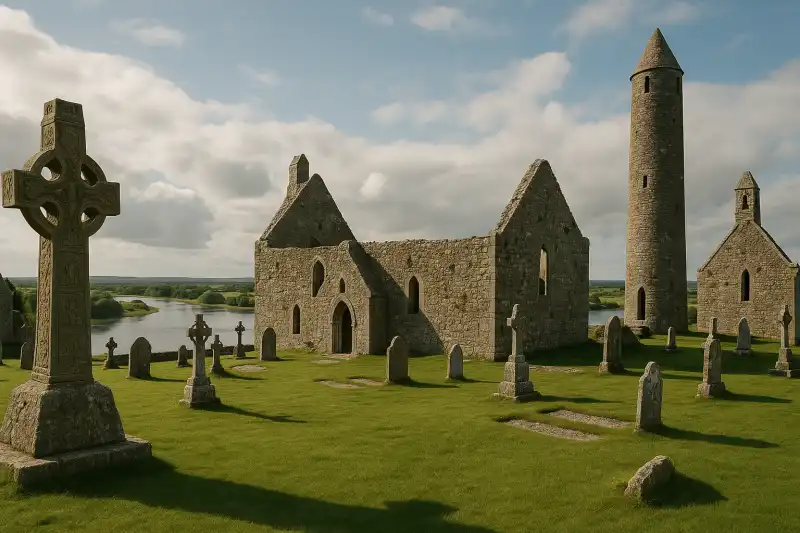
Clonmacnoise Travel Guide 2026: Monastic Ruins, High Crosses, and River Shannon Context
Early Medieval IrelandPlan a first visit to Clonmacnoise with practical timing, monastic-site context, and clear route adv...
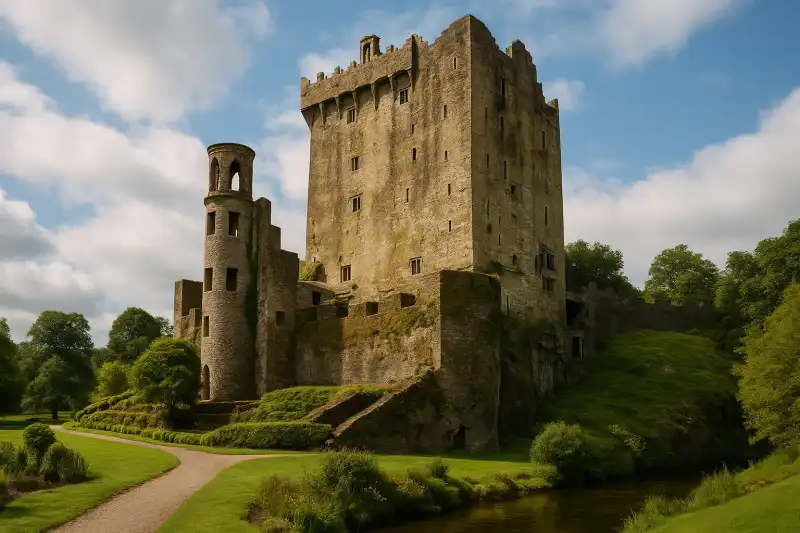
Blarney Castle Travel Guide 2026: Cork Day-Trip Timing, Gardens, and Stone Access
Medieval IrelandPlan a practical first visit to Blarney Castle with timing for the Stone queue, garden route priorit...