Quick Info
At a glance
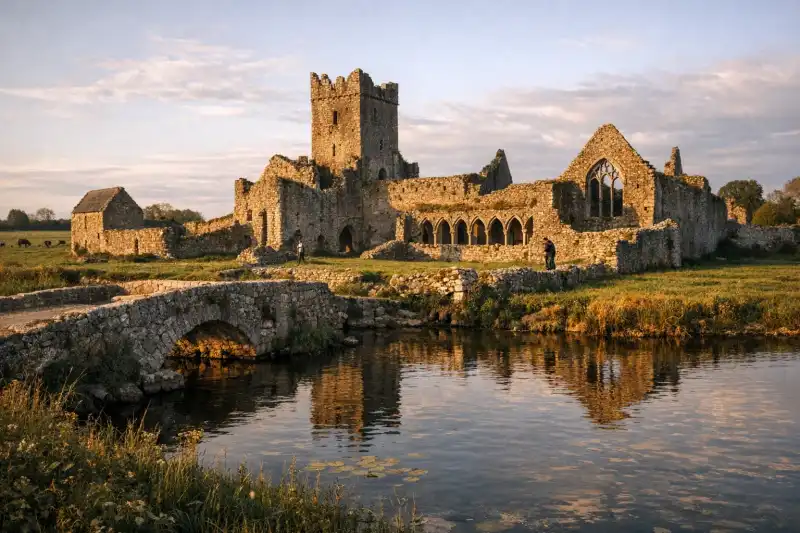
Athassel Priory in Ireland rises unexpectedly from the green landscape of County Tipperary, its broken stone walls and surviving arches standing above a bend in the River Suir. Even before you know its history, the scale of the place is striking. This is not a small rural ruin tucked into a field, but the remains of one of the largest medieval priory complexes in the country, a religious foundation whose footprint still dominates the riverside ground around it. The priory sits near the village of Golden, in a pastoral setting of hedgerows, fields, and slow-moving water that makes the site feel at once grand and remote.
What makes Athassel so memorable is the contrast between silence and ambition. The surviving church walls, tower, cloister traces, and domestic ranges suggest a community that once carried out worship, administration, hospitality, and daily labor on a serious scale. Today, birds cross through empty windows, grass covers former working spaces, and the priory appears half reclaimed by the countryside. Yet enough remains to read the outline of a medieval institution that was once wealthy, connected, and architecturally confident.
For travelers exploring inland Munster, Athassel Priory offers something different from Ireland’s better-known castles and cathedral sites. It rewards slow observation rather than spectacle. You come here for atmosphere, for the sweep of masonry against open sky, and for the sense of encountering a major monument that still feels under the radar. It is a place where the medieval world seems close, not because everything survived intact, but because so much of its scale still can be felt.
History
Foundation in the Anglo-Norman Era
Athassel Priory was founded in the late 12th century, commonly dated to around 1192, during a period when Anglo-Norman influence was reshaping parts of Ireland politically, economically, and religiously. The founder is generally identified as William de Burgo, one of the major Norman magnates active in Munster. He established the priory for the Augustinian Canons, a religious order that followed a communal rule while also serving pastoral and administrative functions.
The choice of location was not accidental. The River Suir provided water, transport links, fertile surrounding land, and a strategic setting within a region being reorganized under new lordship. Monastic foundations in this period were acts of piety, but they were also statements of status and authority. To endow a large priory was to shape the spiritual map of a territory while also reinforcing a family’s legitimacy. Athassel seems to have been conceived from the beginning on an impressive scale, reflecting both wealth and ambition.
Its architecture belongs to a transitional moment in medieval building. Romanesque traditions still influenced some forms, but Gothic ideas were increasingly visible in pointed arches, taller proportions, and more complex internal arrangements. As a result, the priory grew into a sophisticated monastic complex rather than a simple church with a few supporting structures.
Growth and Prosperity in the Medieval Period
During the 13th and 14th centuries, Athassel Priory developed into a major religious house. Like other Augustinian foundations, it would have combined liturgical life with estate management, hospitality, education, and engagement with local communities. The canons who lived here were not hermits withdrawn from the world. They were part of a working institution with ties to patrons, tenants, clergy, and travelers.
The priory’s extensive remains hint at this prosperity. A large church formed the spiritual center of the complex, while cloisters and domestic buildings organized the rhythms of daily life. Refectory, dormitory, chapter house, kitchens, storerooms, and service areas all supported the communal existence of the canons. The scale suggests substantial revenues, likely derived from landholdings, rents, agricultural production, and donations.
As with many ecclesiastical institutions in medieval Ireland, Athassel would not have existed outside politics. The priory lived through periods of regional tension, shifting lordship, and occasional violence. Monastic houses were vulnerable not only to warfare but also to economic pressure and local disputes. Even so, Athassel remained an important religious center for centuries, indicating resilience as well as wealth.
Late Medieval Challenges and Decline
By the later Middle Ages, many monasteries in Ireland faced a mix of pressures: political instability, declining revenues in some regions, changing patterns of patronage, and the broader upheavals that affected church institutions across Europe. Athassel was no exception. While the priory continued in use, its fortunes seem to have fluctuated.
Conflict in Munster, especially during turbulent periods of lordship and rebellion, could damage agricultural lands and reduce income. Monastic buildings also required ongoing upkeep, and large complexes were expensive to maintain. Where once expansion and embellishment were possible, later generations may have focused on repair and survival.
The priory’s riverside position, while advantageous in many ways, also meant constant exposure to weathering and environmental wear. Medieval masonry can survive for centuries, but only if institutional stability and resources remain strong enough to sustain it. By the early modern period, Athassel’s long era of confidence was ending.
Dissolution and the Afterlife of the Ruins
The decisive break came in the 16th century with the dissolution of monasteries under Tudor rule. Across Ireland, long-established religious houses were suppressed, their lands transferred, and communal monastic life brought to an end. Athassel Priory was dissolved in this context, and the canons disappeared from the site as a functioning religious community.
After dissolution, the priory entered the afterlife common to many great medieval monuments. Without the institutional framework that had sustained it, parts of the complex fell into ruin. Stone was sometimes reused locally, roofs disappeared, timber decayed, and weather began the slow work of dismantling what human hands had built. Yet because Athassel was so large and strongly constructed, much survived in skeletal form.
In later centuries, antiquarians, historians, and travelers recognized the importance of the site. Rather than vanishing entirely into the landscape, Athassel became one of Ireland’s most significant monastic ruins. Today it stands not as a restored monument but as a powerful remnant of medieval religious life. Its broken walls tell a story not only of foundation and prosperity, but also of suppression, abandonment, and long survival in the Irish countryside.
Key Features
The most striking feature of Athassel Priory is its sheer extent. Many visitors arrive expecting a picturesque ruin and instead find an expansive complex whose surviving walls suggest a once highly organized religious settlement. The priory church dominates the ensemble. Although roofless, it preserves enough of its structural outline to convey the monumentality of the original building. Long wall runs, window openings, and surviving arches help define sacred space even in ruin. Looking through the church today, you can still sense the direction of processions, the placement of altars, and the separation of liturgical zones once used by the canons.
The crossing tower is among the most memorable architectural elements. Rising above the surrounding masonry, it acts as a visual anchor for the whole site. Towers in monastic churches were practical and symbolic, helping articulate the building’s importance across the landscape. At Athassel, the surviving height of the tower gives the priory a vertical emphasis rare enough to be impressive, especially when seen against changing Irish skies. It also helps visitors orient themselves within what was once a carefully planned complex.
Equally evocative are the cloister and conventual buildings. The cloister was the heart of communal monastic life, a covered walk around an open central space that linked the church to chapter house, dormitory, refectory, and service rooms. At Athassel, traces of this arrangement remain legible in stone foundations and wall alignments. Even where details are fragmentary, the plan still emerges for anyone willing to slow down and read the site. This is where the priory becomes more than a ruin of worship: it becomes a place of routine, governance, reading, eating, sleeping, and work.
The domestic ranges add another layer of interest. Medieval religious houses were self-sustaining institutions, and Athassel preserves evidence of buildings that supported cooking, storage, and administration. The remains suggest a complex accustomed to handling people, resources, and hospitality on a considerable scale. This is important because it reminds visitors that monasteries were not isolated prayer machines. They were economic centers tied to surrounding lands and communities.
The riverside setting is also central to the priory’s character. The River Suir flows close by, and the relationship between water and stone gives Athassel much of its atmosphere. Water was essential in medieval monastic planning, used for practical needs and sometimes integrated into drainage, sanitation, or milling systems. At Athassel, the river now contributes primarily to mood. The surrounding greenery softens the monumental architecture, and the open landscape allows broad views of the surviving walls. In mist or low evening light, the priory can feel haunting; on a bright day, it appears expansive and almost serene.
Architecturally, visitors may notice the mix of solidity and elegance in the surviving masonry. Some portions are heavy and defensive in appearance, while others reveal refined ecclesiastical design in arches, window forms, and carved details. This contrast reflects both the long building history of the site and the practical realities of medieval monastic architecture. Buildings had to last, but they also had to communicate prestige and devotion.
Perhaps the greatest feature of Athassel Priory, however, is the degree to which it still allows imagination to operate. Some heritage sites explain everything at a glance. Athassel asks more from the visitor. You have to piece together spaces from fragments, reconstruct roofs from wall lines, and imagine sound where there is now silence. For many travelers, that makes the experience deeper. Rather than presenting a finished story, the priory offers a monumental framework in which history, architecture, and landscape remain vividly intertwined.
Getting There
Athassel Priory is located near Golden in County Tipperary, in the province of Munster. The easiest way to reach it is by car, especially if you are exploring inland Tipperary as part of a wider trip that includes the Rock of Cashel, Holycross Abbey, or Cahir. From Cashel, the drive typically takes around 25 to 35 minutes, depending on route and local roads. From Tipperary town, allow roughly 20 minutes, and from Limerick around 50 to 70 minutes. Car rental from major Irish cities often starts at about €35-€70 per day, though peak-season prices can be higher.
Public transport is possible, but it requires more planning. The nearest practical hubs are Tipperary town, Thurles, or Limerick, depending on your route. Bus fares within the region are often in the €8-€18 range one way, while rail connections to nearby towns from Dublin or Cork may cost roughly €20-€45 if booked in advance. From a bus or rail stop, you will likely need a taxi for the final leg to Golden and the priory area. Local taxi fares can vary, but a short regional transfer may cost around €15-€30 each way.
Cycling is an option for confident riders, particularly in fine weather, though rural Irish roads can be narrow. If you drive, be prepared for country lanes and check local access arrangements before traveling. Parking and direct site access can be limited, so the most practical approach is to combine Athassel Priory with a day route through County Tipperary rather than treating it as a standalone urban excursion.
When to Visit
Late spring through early autumn is the most comfortable time to visit Athassel Priory. From May to September, longer daylight hours make it easier to explore the ruins and appreciate the surrounding landscape. Summer brings the greenest scenery and the best chance of dry weather, though in Ireland that never guarantees sunshine. Temperatures are usually mild rather than hot, often ranging from about 15°C to 22°C, which is ideal for walking and photography.
Spring is especially rewarding if you prefer quieter conditions. The fields around the priory brighten early, and the combination of fresh growth, soft light, and lighter visitor traffic gives the site a calm, reflective atmosphere. Autumn can also be excellent, particularly in September and early October, when the countryside remains attractive but the busiest travel season has begun to ease. Lower sun angles at this time can be beautiful for photography, bringing out texture in the old stone.
Winter visits are still possible, and some travelers may enjoy the priory’s starkest mood in cold weather. The ruins can feel especially dramatic under gray skies or in mist, but days are short, surfaces may be slippery, and rain can make rural access less pleasant. If you visit in winter, aim for the middle of the day and wear waterproof footwear.
Whenever you go, check the forecast and dress for changing conditions. Ireland’s weather can shift quickly, and exposed monastic ruins offer little shelter. Early morning or late afternoon often provides the best light for seeing the architectural forms clearly, while also enhancing the sense of solitude that makes Athassel Priory so memorable.
| Quick Facts | Details |
|---|---|
| Location | Near Golden, County Tipperary, Munster, Ireland |
| Site Type | Medieval Augustinian priory |
| Founded | c. 1192 |
| Founder | Traditionally attributed to William de Burgo |
| Historical Period | Medieval, with later early modern decline |
| Setting | Riverside site on the River Suir |
| Best For | Medieval architecture, monastic history, quiet heritage visits |
| Typical Visit Length | 45 minutes to 1.5 hours |
| Nearest Useful Base | Cashel, Tipperary town, or Limerick |
| Best Season | May to September |
Athassel Priory is one of those places that lingers in memory not because it is polished or heavily interpreted, but because it remains so physically persuasive. The ruin still occupies the land with authority. Its church, tower, and cloister fragments do more than survive; they suggest a living institution of real scale and confidence, one woven into the medieval landscape of Munster. In a country famous for monastic heritage, Athassel stands out for its size and for the way its remains still communicate a complete world of worship, labor, and community.
For visitors willing to seek out less familiar sites, that is its special reward. Athassel Priory does not rely on crowds, ticket queues, or dramatic restoration. Instead, it offers the slower pleasure of discovery. You walk among walls that have stood through dissolution, weather, and centuries of rural change, and you begin to understand how substantial monastic life once was in inland Ireland. The river still moves past, the fields still open around it, and the priory remains what all great ruins become over time: a meeting point between history, place, and imagination.
Guided tours: worth it?
Most travelers can visit Athassel Priory independently. Compare a tour only if you want a tighter history-focused visit, easier logistics, or a guide who can answer questions on the spot.
Best for
- Short visits where a planned route saves time
When to go self-guided
Go independently if you prefer setting your own pace, reading as you go, and checking official hours or ticket rules directly before you arrive.
What I’d avoid
Skip paid tours that bundle unrelated stops you do not actually want. The best option should either save meaningful planning time or add historical context you would miss on your own.
Tipperary and Cashel Heritage Tours
Useful when: you want to compare guided formats before deciding
Rock of Cashel and County Tipperary Day Trips
Useful when: transport or pickup logistics matter
Limerick to Tipperary Historical Tours
Useful when: you want to compare guided formats before deciding
Some tour links are affiliate links, which may earn Ancient Travel a small commission at no extra cost to you. I try to surface options that make practical sense for the site—not just anything bookable.
Frequently Asked Questions
Where is Athassel Priory located?
Athassel Priory stands near Golden in County Tipperary, Munster, Ireland, on the banks of the River Suir.
What is Athassel Priory known for?
It is known as one of the largest medieval monastic ruins in Ireland, with extensive remains including a church, cloister, tower, and domestic buildings.
Is there an entry fee to visit Athassel Priory?
Access conditions can change, but the site is generally viewed from the surrounding area and may have limited or managed access depending on conservation or land-use arrangements.
How much time should I allow for Athassel Priory?
Most visitors should allow 45 minutes to 1.5 hours to appreciate the scale of the ruins, the riverside setting, and the architectural details.
When was Athassel Priory founded?
Athassel Priory was founded in the late 12th century, traditionally around 1192, during the Anglo-Norman period in Ireland.
Can Athassel Priory be combined with other historic sites?
Yes. It is often paired with the Rock of Cashel, Cahir Castle, Holycross Abbey, and other historic places in County Tipperary.
Nearby Ancient Sites
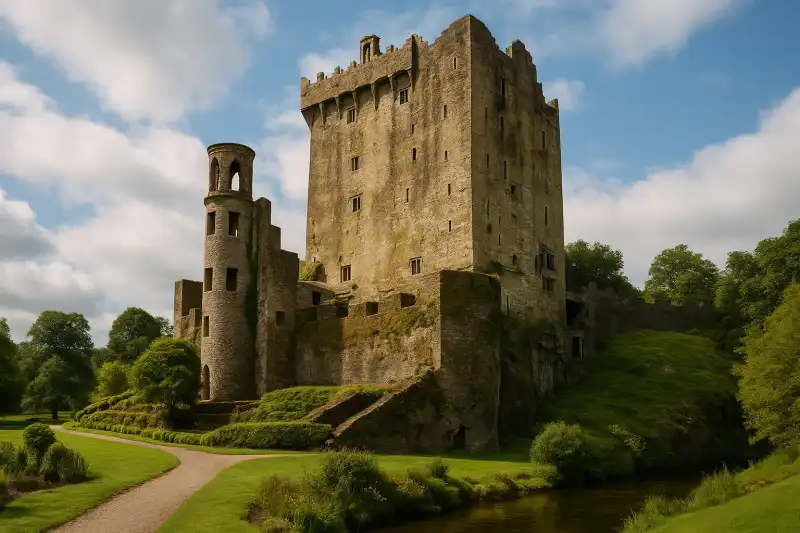
Blarney Castle Travel Guide 2026: Cork Day-Trip Timing, Gardens, and Stone Access
Medieval IrelandPlan a practical first visit to Blarney Castle with timing for the Stone queue, garden route priorit...
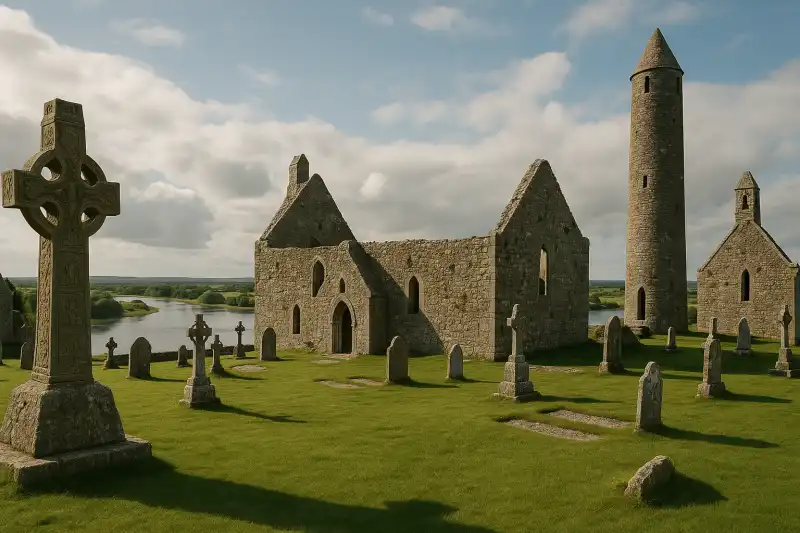
Clonmacnoise Travel Guide 2026: Monastic Ruins, High Crosses, and River Shannon Context
Early Medieval IrelandPlan a first visit to Clonmacnoise with practical timing, monastic-site context, and clear route adv...
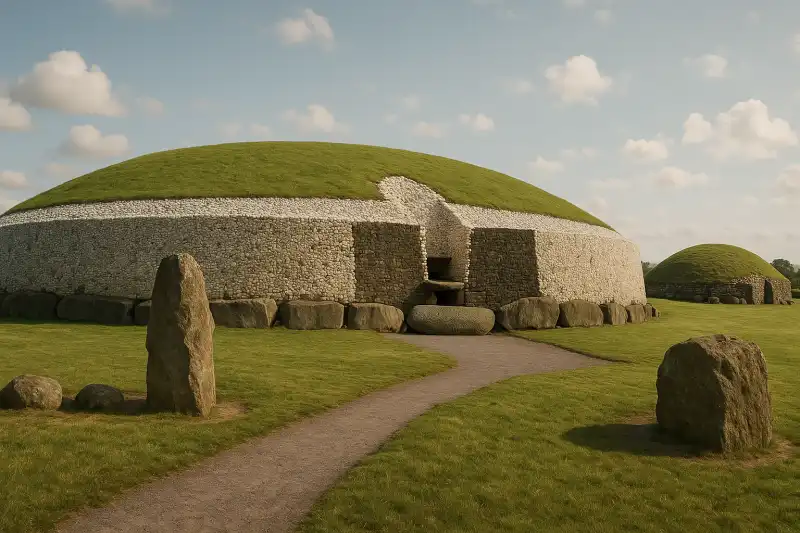
Boyne Valley Passage Tombs Travel Guide 2026: Newgrange, Knowth, and Dowth Visit Strategy
Neolithic IrelandPlan your first Boyne Valley passage tombs visit with practical timing, Brú na Bóinne access flow, a...