Quick Info
At a glance
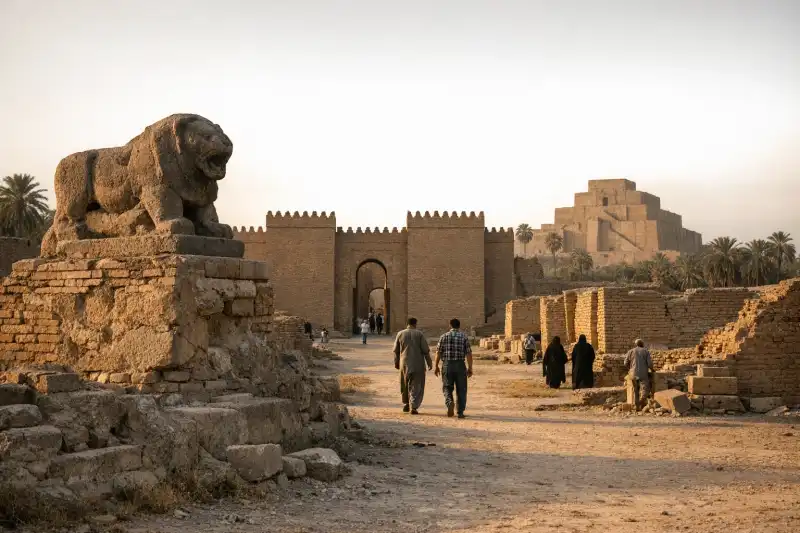
Babylon in Iraq is one of the ancient world’s most resonant names, a place where imperial ambition, sacred architecture, and cultural memory meet on the alluvial plain of Mesopotamia. Even before you arrive, the name carries weight: Hammurabi’s law code, Nebuchadnezzar II’s monumental building works, stories of the Tower of Babel, and the image of a city so grand that it became a symbol far beyond its own geography. Today, the archaeological site lies near modern Hillah, south of Baghdad, where broad skies, low earth mounds, reconstructed walls, and scattered brickwork hint at the scale of a metropolis that once stood at the center of political and intellectual life in the ancient Near East.
Visiting Babylon is different from visiting a compact ruin perched on a hill. Its power comes from expanse and memory. You move through a landscape of processional routes, temple precincts, palace foundations, and partially reconstructed features that suggest how large and carefully planned the city once was. The Euphrates, which helped sustain Babylon’s rise, still defines the wider setting, reminding visitors that this was a river civilization shaped by irrigation, trade, and statecraft. What remains is fragmentary, but the site’s historical gravity is unmistakable. For travelers interested in Mesopotamia, imperial capitals, or the origins of urban civilization, Babylon is not just a famous name on a map; it is one of the places where ancient history feels foundational.
History
Early origins and the rise of a city
Babylon began as one among many settlements in southern Mesopotamia, probably emerging in the 3rd millennium BCE. In its earliest phases it was not yet the overwhelming capital later remembered in texts and legend. The region was crowded with competing city-states, each tied to irrigation networks, agricultural wealth, and local dynasties. Babylon’s location on the Euphrates gave it an enduring advantage, connecting it to trade routes and fertile land while allowing rulers to project power into surrounding territories.
Its real ascent came in the early 2nd millennium BCE, when Amorite dynasties established control in the city. Babylon grew from a regional center into a political capital, drawing administrators, merchants, priests, and craftsmen. Temples and public works expanded, and the city became more deeply integrated into the cultural and economic world of Mesopotamia.
Hammurabi and the Old Babylonian kingdom
The reign of Hammurabi, usually dated to the 18th century BCE, marked Babylon’s first great age. Through military strategy, diplomacy, and opportunism, Hammurabi defeated rival powers and brought much of southern Mesopotamia under Babylonian authority. His name is now inseparable from the famous law code associated with him, though the broader significance of his reign lies in the consolidation of royal power and the transformation of Babylon into the leading city of a kingdom.
Under Hammurabi and his successors, Babylon became not only an administrative center but also a symbolic one. Royal ideology linked the king with divine order, and the city’s gods, especially Marduk, grew in importance. Even after the Old Babylonian kingdom weakened, the prestige established in this period endured. Babylon had become more than a city; it had become a political and religious idea.
Kassite rule and enduring prestige
After a turbulent period that included the Hittite raid on Babylon around 1595 BCE, the city entered a new era under Kassite rule. The Kassites governed Babylonia for several centuries, and while their political origins lay outside the old urban traditions of southern Mesopotamia, they adopted and sustained Babylon’s cultural centrality. During this time, Babylon remained a major religious and ceremonial center even when political power shifted across the region.
Texts, rituals, and scholarly traditions flourished. The cult of Marduk deepened Babylon’s special status, and the city continued to shape the intellectual world of Mesopotamia. Scribes copied literature, priests maintained rituals, and elites looked to Babylon as a source of legitimacy. Its importance was no longer dependent solely on imperial conquest.
The Neo-Babylonian revival
Babylon reached its most famous physical form during the Neo-Babylonian period, especially in the 7th and 6th centuries BCE. After Assyrian domination and episodes of destruction, Babylon experienced a dramatic revival under Nabopolassar and, above all, Nebuchadnezzar II. This was the era of massive walls, grand ceremonial architecture, rebuilt temples, and urban embellishment on a scale that impressed ancient observers.
Nebuchadnezzar II transformed Babylon into an imperial showpiece. The Processional Way, the Ishtar Gate, the vast temple complex of Esagila, and the ziggurat Etemenanki all belong to the city’s greatest monumental phase. Biblical memory, classical writers, and later tradition all preserve echoes of this age. It was then that Babylon became the archetype of royal grandeur, wealth, and urban magnificence.
Persian, Hellenistic, and later decline
In 539 BCE, Cyrus the Great of Persia entered Babylon, and the city became part of the Achaemenid Empire. Though it lost some political independence, Babylon remained an important administrative and ceremonial center. Later, after Alexander the Great conquered the Persian Empire, he selected Babylon as a major seat of power and died there in 323 BCE. For a time, it still held prestige in the Hellenistic world.
Yet over the centuries, shifts in trade routes, political capitals, and settlement patterns reduced Babylon’s importance. New cities rose, maintenance of canals declined, and populations moved. By late antiquity, much of the great city had faded into ruin. Bricks were reused elsewhere, buildings eroded, and the once-dominant capital became a layered archaeological landscape. Even so, its name survived in religious texts, historical writing, and modern imagination, ensuring that Babylon would never entirely vanish from memory.
Key Features
The experience of Babylon today is shaped by both authentic archaeological remains and later reconstructions, and understanding that mixture is part of appreciating the site. Unlike a ruin where every visible stone is ancient and untouched, Babylon presents a more complicated visual story. Some sections preserve original foundations, baked-brick walls, and plan outlines, while others were rebuilt or highlighted in modern times to evoke the city’s lost grandeur. For visitors, that means the site is best approached as a historical landscape rather than a single intact monument.
One of the most evocative elements is the Processional Way, the ceremonial route once used during important religious festivals, especially the New Year rites associated with Marduk. Even in partial form, the idea of this paved avenue helps orient the visitor within Babylon’s old ritual geography. You can imagine delegations, priests, royal processions, and sacred images moving through a city designed to display authority. The route connected symbolic spaces, turning urban planning into political theater.
Nearby stood the Ishtar Gate, perhaps Babylon’s most internationally recognized monument. The original glazed-brick gate, decorated with striding animals in vivid colors, is now best known through the reconstructed version in Berlin’s Pergamon Museum. At Babylon itself, the surviving remains and traces of its setting still matter deeply. They allow visitors to place the famous gate in context, not as an isolated masterpiece but as part of a larger ceremonial and defensive system. The gate was both beautiful and strategic, announcing the wealth of the city to all who entered.
The Southern Palace area, associated with Nebuchadnezzar II, reveals the scale of royal architecture. What remains are foundations, wall lines, courtyards, and reconstructed segments that help suggest the extent of the complex. Here the visitor gets a sense of Babylon as a working imperial capital: a place of reception halls, administration, storage, military oversight, and dynastic display. The palace was not simply a residence; it was the nerve center of empire.
The religious heart of Babylon lay in the temple of Marduk, known as Esagila, and in the great ziggurat Etemenanki, often linked in later tradition to the Tower of Babel. These structures survive mainly as archaeological traces rather than towering remains, so they demand some imagination. Yet they are essential to understanding the city. Babylon’s greatness was not only military or economic. It rested on ritual centrality, sacred kingship, and the idea that the city stood in a special relationship to cosmic order. In Mesopotamian thought, temples were not peripheral monuments but the anchors of civic and divine life.
The wider site also includes mounds, excavation zones, and open expanses where the city’s former districts stretched beyond what a casual glance might suggest. This is where Babylon becomes especially rewarding for travelers willing to slow down. The significance lies not just in isolated highlights but in the urban whole: fortifications, waterways, ceremonial routes, and institutional complexes integrated into one of antiquity’s most celebrated capitals. The exposed terrain may appear quiet now, but it once supported a dense and highly organized city.
Modern interventions are also part of the story. Twentieth-century excavations, site management efforts, and politically driven reconstruction campaigns changed the appearance of certain areas. While these additions can be controversial from a conservation perspective, they also reflect the modern afterlife of Babylon as a national symbol. For a visitor, that layered history adds another dimension. Babylon is not only an ancient city; it is also a place where archaeology, heritage, identity, and memory continue to intersect.
Getting There
Babylon is usually visited from Baghdad or from nearby Hillah. Hillah is the closest practical base, roughly 10 kilometers away, while Baghdad is the main international gateway for most travelers arriving in Iraq. From Baghdad, the road journey typically takes around 1.5 to 2.5 hours depending on traffic, checkpoints, and the exact starting point in the city. A private car with driver is the most straightforward option and is commonly arranged through hotels, local travel agencies, or guides. Expect a round-trip hire from Baghdad to cost roughly $80 to $150 depending on vehicle type, waiting time, and whether guiding is included.
Shared transport can reduce costs but is less predictable for international visitors. You may be able to travel by bus or minibus from Baghdad to Hillah for approximately $5 to $10, then continue by local taxi to the site for another $5 to $15. This is cheaper, but it requires flexibility, patience, and up-to-date local advice. Schedules are not always tourist-friendly, and language barriers can complicate transfers.
From Hillah, taxis are quick and affordable, and many visitors arrange a return fare with the same driver. If you are already touring central Iraq with a licensed guide, Babylon is often combined with other nearby heritage stops or as a day trip from Baghdad. Because access conditions, security checks, and opening arrangements can change, it is wise to confirm current details a day or two before visiting. Carry your passport, some cash in local currency, water, and sun protection. Even when logistics are simple, Babylon rewards travelers who plan ahead.
When to Visit
The best time to visit Babylon is from November through March, when central Iraq is cooler and far more comfortable for walking. Winter and early spring bring the most pleasant conditions, with daytime temperatures often suitable for spending several hours outdoors. This matters because Babylon is an open archaeological landscape with little shade, and much of the experience involves moving slowly between exposed areas of brick, earth, and stone under direct sun.
April and October can also be reasonable shoulder-season months, especially if you start early in the morning. Temperatures rise quickly later in the day, but these periods may still work well for travelers who are accustomed to warm climates. In spring, the surrounding plain can feel less harsh than in peak summer, and visibility is often good for photography.
From late May to September, heat becomes the dominant factor. Midday temperatures can be extreme, and even short walks may become exhausting. If you visit in summer, go as early as possible, wear a hat, carry more water than you think you need, and keep your itinerary flexible. Many travelers will find summer significantly less enjoyable.
For the best overall experience, aim for a weekday morning in the cooler months. You will have softer light, more manageable temperatures, and a calmer atmosphere for taking in the site’s scale. A guide can be particularly valuable at any time of year, but in the cooler season you are more likely to linger long enough to appreciate the complexity of Babylon rather than simply moving from landmark to landmark in the heat.
| Quick Facts | Details |
|---|---|
| Location | Near Hillah, Babil Governorate, Iraq |
| Ancient Civilization | Babylonian / Mesopotamian |
| Best Known For | Hammurabi, Nebuchadnezzar II, the Ishtar Gate, and the legacy of the Tower of Babel |
| UNESCO Status | Part of the UNESCO World Heritage list |
| Nearest City | Hillah |
| Main Gateway | Baghdad |
| Ideal Visit Length | 2–4 hours |
| Best Season | November to March |
| Terrain | Open archaeological plain with exposed walking areas |
| What to Bring | Passport, water, hat, sunscreen, sturdy shoes, cash |
Babylon remains one of the rare places where the gap between historical fame and physical experience is itself meaningful. Visitors do not come only to see a single perfect ruin. They come to stand within the footprint of a city that shaped law, kingship, religion, architecture, and imagination across millennia. The surviving remains require attention and some historical context, but that effort is rewarded. The site’s scale, its association with some of the most powerful rulers of the ancient Near East, and its layered afterlife in archaeology and literature make it one of Iraq’s most compelling destinations.
To walk through Babylon is to encounter both presence and absence: the outlines of palaces, the remembered splendor of gates, the ghost of a ziggurat, the persistence of a name that never disappeared. For travelers interested in the deep past, Babylon offers something more than visual spectacle. It offers contact with one of the foundational cities of human civilization.
Guided tours: worth it?
Self-guided works here, but a guide can add real value if you want the ruins explained as a living place rather than just a sequence of monuments.
Best for
- First-time visitors who want context, not just photos
- Short visits where a planned route saves time
When to go self-guided
Go independently if you prefer setting your own pace, reading as you go, and checking official hours or ticket rules directly before you arrive.
What I’d avoid
Skip paid tours that bundle unrelated stops you do not actually want. The best option should either save meaningful planning time or add historical context you would miss on your own.
Babylon Iraq tours
Useful when: you want to compare guided formats before deciding
Babylon and Baghdad day trips
Useful when: transport or pickup logistics matter
Iraq archaeology tours
Useful when: you want to compare guided formats before deciding
Some tour links are affiliate links, which may earn Ancient Travel a small commission at no extra cost to you. I try to surface options that make practical sense for the site—not just anything bookable.
Frequently Asked Questions
Where is Babylon located?
Babylon is in central Iraq in Babil Governorate, near the modern city of Hillah and south of Baghdad.
Can you visit Babylon independently?
Visitors can reach Babylon independently from Baghdad or Hillah, but many travelers prefer a guide or organized driver because transport logistics and local access rules can change.
How much time do you need at Babylon?
Most visitors spend two to four hours exploring the main archaeological zone, reconstructed processional areas, and museum exhibits if open.
Is Babylon safe to visit?
Safety conditions in Iraq can change, so travelers should check current government advisories, confirm local conditions, and consider using a reputable local guide or tour operator.
What is the best time of year to visit Babylon?
The best time to visit Babylon is from late autumn to early spring, when temperatures are milder and walking around the exposed ruins is more comfortable.
What should you wear to Babylon?
Wear light but modest clothing, sturdy walking shoes, sun protection, and bring water, especially outside the cooler winter months.
Nearby Ancient Sites
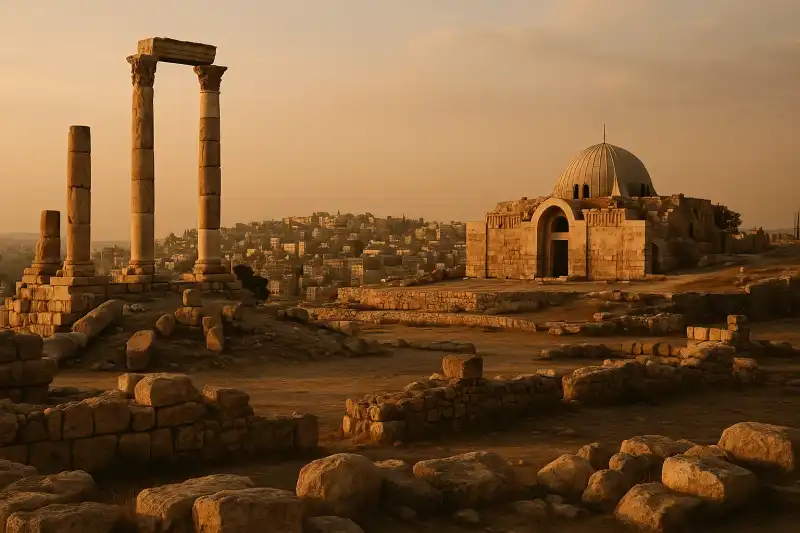
Amman Citadel Jordan Guide 2026: Temple of Hercules & Ancient Rabbah
Ammonite-Roman-UmayyadExplore Jordan's ancient citadel overlooking modern Amman. Discover the Temple of Hercules, Umayyad ...
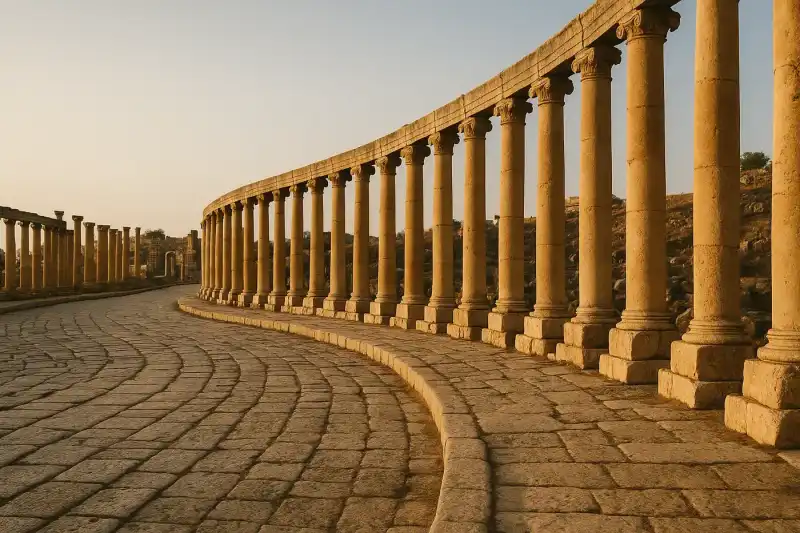
Jerash: The Pompeii of the East and Jordan's Best-Preserved
Roman / NabataeanDiscover Jerash, Jordan's remarkable Roman ruins. Walk the colonnaded streets of ancient Gerasa, exp...
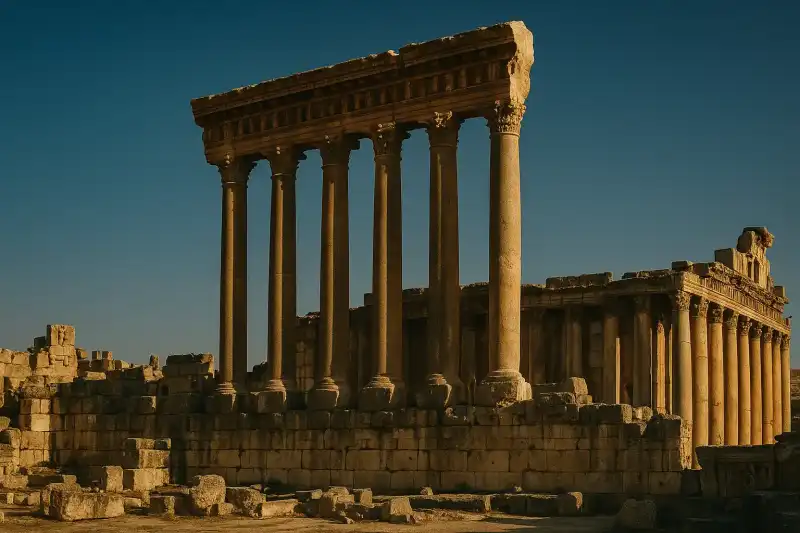
Baalbek: Rome's Mightiest Temple Complex in Lebanon's Beqaa
Roman / PhoenicianExplore Baalbek's colossal Roman temples, including the best-preserved Temple of Bacchus. Discover t...