Quick Info
The Mountain of a Thousand Statues
Emerging from the morning mist like a stepped pyramid from a dream, Borobudur rises from the lush Javanese landscape as the largest Buddhist temple in the world—and perhaps the most spiritually evocative. This isn’t merely an ancient monument; it’s a three-dimensional mandala, a stone scripture, and a pilgrimage path compressed into one extraordinary structure.
Built in the 9th century CE by the Sailendra Dynasty, Borobudur predates Angkor Wat and rivals it in ambition and artistry. For centuries, volcanic ash from nearby Merapi buried the temple in jungle, preserving it from looters and time until explorers unearthed it in the 19th century. Today, it stands as Indonesia’s most visited attraction and a UNESCO World Heritage Site, drawing pilgrims and travelers who come to witness sunrise over its perforated stupas and decipher the stories carved into its walls.
The Sailendra Dynasty’s Cosmic Vision
To understand Borobudur, you must understand the Sailendra rulers who built it—a dynasty that blended Javanese traditions with Mahayana Buddhist theology to create something uniquely Indonesian. They called their creation Bhūmiśambhāra—the mountain of the accumulation of virtue.
The Sailendas ruled central Java during an era of remarkable cultural syncretism. Hinduism and Buddhism coexisted, each borrowing from the other and from indigenous Javanese beliefs. Borobudur represents the pinnacle of this fusion: Buddhist in doctrine but Javanese in aesthetic, with architectural elements that echo earlier Hindu-Buddhist temples while pioneering techniques that wouldn’t be matched for centuries.
Construction required an estimated 75 years and the labor of thousands. Two million blocks of volcanic stone were quarried, transported, carved, and fitted together without mortar. The result was a structure so precisely engineered that it has withstood earthquakes and volcanic eruptions for eleven centuries.
Getting to Borobudur: From Yogyakarta and Beyond
The 1-Hour Drive from Yogyakarta
Most visitors reach Borobudur from Yogyakarta (often called “Jogja”), Java’s cultural capital and the nearest major city. The 40-kilometer journey takes approximately one hour by car, passing through rural villages, rice paddies, and volcanic landscapes with Merapi looming in the distance.
Private Driver: The most popular option, costing approximately $40-50 USD for a full day including fuel. This allows flexibility to combine Borobudur with other sites like Mendut and Pawon temples. Drivers can be arranged through your accommodation or hired from the street—negotiate the full itinerary and price upfront.
Taxi/Grab: Ride-hailing apps operate in Yogyakarta, and a one-way trip to Borobudur costs around $15-20 USD. However, finding a return ride can be challenging, so book round-trip or arrange for the driver to wait.
Organized Tour: Countless operators offer sunrise tours (departing Yogyakarta at 3:30 AM) and day trips. Prices range from $30-80 USD depending on group size and inclusions. This is the easiest option for sunrise visits.
Public Bus and Tour Options
Public Bus: Budget travelers can take a bus from Yogyakarta’s Jombor Terminal to Borobudur village (90 minutes, $2-3 USD). From the terminal, it’s a 15-minute walk or short motorbike taxi ride to the temple entrance. This option requires early departure for sunrise and patience with local transport schedules.
Bicycle: Adventurous travelers sometimes cycle from Yogyakarta to Borobudur—a flat but lengthy journey of 3-4 hours each way. Several operators offer guided cycling tours that include the return by vehicle.
Borobudur Village Accommodation
For those prioritizing the sunrise experience, staying in Borobudur village itself offers significant advantages. You can wake up at 4:00 AM instead of 3:00 AM, and you’ll be positioned for multiple visits if desired.
Manohara Hotel: The only hotel with direct access to the temple for sunrise viewing (through their exclusive sunrise package). Rooms are mid-range ($100-150 USD/night) and include the sunrise entrance. Even if staying elsewhere, you can book their sunrise package separately.
Village Homestays: Numerous guesthouses and homestays in the surrounding village offer basic to comfortable accommodation at $20-50 USD/night. The atmosphere is relaxed, and you’ll experience local Javanese hospitality.
Decoding the Architecture: A Mandala in Stone
Borobudur isn’t merely a temple—it’s a physical representation of Buddhist cosmology, designed to be walked as a pilgrimage toward enlightenment. Understanding this structure transforms your visit from sightseeing into spiritual journey.
Kamadhatu: The Base and Hidden Foot Reliefs
The temple’s square base represents Kamadhatu—the realm of desire, where ordinary humans dwell in ignorance and attachment. Originally, this level was mostly buried, which inadvertently preserved some of Borobudur’s most detailed reliefs.
The hidden foot contains 160 panels depicting the law of karma—the consequences of human actions. Scenes show people experiencing the results of their deeds: the generous are rewarded, the cruel punished. These weren’t just moral lessons; they were spiritual technology, reminding pilgrims that actions have consequences across lifetimes.
During restoration in the 20th century, archaeologists uncovered these buried panels and created a viewing corridor. Take time to examine the detailed scenes of daily Javanese life—merchants, farmers, nobles—all subject to the same cosmic justice.
Rupadhatu: The Square Terraces and Story Panels
Above the base, four square terraces represent Rupadhatu—the realm of form, where beings have transcended crude desire but remain attached to form and distinction. This is where Borobudur’s famous narrative reliefs begin.
The walls of these terraces contain 1,300+ panels telling stories essential to Buddhist education. As you ascend, you’re meant to walk clockwise (keeping the monument on your right), following the panels in sequence as a pilgrim would read a sacred text.
The reliefs illustrate:
- Jataka Tales: Stories of the Buddha’s previous lives, when he was perfecting the virtues necessary for enlightenment
- Gandavyuha: The spiritual quest of Sudhana, who visits 53 teachers seeking wisdom
- Lalitavistara: The life story of Siddhartha Gautama, from birth through enlightenment
The carving is exquisite—figures in graceful poses, detailed architecture, expressive faces, and naturalistic landscapes. Even without understanding the specific stories, the artistry impresses. With context, the panels become a visual scripture guiding the viewer toward Buddhist understanding.
Arupadhatu: The Circular Terraces and Perforated Stupas
The upper three terraces form Arupadhatu—the realm of formlessness, where attachment to physical existence dissolves. Here, the architecture shifts from square to circular, symbolizing the transition from earthly bounds toward infinite liberation.
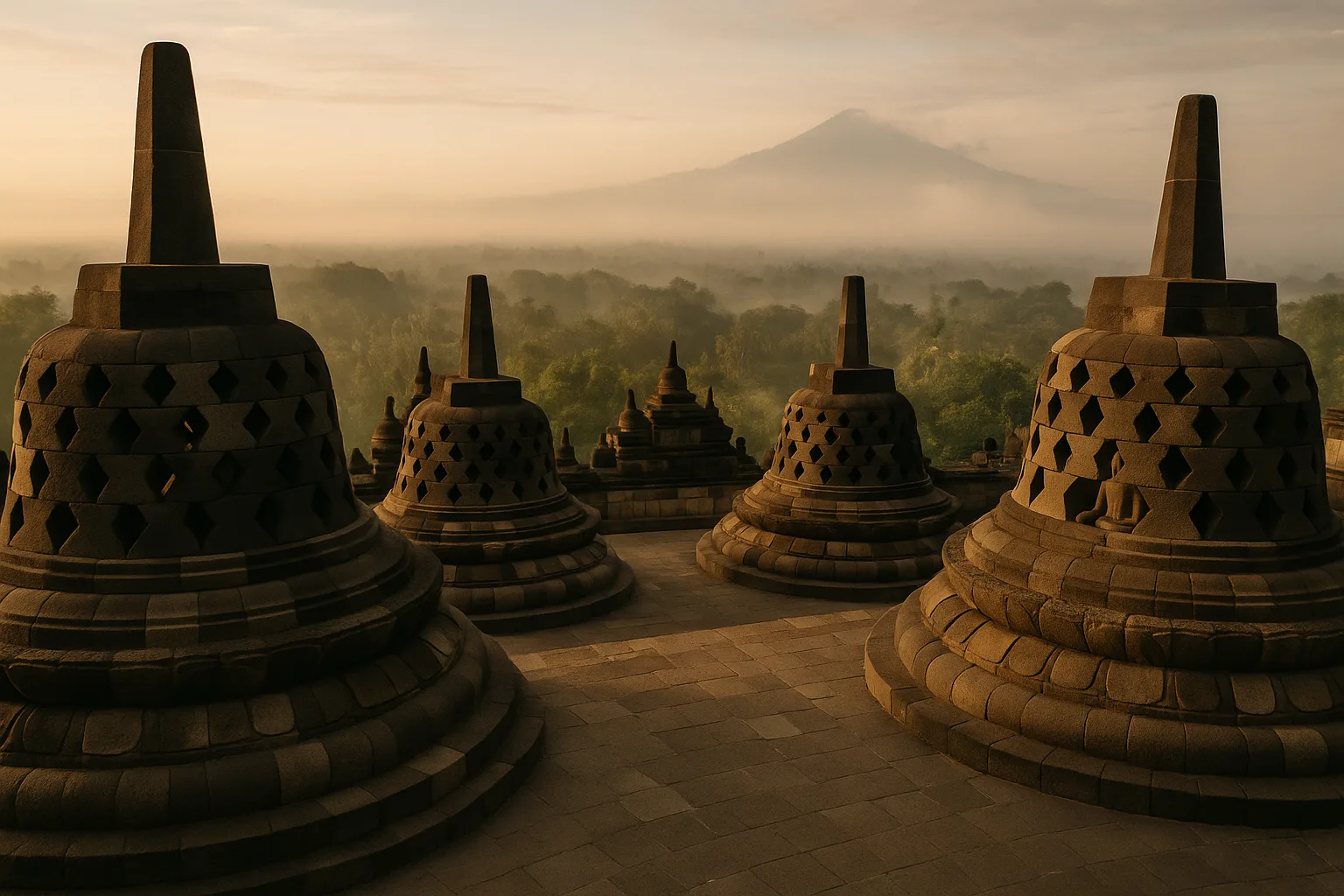
Circular terraces hold 72 perforated stupas, each containing a statue of the Buddha in meditation pose. The stupas resemble stone bells with diamond-shaped openings. When viewed from above, they form a mandala pattern—sacred geometry representing the cosmos.
The crowning stupa at the summit is solid, representing the ultimate attainment of enlightenment—beyond form, beyond concept, beyond even Buddha images. Pilgrims who have walked the path, absorbed the teachings, and climbed through the realms reach this empty center, which paradoxically contains everything.
The Reliefs: Reading Borobudur’s Visual Scriptures
The Jataka Tales (Buddha’s Previous Lives)
The most accessible stories on Borobudur’s walls are the Jataka tales—hundreds of narratives about the Buddha’s previous incarnations as he accumulated the perfections (paramitas) necessary for Buddhahood. In these stories, he appears as animals, kings, merchants, ascetics, and commoners, always demonstrating virtues like generosity, patience, and wisdom.
Look for the story of the hungry tigress, where the Buddha-to-be offers his own body to save a starving tiger and her cubs. Or the tale of the golden rabbit who sacrifices himself to feed a beggar (actually a god in disguise). These aren’t just stories—they’re ethical teachings about the path of the bodhisattva, who postpones final enlightenment to help all beings.
The Gandavyuha and Lalitavistara Panels
The upper terraces feature continuous narratives from advanced Mahayana texts. The Gandavyuha tells of Sudhana, a seeker who visits 53 spiritual teachers including monks, nuns, merchants, and even a goddess, learning different aspects of wisdom at each stop. This text celebrates the infinite paths to enlightenment and the bodhisattva’s commitment to serving all beings.
The Lalitavistara presents the Buddha’s life story with mythological elaboration: his descent from heaven, miraculous birth, royal youth, discovery of suffering, great renunciation, and final enlightenment beneath the Bodhi tree.
Reading these panels requires time and ideally a guide, but even casual observation reveals the sophistication of Javanese Buddhist culture in the 9th century. The artists knew these texts intimately and translated complex theology into accessible visual narratives.
The Sunrise Experience: Worth the Early Wake-Up?
Manohara Hotel Sunrise Package
Borobudur at sunrise is legendary—and for good reason. As dawn breaks over Java, mist drifts through the surrounding valleys while the first rays of sunlight illuminate Merapi volcano on the horizon. The perforated stupas create patterns of light and shadow that seem almost supernatural.
The only way to access the temple before 6:00 AM is through the Manohara Hotel’s sunrise package ($50 USD including entrance, flashlight, and simple breakfast). This exclusive arrangement allows entry at 4:30 AM, positioning you on the upper terraces as the sky transforms from indigo to gold.
Is it worth the cost and early wake-up? For photographers and spiritual seekers, absolutely. The atmosphere is transcendent—quiet, misty, and almost mystical. For casual visitors, the regular 6:00 AM opening still offers excellent light and smaller crowds than midday.
Temple Grounds Opening at 6 AM
Regular admission begins at 6:00 AM, and arriving at opening time provides the best balance of good light, reasonable temperatures, and manageable crowds. By 8:00 AM, tour buses arrive en masse, transforming the contemplative atmosphere into a bustling tourist site.
The early morning light is particularly beautiful on the eastern-facing reliefs, and the walk up through the terraces as the sun rises creates a natural metaphor for spiritual illumination ascending toward enlightenment.
Photography Tips for Golden Hour
- Bring a wide-angle lens to capture the scale of the stupas and terraces
- The perforated stupas create beautiful patterns when shot from inside looking out
- Silhouettes of Buddha statues against morning mist make compelling images
- Tripods are technically not allowed (though enforcement varies); stabilize your camera on the structure itself
- The summit offers panoramic views of Merapi and the surrounding countryside
When to Visit: Weather and Crowd Strategy
Dry Season (May-September): Peak Tourism
The dry season (May through September) offers the most reliable weather for visiting Borobudur, with minimal rainfall and clear mornings ideal for sunrise viewing. However, this is also peak tourist season, with domestic and international visitors filling the terraces by mid-morning.
June and July are particularly busy due to school holidays. If visiting during these months, the sunrise package or 6:00 AM arrival becomes essential for experiencing the temple without crowds.
Rainy Season: Lush but Slippery
October through April brings the rainy season, with afternoon thunderstorms common and occasional all-day downpours. However, don’t dismiss this period entirely:
- The surrounding landscape is lush and green rather than dry
- Crowds are significantly thinner
- Morning visits often enjoy clear skies before afternoon storms
- The temple’s stone provides decent traction even when wet (though caution is advised)
If visiting during rainy season, start early and carry a poncho. The temple has minimal shelter from rain.
Essential Logistics: Tickets and Tours
Foreigner vs. Local Pricing
Indonesia maintains a dual pricing system for heritage sites, with foreign visitors paying significantly more than locals. As of 2024, Borobudur entrance costs approximately $25 USD for foreigners (cash or card accepted). This includes access to all terraces and the museum.
While the price difference annoys some visitors, it reflects the reality that foreign tourism generates revenue for preservation while local visitors have cultural and religious connections to the site.
Combined Borobudur-Prambanan Tickets
If you’re visiting both Borobudur (Buddhist) and Prambanan (Hindu)—and you absolutely should—purchase the combined ticket for approximately $45 USD, saving about $10 over separate admissions. The ticket is valid for two days and covers both sites plus the smaller temples of Mendut and Pawon near Borobudur.
Official Guides at the Entrance
Licensed guides are available at the entrance for approximately $15-25 USD depending on language and duration. While you can explore independently, a guide transforms the experience by explaining the relief narratives, Buddhist symbolism, and architectural features.
English-speaking guides are plentiful; other languages may need to be arranged in advance. Official guides wear identification badges—avoid unofficial touts who approach you in the parking area.
The Temple Trio: Borobudur, Mendut, and Pawon
Borobudur wasn’t an isolated monument but part of a ritual landscape connecting three temples in a straight line. The traditional pilgrimage walked from Mendut to Pawon to Borobudur, each temple marking a stage of spiritual preparation.
Mendut Temple: Located 3 kilometers east of Borobudur, Mendut houses three large Buddha statues in exquisite condition. The central figure shows Buddha with hands in the teaching mudra, flanked by bodhisattvas. The exterior carvings are remarkably detailed.
Pawon Temple: Between Mendut and Borobudur, this smaller temple served as a symbolic transition point. Though less impressive than its neighbors, the location midway between the other temples suggests ritual significance.
Visiting all three temples provides context for how Borobudur functioned within a broader sacred geography. Most tours include all three, or you can walk the path between them (approximately 4 kilometers total).
Frequently Asked Questions
Is the Borobudur sunrise tour worth the extra cost?
Yes, for most visitors. Watching the sun rise over Merapi volcano as mist drifts through the stupas creates an unforgettable atmosphere impossible to replicate during crowded daylight hours. The Manohara Hotel package ($50 USD) includes entrance, flashlight, and breakfast—reasonable value for the exclusive access. If you’re on a tight budget or not a morning person, regular 6:00 AM opening still offers good light and fewer crowds than later hours.
How do I get from Yogyakarta to Borobudur?
The easiest options are: (1) Hire a private driver for the day ($40-50 USD), allowing flexibility to visit multiple temples; (2) Book an organized sunrise or day tour ($30-80 USD); (3) Take a public bus from Jombor Terminal (90 minutes, $2-3 USD). Most visitors prefer private drivers or tours for convenience.
What’s the difference between Borobudur and Prambanan?
Borobudur is a 9th-century Buddhist stupa designed as a mandala pilgrimage path, while Prambanan (50 km away) is a 9th-century Hindu temple complex dedicated to the Trimurti (Shiva, Vishnu, Brahma). Borobudur emphasizes meditation and narrative reliefs; Prambanan features towering spires and epic Ramayana carvings. Both are UNESCO sites built during the same era, representing the religious syncretism of ancient Java. Visit both if possible—they’re complementary rather than redundant.
Can I climb to the top of Borobudur?
Yes, visitors can ascend through all nine levels following the traditional pilgrim path. There’s no elevator or special access—the experience is designed as a walk through Buddhist cosmology. The climb involves stairs but is manageable for anyone with moderate mobility. The summit offers 360-degree views and access to the central stupa.
What should I wear to Borobudur?
Conservative dress is required as this is an active religious site for Buddhists. Cover shoulders and knees; avoid tank tops, shorts, and short skirts. Sarongs are available to borrow at the entrance if needed (included in ticket price). Comfortable walking shoes with good grip are essential for the stone steps. Bring sun protection—there’s minimal shade on the upper terraces.
Walking the Path to Enlightenment
As you descend Borobudur’s eastern staircase, having walked clockwise through realms of desire, form, and formlessness, having read the Jataka tales and witnessed the sunrise over Java’s volcanic landscape, you may find yourself changed in subtle ways. This is what the Sailendra architects intended—not merely a monument to admire, but a path to walk, a text to read, a journey to experience.
Borobudur works on multiple levels. As architecture, it demonstrates extraordinary engineering and artistic achievement. As archaeology, it preserves a moment of Javanese civilization at its zenith. As art, it offers thousands of carved narratives that still speak across eleven centuries. As spiritual technology, it provides a physical meditation on the Buddhist path.
But perhaps Borobudur’s greatest gift is its invitation to slow down. In an age of rushed tourism and photographic trophy hunting, this temple demands time. You cannot see Borobudur in 30 minutes, nor even in an hour. To truly encounter it requires walking the full circuit, studying the reliefs, sitting with the stupas, absorbing the atmosphere.
That slowness becomes its own meditation. As you walk, clockwise, always upward, through stories of sacrifice and wisdom, past Buddhas in their perforated stone chambers, toward the empty summit that somehow contains everything—you’re participating in something ancient and living.
The Sailendra kings who built this mandala in stone are long gone. The civilization that created it faded into history. But Borobudur remains, waiting for pilgrims who understand that the path to enlightenment isn’t a destination—it’s the walk itself, one step at a time, around and up, through desire and form toward whatever awaits beyond.
Quick Facts
| Attribute | Details |
|---|---|
| Location | Central Java, Indonesia |
| Country | Indonesia |
| Region | Central Java |
| Civilization | Sailendra Dynasty (Buddhist) |
| Historical Period | 8th–9th century CE |
| Established | c. 800 CE |
| Coordinates | -7.6079, 110.2038 |
Explore More Ancient Wonders
- Angkor Wat: Cambodia’s magnificent Khmer temples
- Bagan: Myanmar’s mystical plain of temples
- Hampi: India’s Vijayanagara ruins
- Sigiriya: Sri Lanka’s Lion Rock fortress
Learn essential travel skills with our beginner’s guide and tips for photographing ruins. For budget travel tips, see our budget archaeological travel guide.
Frequently Asked Questions
What is Borobudur and why is it special?
Borobudur is the world's largest Buddhist temple—a 9th-century Mahayana masterpiece in central Java, Indonesia. Built in stepped pyramidal form with 2,672 relief panels narrating Buddhist teachings, 504 Buddha statues, and 72 hollow stupas, it was abandoned in the 14th century and rediscovered under volcanic ash in 1814. Its size, artwork quality, and spiritual symbolism make it unmatched among ancient religious monuments.
Can you enter the stupas at Borobudur?
No. The hollow stupas containing meditating Buddha statues can be viewed through diamond-shaped openings but cannot be entered. Some stupas have broken sections or have been opened for restoration, offering clearer views. Touching or interfering with the statues is prohibited.
Is the Borobudur sunrise tour worth it?
For most visitors, absolutely yes. The sunrise ticket allows entry before regular opening, watching the sky turn gold behind the volcanic landscape while the site is tranquil and uncrowded. The mist rising from the surrounding fields creates a magical atmosphere. Book well in advance—sunrise tickets sell out weeks ahead in peak season.
How long do you need at Borobudur?
Allow 2-3 hours for a thorough visit of the temple itself, including reading the relief panels and reaching the summit. Combine with Prambanan Hindu temple complex (45 minutes away) for a full day of UNESCO-listed Javanese temples—together they represent the height of 9th-century Javanese civilization.
Can I combine Borobudur and Prambanan in one day?
Yes, though it makes for a long day. Most visitors use Yogyakarta as a base (1-1.5 hours from Borobudur, 45 minutes from Prambanan). Start early at Borobudur (with sunrise if possible), visit Prambanan in the afternoon. Many organized tours handle the logistics. Both are included in a combined UNESCO ticket.
Nearby Ancient Sites
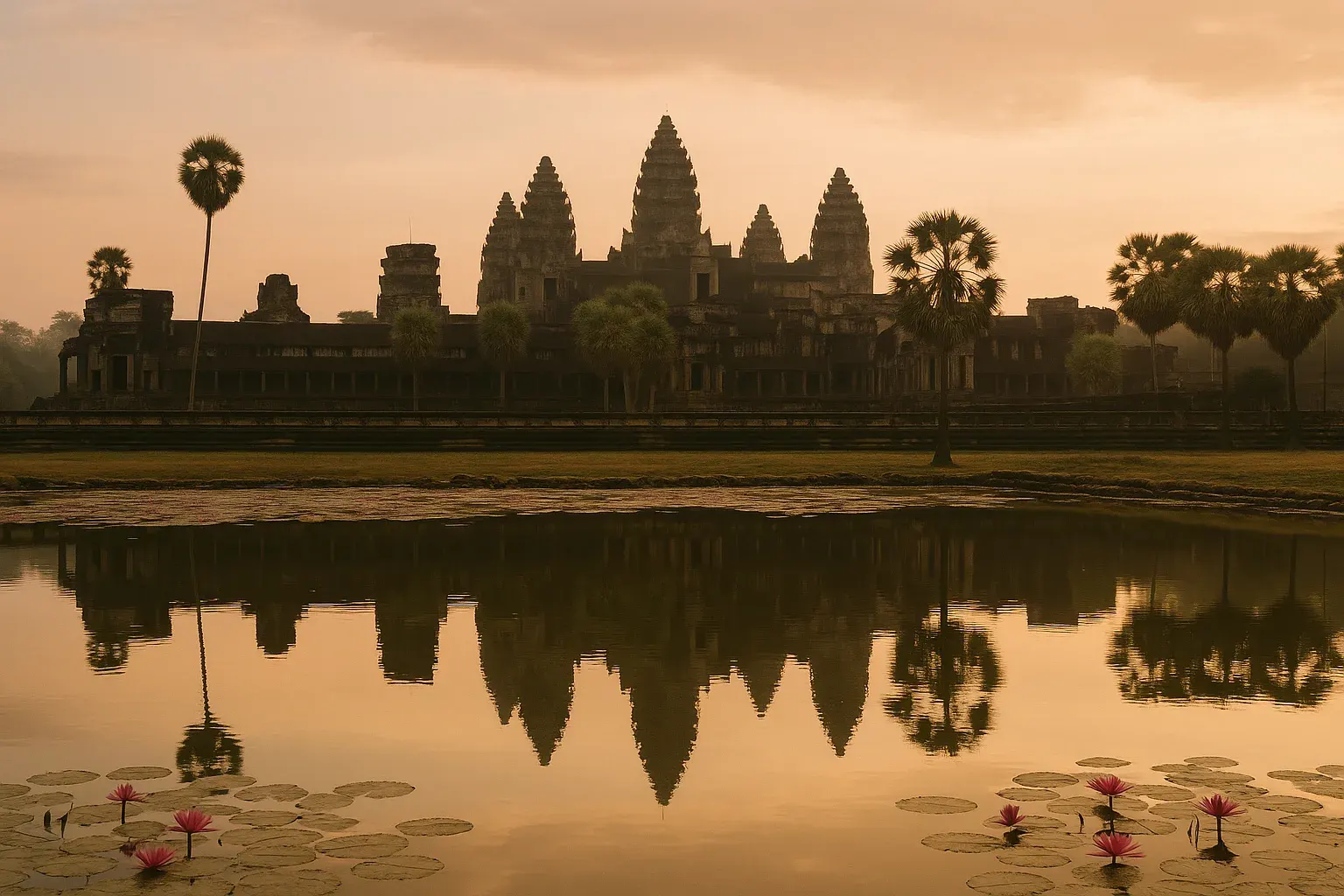
Angkor Wat Travel Guide 2026: Everything You Need to Know
KhmerAngkor Wat, the world's largest religious monument, spans over 400 acres in the heart of Cambodia. T...
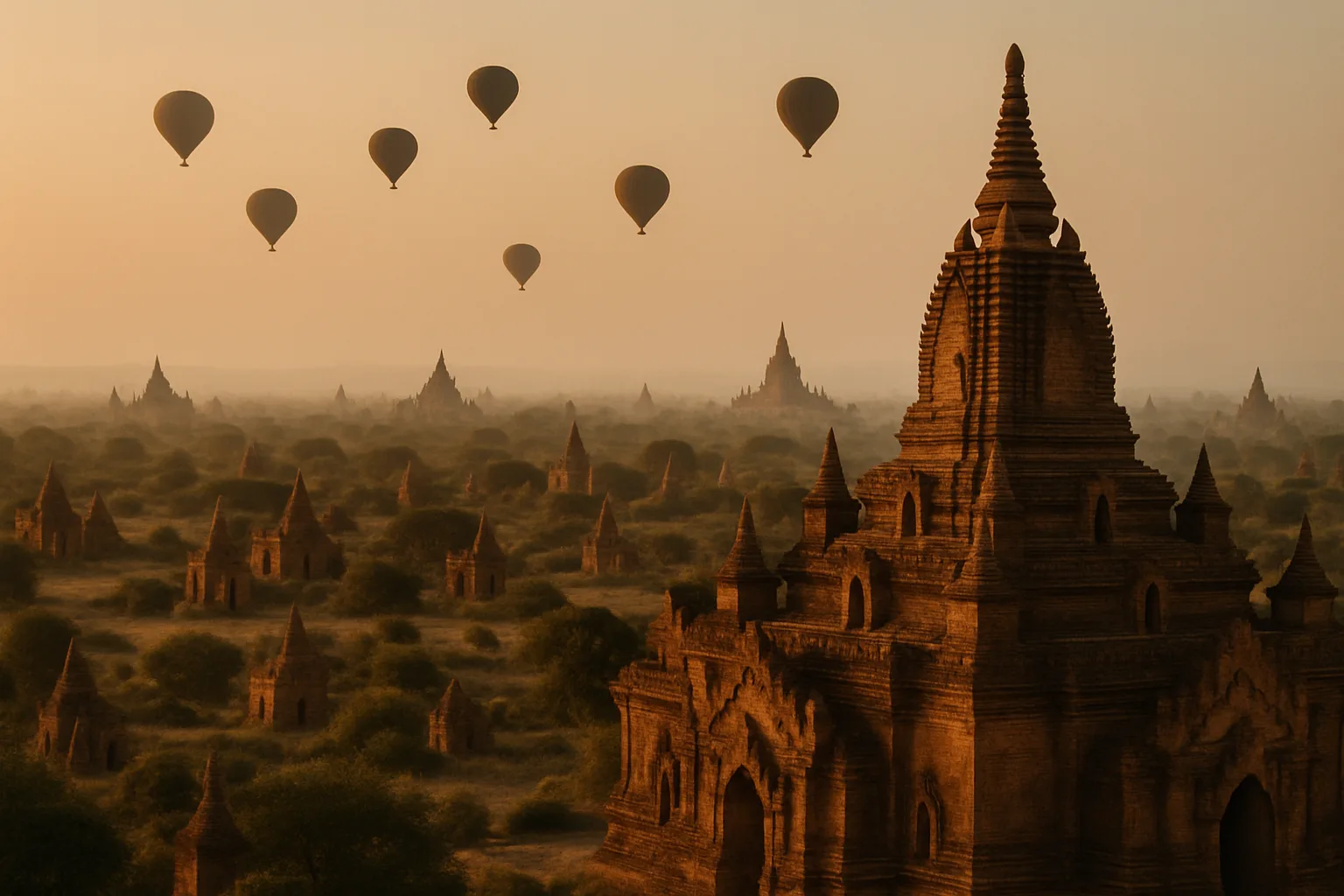
Bagan: 2,000 Temples Rising from the Myanmar Plains
Pagan Kingdom (Burmese)Explore Bagan, Myanmar's ancient temple city with over 2,000 surviving pagodas scattered across the ...