Quick Info
At a glance
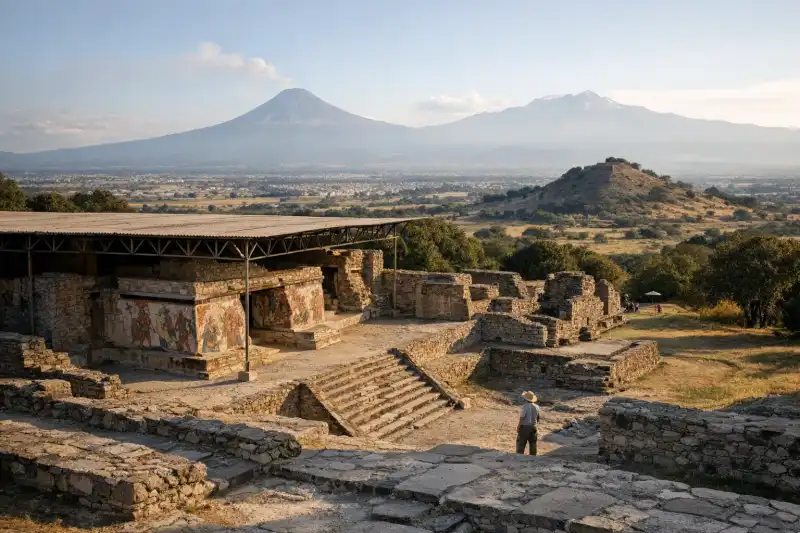
Cacaxtla, Mexico, rises above the surrounding valleys of Tlaxcala as one of the country’s most striking yet often overlooked archaeological sites. Unlike the towering stone silhouettes that dominate many travelers’ mental image of ancient Mexico, Cacaxtla captivates through color, detail, and atmosphere. Here, under a vast modern protective roof, painted walls still carry the visual energy of a world that flourished more than a thousand years ago. Warriors, jaguars, birds, gods, marine imagery, and ceremonial symbolism survive in murals so vivid that they can feel unexpectedly immediate, as if the painters had just laid down their pigments.
The site sits on a long hill once strategically positioned between important trade routes crossing central Mexico. That location helped make Cacaxtla a place of power during the turbulent centuries after the decline of Teotihuacan, when regional centers competed, traded, and forged shifting alliances. Visiting today offers a different experience from the grand urban plans of larger archaeological parks. Cacaxtla feels more intimate and more interpretive. You move through palace platforms, corridors, stairways, and painted spaces that invite close attention rather than awe from sheer scale alone. Its importance lies not only in architecture, but in what those famous murals reveal about political ambition, cultural exchange, and the complexity of Epiclassic Mesoamerica. For travelers interested in ancient art, lesser-known ruins, or the deep history of central Mexico, Cacaxtla is one of the most rewarding destinations in the country.
History
Early settlement and the landscape before Cacaxtla
The hill where Cacaxtla stands was part of a fertile and strategically valuable zone in present-day Tlaxcala. Long before the site reached its peak, central Mexico was home to interconnected farming communities, ceremonial centers, and trade corridors linking the Gulf Coast, highlands, and southern regions. The valleys around Cacaxtla supported agriculture, while nearby elevations offered defensive advantages and clear views across the surrounding plain.
Archaeologists believe the broader region was occupied for centuries before Cacaxtla emerged as a major center. The area’s development was tied to wider Mesoamerican patterns: population growth, exchange networks, and the rise of regional elites who used religion, war, and control of trade to strengthen their authority. Nearby Xochitécatl, associated with an earlier ceremonial complex, shows that this landscape already had ritual significance before Cacaxtla became politically dominant.
Rise during the Epiclassic period
Cacaxtla’s most important phase dates to the Epiclassic period, roughly from the 7th to the 9th centuries CE. This was a transformative era in central Mexico. Teotihuacan, once the great metropolis of the highlands, had declined, creating a power vacuum. In its aftermath, a number of regional centers rose to prominence. Cacaxtla was one of them.
The site is often associated with the Olmeca-Xicalanca, a group mentioned in later historical traditions, though scholars continue to debate aspects of ethnicity and identity at the site. What is clearer is that Cacaxtla’s rulers cultivated a cosmopolitan visual language. Their art shows influences and connections extending beyond the Tlaxcala region, including stylistic and symbolic links to Maya traditions, Gulf Coast imagery, and central Mexican iconography. This was not an isolated settlement but a place deeply engaged with wider Mesoamerican currents.
Its hilltop position suggests both ceremonial purpose and political strategy. Cacaxtla likely controlled movement through the Puebla-Tlaxcala corridor, benefiting from trade in goods, ideas, and prestige objects. Elites built palatial and ceremonial structures on terraces and platforms, decorating important spaces with elaborate murals that projected authority and sacred legitimacy.
Murals, rulership, and regional influence
What sets Cacaxtla apart is the extraordinary survival of its painted program. The murals are not mere decoration. They appear to communicate military triumph, ritual power, and the identity of the ruling class. In the famous Battle Mural, richly costumed figures engage in combat, their bodies dynamic and individualized. Victors and captives are shown with careful attention to dress and symbolism, suggesting that warfare played a central role in political representation.
Elsewhere, murals such as those in the Portico Building feature figures dressed as bird and jaguar warriors, surrounded by aquatic and agricultural imagery. These compositions may express duality, cosmic order, fertility, rulership, and the merging of earthly and supernatural power. The paintings imply that Cacaxtla’s leaders saw themselves as more than local chiefs. They presented their rule through a sophisticated visual ideology tied to broader Mesoamerican beliefs.
By the height of its power, Cacaxtla was likely a major regional center, though probably not a city on the scale of Teotihuacan or later Tula. Its significance came from influence, symbolism, and strategic placement rather than overwhelming size. The site’s elite residences and ceremonial architecture point to a society with complex hierarchy and specialized artisans, including painters of exceptional skill.
Decline, abandonment, and rediscovery
Like many Epiclassic centers, Cacaxtla eventually declined. By around 900 CE, the site had lost much of its political importance. The reasons remain debated, but shifting trade routes, environmental pressures, changing alliances, and the rise of other centers may all have contributed. Over time, buildings were buried, weathered, and forgotten beneath the landscape.
Modern rediscovery came in 1975, when murals were uncovered during archaeological work. The find quickly drew national and international attention because painted surfaces from ancient Mexico rarely survive in such condition. Excavations revealed a complex architectural sequence and confirmed the site’s outstanding importance for the study of Epiclassic Mesoamerica.
To protect the murals, a large roof structure was built over the main excavation area. While modern in appearance, it has played a crucial role in preserving paintings that are central to understanding politics, religion, and artistic exchange in ancient Mexico. Today, Cacaxtla stands as both an archaeological site and an art historical treasure, bridging the worlds of architecture, ritual, and painting in a way few places can.
Key Features
The defining feature of Cacaxtla is, without question, its mural painting. Even visitors with only a casual interest in archaeology are often struck by the freshness of the colors and the complexity of the scenes. Reds, blues, yellows, blacks, and whites still animate the walls, giving form to warriors, deities, animals, and ceremonial motifs. These are not fragmentary traces that require imagination to decode; many remain legible enough to communicate mood, action, and symbolism almost immediately. Their preservation makes Cacaxtla one of the best places in Mexico to appreciate painting as a central medium of ancient political and religious expression.
Among the most celebrated works is the Battle Mural, a dramatic composition filled with movement and narrative tension. The scene depicts combat between opposing groups of elaborately dressed figures, with victors and defeated individuals shown in strikingly different states. The mural is visually rich and deeply revealing. Clothing, body paint, headdresses, and weaponry all suggest rank and identity. The scene has inspired generations of scholarship because it may represent real conflict, ritualized warfare, or a symbolic statement of conquest and legitimacy. Either way, it shows that Cacaxtla’s rulers wanted military power to be seen and remembered.
Another major highlight is the Portico Building, where the famous mural figures often identified as the Bird Man and Jaguar Man appear. These elegant, commanding images combine human form with animal attributes and elaborate regalia. They seem to inhabit a world where rulership, costume, sacred identity, and cosmic symbolism are inseparable. One figure is associated with avian imagery and another with a jaguar, and around them are motifs linked to water, fertility, plants, and celestial order. The imagery suggests not just authority, but a ruler’s place within a carefully balanced sacred universe.
Architecturally, Cacaxtla differs from sites known for massive pyramids or broad ceremonial avenues. What survives instead is a network of platforms, stairways, courtyards, and residential-ceremonial spaces built across a hilltop setting. This gives the site a layered and almost domestic feel in places. You do not simply stand before monuments from a distance; you move through elite spaces where walls, floors, and circulation patterns mattered. That intimacy can make the site more engaging, especially for travelers interested in how ancient power was staged through built environments.
The enormous protective roof over the excavated core is itself part of the modern visitor experience. It changes the atmosphere of the ruins, creating a hybrid feeling: part museum, part archaeological field, part open-air sanctuary for endangered art. Some visitors initially find the structure visually surprising, but its function becomes obvious once you begin examining the murals. Without it, the sun, wind, and rain of the highlands would have caused far greater damage. The shelter allows unusually close viewing while underscoring the fragility of what has survived.
Another compelling feature of Cacaxtla is its setting. From the hill, you can sense why this location mattered. The broader valley landscape unfolds around the site, hinting at the routes, fields, and neighboring settlements that once sustained it. This elevated position was not accidental. It provided oversight, defensibility, and symbolic dominance. Ancient rulers often built where geography could reinforce power, and Cacaxtla is a strong example of that principle.
Visitors who take time to observe closely will also notice how much Cacaxtla reveals about cultural interaction. The art is one of the clearest signs that central Mexico during the Epiclassic was not culturally sealed off. The iconography reflects ideas moving across regions, perhaps through trade, diplomacy, migration, or shared ritual practices. That blend is one reason specialists consider the site so important. Cacaxtla complicates simple narratives about isolated civilizations by showing a vividly connected ancient world.
Getting There
Cacaxtla is easiest to reach from Puebla, Tlaxcala City, or Mexico City. The site lies near Nativitas in the state of Tlaxcala, and the most convenient option for most travelers is to go by car or private driver. From Puebla, the journey usually takes about 45 minutes to 1 hour, depending on traffic, and a taxi or ride arranged for the day commonly costs around MXN 700 to 1,500 round trip depending on waiting time and negotiation. From Mexico City, travel time is often 2 to 2.5 hours by car, with private transport or guided excursion prices varying widely, often starting around MXN 2,500 or more for a dedicated vehicle.
Budget travelers can combine bus and taxi. From Puebla’s CAPU bus terminal, buses to Tlaxcala or nearby towns are frequent and often cost roughly MXN 80 to 180 depending on route and class. From Tlaxcala City or nearby transport hubs, a local taxi to Cacaxtla may add another MXN 150 to 300. From Mexico City, buses toward Puebla or Tlaxcala are common from major terminals, generally ranging from about MXN 200 to 450 one way, after which you can continue by local taxi.
Guided tours can be a practical choice if you want historical context and easy logistics. Prices vary by city of departure, but day trips from Puebla are often more affordable than those from Mexico City. If you are driving yourself, parking is usually the simplest arrangement, and combining Cacaxtla with nearby Xochitécatl can make the journey more worthwhile. Carry cash for tickets, snacks, and local transport, since smaller vendors and taxi drivers may not always accept cards.
When to Visit
The best time to visit Cacaxtla is during Mexico’s dry season, generally from November through April. These months usually bring clearer skies, lower chances of rain, and more comfortable conditions for walking around the exposed archaeological zone. Because much of the main complex is under a protective roof, the site remains visitable year-round, but dry weather makes the approach, surrounding views, and overall day trip more pleasant.
December through February can be especially appealing if you prefer mild temperatures. Mornings may feel cool, while midday is often comfortable for exploring. March and April are also good months, though the sun can be stronger and weekends around holiday periods may draw more local visitors. Arriving early in the day is wise if you want softer light, fewer people, and more time to study the murals at a calm pace.
The rainy season, usually from May through October, has its advantages too. The surrounding landscape becomes greener, and afternoon showers can create a dramatic atmosphere over the valley. Still, storms may complicate road travel, and humidity can make longer outdoor visits less comfortable. If you go in these months, aim for a morning visit before rain is more likely.
Weekdays are generally quieter than weekends and public holidays. If your main interest is photography, note that the protective roof affects lighting conditions, so midday brightness outside does not always translate into ideal mural views. For a more reflective visit, choose a weekday morning in the dry season and allow enough time to read signage, pause at the murals, and take in the hilltop setting without rushing.
| Quick Facts | Details |
|---|---|
| Location | Near Nativitas, Tlaxcala, Mexico |
| Region | Tlaxcala |
| Best known for | Exceptionally preserved Epiclassic murals |
| Cultural association | Olmeca-Xicalanca and wider Mesoamerican traditions |
| Main period | c. 650-900 CE |
| Rediscovery | 1975 |
| Typical visit length | 2-3 hours |
| Nearest major city | Puebla |
| Best season | November to April |
| Ideal for | Ancient art lovers, archaeology travelers, day trips from Puebla |
Guided tours: worth it?
Most travelers can visit Cacaxtla independently. Compare a tour only if you want a tighter history-focused visit, easier logistics, or a guide who can answer questions on the spot.
Best for
- Short visits where a planned route saves time
When to go self-guided
Go independently if you prefer setting your own pace, reading as you go, and checking official hours or ticket rules directly before you arrive.
What I’d avoid
Skip paid tours that bundle unrelated stops you do not actually want. The best option should either save meaningful planning time or add historical context you would miss on your own.
Cacaxtla and Tlaxcala Archaeology Tours
Useful when: you want to compare guided formats before deciding
Puebla to Cacaxtla Day Trips
Useful when: transport or pickup logistics matter
Mexico City to Cacaxtla Tours
Useful when: you want to compare guided formats before deciding
Some tour links are affiliate links, which may earn Ancient Travel a small commission at no extra cost to you. I try to surface options that make practical sense for the site—not just anything bookable.
Frequently Asked Questions
What is Cacaxtla best known for?
Cacaxtla is best known for its exceptionally well-preserved polychrome murals, which are among the most important surviving paintings from ancient Mesoamerica.
Where is Cacaxtla located?
Cacaxtla is located in the state of Tlaxcala in central Mexico, near the town of Nativitas and within reach of Puebla and Mexico City.
How much time do you need to visit Cacaxtla?
Most travelers spend 2 to 3 hours exploring the site, though history enthusiasts may want half a day if also visiting nearby Xochitécatl or local museums.
Can you visit Cacaxtla from Puebla or Mexico City?
Yes. Cacaxtla is a practical day trip from Puebla and a longer but manageable excursion from Mexico City by car, private transfer, or guided tour.
Why are the murals at Cacaxtla important?
The murals are important because they preserve rare details about dress, warfare, trade, religion, and artistic exchange during Mexico’s Epiclassic period.
Is Cacaxtla suitable for families?
Yes, although families should be prepared for walking on uneven surfaces and open-air conditions under the large protective roof.
Nearby Ancient Sites
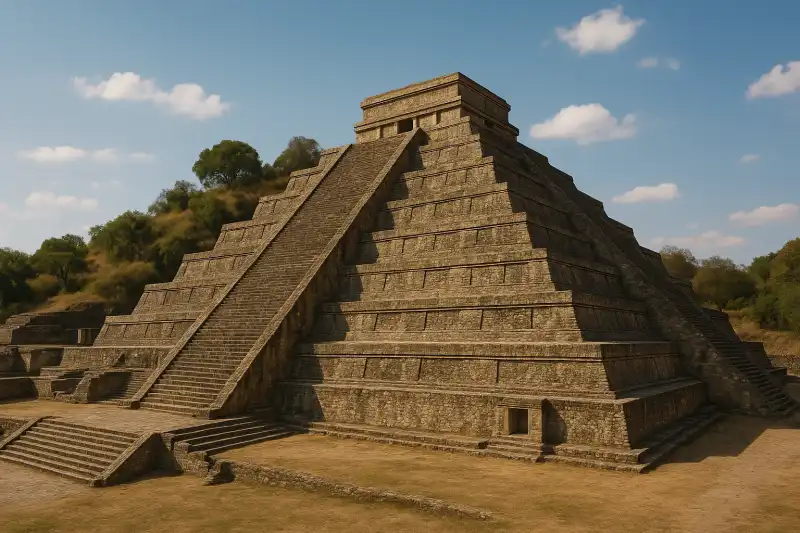
Great Pyramid of Cholula Travel Guide 2026: Tlachihualtepetl Essentials
Preclassic and Postclassic MesoamericanPlan a smart visit to the Great Pyramid of Cholula with key context, timing advice, and practical fi...
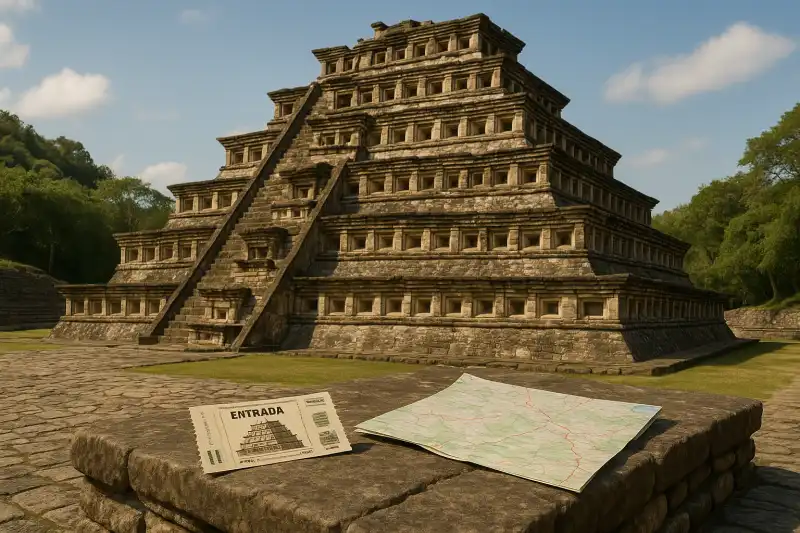
El Tajin Travel Guide 2026: Pyramid of the Niches, Tickets, and Route Planning
Classic VeracruzPlan a smoother El Tajin visit with practical transport timing, key structures to prioritize, and re...
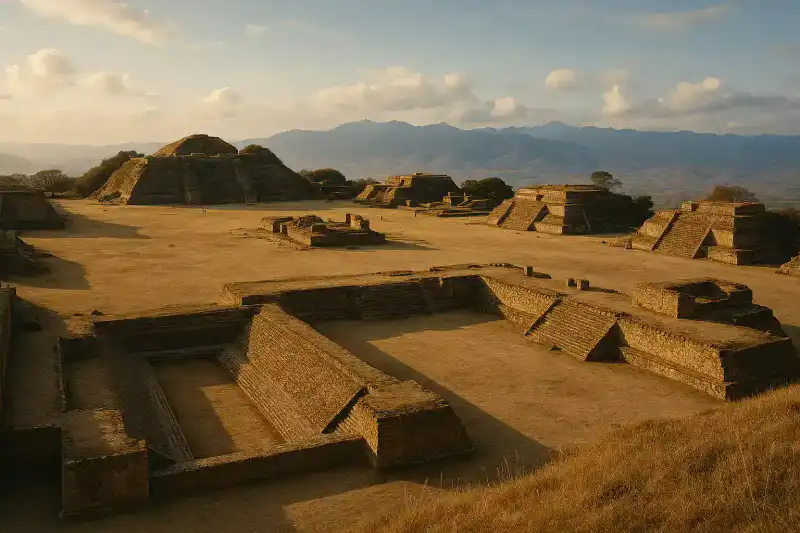
Monte Albán Mexico Travel Guide 2026: Zapotec Capital Above Oaxaca
ZapotecExplore Monte Albán, the ancient Zapotec capital perched above Oaxaca. Discover the Grand Plaza, bal...