Quick Info
At a glance
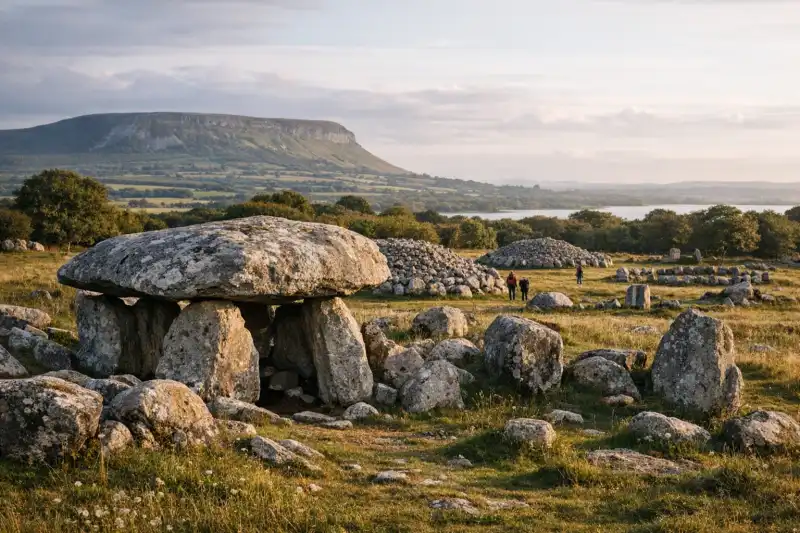
Carrowmore Megalithic Cemetery in Ireland sits in a windswept landscape just outside Sligo, where low stone circles, ancient chambers, and distant mountains combine to create one of the most evocative prehistoric settings in Europe. At first glance, the monuments can seem modest compared with towering castles or cathedral ruins, yet that understatement is part of their power. Here, the story is written not in vertical grandeur but across the land itself: clusters of tombs, subtle alignments, and enduring relationships between ritual architecture and natural landmarks. The cemetery spreads across the Cúil Irra peninsula, with the great bulk of Knocknarea rising nearby and the Atlantic never far beyond the horizon.
For travelers interested in deep time, Carrowmore offers something rare. This is not a single famous monument but an entire ritual landscape, one that reveals how Neolithic communities organized memory, ceremony, and burial on a scale that still impresses today. Many of the surviving tombs date back to the 4th millennium BCE, making Carrowmore older than many better-known megalithic sites in Ireland and Britain. Visiting it is less about stepping into a preserved building and more about learning to read traces: boulders set with purpose, chambers framed by standing stones, and a sacred geography that linked the dead to mountain, sky, and community. For anyone exploring Ireland’s ancient past, Carrowmore is one of the essential places to understand how early farming societies shaped both the landscape and their own legacy.
History
Early Neolithic origins
Carrowmore’s origins reach back to the early Neolithic period, around 3700 BCE, when communities in what is now County Sligo were establishing farming settlements and developing new ritual traditions. This was a transformative era in Ireland, marked by shifts from more mobile lifeways toward settled agriculture, woodland clearance, and the emergence of communal ceremonial architecture. Carrowmore appears to have been one of the earliest major burial landscapes created by these communities. Rather than centering on one monumental mound alone, the cemetery developed as a broad field of megalithic tombs, many of them relatively small in size but carefully positioned across the terrain.
The earliest monuments at Carrowmore are often identified as simple dolmen circles: a central burial chamber made of upright stones and a capstone, enclosed within a ring of boulders. Cremated remains have been recovered from several tombs, suggesting that burning the dead formed an important part of ritual practice here. These tombs likely served not just as graves but as places where communities gathered, marked ancestry, and reinforced social identity. Their concentration in one area indicates that Carrowmore was already a significant ceremonial center very early in Irish prehistory.
Growth of the cemetery landscape
Over time, the cemetery expanded dramatically. Archaeologists estimate that Carrowmore may once have included around 60 monuments, though fewer survive today in recognizable form. The tombs are spread across a broad plain, but their arrangement does not appear random. Many seem to orient toward or relate visually to nearby landmarks, especially Knocknarea mountain, crowned by the prominent cairn known as Queen Maeve’s Tomb. This relationship between built monuments and natural topography is one of the defining features of Carrowmore and suggests an increasingly sophisticated ritual landscape.
As the cemetery grew, it became more than a simple collection of graves. It functioned as a ceremonial complex embedded in the wider geography of prehistoric Sligo. Carrowkeel, another major passage tomb complex, lies farther south in the same region, and together these sites point to a dense concentration of Neolithic ritual activity. The development of Carrowmore reflects a society investing labor and meaning into burial architecture over generations, perhaps using these monuments to connect lineages with specific territory and cosmological beliefs.
Listoghil and changing traditions
The focal point of Carrowmore is the central monument known as Listoghil, or Tomb 51. Unlike many of the smaller dolmen circles, Listoghil was a larger passage-tomb-like structure originally covered by a cairn. Excavations have shown that it belongs within the Neolithic sequence of the cemetery and may represent a later phase of ceremonial elaboration. In many ways, Listoghil provides a bridge between Carrowmore’s smaller tombs and the great passage tombs elsewhere in Ireland.
Its importance lies not only in its size but in what it suggests about changing ritual priorities. As the cemetery developed, some communities may have sought to create a stronger central monument within the already sacred landscape. The addition or enhancement of Listoghil may have formalized Carrowmore’s role as a regional ceremonial center. Finds from excavations, including cremated bone and artifacts, reinforce the interpretation of the site as a place where burial, commemoration, and ritual gathering overlapped.
Antiquarian interest and modern archaeology
By the 19th century, Carrowmore had begun attracting antiquarian attention, though not always to its benefit. Parts of the cemetery were damaged by agriculture, stone removal, and poorly documented digging. Like many prehistoric sites in Europe, it suffered from a period when curiosity often outpaced scientific care. Some monuments were dismantled, altered, or lost, making later reconstruction of the full complex more difficult.
Systematic archaeological work in the 20th century brought much greater clarity. Excavations and surveys helped establish the site’s Neolithic date and its significance within the broader megalithic tradition of Atlantic Europe. Researchers mapped surviving monuments, studied burial deposits, and examined how the tombs related to each other and to the surrounding landscape. These efforts transformed Carrowmore from an antiquarian curiosity into a key site for understanding early farming communities in Ireland.
Today, Carrowmore is protected as a national monument and interpreted through a visitor centre that introduces the cemetery’s chronology, archaeology, and symbolic setting. Modern scholarship continues to debate aspects of chronology and function, but the central truth remains clear: Carrowmore is one of Ireland’s oldest and most important ritual landscapes, preserving evidence of how Neolithic people honored the dead and organized sacred space over thousands of years.
Key Features
What makes Carrowmore Megalithic Cemetery so memorable is the way its monuments combine simplicity with scale. Individual tombs may appear restrained at first, especially compared with later stone buildings or massive mound-covered chambers, but taken together they create a landscape of extraordinary depth. The surviving monuments are typically built around a small chamber of upright stones capped with a slab, often enclosed by a ring of boulders. These forms are distinctive to Carrowmore and give the cemetery its characteristic visual identity. Instead of one dominant structure overwhelming the visitor, the site unfolds gradually, with one tomb leading the eye toward another and then toward the surrounding mountains.
The central monument, Listoghil, stands apart from the rest. It is the largest tomb in the cemetery and has been partially reconstructed to help visitors understand its original form as a substantial cairn-covered structure. This monument acts almost like an anchor for the broader site. Even if many of the smaller tombs represent the oldest phase of Carrowmore, Listoghil gives a sense of ceremonial culmination. Its more imposing scale suggests that the cemetery was not static but evolved over time, incorporating new architectural forms and perhaps new ritual meanings.
Another striking feature is the setting itself. Carrowmore is not enclosed in an isolated archaeological park cut off from the wider world. It sits within an open landscape where views matter. Knocknarea dominates the horizon, and the mountain’s summit cairn forms part of the visual and symbolic experience of the cemetery. On clear days, the relationship between tombs and topography becomes obvious. This is one of the reasons Carrowmore feels less like a collection of ruins and more like a sacred map. The builders were not simply placing tombs in empty space; they were composing a landscape of memory in dialogue with mountain, sky, and distance.
The visitor centre, set in a restored cottage, is small but important. It provides context that can be easy to miss when looking only at low stone remains in the field. Exhibits explain the chronology of the site, burial practices, excavation history, and the wider megalithic world of Neolithic Ireland. For many travelers, this interpretive introduction is essential because Carrowmore rewards informed observation. Once you understand what a dolmen circle is, why cremation mattered, and how the monuments relate to each other, the site becomes much more legible.
Walking through Carrowmore also reveals one of its quiet strengths: atmosphere. The cemetery is rarely experienced as a crowded spectacle. Even in peak season, the openness of the site and the subdued form of the monuments encourage a reflective pace. Wind moving over grass, changing light on stone, and the broad Sligo sky all contribute to a mood very different from more monumental tourist sites. This is a place where interpretation and imagination work together. The surviving stones are fragments, but they are enough to evoke ceremonies, processions, and acts of remembrance carried out here over five millennia ago.
Finally, Carrowmore’s importance lies in its role within a larger prehistoric network. It is part of a concentration of Neolithic monuments in County Sligo that includes passage tombs, cairns, and mountain-top ritual markers. Even if a visitor only sees Carrowmore itself, the sense of connection to a broader ceremonial landscape is unmistakable. The cemetery does not stand alone. It belongs to a region where prehistoric communities invested heavily in monumental architecture and sacred geography, making Sligo one of Ireland’s richest areas for archaeological travel.
Getting There
Carrowmore Megalithic Cemetery is located about 4 kilometers west of Sligo town in County Sligo, making it one of Ireland’s more accessible prehistoric sites. If you are driving, the journey from central Sligo usually takes around 10 minutes, and signage from the town is generally straightforward. Parking is available near the visitor centre. From Dublin, expect roughly a 2.5- to 3-hour drive, depending on traffic and route. Car rental is the easiest option if you plan to combine Carrowmore with other archaeological sites in the region.
Public transport is possible, though less direct. Sligo is well connected by Irish Rail from Dublin Connolly, with one-way fares often starting around €20 to €35 when booked in advance, while standard fares can be higher. Bus services from Dublin to Sligo commonly range from about €15 to €30 depending on operator and booking time. Once in Sligo, a taxi to Carrowmore typically costs around €10 to €15 each way, making it a practical short transfer for visitors without a car.
Local buses may operate in the wider area, but schedules can be limited and are not always ideal for timed visits, so check current services in advance. Walking from Sligo town is possible for confident walkers and takes roughly 45 to 60 minutes, though weather can be a factor. Guided day tours focused specifically on Carrowmore are not always frequent, but private archaeology-focused tours from Sligo or broader northwest Ireland can sometimes be arranged. If you want flexibility and the chance to explore nearby viewpoints such as Knocknarea, a car remains the most convenient choice.
When to Visit
The best time to visit Carrowmore Megalithic Cemetery is from late spring through early autumn, when longer daylight hours and milder weather make the open landscape easier to appreciate. May, June, and September are especially appealing because they often combine decent conditions with fewer crowds than peak midsummer. In these months, visibility across the surrounding hills can be excellent, helping you understand the cemetery’s relationship to Knocknarea and the broader Sligo landscape.
Summer brings the warmest temperatures and the most reliable visitor services, but it also tends to be the busiest season in Irish tourism. Even so, Carrowmore generally feels calmer than many headline attractions. If you visit in July or August, going earlier in the day can offer softer light and a quieter atmosphere. Bring layers regardless of season; western Ireland’s weather can shift quickly from sunshine to wind or rain.
Autumn can be rewarding for travelers who like moodier landscapes. The lower light often gives the stones and fields a more dramatic appearance, and visitor numbers tend to ease. Winter visits are possible, but shorter days, wet ground, and stronger winds can limit the experience. Some travelers enjoy the starkness of the site in colder months, yet it is wise to check opening times in advance because seasonal schedules may vary.
If your main interest is photography, aim for a clear morning or late afternoon when the low sun gives shape to the boulder circles and surrounding terrain. If your main interest is archaeology, choose a day with good visibility and allow enough time for the visitor centre first. Carrowmore is a site best experienced not in haste but with patience, weather awareness, and time to absorb the landscape as well as the stones.
| Quick Facts | Details |
|---|---|
| Location | Near Sligo, County Sligo, Ireland |
| Type | Neolithic megalithic cemetery |
| Earliest date | c. 3700 BCE |
| Best known for | Large concentration of prehistoric tombs |
| Main monument | Listoghil (Tomb 51) |
| Cultural context | Early farming communities of Neolithic Ireland |
| Typical visit length | 1.5–2 hours |
| Nearest city | Sligo |
| Best season | Late spring to early autumn |
| Access style | Visitor centre plus walking route through monuments |
Carrowmore Megalithic Cemetery is one of those places that rewards attention far beyond first impressions. It does not rely on towering walls or lavish decoration; its strength lies in age, setting, and the cumulative force of many carefully placed monuments. In County Sligo, where mountain, plain, and memory converge, Carrowmore preserves a vision of prehistoric Ireland that feels both intimate and immense. For travelers drawn to ancient landscapes rather than isolated landmarks, it offers one of the country’s most profound encounters with the Neolithic world.
Guided tours: worth it?
Most travelers can visit Carrowmore Megalithic Cemetery independently. Compare a tour only if you want a tighter history-focused visit, easier logistics, or a guide who can answer questions on the spot.
Best for
- Short visits where a planned route saves time
When to go self-guided
Go independently if you prefer setting your own pace, reading as you go, and checking official hours or ticket rules directly before you arrive.
What I’d avoid
Skip paid tours that bundle unrelated stops you do not actually want. The best option should either save meaningful planning time or add historical context you would miss on your own.
Sligo archaeology and Carrowmore Megalithic Cemetery tours
Useful when: you want to compare guided formats before deciding
County Sligo prehistoric sites tours
Useful when: you want to compare guided formats before deciding
Ireland ancient sites and passage tomb tours
Useful when: you want to compare guided formats before deciding
Some tour links are affiliate links, which may earn Ancient Travel a small commission at no extra cost to you. I try to surface options that make practical sense for the site—not just anything bookable.
Frequently Asked Questions
What is Carrowmore Megalithic Cemetery?
Carrowmore Megalithic Cemetery is a large complex of Neolithic tombs near Sligo in western Ireland, regarded as one of the country’s oldest and most extensive megalithic burial landscapes.
Where is Carrowmore Megalithic Cemetery located?
The cemetery lies a short drive west of Sligo town in County Sligo, on the Cúil Irra peninsula, with views toward Knocknarea and the surrounding mountains.
Do you need a ticket to visit Carrowmore Megalithic Cemetery?
Yes, access to the visitor centre and guided entry to the preserved core area is typically ticketed, while prices can vary by season and category.
How long should I spend at Carrowmore Megalithic Cemetery?
Most visitors allow 1.5 to 2 hours to see the exhibition, join the site interpretation or guided tour, and walk among the visible monuments.
What makes Carrowmore different from Newgrange?
Carrowmore is a broad cemetery of many smaller tombs spread across a landscape, while Newgrange is a single monumental passage tomb with a famous winter solstice alignment.
Is Carrowmore Megalithic Cemetery suitable for children?
Yes, older children often enjoy the open setting and prehistoric stories, though supervision is important because the terrain can be uneven and weather conditions can change quickly.
Nearby Ancient Sites
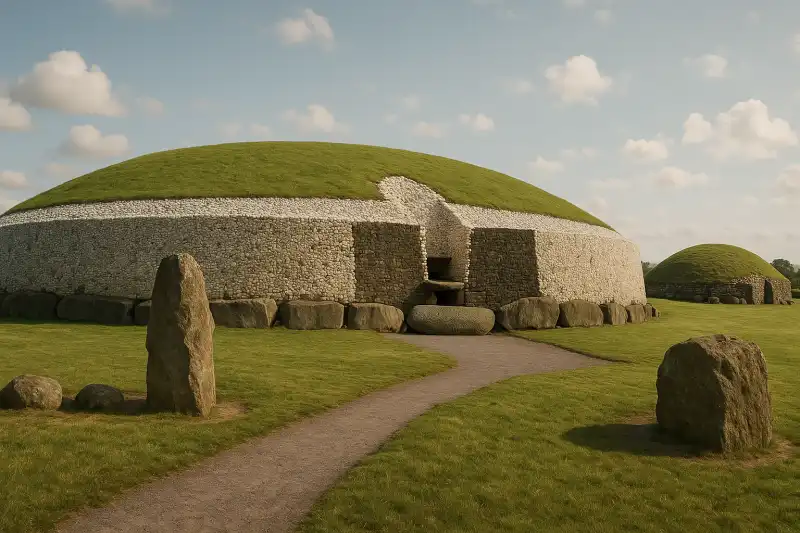
Boyne Valley Passage Tombs Travel Guide 2026: Newgrange, Knowth, and Dowth Visit Strategy
Neolithic IrelandPlan your first Boyne Valley passage tombs visit with practical timing, Brú na Bóinne access flow, a...
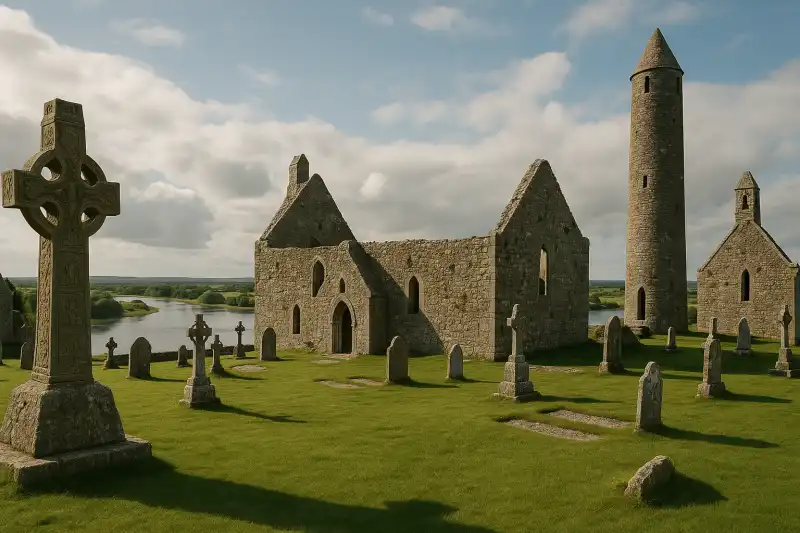
Clonmacnoise Travel Guide 2026: Monastic Ruins, High Crosses, and River Shannon Context
Early Medieval IrelandPlan a first visit to Clonmacnoise with practical timing, monastic-site context, and clear route adv...
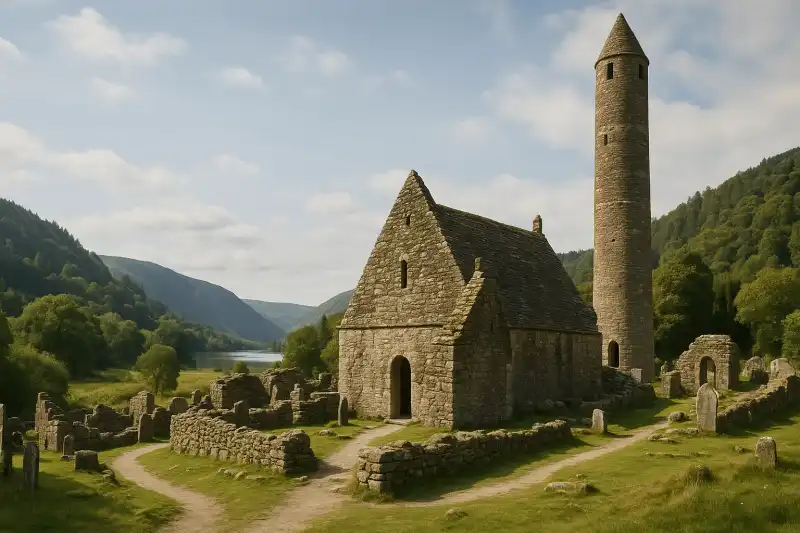
Glendalough Travel Guide 2026: Monastic Ruins, Lakes, and Wicklow Day-Trip Plan
Early Medieval IrelandPlan a clear first visit to Glendalough with route advice, monastic-site context, and practical timi...