Quick Info
At a glance
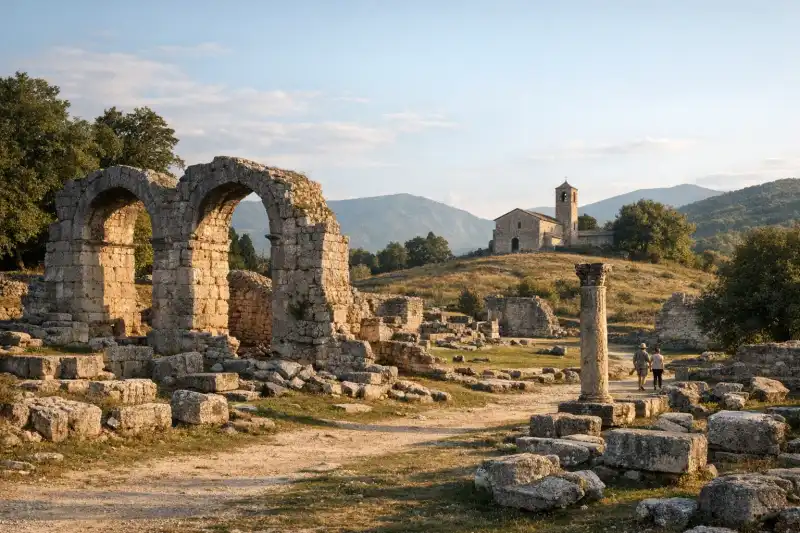
Carsulae, Italy, lies quietly among the hills and fields of Umbria, far from the noise that surrounds many famous Roman ruins. That stillness is part of its power. Instead of rising in the middle of a modern city, the remains of this ancient settlement sit in an open rural landscape where the outlines of roads, public buildings, and monuments can still be read with unusual clarity. Walking here feels less like entering a museum and more like stepping into the framework of a Roman town paused in time.
For travelers interested in archaeology, Carsulae offers something distinct from Italy’s better-known imperial showpieces. It is not overwhelming in scale, nor crowded with layers of later construction. Its appeal lies in legibility. The paving stones of the old Via Flaminia still define the site. The forum area, the theater, the arch, the basilica, baths, and funerary zones all reveal how Roman civic life was organized in a provincial town that prospered through trade and movement. Because the ruins are spread across grass, stone, and low walls instead of compressed behind urban barriers, visitors can understand the place spatially as well as visually.
This is a site for slow exploration. The atmosphere changes with light, weather, and season, and even a short visit can feel meditative. Carsulae rewards anyone who wants to see Roman history not just as isolated monuments, but as a living urban plan set into the Umbrian countryside.
History
Early origins and the Via Flaminia
Carsulae’s story is closely tied to one of the great roads of ancient Italy: the Via Flaminia. Constructed in 220 BCE by the censor Gaius Flaminius, this route linked Rome to the Adriatic and became one of the major arteries of movement across central Italy. Settlements along the road naturally benefited from trade, transport, military passage, and administrative contact with the capital. Carsulae appears to have developed during the late Republican period, likely from an earlier local settlement that grew in significance because of its position on this route.
Its location was strategic rather than defensive. Unlike many older hilltop communities in Umbria, Carsulae occupied a more open area, reflecting a Roman preference for accessible, connected urban centers. This alone tells us much about the changing political geography of Italy under Roman influence. Towns no longer needed to rely solely on elevation and fortification; integration into a road network became a source of prosperity and stability.
Growth under Roman rule
Carsulae flourished especially during the early Imperial era, when Roman infrastructure, long-distance trade, and regional administration were at their height. Archaeological remains suggest a town with substantial civic ambitions. Public baths, a forum, temples, entertainment structures, and monumental entrances indicate not a remote outpost but a community with resources and a recognizable Roman urban identity.
The town likely served travelers moving along the Via Flaminia as well as the agricultural hinterland around it. Inns, markets, workshops, and service activities would have supported movement through the region. At the same time, local elites almost certainly invested in public building programs to display their status and loyalty to Roman civic ideals. The architecture of Carsulae reflects the standard language of Roman urbanism: roads laid out with clear axes, a public center for commerce and politics, and monuments that tied private memory to collective life.
This was also a period when many Italian towns benefited from imperial peace and internal connectivity. Carsulae’s survival in the archaeological record, though partial, suggests a community with enough wealth to build in stone and enough importance to maintain its civic structures for generations.
Religious and civic life
As in many Roman towns, public and sacred spaces were intertwined. The forum was the heart of administration, exchange, and social display. Nearby stood temples and formal civic buildings, reinforcing the connection between religion, law, and local government. Carsulae’s basilica, theater, and other public structures would have shaped the rhythms of daily life, from legal transactions to performances and ritual observances.
Burial monuments outside the inhabited center also reflect Roman customs and social hierarchy. Funerary architecture at Carsulae points to a population that cared deeply about status, memory, and family identity. Tombs positioned along roads were not hidden away; they were seen by passersby, becoming part of the public image of the town and its leading inhabitants.
Decline and abandonment
Carsulae’s decline appears to have begun in late antiquity. As with many Roman settlements, several factors may have contributed: changing trade patterns, road realignments, seismic activity, political instability, and the weakening of urban institutions. One often-cited possibility is that alterations to the route of the Via Flaminia reduced the town’s economic relevance. If traffic no longer passed through the center as before, the basis of Carsulae’s prosperity would have diminished sharply.
There is also evidence that earthquakes may have played a role in damaging the settlement. In a region where seismic events were not unknown, structural instability could easily accelerate abandonment. Over time, Carsulae ceased to function as a living town, and unlike many ancient sites, it was not densely overwritten by a large medieval or modern settlement. That relative isolation helped preserve the urban plan beneath fields and vegetation.
Rediscovery and archaeology
Carsulae remained known locally, but systematic archaeological interest increased in the modern period. Excavations gradually brought its streets, monuments, and civic spaces back into view. The site became important not because it preserved the tallest Roman ruins in Italy, but because it retained a coherent and readable townscape. Archaeologists and visitors alike could trace how a Roman center worked on the ground.
Today Carsulae stands as one of Umbria’s most evocative archaeological parks. Its value lies in both what survives and what can be imagined from the surviving layout: a connected Roman community shaped by roads, ritual, trade, and local ambition.
Key Features
The first feature most visitors notice is the ancient road itself. The Via Flaminia cuts through Carsulae like a spine, and walking along its paving stones gives the site immediate clarity. This is not a ruin assembled into disconnected fragments. The road organizes everything around it. Side structures, civic spaces, and commemorative monuments make sense in relation to this line of movement, just as they did in antiquity. Because the road remains so visually dominant, Carsulae feels deeply legible even to first-time visitors.
Near the entrance area, one of the most striking monuments is the Arch of San Damiano, often associated with the northern gateway of the town. Its survival provides a strong sense of threshold and arrival. Standing beneath or near the arch, you can imagine merchants, officials, animals, carts, and travelers passing through, all entering a carefully ordered urban environment. The arch is not on the scale of Rome’s imperial triumphal arches, but that is part of its charm. It belongs to a functioning town rather than a ceremonial capital.
The forum area reveals the civic heart of Carsulae. Here, low walls and foundations indicate the spaces where legal, administrative, commercial, and social life unfolded. The remains may seem modest at first glance, but they reward patience. Once you orient yourself, the logic of Roman town planning becomes visible. The open central area, the adjacent public buildings, and the regularity of the arrangement all show how Roman communities created formal centers for collective life.
The basilica is another essential element. In Roman terms, a basilica was not originally a church but a public building used for law, business, and civic administration. Its presence at Carsulae signals a town with institutional weight. Nearby temple remains add a sacred dimension to the same zone, reminding visitors that Roman urban life did not separate political, economic, and religious functions as sharply as many modern cities do.
Carsulae’s theater adds a more human and intimate layer to the site. Rather than an enormous spectacle arena, it suggests local gatherings, performances, speeches, and festivals. The theater’s setting in the open landscape makes it especially evocative. You can almost hear how sound might once have traveled across the seating and stage area. It is one of the places where the site feels most alive, because performance spaces always encourage the imagination to repopulate ruins with voices and movement.
The baths reveal another side of Roman identity. Bathing culture was central to social life across the empire, and even smaller towns invested in these facilities. At Carsulae, the remains of the bath complex help visitors think beyond monuments and politics toward ordinary routines: washing, conversation, exercise, and the daily mingling of classes and acquaintances. Roman towns were not built only for administration and display. They were environments of repeated habits, and the baths are among the clearest material traces of that fact.
Perhaps the most atmospheric remains are the funerary monuments outside the core urban zone, especially the twin tombs known as the Gemini. These structures stand in a way that feels both elegant and solemn. They connect the living town to the memory of those buried near its roads. Their preservation also gives Carsulae an emotional dimension beyond urban archaeology. The site is not only about systems and planning, but about families, commemoration, and the Roman desire to remain visible after death.
Finally, one of Carsulae’s greatest features cannot be mapped as a single structure: its rural silence. The surrounding Umbrian landscape frames the ruins beautifully. Grass, open sky, and distant hills create a sense of continuity rather than confinement. Many Roman sites are experienced amid traffic, apartment blocks, or heavy tourism. Carsulae offers the rare chance to read an ancient town with relatively little modern interruption. That quiet context is not incidental. It is part of what makes the site memorable.
Getting There
Carsulae is in Umbria near San Gemini, between Terni and Spoleto, and is easiest to reach by car. From Rome, the drive usually takes around 1 hour 40 minutes to 2 hours depending on traffic, generally via the A1 and local roads. Rental cars from Rome often start around €35-€60 per day, not including fuel and tolls. From Perugia, expect roughly 1 hour 15 minutes by car.
If you prefer public transport, the most practical route is usually by train to Terni, then a taxi or local bus toward San Gemini and the archaeological area. Regional trains from Rome Termini to Terni commonly cost about €8-€15 each way depending on service type and timing. From Terni station, a taxi to Carsulae may cost roughly €20-€30. Bus links can be cheaper, often just a few euros, but schedules may be limited and less convenient for a same-day visit without careful planning.
Another good option is to base yourself in Spoleto, Terni, or even Orvieto and combine Carsulae with a broader Umbria itinerary. Guided day trips are less common than for major Italian landmarks, so independent travel is often the simplest approach. If driving, parking near the site is usually straightforward compared with urban archaeological destinations.
Because the area is rural, check opening hours in advance and do not rely on frequent evening transport. Comfortable shoes are essential, and carrying water is wise, especially in warmer months when shade across the ruins can be limited.
When to Visit
Spring and autumn are the best seasons to visit Carsulae. From April to June and again from September to October, temperatures are usually pleasant for walking, photography, and slow exploration. The site’s open setting becomes an advantage in these months, with green fields, softer light, and enough comfort to spend a couple of hours outdoors without fatigue. Spring often brings especially attractive contrast between stone ruins and fresh vegetation.
Summer is certainly possible, but the exposed landscape can become hot in the middle of the day. July and August temperatures in Umbria frequently climb high enough to make long walks over stone and grass less enjoyable, especially for families with young children or travelers sensitive to heat. If you visit in summer, aim for early morning or late afternoon, bring water, and wear a hat. The reward is strong light and often clear skies, but the trade-off is reduced comfort.
Winter offers a quieter and more atmospheric experience. On crisp days, the site can feel almost contemplative, and lower visitor numbers enhance the sense of discovery. However, shorter daylight hours, occasional rain, and cooler temperatures mean you should check conditions before setting out. Some services may also be reduced outside peak season.
Whenever you go, weekdays are usually calmer than weekends. Carsulae is not generally overcrowded, but visiting on a weekday morning often gives you the best chance to experience its defining quality: silence. For photographers, the low angled light of early morning or late afternoon gives the stones, arches, and pathways extra depth and warmth.
| Quick Facts | Details |
|---|---|
| Location | Near San Gemini, Umbria, Italy |
| Ancient Civilization | Roman |
| Main Period | Late Republic to Imperial Rome |
| Founded | Likely developed from the 3rd century BCE |
| Best Known For | Via Flaminia, forum, arch, theater, baths, funerary monuments |
| Typical Visit Length | 1.5 to 3 hours |
| Best Seasons | Spring and autumn |
| Nearest Major Rail Hub | Terni |
| Best Transport Option | Car or train to Terni plus taxi |
| Site Atmosphere | Quiet, rural, open-air archaeological park |
Carsulae is not the kind of place that overwhelms with scale or spectacle. Instead, it draws visitors in through clarity, atmosphere, and a rare sense of continuity between landscape and archaeology. You can see how a Roman town functioned here: how people entered it, moved through it, gathered, traded, worshipped, watched performances, and remembered their dead. That comprehensibility is one of its greatest strengths. While famous cities like Rome or Pompeii can dazzle through sheer abundance, Carsulae teaches through proportion and space.
For travelers exploring central Italy, it also offers a rewarding contrast to more crowded destinations. A visit here feels personal. You are not just looking at artifacts behind glass or isolated monuments behind barriers; you are walking a place with an intact urban logic. The road remains a road, the forum remains a center, and the tombs still hold their solemn positions at the edge of communal life.
If your idea of travel includes silence, historical depth, and the pleasure of piecing together the past from ruins still rooted in their original setting, Carsulae is one of Umbria’s most satisfying ancient sites. It is a destination that speaks quietly, but with remarkable coherence.
Guided tours: worth it?
Self-guided works here, but a guide can add real value if you want the ruins explained as a living place rather than just a sequence of monuments.
Best for
- First-time visitors who want context, not just photos
- Short visits where a planned route saves time
When to go self-guided
Go independently if you prefer setting your own pace, reading as you go, and checking official hours or ticket rules directly before you arrive.
What I’d avoid
Skip paid tours that bundle unrelated stops you do not actually want. The best option should either save meaningful planning time or add historical context you would miss on your own.
Umbria Roman Sites and Archaeology Tours
Useful when: you want to compare guided formats before deciding
Terni and Carsulae Day Tours
Useful when: you want to compare guided formats before deciding
Spoleto and Umbrian Countryside Tours
Useful when: you want to compare guided formats before deciding
Some tour links are affiliate links, which may earn Ancient Travel a small commission at no extra cost to you. I try to surface options that make practical sense for the site—not just anything bookable.
Frequently Asked Questions
What is Carsulae?
Carsulae is an ancient Roman town in Umbria, Italy, known for its well-preserved road, forum, arches, theater, and funerary monuments.
Where is Carsulae located?
Carsulae is located near San Gemini in the region of Umbria, roughly between Terni and Spoleto in central Italy.
Do you need a ticket to visit Carsulae?
Carsulae usually requires a modest entrance ticket, though prices and opening arrangements can vary seasonally, so checking current information before visiting is recommended.
How much time should I spend at Carsulae?
Most visitors spend 1.5 to 3 hours exploring the archaeological park, though history enthusiasts may want longer to walk the entire site and museum area.
Is Carsulae good for families?
Yes, Carsulae is family-friendly thanks to its open setting, manageable paths, and visually impressive ruins, though sturdy shoes are useful on uneven ground.
What makes Carsulae special?
Carsulae is especially notable for its quiet rural atmosphere and for preserving the layout of a Roman town along the Via Flaminia without heavy later urban overbuilding.
Nearby Ancient Sites
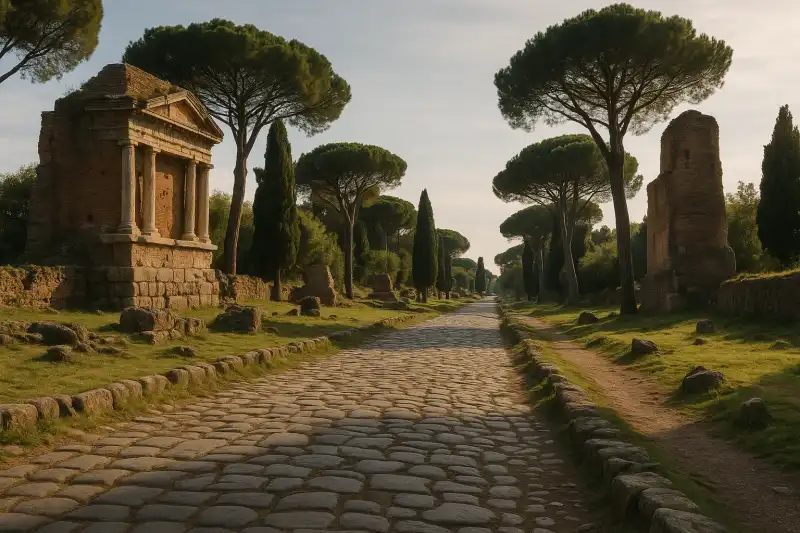
Appian Way Rome Guide 2026
RomanPlan a smart visit to the Appian Way with route choices, catacomb logistics, bike-vs-walk strategy, ...
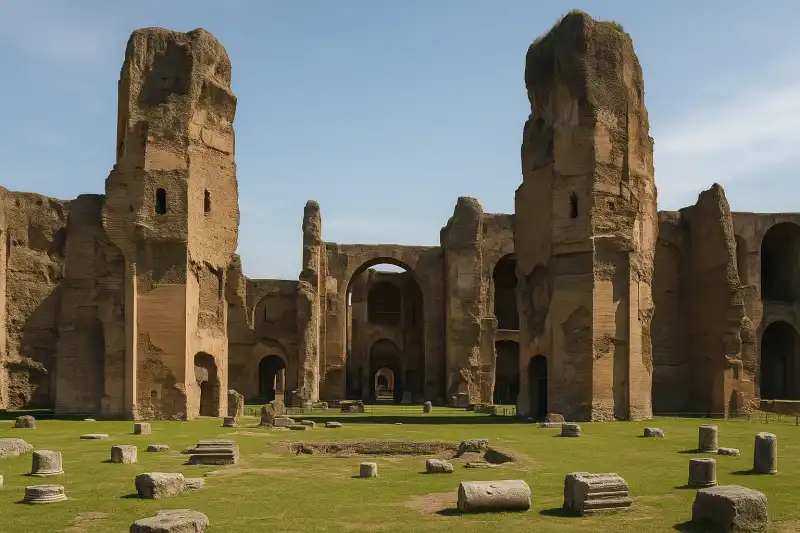
Baths of Caracalla Rome Guide 2026
RomanPlan your visit to the Baths of Caracalla with practical route advice, history context, timing, and ...
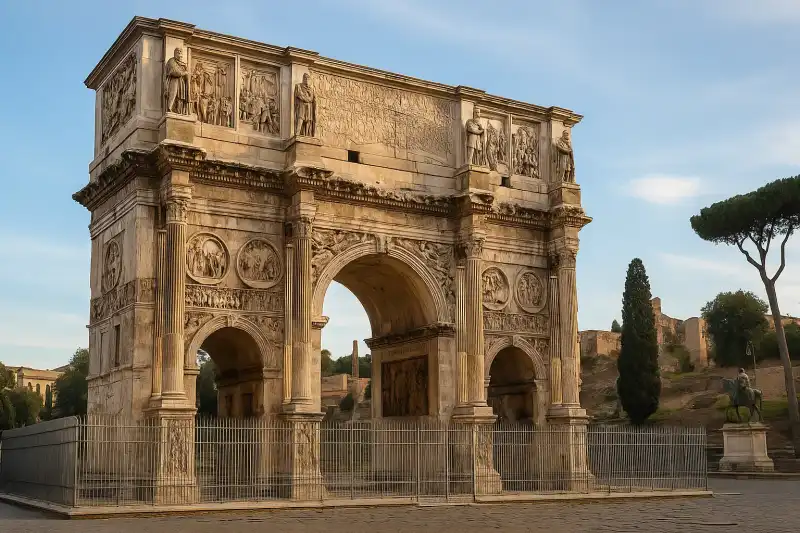
Arch of Constantine Rome: Triumph Over Maxentius Guide
Roman EmpireThe Arch of Constantine commemorates Constantine's 312 CE victory. Spolia details, best photo angles...