Quick Info
At a glance
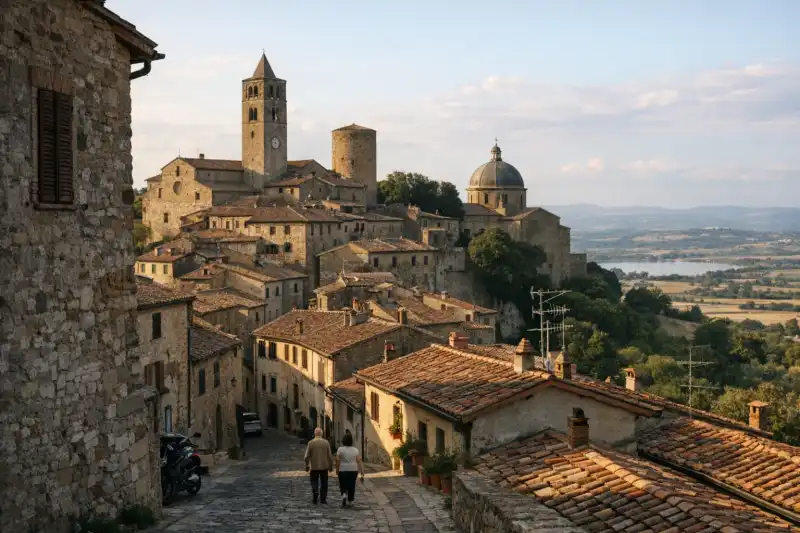
Chiusi in Italy is one of those places where the landscape seems to hold memory beneath every hill. In southern Tuscany, between the Val di Chiana and the routes that once linked Etruria to Rome, this modest modern town stands atop the remains of one of the most important Etruscan centers of antiquity. It does not overwhelm visitors with monumental ruins in the way that Rome does, nor does it present itself as a single dramatic archaeological park. Instead, Chiusi rewards careful attention. Its churches, lanes, museums, underground spaces, and tombs reveal a long urban life stretching from the Etruscans to the Romans and into the Christian Middle Ages.
For travelers interested in ancient Italy beyond the familiar circuit, Chiusi offers something unusually rich: context. Here you can trace how an Etruscan city became a Roman municipality, how burial traditions changed over time, and how the memory of a prestigious past was preserved in local collections and place names. The town is also associated with one of the most famous figures in Etruscan legend, Lars Porsena, whose name still hovers around discussions of Chiusi’s underground passages and ancient prestige. Visiting Chiusi means seeing Tuscany from a deeper historical angle, one in which the countryside is not only beautiful but also densely layered with evidence of early urban civilization.
History
Etruscan origins and rise
Chiusi, known in antiquity as Clevsin to the Etruscans and Clusium to the Romans, was one of the principal cities of Etruria. By the first millennium BCE it had become an important center controlling routes through inland central Italy. Its position was strategic: close enough to major communication corridors to participate in trade and diplomacy, yet protected by elevated terrain and a strong urban core. Like other Etruscan cities, Chiusi developed as both a political community and a sacred landscape, with the living city above and extensive burial areas beyond its walls.
Archaeological finds from the region show that the area was occupied well before Chiusi reached its height, but the city’s real prominence belongs to the Etruscan period. Wealth from agriculture, exchange, and regional influence allowed local elites to commission finely decorated tombs, bronze objects, pottery, and inscriptions. Chiusi became known for its funerary culture in particular. The tombs around the city preserve evidence not only of wealth but of social organization, family identity, and changing artistic styles. Stone urns, cinerary containers, and chamber tombs all help reconstruct the values of the society that flourished here.
The age of Lars Porsena
No discussion of Chiusi can avoid Lars Porsena, the semi-legendary Etruscan king traditionally associated with the city in the late 6th century BCE. Roman authors remembered Porsena as a powerful ruler who intervened in early Roman affairs and besieged the city after the fall of the Roman monarchy. Although literary sources are colored by later Roman storytelling, they preserve an important truth: Chiusi was considered formidable enough to stand in Rome’s political imagination as a major rival.
Ancient writers also attached to Porsena elaborate stories about a grand tomb or labyrinth at Chiusi. These accounts have fueled centuries of speculation about underground chambers and passageways beneath the town. While the surviving archaeology does not confirm the more fantastic ancient descriptions in full, the tradition itself is revealing. It suggests that Chiusi’s ancient reputation for wealth, complexity, and engineering endured long after its political independence faded. Even today, visitors encounter this legendary aura in the town’s subterranean spaces and in museum interpretation.
Roman incorporation
As Roman power expanded across central Italy, Chiusi was gradually drawn into the Roman sphere. The city became Clusium, maintaining importance thanks to its location and established urban infrastructure. Roman roads strengthened connections across the peninsula, and the settlement adapted rather than disappearing. This continuity is one of Chiusi’s strengths as a destination: it allows visitors to see how an Etruscan center transitioned into a Roman one without losing its older identity entirely.
During the Roman period, local life changed in administration, language, and material culture. Latin inscriptions became more common, architecture reflected Roman forms, and the surrounding countryside was increasingly integrated into Roman systems of landholding and movement. Yet older traditions survived in burial practices and local memory. Archaeological collections from Chiusi include material that shows this overlap clearly, with Etruscan and Roman objects sitting not in isolation but as parts of a long sequence.
Late antiquity and Christian Chiusi
By late antiquity, Chiusi had become an episcopal center, and Christianity added another layer to the town’s identity. Catacombs and early Christian remains testify to a community that adapted existing spaces and traditions to new religious needs. The shift from pagan and family tombs to Christian burial spaces is one of the most compelling long-term stories visible here. It is not simply a change in decoration; it marks a transformed understanding of community, death, and sacred space.
The city continued into the medieval period, when churches and civic structures reshaped the urban fabric. Many ancient stones were reused, and older layers became embedded within later building campaigns. This is common in Italian towns, but in Chiusi the effect is especially meaningful because the Etruscan past remained unusually strong in local identity. What survives today is not a frozen ancient ruin but a continuously inhabited place whose archaeology must be read through many eras at once.
Key Features
Chiusi’s appeal lies in a network of sites rather than a single blockbuster monument. The National Etruscan Museum is often the best starting point because it provides the narrative framework for everything else. Its collections include urns, sarcophagi, ceramics, inscriptions, bronzes, and funerary objects excavated in and around the town. Many visitors are struck by the sheer volume of material linked to death and commemoration, but that focus is exactly what makes Chiusi so important. Etruscan tombs preserve some of the clearest evidence for social rank, artistic taste, and family memory, and the museum helps decode what you later encounter in the landscape.
Among the most distinctive experiences in Chiusi is visiting the Etruscan tombs themselves. These are not all alike. Some are chamber tombs cut into the earth or rock, with spaces designed to hold burials and grave goods over generations. Others are known for painted or carved details, though preservation varies. Their power often comes less from spectacular color than from atmosphere and structure. Entering one of these tombs gives a direct sense of how the Etruscans conceived the house of the dead. The spaces can feel architectural rather than merely funerary, suggesting continuity between domestic and ancestral worlds.
The so-called labyrinth or underground passages associated in popular imagination with Lars Porsena add another dimension. Although the ancient literary descriptions are exaggerated, Chiusi does have significant subterranean features, including passages and cistern-like spaces beneath parts of the town. These underground environments are memorable because they turn the site into a vertical experience. The city is not only what stands above ground in squares and streets; it is also the hidden infrastructure and ritual depth beneath them. For many travelers, these spaces are the highlight of a visit because they combine archaeology, legend, and a sense of discovery.
Chiusi Cathedral and the surrounding historic center also matter, even for travelers focused on antiquity. The cathedral area sits within the long continuity of urban occupation, and the town plan itself preserves the logic of an ancient center transformed over centuries. Walking through Chiusi means moving through a place that never entirely reset. Medieval walls, churches, and civic buildings are part of the story because they demonstrate how a former Etruscan capital remained meaningful long after the political world of Etruria had vanished.
Another important feature is the Christian catacomb complex, especially for visitors interested in the transition from Roman to early Christian Italy. These burial spaces present a different kind of subterranean world from the Etruscan tombs. The comparison is illuminating. The earlier tombs emphasize family prestige and elite tradition; the Christian spaces express communal burial and new religious symbolism. Seen together, they make Chiusi one of the rare smaller destinations where visitors can examine changing concepts of death and memory across many centuries in one compact area.
Finally, the setting itself deserves attention. Chiusi is surrounded by a southern Tuscan landscape of gentle ridges, fields, and roads that long predates modern tourism. This geography helps explain the city’s ancient importance. It was never an isolated hilltown but part of a connected territory. Looking out over the countryside from the modern town, you can understand why an Etruscan center flourished here and why later Romans and medieval communities continued to value the same site. Chiusi’s key feature, in the end, is this fusion of museum, tomb, town, underground world, and landscape into a coherent historical experience.
Getting There
Chiusi is one of the more accessible ancient destinations in inland Tuscany. The main rail stop is Chiusi-Chianciano Terme, a station on the Florence–Rome line. From Rome, direct or semi-direct trains usually take around 1 hour 30 minutes to 2 hours, with standard one-way fares often ranging from about €12 to €30 depending on train type and booking time. From Florence, the trip generally takes 1 hour 20 minutes to 2 hours, with fares commonly around €14 to €28. From the station, local buses or taxis connect travelers to the historic center. A taxi ride into town is typically around €10 to €15.
If you are driving, Chiusi is convenient from the A1 Autostrada del Sole, with the Chiusi-Chianciano Terme exit providing straightforward access. Driving allows easier visits to tombs outside the immediate center and flexibility for combining Chiusi with Montepulciano, Pienza, or Lake Trasimeno. Fuel and toll costs vary, but from Florence or Rome, expect motorway tolls of roughly €10 to €20 each way in addition to fuel.
Buses serve the area, though they are less convenient than trains for most international visitors. Regional bus fares are inexpensive, often under €5 for local connections, but timetables can be limited outside peak commuting hours. Once in Chiusi, the center is walkable, though some archaeological points may require a short drive, taxi, or pre-arranged guided transport.
When to Visit
The best times to visit Chiusi are spring and early autumn, especially April to June and September to October. During these months, temperatures are generally mild, the surrounding Tuscan countryside is at its most attractive, and walking between the historic center, museum spaces, and underground sites is comfortable. Daytime temperatures often range from about 16°C to 26°C, ideal for a full day of sightseeing without the fatigue that can come with midsummer heat.
Summer, particularly July and August, brings warmer conditions, often above 30°C on hotter days. Chiusi is still manageable because some of its key attractions are museums or underground spaces, but the heat can make long outdoor walks less pleasant. Summer also tends to bring more domestic tourism across Tuscany, so accommodation prices may rise and some tours may book out earlier. If visiting in high season, morning starts are best.
Winter has its own appeal if you prefer quiet towns and lower lodging rates. Temperatures are cooler, often between 4°C and 12°C, and the atmosphere in the historic center can feel intimate and reflective. The main caution is that opening hours for smaller archaeological sites and tombs may be reduced, and some visits may require advance arrangement. Rain is possible in late autumn and winter, so flexible planning helps.
For most travelers, shoulder season is the ideal compromise. You get softer light for photography, fewer crowds, and enough daylight to see both the museum collections and the outdoor setting properly. If your interest is especially archaeological, aim for a weekday in spring or autumn and confirm in advance which tombs, catacombs, or underground areas are open on the day you plan to visit.
| Quick Facts | Details |
|---|---|
| Location | Chiusi, Tuscany, Italy |
| Ancient Name | Clevsin (Etruscan), Clusium (Roman) |
| Best Known For | Etruscan tombs, museum collections, catacombs, and legendary ties to Lars Porsena |
| Historical Importance | One of the major cities of ancient Etruria |
| Main Civilizations | Etruscan, Roman, early Christian |
| Nearest Train Station | Chiusi-Chianciano Terme |
| Ideal Visit Length | Half day to full day |
| Best Season | Spring and early autumn |
| Family Friendly | Yes, especially for older children interested in archaeology |
| Accessibility Note | Historic streets and underground sites may involve steps and uneven surfaces |
Chiusi is not a place that relies on spectacle alone. Its reward is cumulative. A tomb entrance, a museum inscription, a reused stone in a church wall, a passage beneath the town, and a view over the Tuscan plain all contribute to a layered understanding of ancient Italy. For travelers willing to slow down, it offers one of the clearest windows into the Etruscan world available in a living town. Chiusi may be quieter than Italy’s great headline destinations, but that quiet is part of its strength. Here, history feels less staged and more deeply embedded in the ground itself.
Guided tours: worth it?
You can visit Chiusi independently, but a guide can help connect the most important objects to the wider ancient landscape instead of turning the visit into a long label-reading session.
Best for
- First-time visitors who want context, not just photos
- Trips where tickets, circuits, or timed entry can shape the day
- Museum-plus-site days where the collection needs context
- Short visits where a planned route saves time
When to go self-guided
Go independently if you prefer setting your own pace, reading as you go, and checking official hours or ticket rules directly before you arrive.
What I’d avoid
Skip paid tours that bundle unrelated stops you do not actually want. The best option should either save meaningful planning time or add historical context you would miss on your own.
Chiusi Etruscan tombs and museum tours
Useful when: you want to connect a site and museum visit
Val d'Orcia and southern Tuscany day trips from Chiusi
Useful when: transport or pickup logistics matter
Tuscany archaeology and Etruscan heritage tours
Useful when: you want to compare guided formats before deciding
Some tour links are affiliate links, which may earn Ancient Travel a small commission at no extra cost to you. I try to surface options that make practical sense for the site—not just anything bookable.
Frequently Asked Questions
What is Chiusi best known for?
Chiusi is best known for its Etruscan heritage, including chamber tombs, catacombs, archaeological collections, and its role as one of the major cities of ancient Etruria.
Is Chiusi worth visiting if I am interested in archaeology?
Yes. Chiusi is one of the most rewarding smaller archaeological destinations in Tuscany, with museums, tombs, inscriptions, and evidence of Etruscan, Roman, and early Christian occupation.
Can you visit Etruscan tombs in Chiusi?
Yes, several tombs and underground spaces can be visited, though access may be limited to guided hours or seasonal schedules, so it is wise to confirm opening times in advance.
How do I get to Chiusi by train?
Chiusi-Chianciano Terme station is on a major rail line linking Florence and Rome, making the town one of the easier smaller historic destinations in Tuscany to reach without a car.
How much time should I spend in Chiusi?
A full day is enough for the main museums, tombs, and historic center, but an overnight stay gives you time to explore at a slower pace and combine Chiusi with nearby Tuscan landscapes.
When is the best time to visit Chiusi?
Spring and early autumn are ideal for comfortable walking weather, fewer extremes of heat, and good conditions for combining archaeological visits with time in the surrounding countryside.
Nearby Ancient Sites
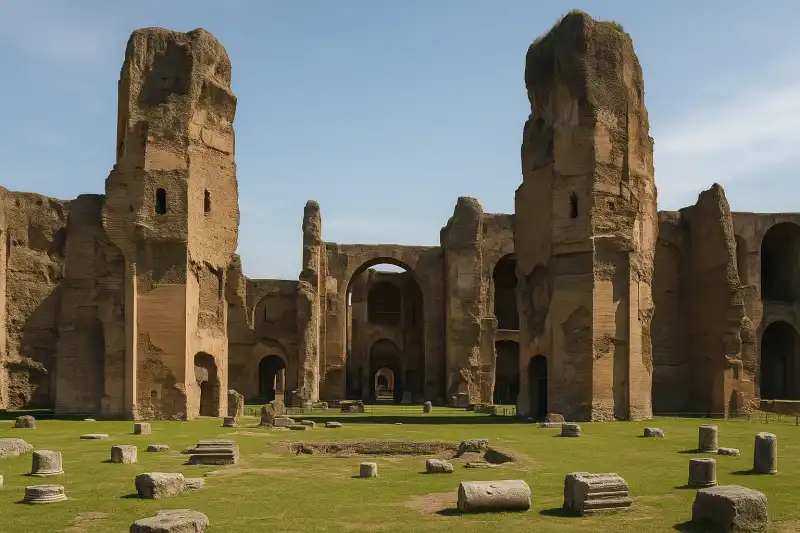
Baths of Caracalla Rome Guide 2026
RomanPlan your visit to the Baths of Caracalla with practical route advice, history context, timing, and ...
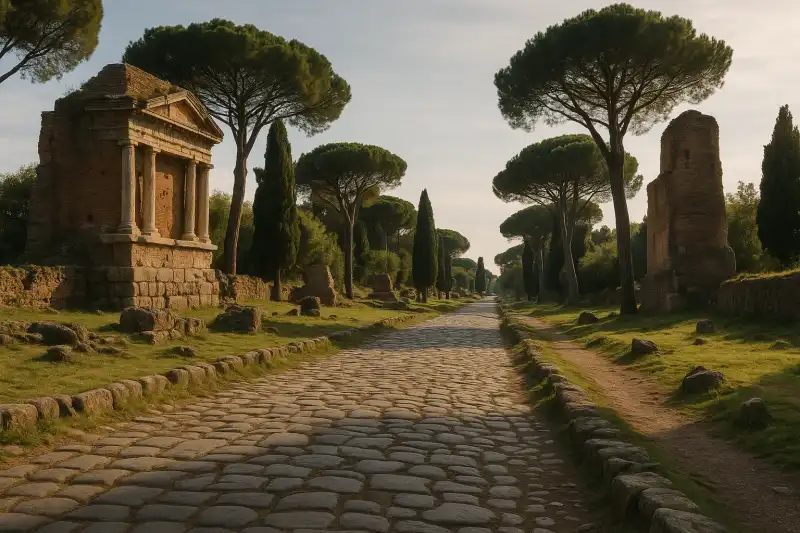
Appian Way Rome Guide 2026
RomanPlan a smart visit to the Appian Way with route choices, catacomb logistics, bike-vs-walk strategy, ...
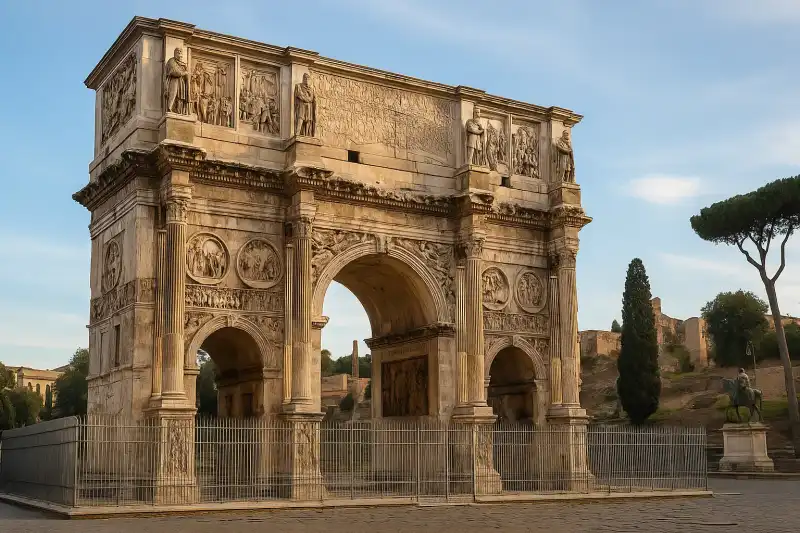
Arch of Constantine Rome: Triumph Over Maxentius Guide
Roman EmpireThe Arch of Constantine commemorates Constantine's 312 CE victory. Spolia details, best photo angles...