Quick Info
At a glance
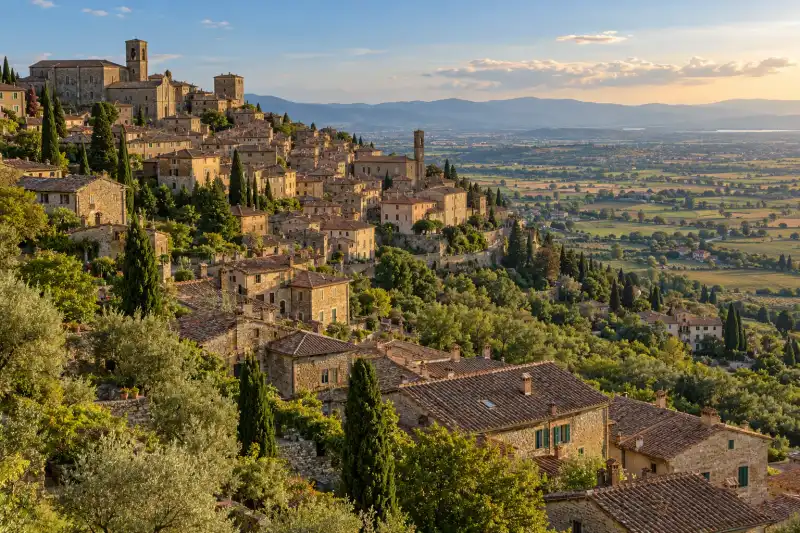
Cortona sits high above Tuscany’s Val di Chiana, a compact town of stone lanes, bell towers, shuttered houses, and long views toward Lake Trasimeno. It is often approached as a pretty hill-town stop. That undersells it. Cortona has an Etruscan foundation, substantial medieval fabric, and a civic museum whose collections make the surrounding landscape easier to read. The town is not an excavated ancient city and should not be treated like one. Its value is the overlap: walls and place names from an older settlement, a medieval street plan that still determines how you move, and museums that connect local objects with the wider Etruscan world.
History: from Etruscan ridge settlement to Tuscan town
Cortona was one of the important Etruscan centers of inland Italy. Its elevated position offered defensible ground and command over routes through the Val di Chiana, a broad basin that connected the Arno and Tiber worlds. Traces of the Etruscan city survive in sections of walling and in the archaeological record around the town. The evidence matters because it corrects a common Tuscany shorthand: not every old stone street is medieval, and Cortona’s story began long before Florence dominated the region.
Roman rule brought Cortona into a new political network, but the town’s visible character is most strongly shaped by later centuries. Medieval communes, episcopal authority, warfare, and trade rebuilt the hilltop in durable stone. The steep routes between piazzas, gates, churches, and defensive high points are products of that long urban life. Cortona’s official historical overview also notes Renaissance interventions, including work on the walls and fortress under Cosimo I in the sixteenth century. The result is not a frozen period piece. It is a town where Etruscan, Roman, medieval, and Renaissance layers remain close enough to compare on foot.
What to see
Museo dell’Accademia Etrusca e della Città di Cortona
Begin at the MAEC, the town museum in Palazzo Casali. Its archaeological material gives meaning to the landscape outside: inscriptions, bronzes, ceramics, funerary objects, and objects connected with local excavation. The collection is not a substitute for an archaeological site, but it is the best preparation for walking one of Tuscany’s most historically dense towns. Check the museum’s official listing for current exhibitions and access conditions.
Piazza della Repubblica and the civic center
Piazza della Repubblica is Cortona’s social hinge, with the Palazzo Comunale and its staircase setting the tone for the town’s medieval and later civic identity. From here, do not rush. The useful experience is moving gradually uphill through the lanes, noticing how limited flat ground concentrates public life in squares and at church fronts.
Upper streets, walls, and views
The upper town leads toward Santa Margherita and the fortress zone, where the geography becomes plain. Cortona’s position explains its defensive history and its continued pull for visitors. The views are broadest in clear weather, but the walk is worthwhile even when the valley is hazy because the route exposes the town’s dense stone construction. Respect closed gates and private property. The walls are heritage structures, not climbing equipment.
Planning a visit
Cortona rewards a full day more than a rushed photo stop. Arrive early enough to see the museum before the busiest part of the day, then walk the center and choose one upper route. The streets are steep and uneven, so use shoes with grip and carry water in warm months. If you are arriving by rail, confirm the current connection between Camucia-Cortona station and the hilltop with the local transport authority or your accommodation rather than relying on old travel blogs.
Spring and autumn usually make walking more comfortable, but weather is not the only consideration. A weekday morning gives a better chance to experience the town before the center becomes busy. Winter can be quiet and atmospheric, though individual museums and restaurants may follow shorter seasonal schedules. Verify current details directly with Cortona’s official tourism and museum sources.
Cortona in a wider Italy itinerary
Cortona works best as a Tuscany and Umbria base or as a slower stop between larger cities. It does not need to compete with Pompeii or Rome as a monumental archaeological destination. Instead, use it to understand the older Etruscan geography beneath later Italian urban history. If your route continues south, Paestum offers an entirely different experience of ancient Italy through its Greek temples. Pompeii and Herculaneum are better choices for a concentrated Roman urban archaeology day.
A slower Cortona walking plan
Start at the museum, because it gives names and periods to the material that otherwise becomes “old-looking stone” by lunchtime. From Palazzo Casali, take time in Piazza della Repubblica, then follow one of the rising lanes rather than optimizing every turn. Cortona’s urban character comes from compression: narrow passages open into a small square, then a view, then another stair. The change in level is historical evidence. The town used a difficult hill because the hill offered control and visibility.
At the upper edge, pause before treating the panorama as the finale. The Val di Chiana below is part of the story. An Etruscan settlement here was connected to routes, agriculture, and neighboring centers across a changing landscape. Medieval and Renaissance authorities inherited that geographical advantage and altered the town’s defenses and public spaces accordingly. A sensible walk therefore alternates between close looking at masonry and looking outward to the valley.
If you have a second day, use it to separate museum time from town time. Return to the MAEC for a collection you hurried past, visit a church or temporary exhibition if officially open, or take a calmer perimeter walk. This is better than trying to add a long-distance day trip merely because a map makes all of Tuscany look like one small picnic table.
Responsible historical reading
Cortona’s association with Etruscan history is real, but visitors should be wary of claims that turn every wall into original Etruscan construction or every local tradition into a documented ancient survival. Ask what you are looking at: a retained wall line, a later rebuilding, a museum object with secure provenance, or a modern interpretation. The distinctions make the town more interesting, not less.
Likewise, avoid treating “medieval” as a decorative label. The medieval town was a working civic environment shaped by institutions, defense, worship, and status. Streets and stairways directed movement, while squares staged exchange and government. Later Renaissance projects changed that inherited frame without erasing it. Cortona is valuable precisely because those layers remain in conversation.
Before you go
Keep the practical plan light. Choose one museum, one upper-town walk, and enough unstructured time to get mildly lost without becoming actually lost. Cortona has shops, restaurants, religious buildings, and private residences all operating in the same historic fabric. A church may close for worship, a small museum may observe seasonal hours, and a lane that looks like a public shortcut may end at a private threshold. Check official opening details, then let the town set some of the pace.
For photography, the temptation is to chase one panoramic image. Try a second approach: photograph the junction between a steep lane and a square, a retaining wall against a later façade, or a view through a gate toward the valley. Those scenes explain the town’s structure better than a generic skyline. Ask before photographing people closely and keep doorways clear. Cortona’s lived-in quality is the whole point.
If your interest is primarily Etruscan archaeology, build your itinerary around museum and verified archaeological resources rather than assuming the historic center supplies every answer outdoors. If it is medieval Tuscany you want, focus on the civic spaces and walk slowly. Either approach is valid. What does not work is demanding that one small hill town impersonate every period of Italy at once.
Small details that repay attention
Look for practical evidence of adaptation rather than only grand monuments: changes in paving where slopes meet, drains cut beside lanes, walls that retain a terrace behind a house, and thresholds worn by repeated use. These are modest details, but they explain how a town survives on a steep site. They also make clear why preservation is a continuing task rather than a finished declaration.
Cortona is not asking visitors to solve its entire chronology in an afternoon. It is asking them to notice that the chronology is there. A museum object, a wall line, a civic stair, and a valley view can all contribute to that reading when you give them room.
Quick Facts
| Attribute | Details |
|---|---|
| Location | Cortona, Tuscany, Italy |
| Historical character | Etruscan foundation with Roman, medieval, and Renaissance layers |
| Best first stop | MAEC, the Museo dell’Accademia Etrusca e della Città di Cortona |
| Terrain | Compact but steep hill town with cobbles and steps |
| Best approach | Full day or overnight, not a rushed drive-through |
| Current information | Check Cortona’s official tourism and MAEC channels |
Cortona is strongest when approached with patience. Its archaeology does not announce itself with a single grand ruin. It accumulates through walls, museum cases, terrain, and the basic fact that people have kept adapting the same hill for more than two millennia.
Frequently Asked Questions
Is Cortona an ancient ruin site?
No. Cortona is a living Tuscan town with Etruscan remains, Roman-period evidence, medieval streets, churches, and museums. Its archaeology is distributed through the town and surrounding countryside rather than concentrated in one excavated park.
What should I prioritize in Cortona?
Start with the Museo dell'Accademia Etrusca e della Città di Cortona, then walk Piazza della Repubblica and the upper streets toward the Medici Fortress area. This sequence gives historical context before the views.
How much time does Cortona need?
A full day allows time for the museum, the historic center, and a slower walk along the upper lanes. An overnight is better if you want to use Cortona as a base for the Val di Chiana.
Is Cortona difficult to walk?
The center is compact but steep, with cobbles and stepped lanes. Comfortable shoes and a plan to pause on climbs make a substantial difference.
Where can I check current museum access?
Use Cortona's official tourism site and the MAEC's official channels before travel. Hours, exhibitions, and ticket arrangements can change.
Nearby Ancient Sites
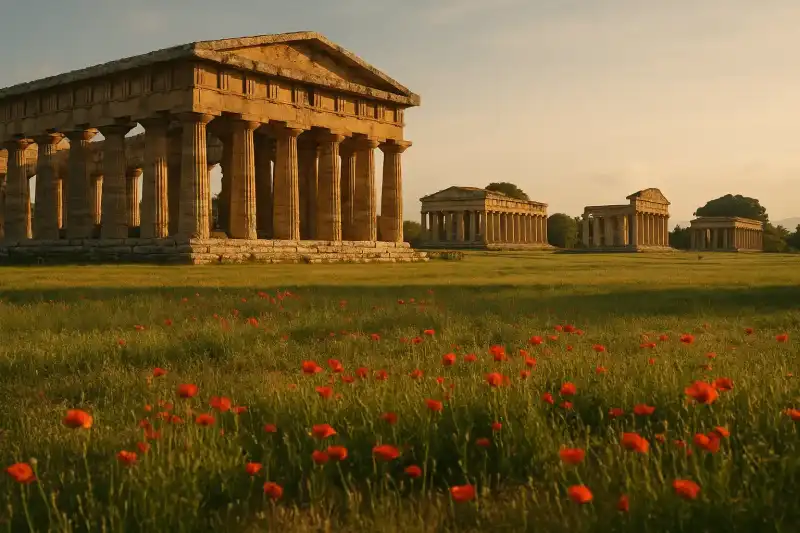
Paestum: Europe's Best-Preserved Greek Temples on Italy's
Ancient Greek / RomanDiscover Paestum's magnificent Greek temples, the Tomb of the Diver, and buffalo mozzarella farms on...
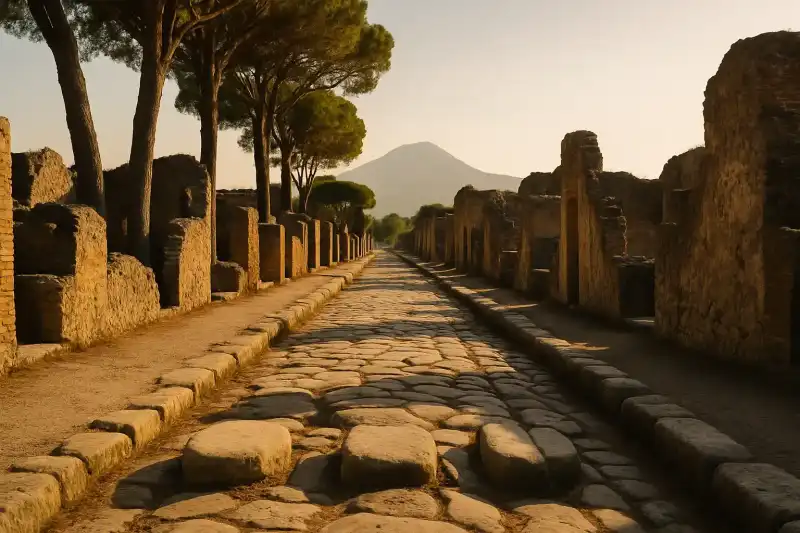
Pompeii Italy Travel Guide: Frozen in Time, Complete 2026
Roman EmpireWalk the streets of ancient Pompeii with our complete guide. Discover the best routes, must-see hous...
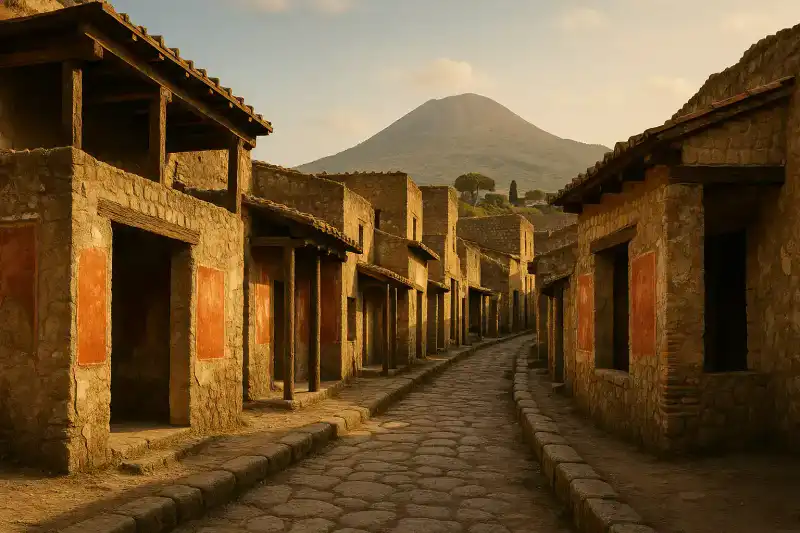
Herculaneum Italy Travel Guide 2026: Better Preserved Than Pompeii
Roman EmpireDiscover Herculaneum's extraordinary preservation of ancient Roman life. See carbonized wood, vivid ...