Quick Info
At a glance
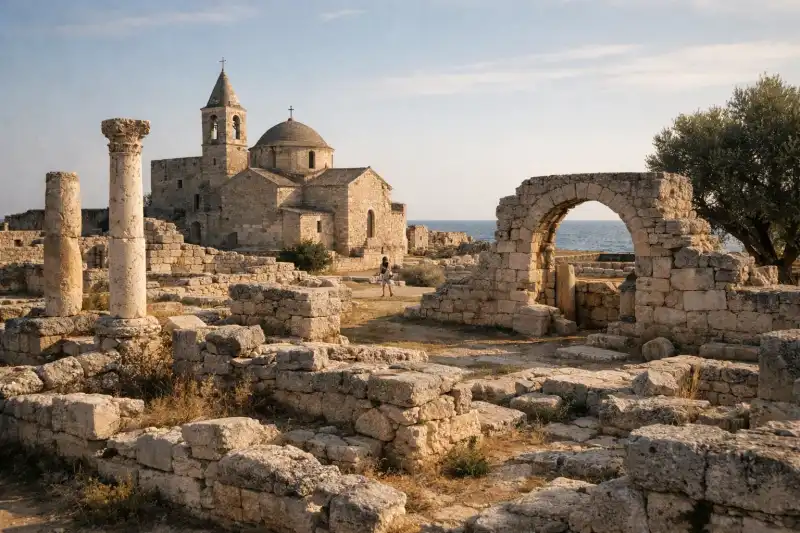
Egnazia, Italy, sits beside the Adriatic in a landscape where pale stone, salt air, and low Mediterranean light make antiquity feel unusually close. Unlike hilltop ruins that announce themselves from a distance, this ancient city reveals its story more gradually: a line of defensive walls, a fragment of Roman paving, the outline of public buildings, and tombs that speak of communities living here for many centuries before the modern coastline became a holiday destination. Today the archaeological park of Egnazia, near Fasano in Apulia, offers one of southern Italy’s most evocative encounters with a place that passed from indigenous Messapian control into the orbit of Rome and then into the Christian world of Late Antiquity.
What makes Egnazia memorable is not only the age of the remains but the setting. The site lies close to the sea, and even when you are studying masonry or trying to imagine vanished streets, you remain aware of ships, trade, and the long Adriatic routes that helped shape the city’s fortunes. This was never an isolated settlement. It was a node linking inland Apulia to maritime exchange, and its ruins still carry traces of that role. For visitors, Egnazia rewards a slower pace than many headline sites in Italy. The museum provides context, the open-air remains offer space and atmosphere, and together they reveal a place where local identity and imperial power met on a strategic stretch of coast.
History
Messapian origins
Long before Egnazia became a Roman town, the area was inhabited by communities associated with the Messapians, one of the principal ancient peoples of Apulia. Archaeological evidence suggests settlement in the broader area from the Bronze Age, with more substantial urban development taking shape during the first millennium BCE. Its coastal position gave the settlement unusual advantages. It could draw on agricultural resources inland while also participating in maritime trade across the Adriatic and wider Mediterranean.
By the 8th and 7th centuries BCE, Egnazia was emerging as a significant center. Fortifications, necropoleis, and material finds indicate a community with social organization, external contacts, and enough wealth to invest in public and defensive works. Imported ceramics and local craft production point to an active exchange network. Although later Roman narratives often overshadow indigenous histories, the Messapian phase is essential for understanding the site. Egnazia was not created by Rome; it was absorbed by Rome after centuries of local development.
Contact with the Greek and wider Mediterranean world
As with much of southern Italy, Egnazia existed within a complex web of interaction involving Greek colonies, Adriatic merchants, and Italic peoples. Contact did not necessarily mean direct political control, but it did shape material culture, trade habits, and artistic forms. Pottery styles, burial customs, and architectural elements show a community in dialogue with larger Mediterranean trends while retaining local traditions.
This period likely saw the strengthening of Egnazia’s urban identity. Defensive walls and planned areas of burial suggest not simply a village but an established center with territory, hierarchy, and regional importance. The city’s coastal location also made it vulnerable. Access to trade invited opportunity, but it also placed Egnazia within the strategic calculations of larger powers. By the Hellenistic era, southern Italy was a contested landscape in which local elites had to navigate alliances, rivalries, and shifting balances of power.
Roman incorporation
Rome’s expansion into southern Italy transformed Egnazia’s trajectory. By the 3rd century BCE, after the wars that brought much of the region under Roman influence, the city entered the Roman sphere. Its importance grew because of geography. Egnazia lay along the route later formalized as the Via Traiana, an imperial road connecting Beneventum to Brundisium, one of Rome’s crucial embarkation ports for the eastern Mediterranean. This connection made Egnazia valuable not merely as a local town but as part of a larger communications network linking Italy to Greece, the Balkans, and beyond.
Under Roman rule, urban spaces were reshaped. Public architecture developed, streets were organized, and monumental elements typical of Roman civic life appeared. The forum area became the political and commercial heart of the town. There were baths, religious buildings, and infrastructure serving residents and travelers. Romanization at Egnazia was not an overnight replacement of one culture by another. Instead, archaeology suggests a layered process in which indigenous traditions persisted even as Roman institutions and architectural forms took deeper hold.
The town is also remembered through literature. Horace, traveling on the road to Brundisium in the 1st century BCE, mentions Egnatia in his Satires with a touch of irony, referring to local claims of miraculous incense igniting without fire. Whether he was amused, skeptical, or simply performing literary wit, the reference confirms that Egnazia was known to educated Roman audiences.
Late Antiquity and Christian Egnazia
Egnazia continued into the imperial and late Roman periods, adapting as the empire changed. In Late Antiquity, Christianity left visible marks on the urban landscape. Basilica remains and related structures indicate the city’s role within the Christianized world of the later empire. The transition did not erase earlier layers; rather, sacred and civic spaces were repurposed, modified, or built over. This continuity and change are among the most compelling aspects of the site today.
Like many ancient cities, however, Egnazia eventually declined. Several factors may have contributed: shifting trade patterns, environmental changes affecting the harbor or coastline, insecurity in the later empire, and the gradual movement of population toward more favorable inland or defensible locations. By the early medieval period, the ancient city had largely lost its former prominence. Yet it was never entirely forgotten. Its stones remained in the landscape, and antiquarians, archaeologists, and state institutions would later recover its significance through excavation and preservation.
Key Features
Egnazia’s most striking quality is the way multiple cities seem to coexist within one archaeological area. Visitors do not encounter a single monumental centerpiece on the scale of the Colosseum or Pompeii’s amphitheater. Instead, they move through an urban fabric in fragments, and those fragments together tell a richer story of continuity.
The defensive walls are among the first features to establish the city’s scale. These fortifications, originating in the Messapian phase and modified over time, speak to a settlement that needed to define and protect itself. Even in ruin, they suggest the seriousness of urban planning here before and during Roman control. Their rough power contrasts with later, more formal Roman spaces inside the city. Standing near them, it is easy to imagine Egnazia as a frontier between sea routes and inland territory, commerce and conflict.
The Roman forum area provides a different atmosphere altogether. Here the logic of Roman urbanism becomes visible. This was the civic heart of the city, where administration, trade, ritual, and public life intersected. Foundations and surviving architectural elements require some imagination, but the site is well suited to visitors who enjoy reading a plan in stone rather than relying only on grand reconstructions. The remains invite you to think about the rhythms of an ordinary Roman town: legal business, market exchanges, political announcements, and the movement of people through a shared public space.
Nearby are remains associated with baths and other communal structures. Though not fully preserved above standing height, they reveal how Roman amenities shaped urban identity. Bath complexes were never only about washing. They were places of social interaction, routine, and status, and their presence in Egnazia signals participation in the wider habits of Roman civic culture. Likewise, stretches of ancient road and paving retain the practical, connective quality that defined the city’s role on the Adriatic route to Brindisi.
One of Egnazia’s most important and moving areas is the necropolis. Tombs and funerary remains illuminate the city from another angle: how its people marked death, memory, and belonging. Burials from different periods show changing customs and social structures, while grave goods reveal beliefs, wealth, and external influences. In many ancient sites, tombs are peripheral. At Egnazia they are central to understanding the depth of the settlement’s history, especially its pre-Roman and transitional phases.
The early Christian remains add yet another layer. Basilica structures and associated spaces show how the city adapted in Late Antiquity. These remains are especially valuable because they demonstrate that Egnazia was not frozen in a single “Roman moment.” It continued to evolve as the empire’s religious and political character changed. For visitors interested in the long transformation from pagan antiquity to Christian late Roman society, this is one of the site’s strongest dimensions.
No visit is complete without the National Archaeological Museum of Egnazia. The museum gives meaning to walls and foundations by presenting the portable evidence of daily life and ritual: pottery, inscriptions, sculpture fragments, tools, ornaments, and objects from burials. The Messapian material is particularly important, helping correct the common tendency to see southern Italian antiquity only through a Roman lens. Displays generally emphasize continuity across periods, making the museum a necessary complement to the open-air site rather than an optional extra.
Finally, the coastal environment is itself a feature. Egnazia’s relationship with the Adriatic is not decorative; it is historical. The sea explains trade, movement, prosperity, vulnerability, and decline. Light, wind, and open views give the ruins a sense of exposure that feels appropriate for a city defined by exchange. This is one reason Egnazia often leaves such a strong impression despite the partial survival of its monuments. The landscape completes the archaeology.
Getting There
Egnazia is in Apulia, near Fasano, roughly between Bari and Brindisi, and the easiest way to visit is by car. From Bari Airport, the drive usually takes about 50 to 60 minutes; from Brindisi Airport, around 45 to 55 minutes depending on traffic. Rental cars are widely available at both airports, and day rates commonly begin around €35 to €60 in standard season, rising in summer. Parking near the archaeological area is generally straightforward compared with city-center destinations.
If you prefer public transport, take a regional train to Fasano or Monopoli. Fares from Bari to Fasano are often in the €5 to €8 range, while Bari to Monopoli is usually similar or slightly lower. From Brindisi, regional train fares are commonly around €6 to €10 depending on the service. The challenge comes with the final leg, because the site is not directly integrated into a major rail hub. From Fasano station, a taxi to Egnazia may cost about €20 to €30 each way. From Monopoli, expect roughly €25 to €40 depending on season and time of day. Some hotels in the area can arrange transfers, and in high season there may be local shuttle or bus options, though schedules should always be checked in advance.
Many travelers combine Egnazia with nearby coastal towns or inland highlights such as Alberobello, Ostuni, or Polignano a Mare. If you are already touring the Valle d’Itria or the Adriatic coast, Egnazia works especially well as a half-day stop.
When to Visit
Spring and early autumn are the best times to visit Egnazia. From April to June and from September to October, temperatures are usually pleasant, skies are bright, and the archaeological park is far more comfortable for walking than during peak summer heat. In these months, daytime temperatures often sit between 18°C and 28°C, ideal for moving between the museum and outdoor ruins without rushing. The coastal light can also be beautiful for photography, especially in the late afternoon.
Summer is the busiest season in Apulia, and while Egnazia is generally calmer than the region’s beach resorts, July and August can still be hot, with temperatures frequently above 30°C. The site has exposed sections with limited shade, so if you visit in summer, arrive early in the morning, carry water, wear a hat, and plan the museum portion for the hottest part of the day. The advantage of summer is that nearby towns and seaside infrastructure are fully active, making it easy to combine archaeology with a broader holiday itinerary.
Winter offers a quieter and more reflective experience. Crowds are minimal, and southern Apulia often remains mild by northern European standards, though temperatures can feel cool in the wind and rain is more likely. Some travelers appreciate this season because the site’s atmosphere becomes more contemplative, especially with the sea in the background and fewer visitors around. The main consideration is to confirm opening hours in advance, as museum or site schedules can be more limited outside the main tourist season.
Whenever you go, allow enough time for both the archaeological park and museum. Egnazia is a site best appreciated slowly, with space to connect the artifacts indoors to the urban traces outside.
| Quick Facts | Details |
|---|---|
| Location | Near Fasano, Apulia, Italy |
| Ancient Cultures | Messapian, Roman, Early Christian |
| Best For | Archaeology, Roman history, coastal heritage |
| Typical Visit Length | 2 to 3 hours |
| Nearest Airports | Bari Karol Wojtyła Airport; Brindisi Airport |
| Easiest Access | Rental car or train plus taxi |
| Main Highlights | City walls, forum, necropolis, basilica remains, museum |
| Best Seasons | Spring and early autumn |
| Family Friendly | Yes, especially with older children interested in history |
| Combine With | Monopoli, Ostuni, Alberobello, Fasano coast |
Egnazia is not the kind of ancient site that overwhelms through sheer scale. Its power lies in accumulation: indigenous origins, Roman urban life, Christian transformation, coastal trade, and centuries of burial and memory all preserved in one place. For travelers exploring Apulia, it offers something rarer than spectacle alone. It offers historical depth without losing a sense of landscape. You leave with the feeling that the Adriatic has been watching this shore for millennia, and that Egnazia, though ruined, still knows how to tell its story.
Guided tours: worth it?
You can visit Egnazia independently, but a guide can help connect the most important objects to the wider ancient landscape instead of turning the visit into a long label-reading session.
Best for
- First-time visitors who want context, not just photos
- Trips where tickets, circuits, or timed entry can shape the day
- Museum-plus-site days where the collection needs context
- Short visits where a planned route saves time
When to go self-guided
Go independently if you prefer setting your own pace, reading as you go, and checking official hours or ticket rules directly before you arrive.
What I’d avoid
Skip paid tours that bundle unrelated stops you do not actually want. The best option should either save meaningful planning time or add historical context you would miss on your own.
Egnazia archaeological site tours
Useful when: you want to compare guided formats before deciding
Puglia archaeology and history tours
Useful when: you want to compare guided formats before deciding
Monopoli and Fasano day trips
Useful when: transport or pickup logistics matter
Some tour links are affiliate links, which may earn Ancient Travel a small commission at no extra cost to you. I try to surface options that make practical sense for the site—not just anything bookable.
Frequently Asked Questions
What is Egnazia?
Egnazia is an archaeological site on the Adriatic coast of Apulia in southern Italy, preserving remains from the Messapian, Roman, and early Christian periods.
Where is Egnazia located?
Egnazia lies near Fasano in Apulia, between Bari and Brindisi, close to the modern coast and within reach of Monopoli and Ostuni.
Is there a museum at Egnazia?
Yes. The National Archaeological Museum of Egnazia displays artifacts from the site, including pottery, inscriptions, funerary goods, and material from its Messapian and Roman phases.
How much time should I allow for visiting Egnazia?
Most visitors should allow 2 to 3 hours to see the archaeological park and museum at a comfortable pace.
Can you visit Egnazia without a car?
Yes, but it is easier with a car. Travelers can combine regional trains to Fasano or Monopoli with a taxi, local transfer, or seasonal bus service.
What are the main highlights of Egnazia?
Highlights include the city walls, Roman forum area, basilica remains, necropolis, stretches of ancient road, coastal setting, and the museum collections.
Nearby Ancient Sites
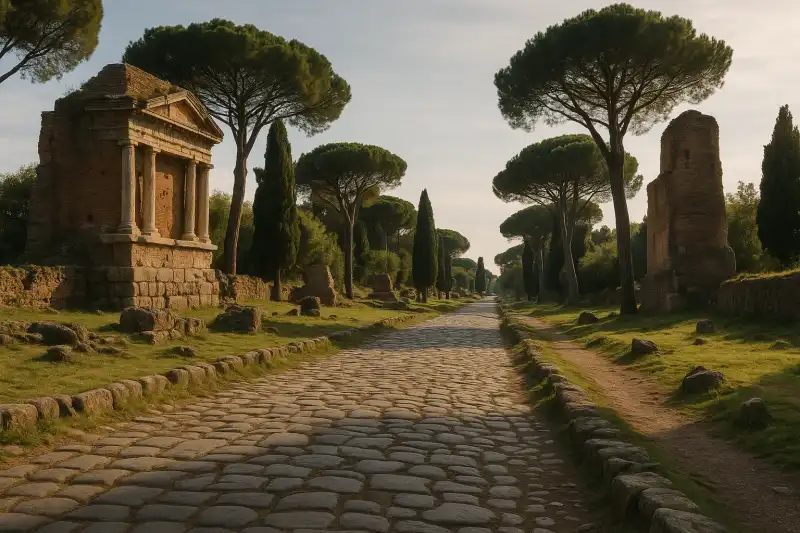
Appian Way Rome Guide 2026
RomanPlan a smart visit to the Appian Way with route choices, catacomb logistics, bike-vs-walk strategy, ...
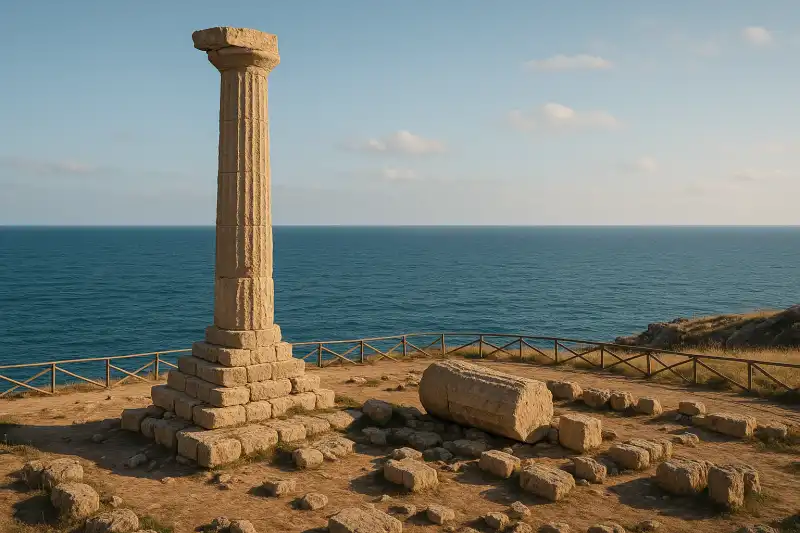
Capo Colonna Guide 2026: Calabria’s Coastal Temple Ruins
GreekVisit Capo Colonna with a practical plan: what remains to see, when to go, and how to pair this coas...
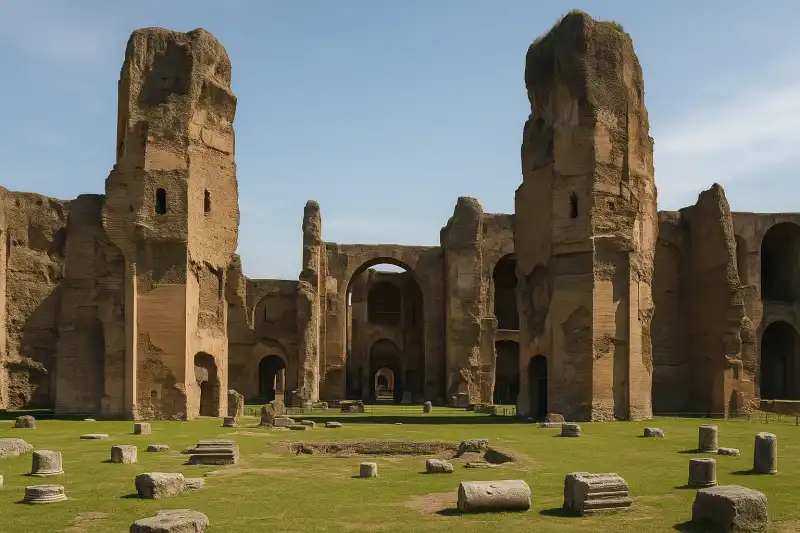
Baths of Caracalla Rome Guide 2026
RomanPlan your visit to the Baths of Caracalla with practical route advice, history context, timing, and ...