Quick Info
At a glance
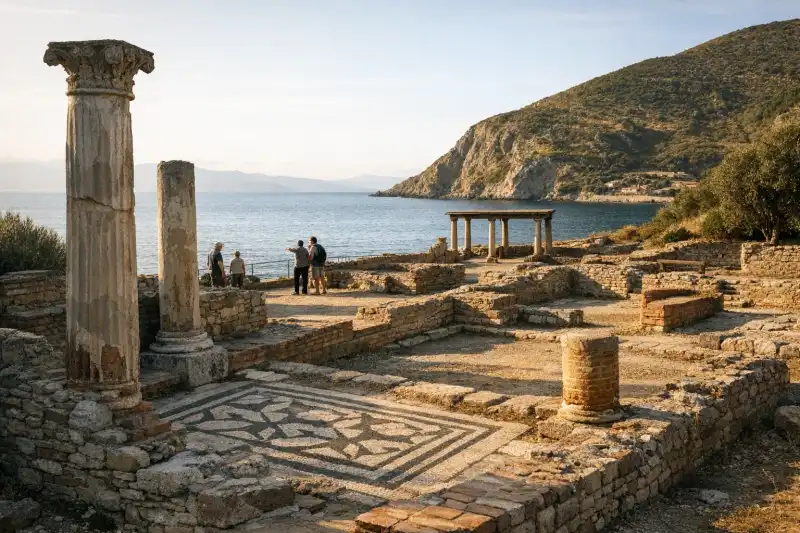
Elba Roman Villas in Italy offer a different kind of Roman experience: not the overpowering scale of Rome itself, nor the monumental formality of imperial capitals, but the intimate remains of wealthy coastal residences on a Mediterranean island shaped by trade, beauty, and strategic value. On Elba, archaeology sits close to the sea. Pine-covered slopes, coves of clear water, and the busy harbor of Portoferraio create a landscape where the ancient and the modern still feel naturally connected. The surviving villa sites, especially the Villa delle Grotte and the Villa della Linguella, suggest how Roman elites used the island not only as a waypoint in maritime networks, but also as a place of comfort, display, and seasonal retreat.
For travelers, these ruins are compelling precisely because they are not over-restored. Broken walls, fragments of rooms, and commanding views over the Tyrrhenian Sea invite imagination. You can stand among the traces of baths, terraces, and reception spaces and picture ships approaching the coast, servants moving through service corridors, and aristocratic owners enjoying the sea air far from the noise of the mainland. Elba is famous for Napoleon’s later exile, but its Roman past is much older and in many ways just as revealing. The villas show that this island, rich in mineral resources and well placed on maritime routes, was fully woven into the economic and cultural world of Roman Italy.
History
Early Elba in the Etruscan and Roman orbit
Long before the villa ruins visible today were constructed, Elba was already known for its strategic position and natural resources. The island lies between the Tuscan coast and Corsica, making it important for shipping across the Tyrrhenian Sea. It was especially valued for iron deposits, which had attracted attention since Etruscan times. By the late Republic, Rome had absorbed this wider region into its political and economic system, and Elba’s role expanded beyond extraction and transport. It became part of a connected coastal world in which harbors, estates, and maritime villas served both practical and social purposes.
As Roman power stabilized the western Mediterranean, elites increasingly invested in attractive coastal properties. Across Italy, villas appeared in landscapes that offered fertile land, good anchorage, and scenic value. Elba fit this pattern well. Its shorelines provided direct access to maritime routes, while its elevated sites offered breezes, light, and wide views. Although the island was never among the largest urban centers of Roman Italy, it benefited from the movement of goods, people, and ideas between the mainland and the islands.
The rise of the Roman villas
The principal villa remains on Elba are generally dated between the late 1st century BCE and the 1st century CE, a period when Rome’s ruling classes were investing heavily in country houses and maritime residences. The Villa delle Grotte, located on a promontory east of Portoferraio, is the most evocative example. Its position was carefully chosen. From here, occupants could look over the sea and inland channels while enjoying a setting that balanced privacy with visibility. Roman villas were never simply farmhouses. At elite sites, architecture communicated status through symmetry, terraces, gardens, decorated interiors, and specially designed reception spaces.
The Villa della Linguella, closer to the harbor area of Portoferraio, reveals another dimension of Roman presence on the island. It stood in a more directly connected coastal setting, tied to the rhythms of maritime movement and local settlement. Together, these villas suggest that Roman Elba included both refined residential life and active participation in trade networks. Imported materials, ceramic finds, and architectural remains all point to owners who were integrated into wider Roman consumption patterns.
Life at the villas
Although much of the superstructure has disappeared, the surviving remains allow archaeologists to reconstruct aspects of daily life. These villas were likely occupied by wealthy families or administrators linked to mainland interests. Their residents would have benefited from sea transport, which was often faster and more efficient than long-distance land travel. Goods such as wine, oil, fine pottery, and luxury items could move easily through island and coastal routes.
Inside the villas, life probably mixed leisure with management. Roman elite culture valued otium, a concept often translated as cultivated leisure. Villas were places to read, write, host guests, dine, bathe, and enjoy philosophical conversation in surroundings designed for refinement. But they also had a practical side. Estates required workers, supplies, water systems, kitchens, storage areas, and maintenance. On Elba, the proximity to harbors meant that villas could also function as nodes in economic exchange.
Decline, reuse, and rediscovery
Like many Roman residential sites, the Elba villas did not remain unchanged forever. As the western Roman world transformed between Late Antiquity and the early medieval period, maintenance of luxury seaside residences became more difficult. Political instability, shifting trade routes, and changing patterns of landholding all affected island life. Buildings were abandoned, adapted, robbed for stone, or simply allowed to decay. Roofs collapsed, decorative materials were removed, and walls slowly merged into the landscape.
Centuries later, antiquarian curiosity and archaeological investigation brought renewed attention to these sites. Excavation and study helped identify room plans, building phases, and decorative fragments. Even where preservation is incomplete, the villas now hold an important place in the interpretation of Elba’s ancient past. They remind visitors that the island’s history did not begin with medieval fortifications or the Napoleonic era. Instead, Elba was already embedded in a sophisticated Roman maritime world in which architecture, commerce, and natural beauty came together.
Key Features
What makes the Elba Roman Villas memorable is their relationship with the landscape. At the Villa delle Grotte, the setting is nearly as important as the masonry. The ruins occupy a headland with broad views over water and the surrounding coast, and this visual command was certainly intentional. Roman elite villas often staged the natural world as part of the architecture. Terraces, porticoes, and reception rooms were aligned not only for shelter and convenience but for outlook. Even in ruin, that design logic survives. Walking through the site, you sense that the sea was never background scenery. It was central to the identity of the residence.
The surviving wall lines at Villa delle Grotte reveal a substantial complex with multiple levels and organized spaces. Archaeologists have identified areas associated with baths and domestic rooms, and there is enough of the layout to suggest a carefully planned villa rather than an improvised coastal dwelling. Roman baths in private residences were powerful status symbols. They required engineering skill, water management, heating systems, and labor. Their presence indicates comfort and expense, but also the importance of hospitality. To entertain guests in a villa with bathing facilities and elegant sea views was to display both wealth and cultural sophistication.
Another striking feature is the fragmentary but readable quality of the ruins. Some ancient sites overwhelm the visitor with reconstruction or signage; Elba’s villas instead encourage close observation. You notice the thickness of walls, the placement of thresholds, the way one area opens toward another. This gives the visit a more contemplative atmosphere. Rather than moving through a single monumental structure, you read the site in pieces. That fragmented experience is part of its charm, because it mirrors the archaeological process itself: assembling a picture of Roman life from foundations, surviving masonry, and context.
The Villa della Linguella offers a different perspective. Positioned near Portoferraio’s harbor zone, it speaks more directly to the interface between residence and maritime movement. While less dramatically scenic than Villa delle Grotte, its importance lies in showing how Roman occupation on Elba was tied to coastal infrastructure. A villa here was not isolated. It was linked to boats, cargo, harbor traffic, and local settlement. In Roman terms, that was ideal. Elite residences often balanced retreat with access. An owner could enjoy comfort and privacy while remaining fully connected to the economic lifelines of the region.
Across both sites, the smaller details are easy to overlook but rewarding to imagine. Flooring fragments, brickwork, plaster traces, and the arrangement of rooms suggest interiors that were once far more polished than the ruins imply today. Roman villas typically featured painted walls, mosaic or opus signinum floors, storage spaces, servant quarters, and carefully managed circulation routes. The movement of household members, workers, guests, and supplies would have shaped daily life. These were not static showpieces. They were active environments in which architecture served social hierarchy.
The villas also stand out because they expand the common image of Roman Italy. Many travelers associate Roman remains with amphitheaters, forums, triumphal arches, and city streets. Elba offers another side of the Roman world: the private, seasonal, coastal, and luxurious. Here the empire is visible not in giant public monuments but in the quiet confidence of land ownership, seaborne access, and cultivated residence. That makes the villas especially appealing to visitors interested in how ordinary elite life actually functioned beyond Rome’s ceremonial center.
Finally, there is the emotional quality of the sites. The ruins feel open to weather, salt air, and changing light. Morning and late afternoon are especially beautiful, when the stone and vegetation soften under angled sun and the sea beyond seems to complete the architecture. Even travelers with only a basic interest in archaeology often find themselves lingering. The combination of incomplete structures and complete views is powerful. Elba’s Roman villas may not be among Italy’s most famous ruins, but they are among its most atmospheric.
Getting There
Most visitors reach Elba through the port of Piombino on the Tuscan mainland. Regular ferries connect Piombino to Portoferraio, the island’s main gateway. One-way passenger fares commonly start around €15 to €25 depending on season and operator, while bringing a car can raise the total significantly, often from about €50 upward. Advance booking is wise in summer, when demand is high.
From Portoferraio, the Villa della Linguella is the easier of the main Roman villa sites to access, since it lies within or near the town area and can often be reached on foot from central accommodations or the ferry port. The Villa delle Grotte sits a little farther east and is usually easiest to visit by rental car, taxi, or seasonal local bus where available. A short taxi ride from Portoferraio may cost roughly €12 to €20 depending on time and demand. Car and scooter rentals are common on Elba, with daily car hire often starting around €40 to €70 outside peak season and higher in summer.
If you are not bringing your own vehicle, Portoferraio makes the best base. It offers ferry access, accommodation, restaurants, and proximity to both villa sites. Travelers coming from Florence, Pisa, or Rome usually combine train or car travel to Piombino with the ferry crossing. From Pisa to Piombino by train, expect fares often in the €15 to €25 range depending on route and booking, with onward ferry costs added separately.
Because archaeological opening hours can vary, it is sensible to verify access before setting out. Wear shoes suitable for uneven ground, bring water, and allow extra time if relying on local transport outside the summer season.
When to Visit
The best time to visit Elba Roman Villas is usually late spring, from April to June, and early autumn, especially September and early October. During these months, temperatures are generally comfortable for walking, the sea views are often crystal clear, and the island feels lively without reaching the full intensity of midsummer. Spring also brings greener landscapes and softer light, which suits photography and makes the villa settings especially appealing.
Summer, particularly July and August, is the busiest period. This is when Elba is at its most energetic, with frequent ferries, long daylight hours, and plenty of services open. If you are combining archaeology with beaches and island touring, summer is convenient. The downside is heat, stronger sun exposure, and heavier crowds on ferries, roads, and in Portoferraio. Midday visits can feel tiring, so early morning or late afternoon is best. Carry water, sunscreen, and a hat, as shade at archaeological sites may be limited.
Autumn is an excellent compromise. The sea remains attractive, the island slows slightly, and travel can become more relaxed. September is especially rewarding for visitors interested in both history and scenery. Winter offers the quietest experience, and the villas can feel wonderfully solitary, but transport schedules and local services are more limited. Some sites may also have reduced access or less on-site support. If visiting in the off-season, plan ahead carefully and check current information locally.
Whenever you go, aim for clear weather if possible. These villas are deeply tied to their setting, and much of their impact comes from the visual connection between ruins, hillsides, and sea.
| Quick Facts | Details |
|---|---|
| Location | Elba Island, Tuscany, Italy |
| Main sites | Villa delle Grotte and Villa della Linguella |
| Nearest town | Portoferraio |
| Historical era | Late Roman Republic to early Roman Empire |
| Best for | Roman archaeology, coastal views, quiet historical visits |
| Typical visit length | 1-3 hours per site, or half a day for both |
| Access | Ferry from Piombino, then local transport on Elba |
| Best season | April-June and September-October |
| Terrain | Uneven ground with exposed outdoor sections |
| What to bring | Water, sun protection, sturdy shoes, camera |
Guided tours: worth it?
A guide can be genuinely useful at Elba Roman Villas, especially if you want help with transport, timing, tickets, or understanding a large site without losing half the day to logistics.
Best for
- Travelers who want transport, timing, or entry logistics handled
- Short visits where a planned route saves time
When to go self-guided
Go independently if you already have transport and tickets sorted, enjoy moving at your own pace, and are comfortable checking the latest official rules before you arrive.
What I’d avoid
Skip paid tours that bundle unrelated stops you do not actually want. The best option should either save meaningful planning time or add historical context you would miss on your own.
Elba Island Archaeology and History Tours
Useful when: you want to compare guided formats before deciding
Portoferraio and Elba Cultural Tours
Useful when: you want to compare guided formats before deciding
Tuscany Coast and Elba Day Trips
Useful when: transport or pickup logistics matter
Some tour links are affiliate links, which may earn Ancient Travel a small commission at no extra cost to you. I try to surface options that make practical sense for the site—not just anything bookable.
Frequently Asked Questions
What are the Elba Roman Villas?
The term usually refers to the surviving Roman villa sites on Elba, especially the Villa della Linguella at Portoferraio and the Villa delle Grotte, both connected to elite Roman life on the island.
Are Elba Roman Villas worth visiting?
Yes. They offer a quieter alternative to Italy’s larger archaeological parks, with coastal views, traces of luxury residences, and insight into Roman trade and leisure in the Tyrrhenian Sea.
How do I get to the Elba Roman Villas?
Most visitors reach Elba by ferry from Piombino to Portoferraio, then continue by foot, taxi, bus, or rental car depending on which villa site they plan to visit.
Can you visit both major villa sites in one day?
Yes. Villa della Linguella and Villa delle Grotte can usually be combined in a single day, especially if you are based in Portoferraio and have a car, taxi, or enough time for local transport.
When is the best time to visit Elba Roman Villas?
Late spring and early autumn are ideal for comfortable weather, lighter crowds, and clear views. Summer is lively but hotter and busier, while winter is quieter with more limited services.
Do Elba Roman Villas have museums or interpretation panels?
Facilities vary by site and season, but visitors can usually expect at least some explanatory signage. Checking current opening information locally before visiting is a good idea.
Nearby Ancient Sites
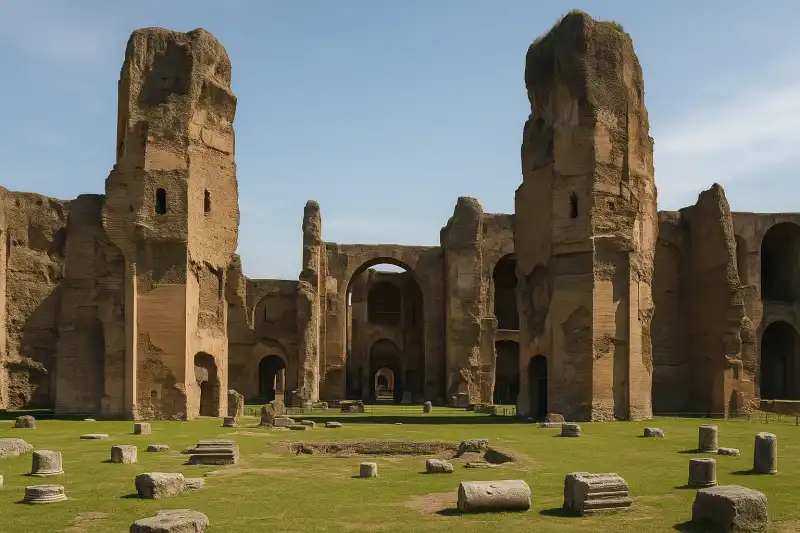
Baths of Caracalla Rome Guide 2026
RomanPlan your visit to the Baths of Caracalla with practical route advice, history context, timing, and ...
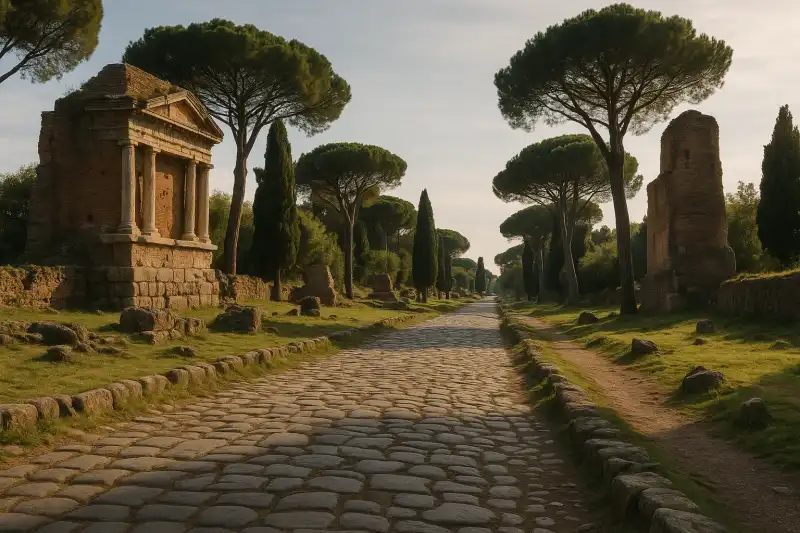
Appian Way Rome Guide 2026
RomanPlan a smart visit to the Appian Way with route choices, catacomb logistics, bike-vs-walk strategy, ...
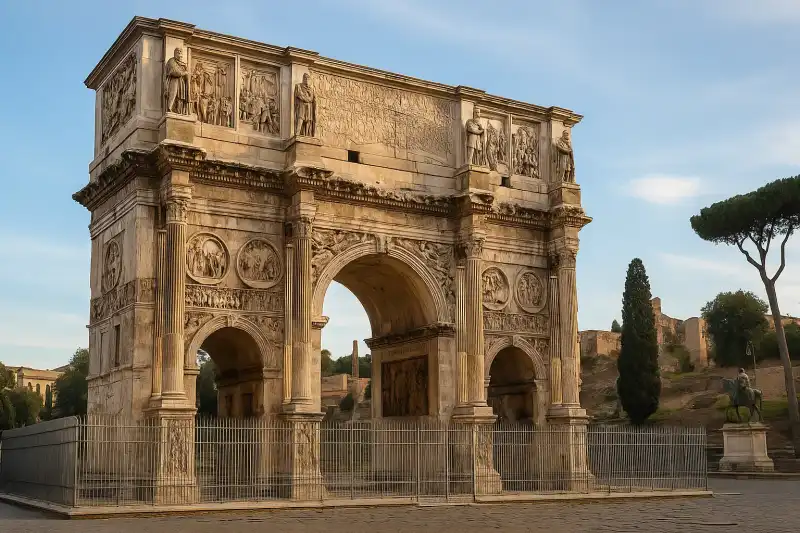
Arch of Constantine Rome: Triumph Over Maxentius Guide
Roman EmpireThe Arch of Constantine commemorates Constantine's 312 CE victory. Spolia details, best photo angles...

Aosta Roman Ruins Guide 2026: Alpine Rome on Foot
RomanPlan a practical visit to Aosta's Roman remains, including the Arch of Augustus, theater, city walls...