Quick Info
At a glance
Gebel el-Silsila in Egypt is one of those places that quietly overturns expectations. Travelers often come to the Nile searching for colossal temples, painted tombs, and royal names carved in stone, yet here the story begins before the monument itself. At this narrow reach of the river, where sandstone cliffs rise close to the water and the valley seems to compress into a natural gateway, the raw material of empire was cut from the mountainside. Blocks quarried here traveled north and south to become pylons, columns, sanctuaries, and statues in some of the best-known sacred landscapes of ancient Egypt.
What makes Gebel el-Silsila so memorable is not simply its antiquity but its atmosphere. The site feels at once monumental and practical, sacred and industrial. Along the banks are traces of work gangs, inscriptions left by officials, shrines cut into rock, and evidence of communities that lived among extraction zones shaped by royal demand. Instead of a single temple complex planned as a unified whole, visitors encounter a layered cultural landscape: cliff faces split by quarry cuts, niches holding devotional images, river views that explain the importance of transport, and quiet stretches that make it easier to imagine the rhythm of labor in pharaonic times. For anyone interested in how ancient Egypt was physically built, Gebel el-Silsila offers something rare: a direct look at the source.
History
Early significance of the Nile narrows
Gebel el-Silsila occupies a strategic and visually dramatic point along the Nile. The name refers to the “mountain of the chain,” a likely reflection of the way the cliffs seem to constrict the river. Long before the site became famous for quarrying, this narrow passage would have drawn attention for both practical and symbolic reasons. In ancient Egypt, landscape mattered deeply. Places where the river changed character, where cliffs pressed close, or where natural boundaries seemed especially marked were often understood as charged with meaning.
Archaeological evidence suggests that the area was known and used before its greatest period of activity. Like many Nile-side locations, it probably served as a stopping point, a lookout, or a place with local cult significance. Even in later periods, when quarrying became dominant, Gebel el-Silsila was never only an industrial site. Its religious functions remained intertwined with its physical geography.
The rise of the quarries in the New Kingdom
The site came into major prominence during the New Kingdom, especially from the 18th Dynasty onward. This was the age of large-scale temple building, military expansion, royal self-presentation, and increasingly ambitious monumental architecture. Sandstone became one of the preferred building materials for many Upper Egyptian temples, and Gebel el-Silsila was exceptionally well placed to provide it. The quarries were directly accessible from the Nile, allowing heavy blocks to be loaded onto barges and shipped efficiently to major projects.
Pharaohs of the New Kingdom invested in enormous construction campaigns at Karnak, Luxor, Edfu, Kom Ombo, and elsewhere. The demand for quality sandstone was immense, and Gebel el-Silsila answered that demand. Quarry marks, unfinished extractions, and inscriptions recording officials and expeditions show that work here was highly organized. Quarrying on this scale required overseers, skilled stonecutters, laborers, boat crews, scribes, and administrators. In effect, Gebel el-Silsila became part of the logistical backbone of the Egyptian state.
Its importance can also be measured by the way officials commemorated themselves at the site. Rather than being invisible workers behind royal monuments, quarry supervisors and functionaries sometimes left inscriptions celebrating their role in supplying stone for the king’s works. These records offer glimpses into the bureaucratic world that supported temple construction and state ideology.
Cult activity and royal patronage
Although quarrying dominates the site’s modern reputation, the religious dimension of Gebel el-Silsila was always close at hand. Rock-cut shrines and stelae indicate that the area functioned as a sacred landscape as well as a place of labor. Workers in dangerous environments often sought divine protection, and ancient Egyptian quarry sites were no exception. Deities associated with the Nile, kingship, the sun, and local manifestations of sacred power appear in the surviving carvings.
One of the most notable monuments at the site is the rock-cut chapel of Horemheb, who later became pharaoh at the end of the 18th Dynasty. His presence here reflects the political importance of the region and the significance of royal control over strategic resources. Shrines and chapels like this helped sacralize the working landscape, linking extraction to divine order. Stone removed from the cliffs did not become ordinary architecture; it became the fabric of temples where cosmic stability was enacted.
Continued use in later periods
Gebel el-Silsila did not vanish with the end of the New Kingdom. Quarrying and occupation continued into later dynasties and, in some form, into the Graeco-Roman era. Like many Egyptian sites, it was reused, reinscribed, and adapted according to changing needs. New patrons might honor older traditions while also leaving their own marks. The durable nature of the sandstone landscape encouraged long-term use.
At the same time, shifting political centers and changing architectural preferences affected the intensity of quarrying. Some periods brought heavy activity; others saw quieter use. Over centuries, the site accumulated an archaeological palimpsest of extraction scars, monuments, domestic remains, and burial evidence. This makes Gebel el-Silsila especially valuable to researchers because it documents not one single moment, but a continuing relationship between people, stone, state power, and the Nile.
Rediscovery and modern archaeology
In modern scholarship, Gebel el-Silsila has become increasingly important as archaeologists pay more attention to industrial and logistical landscapes, not just finished monuments. For a long time, quarries were treated as background to the temples they supplied. Today, researchers recognize them as essential to understanding ancient Egyptian economy, labor organization, religious practice, and environmental adaptation.
Survey and excavation have revealed settlement traces, workers’ spaces, carved monuments, and important inscriptions. The site also helps historians reconstruct the pathways by which building stone moved through Egypt’s transport system. Modern visitors benefit from this changing perspective. What was once considered a support site is now appreciated as a destination in its own right, one that illuminates how the monuments of pharaonic Egypt were imagined, extracted, moved, and made real.
Key Features
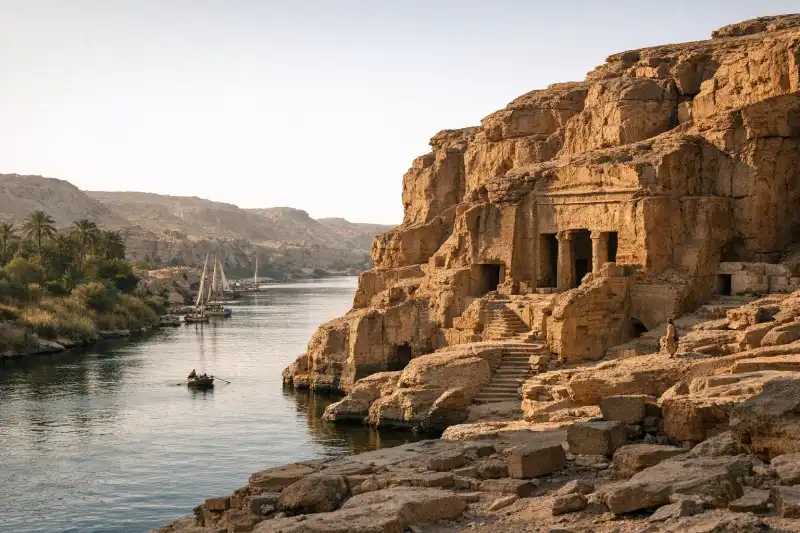
The most striking feature of Gebel el-Silsila is the quarry landscape itself. On both sides of the Nile, sandstone cliffs preserve visible scars of ancient extraction. Cut faces, partially detached blocks, channels, and unfinished workings make the labor process legible in a way that polished temple walls often do not. At many major monuments, stone appears as finished surface; here, visitors see the moment before completion, when the rock was still mountain rather than architecture. This immediacy gives the site unusual interpretive power. It reveals the physical effort, planning, and technical knowledge required to produce the building blocks of empire.
Equally compelling is the relationship between the quarries and the river. Gebel el-Silsila makes geographic sense the moment you stand on the bank. The Nile was ancient Egypt’s great transport highway, and the closeness of quarry to water reduced the challenge of moving vast stone blocks. Barges could be loaded near extraction zones and carried with the current or against it, depending on destination and season. The site’s placement explains why it became so valuable. It was not merely a source of good sandstone; it was a source integrated into the most efficient transport network in the ancient world.
Among the site’s most memorable monuments are its rock-cut shrines and chapels. These are smaller and more intimate than Egypt’s famous temple complexes, yet they can feel more personal. Carved directly into the living rock, they connect devotion to landscape in a very literal way. The chapel associated with Horemheb is especially important, but the broader ensemble of niches, stelae, and carved façades gives the site a sacred texture that balances its industrial identity. Visitors often come expecting quarry cuts and leave impressed by the devotional dimension.
There are also traces of habitation and community. Quarrying at Gebel el-Silsila was not the work of isolated laborers arriving briefly and departing. The site supported organized activity that required food, administration, storage, shelter, and ritual life. Archaeological remains associated with workers and officials help humanize the landscape. This was a place where people lived demanding routines, negotiated authority, and participated in systems far larger than themselves. Some inscriptions proudly record names and titles, reminding us that the extraction of stone was not anonymous in ancient Egyptian thought. It could be a prestigious act, tied to royal service.
The cliffs themselves add another layer of appeal. Their warm sandstone tones change with the light, especially in early morning and late afternoon. Because Gebel el-Silsila is less heavily visited than major temples, its natural drama can be easier to absorb. The silence between passing boats, the reflection of stone in the Nile, and the contrast between worked and untouched cliff faces all contribute to a strong sense of place. For photographers, this interplay of geology and archaeology is one of the site’s great strengths.
Finally, Gebel el-Silsila stands out because it teaches visitors to read an ancient landscape differently. Instead of asking only which king built what, the site encourages questions about supply chains, labor organization, sacred geography, and the hidden infrastructure behind monumental culture. It is especially rewarding for travelers who have already seen Egypt’s famous temples and want to understand how those temples came into being. In that sense, Gebel el-Silsila is both a destination and a key to many other destinations across Upper Egypt.
Getting There
Gebel el-Silsila is most commonly reached from Aswan, Kom Ombo, or Edfu by road, often with a private driver or organized day tour. From Aswan, the drive usually takes around 1.5 to 2 hours depending on route and stops. A private car with driver for a half-day or full-day excursion in Upper Egypt often costs roughly EGP 1,800 to 3,500, depending on vehicle type, waiting time, and whether guide services are included. If you are based in Kom Ombo or Edfu, transport is shorter and may be cheaper.
Some travelers include the site as part of a tailored Nile Valley itinerary, pairing it with Kom Ombo, Edfu, or lesser-visited desert-edge sites. Standard large cruise itineraries do not always stop here, so independent planning is more important than it is for Egypt’s headline monuments. Hiring a licensed guide or Egyptologist from Aswan can add context and usually costs extra, often from EGP 1,500 upward for a private day depending on expertise and language.
Public transport is not the easiest option. Shared minibuses may operate along regional routes, but schedules can be irregular and may not leave you close to the archaeological areas. For most visitors, this makes them impractical unless you are experienced with local transport and willing to arrange onward connections. Ride-hailing coverage is limited outside main urban centers, so do not rely on app-based transport for the return journey.
Bring water, snacks, cash, and sun protection, as visitor facilities can be basic. Confirm access conditions before departure, especially if you are trying to visit specific sectors on both banks of the Nile.
When to Visit
The best time to visit Gebel el-Silsila is during the cooler months from October to April, when daytime temperatures in Upper Egypt are more manageable. This is the main sightseeing season across the Nile Valley, and for good reason: walking among open quarries and exposed cliff faces in summer can be exhausting. In winter, daytime temperatures are often pleasant for exploring, especially in the morning, though evenings can feel cool by Egyptian standards.
If you are visiting between May and September, start as early as possible. Midday heat in Upper Egypt can become intense, and shade at the site is limited. Heat reflected from sandstone surfaces can make conditions feel even harsher. In these months, shorter visits are wiser, and carrying more water than you think you need is essential.
Light also matters here. Early morning and late afternoon are ideal not just for comfort but for atmosphere. The low sun brings out quarry cuts, carved details, and warm color shifts in the cliffs. Photographers will usually prefer these hours. Harsh midday light can flatten the landscape and make inscriptions harder to appreciate.
Because Gebel el-Silsila is less crowded than major temples, you do not usually need to worry about peak congestion in the same way you might at Luxor or Abu Simbel. Still, winter and major holiday periods can mean more traffic on regional roads and fuller hotel availability in Aswan. If you want a quieter, more contemplative visit, a weekday morning outside Egyptian public holidays is often the best choice.
| Quick Facts | Details |
|---|---|
| Location | Upper Egypt, between Edfu and Kom Ombo on the Nile |
| Modern Region | Aswan Governorate |
| Main Significance | Major ancient sandstone quarry and sacred landscape |
| Best Known For | Supplying stone for pharaonic temples and monuments |
| Primary Era | New Kingdom, with continued later use |
| Typical Visit Length | 2 to 3 hours |
| Best Time to Go | October to April |
| Closest Practical Base | Aswan or Kom Ombo |
| Terrain | Uneven rocky ground and riverbank areas |
| Ideal For | Archaeology enthusiasts, repeat Egypt visitors, landscape photographers |
Gebel el-Silsila is not Egypt at its most polished, and that is exactly why it matters. Here the grandeur of ancient civilization is stripped back to process, material, and landscape. The site shows where monuments began, in the quarry face and on the riverbank, in labor and logistics as much as in kingship and belief. For visitors willing to look beyond the standard circuit, it offers a fuller picture of how ancient Egypt functioned. Rather than competing with the temples of Upper Egypt, Gebel el-Silsila deepens them. After seeing it, columns and sanctuary walls elsewhere in the Nile Valley no longer seem inevitable. They seem quarried, transported, planned, and earned.
Guided tours: worth it?
A guide can be genuinely useful at Gebel el-Silsila, especially if you want help with transport, timing, tickets, or understanding a large site without losing half the day to logistics.
Best for
- Travelers who want transport, timing, or entry logistics handled
- Short visits where a planned route saves time
When to go self-guided
Go independently if you already have transport and tickets sorted, enjoy moving at your own pace, and are comfortable checking the latest official rules before you arrive.
What I’d avoid
Skip paid tours that bundle unrelated stops you do not actually want. The best option should either save meaningful planning time or add historical context you would miss on your own.
Aswan day tours and Nile sites
Useful when: you want to compare guided formats before deciding
Kom Ombo, Edfu, and Nile Valley excursions
Useful when: you want to compare guided formats before deciding
Private Egyptology tours from Aswan
Useful when: you want flexible timing or a private guide
Some tour links are affiliate links, which may earn Ancient Travel a small commission at no extra cost to you. I try to surface options that make practical sense for the site—not just anything bookable.
Frequently Asked Questions
What is Gebel el-Silsila known for?
Gebel el-Silsila is best known as one of ancient Egypt’s major sandstone quarry zones, supplying stone for temples and monuments across the Nile Valley. It also contains rock-cut shrines, stelae, tombs, and settlement remains.
Where is Gebel el-Silsila located?
The site lies on both banks of the Nile in Upper Egypt, between Edfu and Kom Ombo, within modern Aswan Governorate.
Can tourists visit Gebel el-Silsila easily?
Yes, but it is less visited than major Egyptian monuments. Most travelers reach it by private car, organized excursion, or as part of a specialist Nile itinerary from Aswan, Edfu, or Luxor.
How much time should I spend at Gebel el-Silsila?
Plan at least 2 to 3 hours to explore the principal quarry faces, riverbank monuments, and rock-cut features. Archaeology enthusiasts may want half a day.
Is Gebel el-Silsila suitable for independent travelers?
It can be, but independent visits are easier with a hired driver and some advance planning. Facilities are limited, and a local guide or Egyptologist helps make sense of the industrial and religious remains.
What should I bring when visiting Gebel el-Silsila?
Bring water, sun protection, sturdy shoes, and cash for transport or local arrangements. Shade is limited, and the terrain around the quarries can be uneven.
Nearby Ancient Sites
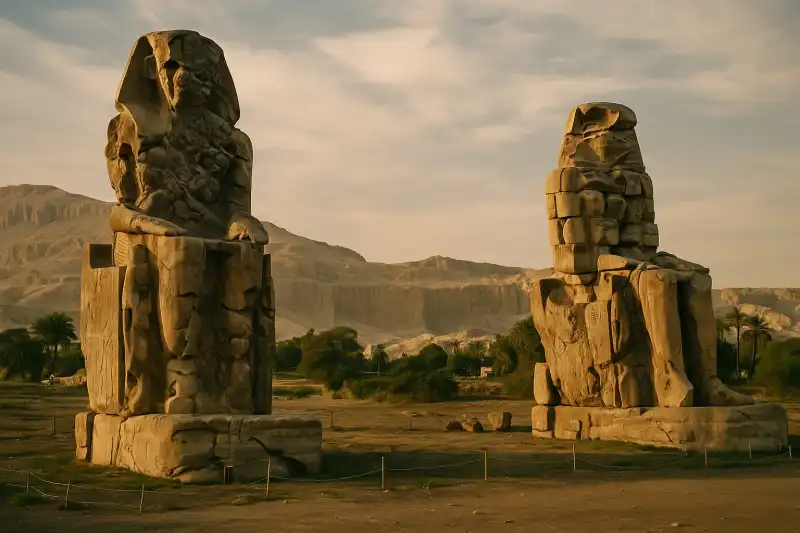
Colossi of Memnon
Ancient Egypt (New Kingdom)Twin colossal statues of Pharaoh Amenhotep III guarding the Theban necropolis on Luxor's West Bank, ...
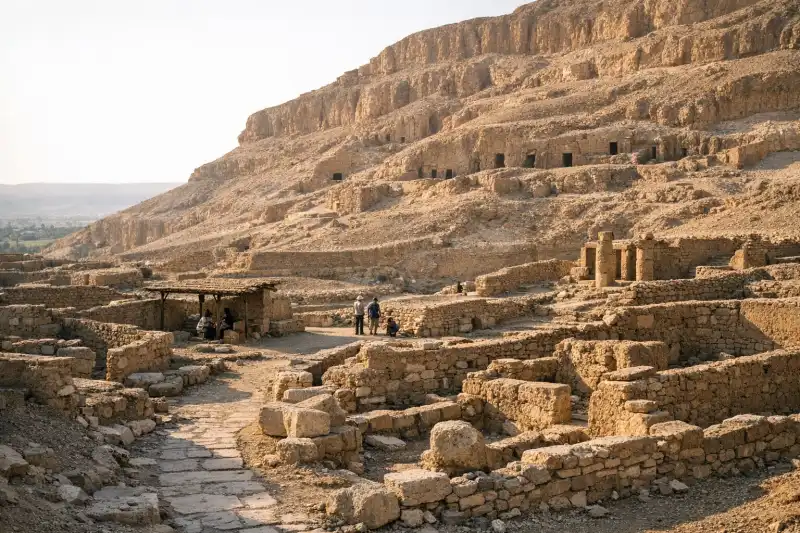
Deir el-Medina
Deir el-Medina is an ancient Egyptian workers’ village near Luxor, renowned for its remarkably prese...
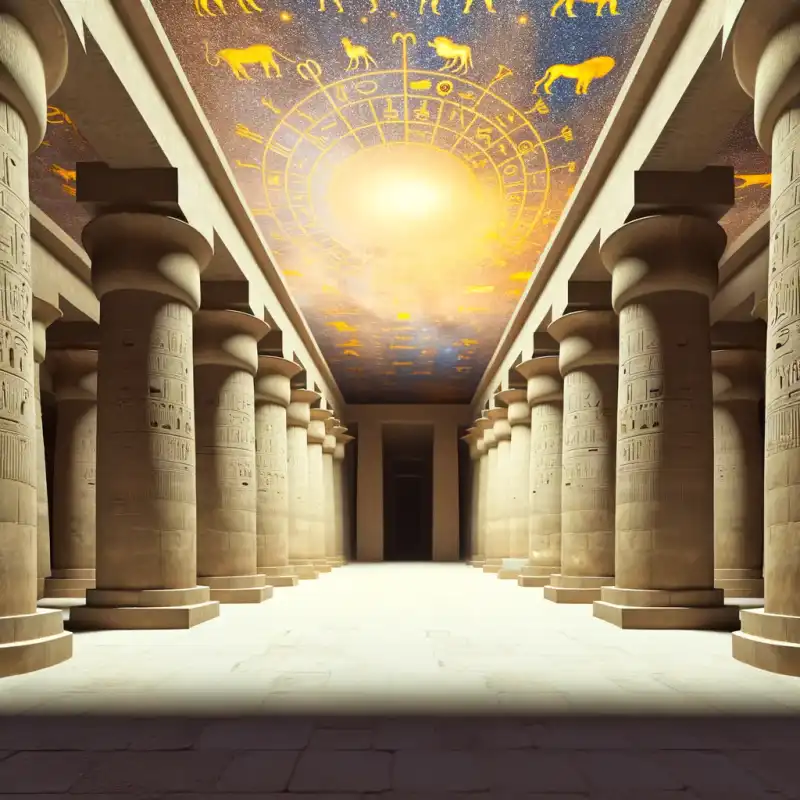
Dendera Temple Complex Egypt Guide 2026: Temple of Hathor & Zodiac Ceiling
Ptolemaic-RomanExplore Dendera's magnificent Temple of Hathor near Luxor. Star-mapped zodiac ceiling, Ptolemaic arc...