Quick Info
Curated Experiences
Gobeklitepe, The World's First Temple Tour from Sanliurfa
Daily Gobeklitepe Private Tour
On a windswept hilltop in southeastern Turkey, where the Mesopotamian plain meets the foothills of the Taurus Mountains, stone circles older than agriculture itself rise from the earth under a protective steel canopy. These are the T-shaped pillars of Gobekli Tepe — carved, transported, and erected by hunter-gatherers roughly 11,600 years ago, six millennia before Stonehenge and seven before the Egyptian pyramids. Standing before them, you confront a fundamental revision of everything we thought we knew about the origins of civilization.
The conventional narrative said it went like this: farming came first, then surplus, then settlements, then religion and monumental architecture. Gobekli Tepe inverts that sequence entirely. Here, organized religion — or something very much like it — came before any of the rest.
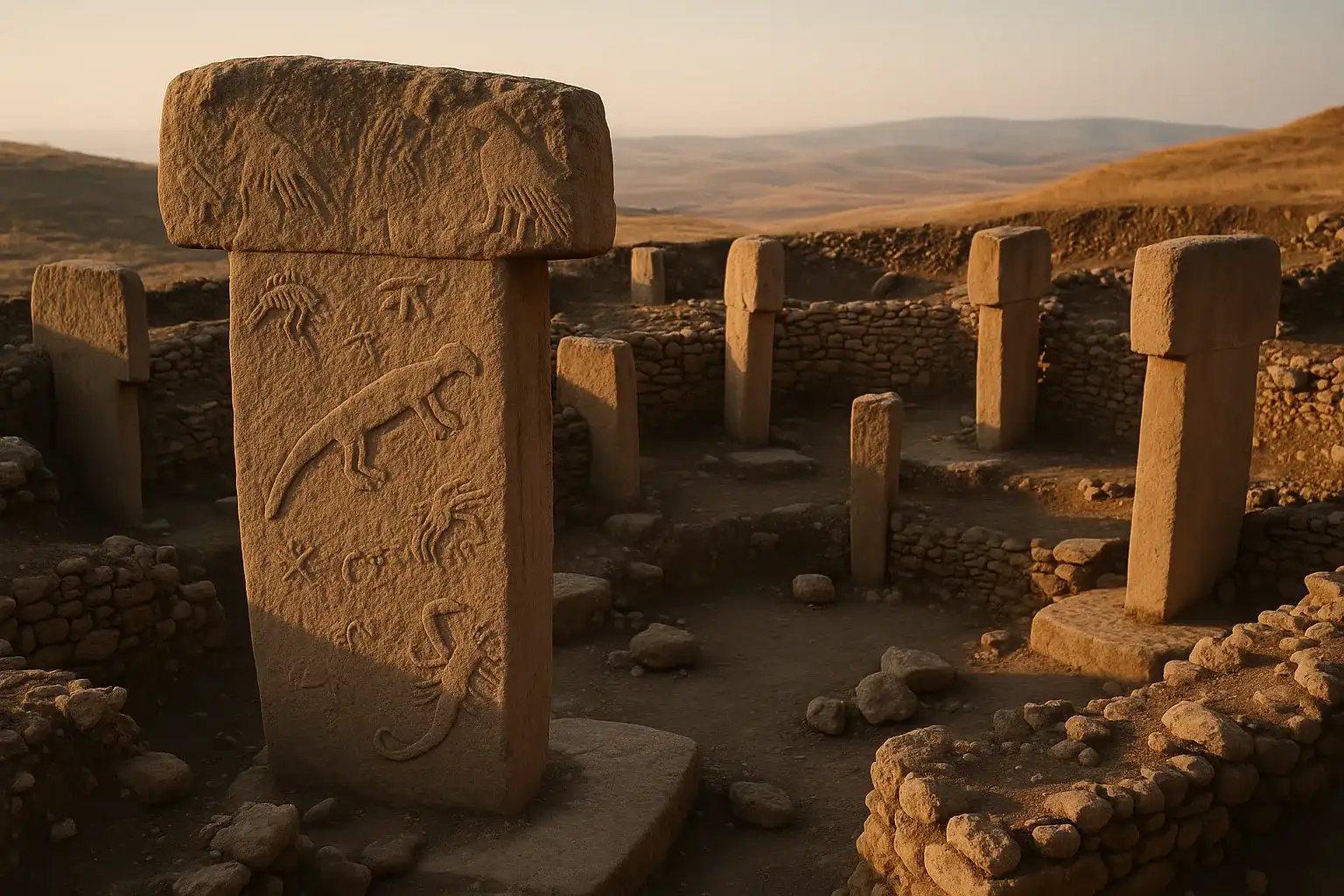
The site does not look like much at first approach. A low artificial mound, protective canopies, a visitor center, the brown and beige palette of the upper Mesopotamian steppe. Then you reach the viewing platforms and look down into the excavated enclosures, and the pillars resolve into focus: massive limestone monoliths three to five meters tall, weighing up to sixteen tons, carved with animals in low relief and arranged in precise circles with two taller central pillars facing each other. The question that hovers over everything is the obvious one: why did hunter-gatherers, with no permanent settlements and no agricultural surplus, invest this staggering effort in this remote hilltop? That question — still unanswered, still generating fierce scholarly debate — is what makes Gobekli Tepe the most intellectually significant archaeological site discovered in the last century.
Historical Context
Gobekli Tepe was built during the Pre-Pottery Neolithic period, beginning around 9600 BCE. To grasp what that means, consider the timeline: the last Ice Age had ended barely a thousand years earlier. Humans in this region were still nomadic hunter-gatherers, following game herds and gathering wild grains across the fertile uplands between the Tigris and Euphrates rivers. They had not yet domesticated wheat, barley, sheep, or cattle — all of which would happen within the next few millennia, and all of which would happen in this same region of southeastern Turkey and northern Syria.
Gobekli Tepe was built at the precise hinge point of human history, the moment just before everything changed. The wild ancestors of domesticated wheat (einkorn) grow naturally on the hills surrounding the site. Some researchers have proposed that the large gatherings of people required to build and use Gobekli Tepe may have created the very conditions — concentrated populations, increased demand for food, intensive harvesting of wild grains — that led to the invention of agriculture.
The site was first noticed by a Kurdish farmer in 1963, when he uncovered oddly shaped stones while plowing. A joint American-Turkish survey in the same decade noted the mound but interpreted it as a medieval cemetery. It was not until 1994, when German archaeologist Klaus Schmidt visited the site and recognized the T-shaped limestone fragments as something unprecedented, that systematic excavation began.
What emerged from the earth over the next two decades was revolutionary: at least twenty circular enclosures, the largest measuring twenty meters in diameter, containing massive T-shaped pillars arranged in concentric rings. Radiocarbon dating placed the earliest construction phases at roughly 9600 BCE. Schmidt devoted the rest of his career to the site until his death in 2014, and his central thesis — that Gobekli Tepe was primarily a ritual or religious center built before the advent of agriculture — reshaped the global conversation about human origins.
One of the site’s most puzzling features is that the enclosures were deliberately buried. After a period of use, each circular structure was filled with debris — rubble, animal bones, flint tools, soil — and a new enclosure built nearby or on top. This intentional backfilling both preserved the carvings for millennia and suggests a ritualistic cycle of construction, use, and closure that we cannot fully interpret.
Ground-penetrating radar surveys indicate that only a small fraction of the site has been excavated. The mound may contain hundreds of additional pillars. Gobekli Tepe is not a finished story. It is a story barely begun.
UNESCO inscribed the site as a World Heritage Site in 2018, recognizing it as an “exceptional testimony to the transition from hunter-gatherer societies to the first agricultural communities.” The broader context continues to expand: Karahan Tepe, a related T-pillar site 47 kilometers east, has been under active excavation since 2019 and is revealing comparable monumental architecture of similar antiquity, suggesting that Gobekli Tepe was not an isolated anomaly but part of a wider tradition.
What to See
The Main Excavated Enclosures (A through D)
The heart of any Gobekli Tepe visit is the cluster of excavated circular enclosures visible from the viewing platforms under the protective canopies. Enclosures A through D are the most thoroughly excavated, with Enclosure D being the largest and most spectacular — roughly fifteen meters in diameter, with two central T-shaped pillars standing over five meters tall and surrounded by a ring of smaller pillars set into a low stone wall.
The engineering precision is remarkable: the pillars are aligned with care, their surfaces smoothed, their proportions consistent. Each enclosure features two taller central pillars that face each other, a configuration that suggests a deliberate architectural grammar whose meaning we can only guess at. Some researchers have proposed that the central pillars represent ancestors, deities, or symbolic human figures — an interpretation supported by the carved arms and hands that appear on some of the central pillars.
The enclosures were built over roughly 1,500 years, with earlier structures generally being larger and more elaborate than later ones — the opposite of what evolutionary models of social complexity would predict. This inversion is one of the site’s most provocative implications: the builders’ ambition and skill appear to have been greatest at the beginning.
Practical tip: the viewing platforms offer good sight lines into the enclosures, but angles vary. Move between platforms to get different perspectives on the central pillars and carved surfaces. Morning light from the east illuminates the carvings most clearly.
The T-Shaped Pillars and Animal Carvings
The T-shaped pillars are Gobekli Tepe’s defining visual feature: massive limestone monoliths quarried from nearby bedrock using stone tools, their flat tops and narrow bodies suggesting a stylized human form. Some pillars feature carved arms bent at the elbows, with hands meeting over what would be the belly — reinforcing the interpretation that these are abstract human figures, perhaps representing ancestors or supernatural beings.
The animal carvings are what truly captivate. Foxes snarl with bared teeth. Vultures spread their wings in elaborate compositions. Scorpions, boars, snakes, and wild cattle are rendered in low relief with a confidence and detail that seems impossible given the tools available — nothing but stone, bone, and obsidian.
The vulture imagery is particularly prominent and may relate to excarnation practices — the ritual exposure of the dead to scavenging birds, a funerary tradition documented in later Near Eastern cultures. Snakes and scorpions may carry underworld or protective symbolism. The carvings are not random decoration. They appear to follow patterns that differ between enclosures, possibly representing different clan groups, ritual themes, or cosmological narratives.
Practical tip: bring binoculars or a camera with a good zoom lens. Some of the finest carvings are on pillars that you cannot approach closely, and the detail rewards magnification.
The Visitor Center
The on-site visitor center provides essential context: excavation history, archaeological methodology, scale models, and explanatory panels that help you understand what you are seeing in the enclosures. Displays explain how the pillars were quarried from exposed limestone outcrops, how the enclosures were constructed, and why the deliberate backfilling is so significant.
The center also addresses the central interpretive question — what was Gobekli Tepe for? — presenting the major competing theories without overly committing to any single explanation. This intellectual honesty is refreshing and appropriate given the genuine uncertainty that surrounds the site.
Practical tip: visit the center first. The enclosures are far more meaningful with context, and the scale models help you visualize the complete structures that the exposed foundations only partially reveal. Allow twenty to thirty minutes.
The Sanliurfa Archaeological Museum
The Sanliurfa Archaeological Museum, located in the city center roughly 18 kilometers from Gobekli Tepe, is the essential companion to a site visit. The museum houses original artifacts from the excavations, including carved pillar fragments, flint tools, and animal bones. The striking “Urfa Man” — a life-sized limestone statue with obsidian eyes, discovered near Sanliurfa and dating to roughly 9000 BCE — is among the oldest known naturalistic human sculptures in the world.
A full-scale replica of Enclosure D allows you to examine the T-pillar carvings at close range, without the distance imposed by the site’s viewing platforms. Walking among the replica pillars gives you a physical sense of the enclosure’s scale and the carved figures’ presence that the hilltop platforms cannot provide.
The museum also contextualizes Gobekli Tepe within the broader Neolithic revolution in upper Mesopotamia, connecting it to sites like Karahan Tepe, Nevali Cori, and Catalhoyuk. The collection is well-displayed and the interpretive materials are available in Turkish and English.
Practical tip: visit the museum either before or after the site — both approaches work. Allow at least 90 minutes. The Enclosure D replica alone is worth the trip.
The Quarry Area
On the hillside near the main enclosures, an unfinished T-shaped pillar remains partially carved from the bedrock — abandoned during production, still connected to the living rock. This pillar, estimated at seven meters long and over fifty tons in weight, is the single most evocative piece of evidence for the ambition of Gobekli Tepe’s builders.
It shows their working method: carving the pillar from the top and sides, then attempting to free it from below. The fact that this pillar was too large to extract tells you the builders were deliberately pushing the limits of their technology — and that their ambitions sometimes exceeded their means.
Practical tip: the quarry is a short walk from the main enclosures. Ask at the visitor center for directions if signage is unclear. The path is uneven.
Timing and Seasons
The best months to visit Gobekli Tepe are March through May and September through November. Spring temperatures run 59-77°F (15-25°C), with wildflowers on the surrounding hills and clear skies that offer views across the Mesopotamian steppe. April and May offer the most pleasant conditions overall. Autumn brings similar temperatures with slightly fewer visitors.
Summer (June through August) is punishing. Southeastern Turkey regularly exceeds 104°F (40°C), and Gobekli Tepe’s hilltop location offers almost no shade beyond the canopies over the enclosures. The heat radiating from stone and bare earth compounds the air temperature. If visiting in summer, arrive at the 8 a.m. opening and plan to finish by 11 a.m. Bring at least two liters of water per person. Heat exhaustion is a genuine risk.
Winter (December through February) is cool to cold — 37-50°F (3-10°C) — with occasional rain and biting wind on the exposed hilltop. The site remains open year-round, and winter visits offer near-total solitude. The moody atmosphere of a cold, windswept Gobekli Tepe — low clouds moving across the steppe, the pillars standing dark against gray sky — has its own power. Dress warmly in layers.
The best time of day is early morning, from the 8 a.m. opening until about 10 a.m. The light is warm, the temperature bearable even in summer, and organized tours have not yet arrived. Late afternoon (after 4 p.m.) offers soft light and thinning crowds.
Tickets, Logistics, and Getting There
Admission to Gobekli Tepe is approximately 250 Turkish lira (around $9 USD) for foreign visitors. The Museum Pass Turkey (2,500 TL / approximately $90 USD, valid 15 days) covers the site along with hundreds of other Turkish sites and monuments. The site opens at 8 a.m. year-round, closing at 7 p.m. from April through October and 5 p.m. from November through March. Tickets can be purchased on-site or online. During peak season (April through October), booking online is recommended.
Gobekli Tepe is 18 kilometers northeast of Sanliurfa. A taxi from the city center takes about 25 minutes and costs 150-200 Turkish lira ($5-7 USD). Negotiate in advance whether the driver will wait (recommended, as return taxis are scarce at the site) or arrange a pickup time. Most drivers will wait two to three hours for an additional fee of 200-300 TL. A round-trip with waiting time typically runs 500-700 TL total.
Rental cars are available at Sanliurfa GAP Airport and in the city center, providing the most flexibility for combining Gobekli Tepe with regional sites. The road to the site is paved and well-signed. Public buses do not serve the site directly.
Reaching Sanliurfa from Istanbul requires a domestic flight to Sanliurfa GAP Airport (GNY), roughly 1 hour and 45 minutes. Turkish Airlines, Pegasus, and AnadoluJet serve the route with multiple daily departures, typically $30-80 USD each way. From the airport, the city center is about 35 kilometers (40-minute drive).
Organized tours from Sanliurfa offer convenience with guide services included. Half-day tours to Gobekli Tepe run $40-80 per person. Full-day tours combining Gobekli Tepe with Karahan Tepe and/or Harran run $80-150.
Practical Tips
- The site is almost entirely exposed. Sun protection — hat, sunglasses, SPF 50+ sunscreen — is non-negotiable from March through October.
- Bring at least 1.5 liters of water per person, two liters in summer. The visitor center has a small cafe but facilities are limited.
- Comfortable walking shoes with good grip are essential. The terrain is uneven, with gravel paths and some moderately steep sections near the quarry.
- Hiring a licensed guide at the entrance (approximately 400-600 TL / $15-22 for a 1-2 hour tour) dramatically transforms the experience. A good guide explains the pillar carvings, competing theories, and details you would otherwise miss.
- Binoculars or a camera with zoom capability are valuable. The viewing platforms keep you at a distance from the pillars, and the finest carvings reward magnification.
- Dress modestly in Sanliurfa, which is a conservative city. This does not apply to the archaeological site itself, but cultural awareness matters in town.
- The Sanliurfa region is stable, welcoming, and safe for tourists. The city’s old bazaar district is excellent for food and atmosphere.
- Budget the better part of a day for Gobekli Tepe plus the Sanliurfa museum. Trying to rush both in a few hours shortchanges both experiences.
Suggested Itinerary
Start at the Sanliurfa Archaeological Museum (9 a.m., 90 minutes) to see the original artifacts, the Enclosure D replica, and the Urfa Man. Drive to Gobekli Tepe (25 minutes by taxi or rental car). Visit the on-site visitor center (20-30 minutes). Walk to the viewing platforms and spend time with the excavated enclosures, moving between platforms for different angles (45-60 minutes). Walk to the quarry area to see the unfinished pillar (15 minutes). Total time at the site: 1.5 to 2.5 hours.
For a full-day excursion, add Karahan Tepe (47 kilometers east, roughly 45 minutes by car) in the afternoon. Karahan Tepe’s excavations are newer and less touristed, but the T-pillar architecture is comparable in scale and ambition. Its underground chamber with carved human heads is unlike anything at Gobekli Tepe.
Return to Sanliurfa for a late afternoon visit to Balikligol (the Pools of Abraham) — sacred fish pools surrounded by beautiful mosque architecture in the city center. Have dinner in the atmospheric old bazaar district, where kebab restaurants and traditional lokanta serve the regional cuisine that makes Sanliurfa one of Turkey’s best food cities.
Nearby Sites
Ephesus on Turkey’s Aegean coast is chronologically unrelated — a Roman city separated from Gobekli Tepe by nine millennia — but the contrast between the two is instructive. Ephesus shows what monumental architecture became once civilization had matured for thousands of years; Gobekli Tepe shows where the impulse may have begun. The two sites are connected by domestic flights through Istanbul or Izmir.
Karahan Tepe, 47 kilometers east of Sanliurfa, is the most significant related site and should be considered part of the same visit. Excavations since 2019 have revealed T-pillar enclosures of comparable age and sophistication, including an underground chamber with carved human figures that has no parallel at Gobekli Tepe. Together, the two sites suggest that the Pre-Pottery Neolithic ritual tradition was far more widespread than previously imagined.
Harran, 45 kilometers southeast of Sanliurfa, is one of the oldest continuously inhabited cities on Earth. Mentioned in the Book of Genesis as the place where Abraham lived, Harran today is known for its distinctive beehive houses — domed mud-brick structures built the same way for thousands of years. The ancient citadel and the ruins of the medieval Islamic university add further historical layers.
The Pools of Abraham (Balikligol) in central Sanliurfa combine sacred carp pools, Ottoman mosque architecture, and landscaped gardens into a peaceful urban site that complements the intensity of Gobekli Tepe with something more contemplative and social.
Final Take
Gobekli Tepe is not a site that rewards the casual visitor expecting photogenic ruins. The enclosures are viewed from platforms, the carvings require magnification and context, and the landscape is stark. What it offers instead is something no other archaeological site on earth can match: the physical evidence that human beings organized themselves for purposes beyond survival far earlier than anyone imagined.
The impulse to build something sacred preceded the impulse to plant a field. The impulse to carve meaning into stone preceded the invention of pottery. Whatever these hunter-gatherers were doing on this hilltop eleven thousand years ago, it was important enough to mobilize hundreds of people for generations of labor, and it may have set in motion the chain of events that led to agriculture, cities, and everything we call civilization.
Stand on this hilltop, look at the T-shaped pillars, and recalibrate everything you thought you knew about what our species is capable of. It is worth the journey to southeastern Turkey. Nothing else prepares you for how it feels to stand at the actual beginning.
Discover More Ancient Wonders
- Ephesus — the magnificent Roman city on Turkey’s Aegean coast
- Pergamon — acropolis city with the steepest theater in the ancient world
- Pamukkale — thermal springs and the ancient spa city of Hierapolis
- Explore more with our Turkey Ancient Sites Guide
- Plan your visit with our beginner’s guide to archaeological sites
Quick Facts
| Attribute | Details |
|---|---|
| Location | Şanlıurfa Province, Turkey |
| Country | Turkey |
| Region | Şanlıurfa Province |
| Civilization | Pre-Pottery Neolithic |
| Historical Period | c. 9600–8000 BCE |
| Established | c. 9600 BCE |
| UNESCO Status | World Heritage Site (2018) |
| Coordinates | 37.2236, 38.9217 |
Frequently Asked Questions
Why does Göbekli Tepe change what we know about human history?
Göbekli Tepe predates Stonehenge by 6,000 years and was built by hunter-gatherers before the invention of pottery, writing, or agriculture. Its scale and sophistication overturned the assumption that agriculture and settled society preceded organized religion and monumental architecture. Many archaeologists now believe organized religion may have been the catalyst for agriculture, not the result.
How do I get to Göbekli Tepe from Şanlıurfa?
Göbekli Tepe is 18 km northeast of Şanlıurfa (Urfa). Taxis from the city center take about 25 minutes and cost 150-200 Turkish Lira. Public buses don't serve the site directly. Most visitors combine it with the Şanlıurfa Archaeological Museum (which houses original carvings) and Karahan Tepe (another T-pillar site 47 km away).
What can I see at Göbekli Tepe today?
The main site has several excavated enclosures visible under protective steel canopies, with the famous T-shaped pillars and animal reliefs. Ongoing excavations continue to reveal new structures. The visitor center provides context. Note: only a fraction of the site has been excavated—ground-penetrating radar suggests the full extent is enormous.
Is Göbekli Tepe a UNESCO World Heritage Site?
Yes—it was inscribed on the UNESCO World Heritage List in 2018, recognized as an 'exceptional example of a pre-Pottery Neolithic sanctuary' whose discovery fundamentally changed our understanding of human prehistory and the origins of civilization.
Who built Göbekli Tepe and why?
The builders were hunter-gatherers who predated any known civilization. The 'why' remains one of archaeology's great open questions. Klaus Schmidt, who excavated the site for decades until his death in 2014, believed it was primarily a ritual or religious center—possibly the world's oldest temple complex. The T-pillars may represent stylized human beings, deities, or mythological figures. Its purpose still generates active scholarly debate.
Nearby Ancient Sites
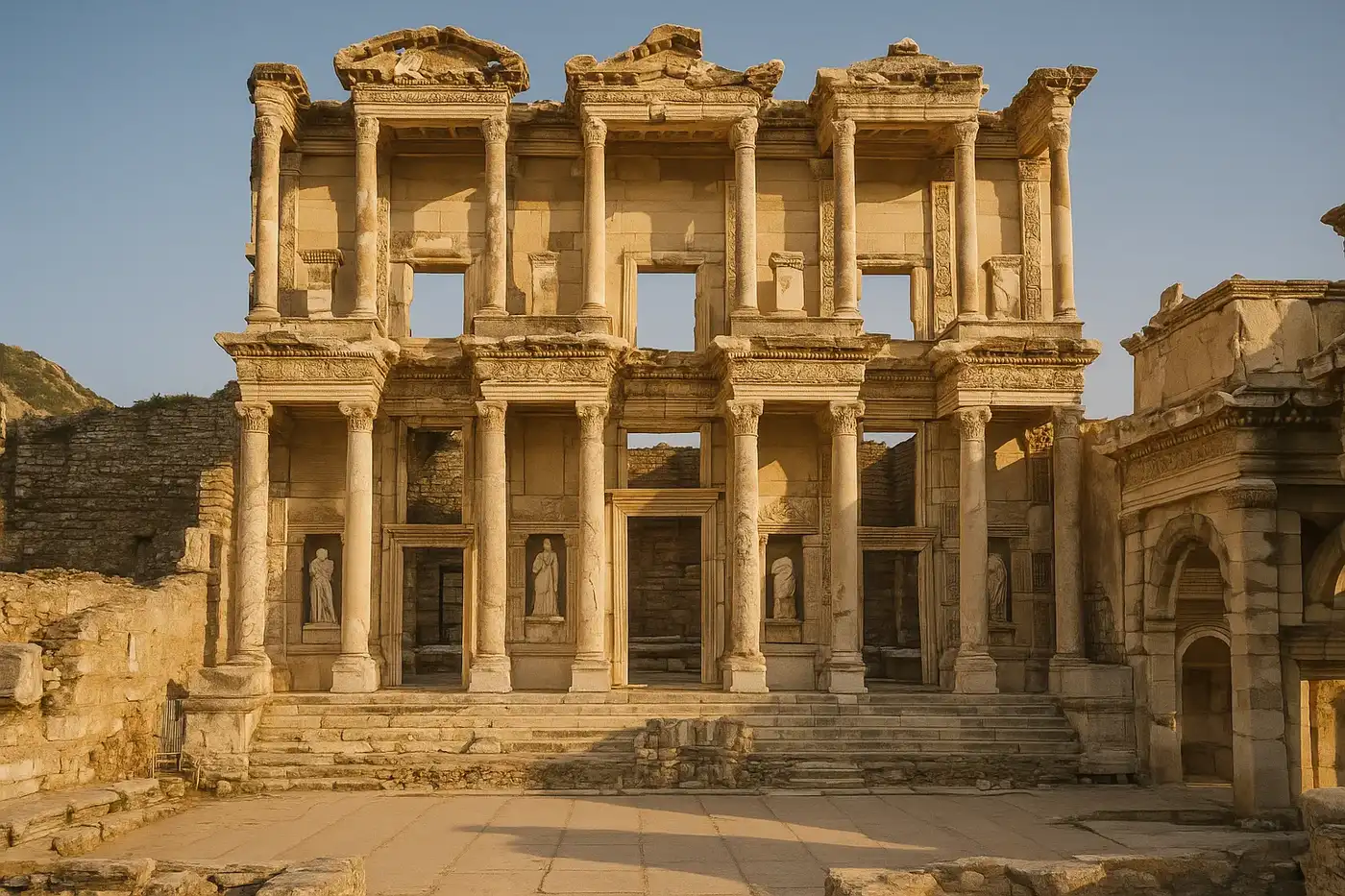
Ephesus Turkey Travel Guide: Library of Celsus & Terrace Houses
Greco-RomanDiscover Ephesus, the best-preserved ancient city in the Mediterranean. Our complete guide covers th...
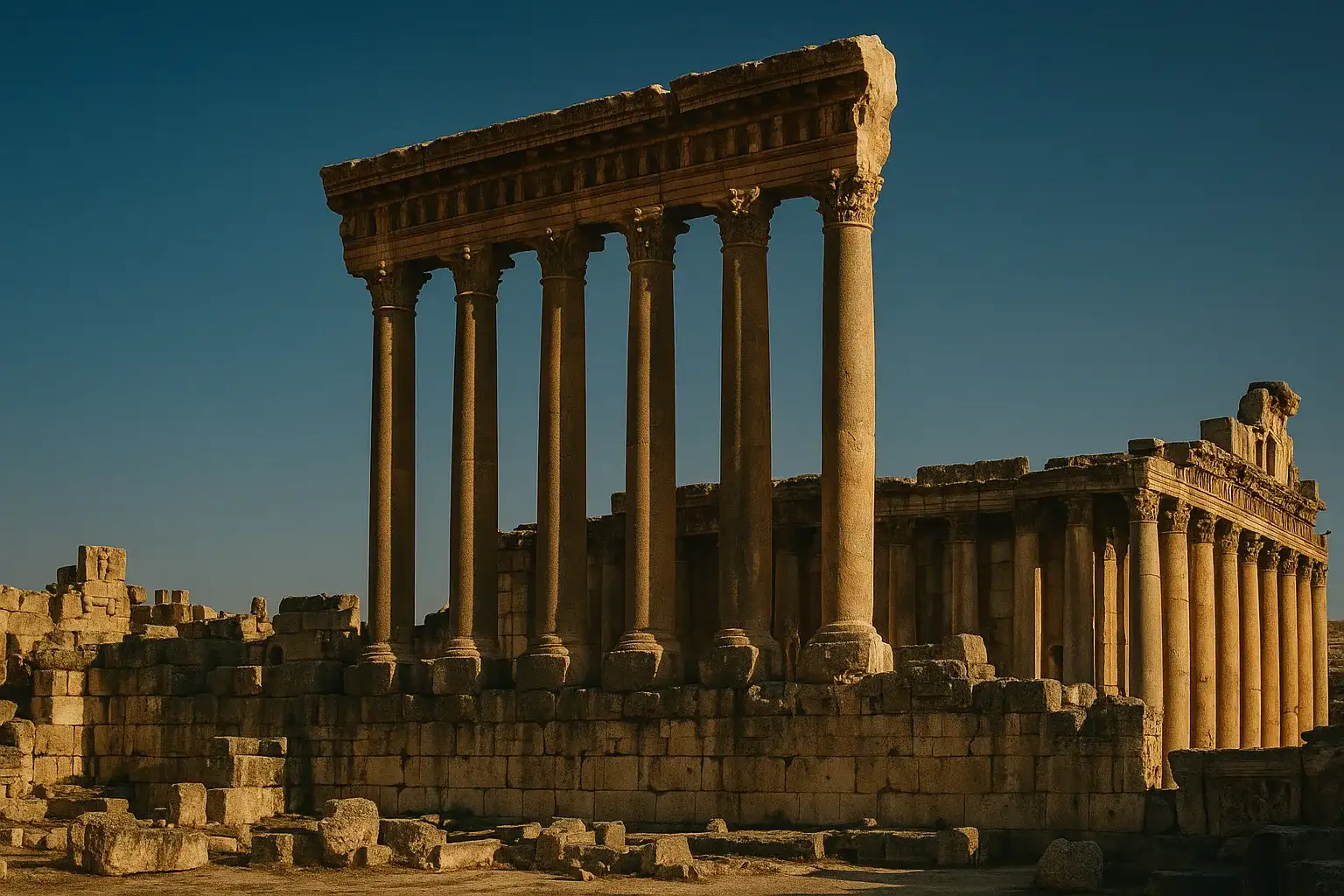
Baalbek: Rome's Mightiest Temple Complex in Lebanon's Beqaa
Roman / PhoenicianExplore Baalbek's colossal Roman temples, including the best-preserved Temple of Bacchus. Discover t...
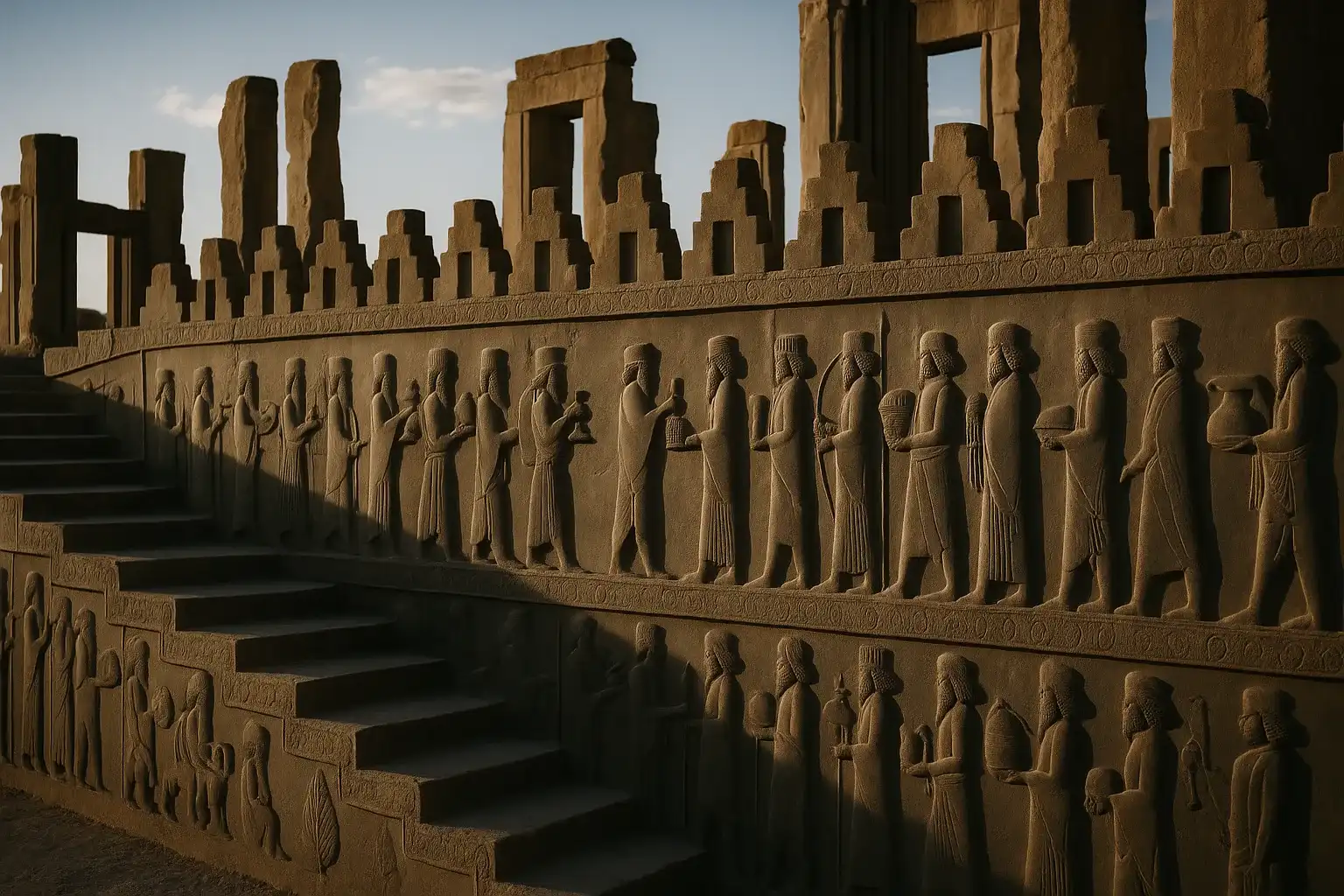
Persepolis: The Glorious Capital of the Persian Empire
Achaemenid Persian EmpireExplore Persepolis, the magnificent ceremonial capital of the Achaemenid Empire. Walk among towering...