Curated Experiences
Great Zimbabwe Ruins Day Trip from Harare
Great Zimbabwe Ancient City Private Tour
Africa’s Greatest Stone City
Rising from the granite hills of southeastern Zimbabwe, the ancient city of Great Zimbabwe stands as the most impressive monument to African engineering and political organization south of the Sahara. These weathered stone walls, built without mortar and standing for over seven centuries, once housed the capital of a thriving Shona kingdom that dominated trade routes between the interior goldfields and the Indian Ocean coast.
The Name That Became a Nation
Great Zimbabwe doesn’t just describe a place—it gave its name to an entire nation. When European colonizers arrived in the late 19th century, they found these ruins so impressive that they appropriated the name for their new colony: Southern Rhodesia became Zimbabwe in 1980, taking the name from the Shona phrase dzimba dza mabwe (“houses of stone”).
The name carries profound significance. For decades, colonial authorities refused to accept that Black Africans could have built such sophisticated structures, concocting theories about Phoenician, Arab, or even Biblical lost tribes as the true builders. These racist narratives have been thoroughly debunked by archaeology, oral history, and carbon dating—all confirming that Great Zimbabwe was built by the Shona people between the 11th and 15th centuries CE.
Today, Great Zimbabwe is a UNESCO World Heritage Site and the most important symbol of African heritage and achievement on the continent. Visiting these ruins isn’t just tourism—it’s an act of reclaiming history and celebrating Indigenous ingenuity.
Getting to Great Zimbabwe
From Harare: The 4-Hour Drive South
Most visitors reach Great Zimbabwe from Harare, Zimbabwe’s capital. The 290-kilometer journey south takes approximately 4 hours by car on paved roads in reasonable condition. The route passes through scenic highveld countryside, with opportunities to stop at towns like Masvingo for supplies.
Car rental is available in Harare from international agencies and local operators. A 4WD vehicle isn’t necessary for reaching Great Zimbabwe itself—the access roads are paved—but if you plan to explore more remote areas of Zimbabwe, consider upgrading. Fuel shortages can occur, so fill up when you can and carry cash for fuel purchases.
From Bulawayo: Approaching from the West
Travelers coming from Bulawayo (Zimbabwe’s second city) face a longer journey—approximately 340 kilometers taking 5-6 hours. The route passes through Gweru and offers different scenery, including granite kopjes (small hills) that foreshadow the geology of Great Zimbabwe.
Bulawayo itself is worth exploring, with excellent museums and proximity to Matobo National Park, home to Ndebele rock art and the grave of Cecil Rhodes. Combining Matobo with Great Zimbabwe creates a comprehensive cultural itinerary.
Public Transportation and Organized Tours
Public Transport: Budget travelers can reach Masvingo town by bus from Harare ($10-15 USD, 4-5 hours) or Bulawayo. From Masvingo, you’ll need to hire a taxi for the final 27 kilometers to Great Zimbabwe ($15-25 USD each way). This approach saves money but requires flexibility and patience.
Organized Tours: Several operators in Harare and Victoria Falls offer day trips and overnight tours to Great Zimbabwe. These typically include transportation, guide services, accommodation, and entrance fees. Prices range from $200-400 USD for multi-day trips. Tours offer convenience and expert interpretation, particularly valuable given the complex history of the site.
Private Driver: Hiring a private driver with vehicle costs approximately $150-200 USD per day including fuel—a reasonable option for groups of 2-4 people wanting flexibility without the stress of self-driving.
The Three Complexes: Understanding the Layout
Great Zimbabwe isn’t a single site but three distinct architectural complexes spread across a 7-square-kilometer area: the Hill Complex, the Great Enclosure, and the Valley Complex. Understanding this layout helps visitors appreciate how the city functioned as a political, religious, and residential center.
The Hill Complex: Royal Citadel
Begin your exploration at the Hill Complex, the oldest and most elevated portion of the site. This granite outcrop, rising 80 meters above the surrounding terrain, was the spiritual and political heart of Great Zimbabwe. The climb involves uneven steps and narrow passages between boulders—sturdy shoes are essential.
Archaeological evidence suggests the Hill Complex served as the royal residence and religious center. High-status dwellings once crowned the summit, and the location provided commanding views of approaching visitors and trade caravans. Look for the mysterious stone monoliths and the site’s oldest walls, dating to the 11th century.
The Hill Complex also contains the earliest evidence of occupation, with artifacts suggesting continuous settlement for over 400 years. The strategic position—defensible, visible, and spiritually significant—explains why this location anchored the city’s development.
The Great Enclosure: Engineering Marvel
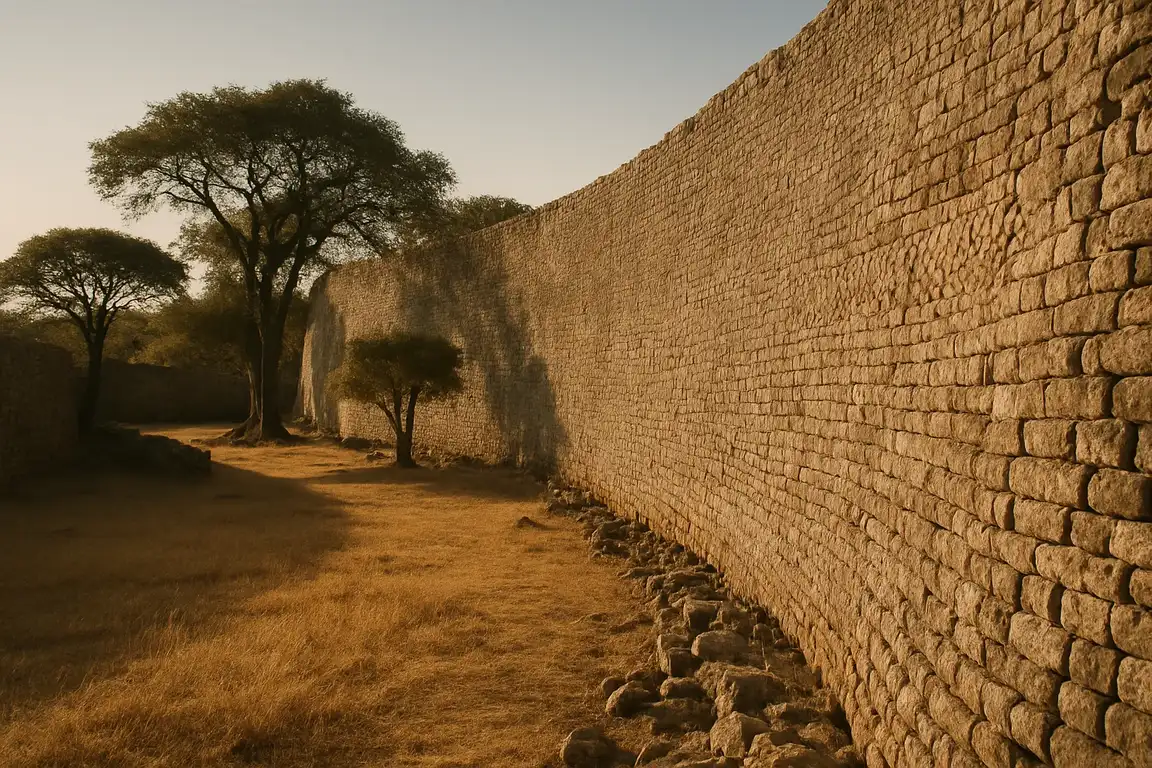
The Great Enclosure represents the pinnacle of Great Zimbabwe’s architectural achievement—and one of the most impressive ancient structures in Africa. This massive elliptical stone wall measures 250 meters in circumference and reaches 11 meters in height in places, all constructed without mortar.
As you approach, the scale becomes overwhelming. The outer wall varies from 4-5 meters thick at the base, tapering gracefully toward the top. Pass through the narrow entrance and you’ll find an inner wall running parallel, creating a mysterious corridor that scholars believe had ritual significance.
The Great Enclosure’s purpose remains debated. It likely served as a royal residence or ritual space—archaeologists have found gold artifacts and ceremonial objects here, but few signs of everyday domestic activity. The famous Conical Tower, a solid stone structure rising 10 meters, stands within the enclosure, its purpose still unknown. Some suggest it represented a grain silo symbolically; others believe it had religious significance.
What astonishes visitors and engineers alike is the precision of the dry stone construction. Each granite block was carefully shaped and placed, with no mortar binding them together. Yet the walls have stood for 700+ years, surviving earthquakes, tropical storms, and centuries of neglect.
The Valley Complex: Living Quarters
The Valley Complex stretches between the Hill Complex and Great Enclosure, containing the ruins of ordinary dwellings and workshops. While less visually dramatic than the monumental architecture, this area reveals the lives of the estimated 18,000 people who called Great Zimbabwe home at its peak.
Archaeologists have identified remains of daga (mud and thatch) houses, iron-smelting furnaces, and gold-working sites. Trade goods from as far as China and Persia demonstrate Great Zimbabwe’s connection to Indian Ocean trade networks. The Valley Complex reminds visitors that this wasn’t just a ceremonial center but a thriving city with artisans, farmers, and merchants.
Decoding the Architecture: Dry Stone Mastery
How the Walls Were Built (No Mortar!)
The construction technique at Great Zimbabwe represents a sophisticated response to local materials and conditions. Builders used granite blocks quarried from the surrounding hills—some weighing several tons—shaping them through controlled heating and cooling that caused the stone to fracture along predictable lines.
The genius lies in the placement. Workers stacked stones in horizontal courses, carefully selecting each piece to interlock with its neighbors. The walls taper from a wide base to a narrower top, providing stability through geometry rather than mortar. Some walls incorporate natural boulders as anchors, seamlessly integrating architecture with landscape.
This technique required enormous labor—estimates suggest the Great Enclosure alone required over a million person-hours of work. But the result was durable, weather-resistant structures that have outlasted many modern buildings.
The Conical Tower and Its Purpose
The Conical Tower stands as one of Great Zimbabwe’s enduring mysteries. This solid stone cylinder, built without interior chambers or passages, rises 10 meters within the Great Enclosure. Archaeological investigation confirms it was built simultaneously with the surrounding walls, not added later.
Theories abound: a symbolic grain silo representing prosperity, a phallic symbol associated with kingship and fertility, a beacon or marker visible from the Hill Complex, or simply an architectural statement of power and permanence. Whatever its purpose, the Conical Tower demonstrates the ambition and skill of Great Zimbabwe’s builders.
When to Visit: Weather and Wildlife
Dry Season (April-October): Best Conditions
The dry season offers ideal conditions for exploring Great Zimbabwe. From April through October, rainfall is minimal, humidity drops, and temperatures are moderate (15-25°C / 59-77°F). The dry season also coincides with Southern Africa’s winter, bringing cooler nights and pleasant daytime conditions.
June through August are particularly comfortable, though mornings can be chilly. The dry vegetation makes wildlife viewing easier—you may spot klipspringers (small antelopes) among the rocks, and birdwatching is excellent year-round.
Green Season: Lush but Muddy
November through March brings the rainy season, transforming the landscape into lush green veld. While temperatures are hotter (often exceeding 30°C / 86°F) and afternoon thunderstorms are common, the green season has its charms. Wildflowers bloom, birdlife is abundant, and the stone ruins contrast beautifully against verdant surroundings.
However, the Hill Complex paths become slippery after rain, and the Valley Complex can be muddy. If visiting during green season, start early to avoid afternoon storms and bring waterproof gear.
Practical Essentials: Tickets, Guides, and Logistics
Entrance Fees and Park Hours
Great Zimbabwe National Park opens daily from 6:00 AM to 6:00 PM. Foreign visitor entrance fees are approximately $20 USD per person (payable in USD cash or local equivalent). The fee includes access to all three complexes and the museum.
Allow a full day for thorough exploration—minimum 4-5 hours, though enthusiasts could easily spend longer. The site opens at sunrise, which offers cooler temperatures and beautiful light for photography.
The On-Site Museum
Before or after exploring the ruins, visit the on-site museum, which displays artifacts recovered from excavations: gold ornaments, iron tools, pottery shards, and the famous Zimbabwe Birds. These carved soapstone eagles—eight were originally found at Great Zimbabwe—have become national symbols and appear on Zimbabwe’s flag and currency.
The museum also provides historical context, addressing the site’s discovery, colonial misconceptions, and the ongoing significance of Great Zimbabwe for African heritage. Interpretive panels help visitors understand what they’re seeing in the archaeological zones.
Where to Stay (Great Zimbabwe Hotel and Camping)
Great Zimbabwe Hotel: Located within walking distance of the entrance, this mid-range hotel offers comfortable rooms, a restaurant, and swimming pool—perfect for cooling off after a hot day of exploration. Rates typically range $80-120 USD per night including breakfast.
Camping: Budget travelers can camp at designated sites within the park for approximately $10-15 USD per person. Basic facilities include ablutions and braai (barbecue) areas. Bring all supplies from Masvingo, as the camp store is limited.
Masvingo Town: For more options, stay in Masvingo (27 km away), which offers guesthouses and hotels at various price points. This requires transport to and from the site but provides more dining and service options.
Frequently Asked Questions
Who actually built Great Zimbabwe?
Great Zimbabwe was built by the Shona people between the 11th and 15th centuries CE. This is definitively established through archaeology, oral history, radiocarbon dating, and continuity with modern Shona traditions. Colonial theories attributing construction to external peoples (Phoenicians, Arabs, etc.) have been thoroughly debunked and recognized as racist attempts to deny African achievement.
Is Great Zimbabwe safe to visit?
Yes, Great Zimbabwe and the Masvingo region are safe for tourists. Zimbabwe has experienced economic challenges, but violent crime against visitors is rare at archaeological sites. Standard precautions apply: secure valuables, use reputable transport, and follow local advice. The site itself is well-managed with park rangers present.
How much time do I need at Great Zimbabwe?
Plan for at least 4-5 hours to explore all three complexes at a reasonable pace. A full day allows for a more relaxed experience, time in the museum, and possibly a second climb of the Hill Complex for different lighting. Serious enthusiasts may want to stay overnight to experience sunrise and sunset at the ruins.
Can I climb the walls?
No—walking on the walls damages the dry stone masonry and is strictly prohibited. Stick to designated paths and respect barriers. The walls have survived for centuries; responsible tourism helps ensure they survive for future generations.
Do I need a guide?
While not mandatory, hiring a guide is highly recommended. Licensed guides (available at the entrance for $20-30 USD) provide essential context on Shona history, architectural techniques, and the site’s cultural significance. A good guide transforms the experience from “looking at old walls” to understanding one of Africa’s greatest civilizations.
A Monument to African Ingenuity
Standing before the towering walls of the Great Enclosure, tracing the precise lines of granite blocks placed seven centuries ago, you’re witnessing something extraordinary—not just impressive architecture, but a refutation of colonial narratives that sought to deny African achievement. Great Zimbabwe represents the pinnacle of pre-colonial engineering, political organization, and artistic expression in southern Africa.
The Shona builders who created this city achieved what seemed impossible: a monumental capital that dominated regional trade, projected royal power, and inspired awe in all who beheld it. They did this without mortar, without metal tools for stone-cutting, without written plans—using only stone, skill, and social organization.
Great Zimbabwe’s decline in the 15th century remains mysterious—perhaps environmental degradation, perhaps political fragmentation, perhaps shifting trade routes. But the legacy endures. Modern Zimbabwe draws its name, its pride, and its identity from this place. The Zimbabwe Birds, those mysterious soapstone eagles, watch over a nation that has reclaimed its history.
For travelers, visiting Great Zimbabwe offers more than sightseeing—it offers connection to one of humanity’s great civilizational stories, told in stone by African hands. That makes this remote corner of Zimbabwe essential pilgrimage for anyone seeking to understand our shared human heritage.
Explore More Ancient Wonders
- Volubilis: Morocco’s best-preserved Roman ruins
- Luxor: Egypt’s greatest open-air museum
- Petra: Jordan’s rose-red city carved from cliffs
- Jerash: The best-preserved Roman city in the Middle East
Learn essential travel skills with our beginner’s guide and tips for photographing ruins. For budget travel advice, see our budget archaeological travel guide.
Frequently Asked Questions
Why is Great Zimbabwe historically significant?
Great Zimbabwe is the largest ancient structure in sub-Saharan Africa and represents undeniable proof of sophisticated indigenous African civilization before European contact. When European colonizers discovered it, many refused to believe Africans could have built it—attributing it to Phoenicians, Israelites, or others. Today it's recognized as the capital of the medieval Munhumutapa Kingdom and a symbol of African civilization's depth and achievement. It gave Zimbabwe its name at independence.
What is the Great Enclosure at Great Zimbabwe?
The Great Enclosure is the largest single ancient structure in sub-Saharan Africa—a massive elliptical wall standing 11 meters high, 5 meters thick, and over 250 meters in circumference, built entirely without mortar. Its precise construction, conical tower, and sophisticated drainage system demonstrate the Shona builders' advanced engineering. Its exact purpose—royal residence, religious sanctuary, coming-of-age facility—remains debated.
How do you get to Great Zimbabwe?
Great Zimbabwe is 30 km southeast of Masvingo in southeastern Zimbabwe. Most visitors fly to Harare and drive or take a bus to Masvingo (4-5 hours, 300 km), then a short taxi to the site. Alternatively, charter flights serve Masvingo Airport. Budget a full day from Masvingo; the ruined city and site museum together need 3-4 hours.
What is the best time to visit Great Zimbabwe?
The dry season (May-October) offers the most comfortable visiting conditions with clear skies and manageable temperatures. The site is accessible year-round, but the summer rainy season (November-April) can make unpaved roads to the site difficult.
Who were the people of Great Zimbabwe?
Great Zimbabwe was built and inhabited by the ancestors of the Shona people of modern Zimbabwe. At its peak around 1350 CE, it housed an estimated 18,000 people and controlled trade routes connecting the interior of Africa to Indian Ocean ports. The city exported gold and ivory, importing Chinese porcelain, Persian faience, and glass beads found at the site. The Munhumutapa Kingdom that emerged from Great Zimbabwe influenced the region for centuries.