Quick Info
Curated Experiences
Hire a Licensed Guide for Fullday Hampi Visit
1 Day Private Tour of Hampi World Heritage Site
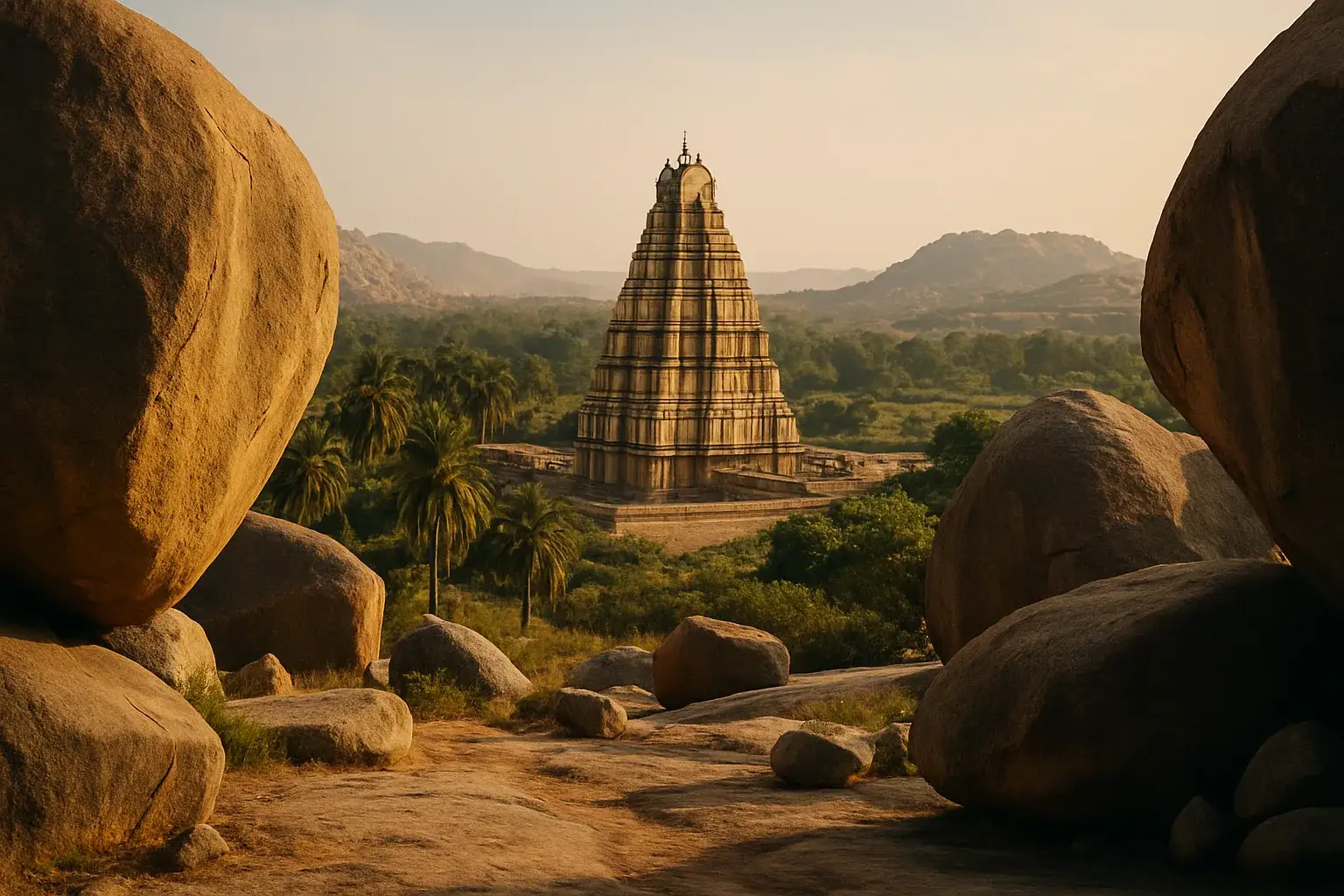
Sprawled across a hallucinogenic landscape of granite boulders, banana plantations, and the palm-fringed Tungabhadra River, Hampi is unlike any other destination on Earth. This UNESCO World Heritage Site preserves the remains of Vijayanagara—the “City of Victory”—which was India’s wealthiest metropolis and the world’s second-largest city after Beijing in 1500 CE.
Founded in 1336, the Vijayanagara Empire defended South India from northern sultanates for over two centuries before its catastrophic defeat at the Battle of Talikota in 1565 led to six months of pillaging that reduced the city to rubble. Today, visitors explore over 1,600 surviving monuments spread across 4,100 hectares: soaring gopurams that pierce the sky, the musical pillars of the Vitthala Temple, elephant stables fit for royalty, and the still-active Virupaksha Temple where pilgrims have worshipped for 1,400 years.
Whether you’re a history buff, a boulderer seeking world-class climbing, or a backpacker chasing India’s most photogenic sunsets, Hampi delivers an experience that’s equal parts spiritual, adventurous, and utterly surreal.
Where Is Hampi? Reaching India’s Most Surreal Landscape
Hampi sits in the Bellary district of northern Karnataka, in a valley formed by the Tungabhadra River. The nearest major transportation hub is Hospet (Hosapete), 13 kilometers away, which provides the gateway for most visitors.
Getting to Hampi:
- By rail: Hospet Junction connects to Bangalore, Hyderabad, Goa, and major Indian cities. Overnight trains from Bangalore are popular.
- By road: Regular buses run from Bangalore (6–7 hours), Hyderabad (8–9 hours), and Goa (7–8 hours). Private taxis are also available.
- By air: The nearest airports are Hubli (140 km) and Bangalore (350 km). From either, continue by road to Hospet/Hampi.
Arrival in Hampi: Auto-rickshaws from Hospet charge ₹300–400 for the journey to Hampi. Local buses also run frequently for budget travelers (₹20). The final approach reveals the first temple towers rising from the boulder fields, signaling your arrival at this extraordinary place.
Hampi’s Bizarre Landscape: Granite Boulders & Banana Groves
Hampi’s defining characteristic is its otherworldly terrain—an expanse of rounded granite boulders stacked in gravity-defying formations across the valley floor. These 3-billion-year-old rocks create a landscape so surreal that it feels more lunar than terrestrial.
The Geological Story: The granite domes and boulder piles formed through millennia of weathering, erosion, and natural exfoliation. The result is a playground of friction-rich stone that attracts climbers from around the world while providing dramatic backdrops for temple photography.
Agricultural Contrasts: Between the rocks, the fertile valley soil supports lush cultivation. Banana plantations stretch across the flats, their green leaves contrasting with the gray granite. Palm groves line the riverbanks. Paddy fields and sugarcane add layers of green to an already verdant palette.
The River Connection: The Tungabhadra River divides the site into two distinct areas: the Sacred Center (where most temples cluster) and the Royal Center (across the river, accessible by coracle or road). The river itself adds spiritual significance—pilgrims believe its waters purify, and ancient myths associate the valley with the Ramayana epic.
The Rise and Fall of Vijayanagara (1336–1565)
Understanding Hampi’s history transforms scattered ruins into a vibrant metropolis in the mind’s eye.
Foundation: Brothers Harihara I and Bukka Raya I established the Vijayanagara Empire in 1336, creating a Hindu bulwark against the Delhi Sultanate’s expansion into South India. They chose this defensible valley as their capital.
Golden Age: Under Krishnadevaraya (1509–1529), the empire reached its zenith. The Portuguese traveler Domingo Paes described a city of immense wealth, with a population exceeding 500,000. Diamonds were sold openly in markets. The king’s processions featured hundreds of elephants and thousands of soldiers.
Architecture & Arts: Vijayanagara rulers blended Dravidian temple traditions with Indo-Islamic influences, creating a distinctive style visible throughout the ruins. They patronized Telugu literature, Carnatic music, and temple arts that continue to influence South Indian culture.
The Fall: In January 1565, the combined armies of four Deccan sultanates defeated Vijayanagara forces at the Battle of Talikota. The victorious Muslim armies marched on the capital and looted it for six months. When they departed, the city lay in ruins. What the invaders didn’t destroy, time and treasure hunters finished.
Virupaksha Temple: 1,400 Years of Continuous Worship
The spiritual heart of Hampi—and one of the oldest continuously functioning temples in India—Virupaksha dominates the Hampi Bazaar area with its towering 50-meter gopuram.
History & Significance: Dedicated to Shiva as Virupaksha (the one with oblique eyes) and his consort Pampadevi, the temple’s origins predate the Vijayanagara Empire by centuries. Inscriptions indicate worship here since at least the 7th century CE, with major expansions during the empire’s reign.
Architecture: The temple complex follows a typical South Indian layout with multiple enclosures (prakaras):
- The Main Gopuram — Nine stories of gradually receding pyramidal construction, covered in sculptures
- The Ranga Mandapa — A pillared hall with elaborate ceiling paintings added in 1510
- The Sanctum Sanctorum — Housing the Shiva lingam and Pampadevi shrine
- The Courtyards — Multiple enclosures containing subsidiary shrines, pillared halls, and the temple kitchen
The Living Temple: Unlike the ruined monuments surrounding it, Virupaksha remains active. Priests perform daily rituals; pilgrims come for blessings; festivals draw thousands. The temple elephant, Lakshmi, blesses visitors in exchange for coins—a charming tradition that connects ancient and modern India.
Tungabhadra Connection: The temple sits beside the river, and a sacred ghat (bathing steps) allows ritual purification. According to legend, this is where Pampa (a local form of Parvati) performed penance to win Shiva’s love—hence the name Pampapati (Lord of Pampa) for the deity.
Top 10 Monuments at Hampi (That Aren’t Virupaksha)
Beyond the living temple, Hampi’s ruins reward exploration with extraordinary monuments spanning religious, military, and royal functions:
-
The Vitthala Temple Complex — The undisputed artistic masterpiece of Vijayanagara architecture. The famous stone chariot (actually a shrine) stands in the courtyard, while the main temple’s 56 musical pillars produce different notes when struck.
-
The Elephant Stables — Eleven magnificent domed chambers housed the royal elephants. The structure blends Indo-Islamic arches with Hindu decorative elements, demonstrating the empire’s cultural synthesis.
-
The Lotus Mahal — This elegant two-story pavilion served as the queen’s recreational palace. Its arched windows and balconies allowed air circulation while maintaining privacy—a sophisticated climate-control solution.
-
Hemakuta Hill — This elevated area contains over 30 temples, including the giant monolithic statues of Kadalekalu Ganesha and Sasivekalu Ganesha. The hill provides Hampi’s most accessible sunrise viewpoint.
-
The Queen’s Bath — Despite its name, this elaborate bathing complex likely served royal guests of both sexes. Indo-Islamic arched corridors surround a sunken pool.
-
The Achyutaraya Temple — Located east of Virupaksha, this massive Vishnu temple features a colonnaded market street leading to its entrance—a testament to the integration of commerce and worship.
-
The Hazara Rama Temple — The royal family’s private temple, its walls covered in exquisite bas-reliefs depicting the Dasara festival procession and scenes from the Ramayana.
-
The Mahanavami Dibba — This three-tiered platform hosted royal ceremonies and military parades. Climb to the top for panoramic views over the Royal Center.
-
The Underground Shiva Temple — Partially submerged due to changing water tables, this unique temple demonstrates the engineers’ challenges in this riverine landscape.
-
The Tungabhadra Riverside Temples — Coracle boats transport visitors to secluded shrines like the Kodandarama Temple, where the river’s northward turn holds sacred significance.
Hampi Bouldering: World-Class Climbing on Ancient Stone
What truly sets Hampi apart from every other ancient site is its dual identity as one of Asia’s premier bouldering destinations. The same 3-billion-year-old granite boulders that create Hampi’s surreal landscape provide thousands of established climbing routes.
Why Hampi for Climbers:
- Granite quality: Excellent friction with featured faces, cracks, pockets, and slopers
- Route variety: Everything from V0 beginner problems to V13 testpieces established by elite climbers
- Setting: Climb among ancient ruins and banana plantations with temple views
- Season: October–February offers optimal conditions (15–28°C)
- Community: International climbers gather annually; finding partners is easy
Popular Sectors:
- The Citadel: Problems near Virupaksha Temple with views of the gopuram
- Rishimukh: Riverside boulders accessible by coracle; classic problems on golden granite
- Matanga Hill: Highball problems with sunset vistas over the valley
- Hippie Island (Virupapur Gadde): Concentrated boulders within walking distance of guesthouses
Practical Information:
- Equipment: Crash pads available for rent at guesthouses (₹300–500/day)
- Style: Bouldering only—no ropes or sport climbing
- Ethics: Respect temple boundaries; avoid climbing on archaeological structures; minimize chalk use on visible faces
- Guidebook: The “Hampi Bouldering Guide” by Gerry Moffatt and others provides route information
The Hampi Experience: Even non-climbers appreciate the “boulderer culture” that infuses Hampi with youthful, international energy. Sunrise climbing sessions followed by temple exploration create unforgettable days that blend physical adventure with cultural discovery.
Where to Stay: Hampi Bazaar, Hippie Island & Beyond
Hampi offers distinct accommodation zones, each with its own character and advantages:
Hampi Bazaar (Main Bazaar): The traditional pilgrimage area steps from Virupaksha Temple. Guesthouses cluster in the lanes behind the main street, offering temple views and atmospheric ruins at your doorstep.
- Vibe: Busy, spiritual, centrally located
- Budget: Guesthouses ₹500–1,500; basic lodges ₹300–800
- Best for: First-time visitors; temple-focused travelers; budget backpackers
- Note: Government restrictions limit development; expect basic facilities
- Top picks: Mowgli Guest House (rooftop restaurant, temple views), Gowri Resort (mid-range, river-facing)
Hippie Island (Virupapur Gadde): Across the river, reached by coracle ferry (₹20; 5 minutes), this area offers a more relaxed atmosphere with better amenities and the bouldering community’s heart.
- Vibe: Laid-back, international, “Goa of Karnataka”
- Budget: Bamboo huts ₹400–800; resorts ₹1,500–3,000
- Best for: Bouldering enthusiasts; longer stays; younger travelers seeking social atmosphere
- Top picks: Murali Guest House (boulderer hub, pad rentals), Goan Corner (social restaurant, events)
Kamalapuram: Four kilometers from Hampi, this village offers budget hotels near the ASI museum and away from the main tourist crush.
- Best for: Budget travelers with transport; those avoiding Hampi’s intensity
Hospet (Hosapete): Thirteen kilometers away, this transportation hub offers business-class hotels for those arriving late or departing early.
- Best for: Transit nights; travelers wanting consistent amenities
Sunset Points: Matanga Hill, Hemakuta & Malyavanta
Hampi’s boulder-strewn hills provide multiple vantage points for spectacular sunsets—an essential part of any visit.
Matanga Hill: The most popular sunset viewpoint, accessed by a stepped path from Hampi Bazaar. The summit offers panoramic views over the Tungabhadra River, Virupaksha Temple, and the surrounding valley. Arrive 45 minutes before sunset to secure a spot and watch the granite boulders glow golden.
Hemakuta Hill: Easier to climb than Matanga, this hill near Virupaksha offers multiple smaller viewpoints among its cluster of temples. The giant Ganesha statues provide unique foreground elements for photography. Less crowded than Matanga.
Malyavanta Hill: Located near the Royal Center, this hill features a Raghunatha Temple at its summit. The sunset views here include the ruined landscape of the royal quarter, offering a different perspective from the Sacred Center views.
Photography Tips:
- Bring a tripod for low-light shots
- Wide-angle lenses capture the sweeping valley views
- Telephoto lenses isolate temple silhouettes against the colorful sky
- The golden hour begins approximately 30 minutes before official sunset
Tungabhadra River: Coracle Rides & Riverside Ruins
The river is both Hampi’s geographic divider and its spiritual artery. Ancient mythology and modern tourism both center on these waters.
Coracle Rides: Traditional round boats woven from bamboo and waterproofed with tar provide transportation across the river (₹20 per person) and scenic tours to riverside temples. The circular design handles the river’s mild rapids better than conventional boats.
Riverside Temples: Several important monuments line the riverbanks:
- Kodandarama Temple: Where the river turns north—a direction considered auspicious
- Purandaradasa Mantapa: A shrine to the famous 16th-century composer
- Secret shrines: Small carved figures and lingams hidden among riverside boulders, accessible only by coracle
The Ramayana Connection: Hindu tradition identifies Hampi as Kishkindha, the monkey kingdom of the Ramayana epic. The river and surrounding hills feature in numerous episodes, and pilgrims visit sites associated with Rama, Lakshmana, Hanuman, and Sugriva.
Practical Notes:
- Coracles stop operating during heavy rains or high water
- Negotiate prices clearly before boarding
- Life jackets are rarely provided—swim at your own risk
- The river is considered sacred—dress modestly and behave respectfully
2-Day Hampi Itinerary: Sacred Center + Royal Center
Day 1: The Sacred Center
- Sunrise: Matanga Hill for dawn views
- Morning: Virupaksha Temple exploration and breakfast at a riverside café
- Midday: Coracle across to Vitthala Temple; marvel at the stone chariot and musical pillars
- Afternoon: Achyutaraya Temple and the path through the boulders back toward Hampi Bazaar
- Evening: Sunset at Hemakuta Hill; dinner at a rooftop restaurant
Day 2: The Royal Center + Bouldering
- Morning: Hire a bicycle (₹100–150/day) or auto-rickshaw to the Royal Center
- Explore: Lotus Mahal, Elephant Stables, Hazara Rama Temple, Queen’s Bath, Mahanavami Dibba
- Lunch: Return to Hampi Bazaar or cross to Hippie Island
- Afternoon: Bouldering session or exploration of Hippie Island’s relaxed cafes
- Evening: Sunset from Malyavanta Hill or riverside boulders
Extensions:
- Day 3: Day trip to Anegundi (the village across the river) and its ancient caves
- Day 4: Tungabhadra Dam and surrounding countryside
Quick Facts
| Attribute | Details |
|---|---|
| Location | Karnataka, India |
| Country | India |
| Region | Karnataka |
| Civilization | Vijayanagara Empire |
| Historical Period | 14th–16th century CE |
| Established | c. 1336 CE |
| Coordinates | 15.3350, 76.4600 |
Explore More Ancient Wonders
- Angkor Wat: Cambodia’s magnificent Khmer temples
- Bagan: Myanmar’s mystical plain of temples
- Borobudur: Indonesia’s Buddhist monument
- Sigiriya: Sri Lanka’s Lion Rock fortress
Learn essential travel skills with our beginner’s guide and tips for photographing ruins. For budget travel advice, see our budget archaeological travel guide.
|-----------|---------| | Location | Vijayanagara district, Karnataka, India | | UNESCO Status | World Heritage Site (1986) | | Ancient Name | Vijayanagara (“City of Victory”) | | Empire Period | 1336–1565 CE | | Population (peak) | ~500,000 (2nd largest in world c. 1500) | | Site Area | 4,187 hectares (monuments) | | Elevation | 467 meters above sea level | | Nearest Rail | Hospet (13 km) | | Nearest Airport | Hubli (140 km); Bangalore (350 km) | | Best Time | October–March | | Suggested Stay | 2–3 days |
Frequently Asked Questions
What is Hampi famous for?
Hampi is famous for two things: its spectacular boulder-strewn landscape and its remarkable ruins of the Vijayanagara Empire. The 500-year-old ruins—temples, markets, elephant stables, royal platforms—are scattered across 4,100 hectares of surreal granite hillscapes. It's also a world-class bouldering destination, attracting rock climbers from across the globe who scale the same granite domes and boulders that served as the empire's natural defenses.
How long do I need at Hampi?
Three days is ideal: Day 1 for the sacred center (Virupaksha Temple complex, Hampi Bazaar area), Day 2 for the Royal Enclosure and Vittala Temple, Day 3 for outlying temples, riverside exploration, or bouldering. Two days is feasible for highlights. Budget travelers often stay a week, drawn in by the atmosphere, cheap guesthouses, and endless exploration.
How do I get to Hampi?
The nearest airport is Hubli (74 km, 1.5 hours) or Vidyanagar (Toranagal, 65 km). Overnight trains from Bangalore take 8-9 hours to Hosapete (13 km from Hampi), the most convenient rail approach. Sleeper buses from Bangalore (8-9 hours) are popular with backpackers. Rickshaws and bicycles handle local transport within the Hampi area.
Is Hampi divided into two sides?
Yes. Hampi is divided by the Tungabhadra River into the Sacred Center (temples, markets, Virupaksha Temple) and Hippie Island (also called Virupapur Gaddi or Anegundi area). The two sides are connected by a coracle ferry (basket boat). The Hippie Island side is more relaxed with guesthouses, restaurants, and rice paddies; the Sacred Center side has the main ruins and tourist infrastructure.
What is the Vittala Temple and its stone chariot?
The Vittala Temple complex is Hampi's architectural masterpiece—a 15th-century Dravidian temple with extraordinary carved columns designed to produce musical notes when struck (though striking is now prohibited). The iconic Stone Chariot in front of the temple, carved from a single rock, is one of India's most recognized architectural symbols. The temple's hall of 56 musical pillars demonstrates craftsmanship that continues to mystify engineers today.
Nearby Ancient Sites
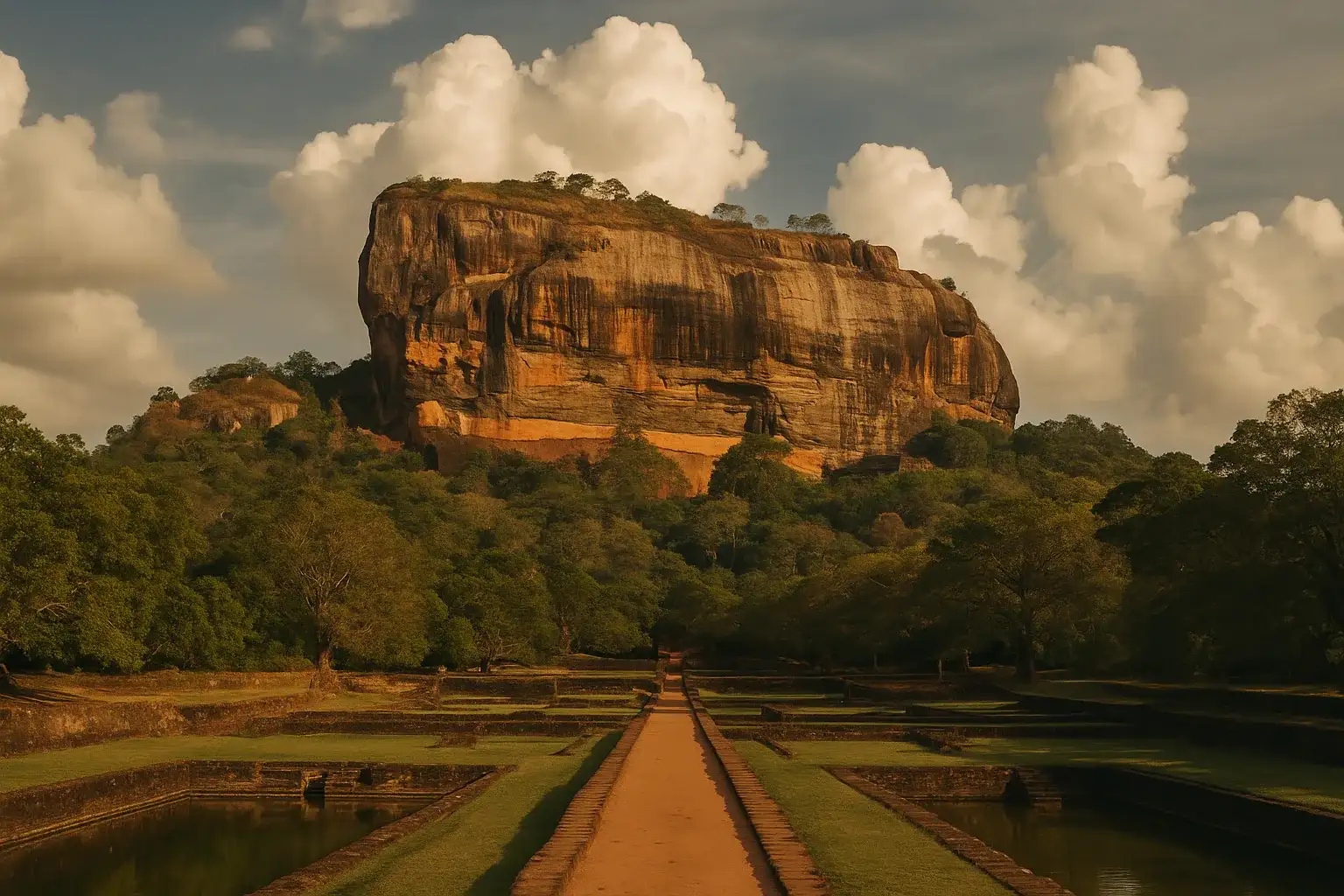
Sigiriya, Sri Lanka: Climbing the Lion Rock Fortress
SinhaleseComplete guide to Sigiriya, Sri Lanka's iconic Lion Rock fortress. Discover the dramatic history of ...
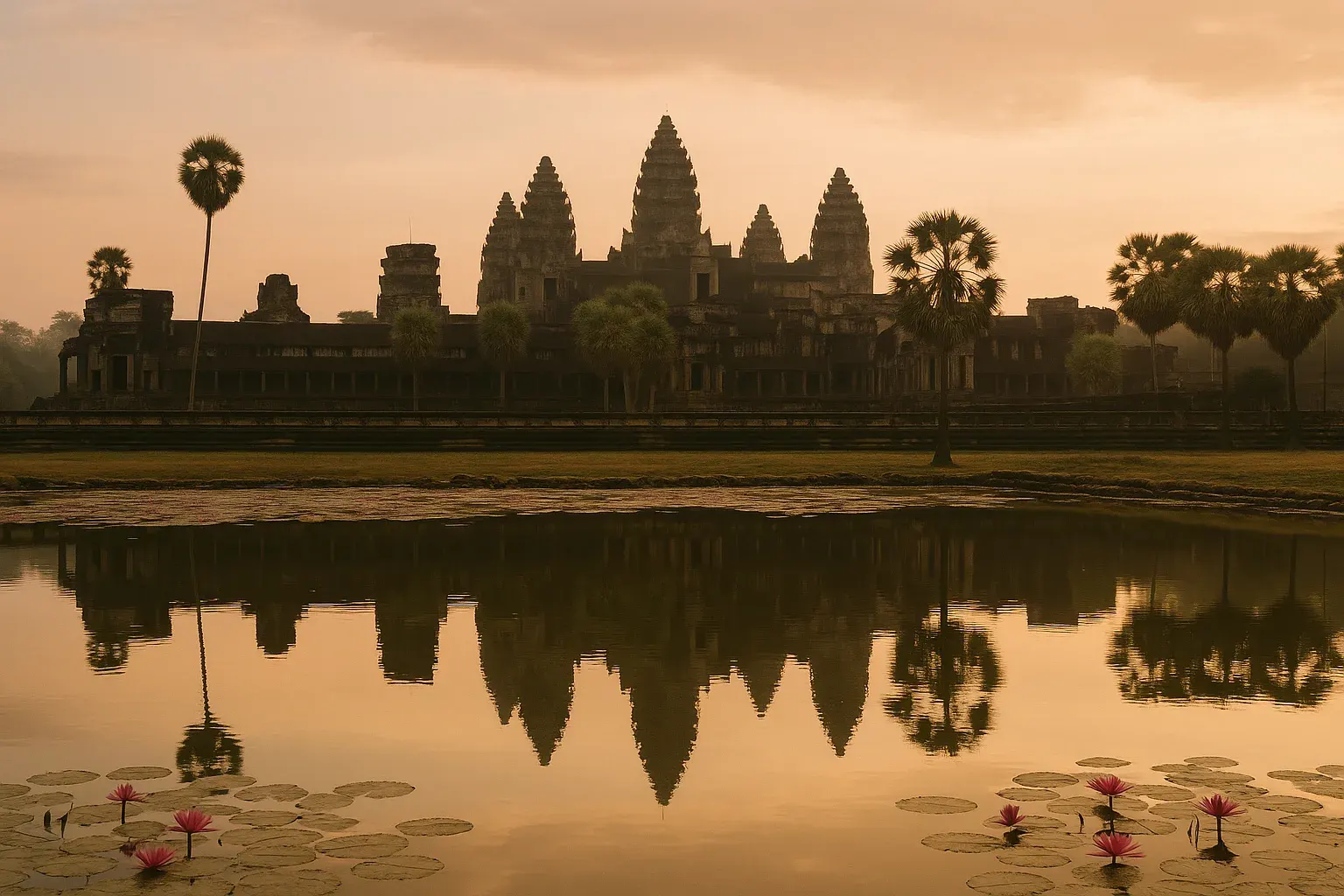
Angkor Wat Travel Guide 2026: Everything You Need to Know
KhmerAngkor Wat, the world's largest religious monument, spans over 400 acres in the heart of Cambodia. T...