Quick Info
At a glance
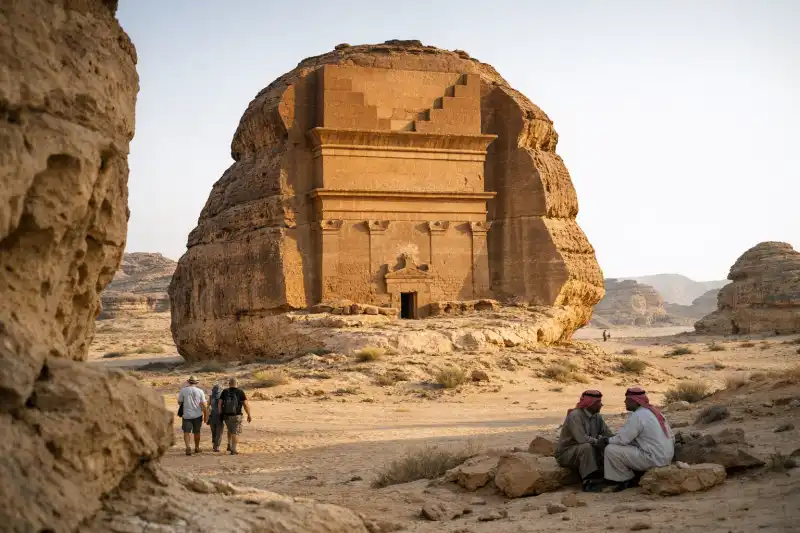
In the vast sandstone landscapes of northwestern Saudi Arabia, Hegra (Madain Saleh) rises from the desert as one of the most striking ancient sites in the Arabian Peninsula. Set near modern AlUla, this former Nabataean city combines monumental tombs, weathered outcrops, and a sense of distance that still evokes the long caravan journeys of antiquity. The setting matters as much as the architecture: isolated rock masses stand above pale sands, and façades carved directly into stone glow gold, rose, and amber as the light changes across the day.
For many visitors, Hegra feels at once familiar and unexpected. Its tombs clearly belong to the same cultural world as Petra, yet the mood here is quieter and more spacious. Instead of a narrow canyon leading to a single famous monument, Hegra unfolds across a broad desert plain scattered with burial zones, inscriptions, water-management features, and traces of settlement. It was not merely a cemetery but a working urban and commercial landscape tied to the incense and luxury-goods routes that linked southern Arabia, the Levant, Egypt, and the Mediterranean. Today, the site is carefully managed and interpreted, making it accessible while preserving its fragile atmosphere. A visit offers more than photography and scenery. It provides a window into Nabataean expansion, trade, engineering, and belief, all preserved in one of Saudi Arabia’s most important archaeological destinations.
History
Early occupation and the oasis landscape
Long before Hegra became a major Nabataean center, the AlUla region supported human settlement because of its combination of groundwater, cultivable land, and defensible desert terrain. Oasis environments in northwestern Arabia made life possible in landscapes that could otherwise seem forbidding. Communities moved through and settled in this region for centuries, leaving behind inscriptions, pathways, and traces of agricultural activity. The wider area formed part of a network of north-south routes used by traders, pastoralists, and pilgrims.
Its strategic importance came from geography. Hegra stood at a point where desert travel could be organized around water access and sheltered stopping places. In practical terms, that meant animals could be watered, goods exchanged, and caravans regrouped. In political terms, it meant control over movement and taxation. These advantages laid the groundwork for the site’s later growth under Nabataean rule.
Hegra under the Nabataeans
Hegra reached its peak between roughly the 1st century BCE and the 1st century CE, when the Nabataeans transformed it into their southernmost major urban center. The Nabataeans are best known for Petra in present-day Jordan, but their kingdom stretched across a much larger territory shaped by commerce and desert expertise. They excelled at controlling caravan routes and managing water in arid settings, and Hegra was central to their southern operations.
Archaeological evidence suggests that Hegra functioned as both a settlement and a funerary landscape. More than a hundred monumental tombs were carved into freestanding sandstone outcrops and cliffs, many bearing inscriptions that name owners, establish burial rights, and threaten penalties for desecration. These texts are invaluable because they place real individuals within the site and reveal legal and social concerns. The tombs themselves display a blend of local and wider artistic influences, including stepped crowning elements, pilasters, eagles, and ornamental details linked to the broader Nabataean visual vocabulary.
The wealth required to commission such monuments points to prosperous families connected to trade. Goods moving through the Nabataean realm likely included incense, aromatics, textiles, metals, and luxury items. Hegra was not isolated from the wider ancient world; rather, it was deeply integrated into it. Through trade, it participated in the economic systems of the eastern Mediterranean, Egypt, and Arabia.
Roman annexation and later transitions
In 106 CE, the Roman Empire annexed the Nabataean Kingdom under Emperor Trajan, incorporating it into the new province of Arabia Petraea. This political shift altered the framework of regional control, though change on the ground was likely gradual. Some routes continued in use, but the patterns of long-distance trade and power began to evolve. Hegra did not vanish overnight, yet it appears to have declined from its former prominence.
Over subsequent centuries, settlement patterns in the region changed. Economic focus shifted, trade routes were reorganized, and the monumental funerary zones ceased to be the centers of elite display they once had been. Still, the site remained embedded in regional memory. Travelers, local communities, and later Islamic-era geographers were aware of ancient remains in the area, and the landscape continued to attract associations with earlier peoples and vanished civilizations.
Rediscovery, archaeology, and heritage status
European scholarly attention increased in the 19th and early 20th centuries, when explorers and researchers documented the tombs, inscriptions, and desert setting. More systematic archaeological work followed later, particularly as Saudi Arabia expanded heritage research and conservation. Surveys, excavations, epigraphic study, and architectural recording have steadily deepened understanding of the site.
A major milestone came in 2008, when Hegra was inscribed as Saudi Arabia’s first UNESCO World Heritage Site. That recognition highlighted not only the quality of its tomb façades but also its broader significance as a Nabataean urban and cultural landscape. In recent years, conservation and tourism development in the AlUla region have brought Hegra to much wider international attention. Modern interpretation now emphasizes that the site is more than a desert backdrop for striking monuments. It is a complex archaeological record of trade, belief, law, craftsmanship, and adaptation to a demanding environment.
Key Features
What makes Hegra extraordinary is the relationship between architecture and landscape. The site is spread across a desert plain punctuated by isolated sandstone formations, and many of these rock masses were transformed into tomb façades of remarkable refinement. Some stand alone in the open, which creates a theatrical effect: a neatly cut front, complete with carved decorative bands and entrance, rising from a natural stone monolith. Others appear in clusters, allowing visitors to compare scale, ornament, and condition from one tomb to the next.
Among the most celebrated monuments is Qasr al-Farid, often called the “Lonely Castle,” though it was never a castle. Its fame comes from its freestanding mass and unfinished façade. The lower section remains rough, exposing the process of carving from top to bottom. That unfinished state gives it special interpretive value, because visitors can see both the intended elegance and the labor behind it. Rather than diminishing the monument, the incomplete work makes it more human and more revealing.
Other tomb groups display the full accomplishment of Nabataean funerary design. Their façades are highly ordered, with crowstep motifs near the top, columns or pilaster-like forms framing the center, and carefully proportioned doorways leading into burial chambers. Inscriptions above entrances often record ownership and legal restrictions. These texts are one of Hegra’s great treasures because they turn monuments into documents. They tell us that these were not anonymous structures but personal and family investments governed by rights, status, and memory.
The site also preserves evidence that Hegra was not only about tombs. Archaeologists have identified residential and urban remains, including traces linked to domestic life, fortification, and ritual practice. Water management was crucial in this arid environment, and wells, channels, and hydraulic systems speak to the engineering knowledge that made settlement possible. The Nabataeans were masters of living with scarcity. At Hegra, that skill shaped every part of the landscape, from habitation to agriculture to the support of passing caravans.
Equally memorable are the natural features that frame the monuments. The sandstone itself is highly textured, eroded by wind and time into ridges, rounded forms, and streaked surfaces that catch changing light beautifully. Early morning and late afternoon often reveal the site at its most dramatic, when shadows emphasize both the geometry of the carvings and the softness of the surrounding desert. Unlike tightly enclosed archaeological sites, Hegra offers long sightlines. You do not simply stand before a tomb; you see it in relation to open space, sky, and neighboring rock formations.
Another key attraction is the sense of controlled access and interpretation. Because Hegra is managed as a major heritage site, visits are typically structured, helping protect fragile areas while giving travelers context. Guides and interpretive materials often explain the distinctions between tomb clusters, discuss inscriptions, and situate Hegra within the wider Nabataean world. For visitors who know Petra, Hegra adds a complementary chapter; for those new to Nabataean history, it can be a powerful first encounter with the sophistication of Arabia’s ancient caravan civilizations.
Getting There
Most travelers reach Hegra via AlUla, the nearest tourism hub and the practical base for visiting the site. AlUla International Airport receives domestic flights from major Saudi cities such as Riyadh and Jeddah, and schedules may also include seasonal or expanding regional connections. Taxi fares from the airport to central AlUla commonly range from about SAR 70 to 150 depending on distance, time of day, and booking method. Many hotels and desert resorts can also arrange transfers, sometimes at a premium.
From AlUla town to Hegra, the journey usually takes around 20 to 30 minutes by car. Taxi or private car fares are often around SAR 80 to 200 for a one-way transfer, though prices vary by vehicle type and waiting time. In practice, many visitors book Hegra through official visitor channels or organized tours that include transport within the archaeological zone, since access policies can require guided entry or designated vehicles. Shared tour prices vary widely, but half-day experiences often start around SAR 150 to 300 per person, with more specialized premium excursions costing more.
If you are coming overland from Medina, expect a drive of roughly 3.5 to 5 hours depending on route and stops. Private transfers can be expensive, often from SAR 700 upward, while rental cars may be more economical for independent regional travel. Fuel prices are generally favorable, but always check the latest access rules before assuming you can self-drive directly inside the site. Booking in advance is strongly recommended, especially in peak season and during festivals or holiday periods in AlUla.
When to Visit
The best time to visit Hegra is from late autumn through early spring, roughly November to March, when daytime temperatures are more comfortable for walking and outdoor touring. During these months, mornings can be cool, afternoons pleasant, and evenings crisp enough to require a light jacket. This is also the period when AlUla is busiest, so accommodation and tours should be booked early. The payoff is excellent weather for combining Hegra with other desert and heritage experiences in the region.
December through February often offers the most comfortable climate overall, though nights can feel surprisingly cold in the desert. If you plan sunrise or sunset visits, dress in layers. March and early April can still be very good, but temperatures begin to climb, especially by midday. Light, breathable clothing, sunscreen, sunglasses, and a hat are essential even in winter because the sun remains intense.
The hottest months, usually from May through September, are more challenging. Midday heat can be severe, and sightseeing becomes less enjoyable unless carefully timed for early morning or late afternoon. Some travelers appreciate the quieter atmosphere in shoulder months such as October and April, when crowds may be lighter but conditions remain manageable. Whatever the season, the quality of light is one of Hegra’s great pleasures. If possible, plan at least one visit during the softer hours around sunrise or near sunset, when the sandstone façades show their richest colors and the desert landscape feels most atmospheric.
| Quick Facts | Details |
|---|---|
| Location | Near AlUla, Al Madinah Province, Saudi Arabia |
| Ancient culture | Nabataean |
| Best known for | Monumental rock-cut tombs in a desert landscape |
| UNESCO status | World Heritage Site since 2008 |
| Peak period | 1st century BCE to 1st century CE |
| Nearest city | AlUla |
| Time needed | Half day minimum; full day with surrounding AlUla sites |
| Best season | November to March |
| Access style | Usually managed entry via official booking or guided transport |
| What to bring | Water, sun protection, sturdy shoes, and layered clothing |
Guided tours: worth it?
A guide can be genuinely useful at Hegra (Madain Saleh), especially if you want help with transport, timing, tickets, or understanding a large site without losing half the day to logistics.
Best for
- First-time visitors who want context, not just photos
- Travelers who want transport, timing, or entry logistics handled
- Short visits where a planned route saves time
When to go self-guided
Go independently if you already have transport and tickets sorted, enjoy moving at your own pace, and are comfortable checking the latest official rules before you arrive.
What I’d avoid
Skip paid tours that bundle unrelated stops you do not actually want. The best option should either save meaningful planning time or add historical context you would miss on your own.
Hegra (Madain Saleh) tours
Useful when: you want to compare guided formats before deciding
AlUla and Hegra day tours
Useful when: you want to compare guided formats before deciding
Saudi Arabia archaeological tours
Useful when: you want to compare guided formats before deciding
Some tour links are affiliate links, which may earn Ancient Travel a small commission at no extra cost to you. I try to surface options that make practical sense for the site—not just anything bookable.
Frequently Asked Questions
What is Hegra (Madain Saleh)?
Hegra, also known as Madain Saleh, is an ancient Nabataean city in northwestern Saudi Arabia famous for its monumental rock-cut tombs, inscriptions, and desert setting. It was a major stop on caravan routes linking Arabia with the Mediterranean world.
Is Hegra a UNESCO World Heritage Site?
Yes. Hegra became Saudi Arabia's first UNESCO World Heritage Site in 2008 because of its exceptional Nabataean funerary architecture and archaeological importance.
How far is Hegra from AlUla?
Hegra lies just north of AlUla and is typically reached in about 20 to 30 minutes by car or organized tour, depending on your starting point and site entry procedures.
Can you visit Hegra independently?
Access rules can change, but visits are commonly managed through timed entry, guided transport, or organized tours arranged via official platforms or local operators in AlUla. It is best to book in advance.
What should I wear when visiting Hegra?
Wear light, breathable clothing that respects local customs, plus sturdy walking shoes, sun protection, and layers for cooler mornings or evenings. Desert conditions can be hot by day and cooler after sunset.
How much time do you need at Hegra?
Most travelers should allow at least half a day to appreciate the major tomb clusters, landscape viewpoints, and interpretive stops. A longer stay in AlUla gives you time to combine Hegra with nearby heritage and natural sites.
Nearby Ancient Sites
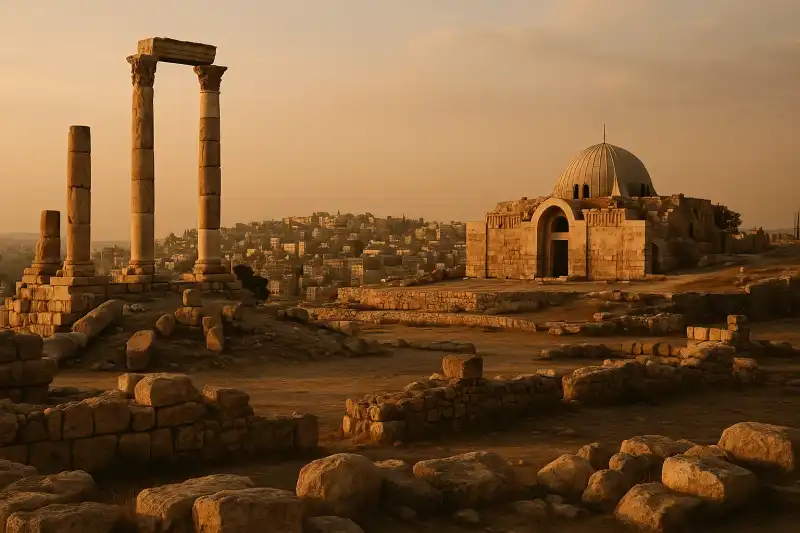
Amman Citadel Jordan Guide 2026: Temple of Hercules & Ancient Rabbah
Ammonite-Roman-UmayyadExplore Jordan's ancient citadel overlooking modern Amman. Discover the Temple of Hercules, Umayyad ...
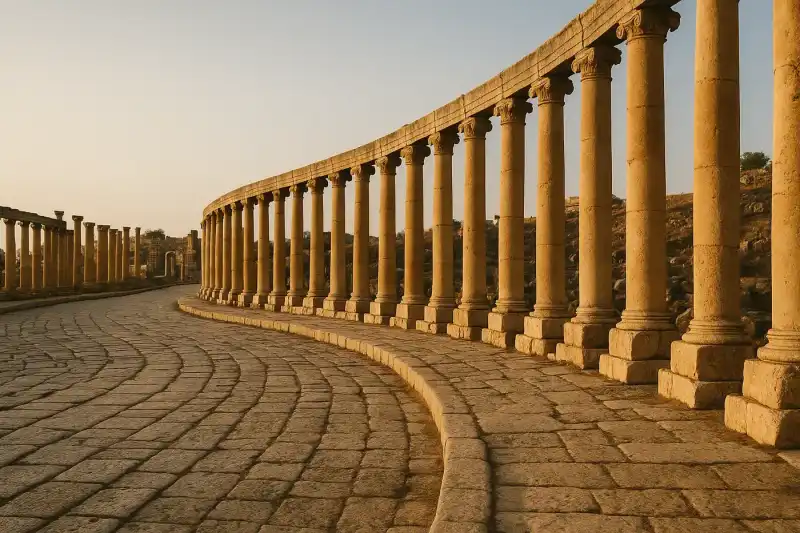
Jerash: The Pompeii of the East and Jordan's Best-Preserved
Roman / NabataeanDiscover Jerash, Jordan's remarkable Roman ruins. Walk the colonnaded streets of ancient Gerasa, exp...
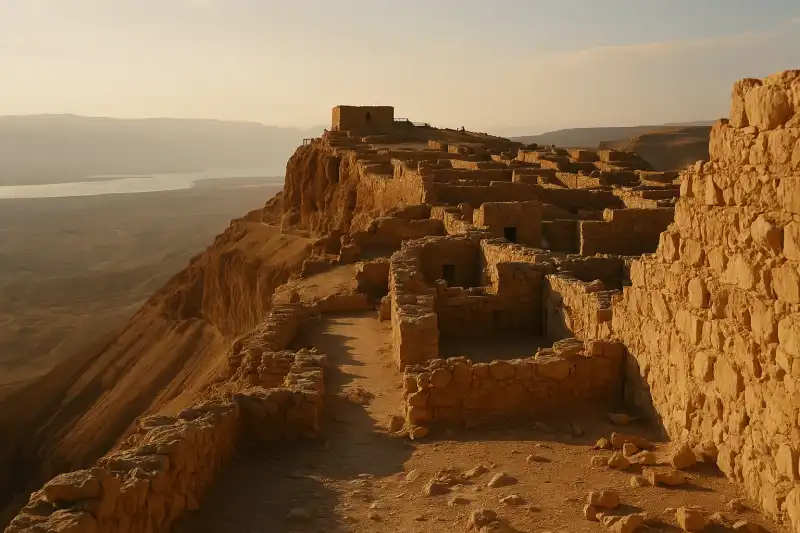
Masada
Hasmonean / Herodian / RomanMasada is a dramatic desert fortress in Israel where Herod built a clifftop palace and Jewish rebels...