Quick Info
At a glance
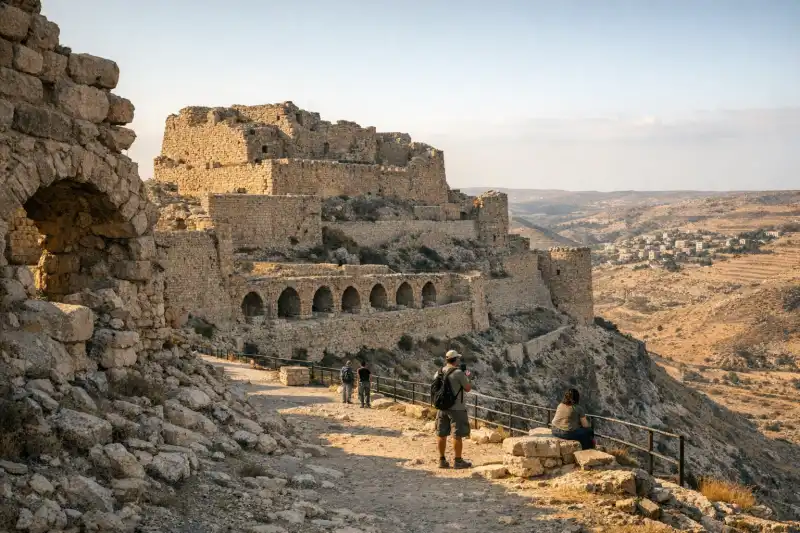
Kerak Castle in Jordan rises above the modern town of Al-Karak like a stone ship anchored on a ridge, its walls stretching across the hilltop and its shadow falling into dry valleys below. Travelers approaching along the King’s Highway often first see its long mass from a distance, perched dramatically between the highlands and the routes that once linked Syria, Jerusalem, Egypt, and Arabia. The setting helps explain everything about the fortress. This was never just a residence or a local stronghold. It was built to command movement, extract power from trade and pilgrimage, and project authority over a wide and often contested landscape.
Even today, Kerak feels more severe than romantic. Its dark vaulted halls, half-lit stairways, arrow slits, and underground chambers preserve the atmosphere of a working military fortress rather than a decorative ruin. Yet that starkness is part of its appeal. Visitors can walk through the remains of Crusader planning, Ayyubid rebuilding, and later Islamic adaptations all in one place, tracing layers of conflict and continuity in stone. The views from the outer edges are equally memorable, with ravines and plateau country spreading outward in every direction. For anyone interested in the medieval Levant, Kerak Castle offers one of Jordan’s most substantial and evocative historic experiences, combining strategic geography, dramatic architecture, and a story that reaches far beyond the town beneath it.
History
Crusader foundation in the 12th century
Kerak Castle was established in the 1140s during the period of Crusader expansion in the Levant. It was built under Pagan the Butler, a lord of the Kingdom of Jerusalem, who selected this commanding site for a fortress intended to strengthen Frankish control east of the Jordan River. The position was extraordinary. From here, the Crusaders could oversee routes running north and south along the highlands as well as east-west connections toward the Dead Sea and the interior. The castle became one of the principal strongholds of the Lordship of Oultrejordain, a frontier territory whose power depended on fortifications, taxation, and the ability to threaten caravans and rival armies.
Unlike some castles that grew gradually from smaller cores, Kerak was conceived as a major fortification from an early stage. Its immense outer works, long galleries, and protected internal spaces reflected the military demands of frontier rule. It was not only a defensive refuge but also an administrative and political center. Control of Kerak gave the Crusaders leverage over trade and pilgrimage routes, which made it economically valuable as well as militarily important.
The age of Reynald of Châtillon
Kerak Castle became especially notorious in the late 12th century under Reynald of Châtillon, one of the most controversial figures of the Crusader era. Reynald’s aggressive raids and attacks on Muslim caravans, and even threats toward the Red Sea pilgrimage routes, heightened tensions with the rising Ayyubid power led by Saladin. Medieval chroniclers, both Latin and Arabic, preserve the reputation of Kerak as a flashpoint during this period.
One of the most famous episodes associated with the castle was Saladin’s siege during a wedding celebration reportedly taking place inside its walls. Whether retold with some embellishment or not, the story captures Kerak’s symbolic status. This was no isolated outpost but a fortress deeply entangled in the politics of the eastern Mediterranean. The confrontations around Kerak formed part of the broader struggle that culminated in the Battle of Hattin in 1187, where Crusader power in the region suffered a catastrophic defeat.
Ayyubid conquest and rebuilding
After the collapse of much Crusader control following Hattin, Kerak eventually fell to Saladin’s forces in 1188. Its capture marked a turning point, but not the end of the fortress’s significance. Rather than abandoning it, the Ayyubids integrated Kerak into their own defensive and administrative system. This is one reason the site is so compelling today: the visible remains are not exclusively Crusader but the result of repeated reuse and adaptation.
Under Ayyubid rule, the castle’s structures were repaired, altered, and strengthened. New defensive needs, new garrison arrangements, and changing architectural preferences all left their mark. Islamic rulers recognized the strategic value of the site just as clearly as the Crusaders had. Kerak remained a key fortress in the southern Levant, linking regional authority to the geography of movement and surveillance.
Mamluk and Ottoman continuities
In the Mamluk period, Kerak retained its importance as a provincial center and fortified administrative seat. The Mamluks were skilled castle builders and maintainers, and they continued to use major strongholds inherited from earlier regimes. Parts of Kerak saw refurbishment, while the surrounding settlement remained tied to the fortress’s presence. The site functioned not merely as a relic of past wars but as a practical center in an evolving political landscape.
During the Ottoman era, Kerak’s role changed gradually as military technology and administrative structures shifted. Cannons and new forms of warfare made many medieval fortresses less decisive than they had once been, though elevated strongholds still had local relevance. The castle persisted as a landmark and defensive position, even as the town around it developed under new circumstances.
Modern archaeology and tourism
In modern Jordan, Kerak Castle has become one of the country’s major historic attractions, particularly for travelers following the King’s Highway. Conservation and archaeological work have helped stabilize sections of the structure and improve access, while still leaving much of its rugged, atmospheric character intact. Unlike heavily restored monuments that can feel detached from their original function, Kerak still conveys the scale and strain of medieval frontier life. Its history is therefore not limited to one empire or faith. The castle stands as a layered monument to Crusader ambition, Ayyubid resilience, later Islamic governance, and the long afterlife of strategic architecture in Jordan’s highland landscape.
Key Features
What makes Kerak Castle so memorable is its sheer mass. Rather than presenting a single iconic façade, the fortress unfolds as a chain of halls, towers, terraces, and subterranean spaces spread across an elongated ridge. Visitors quickly realize that this is a castle to wander rather than merely photograph from one angle. Its internal complexity creates a sense of discovery, with corridors leading into enormous barrel-vaulted chambers and stairs opening onto unexpected overlooks.
One of the defining features is the castle’s integration with the topography. Built on a triangular spur with steep valleys on several sides, Kerak uses the landscape itself as part of its defense. The outer walls appear to grow out of the ridge, and from many points the drop below is striking. This relationship between masonry and terrain gives the fortress a power that goes beyond decorative design. It was engineered to dominate. The high position also rewards modern visitors with sweeping views over Wadi Karak and the surrounding plateau country, especially on clear mornings and in the golden light before sunset.
Inside, the great vaulted halls are among the most atmospheric elements. Some served practical functions such as storage, stabling, circulation, and shelter for troops. Others may have supported administrative or residential uses. Their scale speaks to the need to sustain long occupations and withstand sieges. These rooms are often dim and cool, a welcome contrast to the brightness outside, and they preserve an almost cave-like solemnity. In places, the stonework carries the traces of multiple building phases, reminding visitors that the castle was repeatedly modified.
The defensive architecture is equally impressive. Narrow openings, thick walls, projecting towers, and carefully controlled access points reveal the logic of medieval siege warfare. Kerak was meant to absorb attack, restrict enemy movement, and provide defenders with tactical advantages. You can still sense how the outer approaches were exposed while the inner spaces became progressively more secure. Some sections preserve machicolations and lookout positions, while others show how defenders could move within the fortress under cover.
Another noteworthy feature is the mixture of Crusader and later Islamic construction. Kerak is not frozen in a single date. As you explore, you encounter a site shaped by conquest, adaptation, and practical reuse. Architectural details differ from one sector to another, reflecting changing military priorities and the interventions of successive rulers. This layered character distinguishes Kerak from more uniform ruins. It tells a story of continuity through conflict, where a fortress remained valuable enough for each new power to preserve and transform.
The chapel area, though altered over time, also hints at the castle’s earlier Latin Christian phase. Elsewhere, later modifications reflect Islamic occupation and administration. For visitors with an eye for architecture, these shifts are one of the richest aspects of the site. You are not simply looking at Crusader remains but at a medieval stronghold with a long working life.
Finally, Kerak’s mood deserves mention as a feature in its own right. Some historic sites impress through ornament or surviving sculpture; Kerak works through scale, darkness, and strategic drama. The half-lit passages and broad stone interiors create an experience that feels tactile and immediate. It is easy to imagine soldiers, horses, stores of grain, and the tense routines of siege and survival. Because much of the castle remains rough-edged and spacious, the visitor can still feel the fortress as an environment rather than a museum display. That sense of inhabiting a real military landscape is what gives Kerak Castle its enduring power.
Getting There
Kerak Castle is most commonly reached from Amman, Madaba, or Petra, and it fits naturally into a road trip along Jordan’s King’s Highway. From Amman, the drive usually takes about 2 to 2.5 hours depending on traffic and stops. A rental car is the easiest option, especially if you want to combine Kerak with Mount Nebo, Madaba, the Dead Sea viewpoints, or Petra. Daily car rental in Jordan often starts around 25 to 40 JOD, with fuel extra.
Shared transport is possible but less direct. Buses and minibuses run from Amman’s South Bus Station to Al-Karak, with fares often around 3 to 5 JOD one way. Travel times vary and departures may not follow a strict tourist-friendly timetable, so this option suits flexible independent travelers. From the Al-Karak bus area, a short taxi ride up to the castle generally costs about 1 to 3 JOD depending on distance and negotiation.
Private taxis from Amman are faster and more convenient, especially for day trips or multi-stop itineraries. Expect roughly 50 to 80 JOD for a one-way transfer, or more if the driver waits and includes additional sites. Organized tours typically offer the least hassle, and many Jordan itineraries include Kerak as a stop en route to Petra. These tours are especially useful if you want historical context without arranging connections yourself.
Road access to the castle is straightforward once in Al-Karak, but the streets near the hilltop can be busy. Wear comfortable shoes, as the final approach and the interior both involve uneven surfaces and steps.
When to Visit
Spring and autumn are generally the best times to visit Kerak Castle. From March to May, the highlands around Al-Karak are usually mild, with cooler air than the Jordan Valley and clearer conditions for walking the ramparts and viewpoints. Autumn, especially from September to November, offers similarly pleasant temperatures and often softer light for photography. These seasons make exploring the dark corridors and open terraces comfortable without the harsher extremes of summer or winter.
Summer visits are certainly possible, and many travelers stop at Kerak on their way to Petra. The elevation helps a little, but midday can still be hot, especially on exposed outer sections. If you are visiting in June, July, or August, aim for early morning or late afternoon. The interior chambers can provide shade and relief, but the approach, upper levels, and scenic overlooks are best enjoyed outside peak heat.
Winter brings a different atmosphere. The castle can feel particularly dramatic in cold, cloudy weather, with mist and rain adding to its medieval character. However, stone surfaces may become slippery, and some passages feel darker than usual. Bring a jacket, as the wind on the ridge can be strong. Winter days are also shorter, so arrive earlier than you might in other seasons.
If possible, avoid rushing through Kerak at the hottest or busiest part of the day. Many visitors treat it as a brief roadside stop, but the site rewards a slower visit when light and temperature are favorable. Early morning is excellent for calm exploration, while late afternoon often gives the surrounding landscape a warm, memorable glow.
| Quick Facts | Details |
|---|---|
| Location | Al-Karak, Karak Governorate, Jordan |
| Type | Medieval hilltop fortress |
| Primary historical phases | Crusader, Ayyubid, Mamluk, Ottoman |
| Established | 1140s CE |
| Best known for | Massive Crusader architecture and strategic ridge-top setting |
| Typical visit length | 1.5 to 3 hours |
| Best route | King’s Highway between Amman and Petra |
| Terrain | Uneven stone floors, stairs, vaulted halls, exposed viewpoints |
| Ideal seasons | Spring and autumn |
| Nearest city | Al-Karak |
Kerak Castle is one of those places that repays imagination as much as observation. Its walls do not simply preserve a monument; they preserve the logic of control, survival, and confrontation in the medieval Levant. Standing in its chambers or looking out across the valleys, you can understand why so many powers fought to possess this ridge. For modern travelers, that translates into a rare experience: a fortress large enough to explore, layered enough to study, and dramatic enough to remember long after leaving Jordan’s highlands behind.
Guided tours: worth it?
Self-guided works here, but a guide can add real value if you want the ruins explained as a living place rather than just a sequence of monuments.
Best for
- First-time visitors who want context, not just photos
- Short visits where a planned route saves time
When to go self-guided
Go independently if you prefer setting your own pace, reading as you go, and checking official hours or ticket rules directly before you arrive.
What I’d avoid
Skip paid tours that bundle unrelated stops you do not actually want. The best option should either save meaningful planning time or add historical context you would miss on your own.
Kerak Castle day tours from Amman
Useful when: transport or pickup logistics matter
King's Highway and Kerak Castle tours
Useful when: you want to compare guided formats before deciding
Kerak Castle and Petra private tour
Useful when: you want flexible timing or a private guide
Some tour links are affiliate links, which may earn Ancient Travel a small commission at no extra cost to you. I try to surface options that make practical sense for the site—not just anything bookable.
Frequently Asked Questions
Where is Kerak Castle located?
Kerak Castle stands in the city of Al-Karak in central-southern Jordan, roughly midway between Amman and Petra along the historic King's Highway.
How much time should I spend at Kerak Castle?
Most visitors spend 1.5 to 3 hours exploring the halls, towers, chapels, and underground passages, though history enthusiasts may want longer.
Is Kerak Castle worth visiting on the way to Petra?
Yes. Kerak Castle is one of Jordan's most impressive medieval fortresses and makes a rewarding stop between Amman, Madaba, the Dead Sea region, and Petra.
Do I need a guide at Kerak Castle?
A guide is not essential, but hiring one or joining a tour can help you understand the castle's Crusader and Ayyubid history and identify key spaces inside the complex.
Is Kerak Castle suitable for children?
Yes, many families visit, but parents should watch children carefully because of uneven stone floors, steep steps, dark corridors, and elevated viewpoints.
Can I visit Kerak Castle independently?
Yes. Independent travelers can reach Al-Karak by rental car, taxi, or bus and buy tickets on site, making it a manageable self-guided visit.
Nearby Ancient Sites
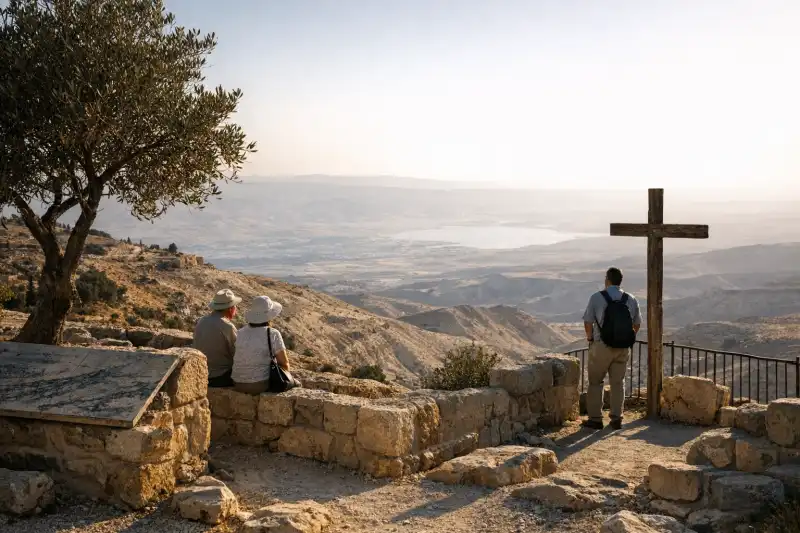
Mount Nebo
Mount Nebo in Jordan offers sweeping views of the Holy Land, biblical significance, and ancient ruin...
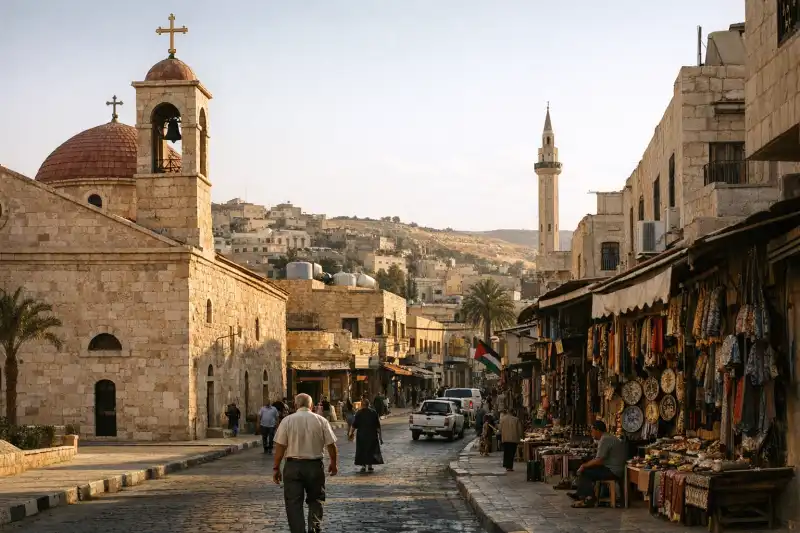
Madaba
Discover Madaba, Jordan’s ancient mosaic city famed for its spectacular Byzantine art, historical ch...
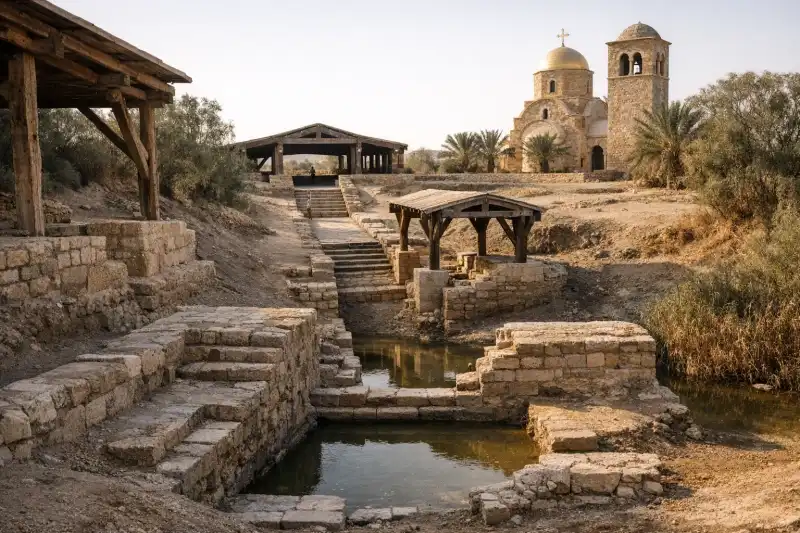
Bethany Beyond the Jordan
Bethany Beyond the Jordan in Jordan is an archaeological and religiously significant site believed t...
Petra Jordan Travel Guide: Treasury, Monastery & Best Hikes
NabataeanUnlock the secrets of Petra with our comprehensive guide. Walk the Siq to the Treasury, hike to the ...