Quick Info
At a glance
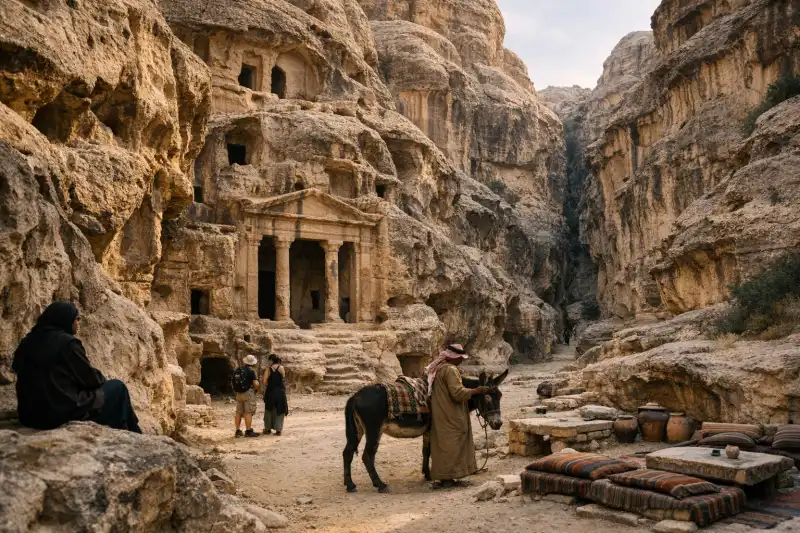
Tucked away in the rugged mountains and arid desert landscape of southern Jordan, Little Petra (Siq al-Barid) awaits as a hidden gem that beckons lovers of history, archaeology, and adventure. Often overshadowed by its more famous neighbor, Petra, Little Petra lies just 8 kilometers north of the legendary Nabataean capital, in the heart of Ma’an Governorate. Here, time seems to stand still as visitors wander through a narrow sandstone canyon that suddenly opens to reveal ancient rock-cut facades, carved staircases, and caves once alive with the vibrant sounds of Nabataean merchants and travelers. With its intimate scale and relative serenity, Little Petra feels like a secret retreat, allowing modern explorers to imagine the flow of incense caravans and the daily life of a once-bustling outpost on the trade routes of antiquity.
Little Petra, officially known by its Arabic name Siq al-Barid (“the Cold Canyon”), is not merely a smaller twin of Petra but a unique archaeological site with its own story. Its slender gorge walls, carved dwellings, painted dining halls, and grain silos tell of a community deeply enmeshed in the fabled spice and incense trade that brought prosperity to the Nabataean Kingdom. Unlike the grandeur and crowds of Petra, Little Petra offers a tranquil, personal encounter with desert history—a place where echoes of ancient laughter and the scent of bread from bygone bakeries seem almost tangible. Whether approached at sunrise, when the cliffs blush in pink light, or at sunset, when shadows lengthen and silence deepens, Little Petra’s timeless ambiance is unforgettable. For those seeking both adventure and contemplation in one of Jordan’s most evocative settings, Little Petra is an essential addition to any itinerary.
History
Early Inhabitants and Nabataean Expansion
The story of Little Petra begins over two thousand years ago, when the Nabataean Kingdom flourished in the deserts of what is now southern Jordan. The Nabataeans were an industrious Arab people, masters of trade, water management, and stone carving. Their capital, Petra, was a grand city renowned for its monumental tombs and temples chiselled directly into cliff faces. As Petra prospered as a hub of commerce on the ancient spice and incense routes, satellite settlements like Siq al-Barid emerged to service the influx of goods, travelers, and traders who journeyed between Arabia, Egypt, and the Mediterranean.
Little Petra’s strategic position made it an important suburb of the main metropolis. Archaeological evidence suggests that Siq al-Barid was constructed in the late 1st century BCE to the early 1st century CE, coinciding with Petra’s peak as the center of a far-reaching commercial empire. Unlike Petra, which was the seat of government and religious worship, Little Petra was likely designed to host visiting merchants, itinerant traders, and camel caravans resting after their grueling desert journeys. The narrow gorge, easily defensible and shaded from the harshest of the midday sun, provided respite as well as security. Carved dining halls, storage rooms, stables, and places of worship were planned to accommodate a constant flow of people and wares—a testament to the Nabataeans’ organizational prowess.
The Roman Annexation and Later Periods
The conquests of the Roman Empire in the early 2nd century CE marked a significant turning point for the Nabataeans and Little Petra. In 106 CE, Emperor Trajan annexed the Nabataean Kingdom, incorporating Petra and its outposts, including Siq al-Barid, into the Roman province of Arabia Petraea. With the new Roman order came both opportunities and challenges. Trade routes shifted as the Romans developed maritime access to Red Sea ports, altering traditional overland caravan paths and diminishing Little Petra’s mercantile prominence.
Nevertheless, life at Siq al-Barid continued for centuries, with evidence of Roman and later Byzantine occupation layered into the archaeological record. Nabataean, Roman, and Byzantine ceramics, along with modified architectural features, suggest that the site adapted to new economic realities. Churches and small chapels replaced earlier dinning rooms or shrines as Christianity spread through the region. The vibrant wall paintings found in certain chambers date from the Roman-Byzantine era, highlighting continued occupation and cultural blending long after the glory days of Petra.
Rediscovery and Modern Archaeology
By the Middle Ages, Petra and its satellite settlements faded from the world’s thoughts, known only to local Bedouin tribes who lived in the shadow of the ancient ruins. Western awareness of the sites was rekindled in the early 19th century with the explorations of Swiss adventurer Johann Ludwig Burckhardt, who famously disguised himself to gain entry to these “lost cities.” Serious archaeological investigations of Little Petra began in the later 20th century. Excavations revealed not only the impressive external facades but also sophisticated systems for channeling scarce water and storing grain, evidence of the high level of planning and resourcefulness that characterized Nabataean society.
One of the most astonishing discoveries was a remarkably preserved ceiling painting in the “Painted House” or “Siq al-Barid Dining Hall”—a rare example of Nabataean fresco art, depicting grapevines, birds, and cupids that echo the Greco-Roman artistic tradition. Today, international teams continue to research, conserve, and share Little Petra’s wonders, ensuring that its history is neither forgotten nor neglected.
Key Features
Approaching Little Petra, visitors first traverse a deceptively simple path that abruptly narrows into the cool embrace of Siq al-Barid’s shaded canyon. The interplay of sunlight and shadow on multicolored sandstone sets the stage for a journey back in time. Unlike Petra’s dramatic Siq, Little Petra’s chasm is shorter and lighter, its walls pocked with shallow tombs, storerooms, and staircases leading to now-silent chambers. Echoes of ancient steps linger amid the chiselled alcoves, where Nabataean families once prepared meals, entertained guests, and stored their precious goods after long treks across the desert.
Among the key features, the Painted House stands out as an extraordinary highlight. Tucked away on a high ledge accessible by a simple staircase, the Painted House contains the renowned Nabataean ceiling fresco—delicate and vividly colored, a masterpiece hidden from the world for centuries. Visitors are awed by the elegant grapevine motifs, rendered in deep reds, greens, and blues, interwoven with images of birds and classical figures. This painting is a testament not only to artistic skill but also to the cosmopolitan influences that flowed through Nabataean society—connecting them to distant cultures of the ancient world.
Throughout the site, rock-cut dining halls and tricliniums speak to the importance of hospitality and communal feasts in Nabataean life. The tricliniums were the social heart of Little Petra, where travelers and locals reclined on stone benches to share hearty meals, bolster trade alliances, and exchange stories. Channels etched along the base of the walls give silent testimony to the ingenious Nabataean water management, designed to capture and store precious rainwater against long dry spells.
Outside the main canyon, visitors discover open courtyards, remnant stairways winding up cliff faces, and grain cisterns—each element harmonizing function, beauty, and adaptability to the harsh desert setting. The site’s scale, though modest in comparison to Petra, encourages a slower, contemplative exploration. While Petra amazes with its monumental grandeur, Little Petra enchants with its intimacy and details.
At the culmination of the gorge, a viewpoint opens over a vast desert panorama, offering sweeping vistas that hint at the extensive networks once connecting Siq al-Barid to distant lands. Here, at the edge of the ancient world, travelers pause to absorb not only the artistry of human endeavor carved into stone but also the resilience that enabled a civilization to thrive against nature’s odds.
Getting There
Plan your Petra-area visit: Pair the rock-cut spaces here with the much earlier village remains at Beidha, and use our Petra guide to plan the main archaeological site separately. The 10-day Jordan itinerary puts Little Petra on Day 8, with Beidha optional, before the main Petra day. The official Petra trail guide describes both nearby sites and the longer back trail: do not confuse a short visit here with that hike, and check current access with the visitor center.
Little Petra (Siq al-Barid) is located about 8 kilometers (5 miles) north of the main entrance to Petra, in the Ma’an Governorate of southern Jordan. The nearest major town is Wadi Musa, which serves as the gateway to both Petra and Little Petra, offering a range of hotels, guesthouses, restaurants, and transport options.
For most international visitors, the journey begins in Amman, the capital of Jordan. The drive from Amman to Wadi Musa takes approximately 3 to 3.5 hours by car or bus—a distance of about 235 kilometers (146 miles). Public buses and minibuses (locally known as “serviis”) leave regularly from Amman’s South Bus Station to Wadi Musa, with ticket prices usually ranging from 7 to 10 JOD (Jordanian dinar) per person. Private taxi fares will vary, but expect to pay around 80–120 JOD one-way for a comfortable, air-conditioned ride.
Once in Wadi Musa, the easiest way to reach Little Petra is by taxi, with the 15-minute journey typically costing between 5 and 10 JOD each way. Many hotels and accommodation providers can arrange transport or organize guided tours that include both Petra and Little Petra in a single itinerary. For the active and adventurous, it is also possible to hike from Petra to Little Petra via the scenic “Back Door” trail, which winds through beautiful desert scenery; however, this walk is best undertaken with a knowledgeable local guide, especially in the heat of summer or winter’s chill.
For independent travelers, Little Petra offers free car parking near the main entrance, and the site is open daily from about 8:00 AM until dusk. There is no regular public transportation between Petra’s main Visitor Center and Little Petra, so arranging a taxi or joining a group tour is highly recommended if you do not have your own vehicle. The approach to Siq al-Barid passes Bedouin camps, small farm plots, and rocky hills—an evocative introduction to the landscape that has cradled this ancient outpost for centuries.
When to Visit
Jordan’s southern deserts offer a dramatic climate, with soaring summer heat, chill desert nights, and an abundance of sunlight year-round. Fortunately, Little Petra’s shaded canyon and the relatively short distances required for exploration make it a pleasant destination most months of the year. However, timing your visit appropriately can make your experience all the more comfortable and memorable.
Spring (March–May) is widely regarded as the best time to visit Little Petra. During these months, daytime temperatures are mild, usually ranging from 18–25°C (64–77°F), and the desert occasionally blooms with colorful wildflowers after winter rains. The moderate heat, clear air, and tranquil atmosphere allow explorers to enjoy both the history and the setting at their leisure.
Autumn (September–November) is another optimal period, with similarly pleasant temperatures and typically stable, dry weather. The lighter crowds compared to Petra’s summer high season make it easier to find peaceful moments to appreciate Little Petra’s details, photograph its rock-cut facades, and linger at the Painted House without interruption.
Summer (June–August) ushers in very hot days, with temperatures routinely exceeding 35°C (95°F). While the canyon does offer some shade, midday visits are best avoided. If traveling in summer, plan your walks for early morning or late afternoon, bring plenty of water, and wear a wide-brimmed hat, sunglasses, and sunscreen. Outdoor hiking between Petra and Little Petra during peak heat is not recommended for those unaccustomed to the dry, intense desert sun.
Winter (December–February) can be surprisingly chilly, especially at night or in the early morning, with temperatures sometimes dipping below freezing. Occasional rain showers are possible, and the canyons may become slippery after rain, so wear appropriate shoes and bring layers. Although fewer tourists visit then, the clear winter skies and peaceful silence of the low season can be deeply rewarding for those seeking solitude.
Regardless of the season, weekends (Fridays and Saturdays) and public holidays draw more local visitors, so arriving early or late in the day will help you enjoy the magic of Little Petra at its most tranquil.
Quick Facts
| Feature | Details |
|---|---|
| Location | Ma’an Governorate, southern Jordan |
| Coordinates | 30.375°N, 35.4802°E |
| Alternative Name | Siq al-Barid (“the Cold Canyon”) |
| Major Civilization | Nabataean |
| Founded | Late 1st century BCE – early 1st century CE |
| Approx. Distance from Petra | 8 km (5 miles) north |
| Entrance Fee | Free (as of 2024) |
| Opening Hours | Daily, from about 8:00 AM to dusk |
| Main Highlights | Painted House, rock-cut dining halls, tricliniums, frescoes |
| Best Time to Visit | Spring and autumn |
| Accessibility | Uneven terrain; not fully accessible for mobility issues |
| Nearby City | Wadi Musa |
| Facilities | Restrooms, parking, café |
| Popular Tours | Combine visits with Petra, Wadi Rum, or regional circuits |
| UNESCO World Heritage | Not separately inscribed; part of Petra’s archaeological zone |
Guided tours: worth it?
A guide can be genuinely useful at Little Petra (Siq al-Barid), especially if you want help with transport, timing, tickets, or understanding a large site without losing half the day to logistics.
Best for
- Travelers who want transport, timing, or entry logistics handled
- Trips where tickets, circuits, or timed entry can shape the day
- Short visits where a planned route saves time
When to go self-guided
Go independently if you already have transport and tickets sorted, enjoy moving at your own pace, and are comfortable checking the latest official rules before you arrive.
What I’d avoid
Skip paid tours that bundle unrelated stops you do not actually want. The best option should either save meaningful planning time or add historical context you would miss on your own.
Full-Day Petra & Little Petra Tour from Amman
Useful when: transport or pickup logistics matter
Private Petra, Wadi Rum, and Little Petra Tour
Useful when: you want flexible timing or a private guide
Guided Little Petra and Petra Excursion from Wadi Musa
Useful when: transport or pickup logistics matter
Some tour links are affiliate links, which may earn Ancient Travel a small commission at no extra cost to you. I try to surface options that make practical sense for the site—not just anything bookable.
Frequently Asked Questions
Is Little Petra open to visitors and do I need a ticket?
Yes, Little Petra is open to visitors year-round and entry is typically free, unlike Petra, which requires a ticket.
How far is Little Petra from Petra?
Little Petra is located about 8 kilometers (5 miles) north of Petra and can be reached by car or taxi in about 15 minutes.
What should I wear when visiting Little Petra?
Wear comfortable walking shoes and modest, lightweight clothing to cope with rocky paths and the desert climate.
How much time should I plan to spend at Little Petra?
Most visitors spend between 1 and 2 hours exploring Little Petra’s main sights and enjoying its tranquil atmosphere.
Are there guided tours available at Little Petra?
Yes, many local guides offer tours at Little Petra, and several tour companies provide trips that include both Petra and Little Petra.
Is Little Petra accessible for people with mobility issues?
While the entrance area is fairly level, many areas include uneven ground or steps, making access challenging for those with limited mobility.
Are restrooms and refreshments available at the site?
There are basic restrooms and a small café located near the entrance to Little Petra for visitor comfort.
Can I visit Little Petra as part of a day trip from Amman?
Yes, it is possible, though it will be a long day; many tours combine Little Petra with Petra on a day trip from Amman.
Nearby Ancient Sites
Petra Jordan Travel Guide: Treasury, Monastery & Best Hikes
NabataeanUnlock the secrets of Petra with our comprehensive guide. Walk the Siq to the Treasury, hike to the ...
Beidha
Pre-Pottery Neolithic communities of the southern LevantExplore Beidha, a remarkable Neolithic village near Petra in Jordan, known for early farming, stone ...