Quick Info
At a glance
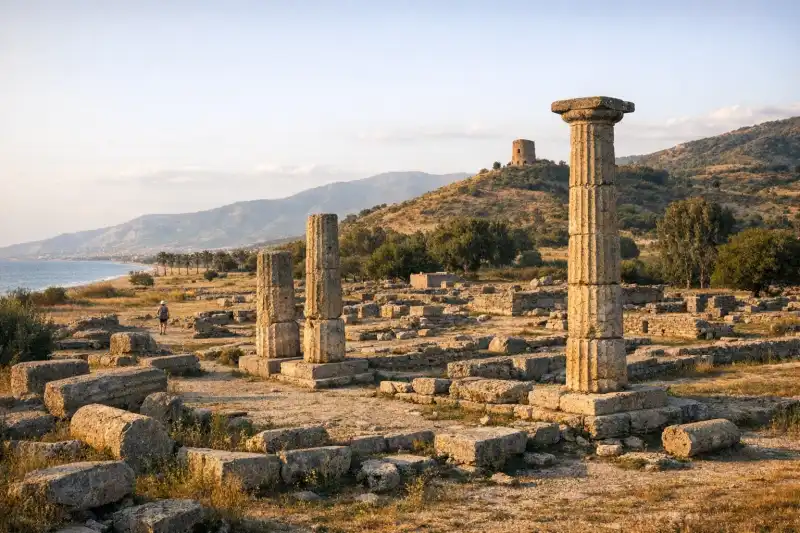
Locri Epizephyrii in Italy is one of the most evocative ancient sites in Calabria, a place where the long memory of Magna Graecia still feels close to the surface. Set near the Ionian coast, with the hills of southern Italy rising behind it and the sea not far away, the archaeological area preserves the remains of a city that was once among the most influential Greek colonies in the western Mediterranean. Today, visitors encounter not a single monument towering over the landscape, but a broad historical terrain: roads, sanctuaries, foundations, walls, and traces of public life spread across a site that rewards patience and imagination.
What makes Locri Epizephyrii especially compelling is the richness of its identity. This was not merely a colonial outpost but a prosperous, self-confident city known for its religious traditions, legal culture, and artistic production. It flourished as part of the wider Greek world while remaining deeply rooted in the distinctive geography of southern Calabria. Walking here, you move through layers of civic ambition, ritual devotion, conflict, and adaptation. The ruins are quieter than those at Italy’s most famous archaeological destinations, yet that quiet is part of the experience. Locri invites visitors to look carefully, to reconstruct ancient life from foundations and fragments, and to appreciate a place whose significance lies as much in its historical depth as in its surviving stones.
History
Greek foundation and early growth
Locri Epizephyrii was founded in the 7th century BCE by Greek settlers, traditionally said to have come from Locris in central Greece. The epithet Epizephyrii distinguished it from other cities named Locri and probably referred to its position near the western winds. Like other colonies in Magna Graecia, it was part of the great movement of Greek expansion across southern Italy and Sicily, when communities established new settlements linked by language, religion, and trade to the wider Hellenic world.
From an early stage, Locri developed into a major urban center. Its location on the Ionian coast gave it access to maritime routes, while nearby inland zones supported agriculture and regional exchange. Ancient authors remembered the city for its laws and institutions, and Locri gained a reputation for order and civic structure. Its rise was also connected to the fertile surrounding territory and to its ability to compete with neighboring powers in Calabria.
Religion played a central role in the city’s identity. Sanctuaries dedicated to powerful deities, including Persephone and Aphrodite, became defining features of Locrian culture. The production of terracotta votive plaques and other ritual objects suggests a community in which sacred practice and public identity were closely linked. These religious traditions helped shape Locri’s place within Magna Graecia and remain among the most important reasons the site matters today.
Classical prosperity and regional power
During the Archaic and Classical periods, Locri reached the height of its influence. It was involved in the political rivalries of southern Italy, including interactions with nearby Greek colonies and indigenous communities. Its alliance networks shifted over time, but the city proved resilient and strategically aware. One of the best-known aspects of its history is its connection to the lawgiver Zaleucus, who was later credited with one of the earliest written law codes in the Greek world, though the historical details remain debated.
By the 5th and 4th centuries BCE, Locri was well established as a fortified and organized city. Urban planning, public spaces, and sanctuaries reflected wealth and civic coherence. The city’s prosperity can be seen indirectly in the artistic quality of its religious offerings and in the scale of its defensive works. It also maintained strong cultural ties to the Greek world beyond Italy, while developing local traditions of worship and visual expression that were distinctly Locrian.
This was also an era of shifting military pressure. Southern Italy was a competitive environment, with Greek colonies, Italic peoples, and later larger Mediterranean powers all seeking influence. Locri managed these challenges with varying success, but for centuries it remained an important player in regional politics.
Hellenistic struggles and Roman transition
The Hellenistic age brought new pressures. As larger geopolitical forces reshaped the Mediterranean, cities like Locri had to navigate alliances with powerful rulers and states. The city became involved in the conflicts associated with Pyrrhus of Epirus and later with the growing expansion of Rome. During the Punic Wars, much of southern Italy became a contested zone, and Locri’s allegiance shifted in the struggle between Rome and Carthage.
At one stage the city fell under Carthaginian influence, and later it was retaken by Roman forces. These events were not merely diplomatic changes; they likely brought disruption, military occupation, and reorganization. Yet the city survived and was incorporated into the Roman sphere. As Roman power consolidated in southern Italy, Locri gradually lost the autonomous political importance it had enjoyed as a Greek polis.
Under Roman rule, the city continued to exist, but its role changed. Some older sanctuaries remained significant, while the urban center adapted to new administrative and economic realities. The process was gradual rather than abrupt. Greek identity and traditions did not simply disappear, but they were increasingly shaped by Roman governance and by wider transformations in trade and settlement patterns.
Decline, abandonment, and rediscovery
Over the imperial centuries, Locri declined in relative importance. Like many ancient cities, it experienced demographic and economic change, and parts of the old urban area were gradually abandoned. Environmental factors, shifting routes, and the concentration of population elsewhere likely contributed to its fading prominence. By late antiquity and the early medieval period, much of the ancient city had ceased to function as an urban center in its old form.
What survived, however, was the archaeological record. Foundations, street lines, sanctuary areas, and burial evidence preserved the outline of the ancient settlement beneath later layers. Modern excavations brought Locri Epizephyrii back into historical view, revealing a city of exceptional importance for understanding Magna Graecia. Archaeologists uncovered evidence not only of monumental architecture but of ritual life, craft production, law, trade, and everyday existence.
Today, Locri Epizephyrii stands as one of the key sites for studying the Greek colonization of Italy and the long transition from Greek to Roman southern Italy. Its ruins may appear understated at first glance, but they preserve the footprint of a city that played a major role in the ancient history of the region.
Key Features
Locri Epizephyrii is best understood as a landscape of connected remains rather than as a single iconic monument. The archaeological park spreads over a broad area, and this gives the visit a particular rhythm. Instead of moving from one spectacular structure to another, you gradually piece together the city through roads, foundations, open spaces, and sacred precincts. That cumulative experience is one of the site’s greatest strengths. It allows you to understand how an ancient city functioned in relation to terrain, coast, and countryside.
Among the most important features are the sanctuary areas associated with the religious life of the city. Locri was especially renowned for cult practices linked to Persephone, and archaeological discoveries have illuminated the role of female devotion, votive offerings, and local religious identity. Terracotta pinakes, or molded plaques, are among the most famous finds from the site, even when many originals are now displayed in museums rather than left outdoors. These objects offer glimpses into myth, ritual, and the symbolic world of Locrian worship. They also show the artistic sophistication of the city and the way religious imagery shaped civic culture.
The urban remains help visitors imagine the city’s layout. Street traces and structural foundations indicate zones of habitation and public use, while the surviving lines of walls reveal the scale of the settlement and the need for defense. Even when the elevations are low, the archaeological plan is legible enough to convey the ambition of the city. You are not looking only at isolated ruins but at the footprint of an entire polis.
Another notable aspect is the relationship between the archaeological park and the museum collections. A visit to Locri works best when the outdoor ruins are paired with the artifacts recovered there. Architectural fragments, inscriptions, ceramics, votive objects, and domestic items fill in the human dimension that stone foundations alone cannot provide. The museum helps explain what the open site once looked like and why certain areas were so important. In particular, small finds reveal the texture of everyday life: how people worshipped, traded, built, and represented themselves.
Locri also has a distinctive atmosphere shaped by its setting. The Calabrian light, the low vegetation, and the sense of distance from Italy’s busiest tourist circuits give the ruins a contemplative quality. This is not a heavily urbanized archaeological zone hemmed in by modern construction on all sides. Although the contemporary town is nearby, much of the ancient area still feels spatially open. That openness helps visitors appreciate why Greek settlers chose this coast and how ancient communities understood land, movement, and sacred space.
For travelers interested in Magna Graecia, Locri is especially valuable because it complements better-known sites in Sicily and Campania. Here the story is less about monumental preservation on a grand scale and more about historical depth, regional identity, and evidence-rich archaeology. It is a place for those who enjoy reading traces in the landscape and connecting museum objects to the ground from which they emerged. The result is a visit that feels intellectually rewarding as well as visually memorable.
Getting There
Locri Epizephyrii is most easily reached from Reggio Calabria, the main transport hub of the region. By regional train, the journey to modern Locri usually takes around 1 hour 30 minutes to 2 hours depending on service patterns. One-way fares often fall in the roughly €7 to €12 range. From Locri station, visitors can take a short taxi ride to the archaeological park, typically costing about €10 to €15, or walk if weather and time allow.
Buses also connect parts of Calabria’s Ionian coast, though schedules can be less convenient than trains. Bus fares from Reggio Calabria are often similar to or slightly lower than train prices, commonly around €6 to €10, but travel times may be longer. If you are staying in nearby towns such as Gerace, Siderno, or on the surrounding coast, a local taxi can be the simplest option for a half-day visit.
Driving is often the most flexible choice, especially for travelers exploring several Calabrian sites. From Reggio Calabria, the drive generally takes about 1 hour 30 minutes via the coastal road network, depending on traffic and your starting point. Rental cars in southern Italy vary by season, but daily rates often begin around €35 to €60 before fuel. Parking near the archaeological area is usually easier than at Italy’s major urban monuments, though it is wise to check current access arrangements before departure.
Because opening hours can change seasonally, confirm museum and park times in advance. Comfortable walking shoes, water, and sun protection are essential, especially if arriving by public transport and covering part of the route on foot.
When to Visit
Spring is the best time for most visitors to Locri Epizephyrii. From March through May, temperatures are usually mild, the light is clear, and the archaeological landscape is easier to enjoy without the fatigue of midsummer heat. This season is especially good for travelers who want to walk slowly through the site, spend time reading interpretive panels, and combine the ruins with nearby coastal or hilltown excursions.
Autumn is another excellent choice. September and October often bring warm but more manageable weather, and the lower angle of the sun can make the site particularly photogenic. The atmosphere is calm, and the surrounding countryside takes on softer colors. For visitors interested in a quieter, reflective experience, autumn can be ideal.
Summer has the advantage of long daylight hours and a lively coastal region, but it can be very hot in Calabria. Since much of Locri Epizephyrii is exposed, midday visits between June and August may feel tiring. If you travel in summer, aim to arrive soon after opening or later in the afternoon, and bring water, a hat, and sunscreen. Winter is possible, especially on clear days when temperatures remain moderate compared with northern Europe, but opening schedules may be reduced and the site can feel more subdued.
If your main goal is archaeology rather than beach time, prioritize April, May, late September, or October. These months generally offer the best balance of comfort, visibility, and pacing for a rewarding visit.
| Quick Facts | Details |
|---|---|
| Site name | Locri Epizephyrii |
| Location | Near modern Locri, Calabria, Italy |
| Ancient culture | Greek colony of Magna Graecia, later Roman |
| Founded | 7th century BCE |
| Best known for | Sanctuaries, votive art, and urban remains |
| Recommended visit length | 2–3 hours |
| Nearest major hub | Reggio Calabria |
| Best seasons | Spring and autumn |
| Terrain | Mostly open-air archaeological park with walking paths |
| Good for | Ancient history enthusiasts, archaeology-focused travelers, Magna Graecia itineraries |
Locri Epizephyrii rewards visitors who arrive with curiosity rather than expectations of dramatic standing monuments. Its importance lies in the coherence of the whole: the memory of a Greek city laid across the Calabrian landscape, the sanctuaries that shaped civic life, and the artifacts that reveal a community both deeply local and fully connected to the wider Mediterranean world. In a region often overlooked by international travelers, the site offers one of southern Italy’s most meaningful encounters with the ancient past.
To walk through Locri is to see how archaeology can preserve more than architecture. It can preserve relationships between city and countryside, ritual and politics, memory and place. The foundations and fragments here ask you to imagine, compare, and reconstruct. For travelers interested in the Greek world beyond Athens and the better-known sites of mainland Italy, Locri Epizephyrii is not a footnote but a destination of real significance. It stands as a quiet, powerful reminder that some of the richest ancient histories survive not in spectacle, but in the patient evidence of a city that once mattered greatly and still does.
Guided tours: worth it?
Self-guided works here, but a guide can add real value if you want the ruins explained as a living place rather than just a sequence of monuments.
Best for
- First-time visitors who want context, not just photos
- Short visits where a planned route saves time
When to go self-guided
Go independently if you prefer setting your own pace, reading as you go, and checking official hours or ticket rules directly before you arrive.
What I’d avoid
Skip paid tours that bundle unrelated stops you do not actually want. The best option should either save meaningful planning time or add historical context you would miss on your own.
Calabria Archaeology Tours
Useful when: you want to compare guided formats before deciding
Reggio Calabria Day Tours
Useful when: you want to compare guided formats before deciding
Southern Italy Ancient Sites Tours
Useful when: you want to compare guided formats before deciding
Some tour links are affiliate links, which may earn Ancient Travel a small commission at no extra cost to you. I try to surface options that make practical sense for the site—not just anything bookable.
Frequently Asked Questions
What is Locri Epizephyrii?
Locri Epizephyrii is the archaeological site of an important ancient Greek colony in Calabria, southern Italy, founded by settlers from mainland Greece and later occupied by Romans.
Where is Locri Epizephyrii located?
The site is near modern Locri in the Metropolitan City of Reggio Calabria, on the Ionian coast of Calabria in southern Italy.
How much time should I allow for a visit?
Most visitors should allow 2 to 3 hours to explore the archaeological park and museum at a comfortable pace.
Is there a museum at Locri Epizephyrii?
Yes. The site includes a museum displaying finds from the ancient city, including architectural fragments, votive objects, inscriptions, and everyday artifacts.
When is the best time to visit Locri Epizephyrii?
Spring and autumn are usually the best times, with milder temperatures and softer light for walking through the open archaeological areas.
Can I reach Locri Epizephyrii by public transport?
Yes. Visitors can usually reach modern Locri by regional train or bus from Reggio Calabria, then take a short taxi ride or walk to the archaeological area depending on the exact stop.
Nearby Ancient Sites
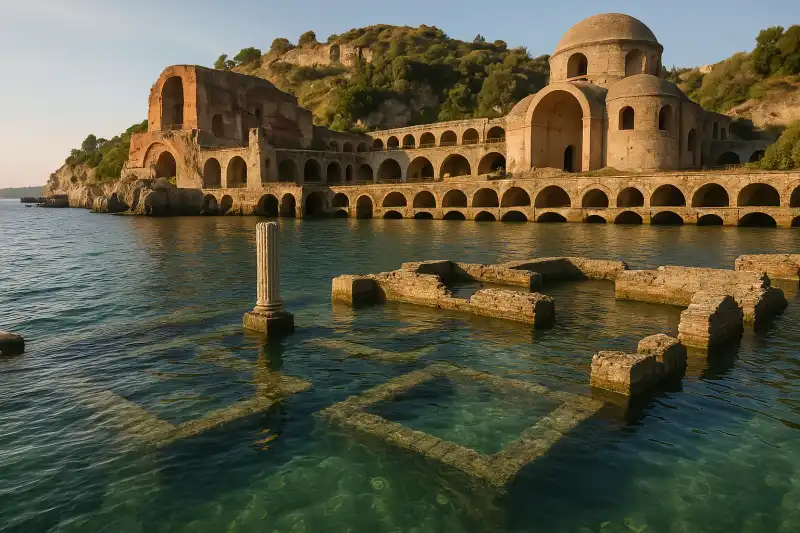
Baia Archaeological Park Guide 2026: Underwater Ruins, Thermal History, and Smart Visit Planning
RomanPlan a focused visit to Baia Archaeological Park near Naples with route strategy, what to prioritize...
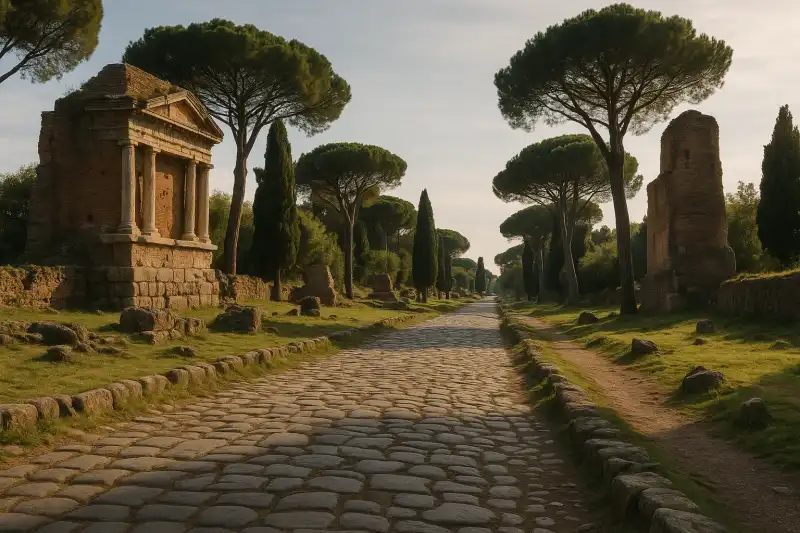
Appian Way Rome Guide 2026
RomanPlan a smart visit to the Appian Way with route choices, catacomb logistics, bike-vs-walk strategy, ...
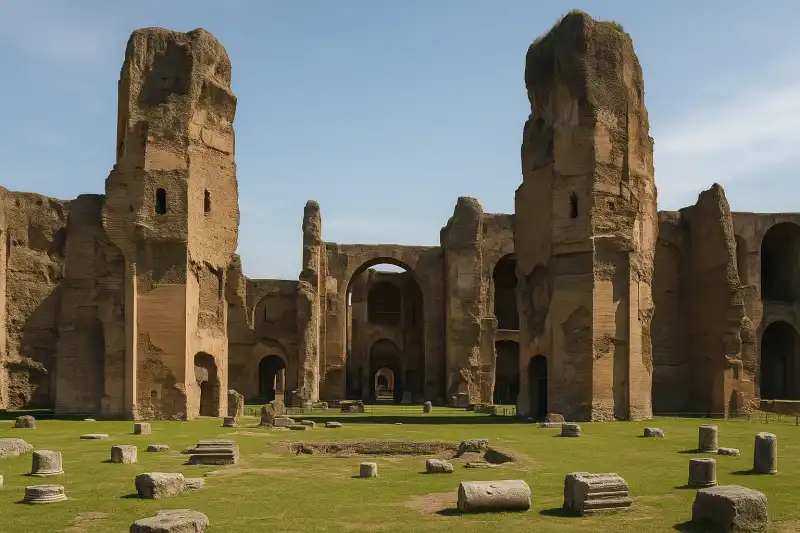
Baths of Caracalla Rome Guide 2026
RomanPlan your visit to the Baths of Caracalla with practical route advice, history context, timing, and ...