Quick Info
At a glance
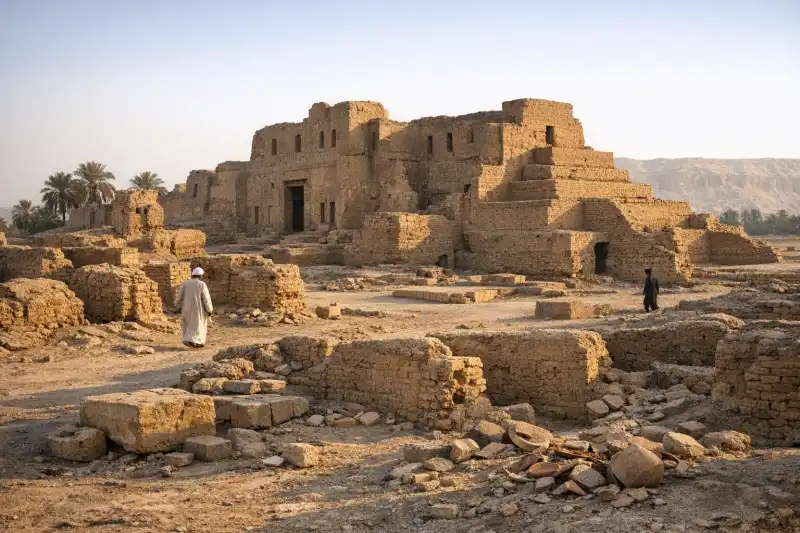
Malkata Palace in Egypt sits quietly on the west bank of the Nile near Luxor, where desert light, cultivated fields, and the broken outlines of ancient walls still suggest the grandeur of a royal city. Unlike the towering temples that dominate most visitors’ images of ancient Thebes, Malkata speaks in a different voice. It is not primarily a place of colossal pylons and forested stone columns, but of residences, courts, audience halls, magazines, chapels, painted rooms, and carefully organized living spaces once made for one of the most powerful rulers of the New Kingdom.
For travelers interested in how pharaohs actually lived, governed, celebrated, and projected power beyond temple ritual, Malkata Palace offers a rare and important perspective. This sprawling complex was built for Amenhotep III, one of ancient Egypt’s richest and most internationally connected kings, and it functioned as far more than a private residence. It was a ceremonial hub, an administrative center, and a stage for royal ideology. Today, the site can appear understated at first glance, especially when compared with Luxor’s more photogenic monuments. Yet that understatement is exactly what makes it compelling. As you walk across the remains of mudbrick structures and palace zones near the edge of the desert, the scale of the ancient plan gradually emerges, and with it a vivid sense of courtly life in one of Egypt’s most prosperous eras.
History
Amenhotep III and the creation of a royal city
Malkata Palace was established during the reign of Amenhotep III in the 18th Dynasty, around the 14th century BCE, when Egypt stood at the height of its imperial and cultural power. Amenhotep III ruled during a period of exceptional wealth, diplomatic prestige, and artistic refinement. He inherited a strong kingdom and developed it into a court culture marked by luxury, monumental building, and increasingly sophisticated royal display.
The palace complex at Malkata was created on the west bank of Thebes, the great southern capital of New Kingdom Egypt. This location was meaningful. The western side of the Nile was strongly associated with the setting sun, royal mortuary traditions, and the desert edge, yet it also held fertile land and room for large ceremonial developments. Amenhotep III’s palace was not a small retreat; it was conceived as a major royal residence with attached administrative, domestic, and ritual spaces. Ancient texts refer to it by names emphasizing joy and radiance, reflecting the image the king wanted to project.
The scale of the project suggests not only the king’s wealth but also a deliberate intention to build a royal environment suited to festivals, diplomatic receptions, and highly structured court life. It was closely linked to Amenhotep III’s jubilees, especially the sed festivals that renewed royal authority and celebrated his long reign. Malkata was therefore both practical and symbolic: a home, a seat of administration, and a ceremonial city.
The palace in use during the late 18th Dynasty
During its peak, Malkata likely housed the royal family, officials, attendants, craftsmen, guards, and all the support systems required for elite life. The complex included a main palace, audience halls, residential sectors, service quarters, storage facilities, and associated structures. It was also connected with a large ceremonial lake, probably artificial, which may have been used for ritual events and royal leisure.
Amenhotep III’s reign is known for extensive contact with foreign courts, luxury imports, and artistic experimentation, and these themes are echoed in the archaeological finds from Malkata. Excavations have uncovered painted plaster, decorated floors, faience, ceramics, glass, and other objects that point to a court environment of color and refinement. The palace was built largely in mudbrick, a common and highly practical material in ancient Egypt, while decorative surfaces provided much of its visual richness.
Malkata also sheds light on the status of royal women in Amenhotep III’s court. Queen Tiye, one of the most influential queens in Egyptian history, was a major figure during this period, and the palace complex included areas linked to the royal household and elite female spaces. The broader site reflects an entire ecosystem of monarchy rather than a single isolated building.
Decline, abandonment, and the shift after Amenhotep III
After Amenhotep III’s death, the palace appears to have declined in importance, especially as political and religious developments transformed the royal court. His son, Amenhotep IV, better known as Akhenaten, launched dramatic religious changes centered on the Aten and eventually shifted the royal focus away from Thebes. The foundation of Akhetaten, modern Amarna, altered the geography of power in Egypt and reduced the centrality of places like Malkata.
Even before complete abandonment, parts of the complex may have seen changing uses. Royal residences often evolved quickly, and mudbrick architecture, while durable when maintained, can deteriorate rapidly without constant repair. Over time, buildings collapsed, sand accumulated, and the visible grandeur of the palace faded. Unlike major stone temples, which often remained standing in monumental form, palatial mudbrick sites were especially vulnerable to decay.
Nevertheless, Malkata was never lost in historical significance. Its relationship to Amenhotep III, to Thebes, and to the ceremonial culture of the late 18th Dynasty kept it important for scholars seeking to understand royal life beyond funerary and temple contexts.
Excavation and modern archaeological importance
Modern archaeological work at Malkata began in earnest in the late 19th and early 20th centuries, with further excavations and studies refining the understanding of the site over time. Archaeologists identified the outlines of major palace sectors and uncovered evidence of painted decoration, room plans, courtyards, and storage areas. Finds from the site helped reconstruct aspects of domestic design, elite ceremony, and New Kingdom court aesthetics that are not always visible in Egypt’s surviving stone monuments.
Today, Malkata is valued not because it survives as an intact palace, but because it preserves a rare archaeological footprint of royal residence planning. It allows historians to ask practical questions: where did the king receive guests, where were goods stored, how were service areas arranged, and how did architecture shape movement through spaces of power? In this way, Malkata remains central to the study of ancient Egyptian kingship, urban planning, and court culture.
Key Features
What makes Malkata Palace memorable is its scale and layout rather than a single spectacular surviving structure. Visitors encounter a wide archaeological landscape where the remains of walls, room divisions, and open areas slowly reveal how large and carefully organized the complex once was. This is a place best understood through imagination informed by archaeology. Instead of looking up at towering columns, you look across the ground plan of royal life.
The main palace area is one of the most significant features. Here, excavations have identified ceremonial halls and reception spaces associated with the king’s public role. These rooms were not merely functional interiors. They were settings for controlled display, where rank, access, and ritual movement mattered deeply. Even in ruin, the arrangement suggests a hierarchy of space, guiding visitors from more open or service-oriented sectors toward areas of increasing importance. The surviving foundations and wall traces help explain how power was staged architecturally in the New Kingdom.
Another striking aspect of Malkata is the evidence for painted decoration. Archaeologists found fragments of plaster and decorated floors showing floral, geometric, and natural motifs. These discoveries transformed modern understanding of Egyptian palaces. The site demonstrated that elite interiors could be vivid and luxurious, filled with color and imagery that complemented furniture, textiles, and ceremonial objects. Such decoration also reminds visitors that ancient Egyptian architecture was rarely as monochrome as ruined remains imply. Malkata’s palace rooms once offered a highly curated visual environment.
The residential and service sectors are equally important, because they reveal the practical machinery behind kingship. Storage rooms, magazines, kitchens, and domestic areas point to the enormous logistical demands of supporting a royal court. Food, wine, oils, textiles, tribute goods, ceremonial equipment, and daily necessities all had to be managed on a large scale. The palace was therefore a working administrative center as well as a residence. For travelers who want to move beyond the image of the pharaoh as a distant icon, these remains make royal life feel materially real.
Associated religious and ceremonial structures add another layer to the site. In ancient Egypt, palace life and sacred symbolism were never entirely separate. Chapels and ritual spaces within or near the complex helped integrate the king’s domestic environment with divine legitimacy. This mattered especially under Amenhotep III, whose reign emphasized royal magnificence and cosmic order. Malkata was designed to embody more than comfort; it projected sacred kingship.
The wider setting also contributes to the site’s appeal. Malkata stands within the broader landscape of western Thebes, close to major mortuary and settlement zones. Its location near cultivated land, desert margin, and routes linking other Theban monuments made it strategically and symbolically effective. The relationship between palace and landscape is essential. Amenhotep III did not build in isolation; he built within a carefully charged environment where royal residence, festival practice, and funerary ideology all intersected.
One of the most intriguing features connected to Malkata is the great ceremonial lake traditionally associated with the complex. Though not always the focal point of a casual visit, this feature helps illustrate the palace’s broader design logic. Water in Egypt had practical, symbolic, and aesthetic power. A large lake near a royal palace signaled control over labor and resources, while also creating a setting for ritual, movement, and display. It turned the palace grounds into a more elaborate ceremonial environment.
For visitors today, the understated nature of the ruins can be part of the experience rather than a drawback. Malkata rewards slow observation. The low walls, open spaces, and desert edge encourage you to imagine movement through rooms, courtyards, and administrative sectors. It is less a monument of vertical spectacle than one of archaeological intelligence. Travelers who appreciate context, planning, and the lived dimensions of ancient power often find it one of the most thought-provoking sites on Luxor’s west bank.
Getting There
Malkata Palace is reached from Luxor, the main gateway for exploring ancient Thebes. Most travelers stay in Luxor city on the east bank of the Nile and cross to the west bank by bridge or local ferry before continuing south by road. The easiest option is to hire a taxi or private driver for a half-day or full-day west bank route. From central Luxor, a taxi to the Malkata area typically costs around EGP 250 to 500 depending on negotiation, waiting time, and whether you combine it with nearby sites such as the Colossi of Memnon or Deir el-Medina.
Private guided tours are also common and often more convenient, especially because Malkata is usually visited as part of a broader historical circuit. Depending on inclusions, expect organized west bank tours to range from about $25 to $80 per person, while private tours can be higher. If you are hiring a driver independently, agree on the full itinerary and waiting time in advance.
Budget travelers can use local transport to the west bank and then arrange a taxi onward, but this is less straightforward and may not save much time. Car rental is possible in Luxor, though many visitors prefer not to drive due to local traffic patterns and negotiation-heavy parking situations.
The nearest airport is Luxor International Airport, around 30 to 45 minutes away by road depending on traffic and your starting point. It is best to bring water, sun protection, and cash for transport, as services around the site are more limited than at Luxor’s major temple complexes.
When to Visit
The best time to visit Malkata Palace is from October to April, when temperatures in Luxor are milder and walking outdoors is much more comfortable. During these months, daytime highs are generally pleasant enough for extended west bank exploration, especially if you plan to combine Malkata with several nearby sites. Winter, particularly December through February, is peak season for international visitors, so hotels and guided tours may cost more, but the weather is at its most forgiving.
Early morning is the ideal time of day. Light across the west bank is softer, temperatures are lower, and the site feels more atmospheric before midday heat builds. Late afternoon can also be appealing, especially for photography and for experiencing the desert-edge setting in warmer tones. Midday visits are possible, but from late spring through early autumn they can be exhausting.
From May to September, Luxor becomes intensely hot, with summer temperatures often climbing above 40°C. If you visit in this period, start as early as possible, carry plenty of water, and keep your itinerary realistic. Malkata’s open setting offers little shade, so heat management is essential.
Unlike temple sites where crowds can be a defining factor, Malkata is often quieter, which makes season less about crowd avoidance and more about comfort. Travelers who enjoy reflective archaeological sites may especially appreciate the calmer atmosphere during shoulder months such as October, November, March, and April, when conditions are favorable without always having the busiest winter flow.
| Quick Facts | Details |
|---|---|
| Location | West bank of the Nile near Luxor, Egypt |
| Ancient Builder | Amenhotep III |
| Date | 14th century BCE |
| Civilization | Ancient Egyptian |
| Period | New Kingdom, 18th Dynasty |
| Primary Material | Mudbrick with painted plaster decoration |
| Main Significance | Royal palace complex and ceremonial center |
| Best Base for Visitors | Luxor |
| Typical Visit Length | 30-60 minutes |
| Best Season | October to April |
Malkata Palace is not the kind of place that overwhelms at first sight. Its power lies in how it expands in the mind as you walk through it. Here, the story of ancient Egypt becomes more domestic, administrative, and human without losing any of its grandeur. In the broken traces of halls, rooms, storage spaces, and ceremonial zones, you begin to understand that pharaonic power was not only carved in stone temples but also lived daily in carefully designed environments like this one.
For that reason, Malkata is especially rewarding for travelers who want more than a checklist of famous monuments. It offers a different angle on Luxor and on the New Kingdom itself: a vision of kingship expressed through residence, planning, luxury, and ritual life. Seen alongside the temples and tombs of western Thebes, the palace completes the picture. It reminds us that the pharaoh was not only worshipped in stone or buried in hidden valleys, but also surrounded by officials, family, servants, goods, ceremonies, and architecture built to sustain a world at the center of empire.
Guided tours: worth it?
Self-guided works here, but a guide can add real value if you want the ruins explained as a living place rather than just a sequence of monuments.
Best for
- First-time visitors who want context, not just photos
- Short visits where a planned route saves time
When to go self-guided
Go independently if you prefer setting your own pace, reading as you go, and checking official hours or ticket rules directly before you arrive.
What I’d avoid
Skip paid tours that bundle unrelated stops you do not actually want. The best option should either save meaningful planning time or add historical context you would miss on your own.
Luxor West Bank Tours
Useful when: you want to compare guided formats before deciding
Luxor Private Day Tour
Useful when: you want flexible timing or a private guide
Ancient Thebes and Luxor Sightseeing
Useful when: you want to compare guided formats before deciding
Some tour links are affiliate links, which may earn Ancient Travel a small commission at no extra cost to you. I try to surface options that make practical sense for the site—not just anything bookable.
Frequently Asked Questions
What is Malkata Palace?
Malkata Palace is the vast royal palace complex built for Pharaoh Amenhotep III on the west bank of ancient Thebes, near modern Luxor in Egypt.
Where is Malkata Palace located?
It lies in Luxor Governorate on the west bank of the Nile, south of the main cluster of western Theban monuments and close to Medinet Habu and the Colossi of Memnon.
Can you visit Malkata Palace?
Yes, the archaeological remains can be visited, often as part of a wider Luxor west bank itinerary, though facilities are more limited than at major temple sites.
Why is Malkata Palace important?
It preserves evidence of one of the largest royal residences of ancient Egypt and offers insight into court life, administration, ceremonial spaces, and elite architecture during Amenhotep III's reign.
How much time should I spend at Malkata Palace?
Most travelers spend 30 to 60 minutes at the site, though history enthusiasts may want longer to appreciate the scale of the palace grounds and related excavation history.
Is Malkata Palace suitable for independent travelers?
Yes, but hiring a taxi, driver, or guide is often the easiest option because the site is spread out, lightly serviced, and usually visited alongside nearby west bank monuments.
Nearby Ancient Sites
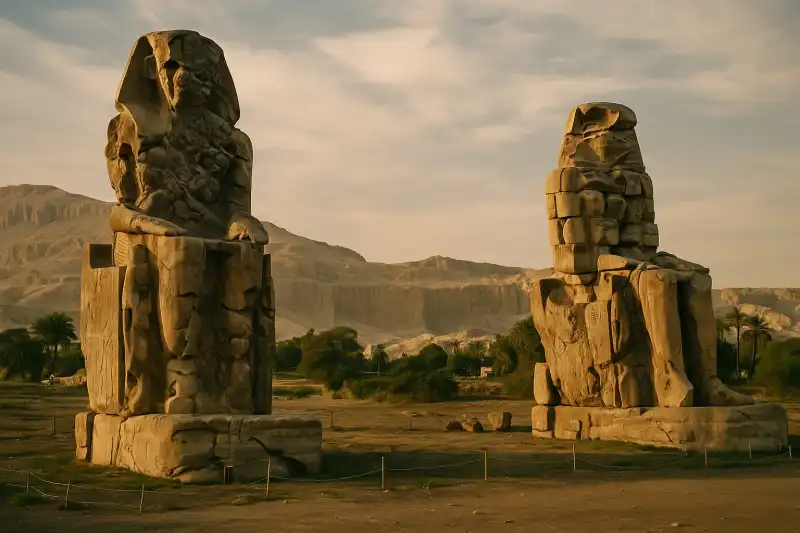
Colossi of Memnon
Ancient Egypt (New Kingdom)Twin colossal statues of Pharaoh Amenhotep III guarding the Theban necropolis on Luxor's West Bank, ...
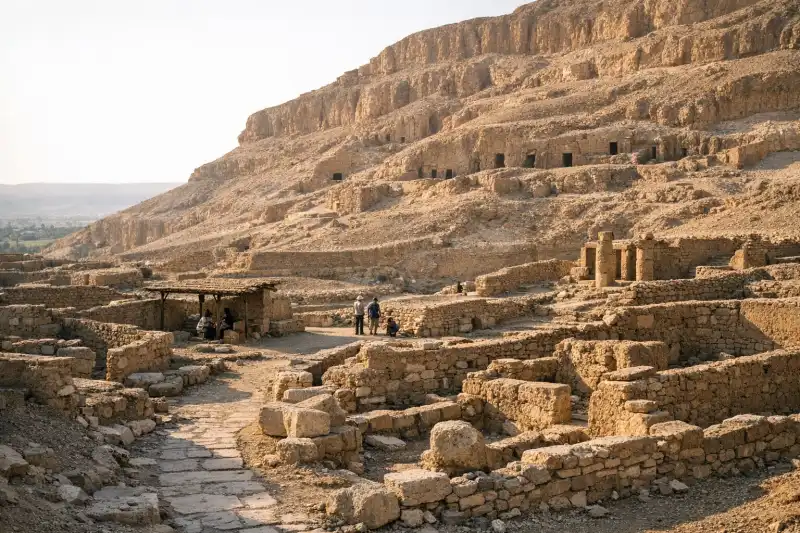
Deir el-Medina
Deir el-Medina is an ancient Egyptian workers’ village near Luxor, renowned for its remarkably prese...
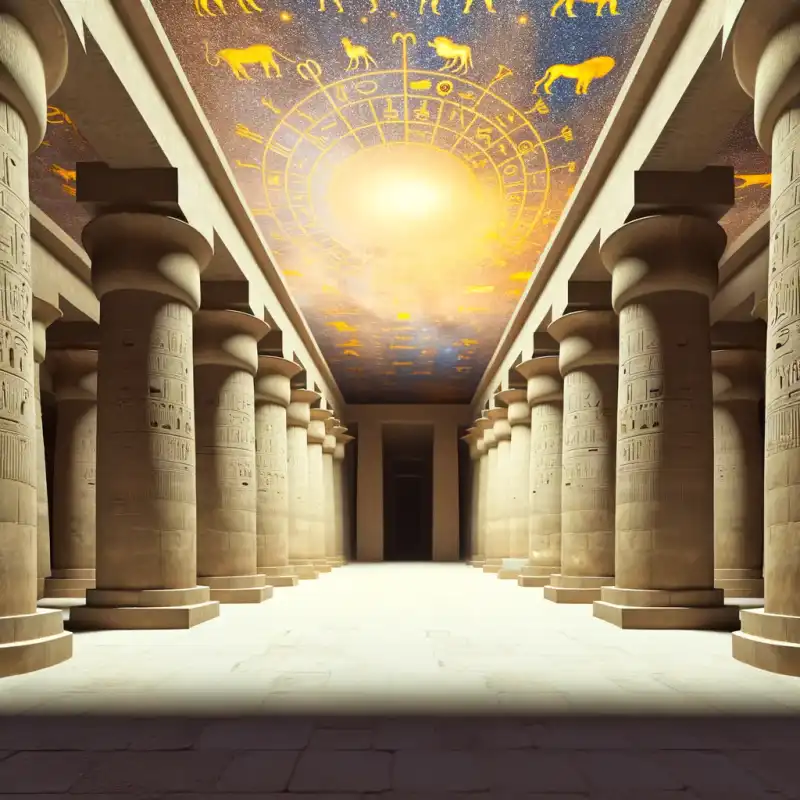
Dendera Temple Complex Egypt Guide 2026: Temple of Hathor & Zodiac Ceiling
Ptolemaic-RomanExplore Dendera's magnificent Temple of Hathor near Luxor. Star-mapped zodiac ceiling, Ptolemaic arc...
Dendera Temple Complex
The Dendera Temple Complex in Egypt is a remarkably preserved ancient site renowned for its grand Te...