Quick Info
At a glance
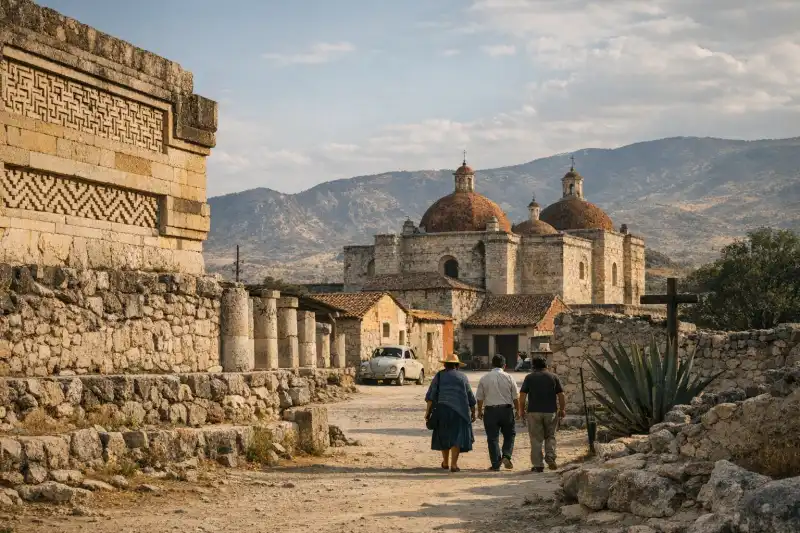
Mitla, Mexico, rises from the eastern arm of the Oaxaca Valley with a presence unlike any other ancient site in the country. Where many Mesoamerican ruins impress through towering pyramids or vast ceremonial plazas, Mitla captivates through precision, pattern, and atmosphere. Low stone buildings stretch across the dry valley floor below surrounding hills, their walls covered in intricate geometric mosaics that seem almost woven rather than carved. The effect is intimate rather than overwhelming, but no less monumental for that. Here, architecture invites close looking: every frieze, doorway, and courtyard rewards patient attention.
For travelers arriving from Oaxaca City, Mitla often comes as a surprise. The road passes modern villages, agave fields, and weaving towns before reaching a place once considered one of the most sacred ceremonial centers of the Zapotec world. Its name derives from the Nahuatl word Mictlán, often linked to the underworld or place of the dead, and that association is fitting. Mitla was deeply connected with funerary rites, ancestor veneration, and elite ritual life. It was not the largest city in ancient Oaxaca, but it became one of the most spiritually important.
Today, Mitla feels both archaeological and living. The site sits beside a present-day town, with local markets, crafts, and parish architecture blending into the valley landscape. Visitors can move from ancient patios and columned halls to village streets within minutes. That closeness between past and present gives Mitla a special texture: not an isolated ruin, but a site still rooted in the cultural geography of Oaxaca.
History
Early settlement in the Oaxaca Valley
Human occupation in the broader Oaxaca Valley reaches far back into prehistory, and the area around Mitla was part of a long continuum of settlement, farming, and ritual activity. By the first millennium BCE, the valley already supported increasingly complex communities connected through trade, religion, and competition. During these early centuries, Monte Albán emerged as the dominant urban and political center of the region, drawing power from surrounding communities and shaping the development of the Zapotec civilization.
Mitla was likely occupied in some form during this wider period, though it did not initially rival Monte Albán in scale or political importance. Its significance appears to have increased gradually, especially as local religious functions became more pronounced. The valley’s network of settlements was dynamic, and sites could rise in prominence as political conditions shifted. Mitla’s later fame suggests that even before its architectural flowering, it occupied a meaningful place within the sacred landscape of Oaxaca.
From Monte Albán’s decline to Mitla’s ascent
The turning point in Mitla’s history came after the decline of Monte Albán, roughly between the 8th and 10th centuries CE. As centralized authority fragmented, regional centers gained influence. Mitla was one of the places that prospered in this new political environment. Rather than replacing Monte Albán as a single dominant capital, it developed into a ceremonial and elite residential center with strong ritual prestige.
This phase saw the construction of many of the buildings visitors associate with Mitla today. The site’s famous palaces, courtyards, and mosaic-decorated walls belong largely to the Late Classic and Postclassic periods. Unlike the broad civic planning of Monte Albán, Mitla’s architecture reflects a more compartmentalized ceremonial world: enclosed patios, carefully defined rooms, and access routes that would have emphasized status and controlled movement.
Mitla became associated with priestly authority and funerary rites. Spanish chroniclers later recorded traditions describing high priests and nobles connected with tombs at the site. While colonial descriptions must be read critically, archaeology supports the idea that Mitla was a place where the dead, sacred knowledge, and elite power were closely intertwined.
Zapotec foundations and Mixtec influence
Mitla is commonly identified as a Zapotec site, and its roots certainly lie within the Zapotec cultural sphere. Yet like much of Oaxaca in the Postclassic era, it also reflects interaction with Mixtec traditions and broader Mesoamerican currents. Trade, marriage alliances, shifting political loyalties, and shared religious practices all shaped the region. Material culture at Mitla suggests continuity alongside adaptation rather than a simple replacement of one people by another.
This blended history helps explain the site’s distinctive character. Mitla’s artistry is deeply local, especially in its geometric stonework, but it also belongs to a wider world of Postclassic ceremonial centers where sacred architecture, noble lineages, and burial spaces were central to political legitimacy. The site’s tombs and palace compounds express both ancestral permanence and regional connectivity.
Spanish conquest and colonial transformation
By the time the Spanish entered Oaxaca in the 16th century, Mitla remained an important ceremonial center. Colonial authorities and missionaries were quick to recognize its symbolic importance. As elsewhere in Mesoamerica, they sought to suppress Indigenous ritual life and repurpose sacred spaces. A Christian church, the Church of San Pablo Villa de Mitla, was built partly over pre-Hispanic platforms and with stones taken from ancient buildings, creating a visible statement of conquest layered directly on the older sacred precinct.
This transformation did not erase Mitla’s importance; it changed the terms on which the site existed. Indigenous memory, local tradition, and physical remains persisted despite the pressures of colonial rule. Some structures survived because they were reused, while others fell into ruin as materials were quarried or ceremonial functions ceased.
Archaeology and modern preservation
Interest in Mitla grew during the 19th and 20th centuries as explorers, scholars, and archaeologists documented the site. Excavations helped clarify the layout of the principal architectural groups, including the Columns Group, the Church Group, and associated tombs. Researchers focused particular attention on the mosaic friezes, whose designs remain among the most celebrated achievements of pre-Columbian stone craftsmanship in the Americas.
Modern preservation has aimed to stabilize walls, conserve decorative panels, and make the site accessible to visitors. Mitla today is protected as one of Oaxaca’s key archaeological destinations and contributes to the UNESCO-recognized cultural landscape associated with the prehistoric caves of Yagul and Mitla. Even so, what makes it remarkable is not just academic importance. Mitla still communicates something immediate: a sacred center designed not for spectacle alone, but for ritual, memory, and the enduring presence of the dead.
Key Features
The most striking feature of Mitla is its geometric stone mosaic work, often called fretwork or greca patterns. These panels cover parts of facades, friezes, and interior walls with interlocking designs assembled from precisely cut stones. Unlike relief carving, these mosaics were created by fitting many small pieces together into repeating angular motifs. Seen from a distance, the effect is orderly and decorative. Up close, it becomes astonishingly sophisticated. There are no visible mortars dominating the composition, and the precision of alignment gives the walls an almost textile quality, as though the builders translated woven patterns into stone.
The Columns Group is the area most visitors remember best. Here, a spacious courtyard is bordered by halls and chambers whose sober lines direct attention toward detail rather than mass. In one famous hall, six monolithic stone columns once supported the roof, lending the space a ceremonial gravity that still lingers even under open sky. The columns are not simply structural remains; they reshape the atmosphere of the compound, turning it into a place that feels formal, enclosed, and distinctly elite. Walking through these rooms, you sense that movement was choreographed. Entryways are narrow, thresholds deliberate, and interior spaces reveal themselves in sequence.
Mitla’s tombs are another essential part of the site’s identity. Subterranean chambers beneath some buildings reinforce the long-standing association between this place and death, ancestry, and ritual authority. These tombs are not monumental in the same way as Egyptian burial architecture or even the grand funerary complexes of other Mesoamerican capitals. Their power lies in integration. At Mitla, the worlds of the living and the dead were architecturally connected. Palaces and ceremonial courtyards stood directly above or beside burial spaces, suggesting that governance, ritual, and ancestral legitimacy were inseparable.
Visitors also notice how different Mitla feels from hilltop centers like Monte Albán. The site spreads low across the valley floor, and its architecture works through horizontality, enclosure, and surface refinement. Rather than dominating the landscape from afar, it creates inward-looking sacred compounds. This makes Mitla especially rewarding for travelers who enjoy close observation. Decorative bands, lintels, room proportions, and paving arrangements matter here as much as skyline silhouettes.
The Church Group offers one of the clearest examples of cultural layering in Oaxaca. The colonial church stands on ancient foundations, and the juxtaposition is impossible to miss. It tells a difficult but crucial story: conquest did not simply destroy old sacred places; it often appropriated them. At Mitla, this layered architecture allows visitors to read several historical eras in one frame, from Zapotec ceremonial design to Spanish ecclesiastical intervention to modern archaeological conservation.
Another subtle but important feature is the site’s relationship to the surrounding valley. The dry climate, muted earth tones, and nearby mountains create a setting that complements the architecture’s controlled elegance. Mitla does not rely on jungle drama or massive elevation changes. Its beauty is measured and rhythmic. Light shifts across the stone during the day, deepening shadows in the mosaic patterns and making the geometry appear almost animated in morning or late-afternoon sun.
Finally, Mitla stands out because it remains connected to a living community. Vendors, local guides, nearby workshops, and the town itself are part of the broader visitor experience. This can make the site feel less isolated than more remote ruins, but it also reinforces an important truth: the Oaxaca Valley is not a museum landscape. It is a continuing cultural region in which ancient architecture still sits among active traditions of craft, food, ceremony, and local identity.
Getting There
Mitla is one of the easiest archaeological sites to reach from Oaxaca City. By car or taxi, the trip is around 45 kilometers and usually takes 50 minutes to 1 hour, depending on traffic and stops in the valley. A private taxi from Oaxaca City commonly costs about MXN 700 to 1,200 one way, while a half-day or full-day hired driver can be more economical if you plan to combine Mitla with Teotitlán del Valle, Hierve el Agua, or a mezcal distillery.
Budget travelers often use shared transport. Second-class buses and colectivos depart from Oaxaca City toward Mitla regularly. Expect fares of roughly MXN 35 to 70 per person each way, with travel times around 1 to 1.5 hours depending on the route and local stops. These options are inexpensive and practical, though less flexible than private transport. If you are comfortable with basic Spanish and local bus stations, they are straightforward to use.
Organized day tours are also popular. Many departures from Oaxaca City include Mitla alongside Hierve el Agua, Tule, and artisan villages. Prices vary widely, but group tours often begin around MXN 700 to 1,500 per person, while more specialized small-group or private tours cost more. These tours are convenient if you want context and logistics handled for you, though they may allow limited time at the ruins.
Once in Mitla, the archaeological zone is walkable and close to the modern town center. Wear sturdy shoes, carry water, and bring cash for entrance fees, snacks, and local purchases.
When to Visit
Mitla can be visited year-round, but the most comfortable months are generally from November through March, when temperatures are milder and skies are often clear. During this period, daytime conditions are pleasant for walking the site, especially in the late morning or afternoon. Light is also excellent for photography, as the low sun emphasizes the depth and rhythm of the geometric mosaics.
The dry season, extending broadly from late autumn into spring, is ideal if you want reliable weather and easy road access to other Oaxaca Valley attractions. April and May can be especially hot, with stronger sun and less shade across the archaeological zone. If you travel in these months, start early, carry plenty of water, and plan breaks in town.
The rainy season, usually from June through September, brings greener landscapes and fewer crowds on some days, but showers can interrupt plans. Rain often falls in the afternoon rather than all day, so morning visits are usually the best strategy. Wet conditions do not ruin the experience, though paths can become slick and the sky less favorable for photography.
If your priority is atmosphere, arrive soon after opening or later in the afternoon, when tour groups thin out. Midday can be busier, especially on weekends and holidays. Mitla is frequently combined with nearby destinations, so independent travelers who come early often enjoy the calmest conditions. Whenever you visit, sun protection is essential; Oaxaca’s valley light can feel intense even on cooler days.
| Quick Facts | Details |
|---|---|
| Location | Mitla, Oaxaca Valley, Mexico |
| Ancient cultures | Zapotec, later Mixtec influence |
| Main significance | Ceremonial and funerary center |
| Best known for | Geometric stone mosaics and columned halls |
| Distance from Oaxaca City | About 45 km |
| Typical visit length | 1–2 hours |
| Best time to go | November to March |
| Combined day-trip stops | Hierve el Agua, Teotitlán del Valle, mezcal palenques |
| Terrain | Mostly flat archaeological paths with some uneven stone surfaces |
| Travel style | Easy half-day or full-day trip from Oaxaca City |
Mitla rewards a different kind of attention than many famous ancient sites. It is not about conquering staircases or scanning broad horizons from a pyramid summit. Instead, it draws you inward, into courtyards, chambers, and surfaces where meaning is built through repetition and precision. The site’s artistry feels remarkably modern in its geometry, yet its purpose was deeply ancient: to anchor ritual, authority, and ancestral memory in stone.
That combination makes Mitla one of Mexico’s most distinctive archaeological experiences. For travelers exploring Oaxaca, it offers more than an excursion to old ruins. It opens a window onto a regional civilization that expressed power with subtlety and sacredness with design rather than sheer scale. If you arrive expecting a quick stop, you may leave surprised by how long its patterns stay in your mind.
Guided tours: worth it?
A guide can be genuinely useful at Mitla, especially if you want help with transport, timing, tickets, or understanding a large site without losing half the day to logistics.
Best for
- First-time visitors who want context, not just photos
- Travelers who want transport, timing, or entry logistics handled
- Short visits where a planned route saves time
When to go self-guided
Go independently if you already have transport and tickets sorted, enjoy moving at your own pace, and are comfortable checking the latest official rules before you arrive.
What I’d avoid
Skip paid tours that bundle unrelated stops you do not actually want. The best option should either save meaningful planning time or add historical context you would miss on your own.
Mitla and Oaxaca Valley tours
Useful when: you want to compare guided formats before deciding
Mitla and Hierve el Agua day trips
Useful when: transport or pickup logistics matter
Oaxaca archaeological tours including Mitla
Useful when: you want to compare guided formats before deciding
Some tour links are affiliate links, which may earn Ancient Travel a small commission at no extra cost to you. I try to surface options that make practical sense for the site—not just anything bookable.
Frequently Asked Questions
What is Mitla known for?
Mitla is best known for its highly refined geometric stone mosaic decoration, columned halls, and tombs associated with Zapotec and later Mixtec occupation.
How far is Mitla from Oaxaca City?
Mitla is about 45 kilometers southeast of Oaxaca City, and the trip usually takes around 50 minutes to 1 hour by car or bus depending on traffic.
Can you visit Mitla on a day trip?
Yes. Mitla is one of the easiest archaeological day trips from Oaxaca City and is often combined with nearby attractions such as Hierve el Agua, Teotitlán del Valle, or mezcal distilleries.
Is Mitla a UNESCO World Heritage Site?
Mitla forms part of the UNESCO World Heritage designation that includes the prehistoric caves of Yagul and Mitla in the Central Valley of Oaxaca.
How much time do you need at Mitla?
Most visitors spend 1 to 2 hours exploring the core ruins, though history enthusiasts may want longer to appreciate the tombs, architecture, and museum context.
What should you bring when visiting Mitla?
Bring water, sun protection, comfortable walking shoes, and cash for tickets, transport, and local purchases, especially if combining Mitla with nearby valley stops.
Nearby Ancient Sites
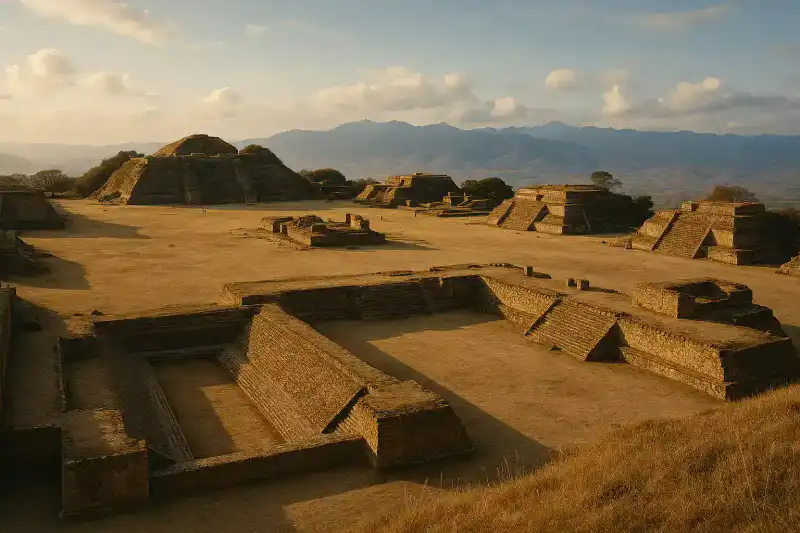
Monte Albán Mexico Travel Guide 2026: Zapotec Capital Above Oaxaca
ZapotecExplore Monte Albán, the ancient Zapotec capital perched above Oaxaca. Discover the Grand Plaza, bal...
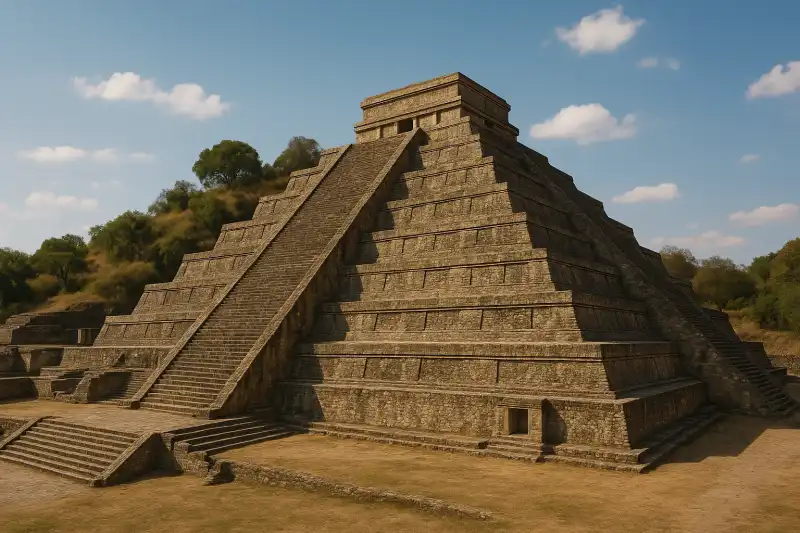
Great Pyramid of Cholula Travel Guide 2026: Tlachihualtepetl Essentials
Preclassic and Postclassic MesoamericanPlan a smart visit to the Great Pyramid of Cholula with key context, timing advice, and practical fi...
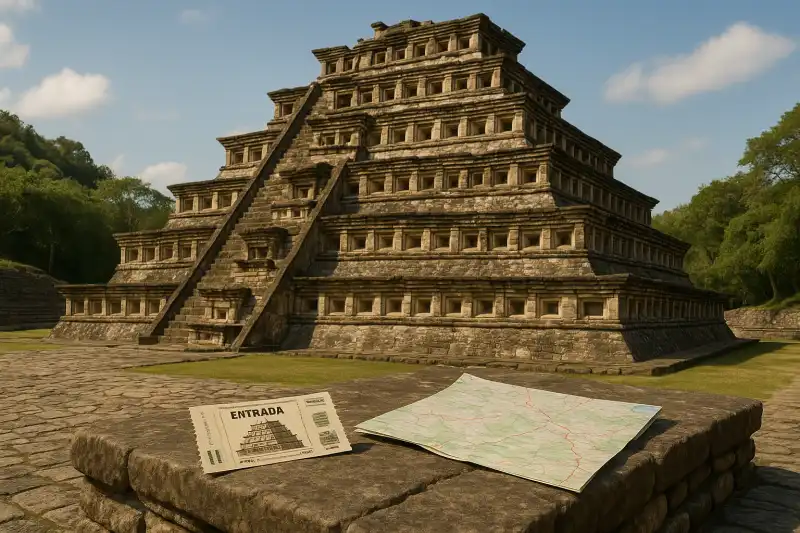
El Tajin Travel Guide 2026: Pyramid of the Niches, Tickets, and Route Planning
Classic VeracruzPlan a smoother El Tajin visit with practical transport timing, key structures to prioritize, and re...