Quick Info
At a glance
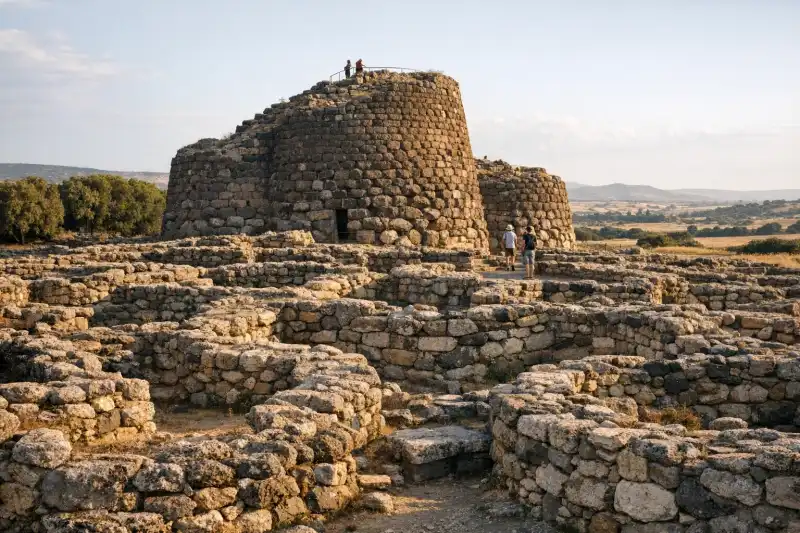
Nuraghe Su Nuraxi in Italy rises from the plains of central Sardinia with a presence that feels both rugged and mysterious, a monument of dark basalt blocks shaped into towers, walls, and passageways long before Rome ever ruled the island. Standing near the small town of Barumini, this UNESCO World Heritage Site is the most famous and complete example of a nuraghe, the distinctive megalithic architecture created by the Nuragic civilization. For travelers, it offers something rare: not just a ruined structure, but a whole archaeological landscape in which fortification, community life, and deep prehistory can still be read in stone.
The setting adds to the effect. Around the site, open fields and low hills stretch across Sardinia’s interior, giving little warning that one of Europe’s most remarkable Bronze Age complexes is waiting ahead. Then the central tower appears, thick and muscular, ringed by later bastions and the traces of a village that once pulsed with daily life. Unlike classical sites where inscriptions and marble statues often dominate the experience, Su Nuraxi tells its story through mass, engineering, and spatial design. Its language is one of corbelled chambers, narrow stairways, courtyards, and defensive lines. Visiting is both physical and imaginative: you move through cool stone interiors and then emerge into the Mediterranean light, trying to picture the people who built, expanded, defended, and inhabited this extraordinary place over many centuries.
History
Origins in the Bronze Age
The story of Nuraghe Su Nuraxi begins in the Bronze Age, when the Nuragic civilization developed across Sardinia and produced thousands of stone towers known as nuraghi. These structures remain one of the island’s defining archaeological signatures. Su Nuraxi, however, stands apart for its scale, complexity, and state of preservation. Archaeologists generally date the earliest core of the monument to the second millennium BCE, probably between the 16th and 13th centuries BCE, when a central tower was raised using large basalt blocks set without mortar.
This first tower was not a crude shelter but a sophisticated work of engineering. It included an internal chamber with a tholos-like corbelled roof and a staircase built within the thick walls. Such features show that Nuragic builders were highly skilled in both design and stone construction. The original monument likely served multiple purposes at once: defense, elite residence, storage, and a visible symbol of power within the surrounding landscape.
Expansion into a Fortress Complex
Over time, Su Nuraxi grew far beyond its initial tower. During the later Bronze Age, the site was expanded into a more formidable stronghold with four additional corner towers connected by curtain walls around a central courtyard. This transformed the original nuraghe into a true multi-towered bastion. The result was a compact but imposing fortress that dominated the area and expressed organized social authority.
At some point, an outer defensive wall with still more towers was added, enlarging the complex even further. Around it, a settlement of circular huts developed, indicating that Su Nuraxi functioned not only as a citadel but as the heart of a living community. Excavation has revealed domestic spaces, lanes, communal areas, and evidence of craft and agricultural activity. The site therefore captures a broader chapter of Nuragic society: not simply the construction of monumental towers, but the development of villages clustered around them.
Contact, Change, and Reuse
By the Iron Age, Sardinia was increasingly connected to wider Mediterranean networks. Contacts with Phoenician traders and, later, Carthaginian influence introduced new goods, practices, and political pressures. Su Nuraxi did not vanish suddenly in the face of these changes. Instead, it appears to have been modified, reused, and reinterpreted over time. Some parts of the village continued in occupation, while the monumental core likely shifted in function as the island’s social and political landscape evolved.
Later still, under Roman control, the site and its surroundings remained part of an inhabited territory. As at many ancient places, occupation patterns changed rather than ended cleanly. Structures were adapted, materials reused, and older meanings layered beneath newer ones. The great Bronze Age towers may have lost their original strategic role, but they retained practical and symbolic value in the local environment.
Burial, Rediscovery, and UNESCO Recognition
Like many archaeological sites, Su Nuraxi survived partly because it was gradually buried. Collapse, soil accumulation, and centuries of agricultural activity helped preserve parts of the monument under the ground. Modern understanding of the site owes much to the work of archaeologist Giovanni Lilliu, whose excavations in the mid-20th century revealed the complexity of the fortress and village. His research was fundamental not only for Su Nuraxi itself but for the study of the Nuragic civilization as a whole.
The excavation of the site transformed public awareness of Sardinia’s prehistoric heritage. What emerged was not an isolated tower but an extensive architectural system showing social hierarchy, engineering skill, and long-term occupation. In 1997, Nuraghe Su Nuraxi was inscribed as a UNESCO World Heritage Site, recognized as the most outstanding and complete example of Nuragic architecture. Today, it stands as the clearest gateway into a civilization that left no long historical texts of its own, but whose achievements remain powerfully legible in stone.
Key Features
The first feature that defines Nuraghe Su Nuraxi is the central tower, often called the keep. Built from hefty basalt blocks, it conveys both simplicity and sophistication. From outside, it appears as a truncated cone, broad at the base and narrowing upward. Inside, however, the structure reveals intricate planning. The chamber is roofed by a corbelled vault, with each successive ring of stone projecting inward until the opening closes near the top. The effect is both monumental and intimate. The air inside is cool, the light subdued, and the walls feel immensely thick, reminding visitors that this was an architecture of endurance as much as display.
Surrounding this core is the later quadrilobed bastion, one of the most impressive elements of the site. Four subsidiary towers linked by walls create a defensive ring around the original nuraghe, producing a compact fortress with controlled points of access and protected internal space. In the central courtyard, archaeologists found a well, an essential feature that points to the site’s practical resilience. Water access would have been crucial during siege conditions and everyday life alike. Seen from above or imagined in plan, the complex is remarkably coherent: each expansion responds to the earlier structure without losing the sense of an integrated whole.
Beyond the fortress lies the village, which broadens the story from elite monument to community settlement. Here, visitors encounter the circular stone bases of huts arranged along irregular paths. Although the walls no longer rise to full height, the settlement’s layout remains legible enough to evoke domestic rhythms. These were spaces for cooking, sleeping, storage, craft production, and communal interaction. Some structures are interpreted as having specialized functions, including meeting areas or huts associated with collective decision-making. This village setting is essential to understanding Su Nuraxi. Without it, the towers might seem only military or ceremonial; with it, they become the center of an inhabited social landscape.
Another striking feature is the site’s use of local material. The dark volcanic stone gives Su Nuraxi a grounded, almost geological character, as if it had emerged from the land rather than been imposed upon it. The architecture does not rely on carved ornament. Its power comes from proportion, texture, and mass. Narrow passages, angled entrances, and enclosed chambers create a controlled experience of movement. You are constantly aware of thresholds and visibility, of what can be seen from a tower and what remains hidden until you turn a corner. This manipulation of space suggests that Nuragic builders cared deeply about defense, but also about processional approach, hierarchy, and the experience of entering a place of authority.
The surrounding landscape adds another dimension. Su Nuraxi occupies a position that allows broad views over the Campidano plain and nearby uplands. Even if the terrain does not feel dramatically mountainous, it is open enough for a fortified complex to communicate command and watchfulness. The relationship between monument and landscape is part of the site’s meaning. Nuraghi across Sardinia often stand in visual dialogue with one another, and Su Nuraxi likely belonged to a wider network of settlements, routes, and territorial markers.
Finally, what makes Su Nuraxi especially memorable is its combination of accessibility and mystery. This is not a site where every function is certain or every historical sequence completely fixed. Archaeology has revealed much, but many questions about Nuragic religion, political organization, and social identity remain debated. That uncertainty is part of the appeal. Visitors can appreciate the site as a major engineering achievement while also feeling the deeper pull of an ancient world that still resists full explanation. In that balance between evidence and enigma, Su Nuraxi becomes one of the most compelling prehistoric monuments in the Mediterranean.
Getting There
Nuraghe Su Nuraxi is located at Barumini in central-southern Sardinia, making it most convenient as a day trip by car from Cagliari. The drive from Cagliari usually takes around 1 hour to 1 hour 15 minutes, depending on traffic and route. Rental cars are the easiest option for independent travelers, with economy rates in Sardinia often starting around €35-€60 per day outside peak season and rising notably in summer. Fuel and parking costs are usually modest, and having a car makes it easier to combine the site with nearby museums or rural stops.
Public transport is possible but slower and less flexible. From Cagliari, regional buses operated by ARST connect to Barumini or nearby towns, though schedules should be checked carefully in advance. One-way fares are often in the range of €4-€8, but journey times can be significantly longer than driving, and service frequency may be limited on weekends or holidays. Some travelers combine train and bus segments depending on their starting point, but this usually adds time rather than convenience.
Organized tours are another practical choice, especially for visitors staying in Cagliari without a car. Small-group day trips to Barumini and the Giara plateau or other South Sardinia highlights commonly cost about €70-€140 per person, depending on inclusions such as hotel pickup, guide service, or lunch. Site entry is sometimes separate, so confirm the details before booking. Once you arrive, guided access at the archaeological area is often part of the standard visit format, which is helpful because the architecture and chronology make much more sense with explanation on site.
When to Visit
Spring is one of the best times to visit Nuraghe Su Nuraxi. From April to early June, the countryside around Barumini is greener, wildflowers may still brighten the fields, and daytime temperatures are generally comfortable for walking. This season offers a strong balance between pleasant weather and manageable visitor numbers. Light layers, a hat, and water are still useful, but the heat is usually less intense than in high summer.
Summer brings long daylight hours and the busiest tourism period in Sardinia. While coastal resorts absorb much of the seasonal crowd, inland sites like Su Nuraxi can still become hot, especially from late morning into mid-afternoon. Temperatures frequently climb above 30°C, and the exposed archaeological terrain offers little shade. If you visit in July or August, aim for the earliest available entry or later in the day, and bring sun protection, water, and sturdy shoes. The advantage of summer is that transport options and organized tours tend to be more frequent.
Autumn, especially September and October, is another excellent season. The worst heat usually eases, the light can be beautiful for photography, and the site often feels calmer than in midsummer. This is a particularly good period for travelers interested in combining archaeology with wider exploration of Sardinia’s interior.
Winter visits can be rewarding for those who prefer quiet conditions and do not mind cooler weather. Sardinia’s winters are generally milder than much of mainland Europe, but rain, wind, and shorter daylight hours can affect the experience. Opening hours may also be reduced. Still, on a crisp clear day, the stark stone towers against a winter sky can feel especially atmospheric. Whatever the season, checking current opening times in advance is wise.
| Quick Facts | Details |
|---|---|
| Site Name | Nuraghe Su Nuraxi |
| Location | Barumini, South Sardinia, Italy |
| UNESCO Status | World Heritage Site |
| Civilization | Nuragic |
| Main Period | Bronze Age to Iron Age |
| Earliest Construction | c. 16th-13th century BCE |
| Best Base | Cagliari or Barumini |
| Typical Visit Duration | 1-2 hours |
| Terrain | Uneven stone surfaces, steps, exposed areas |
| Best Seasons | Spring and autumn |
Guided tours: worth it?
Self-guided works here, but a guide can add real value if you want the ruins explained as a living place rather than just a sequence of monuments.
Best for
- First-time visitors who want context, not just photos
- Short visits where a planned route saves time
When to go self-guided
Go independently if you prefer setting your own pace, reading as you go, and checking official hours or ticket rules directly before you arrive.
What I’d avoid
Skip paid tours that bundle unrelated stops you do not actually want. The best option should either save meaningful planning time or add historical context you would miss on your own.
Su Nuraxi di Barumini tours
Useful when: you want to compare guided formats before deciding
Barumini archaeological tours
Useful when: you want to compare guided formats before deciding
South Sardinia day tours
Useful when: you want to compare guided formats before deciding
Some tour links are affiliate links, which may earn Ancient Travel a small commission at no extra cost to you. I try to surface options that make practical sense for the site—not just anything bookable.
Frequently Asked Questions
What is Nuraghe Su Nuraxi?
Nuraghe Su Nuraxi is a large Bronze Age defensive and residential complex at Barumini in Sardinia, built by the Nuragic civilization and recognized as a UNESCO World Heritage Site.
Do you need a guided tour to enter Nuraghe Su Nuraxi?
Visits are typically organized as guided entries, which help manage the site and explain its architecture, history, and excavated village remains.
How long does a visit take?
Most visitors spend about 1 to 2 hours exploring the main tower, surrounding bastions, village area, and museum or visitor facilities.
Is Nuraghe Su Nuraxi suitable for children?
Yes, many families visit, but some passages are narrow and surfaces uneven, so children should be supervised closely.
Can you visit Nuraghe Su Nuraxi year-round?
Yes, the site is generally open through much of the year, though hours can vary by season, weather, and holidays.
What should you wear to Nuraghe Su Nuraxi?
Wear sturdy walking shoes, sun protection in warmer months, and a light jacket in cooler or windy weather, as the terrain is rocky and mostly exposed.
Nearby Ancient Sites
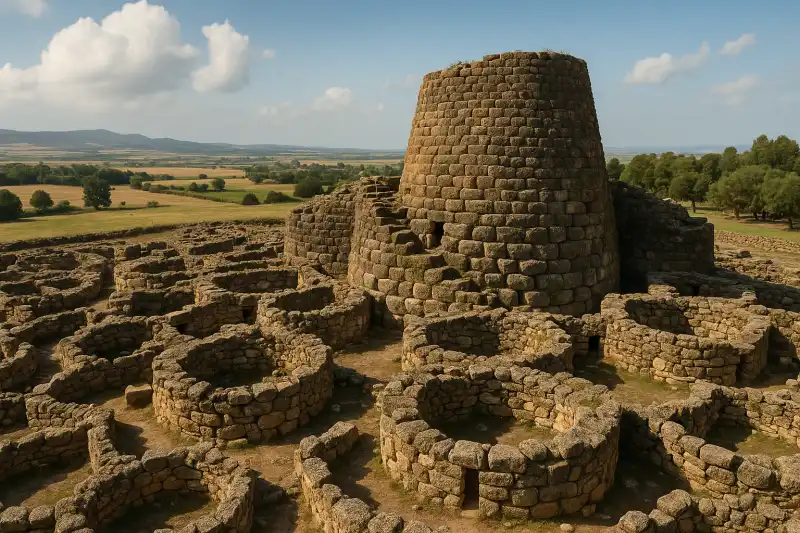
Barumini (Su Nuraxi) Guide 2026: Visiting Sardinia's Nuragic UNESCO Site
NuragicPlan a smart visit to Su Nuraxi di Barumini with timing, transport options, what to prioritize on si...
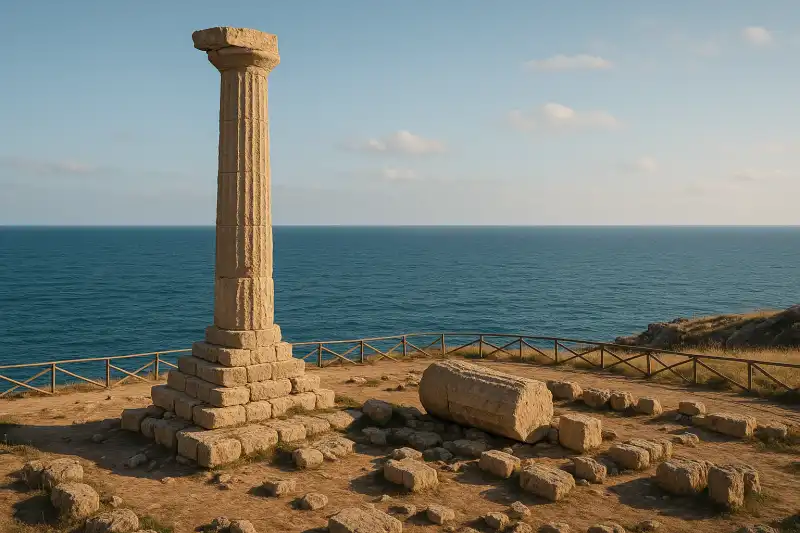
Capo Colonna Guide 2026: Calabria’s Coastal Temple Ruins
GreekVisit Capo Colonna with a practical plan: what remains to see, when to go, and how to pair this coas...
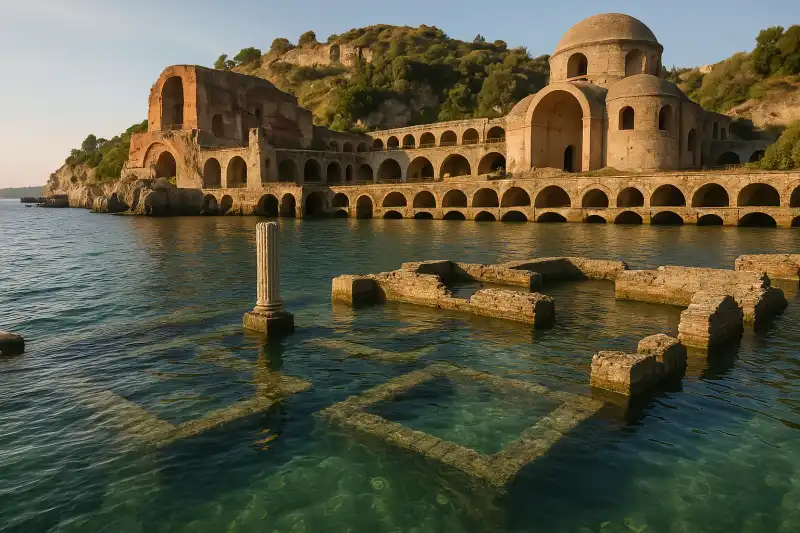
Baia Archaeological Park Guide 2026: Underwater Ruins, Thermal History, and Smart Visit Planning
RomanPlan a focused visit to Baia Archaeological Park near Naples with route strategy, what to prioritize...