Quick Info
Carved into the limestone cliffs of southern Iran’s Fars Province, Persepolis (Persian: تخت جمشید, Takht-e Jamshid, “Throne of Jamshid”) stands as the most spectacular archaeological testament to the Achaemenid Empire—the ancient world’s first true superpower. Founded by Darius the Great in 518 BCE and expanded by his successors Xerxes I and Artaxerxes, this ceremonial capital hosted the empire’s grandest celebrations, received delegations from 23 subject nations, and showcased Persian power through monumental architecture and intricate stone reliefs.
Though Alexander the Great’s armies burned Persepolis to the ground in 330 BCE, the site’s towering columns, elaborate staircases, and remarkably preserved bas-reliefs continue to awe visitors 2,500 years later. Today a UNESCO World Heritage Site, Persepolis offers an unparalleled window into ancient Persia’s sophistication, cultural tolerance, and artistic mastery. For travelers exploring Iran’s rich historical tapestry, Persepolis is the undisputed crown jewel—a place where the glory of the ancient world rises from the dust of the Zagros foothills.
Where Is Persepolis? Location & Getting There
Persepolis lies approximately 60 kilometers northeast of Shiraz, Iran’s cultural capital and the gateway to this archaeological wonder. The site sits at the foot of the Kuh-e Rahmat (Mountain of Mercy), chosen by Darius for its symbolic elevation and natural defensive position.
Getting There:
- From Shiraz: The most common approach is via organized tour or private driver from Shiraz (1-hour drive). Taxis can be hired for approximately $30–50 round trip.
- By Public Transport: Buses run from Shiraz to Marvdasht, from where you can take a taxi the final kilometers to the site.
- As Part of a Circuit: Most visitors combine Persepolis with nearby Naqsh-e Rustam and Pasargadae in a full-day itinerary.
The History of Persepolis: Rise of the Achaemenids
The story of Persepolis begins in 518 BCE when Darius I (Darius the Great) chose this mountain terrace as the site for a new ceremonial capital. Unlike previous Persian capitals at Pasargadae, Susa, and Ecbatana, Persepolis was designed specifically to impress—a visual statement of imperial power and multicultural unity.
Construction Phases:
- 518–486 BCE: Darius builds the initial terrace, Apadana Palace, Tachara, and Treasury
- 486–465 BCE: Xerxes I adds the Gate of All Nations, Throne Hall (Hundred Columns), and Hadish Palace
- 465–424 BCE: Artaxerxes I continues expansion with additional palaces
- 330 BCE: Alexander the Great’s army burns the city; construction halts forever
The site functioned primarily as a ceremonial capital used during the Persian New Year (Nowruz) celebrations, when delegations from across the empire—from Egypt to India, from Greece to Central Asia—would arrive bearing tribute and pay homage to the King of Kings.
Persepolis Site Map: Key Monuments Explained
The archaeological complex sits on an artificial terrace rising 12 meters above the plain, covering approximately 125,000 square meters. Understanding the layout enhances appreciation of the site’s architectural sophistication.
The Terrace: Massive retaining walls of dressed limestone support the platform, constructed without mortar using precision-cut blocks that have withstood earthquakes and invasion for two and a half millennia.
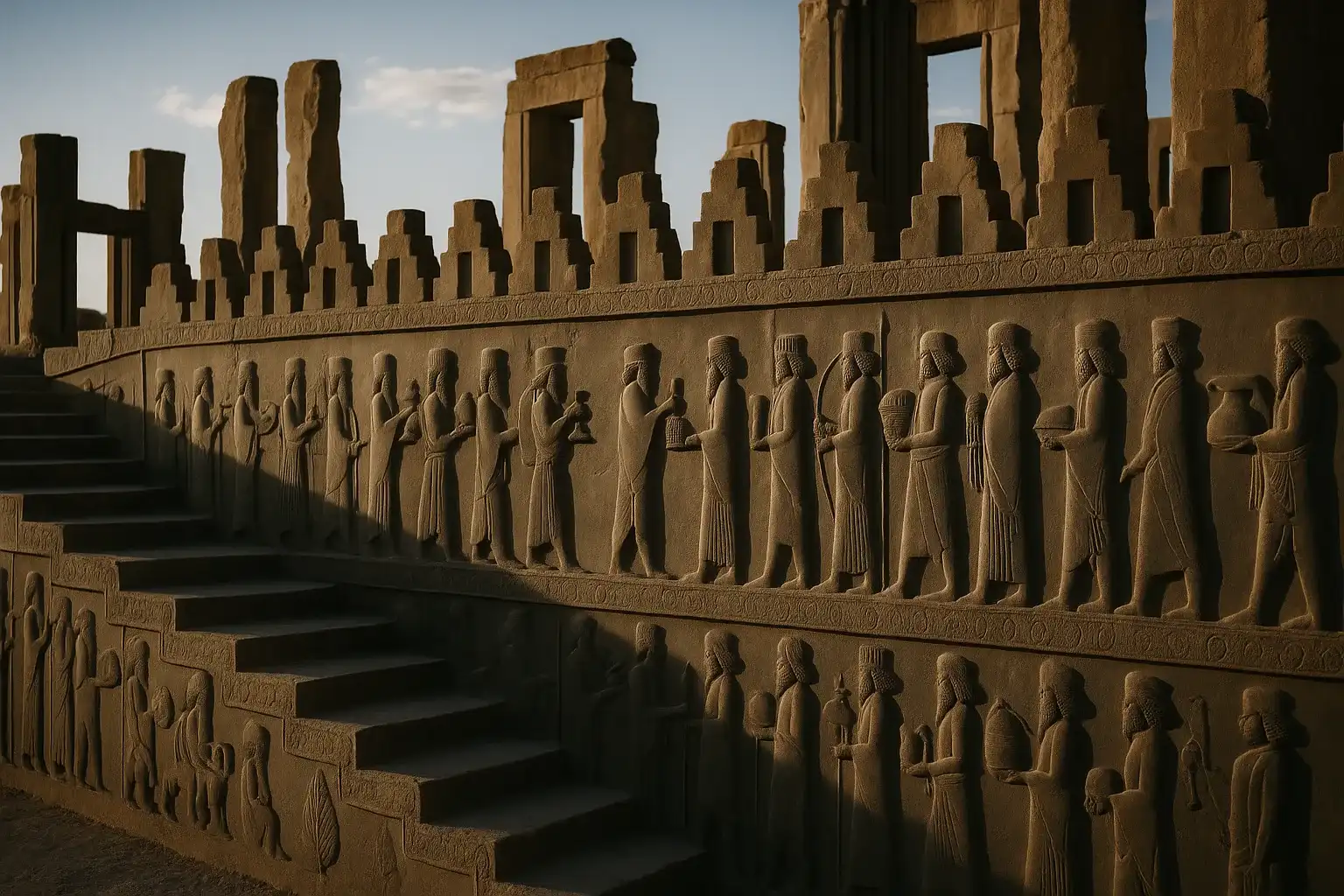
The Processional Way: The grand staircase on the western side features the site’s most famous reliefs, depicting dignitaries ascending to pay tribute.
The Apadana: The largest and most impressive structure, this audience hall could accommodate 10,000 guests beneath 72 cedar columns (each 19 meters high).
Top 10 Things to See at Persepolis
-
The Gate of All Nations — Enter the site through this monumental gate flanked by colossal lamassu (winged bull-men with human heads), symbols of imperial power and protection.
-
The Apadana Palace — Marvel at the remains of this vast audience hall, imagining the grand receptions where subjects from across the empire gathered.
-
The Eastern Stairs of the Apadana — Study the intricate reliefs depicting 23 delegations bringing tribute, each nationality distinguishable by their clothing and gifts.
-
The Throne Hall (Hundred Columns Palace) — Stand before the stump of 100 columns that once supported the roof of this massive hypostyle hall, used for imperial audiences.
-
Tachara (Palace of Darius) — Explore the private residence of Darius I, the earliest palace on the site, featuring distinctive stepped windows.
-
Hadish (Palace of Xerxes) — Visit Xerxes I’s palace, connected to Tachara by a royal walkway and inscribed with the famous declaration: “I am Xerxes, the great king, king of kings.”
-
The Tripylon (Council Hall) — Examine this three-doorway structure, possibly used as a throne room or council chamber, featuring elaborate relief work.
-
The Treasury — Walk through the foundations of where the empire’s wealth was stored, including gold, silver, and precious artifacts from across the known world.
-
The Unfinished Gate — Observe construction halted by the Macedonian invasion, providing insight into ancient building techniques.
-
The Royal Tombs — Though the royal tombs themselves are at nearby Naqsh-e Rustam, Persepolis features unfinished tombs cut into the hillside above the site.
Day Trip from Shiraz: Perfect Itinerary
A well-planned day trip from Shiraz allows visitors to experience Persepolis and its neighboring sites without rushing.
Recommended Schedule:
- 7:00 AM: Depart Shiraz
- 8:00 AM: Arrive at Persepolis; explore the main terrace (3 hours)
- 11:00 AM: Visit the Persepolis Museum (30 minutes)
- 11:30 AM: Drive to Naqsh-e Rustam (15 minutes)
- 11:45 AM: Explore the royal tombs and Sassanian reliefs (1 hour)
- 1:00 PM: Lunch at a local restaurant
- 2:30 PM: Continue to Pasargadae (1 hour drive)
- 3:30 PM: Visit the tomb of Cyrus the Great and palace remains (1.5 hours)
- 5:30 PM: Return to Shiraz
Alternative: For those with limited time, focus on Persepolis and Naqsh-e Rustam, skipping Pasargadae. This allows a more relaxed pace at the two most impressive sites.
Persepolis & Naqsh-e Rustam: The Complete Experience
While Persepolis alone justifies the journey, the nearby necropolis of Naqsh-e Rustam (15 km north) transforms a visit into a comprehensive immersion into Achaemenid royalty and pre-Persian history.
The Four Royal Tombs (Naqsh-e Rustam): Carved high into a cliff face, these cross-shaped tombs feature elaborate facades with columns, platforms, and royal figures above fire altars. Believed to contain:
- Darius I (c. 522–486 BCE)
- Xerxes I (c. 486–465 BCE)
- Artaxerxes I (c. 465–424 BCE)
- Darius II (c. 423–404 BCE)
The Ka’ba-ye Zartosht: A mysterious cube-shaped tower from the Achaemenid period—possibly a fire temple, treasury, or coronation site. Its purpose remains debated by scholars.
Sassasian Reliefs: Below the royal tombs, seven massive rock reliefs from the later Sassasian Empire (224–651 CE) depict victories over Romans and coronation scenes, spanning 400 years of post-Achaemenid Persian history.
Elamite Reliefs: The oldest carvings at the site date to 1000+ years before Persepolis, connecting visitors to Iran’s deep prehistory.
Traveler Tip: The Persepolis-Naqsh-e Rustam-Pasargadae circuit forms Iran’s premier archaeological day trip. Start early in Shiraz, visit Persepolis morning, Naqsh-e Rustam midday, and Pasargadae (tomb of Cyrus the Great) afternoon.
Understanding the Reliefs: Delegations & Symbolism
The stone reliefs at Persepolis constitute one of the most valuable historical documents from the ancient world, providing visual evidence of the empire’s multicultural composition.
The Delegation Procession (Eastern Stairs): The famous relief depicts representatives from 23 subject nations climbing the stairs to present tribute. From right to left, you’ll identify:
- Medes and Persians — The ruling peoples, distinguished by their dress
- Elamites — From southwestern Iran, carrying vessels
- Assyrians — From Mesopotamia, with textiles and vases
- Lydians — From Anatolia, bearing cups and textiles
- Babylonians — With textiles and a humped bull
- Arachosians — From modern Afghanistan, carrying camels
- Bactrians — From Central Asia, with camels and vessels
- Indians — From the Indus Valley, with donkeys and vessels
- Egyptians — Bearing cloth and a bull
- Greeks — From Ionia, with wool and vessels
- Ethiopians — With elephant tusks and an okapi
Symbolic Elements:
- The Lotus and Papyrus: Combined flower motifs symbolizing the unity of Upper and Lower Egypt under Persian rule
- The Date Palm: Representing fertility and the land of Persia
- The Winged Disk: Ahura Mazda, the Zoroastrian symbol of divine protection
- The Lion and Bull Combat: A common motif representing the eternal struggle between day and night, good and evil
Best Time to Visit Persepolis (Climate Guide)
Spring (March–May): Ideal conditions with mild temperatures (15–25°C) and wildflowers carpeting the surrounding hills. The Persian New Year (Nowruz, approximately March 21) brings domestic crowds but also cultural festivities.
Summer (June–August): Extremely hot, with temperatures regularly exceeding 40°C (104°F). The exposed terrace offers little shade. Early morning visits are essential if traveling during these months.
Autumn (September–November): Pleasant temperatures return, and crowds thin out after the summer heat. October and November offer excellent conditions with clear skies.
Winter (December–February): Cold but crowd-free; occasional snow creates dramatic photography conditions with the white-capped mountains behind the site. Daytime temperatures range from 5–15°C. Bring warm layers.
Photography Tips for Persepolis
Golden Hours: The best light occurs in early morning (8:00–9:30 AM) and late afternoon (4:00–5:30 PM). The limestone takes on warm tones at these times.
Iconic Shots:
- The lamassu at the Gate of All Nations (wide angle, morning light)
- The Apadana columns with mountains behind (sunrise or sunset)
- The delegation reliefs on the Eastern Stairs (bring a zoom lens for details)
- The Throne Hall columns (use a wide angle to emphasize scale)
Practical Notes:
- Tripods are permitted and recommended for the low-light conditions inside the Apadana
- The site’s white limestone can fool camera meters—consider +0.3 to +0.7 exposure compensation
- The museum prohibits flash photography
- Drone photography requires permits from Iranian authorities
Practical Information: Visas, Dress Code & Cultural Etiquette
Visa Requirements: Most nationalities require a visa to visit Iran. E-visas are available online for many countries, with processing typically taking 3–7 business days. US, UK, and Canadian citizens face additional restrictions and must travel with approved guides. Always check current requirements as policies can change.
Dress Code: Iran enforces Islamic dress codes at all times:
- Women: Must wear headscarves (hijab) covering hair; loose-fitting clothing covering arms and legs to the ankles. Manteaux (long coats) are standard.
- Men: Long pants required; short-sleeve shirts are acceptable. Avoid shorts and sleeveless tops.
Cultural Etiquette:
- Greet locals with “Salaam” (hello)
- Remove shoes when entering mosques or private homes
- Photography of government buildings and military personnel is prohibited
- Iranians are famously hospitable; don’t be surprised by invitations for tea
- Bring small gifts (sweets, pens) if visiting local homes
Currency: The Iranian rial (IRR) is the official currency, but prices are often quoted in toman (1 toman = 10 rials). Due to sanctions, international credit cards do not work in Iran. Bring sufficient cash (US dollars or euros) to exchange.
Quick Facts
| Attribute | Details |
|---|---|
| Location | Fars Province, Iran |
| Country | Iran |
| Region | Fars Province |
| Civilization | Achaemenid Persian Empire |
| Historical Period | c. 518–330 BCE |
| Established | c. 518 BCE (under Darius the Great) |
| Coordinates | 29.9346, 52.8916 |
Explore More Ancient Sites
- Petra: The rose-red city carved from Jordan’s cliffs
- Göbekli Tepe: The world’s oldest temple in Turkey
- Ephesus: The magnificent Roman city
- Luxor: Egypt’s greatest open-air museum
For tips on capturing ancient sites through your lens, see our guide to photographing ruins.
|-----------|---------| | Location | Fars Province, southern Iran | | UNESCO Status | World Heritage Site (1979) | | Ancient Name | Parsa (Persian); Persepolis (Greek) | | Founded | 518 BCE by Darius the Great | | Destroyed | 330 BCE by Alexander the Great | | Peak Empire | 5.5 million km² (largest ancient empire) | | Nearest City | Shiraz (60 km northeast) | | Elevation | 1,600 meters above sea level | | Best Time | March–May; September–November | | Suggested Stay | Full day (Persepolis + Naqsh-e Rustam) |
Frequently Asked Questions
Is it safe to visit Persepolis?
Persepolis is in Iran's Fars Province, accessible from Shiraz. Check your government's current travel advisory before planning. When open to tourism, Iran generally receives travelers safely—particularly at major heritage sites. Visitor formalities have varied with geopolitical conditions; verify visa and entry requirements carefully before booking.
What is Persepolis and why was it built?
Persepolis (Greek for 'Persian City') was the ceremonial capital of the Achaemenid Empire, the ancient world's largest empire, stretching from Egypt to India. Built by Darius the Great from 518 BCE, it hosted the annual Nowruz (New Year) celebrations where delegations from all 28 nations of the empire came to present tribute. It was burned by Alexander the Great in 330 BCE—an act of symbolic as much as military significance.
What can I see at Persepolis?
The site's highlights include the Gate of All Nations (gateway flanked by winged bull colossi), the Apadana Palace with its extraordinary relief carvings showing tribute delegations from across the empire, the Throne Hall (Hall of 100 Columns), and the Treasury. The relief carvings throughout the site are extraordinarily detailed—showing soldiers, courtiers, animals, and the peoples of the empire in procession.
How do I get to Persepolis from Shiraz?
Persepolis is 57 km northeast of Shiraz (1-1.5 hours by car). Taxis from Shiraz can be hired for a half-day round trip. The site is typically combined with Naqsh-e Rostam (royal Achaemenid tombs carved into a cliff face, 6 km from Persepolis) and Pasargadae (Cyrus the Great's capital, 130 km further north) for a full day of Persian history.
How does Persepolis compare to other ancient sites?
The relief carvings at Persepolis are among the finest in the ancient world—comparable to Egyptian temples and Assyrian palaces in quality but unique in their cosmopolitan subject matter. The site's scale is enormous. Persepolis is regularly cited by archaeologists and historians as one of the greatest ancient sites never to receive the visitor numbers it deserves, largely due to Iran's tourism challenges.
Nearby Ancient Sites
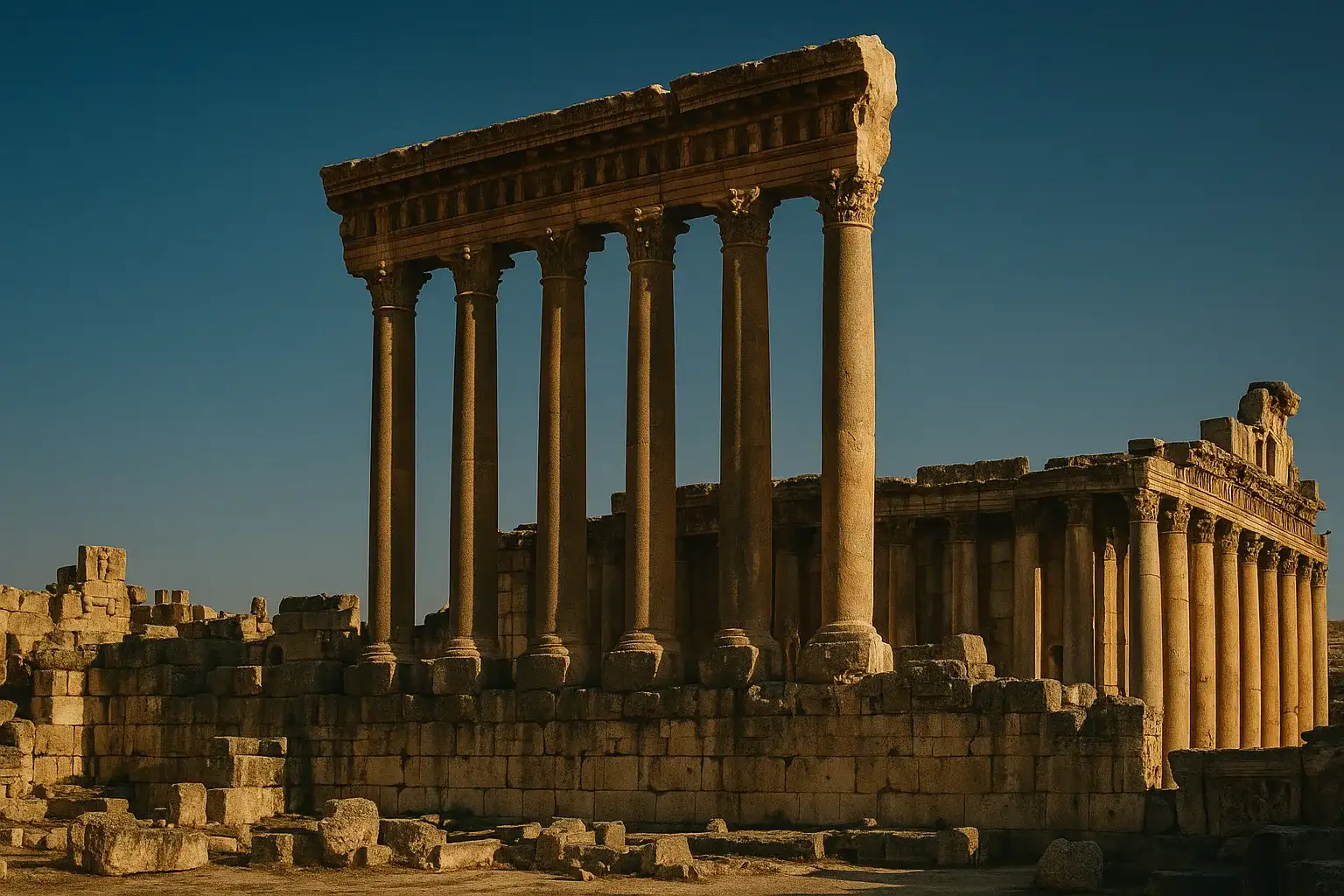
Baalbek: Rome's Mightiest Temple Complex in Lebanon's Beqaa
Roman / PhoenicianExplore Baalbek's colossal Roman temples, including the best-preserved Temple of Bacchus. Discover t...
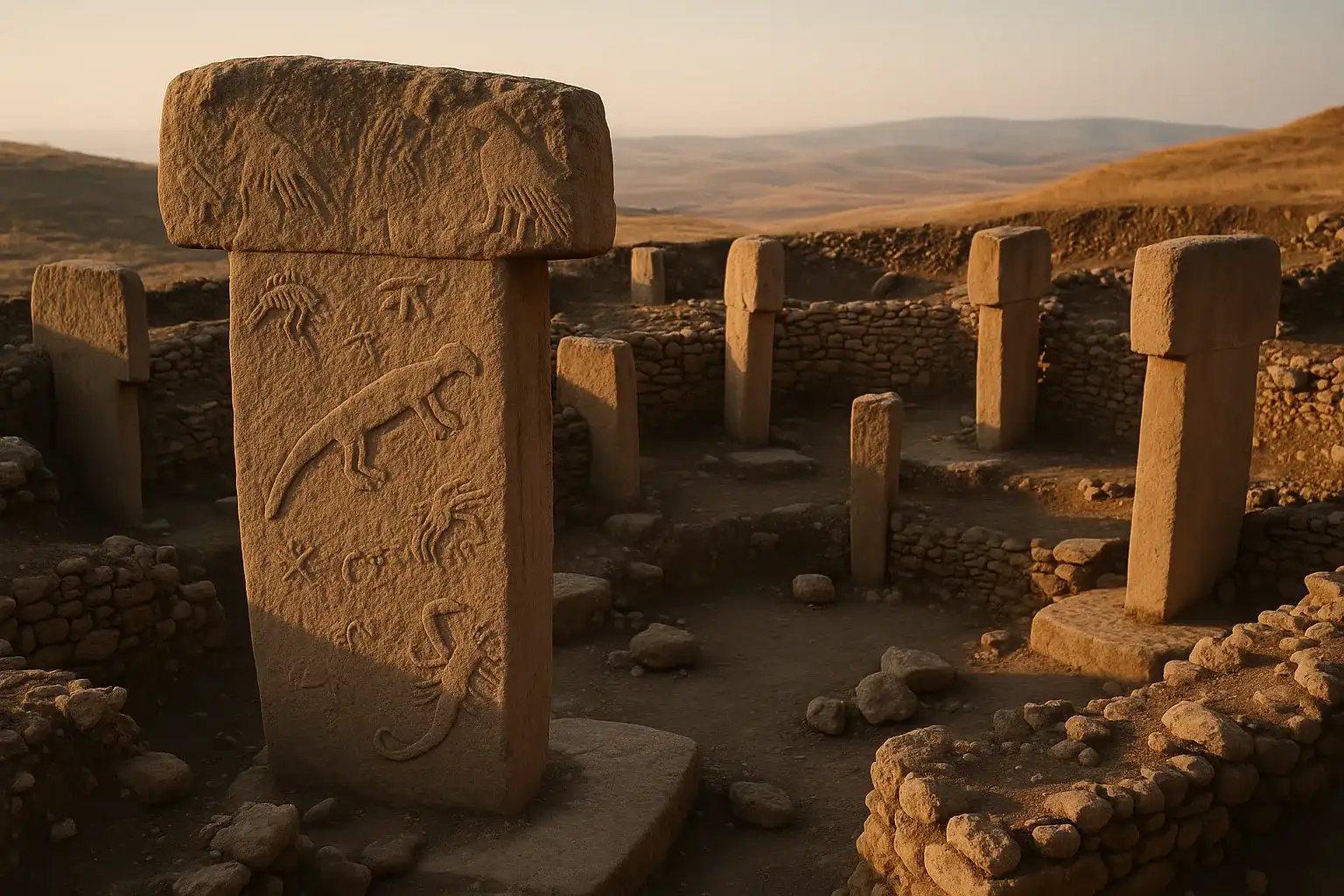
Göbekli Tepe, Turkey: The World's Oldest Temple Complex
Pre-Pottery NeolithicDiscover Göbekli Tepe, the 12,000-year-old archaeological wonder in Turkey that rewrites human histo...