Quick Info
At a glance
Polonnaruwa, Sri Lanka, rises from the dry plains of the island’s north-central heartland with an atmosphere unlike almost anywhere else in South Asia. Here, broad roads cut through an archaeological landscape of shrines, halls, lotus ponds, and colossal stone Buddhas, while monkeys move through trees and the heat shimmers above ancient brick. Once a royal capital and a center of political ambition, religion, irrigation engineering, and art, Polonnaruwa today feels both expansive and intimate: expansive because its monuments are spread over a large ceremonial and urban zone, intimate because so many details survive in stone, from moonstones and guardstones to delicately carved pilasters and shrine walls.
For many travelers, Polonnaruwa is one of the most rewarding stops in Sri Lanka’s Cultural Triangle because it offers more than a single monument. It is a whole historic city, a place where kings planned power through architecture and water management, where monks and pilgrims gave sacred meaning to the landscape, and where later generations left traces of both continuity and decline. The site’s UNESCO World Heritage recognition reflects not only the beauty of famous places like Gal Vihara, but also the broader achievement of a medieval capital laid out with vision and purpose. Visiting Polonnaruwa means moving through a city of memory, where reservoirs gleam in the distance and the stone remains of one of Sri Lanka’s great kingdoms still command attention.
History
Early settlement and the shift of power
Although Polonnaruwa had earlier importance as a settlement and military outpost, its rise to prominence came in connection with the political instability that affected the older capital of Anuradhapura. Repeated invasions from southern India, especially during the late first millennium CE, weakened the island’s existing centers of power. Polonnaruwa’s location, further to the southeast and strategically placed within the dry zone, made it attractive as an alternative administrative and military base.
By the 10th and early 11th centuries, Chola influence from South India had become especially significant. The Cholas, who occupied parts of Sri Lanka, used Polonnaruwa as an administrative center and called it Jananathamangalam in inscriptions. Their occupation left traces in temple architecture and political organization, and it helped establish the city as a serious rival to Anuradhapura. Even though foreign domination was resented, the city’s emerging infrastructure and strategic role laid groundwork for what would become its greatest era.
Vijayabahu I and the restoration of Sinhalese rule
The real transformation of Polonnaruwa into a Sinhalese capital began with King Vijayabahu I in the late 11th century. He is remembered as the ruler who successfully expelled Chola authority and reunified much of the island. After consolidating power, he chose Polonnaruwa as his capital, recognizing both its defensive value and its symbolic importance as a city reclaimed from foreign control.
Vijayabahu’s reign focused on restoration. Buddhism, which had suffered disruption during war and occupation, required institutional renewal. Monasteries were repaired or refounded, and links with Buddhist centers abroad were revived, especially to reestablish monastic ordination lineages. The capital also had to be rebuilt as an operational center of government. Under Vijayabahu, Polonnaruwa began to take shape as a royal and sacred city whose ambitions reached beyond recovery toward cultural prestige.
The age of Parakramabahu I
Polonnaruwa reached its height in the 12th century under King Parakramabahu I, one of the most celebrated rulers in Sri Lankan history. His reign marked a period of extraordinary statecraft, military ambition, hydraulic development, and monumental construction. He is often associated with the famous principle that not even a drop of rainwater should flow to the sea without being used, a statement reflecting the importance of irrigation in the dry zone landscape.
Under Parakramabahu, the city expanded dramatically. Massive palace complexes, audience halls, monastic institutions, shrines, image houses, and carefully planned waterworks were built or rebuilt. The Parakrama Samudra, the great reservoir closely associated with the city, symbolized the union of political authority and environmental engineering. It sustained agriculture and demonstrated the kingdom’s ability to shape the land itself.
This period also saw efforts to unify the Buddhist sangha and strengthen royal oversight of religious institutions. Architecture from the era reveals both grandeur and refinement. Brick structures rose on substantial platforms, stone carvings became more sophisticated, and urban planning connected secular authority with sacred geography. Polonnaruwa was no longer merely a fallback capital; it was the center of a confident kingdom.
Nissanka Malla and later rulers
After Parakramabahu’s death, Polonnaruwa remained important, though political stability became more fragile. King Nissanka Malla, ruling in the late 12th century, sought to present himself as a legitimate and generous monarch. He commissioned inscriptions, built pavilions and temples, and left a visible mark on the city, including monuments that still preserve his political self-image in stone. His reign contributed to the cityscape visitors encounter today, especially in structures designed for display and ceremony.
Yet beneath this architectural activity, succession disputes and external pressures weakened the kingdom. The capital remained active, but the centralized authority that had made its monumental scale possible proved difficult to maintain. Rival claimants, regional fragmentation, and incursions from South India increasingly threatened the city’s future.
Decline and rediscovery
By the late 12th and 13th centuries, Polonnaruwa entered decline. Invasions, especially those linked to the Kalinga Magha period, destabilized the region. Political centers gradually shifted south and west into areas considered easier to defend and less exposed. As royal patronage moved away, Polonnaruwa’s palaces and shrines lost the institutional support needed for maintenance.
Over time, jungle growth overtook much of the site. Reservoirs, roads, and foundations endured, but many buildings collapsed into mounds of brick and stone. Even so, sacred memory never vanished entirely. Local traditions preserved knowledge of the city, and some monuments retained devotional significance.
Systematic archaeological interest grew during the colonial period and continued after independence. Excavation, conservation, and site planning gradually revealed the scale of the medieval capital. Today, Polonnaruwa stands as one of Sri Lanka’s clearest windows into the island’s medieval past, a place where restored structures and excavated remains together tell the story of political renewal, royal ambition, and eventual abandonment.
Key Features
What makes Polonnaruwa so compelling is the way it preserves an entire urban world rather than a single isolated ruin. The archaeological zone unfolds across royal, civic, and religious districts, allowing visitors to understand how kingship and faith shaped one another. In the Royal Palace complex, the surviving brick walls still suggest the scale of what chronicles describe as a multi-storied residence of impressive luxury. Even in ruin, the thickness of the walls conveys a sense of immense weight and former authority. Nearby, the Audience Hall, with its carved stone elephants and finely worked steps, offers a more ceremonial kind of power: this was architecture for public appearance, state ritual, and the careful performance of kingship.
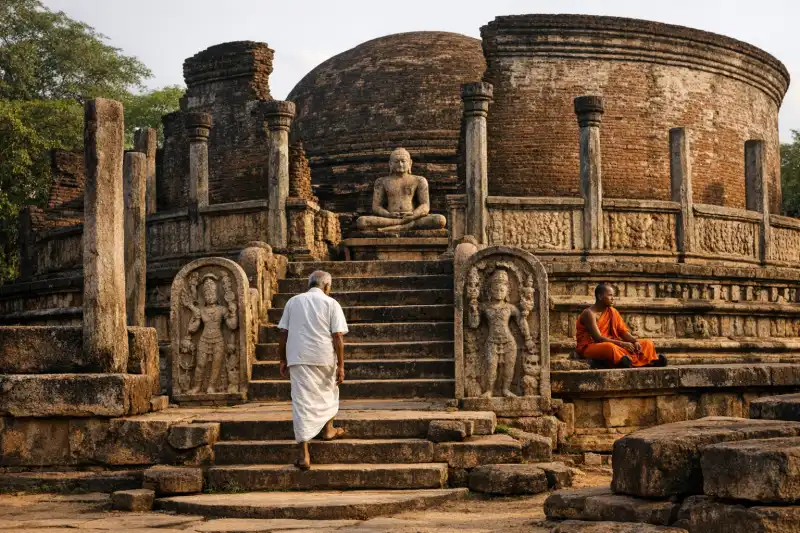
One of the most admired monuments is the Vatadage, a circular relic shrine that seems almost perfectly balanced in its design. Though not huge, it is one of the site’s most elegant structures. Concentric terraces, moonstones, guardstones, and seated Buddha images create a harmony of form that rewards close looking. The stone carving here is among the finest in Sri Lanka, precise yet restrained. Around it, other sacred monuments such as the Hatadage and Atadage reveal how relic worship and royal patronage were closely connected. These structures were not only religious spaces but political statements, asserting legitimacy through devotion.
The Quadrangle, where many of these monuments stand close together, is often the emotional center of a visit because it condenses so much artistry into a relatively compact area. Yet Polonnaruwa’s grandeur lies equally in its spread. The city’s monastic complexes show different traditions within Sri Lankan Buddhism. At places like Lankatilaka, the towering image house still creates awe even though the roof is gone. Its high brick walls rise dramatically, and the standing Buddha inside, damaged but still imposing, gives a powerful sense of scale. Tivanka Image House, named for the triple-bent pose of its Buddha image, preserves notable wall paintings that hint at the rich interior decoration once common in such shrines.
Then there is Gal Vihara, perhaps the most famous single monument in Polonnaruwa. Carved from a granite outcrop, its four Buddha images represent one of the high achievements of Sinhalese rock sculpture. The seated figure radiates calm concentration; the standing image, much discussed for the subtle expression on its face, has an inward gravity; the reclining Buddha, stretched to a length of about 14 meters, captures serene entry into final nirvana. These sculptures are remarkable not only for their technical refinement but for their integration with living rock. They seem discovered within the stone rather than imposed upon it.
Polonnaruwa’s identity also depends on water. The city cannot be fully appreciated without understanding the surrounding tanks and channels that sustained life in the dry zone. The vast Parakrama Samudra is less a decorative lake than an engineered statement of state capacity. Its scale reminds visitors that irrigation was central to prosperity, agriculture, and political control. Smaller pools and bathing places within the city, including the famous lotus-shaped pond, add a more intimate dimension. The lotus pond is especially memorable because of its graceful geometry; its descending tiers resemble unfolding petals and suggest how practical structures could also become works of visual imagination.
Scattered among these better-known monuments are Shiva temples, evidence of South Indian influence and the cosmopolitan reality of the city. Their compact stone forms contrast with the broader brick Buddhist structures and show that Polonnaruwa was a place of layered identities and regional connections. The cumulative effect of the site is one of complexity: royal ambition, monastic discipline, artistic refinement, and hydraulic intelligence all remain legible in the ruins.
Getting There
Polonnaruwa is most commonly reached as part of Sri Lanka’s Cultural Triangle, either from Colombo, Kandy, Dambulla, Sigiriya, or Anuradhapura. From Colombo, the journey by private car usually takes around 5 to 6 hours depending on traffic and route. A hired car with driver for a long intercity transfer or full-day excursion commonly costs about LKR 25,000 to 45,000, depending on vehicle type and whether multiple stops are included. This is the easiest option if you want flexibility and plan to combine Polonnaruwa with Sigiriya or Dambulla.
Public transport is cheaper but slower. Buses connect Polonnaruwa with major towns including Dambulla, Kandy, and Colombo, often requiring a transfer. Typical fares are modest, generally ranging from about LKR 200 to 1,000 depending on distance and bus class. Trains also serve Polonnaruwa on some routes, though schedules may be less convenient than road travel; second- and third-class tickets are inexpensive, often under LKR 500 for regional segments, while longer journeys can still remain budget-friendly.
From Sigiriya or Dambulla, many travelers arrange a taxi or tuk-tuk. A one-way taxi from Sigiriya area to Polonnaruwa may cost roughly LKR 8,000 to 15,000, while tuk-tuks can be cheaper for short regional transfers, though comfort varies in hot weather. Once in town, bicycle rental is a popular choice for visiting the ruins and usually costs around LKR 1,000 to 2,000 per day. Tuk-tuks and local guides are also available near the archaeological museum and entrance area.
When to Visit
Polonnaruwa can be visited year-round, but comfort depends heavily on heat, sunlight, and rainfall. The generally drier period from around May to September is often considered the most convenient time because roads and pathways are easier to navigate and skies are more reliably clear for photography. Even in the drier season, however, midday temperatures can feel intense, especially across open brick and stone areas with limited shade.
The best strategy in almost any month is to start early. Arriving soon after opening gives you softer light, cooler air, and a quieter experience at major monuments like the Quadrangle and Gal Vihara. Late afternoon can also be pleasant, though you will need enough time to cover the site before closing. If you plan to cycle, morning hours are especially valuable, since the heat becomes more tiring after about 11 a.m.
Rainier periods can bring lush surroundings and fewer visitors, but also sudden downpours and humid conditions. If traveling during wetter months, carry water protection for bags and expect some surfaces to be slippery. The upside is that the landscape around tanks and trees can look particularly vivid after rain.
For photographers, early morning and the final light of day are ideal for bringing out texture in brickwork and stone carving. For general sightseeing, a full day with a long midday break is often wiser than trying to rush. Lightweight clothing, sun protection, and plenty of water make a major difference whatever the season.
| Quick Facts | Details |
|---|---|
| Location | North Central Province, Sri Lanka |
| UNESCO Status | Ancient City of Polonnaruwa, World Heritage Site |
| Main Period | 11th to 13th centuries CE |
| Best Known For | Medieval royal capital, Buddhist monuments, Gal Vihara |
| Time Needed | Half day minimum; full day recommended |
| Best Way to Explore | Bicycle, tuk-tuk, or private guide |
| Combined With | Sigiriya, Dambulla, Anuradhapura |
| Landscape Setting | Dry zone plains with major reservoirs and irrigated hinterland |
Polonnaruwa rewards travelers who look beyond the label of “ruins” and instead see a functioning medieval world preserved in fragments. Its surviving palaces speak of courtly power, its shrines of devotion and dynastic legitimacy, its reservoirs of long-term planning in a challenging environment. Unlike sites where one monument dominates everything else, Polonnaruwa invites a slower, more connected understanding. You move from ceremonial courts to intimate sculptures, from brick towers to broad water, and gradually realize that the city’s greatness came from how these elements worked together.
That is why Polonnaruwa lingers in memory. It is not simply beautiful, though it certainly is. It is intelligible. The city still communicates how a kingdom imagined itself: disciplined, sacred, prosperous, and enduring. Even after invasion, abandonment, and centuries of overgrowth, that vision remains visible in stone. For anyone interested in Sri Lanka’s history, Buddhist art, or the design of ancient capitals, Polonnaruwa is not just worth a visit. It is essential.
Guided tours: worth it?
Self-guided works here, but a guide can add real value if you want the ruins explained as a living place rather than just a sequence of monuments.
Best for
- First-time visitors who want context, not just photos
- Short visits where a planned route saves time
When to go self-guided
Go independently if you prefer setting your own pace, reading as you go, and checking official hours or ticket rules directly before you arrive.
What I’d avoid
Skip paid tours that bundle unrelated stops you do not actually want. The best option should either save meaningful planning time or add historical context you would miss on your own.
Polonnaruwa tours
Useful when: you want to compare guided formats before deciding
Polonnaruwa day trip
Useful when: transport or pickup logistics matter
Polonnaruwa and Sigiriya tour
Useful when: you want to compare guided formats before deciding
Some tour links are affiliate links, which may earn Ancient Travel a small commission at no extra cost to you. I try to surface options that make practical sense for the site—not just anything bookable.
Frequently Asked Questions
What is Polonnaruwa famous for?
Polonnaruwa is famous for being a medieval capital of Sri Lanka and for its exceptionally preserved archaeological zone, which includes royal palaces, Buddhist shrines, reservoirs, and the monumental Gal Vihara Buddha statues.
How much time do you need to visit Polonnaruwa?
Most visitors need at least half a day to see the main monuments, but a full day is better if you want time for museums, cycling, photography, and a more relaxed visit across the extensive archaeological park.
Can you explore Polonnaruwa by bicycle?
Yes. Cycling is one of the most popular ways to explore Polonnaruwa because the ruins are spread across a large area with relatively flat roads, and bicycle rentals are widely available near the site.
Is Polonnaruwa worth visiting with Sigiriya?
Yes. Many travelers combine Polonnaruwa with Sigiriya because they are within practical day-trip distance of each other and together offer a rich mix of royal, religious, and landscape history in Sri Lanka’s Cultural Triangle.
When is the best time to visit Polonnaruwa?
The best time to visit is generally during the drier months from around May to September, though mornings are pleasant for much of the year. Early starts help avoid midday heat and crowds.
Do you need a guide at Polonnaruwa?
A guide is not essential, but it can greatly improve your visit by explaining the chronology of kings, religious symbolism, and the original function of monuments that may otherwise appear similar at first glance.
Nearby Ancient Sites
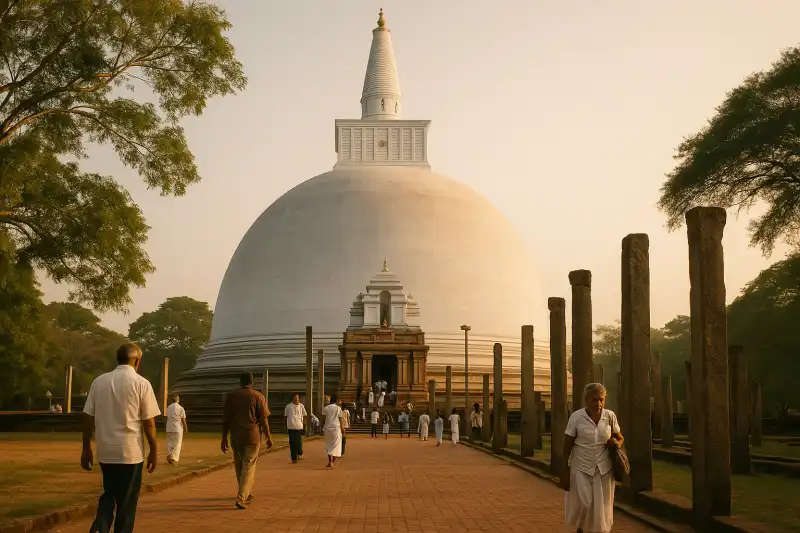
Anuradhapura
SinhaleseSacred ancient capital of Sri Lanka, Anuradhapura preserves towering Buddhist stupas, the world's ol...
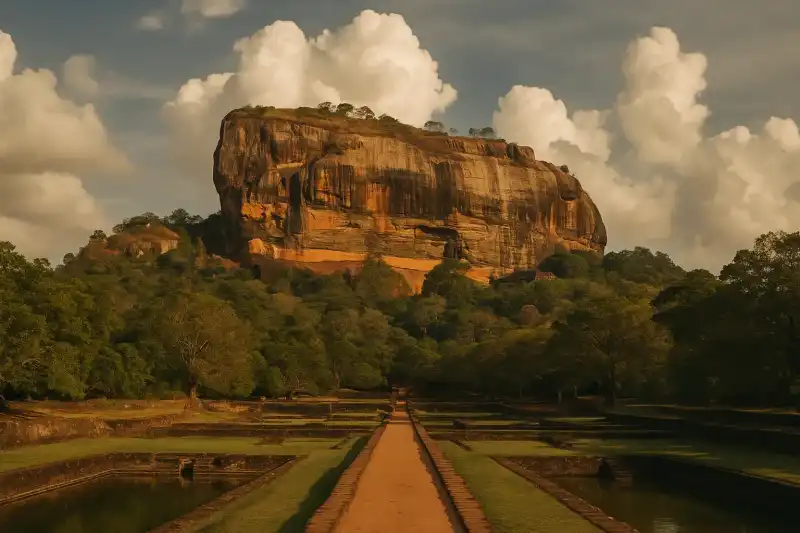
Sigiriya, Sri Lanka: Climbing the Lion Rock Fortress
SinhaleseComplete guide to Sigiriya, Sri Lanka's iconic Lion Rock fortress. Discover the dramatic history of ...
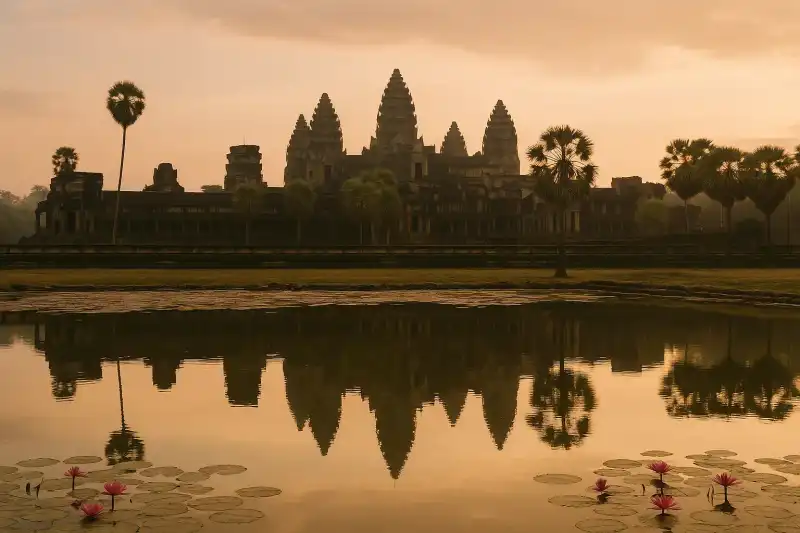
Angkor Wat Travel Guide 2026: Everything You Need to Know
KhmerAngkor Wat, the world's largest religious monument, spans over 400 acres in the heart of Cambodia. T...