Quick Info
At a glance
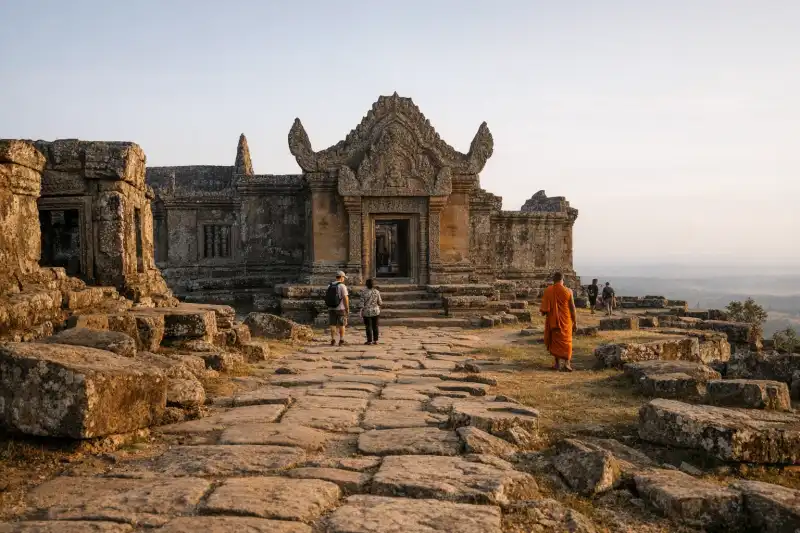
Preah Vihear Temple in Cambodia feels less like a ruin discovered in the jungle and more like a sacred road lifted into the sky. Rising along the crest of the Dangrek Mountains in the country’s far north, this Khmer sanctuary commands one of the most dramatic settings of any temple in Southeast Asia. Instead of spreading across a flat plain, the complex stretches on a long north-south axis up the spine of a mountain, leading visitors through a sequence of causeways, courtyards, and gateways toward the holiest spaces at the summit. Every step seems designed to intensify the experience, with the plains of Cambodia opening far below and the temple’s finely carved stonework framed by wind, light, and sheer escarpments.
For many travelers, the first impression is the setting itself. Preah Vihear does not reveal everything at once. It unfolds gradually, with each terrace and gopura preparing the eye for the next. This processional layout gives the site unusual emotional power. It is at once austere and elegant, monumental and exposed, deeply tied to the landscape around it. Though it is less visited than Angkor’s famous temples, its architecture is among the Khmer world’s most sophisticated. Here, the builders fused engineering, ritual planning, and mountain symbolism into a sanctuary that still conveys grandeur nearly a thousand years after its main phases of construction.
History
Early sacred origins
The mountain on which Preah Vihear Temple stands was almost certainly revered before the grand stone complex took shape. In Khmer religious thought, mountains had deep symbolic meaning, often associated with Mount Meru, the cosmic center in Hindu belief. The choice of a cliff-top site was therefore not accidental. Long before the temple reached its mature form, this elevated setting would have been recognized as a fitting place for worship, royal patronage, and the expression of sacred kingship.
The earliest known phases of Preah Vihear date to the 9th century, during the rise of the Khmer Empire. At this time, regional rulers were consolidating power and laying the foundations for the monumental architecture that would later culminate at Angkor. Initial structures at Preah Vihear were likely more modest than the surviving remains, but they established the site’s religious importance and its role within a broader network of mountain sanctuaries.
Expansion under Khmer kings
Most of the temple visible today belongs to the 10th through 12th centuries, when successive Khmer kings enlarged and refined the complex. Unlike a single-project monument, Preah Vihear evolved over generations. Its architecture reflects different reigns and artistic styles, creating a layered record of Khmer state religion and temple design.
Important contributions are associated with rulers such as Yasovarman I, Suryavarman I, and Suryavarman II. Under these kings, the sanctuary was expanded into a formal processional complex with causeways, monumental gateways, stairways, courtyards, and central shrines. The temple was primarily dedicated to Shiva, one of the principal deities of Hinduism, and functioned as a major pilgrimage destination. Inscriptions indicate that priests, royal patrons, and local communities all played roles in its support, linking the mountain sanctuary to the political and religious system of the empire.
The site’s plan is striking because it differs from the more concentric temple-mountain forms seen elsewhere in Khmer architecture. Instead of a central pyramid rising from symmetrical enclosures, Preah Vihear follows the topography of the ridge. This produced a long linear ascent, shaping a pilgrim’s journey through successive sacred thresholds. The architecture thus made movement itself part of worship.
Religious change and regional continuity
As in many parts of the Khmer world, religious practice changed over time. While Preah Vihear began as a Hindu sanctuary, especially associated with Shiva, later periods saw shifts in ritual use and cultural emphasis. The wider Khmer realm gradually absorbed strong Buddhist influences, and many earlier temples experienced adaptation, reinterpretation, or reduced ceremonial centrality.
Yet Preah Vihear’s remoteness also helped preserve it. Because it sat far from later political centers, it did not undergo the same level of continuous modification as some temples near Angkor. That relative isolation, while sometimes exposing it to neglect, also allowed major architectural features to survive with remarkable clarity.
Colonial scholarship, modern conflict, and UNESCO recognition
In the late 19th and early 20th centuries, French scholars and surveyors working in Cambodia documented Preah Vihear as part of broader efforts to study the monuments of the former Khmer Empire. Its beauty and unusual mountain setting quickly drew attention. However, the temple’s location near the modern Thailand-Cambodia border later made it the subject of political and territorial dispute.
The most notable legal milestone came in 1962, when the International Court of Justice ruled that the temple itself lay within Cambodian territory. Even so, the surrounding frontier remained sensitive for decades, and periods of armed tension affected access and conservation. Landmines and military activity in the wider region long complicated tourism and site management.
A major turning point arrived in 2008, when UNESCO inscribed Preah Vihear Temple as a World Heritage Site. This recognition highlighted both its architectural significance and its exceptional landscape setting. Since then, conservation and visitor infrastructure have improved, though the temple still feels more remote and less commercial than Cambodia’s busiest archaeological destinations. Today, Preah Vihear stands not only as a masterpiece of Khmer design but also as a symbol of resilience, scholarship, and the enduring power of sacred architecture in a contested borderland.
Key Features
Preah Vihear Temple’s greatest distinguishing feature is its extraordinary linear plan. Rather than presenting a compact complex gathered around a central tower, the monument unfolds over a long axis that climbs the ridge in stages. This gives the visit a ceremonial rhythm. You do not simply arrive at the temple; you pass through it progressively, as if reenacting a ritual ascent. Causeways connect successive enclosures, and each gateway marks a transition into a more sacred realm.
The gopuras, or entrance pavilions, are among the most memorable architectural elements. These gateways are not mere passages. They frame views, control movement, and establish hierarchy. Some retain elegant carvings of lintels and pediments, where floral motifs, divine figures, and mythic scenes reveal the refinement of Khmer stonework. Even in weathered condition, the carvings communicate precision and confidence. The temple’s builders understood how ornament could enrich geometry without overwhelming it.
Another remarkable feature is the way the architecture interacts with the mountain itself. The terrain is not an obstacle hidden by construction; it is integral to the design. Staircases and terraces follow the ridge, emphasizing elevation and direction. The temple seems to grow from the escarpment, using the natural topography to intensify both symbolism and spectacle. At several points, visitors encounter sudden openings to the landscape, where the plains below stretch toward the horizon. These cliff-edge views are among the most celebrated in Cambodia and help explain why Preah Vihear leaves such a strong impression on travelers.
The central sanctuary area, though smaller than some visitors expect after the long approach, is especially powerful because of how carefully it is staged. By the time you reach the upper structures, the sequence of ascent has prepared you for a more intimate and concentrated sacred space. The surviving buildings include halls, courtyards, and shrine remains that once housed the temple’s core religious functions. Their arrangement suggests not only devotion but administration, ceremony, and royal investment.
Stone construction throughout the complex shows the Khmer mastery of durable materials. Sandstone and laterite were shaped into walls, paving, columns, and carvings that still define the site. In places, the weathering is severe, softened by centuries of wind and seasonal rain. In others, details remain sharp enough to show the sophistication of Khmer artisans. The balance between structural solidity and decorative grace is one of the temple’s finest qualities.
Preah Vihear also stands out because it feels comparatively open and uncrowded. Unlike more famous temple zones where monuments cluster close together, this sanctuary occupies a dramatic ridge with wide sky above and expansive views all around. The surrounding environment contributes to the mood: dry-season grasses, forest patches, exposed stone, and the constant sense of elevation. Photography here often captures not just architecture but atmosphere.
Finally, there is the emotional quality of the site. Many Khmer temples impress through scale, complexity, or iconography. Preah Vihear does all of these, but its special strength lies in procession and placement. The long journey through thresholds, the exposure to wind and cliff, and the final arrival at the sanctuary create a rare union of movement, landscape, and sacred architecture. It is one of those places where the ancient builders seem to have choreographed not only worship but also wonder.
Getting There
Preah Vihear Temple is remote by Cambodian standards, and that remoteness is part of its appeal. The usual base for visitors is Siem Reap, though overnighting closer to the site in Sra Aem or Preah Vihear Province can make the journey more relaxed. From Siem Reap, the drive typically takes around 3.5 to 4.5 hours each way, depending on the route, weather, and road conditions. A private car with driver is the most common option, usually costing about $90 to $150 for a day trip, sometimes more if guides or multiple stops are included.
Shared minivans and local buses may connect regional towns, but they are not the most practical choice for travelers on a tight schedule. If you are traveling independently, reaching Sra Aem first and arranging onward transport locally can reduce costs, though it takes more planning. Some organized tours from Siem Reap combine Preah Vihear with Koh Ker, which can be efficient for those wanting a broader temple itinerary.
A unique part of the visit is the final ascent to the temple. Because the access road up the mountain is steep, private vehicles usually stop at the base checkpoint. From there, visitors transfer to a local 4WD shuttle or pickup truck service. Fares vary, but budget around $5 to $10 per person for the uphill and return transfer, or more for private arrangements. Tickets and temple fees can change, so it is wise to carry cash in US dollars and Cambodian riel.
Roads are generally better than they once were, but conditions can still shift in the wet season. Start early, bring water, and confirm current access conditions before leaving, especially if border-area rules or weather disruptions are reported.
When to Visit
The best time to visit Preah Vihear Temple is during Cambodia’s dry season, generally from November to February, when temperatures are more comfortable and roads are usually in their best condition. During these months, the clear air can make the cliff-top views especially striking. Morning light is often the most rewarding for both photography and comfort, as the sun becomes intense by late morning and early afternoon.
March to May is the hottest period. The temple remains visitable, but the exposed stone surfaces and open ridge can feel extremely warm. If you travel at this time, begin as early as possible, carry plenty of water, and expect less forgiving conditions for long walks between the gateways. The upside is that visitor numbers may be lower than in peak season.
The rainy season, roughly June to October, transforms the surrounding landscape, bringing greener vegetation and dramatic skies. This can be beautiful, and the mountain setting takes on a different atmosphere when clouds drift across the escarpment. However, heavy rain can affect road quality, visibility, and overall ease of travel. The stone paths may also become slippery. If you choose the wet season, allow extra travel time and wear shoes with good grip.
In practical terms, the ideal window for most travelers is December or January: cooler mornings, relatively reliable roads, and broad visibility across the plains. Regardless of season, weekdays are often quieter than weekends or holiday periods. Because the site is far from major urban centers, arriving early not only helps with temperature and light but also allows you to experience the processional approach with more of the silence it deserves.
| Quick Facts | Details |
|---|---|
| Location | Preah Vihear Province, northern Cambodia |
| UNESCO Status | World Heritage Site since 2008 |
| Main Tradition | Originally Hindu, especially dedicated to Shiva |
| Primary Era | 9th-12th centuries CE |
| Civilization | Khmer Empire |
| Setting | Cliff-top ridge in the Dangrek Mountains |
| Typical Visit Length | 2-4 hours on site |
| Common Gateway City | Siem Reap |
| Best Season | November to February |
| Access Note | Final ascent usually requires local 4WD transport |
Guided tours: worth it?
A guide can be genuinely useful at Preah Vihear Temple, especially if you want help with transport, timing, tickets, or understanding a large site without losing half the day to logistics.
Best for
- First-time visitors who want context, not just photos
- Travelers who want transport, timing, or entry logistics handled
- Short visits where a planned route saves time
When to go self-guided
Go independently if you already have transport and tickets sorted, enjoy moving at your own pace, and are comfortable checking the latest official rules before you arrive.
What I’d avoid
Skip paid tours that bundle unrelated stops you do not actually want. The best option should either save meaningful planning time or add historical context you would miss on your own.
Preah Vihear Temple tours
Useful when: you want to compare guided formats before deciding
Preah Vihear and Koh Ker tours
Useful when: you want to compare guided formats before deciding
Cambodia temple day trips
Useful when: transport or pickup logistics matter
Some tour links are affiliate links, which may earn Ancient Travel a small commission at no extra cost to you. I try to surface options that make practical sense for the site—not just anything bookable.
Frequently Asked Questions
Where is Preah Vihear Temple located?
Preah Vihear Temple stands in Preah Vihear Province in northern Cambodia, dramatically positioned along the edge of the Dangrek Mountains near the Thai border.
Is Preah Vihear Temple a UNESCO World Heritage Site?
Yes. Preah Vihear Temple was inscribed on the UNESCO World Heritage List in 2008 for its outstanding Khmer architecture and spectacular setting.
How difficult is the visit?
Most visitors reach the upper temple area by 4WD shuttle due to the steep access road, so the site is manageable for many travelers, though walking between gateways involves some uneven stone surfaces.
How much time should I allow for visiting Preah Vihear Temple?
Plan at least 2 to 4 hours on site, plus travel time from your base. If coming from Siem Reap, it is usually a full-day excursion.
What is Preah Vihear Temple known for?
The temple is known for its long axial layout climbing toward the sanctuary, refined Khmer carvings, and sweeping cliff-top views across the Cambodian plains.
Can you visit Preah Vihear Temple from Siem Reap?
Yes. Many travelers visit from Siem Reap by private car or organized day tour, though the journey is long and usually takes around 3.5 to 4.5 hours each way depending on road conditions.
Nearby Ancient Sites
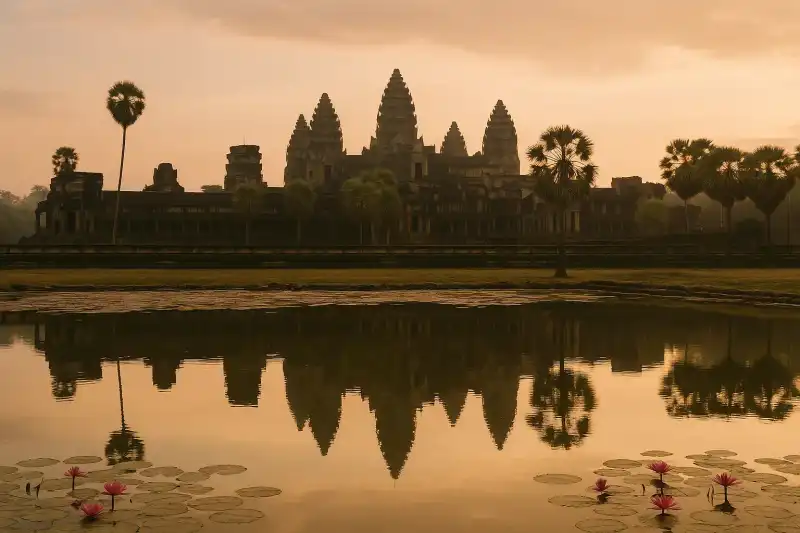
Angkor Wat Travel Guide 2026: Everything You Need to Know
KhmerAngkor Wat, the world's largest religious monument, spans over 400 acres in the heart of Cambodia. T...
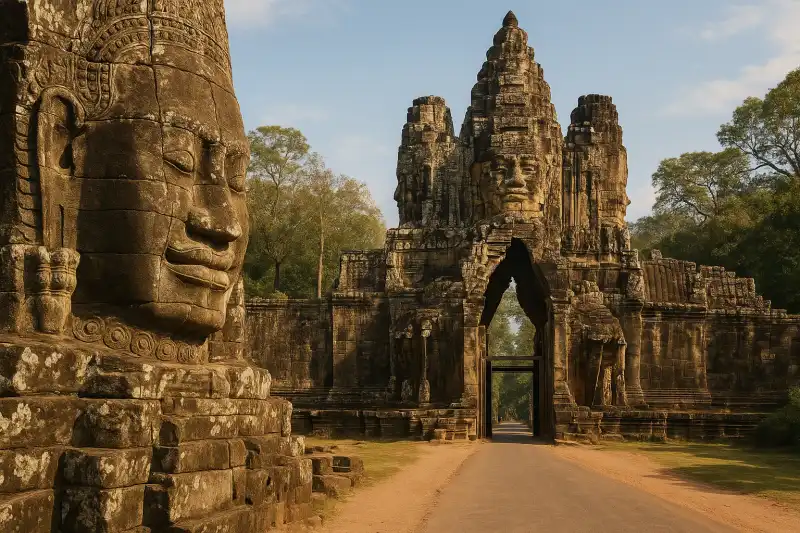
Angkor Thom Travel Guide 2026: Bayon Faces, Gates, and the Khmer Royal City
KhmerAngkor Thom was the last great capital of the Khmer Empire. This guide covers how to visit Bayon, th...
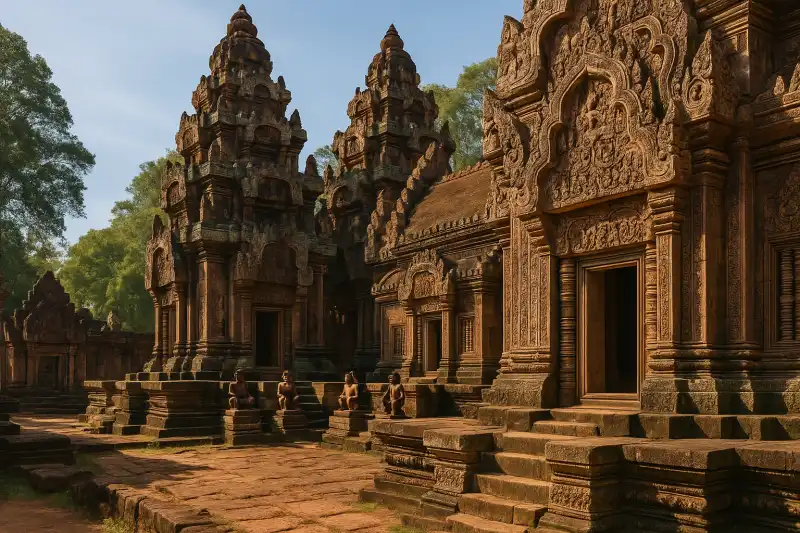
Banteay Srei Travel Guide 2026: Pink Sandstone Temple, Carvings, and Visit Tips
KhmerBanteay Srei is one of Cambodia’s most detailed Khmer temples, known for fine pink sandstone carving...
Bakong
Bakong is Cambodia's first major sandstone temple mountain, a stunning Khmer monument at the heart o...