Quick Info
At a glance
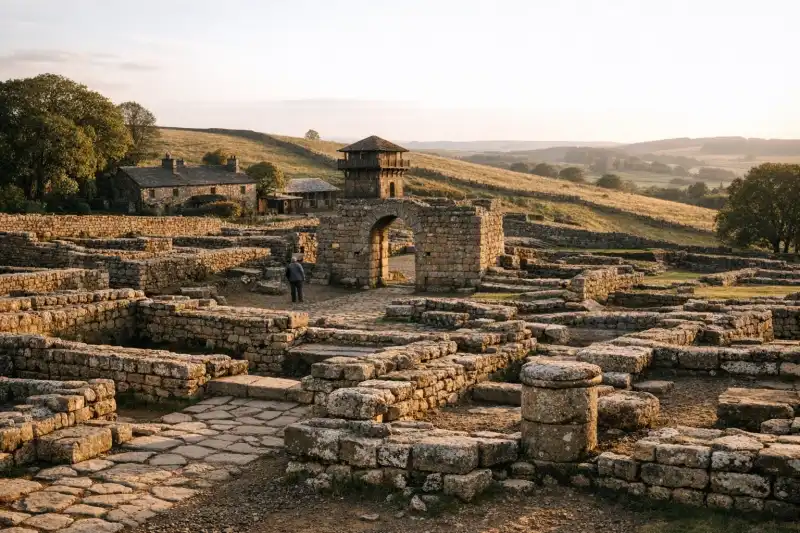
Roman Vindolanda in the United Kingdom feels less like a single ruin and more like a layered conversation with Roman Britain. Set amid the green uplands of Northumberland, not far from Hadrian’s Wall, the site combines excavated stone foundations, traces of timber forts, a superb museum, and the lingering atmosphere of a frontier landscape where soldiers, families, traders, and laborers once lived through damp winters and uncertain politics. Even before you step into the ruins, the setting does much of the storytelling: rolling fields, shifting skies, and wind crossing the high ground make it easy to imagine why this was both a strategic military outpost and a place of endurance.
Vindolanda is one of the most important archaeological sites in Britain because it preserves not just monumental remains but details of ordinary life. Here, archaeologists uncovered leather shoes, tools, pottery, altars, jewelry, and above all the extraordinary Vindolanda tablets, among the oldest surviving handwritten documents in Britain. These ink-written wooden tablets transformed understanding of Rome’s northern frontier by revealing personal messages, military logistics, invitations, complaints, and lists that bring the ancient world strikingly close. A visit to Vindolanda offers more than a look at walls and foundations; it offers access to voices. For travelers exploring Roman sites in the United Kingdom, this is one of the rare places where imperial history and everyday experience meet with unusual clarity.
History
Early frontier origins
Vindolanda was established before Hadrian’s Wall itself, probably in the late 1st century CE, during the period when Rome was consolidating control over northern Britain. The earliest fort on the site was built in timber, reflecting the practical needs of a moving frontier army. It stood along the Stanegate, the important Roman road running east to west across northern England before the wall was constructed. This route linked forts and supported the movement of troops, supplies, and communications.
The garrison at Vindolanda was not a legion but an auxiliary unit, part of the wider Roman military system that relied on non-citizen troops recruited from across the empire. Evidence suggests that soldiers from places as far away as modern Belgium, Germany, and other continental regions served here. This mix gave Vindolanda a cosmopolitan quality unusual for what might otherwise seem a remote outpost. From the beginning, the settlement was more than barracks. Civilian communities developed around the fort, supplying goods and services to the military population.
The age of Hadrian’s Wall
In the early 2nd century CE, during the reign of Emperor Hadrian, Rome embarked on one of its most famous building projects in Britain: Hadrian’s Wall. Although Vindolanda lies just south of the wall rather than directly on it, the fort became part of the wider defensive and administrative network supporting the frontier. It remained strategically significant, and the fort was rebuilt several times in both timber and stone as military priorities shifted.
This period produced some of Vindolanda’s most famous evidence. The waterlogged conditions of the soil preserved organic materials that would normally decay, including writing tablets made from thin pieces of wood. These tablets recorded remarkably human details: duty rosters, requests for socks and undergarments, inventories, accounts, and social invitations. One famous example is often described as an invitation to a birthday party, written by a woman named Claudia Severa to Sulpicia Lepidina, the wife of Vindolanda’s commanding officer. Such finds reveal that elite women were also present on the frontier and that social life extended beyond purely military concerns.
Rebuilding and long occupation
Vindolanda’s history is notable for its repeated reconstruction. Archaeologists have identified a sequence of forts and settlements spanning roughly three centuries. Timber structures gave way to stone, and earlier buildings were leveled or buried to create new surfaces. This cycle of rebuilding unintentionally helped preserve the past: layers of occupation sealed artifacts in anaerobic conditions, protecting wood, leather, and textiles.
As Rome strengthened and then adapted its frontier policies, Vindolanda evolved with them. The site contained barracks, granaries, workshops, bathhouses, temples, domestic buildings, and administrative spaces. The civilian settlement expanded and shifted over time, reflecting the deep entanglement of military and non-military life. Rather than a stark boundary between soldiers and civilians, Vindolanda reveals a connected community dependent on trade, craft, food supply, and social relationships.
Decline, abandonment, and rediscovery
Roman rule in Britain weakened during the late 4th and early 5th centuries CE. As central imperial authority receded, forts like Vindolanda gradually lost their formal role. Occupation may have continued in altered forms for a time, but the site eventually fell into ruin. Stone was likely reused in later centuries, and the visible traces of Roman buildings softened into the landscape.
Modern archaeological interest transformed Vindolanda from a buried frontier settlement into one of Britain’s most celebrated excavation sites. Systematic work in the 20th century and continuing excavations into the present have revealed new structures and finds year after year. This is one of the site’s most exciting qualities for visitors: Vindolanda is not a static ruin fully known and closed to discovery. It remains an active archaeological landscape. New inscriptions, shoes, tools, and fragments of daily life still emerge from the ground, adding to the story of Rome’s northern edge.
Key Features
Vindolanda’s greatest feature is the way it preserves an entire living environment rather than a single dramatic monument. The open-air ruins allow visitors to trace the outline of a Roman fort in practical terms. You can walk along the remains of defensive walls and streets, identify the locations of barracks and headquarters buildings, and see how the settlement was organized for discipline, supply, and movement. This is not a site where imagination has to do all the work, but it helps enormously. Foundations, room plans, drainage systems, and reconstructions combine to make the place legible.
The museum is central to the experience and should not be treated as an afterthought. Many ancient sites are strongest either outdoors or in their collections; Vindolanda excels at both. The museum’s displays give context to what the stones outside cannot communicate on their own. Leather shoes are especially memorable, because they are so immediate and personal. Tiny children’s shoes, sturdy military footwear, and worn everyday pieces of leather turn the Roman frontier into something tangible. These objects are intimate in scale yet powerful in effect. They remind visitors that this was not simply a geopolitical boundary but a place where real people lived their daily routines.
The Vindolanda tablets are perhaps the site’s most famous treasures. Even when displayed selectively, they reshape the whole visit. Reading a letter, list, or request written nearly two millennia ago creates a different kind of connection than seeing architecture alone. The tablets reveal literacy, bureaucracy, domesticity, and personality. They show that the empire ran on paper—or in this case on wood—as much as on roads and walls. For many visitors, this is the moment Vindolanda becomes unforgettable.
Another notable feature is the range of structures represented on site. The remains of bathhouses point to Roman habits of hygiene, ritual, and social interaction even in frontier conditions. Religious spaces and altars suggest the spiritual diversity of the garrison and settlement. Workshops and industrial traces indicate the practical labor needed to keep a fort functioning. Granaries highlight the logistics of sustaining troops in a challenging landscape. Together, these features help visitors understand that a frontier post was a sophisticated system, not merely a defensive checkpoint.
The surrounding setting also deserves attention as a feature in its own right. Northumberland’s open countryside frames Vindolanda beautifully, and the nearby relationship to Hadrian’s Wall adds another dimension. Many travelers come expecting one isolated Roman fort and instead discover a broader Roman landscape of roads, forts, milecastles, museums, and walking routes. Vindolanda works exceptionally well for people who enjoy historical places that still feel geographically meaningful. The terrain explains strategy. Distance explains supply. Weather explains resilience.
Finally, Vindolanda’s continuing excavation sets it apart. Depending on the season, visitors may see archaeologists at work or evidence of newly opened trenches. Few heritage experiences communicate so clearly that knowledge is still being built. Instead of receiving a finished story, you encounter a site still producing evidence. That sense of ongoing discovery gives Vindolanda unusual energy. It is ancient, but it does not feel remote from the present.
Getting There
Roman Vindolanda is in Northumberland, near Bardon Mill and Hexham, and is most easily reached by car. From Hexham, the drive usually takes around 25 to 30 minutes via the B6318 and local roads. From Newcastle upon Tyne, allow roughly 1 hour 15 minutes depending on traffic. Car travel is the simplest option because rural public transport can be limited and schedules may vary by season. Parking is typically available on site, though charges and arrangements can change, so it is worth checking ahead.
If you are traveling by train, the nearest practical rail stop is usually Bardon Mill on the Tyne Valley line, with services connecting from Newcastle and Carlisle. Train fares vary, but a standard one-way journey from Newcastle to Bardon Mill often falls in the approximate £8 to £18 range depending on booking time and ticket type. From Bardon Mill, a taxi to Vindolanda may cost around £12 to £20. Hexham is another useful base, with more frequent services and accommodation options; a taxi from Hexham to the site may cost roughly £25 to £40.
Seasonal bus services in the Hadrian’s Wall corridor can make public transport easier, especially in warmer months. A day sightseeing bus ticket in the region often costs around £10 to £18, depending on operator and route. Organized tours from Newcastle or broader Northumberland are another convenient choice for travelers who want transport included. These usually bundle multiple Roman frontier stops and can remove the stress of coordinating train, taxi, and rural timing.
When to Visit
Vindolanda is rewarding in every season, but the best time for most visitors is late spring through early autumn, when longer daylight hours and milder weather make it easier to combine the site with Hadrian’s Wall walks. From May to September, the landscape is at its greenest, and outdoor exploration is more comfortable. Summer also brings the highest visitor numbers, so expect a livelier atmosphere and consider arriving early in the day for a quieter experience in the museum and ruins.
Spring is an excellent compromise. The weather can still be cool, but crowds are usually lighter than in peak summer, and the countryside feels fresh and expansive. Autumn is similarly appealing, especially in September and early October, when temperatures are often manageable and the site retains a calm, reflective atmosphere. Photographers may especially enjoy the shifting light and dramatic skies that often define Northumberland.
Winter visits can be memorable if you are prepared. The frontier setting feels particularly evocative under low clouds, mist, or frost, and quieter conditions can make the ruins feel more personal. However, wind, rain, and cold can be significant, and muddy ground is possible. Check opening hours carefully, as they may be shorter in the off-season, and wear sturdy waterproof footwear.
If your priority is archaeology, look into periods when excavations are active or when special programs are scheduled. If your priority is comfort and scenery, aim for a dry day between late May and early September. In all seasons, layering is important. Northumberland weather can shift quickly, and even sunny mornings can turn cool by afternoon.
| Quick Facts | Details |
|---|---|
| Location | Near Bardon Mill, Northumberland, United Kingdom |
| Historical Role | Roman auxiliary fort and civilian settlement |
| Period | Roman Britain, from the late 1st century CE |
| Best Known For | Vindolanda tablets, preserved shoes, frontier archaeology |
| Nearby Landmark | Hadrian’s Wall |
| Typical Visit Length | 2 to 4 hours |
| Best Transport Option | Car or rail to Bardon Mill/Hexham plus taxi |
| Ideal For | Roman history enthusiasts, museum lovers, families, walkers |
Vindolanda rewards visitors who want more than a checklist stop. Its ruins are important, but its deeper strength lies in how fully it reconstructs life on Rome’s northern frontier. Through roads, barracks, shoes, letters, shrines, and the outlines of homes, the site reveals that ancient empires were sustained by ordinary acts as much as by imperial ambition. In the United Kingdom, few places make Roman Britain feel so immediate. Whether you arrive as part of a Hadrian’s Wall journey or make Vindolanda your main destination, you leave with the strong sense that this was not the end of the Roman world, but one of the places where it was most human.
Guided tours: worth it?
Most travelers can visit Roman Vindolanda independently. Compare a tour only if you want a tighter history-focused visit, easier logistics, or a guide who can answer questions on the spot.
Best for
- Short visits where a planned route saves time
When to go self-guided
Go independently if you prefer setting your own pace, reading as you go, and checking official hours or ticket rules directly before you arrive.
What I’d avoid
Skip paid tours that bundle unrelated stops you do not actually want. The best option should either save meaningful planning time or add historical context you would miss on your own.
Hadrian's Wall Tours
Useful when: you want to compare guided formats before deciding
Northumberland Roman Sites Tours
Useful when: you want to compare guided formats before deciding
Vindolanda and Hadrian's Wall Tours
Useful when: you want to compare guided formats before deciding
Some tour links are affiliate links, which may earn Ancient Travel a small commission at no extra cost to you. I try to surface options that make practical sense for the site—not just anything bookable.
Frequently Asked Questions
What is Roman Vindolanda?
Roman Vindolanda is a former Roman auxiliary fort and civilian settlement in Northumberland, just south of Hadrian’s Wall, famous for its exceptional archaeological preservation and writing tablets.
How long should I spend at Vindolanda?
Most visitors allow 2 to 4 hours to explore the museum, excavated ruins, reconstructed sections, and walking routes around the site.
Can you visit Vindolanda and Hadrian’s Wall on the same day?
Yes. Vindolanda is close to central stretches of Hadrian’s Wall, and many travelers combine both in a single day trip.
Are the Vindolanda tablets on display?
Some of the famous Vindolanda writing tablets and related finds are displayed in the on-site museum, though exhibition details can rotate.
Is Roman Vindolanda suitable for families?
Yes. The site is family-friendly, with open-air ruins, museum displays, and enough variety to interest both children and adults.
Do I need to book tickets in advance for Vindolanda?
Advance booking is recommended during weekends, holidays, and summer, especially if you want a timed visit or are combining nearby Roman attractions.
Nearby Ancient Sites
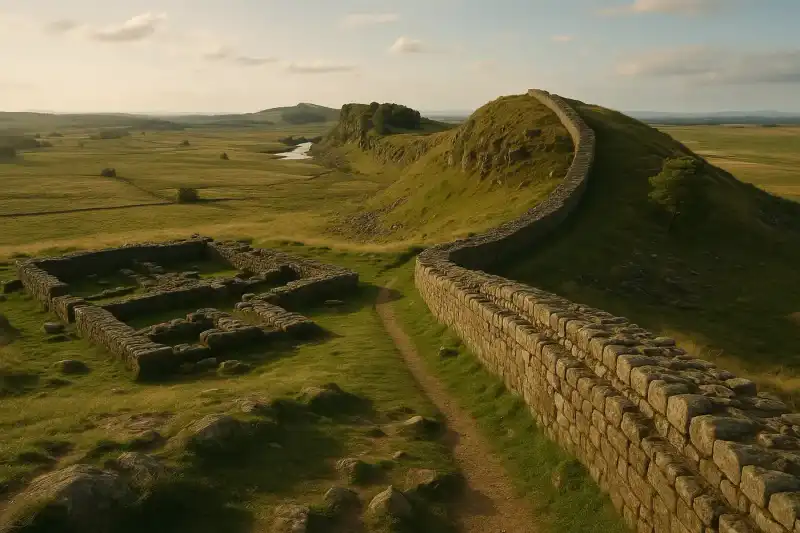
Hadrian's Wall Travel Guide 2026: Best Sections, Roman History, and Practical Planning
Roman BritainPlan a UK frontier-heritage day at Hadrian's Wall with clear section priorities, practical one-day r...
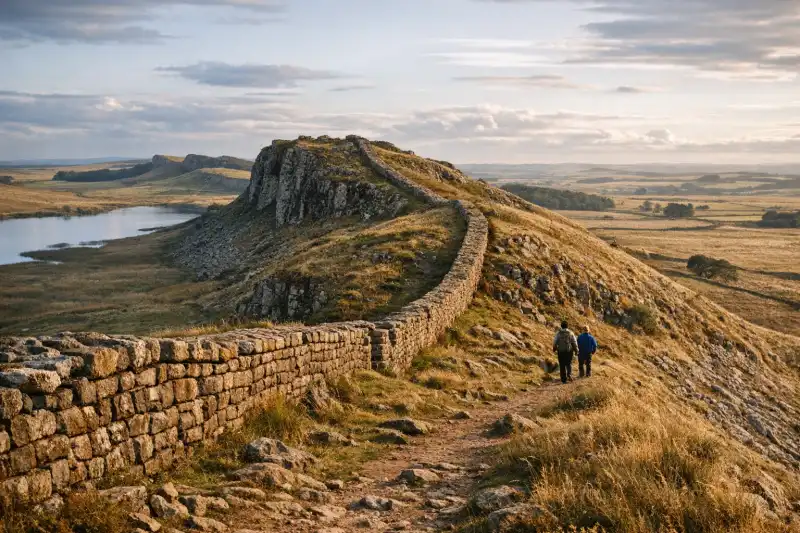
Hadrian's Wall
RomanExplore Hadrian’s Wall in the United Kingdom, Rome’s great northern frontier of forts, milecastles, ...
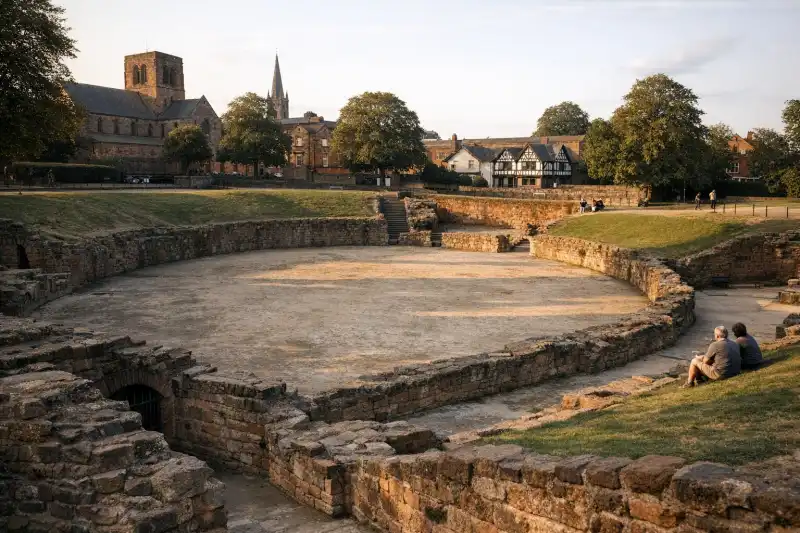
Chester Roman Amphitheater
Explore Chester Roman Amphitheater in the United Kingdom, the largest known Roman amphitheater in Br...