Quick Info
At a glance
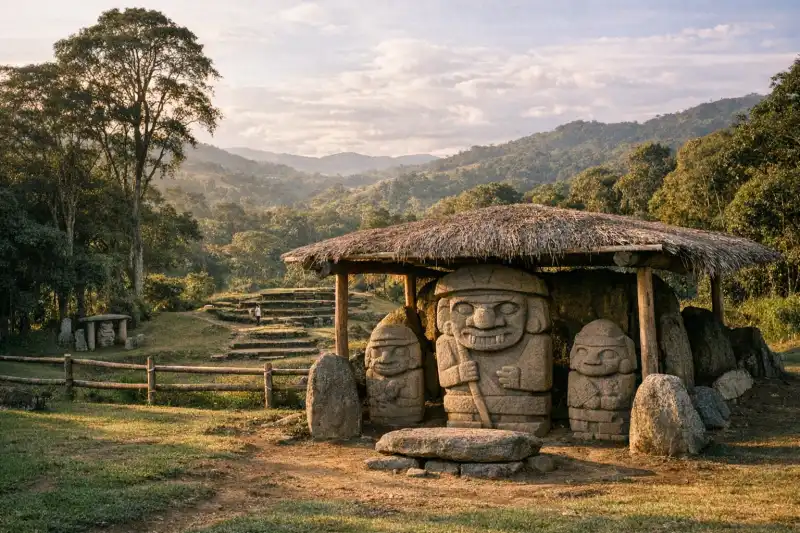
San Agustín Archaeological Park in Colombia lies among green ridges, river valleys, and misty Andean light, a place where monumental stone figures seem to emerge directly from the earth. Near the small town of San Agustín in Huila, this landscape preserves one of the most remarkable concentrations of megalithic sculpture in the Americas. It is not a single ruin in the traditional sense but a broader ceremonial and funerary zone, where carved guardians, burial mounds, terraces, and pathways reveal a long-lived sacred geography shaped over many centuries.
What makes the park so compelling is the feeling that its meaning is still only partly understood. The sculptures are expressive and often unsettling: some combine human and animal features, some clutch snakes or weapons, and others stand watch over underground tombs. Even with museum displays and archaeological study, San Agustín retains an air of mystery. The surrounding scenery intensifies that effect. Forested slopes, volcanic soils, coffee farms, and abrupt canyons frame the monuments, reminding visitors that this was not an isolated settlement but part of a carefully chosen environment linked to water, mountains, and the dead.
Today, the park offers one of Colombia’s most rewarding cultural journeys. It appeals equally to travelers interested in archaeology, landscape, and living rural traditions. Walking here is not only about viewing ancient objects behind barriers; it is about moving through a ceremonial terrain where art, religion, and memory were inseparable. For anyone seeking a deeper side of Colombia beyond its cities, San Agustín is an unforgettable destination.
History
Early settlement and the rise of ritual landscapes
The wider upper Magdalena region was occupied long before the most famous statues were carved. Archaeological evidence suggests that communities were living in this fertile part of southern Colombia by at least the first millennium BCE, taking advantage of temperate uplands, water access, and soils suitable for agriculture. Over time, these populations developed increasingly complex social and ceremonial practices. Rather than building vast stone cities, they expressed status and belief through earthen mounds, tomb architecture, and sculptural monuments integrated into the natural terrain.
By the early centuries CE, ritual life in the region had become highly elaborated. Burial places were especially important. Tombs were not hidden away from communal life but marked and monumentalized, often with large carved stone figures placed as protectors or symbolic attendants. These monuments imply organized labor and a shared visual language, even if the political structure behind them remains unclear. Scholars generally refer to the makers as the San Agustín culture, though this label covers a long period and likely several related communities rather than a single unified kingdom.
The florescence of sculpture and funerary architecture
Between roughly the 1st and 9th centuries CE, the region entered the period for which it is most famous. This was the great age of monumental sculpture at San Agustín. Artisans carved volcanic stone into imposing anthropomorphic and zoomorphic figures, many of them associated with burials of high-status individuals. The carvings vary greatly in style, but recurring themes include feline features, birds of prey, serpents, duality, transformation, and powerful hybrid beings that may represent shamans, deities, or mythic ancestors.
The tombs themselves were also significant works of engineering and ritual design. Some were subterranean chambers covered by earth mounds and stone slabs, with access passages and sculpted guardians. The placement of monuments suggests that funerary rites were public and performative, reinforcing social memory and elite authority. In addition to cemetery zones, archaeologists have identified ceremonial sectors, artificial terraces, and pathways indicating a broader sacred landscape rather than isolated burial plots.
The precise meaning of the statues remains debated, and that uncertainty is part of San Agustín’s enduring fascination. The sculptures are neither decorative nor random. They clearly belonged to a worldview in which death, transformation, and supernatural power were closely linked.
Change, decline, and abandonment
After the peak sculptural era, the region changed. Archaeological evidence points to shifts in settlement patterns and reduced monument production after around the 9th century CE. Communities continued to inhabit the broader area for centuries, but the intensive ceremonial carving tradition appears to have faded. Environmental pressures, social transformation, changing trade networks, or political fragmentation may all have played a role. As with many ancient societies in the Americas, the story is not a simple collapse but a gradual reorganization of life and ritual.
By the time Spanish colonizers entered much of the Colombian interior in the 16th century, the sculptural tradition had long ended. The monuments remained in the landscape, sometimes partially buried, weathered, or enveloped by vegetation. Local memory preserved knowledge of ancient stones and tombs, but the original cultural system that produced them was gone.
Rediscovery, archaeology, and protection
Modern scholarly attention grew during the 18th and 19th centuries, when travelers, officials, and antiquarians began describing the statues. More systematic archaeological work came in the 20th century, especially under the influential Colombian ethnologist and archaeologist Gregorio Hernández de Alba and later researchers. Excavations, recording campaigns, and conservation efforts helped define the main sectors now visited within the park.
San Agustín Archaeological Park was established to protect these remains and present them to the public. UNESCO inscribed it as a World Heritage Site in 1995, recognizing both the artistic importance of its sculpture and the exceptional preservation of its ceremonial landscape. Today, the park remains central to understanding pre-Columbian Colombia. It is also a reminder that the ancient history of the Andes extends far beyond the better-known imperial traditions of later eras.
Key Features
The heart of San Agustín Archaeological Park is its extraordinary concentration of carved stone figures. These statues are what most visitors remember: broad-faced guardians with staring eyes, stylized teeth, folded hands, headdresses, animal masks, and bodies that combine human and supernatural traits. Some appear stern and frontal, almost architectural in their stillness. Others feel animated, as though caught in ritual transformation. Their visual power does not depend on monumental size alone; many are compelling because of their symbolic density and deliberate placement beside tombs or on ceremonial platforms.
One of the most important sectors is the Mesitas area, where several artificial mounds and funerary complexes reveal the scale of elite burial traditions. Here, statues stand in relation to graves rather than as isolated museum pieces. This context matters. Seeing them in place makes it easier to understand how the ancient inhabitants used sculpture to define sacred space, control access, and communicate status. The earthen mounds, stone coverings, and carved guardians work together to create an atmosphere that is both ceremonial and protective.
Another highlight is Fuente de Lavapatas, one of the most unusual monuments in the park. Rather than a freestanding statue, it is a stream bed carved into channels, basins, and relief figures. Water once ran directly through this sculpted ceremonial space, linking ritual practice to the flow of the natural world. The site suggests that water was not simply practical but sacred, perhaps tied to purification, fertility, or communication with spiritual forces. It is a striking reminder that San Agustín’s builders shaped not only stone blocks but living elements of the landscape itself.
The Bosque de las Estatuas, or Forest of Statues, provides another perspective. This section gathers representative sculptures beneath a more shaded setting, allowing visitors to compare styles and motifs more easily than in the dispersed funerary sectors. While less atmospheric than seeing monuments in their original tomb contexts, it is extremely helpful for noticing repeated iconography such as jaguar imagery, avian beaks, serpents, and composite beings. For many travelers, this area turns visual curiosity into real appreciation of the artistic sophistication involved.
The site museum adds essential background. Pottery, tools, maps, and interpretive displays place the monuments within a longer cultural sequence and explain excavation history. San Agustín is not a place where every question has been answered, and the museum does not pretend otherwise. Instead, it helps visitors understand what archaeologists know, what they infer, and what remains uncertain. That balance is one of the destination’s strengths.
Beyond the main park, the surrounding region includes related archaeological points such as Alto de los Ídolos and Alto de las Piedras, often visited from town on a second day. These outlying areas extend the experience and show that the San Agustín cultural tradition covered a wider landscape of settlements and tomb complexes. Even if your schedule limits you to the main park, it is worth remembering that what you see represents only part of a much larger sacred world.
The natural setting is itself a key feature. Rolling hills, cloud movement, birdsong, and dense green vegetation soften the archaeological remains without diminishing them. This is not a desert ruin or an urban excavation. It is a living rural environment where cattle graze, coffee grows, and mountains shape every horizon. That setting makes the ancient sculptures feel less like relics of a dead civilization and more like presences still rooted in the land.
Getting There
Most travelers reach San Agustín by road, usually through the city of Neiva, the capital of Huila. From Neiva, buses to San Agustín generally take around 5 to 6 hours depending on weather and road conditions. A one-way fare is often in the range of COP 50,000 to 80,000. Shared vans or door-to-door shuttle services can be slightly faster and more comfortable, commonly costing around COP 70,000 to 120,000 per person.
Another common route is via Pitalito, which has a small airport with flights from Bogotá on some schedules. From Pitalito to San Agustín, the road journey is about 1.5 to 2 hours. Shared jeeps, local buses, or taxis usually cost roughly COP 12,000 to 25,000 per person for shared transport, while a private taxi may range from COP 90,000 to 150,000 depending on demand and season.
From the town of San Agustín to the archaeological park itself, the distance is short. Many hotels can arrange tuk-tuk style transport, taxi rides, bicycles, or horseback excursions. A taxi or mototaxi to the main entrance often costs around COP 8,000 to 20,000. If you enjoy walking, some accommodations are close enough to make the park reachable on foot, though the terrain can be hilly.
If you are self-driving, allow extra time. Mountain roads can be narrow, winding, and affected by rain or occasional landslides. Fuel up before heading into rural stretches, and avoid arriving after dark if possible. Once in town, local agencies can arrange half-day or full-day circuits that combine the main park with nearby outlying sites.
When to Visit
San Agustín can be visited year-round, but weather has a real impact on the experience. The drier periods, usually from December to February and again around July to August, are often the most convenient. Trails are less muddy, viewpoints are clearer, and moving between sectors is easier. These months are especially good if you plan to combine the main archaeological park with horseback trips or excursions to waterfalls and surrounding countryside.
That said, the region’s greenery owes much to regular rainfall, and even in drier months showers are possible. Bring a light waterproof layer regardless of season. During wetter stretches, typically around April to May and October to November, the park can feel especially atmospheric. Mist, wet foliage, and darker stone surfaces intensify the mood of the sculptures. The tradeoff is slippery footing and slower travel on rural roads. If you visit during a rainy period, wear sturdy shoes with grip and leave extra time for transport delays.
Weekdays are generally quieter than weekends and Colombian holiday periods. If you want a more contemplative experience among the monuments, aim for a weekday morning. Early hours are also cooler and better for photography, with softer light and fewer people in the frame. Midday can be warmer and brighter, though the Andean altitude usually keeps temperatures comfortable compared with lowland Colombia.
For travelers interested in combining archaeology with local culture, town festivals and busy holiday seasons can be enjoyable, but accommodation may fill up earlier and transport prices can rise. Booking ahead is wise if you are visiting during Christmas, New Year, Easter, or long weekends.
| Quick Facts | Details |
|---|---|
| Location | Near San Agustín, Huila, Colombia |
| UNESCO Status | World Heritage Site |
| Best Known For | Pre-Columbian stone statues, tombs, and ceremonial landscapes |
| Cultural Attribution | San Agustín culture |
| Time Needed | 1 full day for the main park; 2 days with nearby sites |
| Nearest Town | San Agustín |
| Nearest Regional Airport | Pitalito |
| Typical Access | Bus, shared van, taxi, or private car |
| Terrain | Hilly paths, grassy areas, and uneven stone surfaces |
| Best Season | Drier months from December to February and July to August |
Guided tours: worth it?
Self-guided works here, but a guide can add real value if you want the ruins explained as a living place rather than just a sequence of monuments.
Best for
- First-time visitors who want context, not just photos
- Short visits where a planned route saves time
When to go self-guided
Go independently if you prefer setting your own pace, reading as you go, and checking official hours or ticket rules directly before you arrive.
What I’d avoid
Skip paid tours that bundle unrelated stops you do not actually want. The best option should either save meaningful planning time or add historical context you would miss on your own.
San Agustín Archaeological Park tours
Useful when: you want to compare guided formats before deciding
San Agustín Huila cultural tours
Useful when: you want to compare guided formats before deciding
Colombia archaeology tours
Useful when: you want to compare guided formats before deciding
Some tour links are affiliate links, which may earn Ancient Travel a small commission at no extra cost to you. I try to surface options that make practical sense for the site—not just anything bookable.
Frequently Asked Questions
What is San Agustín Archaeological Park famous for?
San Agustín Archaeological Park is best known for its large collection of mysterious pre-Columbian stone statues, ceremonial sites, burial mounds, and carved monuments spread across a dramatic Andean landscape.
Where is San Agustín Archaeological Park located?
The park is located near the town of San Agustín in Huila Department, southern Colombia, in the upper Magdalena River region.
How much time do I need to visit the park?
Most travelers should allow at least one full day to see the main sectors, while two days gives enough time to include outlying sites and nearby museums without rushing.
Can I visit San Agustín Archaeological Park without a guide?
Yes, independent visits are possible, and the main park is well organized, but a local guide can add valuable context about the statues, tombs, and regional history.
Is San Agustín Archaeological Park family-friendly?
Yes, though some paths are uneven and hilly. Families with children should wear sturdy shoes, carry water, and plan for frequent stops.
When is the best time of year to visit San Agustín?
The drier months, generally from December to February and July to August, are often the easiest for walking, though the site can be visited year-round.
Nearby Ancient Sites
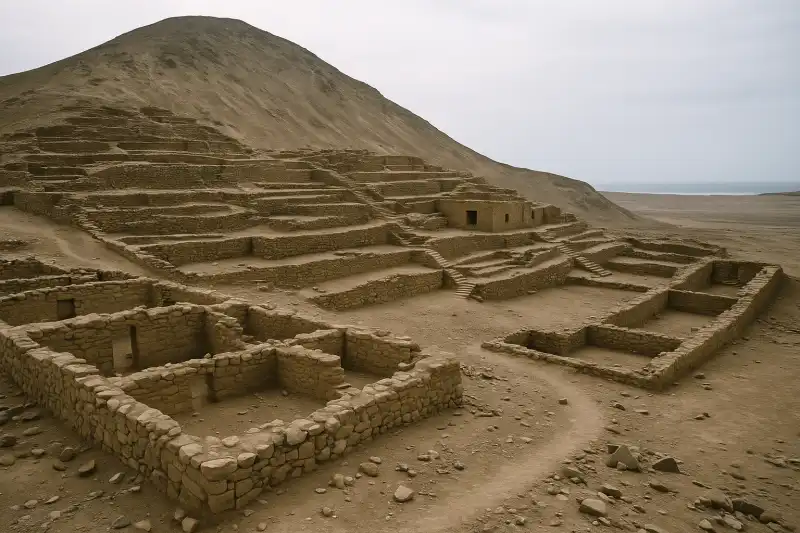
Aspero Peru Guide 2026: Norte Chico Pyramids & Caral Coast
Norte-Chico-CaralVisit Aspero in Peru to see Norte Chico pyramids, plazas, and elite temples, with practical tips for...
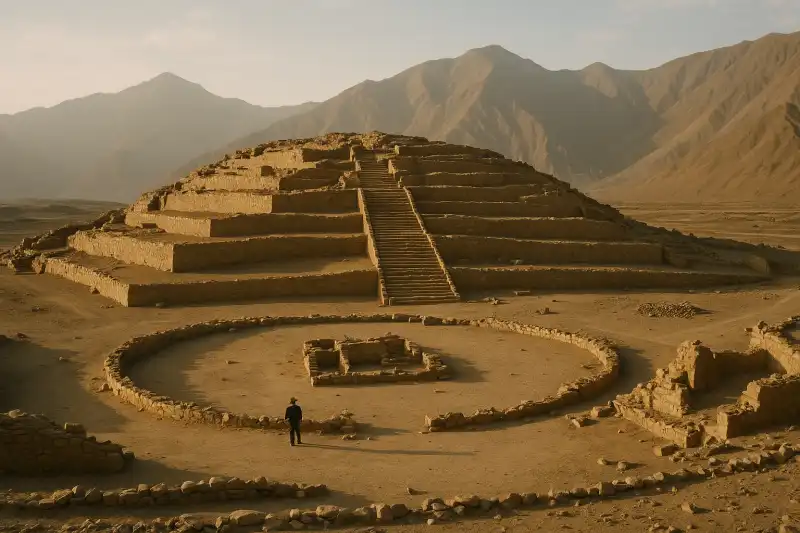
Caral-Supe Peru Guide 2026: Sacred Pyramids & the First Andean City
Norte-Chico-CaralVisit Caral-Supe in Peru, the oldest known city in the Americas, with practical transport from Lima,...
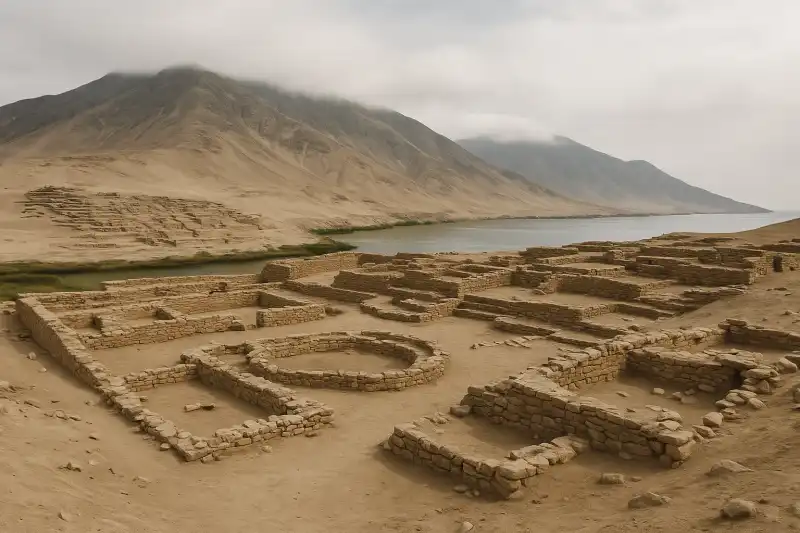
Bandurria Peru Guide 2026: Ancient Mounds & Pacific Wetlands
Norte-Chico-Preceramic-AndeanPlan your Bandurria visit in Peru with history, key mounds, transport from Lima or Huacho, entry tip...