Quick Info
At a glance
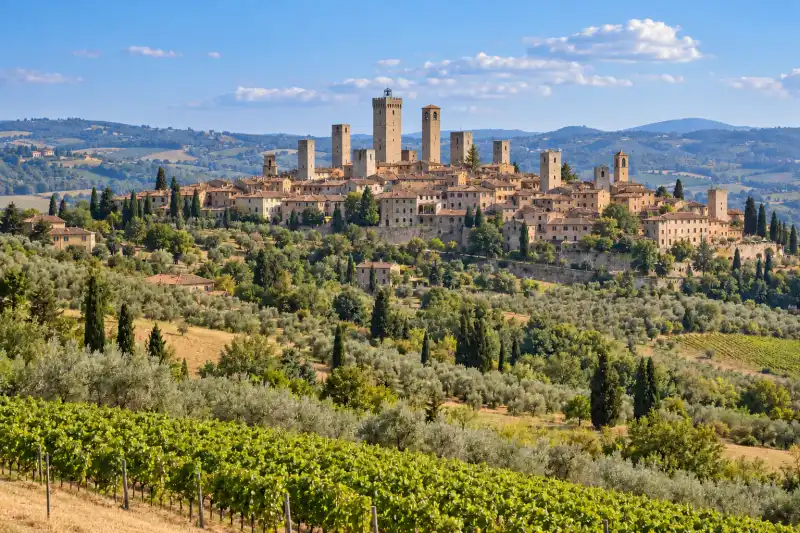
San Gimignano’s skyline looks almost implausible from the Tuscan roads below: a cluster of tall stone towers rising above a compact ridge-top town. The effect is so strong that it can turn the place into a postcard before you arrive. Give it more credit. San Gimignano is a living medieval town whose streets, squares, gates, walls, churches, and surviving towers explain a particular form of civic life in Tuscany. It is not an ancient Roman site, and it should not be sold as one. Its power lies in the medieval cityscape and in how much of that cityscape remains legible.
History: towers, trade, and communal identity
San Gimignano developed at a strategic point on routes through Tuscany and prospered in the medieval period. As in other Italian communes, wealth, family competition, religion, and local government all left marks on the urban fabric. The tower houses that define its profile were not generic fairy-tale decorations. The town’s official history emphasizes that a tower was an expensive and difficult expression of power. Height made a public claim about status, security, and resources.
The town’s streets and squares show that civic life was not organized around one monument alone. Piazza della Cisterna and Piazza del Duomo form an especially concentrated sequence of public spaces, surrounded by towers, palaces, and religious buildings. The walls, completed and altered in phases, mark the boundary between the dense historic core and the surrounding countryside.
San Gimignano’s historic center became a UNESCO World Heritage Site in 1990. The designation recognizes the significance and integrity of the medieval communal town. It does not make the town a museum set. People live and work here, and conservation has to coexist with daily life, weather, delivery vehicles, worship, tourism, and the entirely human urge to get lunch at the same time as everyone else.
What to see
Piazza della Cisterna and Piazza del Duomo
Begin in the central squares and let the built environment establish the story. Piazza della Cisterna is compact and irregular, shaped by its well and surrounding tower houses. Nearby Piazza del Duomo brings civic and religious authority into close contact. Rather than sprinting toward the tallest tower, look at the relationship among façades, narrow lanes, and the limited open ground that gives these piazzas their intensity.
Towers as urban evidence
The towers are San Gimignano’s defining feature, but they are most interesting as a group. Their varied height, placement, and connection to other buildings show how elite households expressed status inside a tight urban footprint. Use official visitor information to identify any towers or museums currently open to the public. Do not assume a view point listed years ago remains accessible.
Walls and perimeter walk
The town’s official itinerary material notes the thirteenth-century wall circuit around the historical center. A walk near the perimeter is useful because it resets the scale. Inside the core, towers dominate the view upward. From the edge, you can see how the hilltop settlement relates to fields and roads beyond it.
Museums and sacred spaces
San Gimignano’s museums and churches add historical depth that the skyline alone cannot provide. Choose one or two rather than trying to consume every interior at speed. Check official hours, temporary closures, and booking requirements in advance, particularly in high season and around religious services.
Practical planning
San Gimignano is manageable on a day trip, but its busiest hours can make the central streets feel like a siege with better snacks. Arrive early or stay late if you can. The historic center is compact and walkable, with stone paving and some slopes. Wear comfortable footwear, carry water in warm weather, and respect restricted areas.
Confirm current transport and parking arrangements from official local sources before driving. The town’s historic center is not a place for improvised vehicle navigation. If you use public transport from another Tuscan city, check the service on your travel date instead of relying on timetable screenshots from a random blog written during the Pleistocene.
Spring and autumn are often the most comfortable walking seasons. Summer can be hot and crowded, while winter may be quieter but can bring shorter hours. Weather changes what you see from the towers and viewpoints, so build a little flexibility into your plan.
Building a wider Italy itinerary
San Gimignano belongs in a Tuscany route focused on medieval towns, art, food, and landscape. It should not be shoehorned into an ancient-Rome day. For a different period and scale of Italian archaeology, Paestum preserves Greek temples, while Pompeii and Herculaneum offer extraordinary Roman urban evidence. Those are separate destinations with their own travel days, not “nearby sites” in the literal sense.
A more useful walking sequence
Begin at the central piazzas before visiting an interior. The squares establish the town’s social geometry: narrow entries, irregular space, wells, civic façades, and towers rising directly from the built fabric. Then choose one interior or museum to give detail to the broad visual story. Finally, walk toward the edge of the historic center for views across the surrounding countryside and back toward the towers. That sequence moves from public space to evidence to landscape.
If the town is crowded, reverse the instinct to race. Take a quieter side lane, read a façade, and return to the main piazzas early or late. The historic center is not improved by trying to defeat every other visitor in a tactical coffee queue. It is improved by noticing how the town fits its defenses, religious institutions, houses, and commercial spaces into a constrained hilltop plan.
Towers without the fairy-tale filter
San Gimignano’s towers are famous because they are rare survivors, but their visual appeal can obscure their social meaning. They declared family status in a competitive urban setting. They also required wealth, labor, skilled building, and maintenance. The skyline is therefore evidence of inequality and rivalry as well as beauty.
The town’s historical integrity does not mean that every street is unchanged since the Middle Ages. Buildings were altered, repaired, repurposed, and conserved across centuries. That is normal for a living place. The useful question is how the medieval structure still organizes the town, not whether each stone can be assigned a magical original date.
Food, services, and respect for residents
San Gimignano is a fine place to eat and pause, but avoid turning local life into a theme-park performance. Book tables where needed, follow municipal rules on public space, and use refill and waste facilities responsibly. Historic centers can absorb a lot of visitors right up until they cannot. Staying overnight, buying from a local business, and walking rather than driving through restricted lanes are small ways to make your visit less extractive.
Before you go
Treat the official town site as your first logistics source. It can point you toward current parking, local transport, events, and visitor information without the nonsense of a decade-old forum post announcing that there is “always space” somewhere. Book or verify any interior you care about, then keep the rest of the day flexible. A town this compact can be understood through walking better than through rigid minute-by-minute optimization.
For photography, look beyond the classic tower silhouette. The best details are often lower down: worn thresholds, narrow lanes that frame a single tower, the transition from fortified edge to countryside, and the changing color of stone under cloud. Avoid blocking residents, church entrances, delivery routes, or the central flow of pedestrians. The fact that everyone is looking up does not make basic spatial awareness optional.
San Gimignano also rewards a second look at dusk or early morning. Day-trip traffic thins, the tower profile becomes easier to read, and the town feels less like a famous image and more like an inhabited place with a long municipal memory. That is the version worth preserving and the version worth taking home in your head, ideally with fewer magnets.
Why the skyline still matters
A skyline can be historical evidence. In San Gimignano, the towers express a medieval competition that was visible from outside the town as well as within it. Their survival allows visitors to read social ambition at a city-wide scale, not just from a label in a museum case.
Take the time to see the profile from more than one point. Then return to street level, where those symbols of status are embedded in the lanes and squares of a town that has always been more than its postcard silhouette.
Quick Facts
| Attribute | Details |
|---|---|
| Location | San Gimignano, Tuscany, Italy |
| Historical identity | Medieval communal town |
| Defining feature | Group of surviving medieval towers |
| UNESCO status | Historic Center inscribed in 1990 |
| Best visit style | Early or late walking, squares, one or two interiors, perimeter views |
| Terrain | Compact, pedestrian-focused historic center with stone paving |
| Current logistics | Verify transport, parking, museum access, and events officially |
San Gimignano earns its reputation, but the good version of the visit is not a checklist of tower selfies. It is learning to read a medieval town as an argument about wealth, protection, religion, public space, and the stubborn durability of good stonework.
Frequently Asked Questions
Is San Gimignano an ancient Roman ruin?
No. San Gimignano is best understood as a living medieval Tuscan town. Its historic center is valued for the survival of its communal urban form and tower skyline.
Why does San Gimignano have so many towers?
Towers were prominent symbols of wealth and power in medieval urban society. The town's official historical material explains that they were difficult and expensive to build.
Is San Gimignano a UNESCO World Heritage Site?
Yes. The historic center was inscribed in 1990. Use UNESCO and the town's official tourism information for current visitor and conservation details.
How much time should I allow?
A day is enough for the historic center, one or two museums, and the walls or viewpoints. An overnight gives a quieter experience before and after day-trip crowds.
How should I plan arrival?
Check current bus, parking, and restricted-traffic information through official local channels. The historic center is designed for walking, not for driving into blindly.
Nearby Ancient Sites
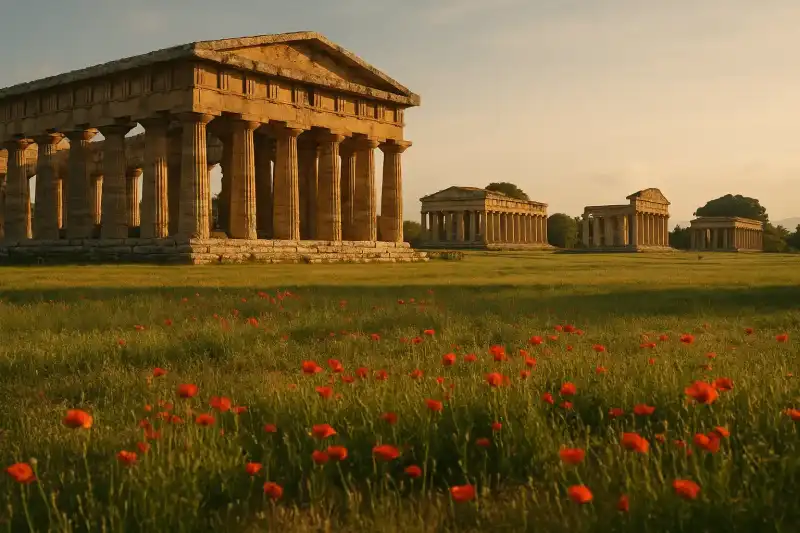
Paestum: Europe's Best-Preserved Greek Temples on Italy's
Ancient Greek / RomanDiscover Paestum's magnificent Greek temples, the Tomb of the Diver, and buffalo mozzarella farms on...
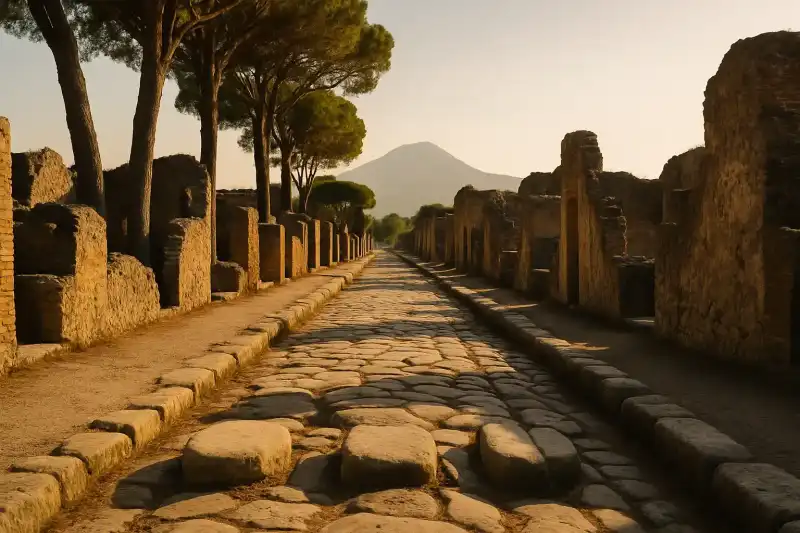
Pompeii Italy Travel Guide: Frozen in Time, Complete 2026
Roman EmpireWalk the streets of ancient Pompeii with our complete guide. Discover the best routes, must-see hous...
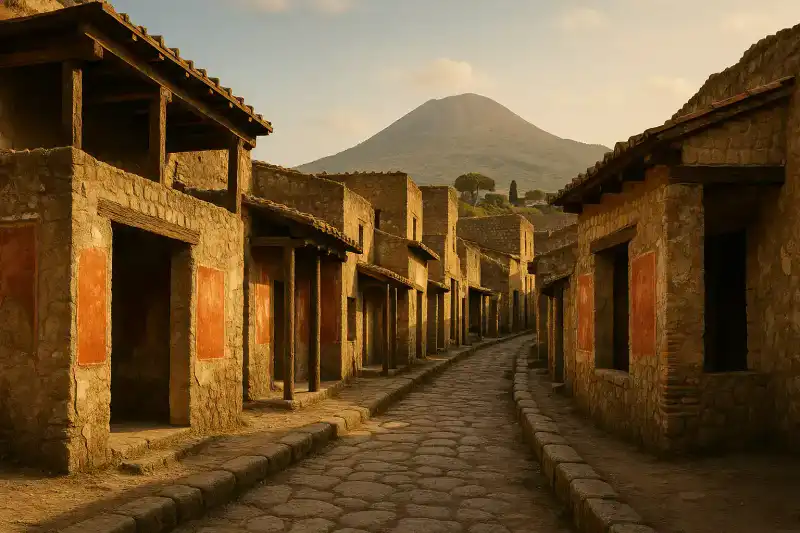
Herculaneum Italy Travel Guide 2026: Better Preserved Than Pompeii
Roman EmpireDiscover Herculaneum's extraordinary preservation of ancient Roman life. See carbonized wood, vivid ...