Quick Info
At a glance
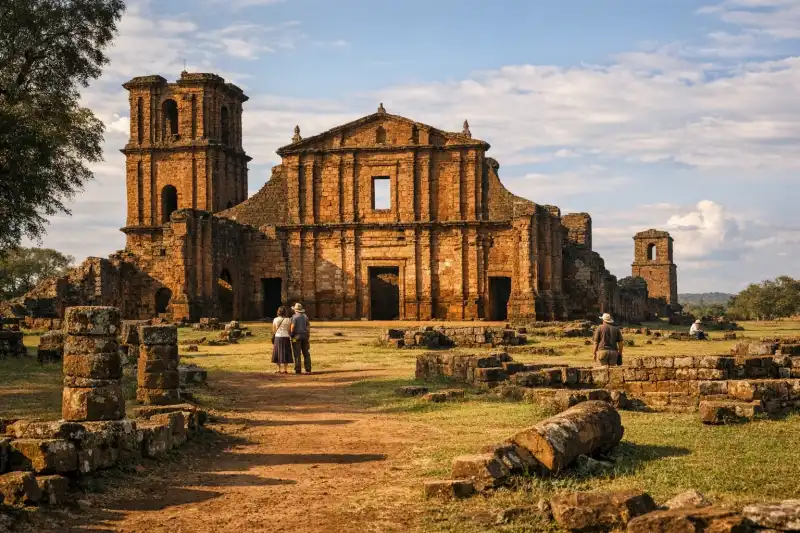
In the rolling grasslands of southern Brazil, São Miguel das Missões rises from the landscape with the quiet drama of a place shaped by faith, empire, conflict, and memory. Located in Brazil’s state of Rio Grande do Sul, this UNESCO-listed site is not a sprawling ruined city in the desert or a hilltop fortress, but something arguably more affecting: the remains of a planned mission settlement where Guaraní communities and Jesuit missionaries once built a world together, however uneven and fragile that experiment proved to be. Today, the great red-stone church facade still stands in striking silhouette against the sky, its arches and carved details giving visitors a glimpse of the ambition that once animated the mission.
What makes São Miguel das Missões so compelling is the way its history survives in layers. The site is both monumental and intimate. It speaks of Baroque architecture in a frontier zone, of sacred music and agricultural labor, of language exchange and religious conversion, and of devastating wars that tore mission life apart. Even for travelers who know little about the Jesuit reductions of South America, São Miguel leaves a strong impression. The open grounds, scattered foundations, museum collections, and evocative evening light-and-sound presentations make it one of Brazil’s most memorable heritage destinations. It is a place where the past feels visible, not hidden, and where ruins do not simply mark an ending but preserve a much more complicated human story.
History
Early Jesuit and Guaraní Encounters
The history of São Miguel das Missões begins within the broader story of the Jesuit reductions, mission communities established across parts of present-day Brazil, Argentina, and Paraguay from the 17th century onward. These settlements were created by Jesuit missionaries working among Indigenous Guaraní populations. In theory, the reductions aimed to gather dispersed communities into organized towns centered on Christianity, agriculture, craft production, and communal life. In practice, they were also frontier institutions deeply entangled with Iberian imperial competition and the pressures of colonial expansion.
The mission associated with São Miguel was originally founded in 1687. Like other reductions in the region, it was intended to be both a spiritual center and a self-sustaining settlement. Guaraní residents were not passive inhabitants of a European project; they played central roles in constructing, governing, defending, and culturally shaping mission life. The community developed around a central plaza, with a church, workshops, residences, and spaces for administration and teaching. Over time, São Miguel became one of the most important and prosperous of the so-called Seven Peoples of the Missions in this borderland region.
Growth and Monumental Construction
During the late 17th and especially the early 18th centuries, São Miguel expanded and acquired the impressive architectural form for which it is now famous. The mission church of São Miguel Arcanjo, whose ruins dominate the site today, was built in the Baroque style using locally available reddish sandstone. It is generally associated with the work of Jesuit architect Giovanni Battista Primoli, though construction on frontier sites was always collaborative and depended heavily on Guaraní labor and craftsmanship.
At its height, the mission was not merely a religious outpost. It functioned as a highly organized town with agricultural fields, livestock, workshops, and a vibrant liturgical culture. Music was especially important in Jesuit-Guaraní communities, and the missions became known for orchestras, choirs, and skilled artisans producing religious objects, furnishings, and sculptures. São Miguel’s church and associated buildings reflected this synthesis of European forms and local execution, giving the settlement a distinctive identity.
This period of growth also revealed the complexity of mission society. Jesuit authorities sought to direct worship, labor, education, and public order, while Guaraní residents adapted these structures in ways that reflected their own communal traditions and social realities. The result was never a simple cultural replacement, but rather a negotiated and unequal interaction that produced a unique historical landscape.
Treaty, War, and Destruction
The turning point came in the mid-18th century. In 1750, the Treaty of Madrid attempted to redraw colonial boundaries between Spanish and Portuguese territories in South America. As part of this agreement, the Seven Peoples of the Missions, including São Miguel, were to be transferred to Portuguese control, and their Guaraní inhabitants were expected to relocate. Many resisted.
That resistance led to the Guaraní War of 1754-1756, a devastating conflict in which mission communities faced combined Spanish and Portuguese military forces. The war shattered the relative stability the reductions had known. Defeat, displacement, and violence profoundly damaged the region’s mission network. Although some structures survived and some populations remained nearby, the old mission order never fully recovered.
A few years later, another blow followed: the expulsion of the Jesuits from Spanish and Portuguese domains in the late 18th century. Without Jesuit administration, many mission settlements declined rapidly. Buildings deteriorated, economic systems collapsed, and populations dispersed or were absorbed into other colonial structures. São Miguel, once a thriving settlement, gradually became a ruin.
From Ruin to Heritage Site
For generations, the remains of São Miguel stood as a visible but partially neglected monument in southern Brazil. Travelers, clergy, local residents, and scholars recognized its importance, but systematic preservation came only gradually. In the 20th century, Brazilian heritage authorities began documenting and conserving the site more seriously. Excavation, stabilization work, and interpretation helped transform the ruins from a local curiosity into a nationally significant historical landmark.
The creation of the onsite museum added another vital layer to the visitor experience. Sculptures and fragments recovered from the mission context, including religious statuary connected to the Jesuit-Guaraní world, made clear that São Miguel had once been a place of artistic production as well as spiritual authority.
International recognition arrived when the site was included among the Jesuit Missions of the Guaranis designated by UNESCO as a World Heritage property. Today, São Miguel das Missões is valued not only for its architecture, but also for what it reveals about colonial frontiers, Indigenous resilience, missionary systems, and the intertwined histories of Brazil, Argentina, and Paraguay.
Key Features
The most arresting feature of São Miguel das Missões is the facade and surviving structure of the church of São Miguel Arcanjo. Even in ruin, it carries immense visual power. Built from warm-toned sandstone, the church presents tall walls, arched openings, and sculptural details that catch the changing light throughout the day. Visitors often arrive expecting a fragment, but the remains are substantial enough to communicate scale. Standing before the facade, you can sense the ambition of the original building and imagine how imposing it would have appeared to residents and travelers in the 18th century.
The church sits within the larger footprint of the mission settlement, and this broader layout is essential to understanding the site. The open expanse around the main ruins once formed a planned town centered on a large plaza. Foundations and archaeological traces indicate where houses, workshops, and communal structures stood. Although less visually dramatic than the church, these lower remains are crucial because they reveal that São Miguel was not simply a ceremonial monument. It was a functioning community with domestic, economic, and administrative dimensions. Walking the grounds gives a better sense of how mission life was organized spatially, with sacred and everyday activities integrated into a coherent urban plan.
Another standout feature is the Museu das Missões, which preserves sculpture and carved works associated with the missions. For many visitors, the museum deepens the experience of the ruins by restoring a human and artistic scale to the story. Here you encounter religious statues that once inhabited mission spaces, many of them created through local workshops that combined European iconography with regional craftsmanship. These objects help bridge the gap between abstract history and lived devotion. Instead of seeing only fallen stone, you begin to understand São Miguel as a place full of color, ritual, music, and movement.
The setting itself is also part of the site’s appeal. Unlike ruins hemmed in by dense modern development, São Miguel retains a strong relationship with the surrounding landscape of the southern Brazilian interior. The openness of the terrain allows the architecture to breathe visually. Sunrise and sunset are particularly memorable, when the reddish stone glows and long shadows lend even more texture to the walls. Photographers often find the site especially rewarding in late afternoon, but it remains compelling throughout the day because the light continually alters the mood of the church facade.
In the evening, many travelers seek out the light-and-sound show, when available. This presentation adds atmosphere and interpretation, using illumination and narration to animate the ruins after dark. While such shows can vary in style and scheduling, the basic effect is to help visitors imagine the mission in a more layered way. The combination of darkness, lit stone, and historical storytelling can make the site feel less like a static monument and more like a stage on which centuries of encounter and conflict once unfolded.
Perhaps the most important feature of São Miguel das Missões, though, is less tangible: its ability to hold contradictions. It is beautiful, but its beauty emerged from a colonial setting. It represents faith and artistic achievement, yet also displacement, coercion, and war. It preserves a Jesuit legacy, but equally the labor, creativity, and endurance of Guaraní communities. The site rewards travelers who look beyond the facade and consider these overlapping dimensions. In that sense, São Miguel is not just one of Brazil’s finest historical ruins. It is one of the clearest places in South America to reflect on how architecture can embody both aspiration and loss.
Getting There
São Miguel das Missões is in a rural part of Rio Grande do Sul, so reaching it usually requires some planning. The nearest practical gateway city for many visitors is Santo Ângelo, about 55 kilometers away by road. From Santo Ângelo, a taxi or ride-hailing trip typically takes around an hour and can cost roughly R$120 to R$200 each way depending on demand, time of day, and whether you negotiate a return wait. Renting a car is often the easiest option if you want flexibility, especially if you are exploring other mission towns or countryside attractions in the region.
If you are arriving from Porto Alegre, expect a much longer journey. Driving takes about 6 to 7 hours depending on traffic and route conditions. Car rental from Porto Alegre varies widely, but budget roughly R$150 to R$300 per day before fuel and insurance. Intercity buses can get you to Santo Ângelo or nearby towns, often in the R$150 to R$250 range one way, though schedules are less convenient than driving and may require onward local transport to the site.
Regional flights to Santo Ângelo, when operating on your travel dates, can save time, but air service in smaller Brazilian cities changes frequently. If flying is possible, you will still need a taxi, transfer, or rental car for the final leg. Guided day tours may occasionally be available from regional hubs, though independent travelers should not rely on them without checking in advance.
Once in the town of São Miguel das Missões, the archaeological site itself is straightforward to access. Parking is usually easy, and the area is calm compared with major urban attractions. Bring water, sun protection, and some cash or a card for tickets and small purchases, since rural logistics can be less predictable than in Brazil’s largest cities.
When to Visit
São Miguel das Missões can be visited year-round, but the best time for most travelers is during the milder months of autumn and spring. From March to May and from September to November, temperatures are generally comfortable for walking the open grounds, and the lower angle of the sun often creates beautiful light for photography. These seasons strike a good balance between pleasant weather and manageable visitor numbers.
Summer, from December through February, brings hotter days and stronger sun. Because much of the site is open and exposed, midday visits can feel tiring, especially for families with children or older travelers. If you come in summer, aim for early morning or late afternoon. The warm season can still be rewarding, particularly if you want vibrant skies and longer daylight hours, but heat and occasional storms are worth keeping in mind.
Winter, from June through August, is cooler and can actually be an excellent time to visit if you prefer crisp air and quieter surroundings. Southern Brazil is not tropical in the way many international visitors expect; mornings and evenings in Rio Grande do Sul can feel quite chilly. A jacket is useful, especially if you plan to stay for an evening presentation. Winter’s softer light can be particularly flattering on the stone ruins.
It is also worth checking local calendars for cultural events and religious or regional festivals, as these can enrich a visit with music, food, and community atmosphere. On the other hand, special events may mean busier accommodations in nearby towns. Regardless of season, try to allow enough time to see both the ruins and the museum rather than rushing through. São Miguel rewards unhurried visits, especially when you can watch how the site changes in different light.
| Quick Facts | Details |
|---|---|
| Site Name | São Miguel das Missões |
| Alternate Name | Ruínas de São Miguel Arcanjo |
| Location | São Miguel das Missões, Rio Grande do Sul, Brazil |
| UNESCO Status | Part of the Jesuit Missions of the Guaranis World Heritage listing |
| Cultural Context | Jesuit-Guaraní mission settlement |
| Founded | 1687 |
| Main Surviving Monument | Baroque church ruins of São Miguel Arcanjo |
| Best Base for Visitors | Santo Ângelo |
| Suggested Visit Length | 2 to 3 hours |
| Best Time of Day | Late afternoon for light; evening for any light-and-sound program |
| Terrain | Open archaeological grounds with uneven stone and grass |
| Family Friendly | Yes, with supervision on uneven surfaces |
A visit to São Miguel das Missões is ultimately less about checking off a famous landmark than entering a historical landscape where architecture, memory, and identity remain closely intertwined. The site is visually memorable, but its deeper impact comes from the questions it raises. How did Guaraní communities navigate mission life? What did Christianity, art, and town planning mean in this frontier world? How should we remember places that were sites of both creativity and control? São Miguel does not offer easy answers, and that is part of its value.
For travelers exploring Brazil beyond its better-known coastlines and cities, this is one of the country’s most rewarding historical destinations. It connects Brazil to a wider South American story and preserves a chapter of the continent’s past that was once nearly erased by war, politics, and neglect. Whether you arrive with a specialist interest in Jesuit history, colonial architecture, UNESCO sites, or Indigenous heritage, São Miguel das Missões offers a visit that lingers long after you leave the red stone behind.
Guided tours: worth it?
Most travelers can visit São Miguel das Missões independently. Compare a tour only if you want a tighter history-focused visit, easier logistics, or a guide who can answer questions on the spot.
Best for
- Short visits where a planned route saves time
When to go self-guided
Go independently if you prefer setting your own pace, reading as you go, and checking official hours or ticket rules directly before you arrive.
What I’d avoid
Skip paid tours that bundle unrelated stops you do not actually want. The best option should either save meaningful planning time or add historical context you would miss on your own.
São Miguel das Missões Tours
Useful when: you want to compare guided formats before deciding
Rio Grande do Sul Heritage Tours
Useful when: you want to compare guided formats before deciding
Brazil Jesuit Missions Tours
Useful when: you want to compare guided formats before deciding
Some tour links are affiliate links, which may earn Ancient Travel a small commission at no extra cost to you. I try to surface options that make practical sense for the site—not just anything bookable.
Frequently Asked Questions
What is São Miguel das Missões?
São Miguel das Missões is the archaeological remains of a Jesuit-Guaraní mission in southern Brazil, best known for its monumental red-stone church ruins and UNESCO World Heritage status.
Where is São Miguel das Missões located?
The site is in the municipality of São Miguel das Missões in the state of Rio Grande do Sul, Brazil, near the border region with Argentina.
Why is São Miguel das Missões important?
It is one of the most significant surviving Jesuit mission sites in South America and preserves evidence of the cultural encounter between Jesuit missionaries and Guaraní communities in the 17th and 18th centuries.
How much time should I spend at São Miguel das Missões?
Most visitors spend 2 to 3 hours exploring the ruins, museum, and grounds, though history enthusiasts may want half a day.
Is São Miguel das Missões good for families?
Yes. The site is open, visually striking, and manageable for families, though children should be supervised around uneven stone surfaces.
Can you visit São Miguel das Missões on a day trip?
Yes, but it depends on your starting point. A day trip is easiest from nearby towns such as Santo Ângelo, while visitors coming from Porto Alegre usually stay overnight in the region.
Nearby Ancient Sites
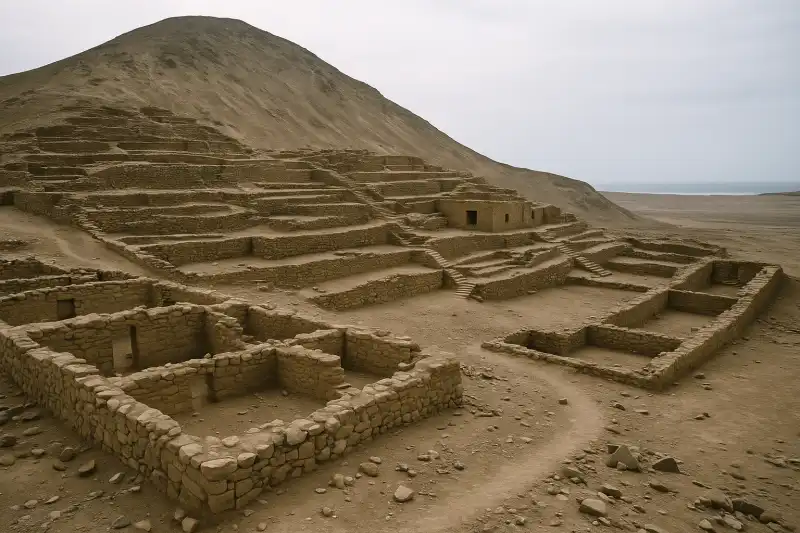
Aspero Peru Guide 2026: Norte Chico Pyramids & Caral Coast
Norte-Chico-CaralVisit Aspero in Peru to see Norte Chico pyramids, plazas, and elite temples, with practical tips for...
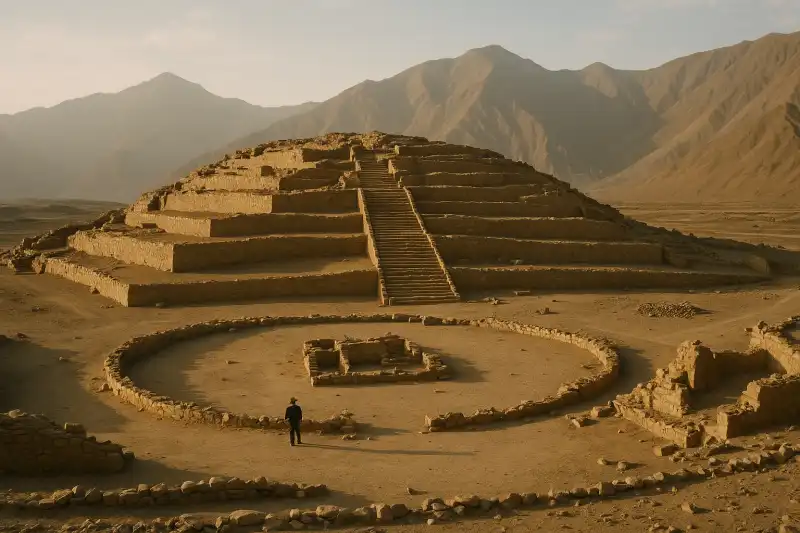
Caral-Supe Peru Guide 2026: Sacred Pyramids & the First Andean City
Norte-Chico-CaralVisit Caral-Supe in Peru, the oldest known city in the Americas, with practical transport from Lima,...
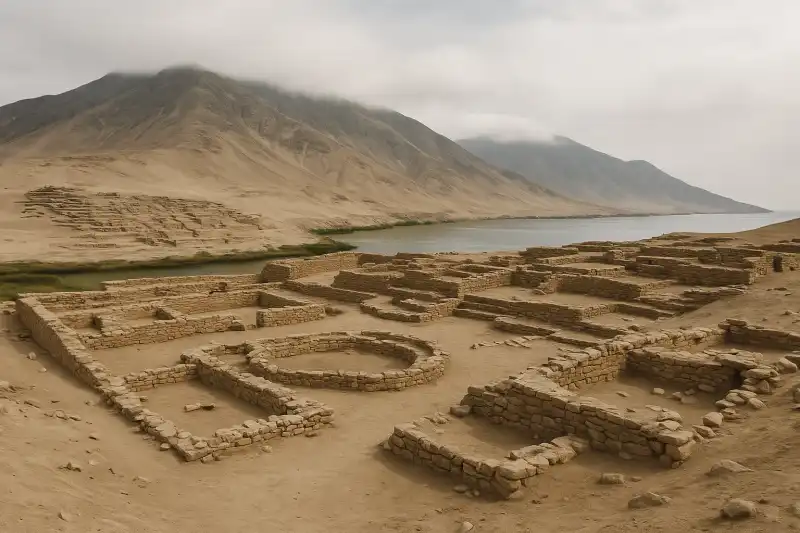
Bandurria Peru Guide 2026: Ancient Mounds & Pacific Wetlands
Norte-Chico-Preceramic-AndeanPlan your Bandurria visit in Peru with history, key mounds, transport from Lima or Huacho, entry tip...