Quick Info
At a glance
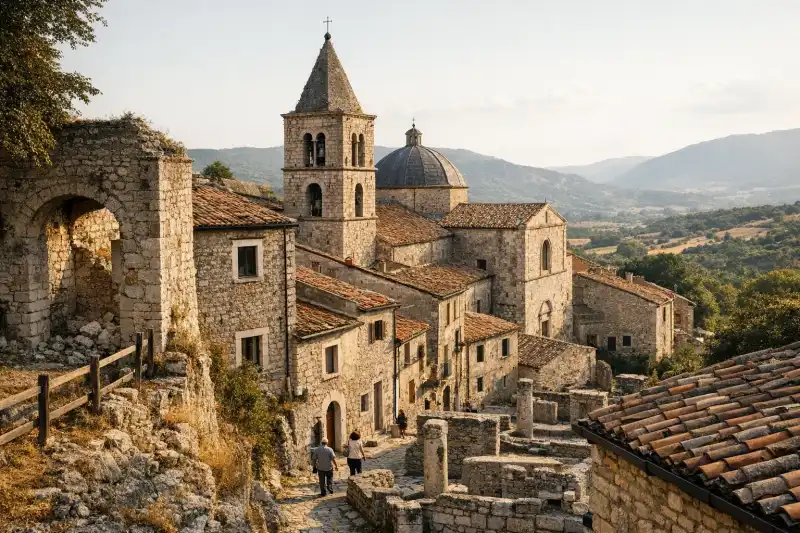
Sepino in Italy is one of those rare archaeological places that still feels discovered rather than consumed. In the Molise hills, far from the thick tourist traffic of Rome, Naples, or Florence, the ancient city of Saepinum lies within a gentle basin backed by the Matese mountains, where light, pasture, and stone combine to create a setting of unusual calm. Instead of monumental crowds and lines, visitors find gates opening onto Roman streets, stretches of wall that still define the old urban outline, and a landscape that helps explain why the town was built here in the first place. There is a deep sense of continuity at Sepino: the Roman city did not stand in isolation, but emerged from older Samnite traditions, mountain routes, and patterns of seasonal movement that shaped this part of south-central Italy for centuries.
What makes Sepino memorable is not only the survival of individual ruins but the legibility of the whole. You can walk through the city plan, trace the alignment of roads, imagine market life in the forum, and look outward to the countryside that sustained it. The scale is human, the stonework eloquent, and the silence often broken only by birds, wind, or the distant sound of farm life. For travelers interested in Roman urbanism, Italy’s regional archaeology, or places where history and landscape still speak to one another directly, Sepino offers one of the country’s most rewarding under-the-radar experiences.
History
Samnite roots and the mountain landscape
Before Saepinum became a Roman town, this area belonged to the world of the Samnites, one of the most formidable peoples of ancient Italy. The Samnites occupied the central and southern Apennines and developed a culture closely tied to upland terrain, fortified settlements, and pastoral mobility. In the region around modern Sepino, archaeology and topography suggest a long relationship between communities in the highlands and routes descending toward lower plains. One important element in this older landscape was transhumance, the seasonal movement of sheep and herds along established drove roads. These patterns of circulation would continue to influence the region even after Roman conquest.
The Samnites repeatedly came into conflict with Rome during the Samnite Wars of the 4th and 3rd centuries BCE. Although Rome eventually prevailed, the process of integration was gradual. Roman authority did not simply erase local traditions; rather, it reshaped them through colonies, roads, taxation, and new legal structures. In the Sepino area, the transformation from indigenous territory to Romanized townscape reflects this broader story of negotiation and incorporation.
Roman conquest and the birth of Saepinum
The Roman city known as Saepinum took shape near the end of the Republic and into the early Imperial period. The urban center that visitors see today is generally associated with reorganization in the late 1st century BCE and 1st century CE, when many towns across Italy were monumentalized with walls, gates, paved streets, and public buildings. Saepinum occupied a strategic position along routes linking the interior highlands with the wider Roman world. It benefited not only from road traffic but from the economic life generated by pastoralism and regional exchange.
The city was enclosed by substantial walls punctuated by impressive gates, among them Porta Bojano and Porta Benevento, which announced the civic identity of the settlement while controlling movement in and out. Within the walls, the standard features of Roman urban planning appeared: a forum as civic center, market facilities, public buildings, and an entertainment venue in the form of a theater. Saepinum was not a metropolis, but it was a well-appointed municipium whose architecture projected order, prosperity, and inclusion within the Roman system.
This period likely marked the city’s greatest prosperity. Local elites adopted Roman civic models, invested in buildings and inscriptions, and connected themselves to the wider language of imperial urban life. At the same time, the surrounding countryside remained essential. Saepinum’s economy was tied to agricultural production, livestock movement, and the role of the town as a node between mountain and plain.
Late antiquity and gradual change
Like many smaller Roman towns, Saepinum changed significantly in late antiquity. The later Empire brought administrative shifts, economic pressures, and increasing insecurity in some parts of Italy. Urban life did not vanish at once, but many towns saw public monuments reused, civic maintenance decline, and settlement patterns evolve. In Saepinum, evidence suggests continuity mixed with contraction. Buildings were adapted, materials recycled, and the city’s role altered as wider networks changed.
Christianity also transformed the social and cultural landscape of the region. As in many Roman towns, older civic structures may have lost prominence while new religious institutions emerged nearby or within reused spaces. This was not a dramatic overnight collapse but a slow reorientation of life away from the classic civic model of the Roman municipium.
Medieval afterlife and rediscovery
In the medieval period, habitation shifted, and the ancient city became, in effect, a stone reservoir and a memory embedded in the local terrain. Yet Sepino was never entirely forgotten. Travelers, antiquarians, and local communities continued to recognize the impressive remains. Because the site was not densely overbuilt by later urban expansion, much of its plan survived in a way that allows modern visitors to read it unusually clearly.
Archaeological study in the modern era brought Saepinum renewed attention. Excavation, conservation, and documentation revealed the quality of the fortifications, the layout of the streets, and the significance of the public buildings. Today, Sepino stands as one of Molise’s most important archaeological sites: not the largest Roman city in Italy, but one of the most evocative examples of a smaller ancient town preserved in relation to its original landscape. Its importance lies in completeness, atmosphere, and the insight it offers into ordinary Roman municipal life beyond the empire’s grand capitals.
Key Features
The most striking feature of Sepino is the way the city still reads as a city. The walls remain a powerful frame, not just as isolated stretches of masonry but as a coherent boundary that tells you where the Roman town began and ended. Approaching one of the gates is especially memorable. Their arches, towers, and stone blocks create a ceremonial threshold, so that entering Saepinum feels less like stepping into a ruin field and more like crossing into an ancient urban world. The gates also underline how carefully Roman planners organized movement, visibility, and identity. Even in partial preservation, they retain that sense of civic authority.
Inside the enclosure, the street grid is one of the site’s great pleasures. Visitors can follow the lines of Roman roads and experience the city spatially rather than only visually. This makes Sepino unusually accessible for anyone trying to understand how a Roman town functioned day to day. The paving, alignments, and traces of adjoining structures allow the imagination to do the rest. Instead of confronting disconnected fragments, you encounter a network of spaces that once guided commerce, administration, worship, and conversation.
The forum area offers another essential window into Saepinum’s life. Though not as monumental as the forums of major imperial centers, it reveals the civic heart of the town. Here, legal matters would have been handled, political messages displayed, and community life staged. The remains suggest a place that balanced practical and symbolic roles: it was where citizens gathered, where authority was visible, and where the Roman urban ideal took local form. Looking across the surviving foundations and architectural traces, it becomes easier to picture magistrates, merchants, and travelers sharing the same public arena.
The theater is perhaps the most emotionally engaging monument at Sepino. Roman theaters always remind visitors that ancient cities were not only administrative and economic machines but also places of spectacle, ritual, and collective leisure. At Saepinum, the theater’s surviving form evokes a social world in which performances, announcements, and civic gatherings helped knit the town together. Set within the modest scale of the site, it feels intimate rather than overwhelming. That intimacy is part of Sepino’s appeal: one can imagine the audience with relative ease, the voices carrying across stone seats, and the surrounding mountains lending acoustics and atmosphere to public life.
Scattered across the city are remains of shops, houses, service structures, and reused architectural elements that reward slow observation. Sepino is not a place where every building stands dramatically upright; it is a place where details accumulate. A threshold here, a stretch of wall there, a carved block reused in a later context, a drainage line running beside a street: together they reveal how Roman towns operated as systems. Those interested in everyday antiquity often find such evidence more meaningful than isolated grand monuments, because it shows habitation rather than mere display.
The setting is itself one of the site’s defining features. The Matese foothills are never far from view, and the relationship between city and countryside remains central to the experience. The landscape explains the town’s historical role in controlling routes and participating in pastoral economies. In many famous archaeological parks, the surrounding modern world can obscure the original environmental logic of the site. At Sepino, that logic is still visible. Fields, open sky, and mountain lines make the ruins feel anchored in their original territory. This is one reason photographers, walkers, and historically minded travelers often find Sepino especially satisfying: architecture and geography remain in conversation.
Another subtle but important feature is the site’s atmosphere of relative quiet. Because it is less visited than Italy’s marquee classics, visitors can often explore with time to pause, reflect, and notice textures of stone, weathering, and terrain. That silence is not emptiness; it is part of the interpretive value of the place. It allows the urban plan, the surviving monuments, and the mountain setting to register more clearly. Sepino does not overwhelm by scale. It persuades by coherence.
Getting There
Sepino is in Molise, and the most practical base for many visitors is Campobasso. From Campobasso, driving is usually the easiest option, with the trip taking roughly 35 to 45 minutes depending on route and traffic. Car rental costs in the region often begin around €35 to €60 per day for a small vehicle, while fuel for a short round trip is modest. A car also makes it easier to combine Sepino with villages, mountain viewpoints, or other Molise stops that are difficult to reach by public transport.
Regional buses may connect Campobasso with the area around Sepino, but services can be limited and schedules may vary by weekday, season, and school term. One-way fares are often in the range of €3 to €6, making the bus inexpensive if timings work for your itinerary. However, because frequencies are not always convenient for independent travelers, it is wise to check current timetables in advance and confirm the stop closest to the archaeological area.
Taxis from Campobasso are possible but can be relatively expensive for a one-off excursion, generally starting around €50 to €80 each way depending on availability and time of day. For couples or small groups, this can still be a workable option if you do not want to drive. Some visitors also arrive as part of a private day tour focused on Molise’s archaeological and historic sites.
If you are coming from Naples, Rome, or the Adriatic coast, expect a longer overland journey, usually best done by car. Roads through the region are scenic, and the final approach to Sepino, with hills rising around the plain, is part of the experience. Because services near the site can be limited, bring water, sun protection, and a charged phone for navigation.
When to Visit
Spring is arguably the best time to visit Sepino. From April through early June, temperatures are usually mild, the surrounding countryside is green, and walking the streets of the ancient city is comfortable even in the middle of the day. This season also brings the site’s landscape into particularly sharp focus: wildflowers, fresh pasture, and clear views toward the mountains all enhance the sense that Saepinum still belongs to its terrain. For photography, spring light tends to be gentle and rewarding, especially in the morning and late afternoon.
Early autumn is another excellent choice. September and October often offer warm but manageable weather, with softer light and fewer concerns about summer heat. The fields and slopes take on richer tones, and the site can feel especially atmospheric as the season turns. For many travelers, autumn is the ideal compromise between pleasant walking conditions and a quieter regional travel calendar.
Summer is certainly possible, but it requires more planning. In July and August, temperatures can rise significantly, and much of the archaeological area is exposed. If you visit in high summer, aim for early morning or later afternoon, carry plenty of water, and wear a hat. The reward is long daylight and strong contrast in the stonework, but midday heat can make detailed exploration tiring.
Winter visits can be appealing for travelers who enjoy solitude and dramatic skies. The mountains may appear starker, and the ruins can take on a beautifully austere character. That said, colder temperatures, rain, or occasional poor weather can limit comfort. Opening times and local services may also be more restricted outside peak seasons. Overall, if you want the most balanced experience of weather, scenery, and ease, choose spring or early autumn and allow enough time to wander without rushing.
| Quick Facts | Details |
|---|---|
| Ancient name | Saepinum |
| Modern location | Near Sepino, Molise, Italy |
| Region | Province of Campobasso |
| Main period | Late Republic to Roman Imperial era |
| Earlier culture | Samnite |
| Best known for | Roman walls, gates, forum, theater, and intact urban plan |
| Recommended visit length | 1.5 to 3 hours |
| Best seasons | Spring and early autumn |
| Nearest city base | Campobasso |
| Ideal for | Roman history lovers, archaeology travelers, photographers, quiet cultural trips |
Guided tours: worth it?
Self-guided works here, but a guide can add real value if you want the ruins explained as a living place rather than just a sequence of monuments.
Best for
- First-time visitors who want context, not just photos
- Short visits where a planned route saves time
When to go self-guided
Go independently if you prefer setting your own pace, reading as you go, and checking official hours or ticket rules directly before you arrive.
What I’d avoid
Skip paid tours that bundle unrelated stops you do not actually want. The best option should either save meaningful planning time or add historical context you would miss on your own.
Sepino and Molise Roman Heritage Tours
Useful when: you want to compare guided formats before deciding
Campobasso and Sepino Day Trips
Useful when: transport or pickup logistics matter
Molise Archaeological Sites Tours
Useful when: you want to compare guided formats before deciding
Some tour links are affiliate links, which may earn Ancient Travel a small commission at no extra cost to you. I try to surface options that make practical sense for the site—not just anything bookable.
Frequently Asked Questions
What is Sepino?
Sepino is an ancient Roman town in Molise, Italy, best known for the archaeological area of Saepinum, with preserved walls, gates, streets, and public buildings.
Is Sepino worth visiting?
Yes. Sepino is one of southern Italy’s most atmospheric lesser-known Roman sites, offering substantial ruins, mountain scenery, and a quieter experience than major tourist centers.
How much time do you need at Sepino?
Most visitors spend 1.5 to 3 hours exploring the archaeological park, though history enthusiasts may want longer to walk the walls and study the forum, theater, and inscriptions.
How do you get to Sepino from Campobasso?
The easiest way is by car or taxi from Campobasso, usually taking around 35 to 45 minutes. Limited regional bus connections may also be available depending on the season.
When is the best time to visit Sepino?
Spring and early autumn are ideal, with mild temperatures, green landscapes, and comfortable conditions for walking among the ruins.
Are there facilities at Sepino?
Basic visitor services are available in the area, but facilities can be limited compared with larger archaeological parks, so it is wise to bring water and check opening times in advance.
Nearby Ancient Sites
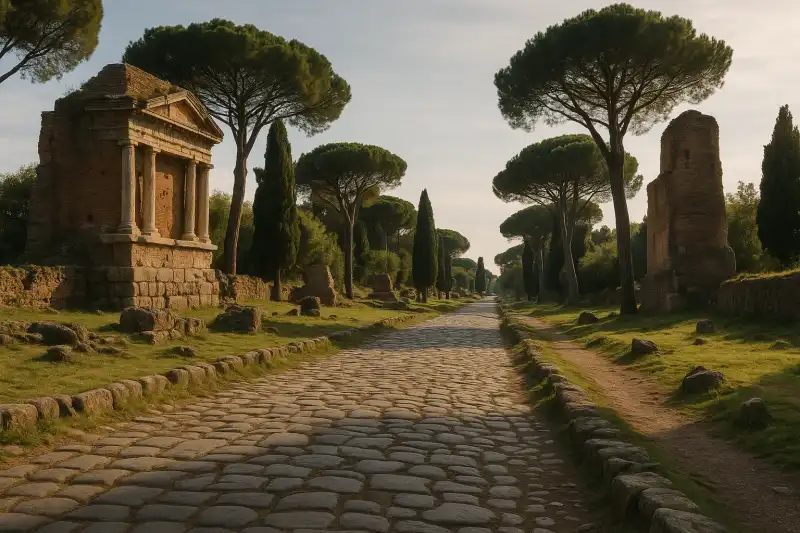
Appian Way Rome Guide 2026
RomanPlan a smart visit to the Appian Way with route choices, catacomb logistics, bike-vs-walk strategy, ...
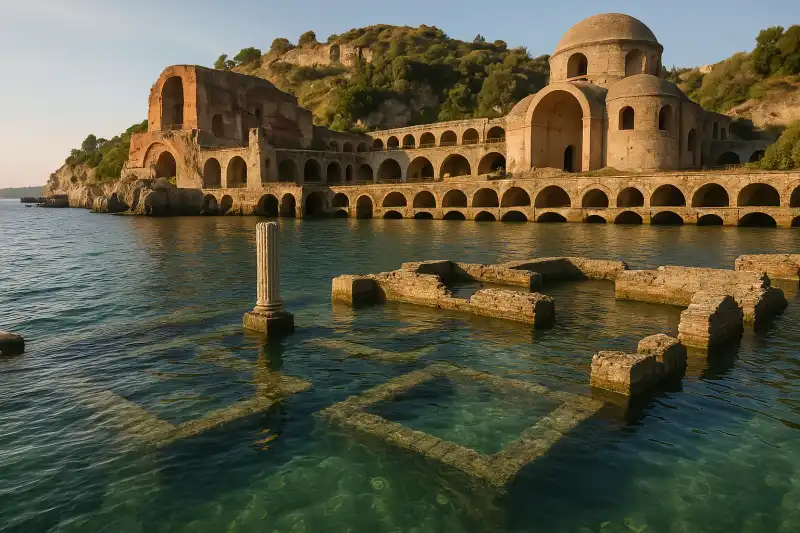
Baia Archaeological Park Guide 2026: Underwater Ruins, Thermal History, and Smart Visit Planning
RomanPlan a focused visit to Baia Archaeological Park near Naples with route strategy, what to prioritize...
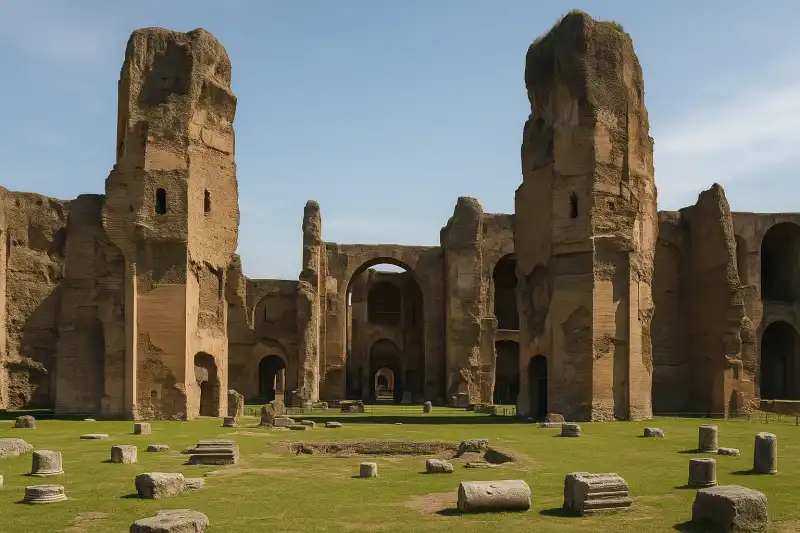
Baths of Caracalla Rome Guide 2026
RomanPlan your visit to the Baths of Caracalla with practical route advice, history context, timing, and ...
Arch of Constantine Rome: Triumph Over Maxentius Guide
Roman EmpireThe Arch of Constantine commemorates Constantine's 312 CE victory. Spolia details, best photo angles...