Quick Info
At a glance
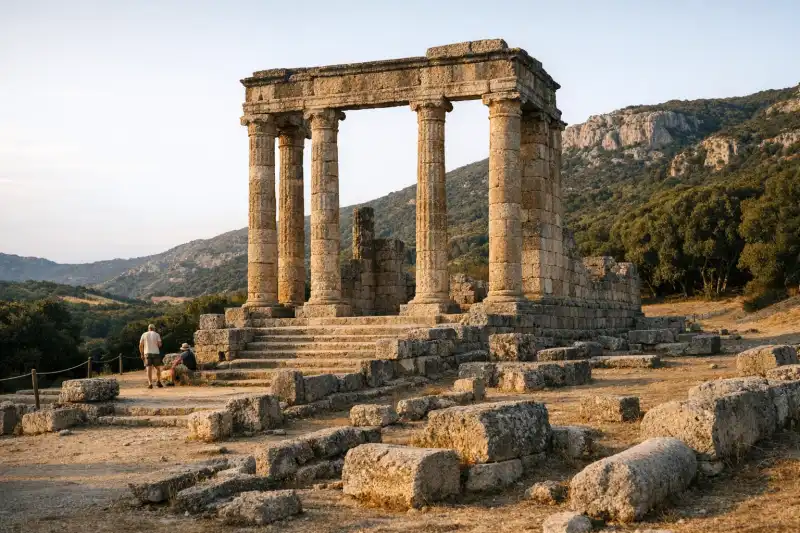
Temple of Antas in Italy is one of those places that feels both monumental and remote, a classical ruin placed not in the middle of a crowded city but in a quiet Sardinian valley ringed by pale limestone ridges. The approach already sets the tone. Roads narrow, the landscape opens, and the site appears almost unexpectedly, its columns rising from a broad clearing where ancient religion, imperial politics, and local identity once met. Unlike Italy’s more famous urban ruins, Antas offers something rarer: a temple best understood not as an isolated monument but as part of a living landscape of mines, mountains, springs, and old routes through southwestern Sardinia.
For travelers willing to venture beyond the island’s beaches, the temple rewards attention with layers of history. What stands today is largely Roman, elegant and orderly in form, yet the sanctuary’s story reaches back to Punic worship and perhaps to even older sacred traditions connected to the local people of the region. The effect is compelling. You are looking at columns and stone blocks, yes, but also at evidence of continuity: a place repeatedly chosen for devotion because of where it stood and what it meant. The site never feels oversized or overwhelming, which makes it especially appealing for visitors who prefer atmosphere over spectacle. In the stillness of the valley, the Temple of Antas seems less like a ruin on display and more like a survivor, enduring in a landscape that helps explain why it mattered in the first place.
History
Pre-Roman sacred beginnings
Long before the current temple took shape, the valley of Antas appears to have been a place of ritual importance. Scholars have long suspected that the sanctuary stood on ground already considered sacred by the indigenous populations of Sardinia, often associated with the Nuragic and later local communities of the island’s southwest. That would not be unusual. Across the Mediterranean, Roman and Punic sanctuaries often developed in places where worship had older roots tied to springs, mountains, caves, or prominent natural settings.
By the first millennium BCE, southwestern Sardinia was deeply connected to wider Mediterranean trade networks. Phoenician and then Punic influence spread across parts of the island, linking local communities to Carthage and maritime commerce. In this context, the site at Antas became associated with the worship of a deity identified in Punic tradition as Sid Addir, a god sometimes connected with protection, power, and regional identity. The sanctuary’s location inland, yet still tied to areas of extraction and movement, suggests it served not only spiritual but also social and economic functions.
The Punic sanctuary
The earliest clearly identifiable monumental phase at Antas is Punic, probably dating to the 3rd century BCE. At this stage the sanctuary was already formalized, with an organized sacred space that likely drew worshippers from the surrounding region. The Punic presence in Sardinia was never simply colonial in a narrow sense; it involved adaptation, exchange, and local participation. Antas reflects that blending well. Rather than creating a sanctuary divorced from its setting, the builders emphasized the valley itself, anchoring ritual architecture in a place that already carried meaning.
This phase unfolded during a turbulent era. Sardinia stood at the edge of major struggles between Carthage and Rome, and the island’s political future was increasingly uncertain. Even so, sanctuaries often remained important points of continuity. Worship could continue through changing regimes, although deities might be renamed, reinterpreted, or politically reframed by new rulers. That transition would shape the next chapter at Antas.
Roman rebuilding and imperial identity
After Rome consolidated control over Sardinia, the sanctuary was not abandoned. Instead, it was absorbed into Roman religious and political frameworks. The existing cult became associated with Sardus Pater, a figure whom Roman tradition linked to the island and treated as an ancestral or protective deity of Sardinia. This was a familiar Roman strategy: preserve the prestige of an established sacred site while translating its meaning into imperial language.
The most visible remains today belong to a Roman rebuilding, generally dated to the Imperial period, with significant work probably undertaken under Emperor Caracalla in the early 3rd century CE. The temple was designed in a classical Roman style with limestone columns and a formal podium, creating the kind of orderly façade associated with Roman civic religion. Yet its purpose remained rooted in local geography and memory. The sanctuary expressed Roman power, but it also acknowledged that this was a place Sardinians had revered for generations.
The Roman temple likely served pilgrims, officials, and local residents. It may also have had symbolic importance in a region known for mining and resource extraction. Temples in such settings often reinforced authority, prosperity, and divine favor, linking landscape, labor, and imperial governance.
Decline, rediscovery, and restoration
Like many ancient sanctuaries, Antas gradually declined as the religious world of the Roman Empire changed. Late antiquity brought transformations in settlement, administration, and faith, and pagan cult sites lost their central role. Over time, the temple collapsed, its stones scattered and partly buried. The valley remained, but the monument receded into the background of rural life.
Modern archaeological interest brought Antas back into focus. Excavations revealed both the Punic and Roman phases, clarifying that the site had a longer and more complex history than its visible columns alone might suggest. Restoration work in the 20th century re-erected several columns and helped visitors understand the original form of the Roman temple. As with many reconstructed ruins, what you see is a careful combination of surviving ancient material and modern conservation, intended to convey proportion and design without pretending the building is complete.
Today, the Temple of Antas stands as one of Sardinia’s most evocative archaeological sites. Its importance lies not just in architectural beauty but in what it reveals about continuity across cultures: indigenous traditions, Punic devotion, Roman statecraft, and modern efforts to preserve the island’s layered past.
Key Features
The first feature most visitors notice is the temple’s setting. Antas does not compete with an urban skyline or sit behind dense layers of later construction. Instead, it occupies an open valley enclosed by dramatic limestone heights, and this geography is central to its appeal. The surrounding hills frame the sanctuary almost like a natural theater, giving the columns unusual visual force. Even when there are other visitors around, the place often feels calm and spacious. That atmosphere is one of Antas’s greatest strengths, and it helps explain why the site was sacred long before modern tourism.
Architecturally, the temple is admired for its Roman clarity. The surviving columns, raised from pale local limestone, stand on a podium that still communicates the monument’s ceremonial form. The façade gives a strong sense of approach and hierarchy. You can immediately imagine worshippers ascending toward the sacred interior, leaving the wider valley behind as they entered a more formal religious zone. The contrast between the geometric order of the temple and the ruggedness of the surrounding terrain is especially striking. Roman architecture often sought to impose legibility and balance, and here that impulse is fully visible.
Yet Antas is not only a Roman monument. One of its most important features is the archaeological evidence beneath and around the reconstructed structure. The site preserves the memory of the earlier Punic sanctuary, and this deeper history gives the place far more complexity than a simple temple façade might suggest. Visitors interested in ancient religion will find Antas especially rewarding because it demonstrates how sacred sites evolved. The Romans did not choose the valley at random. They inherited and reframed an established center of worship. That continuity gives the ruins intellectual depth as well as visual appeal.
The use of local materials also matters. The limestone from the surrounding area creates harmony between the monument and its environment, as if the temple rises directly from the valley floor. In bright sun, the stone can appear almost luminous against greenery or blue sky. Photographers often appreciate this quality, especially in morning or late afternoon light when the columns cast long shadows and the relief of the landscape becomes more pronounced.
Another memorable feature is the sense of scale. Antas is not gigantic, and that is part of its charm. You can grasp the entire sanctuary in one view, then move closer to study its architectural details, its foundations, and its relation to the surrounding land. This makes the site approachable for travelers who may find larger archaeological parks exhausting or difficult to interpret. At Antas, the story is compact enough to follow but rich enough to reward a slow visit.
The broader valley adds another dimension. The temple sits in an area known not only for archaeology but also for caves, traditional pastoral landscapes, and historic mining routes. That means a visit can feel connected to a wider cultural environment rather than limited to one isolated ruin. Even the silence of the place becomes part of the experience. Many major classical sites are now defined by crowds, ticket lines, and urban noise. Antas offers the opposite: wind, birds, open space, and the sensation of standing where ritual once unfolded in direct conversation with nature.
Finally, the monument’s restoration deserves mention. Reconstructed columns can sometimes feel overly staged, but at Antas they are persuasive because they help the visitor understand the temple’s original form without erasing the fact that it is a ruin. You still see gaps, losses, and archaeological uncertainty. The result is a site that feels legible rather than artificial. It is beautiful, but not polished into something modern. That balance makes Antas particularly satisfying for travelers who want both atmosphere and historical substance.
Getting There
The Temple of Antas is in southwest Sardinia near Fluminimaggiore, and the easiest way to reach it is by car. From Cagliari, the drive usually takes around 1 hour 45 minutes to 2 hours, depending on traffic and route. Rental cars from Cagliari Elmas Airport often start at about €35-€60 per day in the low season and rise in summer. Fuel and toll costs are minimal because Sardinia’s roads generally do not involve the same toll structure common on the Italian mainland. Driving is the most practical option because the final stretch to the temple passes through rural roads where public transport is limited.
If you are staying in Iglesias, the trip is much shorter, usually around 35 to 45 minutes by car. This makes Iglesias one of the best bases for visiting the site. Taxis are possible from nearby towns, but fares can be expensive for a round trip, often ranging from €50 to €90 depending on distance and waiting time. If you plan to rely on a taxi, arrange the return journey in advance, as the temple area is isolated.
Public transport can get you only part of the way. Buses connect Cagliari with Iglesias and some nearby towns, with one-way fares often around €5-€8. From there, however, onward connections to the temple are infrequent or seasonal, and schedules may not align well for day visitors. For most travelers, a guided excursion or rental car remains the best solution.
Some organized day tours from Cagliari include archaeology or southwest Sardinia itineraries. These can be a good value if you want transportation handled for you, with prices commonly starting around €70-€130 per person depending on inclusions.
When to Visit
Spring is arguably the best season to visit the Temple of Antas. From April to early June, the valley is greener, wildflowers may be visible, and daytime temperatures are usually comfortable for walking and exploring. This is when the site feels at its most balanced: bright enough for good photography, mild enough to linger, and not yet burdened by peak summer heat. Spring is also ideal if you want to combine the temple with hiking or other inland stops in southwest Sardinia.
Autumn is another excellent choice. September and October often bring warm but softer weather, and the low-angle light suits the pale limestone of the temple particularly well. The countryside can feel calmer after the summer rush, and road travel is generally easier. If your goal is a reflective, uncrowded visit, autumn may be the most rewarding season of all.
Summer has the advantage of long daylight hours and stable weather, but it can be very hot in the exposed valley, especially from late morning through mid-afternoon. If you visit in July or August, aim to arrive early or later in the day, carry plenty of water, and wear sun protection. Sardinia’s coastal tourism peaks in summer, though Antas still tends to be much quieter than headline attractions elsewhere in Italy.
Winter visits are possible and can be atmospheric, especially on clear days when the surrounding hills look especially sharp and dramatic. However, cooler weather, occasional rain, and shorter opening hours can affect the experience. Check local schedules before setting out. In every season, the best light usually comes in the morning or late afternoon, when the columns and valley gain texture and depth.
| Quick Facts | Details |
|---|---|
| Location | Near Fluminimaggiore, South Sardinia, Italy |
| Ancient cultures | Indigenous Sardinian, Punic, Roman |
| Main visible remains | Roman temple reconstruction |
| Earliest sanctuary | Likely 3rd century BCE |
| Roman rebuilding | Early 3rd century CE, often linked to Caracalla |
| Sacred dedication | Associated with Sid Addir and later Sardus Pater |
| Best base for visitors | Iglesias or Cagliari |
| Typical visit length | 1-2 hours |
| Best seasons | Spring and autumn |
| Access | Easiest by rental car or organized tour |
A visit to the Temple of Antas is less about checking off a famous landmark and more about understanding how ancient worship was anchored in landscape. Its columns are beautiful, but they matter most because of where they stand: in a Sardinian valley where local memory, Punic religion, and Roman power converged. That layered identity makes the site distinctive among Italy’s ancient ruins. It does not rely on grand scale or dense urban history to impress. Instead, it offers clarity, atmosphere, and a rare sense of continuity.
For travelers exploring Sardinia beyond its coast, Antas is one of the island’s most rewarding historical destinations. It pairs well with other archaeological sites, but it is also strong enough to justify a dedicated detour. If you enjoy places where architecture and setting cannot be separated, this temple will likely stay with you long after you leave.
Guided tours: worth it?
A guide can be genuinely useful at Temple of Antas, especially if you want help with transport, timing, tickets, or understanding a large site without losing half the day to logistics.
Best for
- First-time visitors who want context, not just photos
- Travelers who want transport, timing, or entry logistics handled
- Short visits where a planned route saves time
When to go self-guided
Go independently if you already have transport and tickets sorted, enjoy moving at your own pace, and are comfortable checking the latest official rules before you arrive.
What I’d avoid
Skip paid tours that bundle unrelated stops you do not actually want. The best option should either save meaningful planning time or add historical context you would miss on your own.
Sardinia Archaeology Tours
Useful when: you want to compare guided formats before deciding
Cagliari Day Trips
Useful when: transport or pickup logistics matter
South Sardinia Historical Tours
Useful when: you want to compare guided formats before deciding
Some tour links are affiliate links, which may earn Ancient Travel a small commission at no extra cost to you. I try to surface options that make practical sense for the site—not just anything bookable.
Frequently Asked Questions
Where is the Temple of Antas located?
The Temple of Antas is in southwest Sardinia, Italy, near Fluminimaggiore in the province of South Sardinia, in a valley surrounded by limestone hills.
Is the Temple of Antas Roman or Punic?
The visible remains are mainly from a Roman reconstruction, but the sanctuary itself has earlier Punic origins and may have been sacred even before that.
How do you get to the Temple of Antas?
Most visitors reach the site by car from Cagliari or Iglesias. Public transport options are limited, so a rental car or organized day tour is usually the easiest choice.
How much time do you need at the Temple of Antas?
A typical visit takes about 1 to 2 hours, though you may want longer if you also explore the surrounding valley, nearby caves, or local hiking paths.
Is there an entrance fee for the Temple of Antas?
Yes, the site usually charges a modest admission fee, though prices can change seasonally. Check current local information before visiting.
What is the best time of year to visit the Temple of Antas?
Spring and autumn are usually the best times, with mild weather, greener landscapes, and more comfortable conditions for walking around the open-air site.
Nearby Ancient Sites
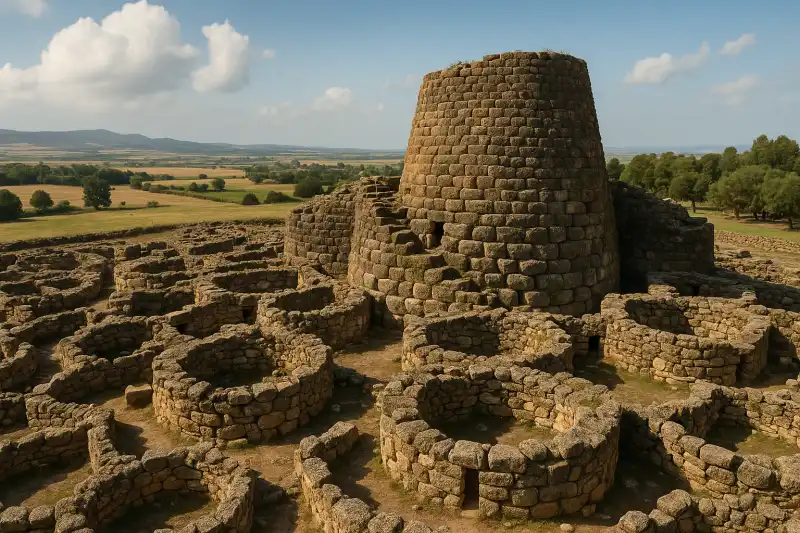
Barumini (Su Nuraxi) Guide 2026: Visiting Sardinia's Nuragic UNESCO Site
NuragicPlan a smart visit to Su Nuraxi di Barumini with timing, transport options, what to prioritize on si...
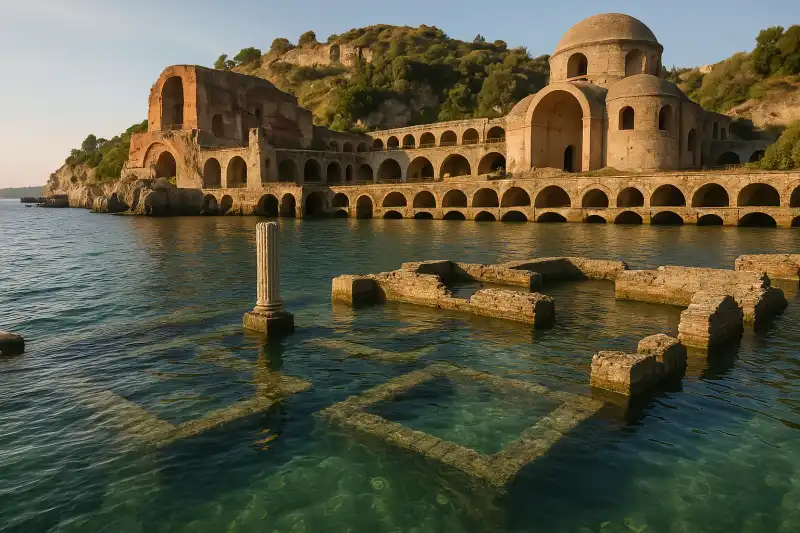
Baia Archaeological Park Guide 2026: Underwater Ruins, Thermal History, and Smart Visit Planning
RomanPlan a focused visit to Baia Archaeological Park near Naples with route strategy, what to prioritize...
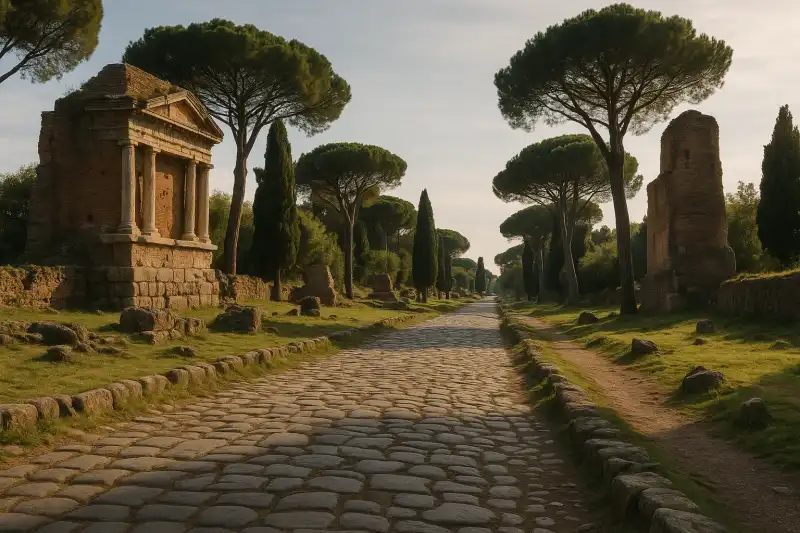
Appian Way Rome Guide 2026
RomanPlan a smart visit to the Appian Way with route choices, catacomb logistics, bike-vs-walk strategy, ...