Quick Info
At a glance
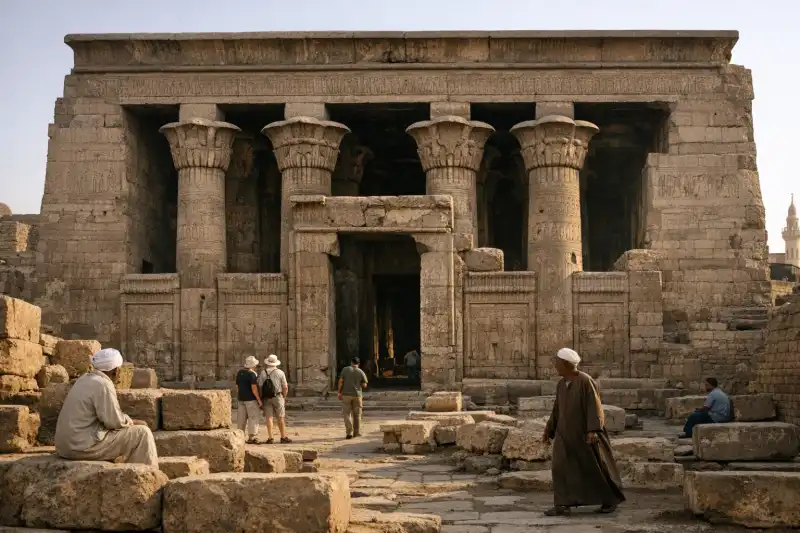
In the riverside town of Esna in Egypt, south of Luxor, one of the country’s most underrated ancient monuments rises unexpectedly from the middle of modern streets and market life. The Temple of Esna does not dominate a desert plateau or stand isolated against a theatrical horizon. Instead, it appears as a powerful survival from antiquity embedded within a living town, where daily commerce, traffic, and local routines unfold around the remains of a sacred structure once dedicated primarily to the ram-headed creator god Khnum. That setting is part of its magic. You descend from the contemporary street level into a much older world, where towering sandstone columns, deeply cut hieroglyphs, Roman imperial cartouches, and traces of brilliantly painted ceilings still speak across two millennia.
For many travelers, Esna is passed by in favor of the major names of Upper Egypt, yet the temple rewards anyone who stops. Its surviving hypostyle hall is among the finest examples of late Egyptian temple decoration, preserving a rare concentration of inscriptions from the Ptolemaic and Roman periods. The reliefs are not simply decorative; they are records of religious ritual, political legitimacy, and cosmic order expressed through architecture. Esna is also one of the best places to appreciate how ancient Egyptian religious traditions continued and evolved long after the age of the great pharaohs, under Greek-descended rulers and then Roman emperors. Compact, atmospheric, and increasingly appreciated for recent conservation work, the Temple of Esna offers a vivid, intimate encounter with Egypt’s long sacred past.
History
Origins and Sacred Foundations
Esna, known in antiquity as Latopolis, was an important settlement on the west bank of the Nile. Long before the current temple was built, the location had religious significance. The principal deity worshipped here was Khnum, the ram-headed god associated with creation, fertility, and the life-giving inundation of the Nile. In Egyptian belief, Khnum was the divine potter who fashioned human beings and even gods on his wheel, making him an especially potent figure in a riverine landscape where agricultural survival depended on annual waters.
There is evidence that earlier temples stood on or near the site during pharaonic times, although little of those structures remains clearly visible today. As at many Egyptian sanctuaries, the later temple likely replaced or expanded earlier sacred buildings. This continuity mattered deeply in ancient Egypt. Temples were not merely places of worship; they were points where cosmic order was maintained through repeated ritual, and preserving a sacred location could be as important as rebuilding its architecture.
Ptolemaic Construction
The surviving temple belongs mainly to the Ptolemaic period, after Alexander the Great’s conquest of Egypt in 332 BCE and the establishment of the Greek-speaking Ptolemaic dynasty. These rulers, though foreign in origin, adopted Egyptian religious imagery and temple-building traditions to legitimize their authority. Across Egypt, they sponsored major sanctuaries in a style that was recognizably Egyptian in form and symbolism, even while the political world around them had changed dramatically.
At Esna, construction of the current temple likely began under Ptolemy VI Philometor in the 2nd century BCE. The sanctuary and other inner parts of the temple probably took shape first, following traditional Egyptian planning. Like many temples of the era, Esna was not completed quickly. Building and decoration unfolded over generations, dependent on royal patronage, local priestly influence, and shifting political circumstances. This long timeline is one reason the inscriptions preserve such a rich record of changing rulers.
Roman Expansion and Decoration
The monument visible today is dominated by the great hypostyle hall, much of which was completed and decorated during the Roman period. Far from neglecting Egyptian religion, Roman emperors continued the established practice of temple patronage, especially in the first centuries of imperial rule. At Esna, inscriptions name emperors including Claudius, Vespasian, Titus, Domitian, Trajan, Hadrian, Antoninus Pius, Marcus Aurelius, Commodus, and Decius. Their names appear in pharaonic style, represented as legitimate rulers making offerings to Egyptian gods.
This does not mean Roman emperors personally directed daily temple life in Esna. Rather, the temple became a place where imperial power was translated into local religious language. The priests who designed and inscribed the reliefs were heirs to long Egyptian traditions, and Esna’s inscriptions are especially valuable because they preserve theological and liturgical texts from a relatively late stage in ancient Egyptian religion. Some are written in hieroglyphic forms so elaborate and scholarly that the temple has become important to specialists studying priestly learning under Roman rule.
The painted ceilings and astronomical scenes also belong to this phase of embellishment. They show how temple decoration remained intellectually ambitious in Roman Egypt, integrating religion, kingship, and celestial order.
Decline, Burial, and Rediscovery
As Christianity spread through Egypt during the late Roman and Byzantine periods, many traditional temples lost their cultic function. Esna gradually ceased to operate as a major pagan sanctuary. Over centuries, parts of the temple were dismantled, buried by accumulated debris, or absorbed into the urban development of the town. Because the surrounding settlement continued to grow, much of the ancient complex disappeared beneath later construction. Only the hypostyle hall survived prominently enough to remain known.
In the modern era, travelers and early archaeologists recognized Esna’s importance, but the monument often suffered from neglect, soot, dust, pigeon droppings, and the pressures of being hemmed in by urban life. Yet this same burial helped preserve portions of its decoration. In recent decades, conservation and cleaning campaigns have transformed understanding of the temple, revealing vibrant pigment on the ceilings and clarifying reliefs that had long appeared darkened and indistinct. These restorations have shown that Esna is not merely a leftover fragment of a lost complex, but one of the most visually and historically significant temple interiors in Egypt.
Key Features
The Temple of Esna is best approached as an experience of surviving space rather than as a complete architectural ensemble. Much of the original temple complex has vanished or lies beneath the modern town, but what remains is so impressive that it conveys the power of the whole. The central feature is the hypostyle hall, a vast columned chamber that once formed the grand entrance area leading toward the now-lost inner sanctuary. Descending to it from street level creates a striking temporal shift. You move not only downward in elevation but backward through layers of history.
The hall is supported by twenty-four large columns arranged in rows, each topped with richly varied floral capitals. These capitals are among the most attractive details at Esna. Rather than repeating a single pattern, the designers used a range of forms inspired by palm fronds, lotus blossoms, papyrus bundles, and composite plant motifs. This variety gives the hall a rhythm and visual liveliness that becomes more apparent the longer you look. The columns are thick, monumental, and yet refined, creating a space that feels both heavy and intricately worked.
Above them, the ceiling is one of Esna’s true marvels. For generations it was obscured by grime, but cleaning has revealed painted scenes and colors of remarkable freshness. Deep blues, reds, yellows, and ochres frame depictions of deities, sacred symbols, and astronomical motifs. Zodiac imagery here has drawn particular interest, not because Esna’s ceiling is identical to the more famous examples elsewhere, but because it reflects the blending of Egyptian religious tradition with broader Hellenistic and Roman-era celestial knowledge. The ceiling is not decorative filler; it is an image of an ordered cosmos suspended above the ritual world below.
The wall reliefs repay slow attention. They show emperors in pharaonic pose, offering wine, incense, food, and sacred emblems to Khnum and associated deities such as Neith, Menhit, and Heka. To a casual visitor, many scenes may seem similar at first glance, but they encode nuanced ideas of kingship, divine reciprocity, and temple ritual. The ruler gives to the gods so that the gods sustain Egypt. At Esna, these scenes are particularly important because the inscriptions accompanying them are extensive and often unusually complex. Scholars have long valued the temple as a source for late hieroglyphic writing and theology.
Khnum himself gives the monument much of its character. His association with creation and the Nile made Esna an apt setting for his worship. In some scenes, he appears as the divine craftsman and source of life. This theological emphasis links the temple to the river environment that shaped the town’s economy and existence. Even for visitors without specialist knowledge, understanding that Esna was a place where the powers of creation, fertility, and annual renewal were honored adds depth to the architecture.
Another notable feature is the temple’s unusual urban context. Many Egyptian temples are encountered in carefully staged archaeological zones. Esna is different. Shops, houses, and streets press close to the monument. That closeness can initially feel less romantic than a desert setting, but it highlights the continuity of habitation on this Nile site. Ancient sacred geography and modern community life overlap here in visible, sometimes startling ways. The temple is not an isolated relic but a survivor within a still-inhabited landscape.
Recent restoration has also become part of the site’s appeal. Visitors today can see the results of careful cleaning that has dramatically changed how the monument is perceived. The restored colors and sharpened carvings allow the hall to be read more clearly than in the past, making Esna one of the best places in Egypt to understand how vivid temple interiors once were. Instead of imagining ancient color as an abstract possibility, you can look up and see it.
Getting There
The Temple of Esna is located in the town of Esna, about 55 to 60 kilometers south of Luxor, making it an easy excursion from one of Upper Egypt’s main tourist bases. The simplest option is a private taxi or arranged car from Luxor. Depending on the season, vehicle type, and whether you negotiate in advance, a round-trip private taxi usually costs around EGP 900 to 1,800, with waiting time included for a short visit. A private driver arranged through a hotel or tour company may cost more, but it offers convenience and less bargaining.
Local minibuses and shared transport also operate between Luxor and Esna, and these are much cheaper, often in the range of EGP 30 to 80 per person each way. They are practical for budget travelers but less comfortable and less predictable, especially if you are working on a tight schedule. Trains stop at Esna as well, though they are not always the most convenient option for a straightforward temple visit unless they align well with your day’s timing.
Many Nile cruises pass through Esna because of the nearby lock, and some itineraries include a stop or optional excursion to the temple. If you are cruising between Luxor and Aswan, ask in advance whether a guided visit is included. Once in Esna town, the temple is centrally located and can be reached on foot from nearby drop-off points. Since the site sits below current street level, access involves descending into the excavated area. Carry small cash for tickets, transport, and tips, and wear shoes suitable for uneven stone surfaces.
When to Visit
The best time to visit the Temple of Esna is during the cooler months from October through April. Temperatures in Upper Egypt are far more comfortable then, especially for travelers combining Esna with Luxor, Dendera, or other temple sites. Daytime conditions are usually pleasant for walking and lingering under the carved ceiling, and the lower heat makes road travel from Luxor much easier.
From May through September, Esna can become intensely hot, with midday temperatures regularly climbing to exhausting levels. If you visit in summer, aim to arrive as early as possible after opening time or later in the afternoon, when the sun is less punishing. The advantage of summer is that visitor numbers may be lower, but for most travelers the heat outweighs that benefit.
Time of day matters even in winter. Early morning visits tend to be quieter and better for careful viewing, especially if you want to appreciate details before tour groups arrive. Because the temple lies below street level and is partly sheltered by its roof, it can feel cooler than open-air sites, but the approach and surrounding town may still be hot and busy later in the day.
If your interest is photography, ask about current lighting conditions and opening hours before going. The temple’s interior atmosphere can change depending on the angle of daylight and any ongoing restoration work. Avoid major holiday congestion if you prefer a calmer experience, though Esna generally remains less crowded than Egypt’s flagship monuments. For most visitors, late autumn, winter, and early spring offer the best balance of comfort, visibility, and manageable crowds.
| Quick Facts | Details |
|---|---|
| Location | Esna, Luxor Governorate, Egypt |
| Ancient Name | Latopolis |
| Main Deity | Khnum |
| Period | Ptolemaic and Roman |
| Main Surviving Structure | Hypostyle hall |
| Approximate Date | 2nd century BCE to 3rd century CE |
| Best Base for Visitors | Luxor |
| Typical Visit Length | 45 minutes to 1.5 hours |
| Architectural Highlight | Twenty-four columns with varied floral capitals |
| Special Feature | Restored painted ceiling and astronomical imagery |
The Temple of Esna is often described as a hidden gem, but that phrase can undersell what it really is. This is not a minor stop made interesting only by low crowds. It is a major temple in fragmentary survival, one that preserves an extraordinary record of Egyptian religious life in the centuries when Greek and Roman rulers governed the Nile Valley. Its inscriptions are intellectually rich, its architecture is imposing, and its restored colors offer one of the clearest reminders that ancient temples were once vivid, polished, and alive with ritual meaning.
What makes Esna memorable is the contrast it creates. Outside is a functioning Egyptian town, busy and unpretentious. Inside is a ceremonial universe of gods, emperors, plants, stars, and sacred texts carved in stone. The transition between those worlds happens in moments, and it lingers long after a visit. For travelers willing to go beyond the most famous monuments, Esna offers both beauty and perspective: beauty in its columns and ceiling, and perspective in showing how ancient traditions endured, adapted, and remained powerful deep into the Roman age.
Guided tours: worth it?
Self-guided works here, but a guide can add real value if you want the ruins explained as a living place rather than just a sequence of monuments.
Best for
- First-time visitors who want context, not just photos
- Short visits where a planned route saves time
When to go self-guided
Go independently if you prefer setting your own pace, reading as you go, and checking official hours or ticket rules directly before you arrive.
What I’d avoid
Skip paid tours that bundle unrelated stops you do not actually want. The best option should either save meaningful planning time or add historical context you would miss on your own.
Esna Temple Tours
Useful when: you want to compare guided formats before deciding
Luxor to Esna Day Tours
Useful when: you want to compare guided formats before deciding
Nile Cruise Excursions to Esna
Useful when: you want to compare guided formats before deciding
Some tour links are affiliate links, which may earn Ancient Travel a small commission at no extra cost to you. I try to surface options that make practical sense for the site—not just anything bookable.
Frequently Asked Questions
What is the Temple of Esna?
The Temple of Esna is an ancient Egyptian temple in the town of Esna, south of Luxor, best known for its well-preserved hypostyle hall from the Ptolemaic and Roman periods.
Is the Temple of Esna worth visiting?
Yes. It is especially rewarding for travelers interested in detailed reliefs, painted ceilings, and a less crowded alternative to the more famous temples of Luxor and Karnak.
How long do you need at the Temple of Esna?
Most visitors spend 45 minutes to 1.5 hours exploring the hypostyle hall, studying the inscriptions, and taking photographs.
Can you visit the Temple of Esna on a day trip from Luxor?
Yes. Esna is close enough to Luxor for an easy half-day or full-day excursion by taxi, private driver, or organized tour.
What makes the Temple of Esna special?
Its massive columned hall, richly carved Roman-era inscriptions, and restored ceiling paintings featuring astronomical and religious imagery make it one of Egypt's most distinctive temples.
Is the Temple of Esna fully preserved?
No. The surviving monument is mainly the hypostyle hall, while much of the larger original temple complex has been lost or lies beneath the surrounding modern town.
Nearby Ancient Sites
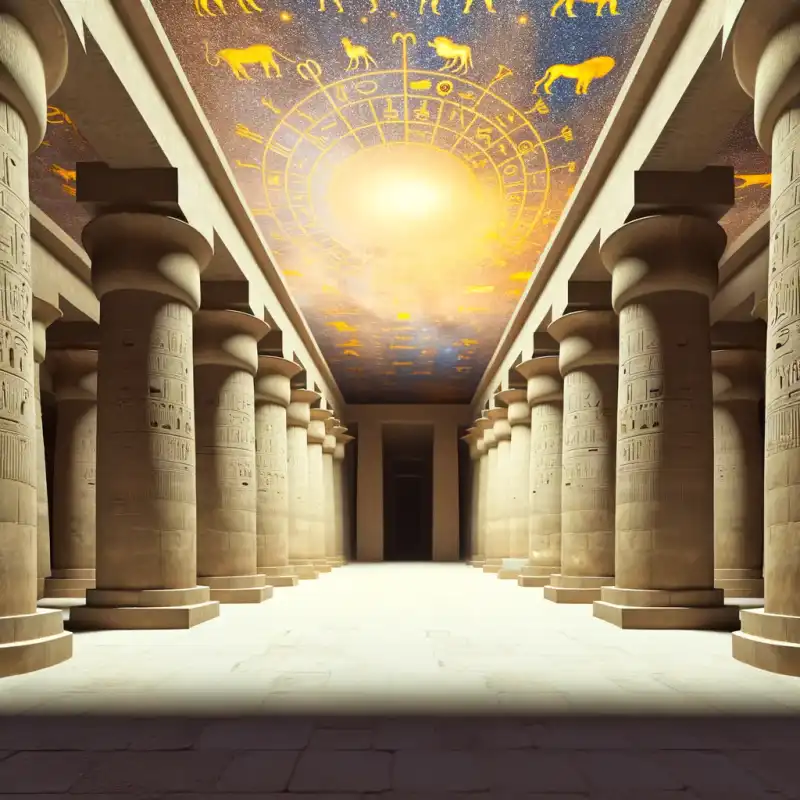
Dendera Temple Complex Egypt Guide 2026: Temple of Hathor & Zodiac Ceiling
Ptolemaic-RomanExplore Dendera's magnificent Temple of Hathor near Luxor. Star-mapped zodiac ceiling, Ptolemaic arc...
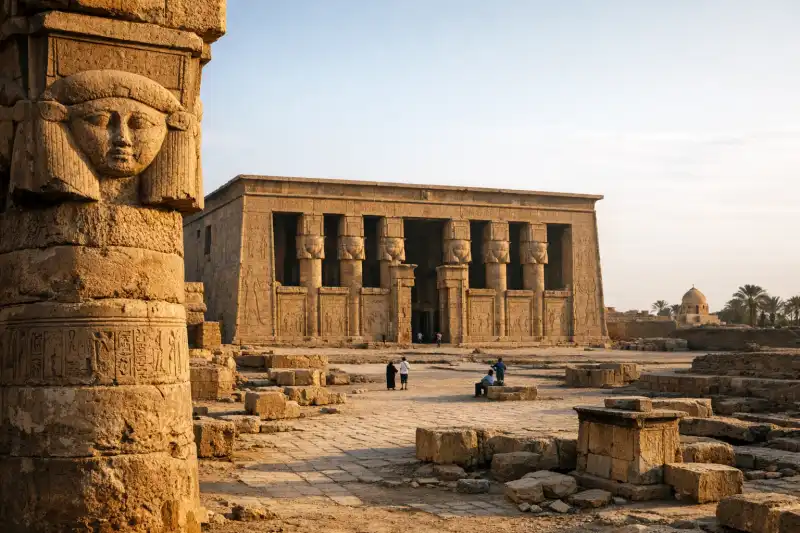
Dendera Temple Complex
The Dendera Temple Complex in Egypt is a remarkably preserved ancient site renowned for its grand Te...
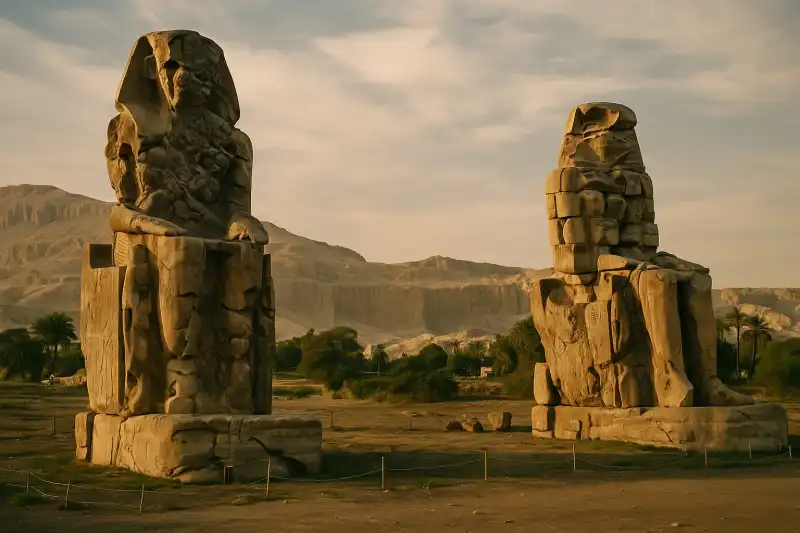
Colossi of Memnon
Ancient Egypt (New Kingdom)Twin colossal statues of Pharaoh Amenhotep III guarding the Theban necropolis on Luxor's West Bank, ...
Deir el-Medina
Deir el-Medina is an ancient Egyptian workers’ village near Luxor, renowned for its remarkably prese...