Quick Info
At a glance
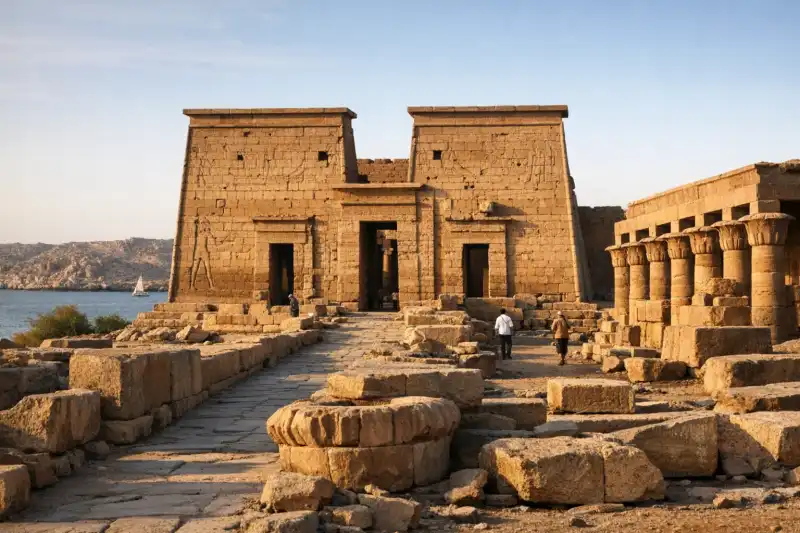
Temple of Kalabsha in Egypt feels both ancient and strangely modern at once: a sandstone sanctuary built in the Roman era for an old Nubian god, then cut apart and moved block by block in the 20th century to escape rising waters. Today it stands above the blue expanse of Lake Nasser, not far from Aswan, where the silence of desert stone meets a broad artificial lake that changed the geography of the region forever. For travelers who know Egypt mainly through the pyramids or the temples of Luxor, Kalabsha offers a different mood—more remote, more spacious, and often far less crowded.
What makes the site especially memorable is its sense of survival. The temple was not only created at a historical crossroads, when Egyptian, Nubian, and Roman traditions overlapped, but also rescued during one of the most ambitious archaeological preservation campaigns ever attempted. Visiting Kalabsha means seeing a monument that has already lived two lives: one on its original ancient foundations in Lower Nubia, and another on its present island-like perch near the High Dam. The approach itself, often involving a short boat ride, adds to the experience. The temple appears gradually against the desert landscape, its pylons and reliefs reflected in the water, as if it had always belonged here. Yet its very presence is a reminder of both loss and preservation, a monument saved from disappearance and given a new horizon.
History
Origins in Ancient Nubia
The Temple of Kalabsha was originally built at ancient Talmis, a settlement in Lower Nubia that lay south of Aswan along the Nile corridor linking Egypt with Nubia. This was a frontier region, but not a marginal one. For centuries it served as a zone of exchange, conflict, trade, and cultural blending. Egyptian religious practices extended into Nubia, while local traditions and deities also remained strong. Kalabsha was dedicated primarily to Mandulis, a Nubian solar god who became integrated into the wider Egyptian religious world.
Although an earlier sanctuary may have stood at the site during the Ptolemaic period, the visible temple seen today belongs mainly to the early Roman era. This matters because it shows how Roman rulers in Egypt did not simply impose foreign forms. Instead, they continued the long-established pattern of temple building in Egyptian style, using familiar sacred layouts, relief traditions, and ritual symbolism. In Kalabsha, Roman power presented itself through Egyptian architecture while honoring a local Nubian deity. The result is a temple that is unmistakably Egyptian in form, but also specifically Nubian in identity.
Construction Under Augustus
Most scholars associate the main phase of construction with the reign of Emperor Augustus, shortly after Rome took control of Egypt in 30 BCE. Augustus and his administrators understood the political value of supporting local cults, especially in a strategic frontier region. Building or completing a major temple at Talmis would have reinforced Roman authority while also respecting regional religious life.
Architecturally, the temple followed a classic Egyptian sequence: entrance pylon, open court, hypostyle hall, and inner sanctuary. The reliefs depict rulers making offerings to gods in the traditional manner, though the ruler in question now represented Rome. This is one of the fascinating tensions of the temple. On its walls, an emperor from the Mediterranean world appears in a visual language developed thousands of years earlier along the Nile. Kalabsha therefore belongs to a period of continuity as much as change.
The temple became one of the largest free-standing monuments in Nubia. Its commanding scale suggests the importance of the cult of Mandulis and the significance of Talmis itself. Inscriptions and decorative scenes also show that the site remained active over time, with ritual use extending beyond the initial construction phase.
Late Antique Change and Christian Reuse
Like many Egyptian temples, Kalabsha did not remain fixed in a single religious role forever. As the Roman Empire changed and Christianity spread through Egypt and Nubia, older temples were gradually abandoned, repurposed, or adapted. At Kalabsha, evidence indicates that parts of the monument were reused in the Christian period. Some ancient reliefs were defaced or altered, and the building itself entered a new phase of life.
This transformation was not unusual. Across Egypt, temples ceased to function as centers of traditional cult and were sometimes converted into churches or used for secular purposes. Kalabsha’s survival through these centuries reflects both its robust construction and the practical habit of reusing monumental stone buildings. Even when the original religious system had faded, the structure remained too substantial and too useful to disappear entirely.
The UNESCO Rescue and Relocation
The greatest turning point in the temple’s modern history came in the mid-20th century with the construction of the Aswan High Dam. The creation of Lake Nasser threatened to submerge vast stretches of ancient Nubia, including many temples, tombs, inscriptions, and settlements. In response, an international rescue campaign led by UNESCO mobilized archaeologists, engineers, and governments in a race against time.
The Temple of Kalabsha was one of the major monuments selected for relocation. Between the 1960s and early 1970s, it was carefully dismantled and reconstructed on higher ground near its current position close to Aswan. This operation preserved not only the main temple but also associated monuments in the surrounding complex. The move was technically demanding and symbolically powerful. Kalabsha became part of a larger story about global heritage preservation, similar in spirit to the famous rescue of Abu Simbel.
Today, visitors encounter a temple that is authentic in material and design, yet no longer in its original setting. That fact is not a flaw in the experience; it is central to it. Kalabsha tells two historical stories at once: the ancient story of a Nubian-Roman temple and the modern story of saving a monument from irreversible loss.
Key Features
The first feature most visitors notice is the temple’s setting. Unlike monuments hemmed in by modern development or dense visitor flows, the Temple of Kalabsha has room to breathe. The waters of Lake Nasser stretch nearby, and the surrounding desert creates a wide, open frame that emphasizes the monument’s mass. This sense of space changes how the architecture is perceived. The pylon and outer walls feel more monumental because there is so little visual competition around them.
The pylon itself is one of the temple’s most striking elements. As the formal entrance to the sacred precinct, it introduces the visitor to the traditional axial movement of Egyptian temple design. Passing through it, you enter a layout that still communicates procession, hierarchy, and ritual transition. Even for travelers without specialist knowledge, the progression inward from open light to darker, more enclosed chambers is easy to feel. The temple was designed to lead both body and mind toward sacred focus.
Inside, the reliefs are among Kalabsha’s greatest rewards. Their style reflects the Roman period, yet they continue the visual grammar of pharaonic temple art: deities seated in profile, ritual offerings, hieroglyphic inscriptions, and idealized royal figures performing acts of devotion. The central religious figure, Mandulis, is especially important. Because he was a Nubian deity worshiped in an Egyptianized temple under Roman rule, the iconography at Kalabsha captures a layered cultural world. This is not simply “Roman Egypt” in a generic sense; it is a frontier sacred landscape where local and imperial traditions met in stone.
The hypostyle areas and inner chambers offer a more intimate experience than the outer courts. Here the carved decoration can feel closer and more atmospheric, especially when light falls obliquely across the walls. Traces of later alteration also remind attentive visitors that the temple’s history did not end in antiquity. Some surfaces preserve signs of Christian intervention, making the building a record of changing faiths as well as changing empires.
One of the less obvious but equally important features of Kalabsha is its relocation itself. The temple is part of a broader archaeological complex often referred to collectively as the Kalabsha site, where other rescued monuments were also re-erected. This means a visit can be richer than a single-building stop. The temple becomes the centerpiece of a landscape of preservation, showing how Nubian heritage was curated and protected after the flooding of its original homeland.
The stonework also deserves careful attention. Sandstone behaves differently from limestone or granite in both color and texture, and at Kalabsha it creates warm tonal shifts throughout the day. In morning light, the temple can appear pale gold; later it deepens toward amber and brown. These changing surfaces are part of the site’s appeal for photographers and for travelers who enjoy simply lingering. Because the crowds are often lighter than at Egypt’s marquee attractions, there is usually more opportunity to pause, study reliefs, and absorb details without being hurried along.
Finally, Kalabsha’s emotional atmosphere is one of its defining characteristics. It is impressive, but not overwhelming; remote, yet accessible; rescued, but not over-restored. You are constantly aware that this is a monument displaced by modern engineering and saved by modern cooperation. That awareness gives the site a reflective quality. Kalabsha is not only a place to admire ancient architecture. It is also a place to think about what is lost, what can be saved, and how landscapes and monuments continue to change long after the civilizations that built them have gone.
Getting There
Most travelers visit the Temple of Kalabsha from Aswan, the nearest major city and the practical base for exploring southern Egypt. From central Aswan, a taxi or private car to the access point near the High Dam area usually takes around 20 to 30 minutes depending on traffic and your exact starting point. Expect local taxi fares in the rough range of EGP 150 to 300 one way if negotiated in advance, while a round-trip private driver with waiting time may cost more, often EGP 500 to 1,000 depending on season, vehicle type, and bargaining.
The final approach commonly involves a short boat ride to the temple complex. Boat prices vary according to whether you share, charter privately, or book through a guide, but many visitors should budget approximately EGP 100 to 300 per person for a simple transfer, with higher costs for private arrangements. Organized half-day tours from Aswan can be convenient if you prefer transport, tickets, and site logistics handled together.
If you are arriving in Aswan by air, Aswan International Airport is the nearest airport, with taxis into town generally costing about EGP 200 to 400. Travelers coming by train from Luxor or Cairo can connect onward from Aswan station by taxi or tour vehicle. Public transport to the temple itself is limited, so independent visitors usually combine taxi and boat. Bring cash for transport and entrance-related expenses, and confirm return arrangements before crossing, especially if visiting outside peak hours.
When to Visit
The best time to visit the Temple of Kalabsha is during Egypt’s cooler months, roughly from October through March. During this period, daytime temperatures in Aswan are usually far more comfortable for walking around exposed stone architecture. Mornings can be especially pleasant, with softer light and a calmer atmosphere on the water. Winter is also the easiest season for combining Kalabsha with other sites around Aswan without feeling drained by the heat.
April and early May can still be manageable, but temperatures rise quickly in Upper Egypt. From late spring through September, the heat can become intense, often making midday visits tiring and shortening the amount of time most travelers want to spend outdoors. If you come in summer, aim for the earliest possible start, wear a wide-brimmed hat, carry plenty of water, and avoid assuming the lakeside location will make conditions cool.
In terms of timing within the day, morning usually offers the best balance of temperature, photography, and logistics. The angled light brings out relief details and sandstone texture, while the site is often quieter. Late afternoon can also be beautiful, with warmer tones on the stone, though you should check opening times and boat availability carefully.
Unlike some of Egypt’s blockbuster monuments, Kalabsha is less about festival dates or crowd-driven planning and more about weather and light. For most travelers, a clear winter or early spring morning provides the ideal experience: comfortable temperatures, good visibility, and enough time to explore at an unhurried pace.
| Quick Facts | Details |
|---|---|
| Location | Near Aswan, Aswan Governorate, Egypt |
| Original Ancient Site | Talmis in Lower Nubia |
| Current Setting | Reconstructed above Lake Nasser near the Aswan High Dam |
| Main Deity | Mandulis |
| Date | Mainly early Roman period, associated with Augustus |
| Material | Sandstone |
| Why It Matters | One of the largest Nubian temples rescued from flooding |
| Best Base | Aswan |
| Typical Visit Length | 1.5 to 3 hours |
| Best Season | October to March |
A visit to the Temple of Kalabsha is ideal for travelers who want something beyond Egypt’s most photographed classics. It offers scale and beauty, but also nuance. Here, you see how Roman rulers adopted Egyptian sacred forms, how Nubian identity remained visible in local worship, and how a monument can gain a second life through modern preservation. The result is not merely an “extra” site to add onto an Aswan itinerary. Kalabsha stands on its own as one of southern Egypt’s most meaningful temple visits.
It is also a deeply atmospheric place. The crossing over water, the openness of the desert, the honey-colored stone, and the relative quiet all combine to create a slower, more contemplative encounter than many visitors expect in Egypt. If you take the time to move carefully through its halls and courts, Kalabsha reveals itself as a monument of transitions: between Egypt and Nubia, pharaonic form and Roman rule, pagan ritual and Christian reuse, original location and rescued reconstruction.
That layered identity is precisely what makes the temple memorable. You are not just looking at a relic of the past. You are standing inside a structure that has already survived empire, religious change, abandonment, threatened submersion, and physical relocation. Few ancient sites express the fragility and endurance of heritage so clearly. For anyone exploring Aswan and the wider Nile world, the Temple of Kalabsha is more than worth the detour—it is one of the most compelling reminders that preservation can be as dramatic a chapter in a monument’s life as its creation.
Guided tours: worth it?
Self-guided works here, but a guide can add real value if you want the ruins explained as a living place rather than just a sequence of monuments.
Best for
- First-time visitors who want context, not just photos
- Short visits where a planned route saves time
When to go self-guided
Go independently if you prefer setting your own pace, reading as you go, and checking official hours or ticket rules directly before you arrive.
What I’d avoid
Skip paid tours that bundle unrelated stops you do not actually want. The best option should either save meaningful planning time or add historical context you would miss on your own.
Aswan day tours
Useful when: you want to compare guided formats before deciding
Aswan Nubian monuments tours
Useful when: you want to compare guided formats before deciding
Lake Nasser boat tours
Useful when: you want to compare guided formats before deciding
Some tour links are affiliate links, which may earn Ancient Travel a small commission at no extra cost to you. I try to surface options that make practical sense for the site—not just anything bookable.
Frequently Asked Questions
Where is the Temple of Kalabsha located?
The Temple of Kalabsha stands near Aswan in southern Egypt, on the western shore of Lake Nasser, after being relocated from its original site in Lower Nubia.
Why was the Temple of Kalabsha moved?
The temple was dismantled and rebuilt on higher ground during the UNESCO-led Nubian Monuments campaign to save it from flooding caused by the creation of Lake Nasser after the Aswan High Dam.
Who built the Temple of Kalabsha?
The surviving temple was largely constructed in the Roman period under Emperor Augustus, though it continued older Egyptian religious traditions and incorporated local Nubian influences.
How do you visit the Temple of Kalabsha?
Most visitors reach the site from Aswan by car and then continue by boat across the water to the temple complex, often as part of a half-day excursion.
How much time should you spend at the Temple of Kalabsha?
Plan for around 1.5 to 3 hours, depending on your pace, interest in the reliefs, and whether you also explore the nearby smaller monuments in the Kalabsha complex.
Is the Temple of Kalabsha worth visiting?
Yes. It is one of Egypt's most atmospheric Nubian temples, with impressive reliefs, a dramatic lakeside setting, and far fewer crowds than many better-known ancient sites.
Nearby Ancient Sites
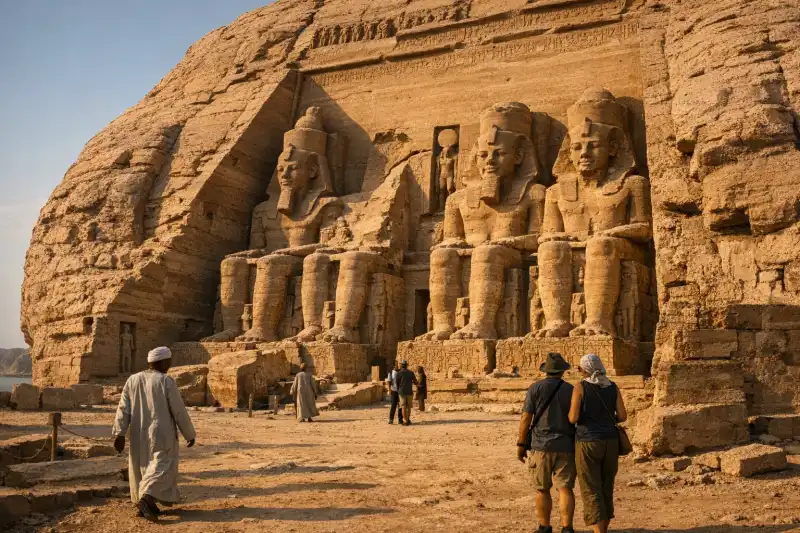
Abu Simbel
Ancient EgyptianDiscover Abu Simbel in Egypt, where colossal rock-cut temples of Ramses II rise above Lake Nasser ne...
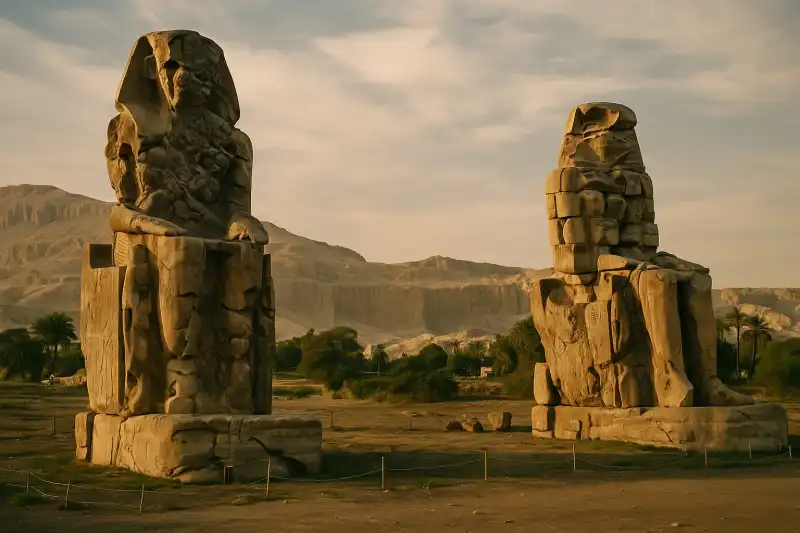
Colossi of Memnon
Ancient Egypt (New Kingdom)Twin colossal statues of Pharaoh Amenhotep III guarding the Theban necropolis on Luxor's West Bank, ...
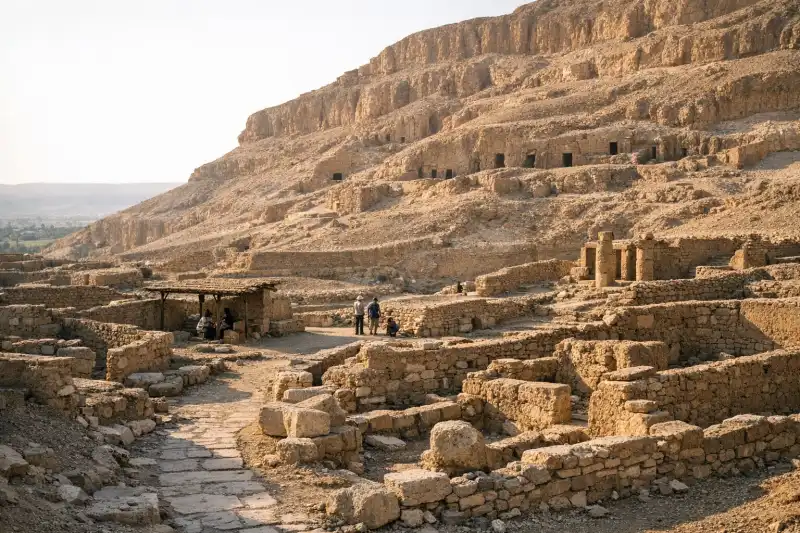
Deir el-Medina
Deir el-Medina is an ancient Egyptian workers’ village near Luxor, renowned for its remarkably prese...
Dendera Temple Complex Egypt Guide 2026: Temple of Hathor & Zodiac Ceiling
Ptolemaic-RomanExplore Dendera's magnificent Temple of Hathor near Luxor. Star-mapped zodiac ceiling, Ptolemaic arc...