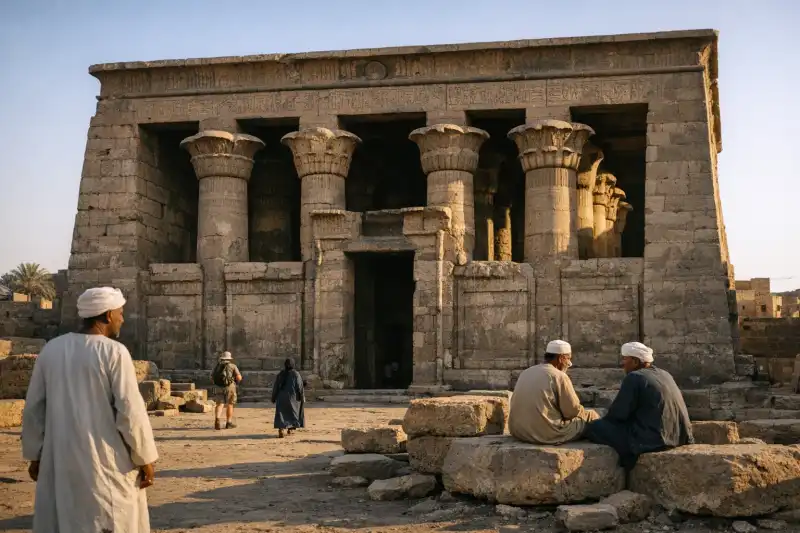
Quick Info
At a glance
Temple of Khnum in Egypt occupies one of the most evocative settings in the Nile Valley: Elephantine Island at Aswan, where granite boulders, palms, river light, and the memory of ancient frontier life come together in a landscape that feels both monumental and intimate. Unlike some of Egypt’s better-known temples that overwhelm with towering pylons and near-complete halls, this sanctuary rewards a slower kind of attention. Its appeal lies in context as much as architecture. Here, on an island that long served as a strategic, commercial, and religious gateway between Egypt and Nubia, worship centered on Khnum, the ram-headed god believed to govern the waters of the Nile and shape life itself on a potter’s wheel.
Walking through the site today, visitors encounter layered ruins rather than a single frozen moment in time. The surviving stones suggest rebuilding, adaptation, and centuries of devotion that stretched from pharaonic traditions into the Ptolemaic and Roman eras. The temple’s location explains much of its significance. Elephantine stood at the First Cataract, a natural threshold in the river, and ancient Egyptians saw this southern reach as a place where the Nile’s power emerged in especially sacred form. That made Khnum an ideal deity for the island. For modern travelers, the experience is less about spectacle and more about atmosphere: boat approaches across the water, views toward Aswan’s riverbanks, and the sense of standing in a sacred landscape tied to flood, fertility, and state power for millennia.
History
Early sacred importance of Elephantine
Long before the visible remains of the Temple of Khnum took their later form, Elephantine Island was already a place of exceptional importance in ancient Egypt. Its position at the southern edge of the Egyptian heartland made it both a border station and a religious center. Trade routes from Nubia converged here, military movements passed through the cataract zone, and officials monitored traffic along the river. The island’s strategic role naturally encouraged cult activity, but religion on Elephantine was more than a practical accompaniment to administration.
Khnum was especially revered because of his connection to the Nile’s life-giving waters. In Egyptian belief, he was associated with the source of the inundation and with creation itself. Elephantine, poised amid the granite channels of the First Cataract, seemed a fitting place for such a god. The island also formed part of a local triad with the goddess Satis and the goddess Anuket, both tied to fertility and southern river landscapes. Earlier shrines likely existed here in perishable materials or in forms that were later dismantled, rebuilt, or absorbed into subsequent temple construction.
Pharaonic foundations and later rebuilding
Like many Egyptian sanctuaries, the Temple of Khnum was not the product of a single ruler or a single century. The sacred precinct evolved over a long period, with additions, restorations, and reconstructions reflecting shifting political conditions. By the Late Period, Egyptian kings were investing in renewed temple building as they sought legitimacy through traditional religion. On Elephantine, this likely meant reinforcing Khnum’s cult in durable stone and formalizing sacred space that had long been important.
The most visible remains at the site are generally associated with later rebuilding phases, particularly from the 30th Dynasty onward and into the Ptolemaic and Roman periods. This pattern is common in Egypt, where late rulers often rebuilt venerable sanctuaries while claiming continuity with deep antiquity. Even when a temple appears “late” in architectural terms, it often stands on a footprint sanctified by much earlier worship. At Elephantine, archaeology has shown that the island preserves traces from numerous periods, from early dynastic occupation onward, making the Temple of Khnum part of a much broader sacred and urban story.
Ptolemaic and Roman continuity
Under the Ptolemies, Greek-speaking rulers of Egypt after Alexander the Great, temple construction flourished across the country. Rather than replacing Egyptian religion, they frequently supported it, using temple patronage to anchor their authority. Khnum’s sanctuary on Elephantine benefited from this broader trend. Architectural details and inscriptions from the site point to continued religious investment, with forms and iconography that remained deeply Egyptian even under foreign rule.
The Roman period also saw temples maintained and embellished, especially at sites with enduring local significance. Elephantine retained importance because of its geography and because Egyptian cult life remained active. The Temple of Khnum, therefore, reflects a world in which old beliefs adapted to new political realities. Worship, processions, offerings, and priestly administration could continue even as the governing elite changed from native pharaohs to Ptolemies and then Roman emperors.
Decline, ruin, and rediscovery
Over time, as religious systems changed and ancient temples lost their active ritual role, the Temple of Khnum entered the long afterlife familiar to many archaeological sites in Egypt. Stone was reused, walls collapsed, and the island’s settlement patterns shifted. Yet Elephantine never entirely disappeared from human use. Its continuous habitation meant that layers accumulated rather than remaining sealed in isolation.
Modern archaeological work transformed understanding of the site. Excavations on Elephantine revealed not only temple remains but also houses, administrative areas, nilometers, and evidence for multicultural communities over many centuries. This broader context is one reason the Temple of Khnum matters so much today. It is not just a standalone monument but part of a lived island landscape where religion, trade, administration, and daily life intersected. For visitors, the ruins may appear fragmentary, but archaeology has restored much of their meaning by situating them within the island’s long and complex history.
Key Features
The Temple of Khnum is best appreciated as a sacred complex embedded in one of Egypt’s most distinctive river settings. The first feature that stands out is location. Elephantine Island is not simply a scenic backdrop; it is central to the temple’s identity. The Nile narrows and breaks around granite outcrops here, creating a landscape that ancient Egyptians linked to the origins and control of the flood. Standing among the temple remains, you are constantly aware of water, stone, and movement. That sensory relationship helps explain why Khnum, a god of creation and inundation, was worshipped here with such importance.
Architecturally, the site preserves the outlines and stone elements of a temple built and rebuilt over time rather than a perfectly complete monument. Visitors should not expect the soaring, intact visual drama of Philae or Edfu. Instead, the appeal lies in reading foundations, columns, wall fragments, and carved blocks in context. These remains reveal the grammar of Egyptian temple design: formal entrances, sacred courts, axial planning, and decorated surfaces that once linked earthly kingship with divine order. The surviving reliefs and inscriptions, though not everywhere complete, provide glimpses into ritual themes and dynastic patronage.
Another defining feature is the temple’s association with the wider cult landscape of Elephantine. Khnum did not stand alone in local worship. The island was tied to the deities Satis and Anuket, and this religious network connected the temple to the annual rhythms of the Nile and to Egypt’s southern frontier. For travelers interested in how sacred geography worked in ancient Egypt, this setting is especially rewarding. The temple makes more sense when seen not as an isolated shrine but as part of a system that linked river, fertility, kingship, and border control.
The surrounding archaeological zone greatly enhances a visit. Elephantine contains settlement remains that show how priests, officials, workers, and residents lived near sacred spaces. This blend of temple and town makes the island unusually revealing. Many famous Egyptian monuments survive as ceremonial shells detached from their original communities, but on Elephantine the relationship between religious and everyday life is easier to imagine. Depending on the route you take, you may also encounter the island’s museum displays and excavated features that broaden the story beyond Khnum alone.
The visual atmosphere is another major feature. Because the temple sits within Aswan’s island landscape, the experience changes with light and season. Morning sun sharpens the pale stone and granite contrast. Late afternoon produces softer tones across the river and nearby banks. The site also offers compelling views back toward the modern city, reminding visitors that Aswan has remained a place of movement, exchange, and cultural layering from antiquity to the present. That continuity gives the ruins emotional depth.
Finally, the Temple of Khnum stands out for what it represents in Egyptian religion. Khnum’s imagery and mythology are unusually vivid: a ram-headed creator, fashioning beings on a wheel, governing waters that determined harvests and survival. At Elephantine, those beliefs feel grounded in place rather than abstract. You are at the edge of the cataract, near the ancient frontier, in a landscape where water control and divine favor would have seemed inseparable. Even in ruin, the temple communicates that powerful union of environment and belief.
Getting There
The Temple of Khnum is located on Elephantine Island in Aswan, so most visitors begin from central Aswan on the east bank of the Nile. The simplest route is by local motorboat or felucca. Public or shared boat crossings from the corniche area are often inexpensive, typically around EGP 20 to 50 per person for a short crossing depending on negotiation, time of day, and whether the boat is private or shared. A private return arrangement may cost more, often from EGP 100 to 300 total depending on waiting time and route.
If you are already staying at a hotel on Elephantine Island, the temple area can usually be reached on foot within a short walk or with a brief local boat transfer if your accommodation is on another part of the island. Travelers based elsewhere in Aswan can also arrive by taxi to one of the river docks first. Short taxi rides within the city often range from EGP 50 to 150, though prices vary and agreeing the fare in advance is wise.
Aswan itself is well connected to the rest of Egypt. Domestic flights from Cairo are the fastest option, while trains from Cairo or Luxor are popular for those traveling overland. From Aswan station or airport, continue by taxi to the riverfront. Some guided tours include Elephantine Island alongside the Aswan Museum or other local archaeological stops, which can simplify logistics.
Wear sturdy shoes, carry water, and bring cash for boats and entrance fees, as small services near the site may not always accept cards.
When to Visit
The best time to visit the Temple of Khnum is from October to April, when Aswan’s temperatures are warm but generally more manageable than in peak summer. During these cooler months, daytime sightseeing is far more comfortable, especially because Elephantine Island involves outdoor walking with limited shade in parts of the archaeological zone. Winter brings the most pleasant conditions, though it can also mean more visitors in Aswan overall.
From May through September, southern Egypt becomes intensely hot. Midday temperatures can be extreme, and exposed stone surfaces radiate heat. If you travel during this period, plan to visit as early in the morning as possible. A dawn or early-morning boat ride to the island can be especially enjoyable, with softer light and calmer conditions on the river. Late afternoon is the second-best option, though the heat often lingers well into the evening in high summer.
Light matters almost as much as season. Early morning gives the temple remains a crisp clarity and makes photography easier before the strongest glare sets in. Late afternoon can also be beautiful, with warmer tones across the Nile and views toward Aswan’s riverbanks. Avoid the central hours of the day whenever possible, particularly from late spring through early autumn.
If your goal is a more contemplative visit, choose a weekday morning outside major holiday periods. Elephantine generally feels quieter than Egypt’s headline temple destinations, but calmer hours still improve the experience. Pairing the temple with nearby museums or an easy felucca ride can create a balanced day without rushing in the hottest part of the afternoon.
| Quick Facts | Details |
|---|---|
| Location | Elephantine Island, Aswan, Egypt |
| Region | Aswan Governorate |
| Main Deity | Khnum, ram-headed god of creation and the Nile |
| Historical Importance | Religious center linked to inundation, fertility, and Egypt’s southern frontier |
| Main Periods Visible | Late Period, Ptolemaic, and Roman phases |
| Setting | Nile island at the First Cataract |
| Typical Visit Duration | 1.5 to 3 hours |
| Best Time to Visit | October to April, ideally morning or late afternoon |
| Access | Short boat ride from central Aswan, then on foot |
| Best Combined With | Elephantine archaeological zone, Aswan Museum, Nubian Museum, Philae Temple |
The Temple of Khnum is not the kind of monument that relies on sheer scale to leave an impression. Its power is subtler and, for many travelers, ultimately more lasting. On Elephantine Island, the temple remains are inseparable from the Nile itself, from the cataract landscape, and from ancient Egyptian ideas about how life began and how order was sustained. Khnum was not merely a local god with a picturesque sanctuary. He represented control over forces that governed survival: water, fertility, creation, and the annual rhythms on which agriculture depended. That belief feels unusually tangible here.
Part of the site’s richness lies in its incompleteness. The surviving stones ask visitors to imagine process rather than just admire finished form. They speak of rebuilding across dynasties, of old sanctity renewed under new rulers, and of a frontier island that remained important through dramatic political change. Seen this way, the Temple of Khnum becomes a record of endurance. It preserves the continuity of Egyptian religious life even as power passed from native kings to Ptolemies and Romans.
For modern visitors to Aswan, this makes Elephantine an especially rewarding stop. The journey across the water immediately distinguishes it from mainland sites, and the atmosphere invites a slower pace. You can read the landscape, not just the masonry. You can see how temple, river, settlement, and trade routes belonged to one connected world. If you are drawn to places where archaeology still feels rooted in geography, the Temple of Khnum offers exactly that experience: a sacred island setting where myth, environment, and history remain vividly entwined.
Guided tours: worth it?
A guide can be genuinely useful at Temple of Khnum, especially if you want help with transport, timing, tickets, or understanding a large site without losing half the day to logistics.
Best for
- First-time visitors who want context, not just photos
- Travelers who want transport, timing, or entry logistics handled
- Short visits where a planned route saves time
When to go self-guided
Go independently if you already have transport and tickets sorted, enjoy moving at your own pace, and are comfortable checking the latest official rules before you arrive.
What I’d avoid
Skip paid tours that bundle unrelated stops you do not actually want. The best option should either save meaningful planning time or add historical context you would miss on your own.
Aswan Temple of Khnum and Elephantine Island tours
Useful when: you want to compare guided formats before deciding
Aswan archaeological sites private tours
Useful when: you want flexible timing or a private guide
Elephantine Island and Aswan day tours
Useful when: you want to compare guided formats before deciding
Some tour links are affiliate links, which may earn Ancient Travel a small commission at no extra cost to you. I try to surface options that make practical sense for the site—not just anything bookable.
Frequently Asked Questions
Where is the Temple of Khnum located?
The Temple of Khnum stands on Elephantine Island in Aswan, southern Egypt, in the First Cataract region of the Nile.
Who was Khnum?
Khnum was an ancient Egyptian creator god associated with the Nile’s waters, fertility, and the annual inundation, often depicted with a ram’s head.
How do you reach the Temple of Khnum?
Most visitors reach Elephantine Island by local boat from Aswan’s east bank, then explore the archaeological area on foot.
How much time should you allow for visiting?
Allow around 1.5 to 3 hours to see the Temple of Khnum remains along with the broader Elephantine archaeological zone and museum.
Is the Temple of Khnum suitable to combine with other Aswan sights?
Yes. It is commonly combined with the Aswan Museum, Nubian Museum, Philae Temple, or a felucca ride around the islands.
What is the best time of year to visit?
The most comfortable months are from October to April, when daytime temperatures in Aswan are milder for walking outdoors.
Nearby Ancient Sites
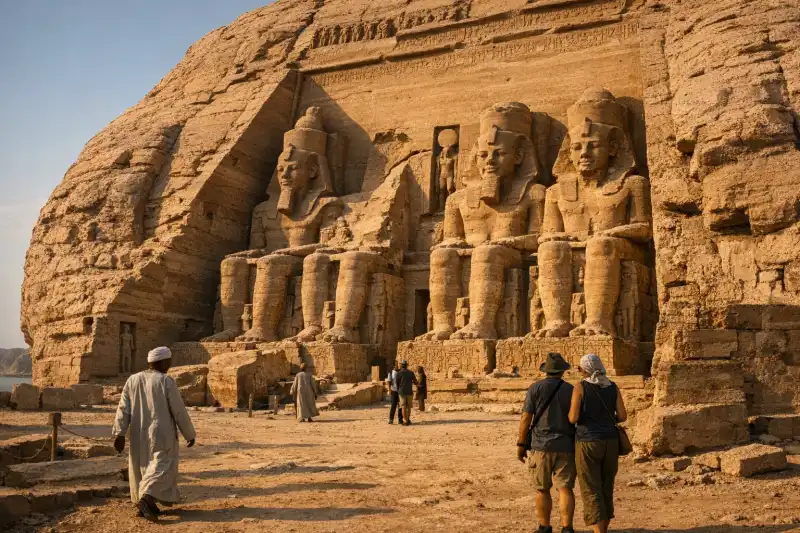
Abu Simbel
Ancient EgyptianDiscover Abu Simbel in Egypt, where colossal rock-cut temples of Ramses II rise above Lake Nasser ne...
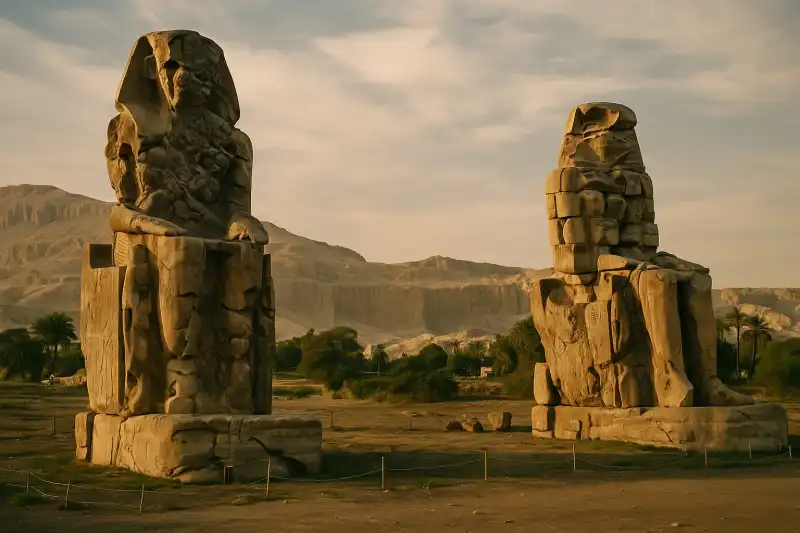
Colossi of Memnon
Ancient Egypt (New Kingdom)Twin colossal statues of Pharaoh Amenhotep III guarding the Theban necropolis on Luxor's West Bank, ...
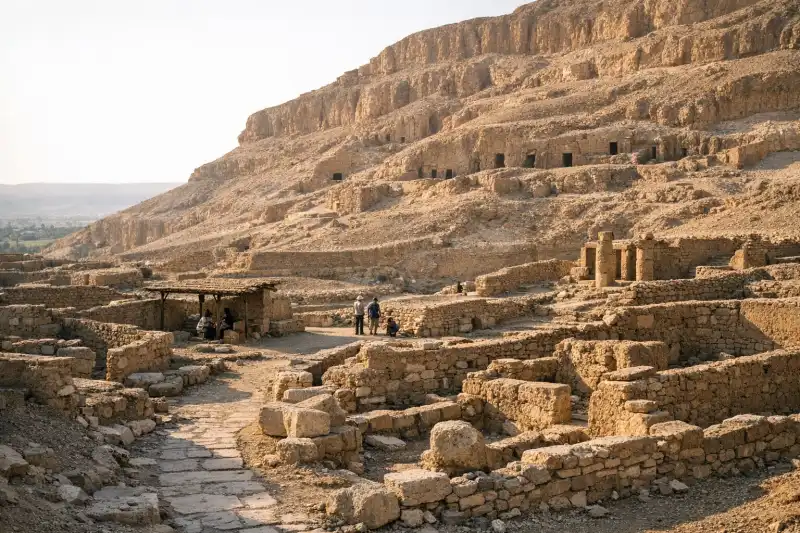
Deir el-Medina
Deir el-Medina is an ancient Egyptian workers’ village near Luxor, renowned for its remarkably prese...
Dendera Temple Complex Egypt Guide 2026: Temple of Hathor & Zodiac Ceiling
Ptolemaic-RomanExplore Dendera's magnificent Temple of Hathor near Luxor. Star-mapped zodiac ceiling, Ptolemaic arc...