Quick Info
At a glance
The Temple of Minerva Medica in Italy rises unexpectedly from modern Rome like a fragment of another world: a shell of brick and concrete, pierced by tall arches and crowned by absence where its dome once stood. Set in the Esquiline district, not far from the traffic and rail lines around Termini, this late Roman monument rewards travelers who want to move beyond the city’s most famous icons and encounter a quieter, more enigmatic piece of the ancient capital. Its popular name suggests a sacred building dedicated to the goddess Minerva in her healing aspect, yet the ruin tells a different story, one bound up with imperial gardens, leisure architecture, and the experimental ambition of late Roman design.
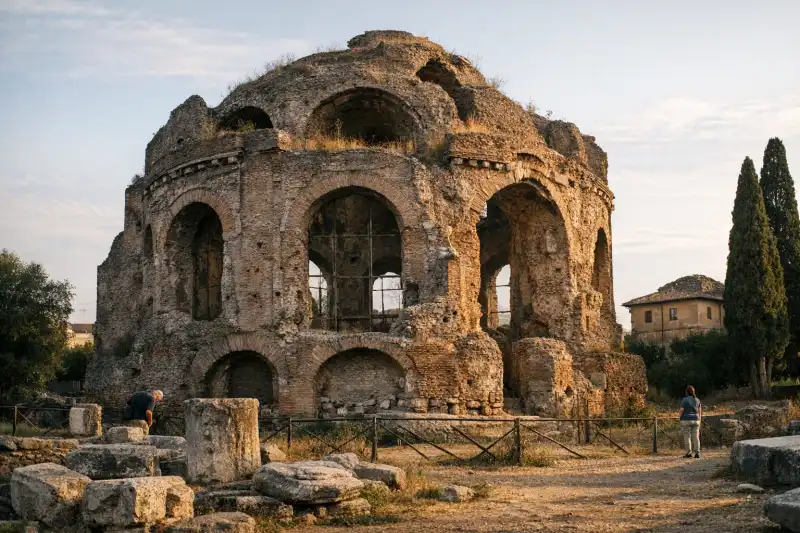
What makes the site so memorable is not only its age, but its mood. The structure’s decagonal plan, vast window openings, and exposed brickwork create an atmosphere both monumental and fragile. Seen in changing light, it can feel austere at midday and almost theatrical toward evening, when the warm color of the masonry deepens. Unlike the polished narratives attached to the Colosseum or Pantheon, the Temple of Minerva Medica retains some mystery. Scholars have revised its identity, artists once romanticized its silhouette, and generations of Romans have watched it survive partial collapse, urban growth, and changing archaeological attitudes. For visitors willing to seek out a lesser-known ruin, it offers one of Rome’s most striking encounters with late antiquity.
History
Origins in the Imperial Landscape
The building now called the Temple of Minerva Medica dates to the 4th century CE, a period when Rome was no longer the only center of imperial power but still remained a city of prestige, ceremony, and elite display. By this time, large suburban and intra-urban garden estates had become important settings for aristocratic and imperial life. The monument appears to have formed part of the Horti Liciniani, the Gardens of Licinius Gallienus, an extensive estate on the Esquiline. Rather than serving as a conventional temple, the structure was most likely a nymphaeum, pavilion, or ceremonial hall designed for leisure, display, and controlled encounters with water, light, and landscape.
This was an era of architectural experimentation. Roman builders had long mastered concrete vaulting, domes, and complex interior spaces, but late antique architects pushed these forms in new decorative and spatial directions. The decagonal shape of the monument, along with its once-domed roof and large arched windows, reflects a taste for centralized plans and dramatic interiors. Such buildings were often meant to impress through geometry and atmosphere as much as through scale.
Misidentification and the Birth of a Name
The ruin’s traditional name does not come from ancient inscriptions proving a dedication to Minerva. Instead, it emerged from antiquarian interpretation in the Renaissance and early modern period. Fragments of sculpture found in the vicinity, including works thought to be associated with Minerva or with healing, helped encourage the label “Minerva Medica.” For centuries, the name stuck, appearing in guidebooks, drawings, and scholarly discussion even after doubts about the identification grew stronger.
This process was not unusual in Rome, where many ruins acquired names based on local tradition, misunderstood finds, or visual resemblance rather than secure historical evidence. In the case of the Temple of Minerva Medica, the romantic and picturesque quality of the ruin probably helped preserve the title. Travelers, artists, and architects of the 18th and 19th centuries embraced it as a compelling relic of ancient Rome, whether or not the identification was accurate.
Late Antique Function and Architectural Significance
Modern scholarship generally sees the building as part of a luxury garden complex rather than a formal temple. The interior likely featured marble revetment, statuary, water displays, and rich surface decoration, all now lost. Its central hall may have served as a reception space, banquet setting, or ornamental pavilion within a landscaped environment. This interpretation better explains the architectural form, which is less suited to a traditional temple cult than to elite recreation and spectacle.
The monument is especially important because it preserves evidence for late Roman construction techniques and aesthetics. The use of brick-faced concrete, the centralized decagonal plan, and the arrangement of windows and niches all show a sophisticated manipulation of mass and light. Though stripped of its decorative skin, the core structure reveals the engineering confidence of Roman builders even in the empire’s later centuries.
Collapse, Survival, and Modern Preservation
For much of its post-antique life, the building stood in partial ruin yet remained sufficiently intact to inspire awe. Its dome survived for many centuries, making it one of Rome’s most famous ancient silhouettes outside the canonical monuments of the center. Artists such as Piranesi and other travelers of the Grand Tour period recorded it in engravings and sketches, often emphasizing its lonely grandeur amid fields and scattered remains.
A major turning point came in 1828, when much of the dome collapsed. This dramatically altered the monument’s appearance and increased concern about its stability. What survives today is therefore both ancient and shaped by loss: a powerful shell that hints at former volume rather than fully enclosing it. As Rome expanded in the 19th and 20th centuries, the ruin became increasingly absorbed into the modern city. Rail infrastructure, roads, and dense neighborhoods changed the setting, but the monument endured as a visible marker of the ancient topography beneath contemporary Rome.
Today, the Temple of Minerva Medica is valued not only as a picturesque ruin but also as a key document of late Roman architecture. Conservation efforts focus on stabilizing the remaining masonry and protecting the structure from environmental wear. Even in its incomplete state, it remains one of the clearest reminders that ancient Rome was not only a city of republican temples and early imperial amphitheaters, but also a place of inventive late antique design.
Key Features
The most remarkable feature of the Temple of Minerva Medica is its decagonal plan. Unlike the rectangular temples many visitors imagine when they hear the word “temple,” this structure is organized around a ten-sided central space. That geometry gives the ruin an unusual visual rhythm, with alternating faces, openings, and recesses producing a sense of movement as you circle it. Even from outside, the plan is legible enough to suggest how carefully the building was composed. It stands as a reminder that Roman architecture could be inventive and surprising, especially in the later imperial period.
The surviving brickwork is another reason the monument is so compelling. Many ancient Roman buildings are known today through marble columns or stripped stone shells, but here the exposed brick-faced concrete takes center stage. The walls rise with a rugged, almost skeletal power, allowing visitors to appreciate the underlying structure rather than just the decorative finish that once covered it. You can see the logic of Roman construction in the arches, the thickness of the piers, and the way the mass of the building was designed to support a large dome. Even in ruin, it communicates technical confidence.
The tall arched windows are among the building’s most striking elements. They once flooded the interior with light, transforming the central hall into a luminous space rather than a dark enclosed chamber. These openings also reduce the heaviness of the structure, making it feel more refined than its thick masonry might suggest. Seen from a distance, the windows give the ruin a crown-like outline, especially against the sky. Their scale hints at the grandeur of the original interior, where daylight would have interacted with marble, water, and decorative surfaces to create a carefully staged atmosphere.
Although the dome has not survived, its absence is itself a defining feature. The open top invites the eye upward and helps modern visitors understand both the scale of the lost covering and the vulnerability of ancient monuments over time. Rather than diminishing the site, the missing dome often heightens the emotional effect. The ruin feels suspended between accomplishment and decay, preserving enough of the original design to inspire imagination while leaving room for historical reflection. In this sense, the monument is especially powerful for travelers who appreciate archaeology as a dialogue between what remains and what has vanished.
The niches and internal articulation also deserve attention. The walls were not blank surfaces but carefully organized elevations with recesses that likely housed statues, fountains, or decorative architectural framing. These features support the interpretation of the structure as a nymphaeum or ceremonial hall rather than a standard cult temple. They suggest a richly orchestrated interior designed for elite experience: movement through space, framed views, water effects, and sculptural display. The building was probably as much about sensory impact as about practical use.
Its setting within the broader Esquiline area adds another layer of interest. Though the ancient gardens have disappeared, the monument still evokes the edge zones of imperial Rome, where villas, parks, tombs, and suburban routes overlapped. It does not stand in an isolated archaeological park with manicured explanatory space; instead, it survives amid the fabric of the modern city. That contrast can be part of the appeal. The Temple of Minerva Medica feels discovered rather than staged, a place where everyday Rome and ancient Rome remain visibly entangled.
For architecture lovers, the ruin also matters historically because it influenced later designers. Renaissance and neoclassical architects studied centrally planned Roman buildings intensely, and the monument’s form entered the visual vocabulary of architectural history through engravings and measured drawings. Even in damaged condition, it helped shape ideas about domed space, geometric planning, and the expressive potential of ancient construction. Standing before it, you are not just looking at a local curiosity but at a monument that participated in the long afterlife of Roman architecture across Europe.
Getting There
The Temple of Minerva Medica is in Rome, making it relatively easy to reach as part of a broader city itinerary. The nearest major transport hub is Roma Termini, the city’s central railway station. From Termini, a taxi usually takes around 10 minutes depending on traffic and generally costs about €8 to €15. If you prefer walking, the route can take roughly 20 to 30 minutes, depending on your starting point and pace, and it allows you to see a less touristy side of central Rome.
Public transport is often the most practical option. Several buses and trams serve the Esquiline and Porta Maggiore area; single tickets on Rome’s ATAC network typically cost €1.50 and are valid for 100 minutes. If you are already exploring nearby neighborhoods, tram connections can be especially convenient. Metro access is less direct than for headline monuments like the Colosseum, but Termini and Vittorio Emanuele stations can still serve as useful approach points combined with a short walk.
Because the site is a stand-alone ruin rather than a fully enclosed ticketed complex, many visitors stop by while exploring nearby ancient routes and monuments. Comfortable walking shoes are a good idea, as sidewalks and crossings in this part of Rome can be uneven or busy. If you are using ride-hailing services, inputting the monument’s name usually works well, though confirming the exact drop-off point is helpful. Guided tours focused specifically on the ruin are uncommon, so independent visits are the norm, often paired with the Esquiline, Porta Maggiore, or a wider ancient Rome circuit.
When to Visit
Spring and autumn are generally the best times to visit the Temple of Minerva Medica. From April to June and from September to early November, Rome usually offers mild temperatures, softer light, and more comfortable walking conditions. These seasons are especially rewarding for photography, as the angled sunlight brings out the texture of the brickwork and gives the ruin greater depth and warmth. The surrounding city is also easier to navigate than in peak summer heat.
Summer visits are certainly possible, but midday can be hot, with temperatures often rising above 30°C. Since much of the experience is outdoors and there is limited shelter in the immediate viewing area, early morning or late afternoon is the most pleasant time to go. Those hours also suit the monument aesthetically: the structure looks more dramatic when shadows emphasize its arches and surviving wall faces. Carrying water and sun protection is essential in July and August.
Winter has its own advantages. Visitor numbers are generally lower across Rome, and the monument’s stark geometry can look especially atmospheric under gray skies or cool low light. Rain is more likely, however, and wet pavement can make walking less comfortable. If your schedule allows flexibility, aim for a clear day near sunset, when the masonry often takes on rich golden tones.
Because access arrangements around the site can change due to conservation or safety considerations, it is wise to confirm current conditions before making a special trip. Even if the interior is not accessible, the exterior view is often enough to appreciate the monument’s unusual form and historical importance. Pairing the visit with nearby districts, churches, or other Roman ruins makes the excursion especially worthwhile in any season.
| Quick Facts | Details |
|---|---|
| Site Name | Temple of Minerva Medica |
| Location | Rome, Lazio, Italy |
| Ancient Civilization | Roman |
| Date | 4th century CE |
| Traditional Identification | Temple to Minerva Medica |
| Modern Interpretation | Late Roman nymphaeum or garden pavilion |
| Architectural Plan | Decagonal central hall |
| Original Roofing | Large dome, now collapsed |
| Best Visit Duration | 20–45 minutes |
| Nearest Major Hub | Roma Termini |
| Typical Transport Ticket | ATAC public transport from €1.50 |
| Best Seasons | Spring and autumn |
The Temple of Minerva Medica is one of those Roman monuments that quietly reshapes your understanding of the city. It lacks the crowds, ticket lines, and instant recognition of the major landmarks, yet it offers something rarer: a direct encounter with the inventive, transitional world of late antiquity. Its unusual plan, weathered brick shell, and uncertain identity make it both intellectually interesting and visually unforgettable. For travelers willing to step slightly off the standard route, it reveals Rome not as a museum of fixed icons, but as a layered landscape where names shift, meanings evolve, and architecture still speaks across the centuries.
Guided tours: worth it?
Self-guided works here, but a guide can add real value if you want the ruins explained as a living place rather than just a sequence of monuments.
Best for
- First-time visitors who want context, not just photos
- Short visits where a planned route saves time
When to go self-guided
Go independently if you prefer setting your own pace, reading as you go, and checking official hours or ticket rules directly before you arrive.
What I’d avoid
Skip paid tours that bundle unrelated stops you do not actually want. The best option should either save meaningful planning time or add historical context you would miss on your own.
Rome Ancient Sites Tours
Useful when: you want to compare guided formats before deciding
Rome Archaeology Walking Tours
Useful when: you want to compare guided formats before deciding
Esquiline Hill and Ancient Rome Tours
Useful when: you want to compare guided formats before deciding
Some tour links are affiliate links, which may earn Ancient Travel a small commission at no extra cost to you. I try to surface options that make practical sense for the site—not just anything bookable.
Frequently Asked Questions
What is the Temple of Minerva Medica?
Despite its traditional name, the Temple of Minerva Medica is not a temple in the strict sense but the monumental remains of a late Roman nymphaeum or garden hall in Rome.
Where is the Temple of Minerva Medica located?
It stands in Rome, in the Esquiline area of Lazio, Italy, near Termini and the ancient routes leading out of the city.
Can you go inside the Temple of Minerva Medica?
Access conditions vary because the structure is delicate and often viewed from outside protective fencing, so visitors should check current local access rules before planning a visit.
Why is it called the Temple of Minerva Medica?
The name comes from an early modern misidentification linked to statues and antiquarian theories; scholars now generally understand the ruin as part of an imperial garden complex rather than a sanctuary to Minerva.
How long should I spend visiting the site?
Most travelers spend 20 to 45 minutes viewing the monument, taking photos, and combining it with a broader walk through nearby ancient and later historic areas of Rome.
Is the Temple of Minerva Medica worth visiting?
Yes, especially for travelers interested in Roman architecture, late antique engineering, and lesser-known ruins beyond the Colosseum and Forum.
Nearby Ancient Sites
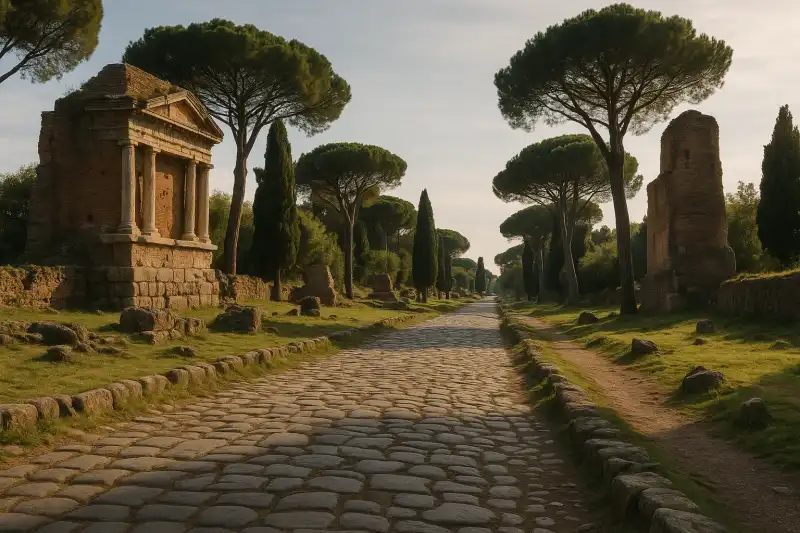
Appian Way Rome Guide 2026
RomanPlan a smart visit to the Appian Way with route choices, catacomb logistics, bike-vs-walk strategy, ...
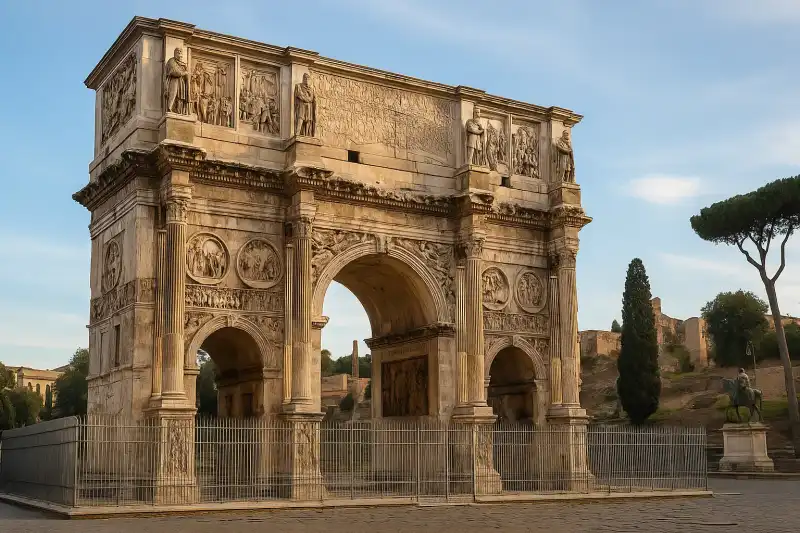
Arch of Constantine Rome: Triumph Over Maxentius Guide
Roman EmpireThe Arch of Constantine commemorates Constantine's 312 CE victory. Spolia details, best photo angles...
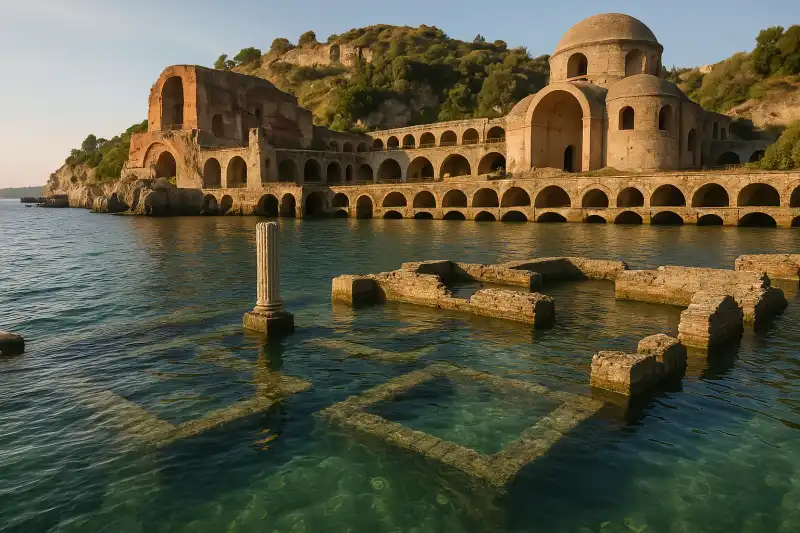
Baia Archaeological Park Guide 2026: Underwater Ruins, Thermal History, and Smart Visit Planning
RomanPlan a focused visit to Baia Archaeological Park near Naples with route strategy, what to prioritize...