Quick Info
At a glance
In Egypt, the Temple of Montu offers a quieter and often overlooked window into the sacred world of ancient Thebes. While many travelers arrive in Luxor with their attention fixed on the great hypostyle halls of Karnak or the royal tombs across the Nile, this sanctuary invites a slower kind of discovery. Dedicated to Montu, the falcon-headed god of war and kingship, the temple stands within the northern religious zone linked to Karnak and preserves the memory of a deity who once embodied the military power of Theban rulers. The setting is not always dramatic in the same way as Egypt’s more monumental showpieces, yet that is part of its appeal: the Temple of Montu feels like a place where the layers of history have not been polished into a simple postcard image.
For visitors interested in how ancient Egyptian religion really worked across centuries, the site is deeply rewarding. Montu was one of the oldest gods of the Theban region, predating the rise of Amun to supreme prominence. His temple reflects shifts in political authority, sacred geography, and royal ideology from the Middle Kingdom onward. Today, a visit here is less about theatrical reconstruction and more about reading traces in stone, enclosure walls, ruined gateways, and the relationship of the precinct to the wider ritual landscape of Luxor. The result is a destination that feels intimate, scholarly, and atmospheric all at once, especially for travelers who enjoy seeing how Egypt’s famous monuments fit into a larger and more complex ancient world.
History
Early Theban Cult and the Rise of Montu
Before Amun became the dominant god of Thebes, Montu held a major place in local religious life. He was associated with warfare, victorious kingship, solar power, and masculine energy, and he was often depicted as a falcon-headed deity crowned with plumes and the sun disk. In the early development of Theban religion, Montu’s cult was important not only within the city itself but also across a network of related sanctuaries in the surrounding region. The Temple of Montu formed part of that religious system, linking divine power with the legitimacy of rulers who sought military success and cosmic order.
The earliest phases of the sanctuary likely belong to the Middle Kingdom, when Thebes became increasingly important as a political center. During this era, kings promoted local gods as part of broader state-building projects, and Montu’s warlike character made him an ideal divine patron. Although much of the earliest fabric has been lost or buried beneath later construction, inscriptions and architectural history suggest that the precinct had sacred significance long before the more visible later remains took shape.
New Kingdom Expansion and Shifting Priorities
As Egypt entered the New Kingdom, Thebes grew into one of the greatest religious capitals of the ancient world. This was the age of imperial expansion, massive temple construction, and royal patronage on an enormous scale. Montu remained respected, especially as a god of military prowess, but the cult of Amun rose to overwhelming prominence. Karnak, primarily associated with Amun, became the monumental heart of this new religious order.
Even so, the Temple of Montu was not abandoned. Instead, it continued within the broader ceremonial landscape of Thebes, preserving the memory of older local traditions while adapting to changing political realities. Some New Kingdom pharaohs, especially those eager to emphasize conquest and royal strength, still honored Montu. The god’s symbolism aligned well with the image of the victorious king, and his sanctuary retained prestige even if it no longer occupied the leading place it once had.
Architectural additions during this period likely renewed or embellished earlier structures. Like many Egyptian temples, the site probably developed in phases rather than according to a single master plan. Walls, courts, gateways, and subsidiary chapels could be expanded, rebuilt, or re-inscribed by successive rulers, each leaving a mark while also claiming continuity with the sacred past.
Late Period and Ptolemaic Rebuilding
Many of the visible remains associated with the Temple of Montu come from later periods, especially the Late Period and the Ptolemaic era. This pattern is common in Egypt, where ancient sacred sites were repeatedly renewed by rulers seeking legitimacy through restoration and temple building. By reviving venerable cult places, these kings connected themselves to the authority of the pharaohs who came before them.
In this phase, the precinct saw significant rebuilding, enclosure works, and the reorganization of sacred space. The architecture reflected both traditional Egyptian forms and the practical realities of maintaining an old sanctuary within a shifting political world. The Ptolemies, Greek rulers of Egypt after Alexander the Great, were particularly active in temple construction and restoration across the country. They understood the political value of Egyptian religion and invested heavily in temples to secure local support and present themselves as proper pharaohs.
At the Temple of Montu, later rebuilding helped preserve the cult center even as the wider religious landscape evolved. The sanctuary’s survival into these periods demonstrates that Montu still mattered, not only as a theological figure but as part of a deeply rooted regional tradition.
Roman Era, Decline, and Modern Rediscovery
Under Roman rule, Egyptian temples continued to function for a time, though changing administration, economics, and religious patterns gradually weakened older cult institutions. Like many sanctuaries in Egypt, the Temple of Montu eventually declined as formal temple rituals faded. Stone was sometimes reused, mudbrick structures eroded, and once-sacred spaces became quieter fragments within a changing inhabited landscape.
Modern archaeological interest in Thebes and Karnak brought renewed attention to the precinct. Scholars studying the northern reaches of Karnak recognized the importance of Montu’s sanctuary for understanding the religious geography of ancient Thebes. Excavation, mapping, and epigraphic work have helped reconstruct the temple’s chronology and its relationship to nearby sacred enclosures. Although the site does not always receive the same public attention as better-preserved monuments, its historical value is considerable. It reveals an older layer of Theban identity and reminds visitors that Egypt’s religious history was never centered on a single god alone.
Key Features
The Temple of Montu is best appreciated not as one isolated building but as a sacred precinct with a distinct character inside the wider Theban ritual landscape. One of its most striking qualities is precisely this sense of placement. Set in the northern part of the Karnak complex, it feels connected to the monumental world of great pylons and processional avenues while also standing slightly apart from the busiest visitor routes. That position helps modern travelers imagine ancient Thebes as a city of multiple temples, deities, priesthoods, and ceremonial zones rather than a single unified monument.
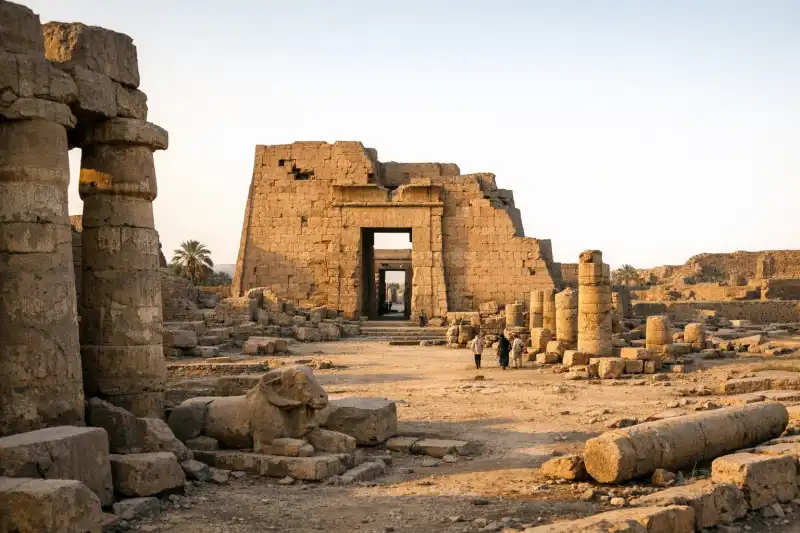
The surviving architectural remains include portions of enclosure walls, gateways, and temple structures that reflect later rebuilding phases. Even where damage or loss is extensive, the layout still communicates purpose. Egyptian temples were carefully ordered spaces, moving from outer courts toward more restricted and sacred interiors. At the Temple of Montu, this logic survives in fragments, allowing visitors to read the site through orientation, scale, and access. The ruins may appear modest beside the grandest monuments of Luxor, but they reward attention because they preserve the anatomy of a working sanctuary dedicated to a specific divine identity.
Another important feature is the religious meaning embodied in the temple’s dedication. Montu was no ordinary local deity. He represented martial power, energy, and royal victory, and his cult had long-standing ties to Theban kingship. This gives the site a different emotional tone from temples focused primarily on fertility, healing, or cosmic regeneration. The symbolism of Montu is forceful and political. He stands for the king as conqueror, protector, and defender of order. In periods when Egypt sought to project power, a god like Montu carried special weight. Visiting his temple adds depth to any understanding of ancient Egyptian statecraft and sacred ideology.
The precinct is also valuable because it preserves evidence of continuity across time. Temples in Egypt were rarely static. They grew, decayed, were renewed, and were reinterpreted by later generations. At Montu’s sanctuary, these accumulated phases are part of the experience. The site reflects the Middle Kingdom origins of the cult, New Kingdom reverence for older traditions, and extensive Late Period and Ptolemaic rebuilding. That layering is one of its greatest features. Rather than presenting one frozen moment, the temple reveals how sacred places endured by changing.
For architecture enthusiasts, the relationship between stone construction and enclosure planning is especially interesting. Egyptian temple precincts were not simply freestanding shrines; they were bounded, managed ritual environments. The enclosing walls defined sacred territory, directed movement, and separated temple life from the outside world. Even in ruined form, such boundaries shape the visitor’s experience. They suggest the once-controlled access of priests, offerings, processions, and festival activity. You are not just looking at leftover walls; you are standing inside what was once an active institution with economic, ceremonial, and political roles.
The atmosphere of the site is another key reason to visit. Because the Temple of Montu is less famous than central Karnak, it often feels more reflective. There is room to think about the practical realities of archaeology, the incomplete survival of monuments, and the way ancient cities are reconstructed from fragments. This quieter setting can make the experience more powerful, especially for travelers already familiar with Egypt’s headline attractions. Here, the absence of crowds becomes part of the interpretation. You notice alignments, masonry, weathering, and the relationship between open sky and ruined stone.
Finally, the temple’s significance lies in how it expands the story of Luxor. Many visitors leave Thebes with vivid memories of Amun, Hatshepsut, Ramesses II, and Tutankhamun. The Temple of Montu introduces another strand: the old war god whose cult speaks to a deeper and sometimes less visible history of the region. In that sense, the site’s greatest feature may be intellectual rather than visual. It changes the way you understand the sacred map of ancient Egypt.
Getting There
The Temple of Montu is reached most easily from Luxor, the modern city that serves as the main base for exploring ancient Thebes. If you are already visiting the Karnak area, the temple precinct is a logical addition to an East Bank itinerary. Most travelers arrive in Luxor by domestic flight from Cairo, with one-way fares often ranging from about E£2,000 to E£4,500 depending on season and booking time, or by overnight train, where seats and sleeper options can vary from roughly E£300 for basic tickets to over E£2,000 for sleeper cabins.
Within Luxor, taxis and app-based rides are the simplest option. A short ride from central Luxor to the Karnak zone usually costs around E£80 to E£200 depending on distance, negotiation, and time of day. Horse carriages may still be offered in tourist areas, though fares vary widely and should be agreed in advance. Private guides and drivers are common and can be especially useful if you want to include lesser-visited parts of the temple landscape, where historical context matters as much as the ruins themselves.
If you are staying on the West Bank, crossing the Nile by local ferry is inexpensive, typically around E£10 to E£20 per person, followed by a taxi to the site. Walking is possible around central Luxor and Karnak in cooler months, but summer heat makes this far less comfortable. Always check current site access before setting out, as some precinct areas within the wider Karnak complex may have restricted or changing visitor arrangements.
When to Visit
The best time to visit the Temple of Montu is from October through April, when Luxor’s weather is generally sunny but much more manageable than in high summer. Daytime temperatures in winter are often pleasant for walking, photography, and lingering at open-air ruins. Early morning is especially rewarding. The light is softer, the atmosphere calmer, and you can explore before the strongest heat develops. Late afternoon can also be good, though some sites close before sunset, so timing matters.
From May through September, conditions become significantly hotter, with midday temperatures often turning archaeological visits into endurance exercises rather than enjoyable exploration. If you travel in summer, plan to arrive as close to opening time as possible, carry plenty of water, wear a hat, and keep expectations realistic. The Temple of Montu is not a heavily shaded destination, and the stone surfaces and open ground can intensify the heat.
Seasonality also affects crowd levels. Luxor is busiest during the cooler months, especially around Christmas, New Year, and major holiday periods. However, because the Temple of Montu is less visited than the main Karnak route, it can still feel comparatively peaceful even in peak season. For travelers who value quiet more than absolute weather perfection, late October, November, February, and March often provide the best balance of mild climate and comfortable sightseeing. Dusty days can occur at any time, so sunglasses and a light scarf are useful additions to your day bag.
| Quick Facts | Details |
|---|---|
| Location | Northern Karnak area, Luxor Governorate, Egypt |
| Dedication | Montu, the falcon-headed god of war and royal power |
| Cultural Context | Ancient Thebes, Upper Egypt |
| Main Periods | Middle Kingdom origins with Late Period, Ptolemaic, and Roman phases |
| Best Base | Luxor |
| Typical Visit Length | 30–60 minutes, or longer with a specialist guide |
| Best Time to Go | October to April |
| Best For | Ancient Egypt enthusiasts, repeat Luxor visitors, temple architecture fans |
| Access Tip | Check current entry routes and whether the precinct is open as part of the wider Karnak visit |
The Temple of Montu may not be the first monument travelers think of when planning a trip to Egypt, but that is precisely why it deserves attention. It belongs to the wider Theban world yet preserves a more focused and less crowded story, one centered on a god whose identity shaped royal language of warfare, protection, and triumph. For visitors willing to look beyond the obvious highlights, the site offers a richer understanding of how ancient Egyptian religion functioned across time, with old cults surviving beside newer powers and sacred spaces constantly rebuilt to meet changing political needs.
In practical terms, the temple works best as part of a broader Luxor journey. In intellectual terms, it can become one of the most memorable stops you make. It reminds you that Egypt’s ancient landscape was never made of isolated masterpieces alone. It was a living network of shrines, processions, priesthoods, and local traditions, all layered together over centuries. The Temple of Montu captures that complexity in a form that is modest in scale but large in significance, making it an excellent destination for thoughtful travelers who want more from Luxor than just its greatest hits.
Guided tours: worth it?
Self-guided works here, but a guide can add real value if you want the ruins explained as a living place rather than just a sequence of monuments.
Best for
- First-time visitors who want context, not just photos
- Short visits where a planned route saves time
When to go self-guided
Go independently if you prefer setting your own pace, reading as you go, and checking official hours or ticket rules directly before you arrive.
What I’d avoid
Skip paid tours that bundle unrelated stops you do not actually want. The best option should either save meaningful planning time or add historical context you would miss on your own.
Luxor Ancient Temples Tours
Useful when: you want to compare guided formats before deciding
North Karnak and Theban Sites
Useful when: you want to compare guided formats before deciding
Luxor East Bank Private Tour
Useful when: you want flexible timing or a private guide
Some tour links are affiliate links, which may earn Ancient Travel a small commission at no extra cost to you. I try to surface options that make practical sense for the site—not just anything bookable.
Frequently Asked Questions
What is the Temple of Montu?
The Temple of Montu is an ancient Egyptian sanctuary dedicated to Montu, a falcon-headed god associated with war, royal strength, and victory, and it was part of the wider sacred landscape of Thebes.
Where is the Temple of Montu located?
It is located in the Luxor region of Upper Egypt, in the northern part of the Karnak religious area associated with ancient Thebes.
Can you visit the Temple of Montu when touring Karnak?
In many cases the Montu precinct is less visited and may not be included in every standard Karnak route, so it is best to check current site access and ask for a guide or private tour that specifically includes it.
How much time should I allow for a visit?
Most travelers interested in the Temple of Montu itself can spend 30 to 60 minutes, though history enthusiasts often combine it with a longer Karnak and Luxor itinerary lasting several hours.
What makes the Temple of Montu important?
Its importance lies in its connection to Montu, one of Thebes' oldest major deities, and in the way the sanctuary preserves evidence of changing religious and royal priorities across many centuries of Egyptian history.
Is the Temple of Montu suitable for independent travelers?
Yes, but independent travelers should confirm current access conditions in Luxor and may benefit from hiring a local guide because the site's history and layout are easier to appreciate with expert context.
Nearby Ancient Sites
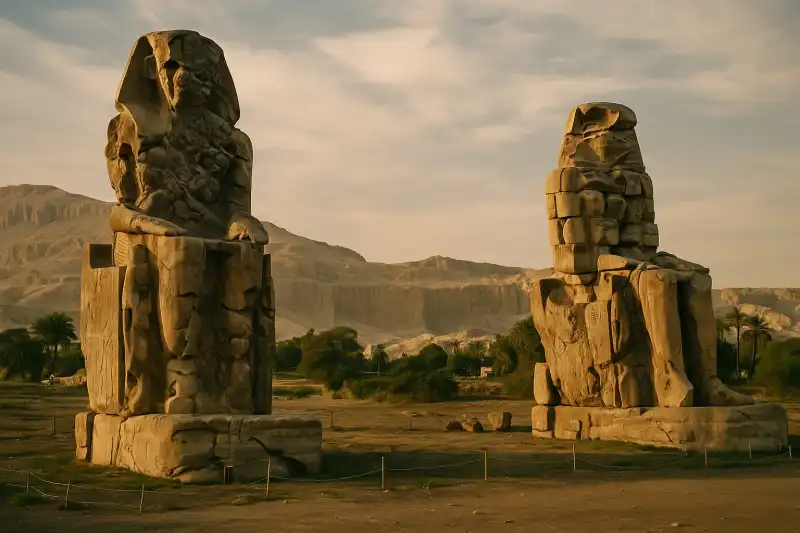
Colossi of Memnon
Ancient Egypt (New Kingdom)Twin colossal statues of Pharaoh Amenhotep III guarding the Theban necropolis on Luxor's West Bank, ...
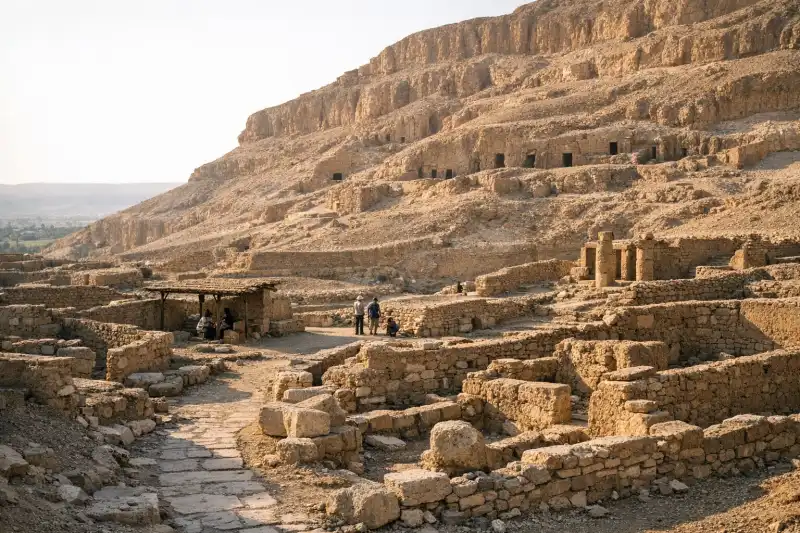
Deir el-Medina
Deir el-Medina is an ancient Egyptian workers’ village near Luxor, renowned for its remarkably prese...
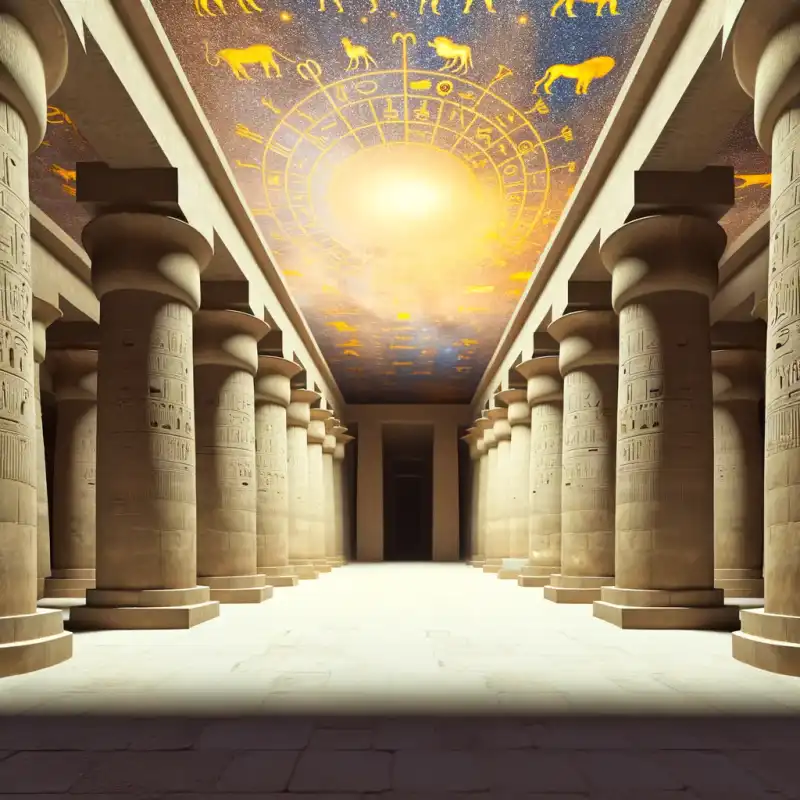
Dendera Temple Complex Egypt Guide 2026: Temple of Hathor & Zodiac Ceiling
Ptolemaic-RomanExplore Dendera's magnificent Temple of Hathor near Luxor. Star-mapped zodiac ceiling, Ptolemaic arc...
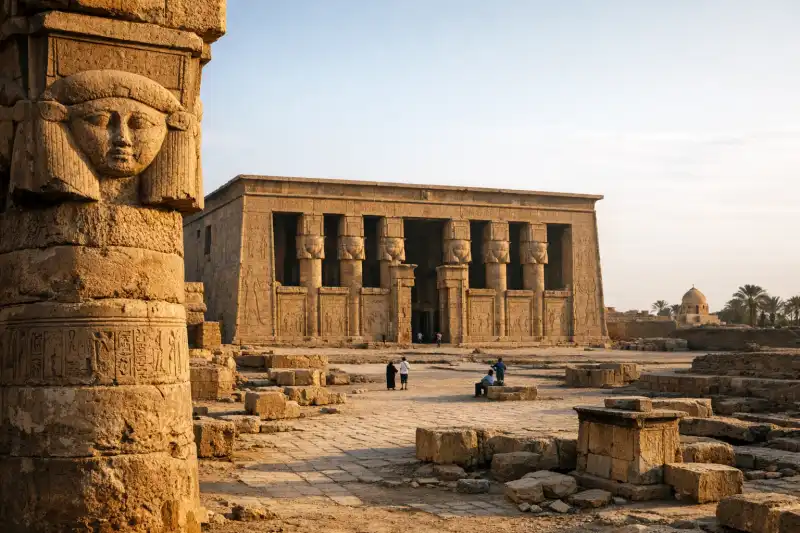
Dendera Temple Complex
The Dendera Temple Complex in Egypt is a remarkably preserved ancient site renowned for its grand Te...