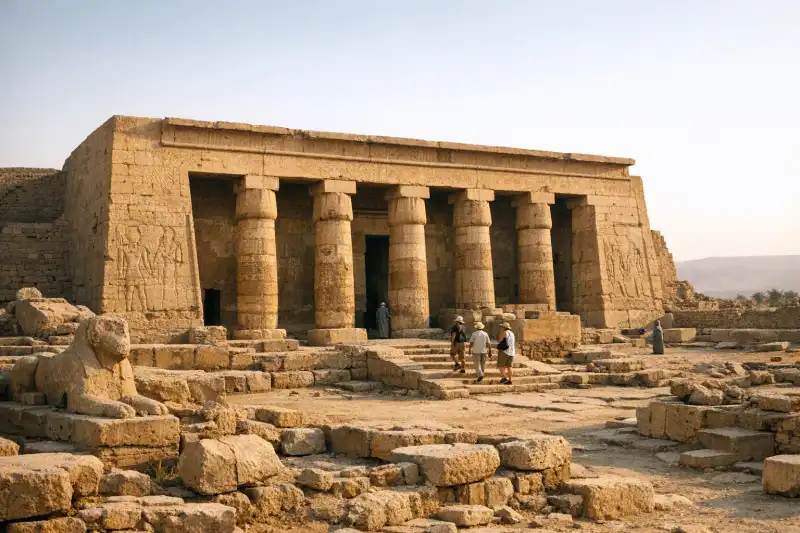
Quick Info
At a glance
In Upper Egypt, the Temple of Osiris (Abydos) stands in one of the most spiritually charged landscapes in Egypt, where kings, priests, and pilgrims once came to honor the lord of the underworld. Even before you step into its courts and roofed halls, Abydos feels different from many Egyptian sites: quieter, more remote, and heavier with memory. This was not simply a monumental temple built to impress. It was a sacred destination, a place where the boundary between the human world and the divine realm of Osiris seemed especially thin.
For ancient Egyptians, Abydos was among the holiest places in the land. To be buried here, commemorated here, or even symbolically linked to this sacred ground was to participate in the promise of rebirth. The temple most visitors see today is primarily the work of Seti I and his son Ramesses II, yet the wider sacred landscape is far older, reaching back to Egypt’s earliest dynasties. Reliefs remain crisp in many chambers, colors linger in protected spaces, and the site’s famous inscriptions give it unusual historical importance as well as religious depth.
Modern travelers often arrive on a long drive from Luxor, and that approach adds to the experience. The temple rises from an agricultural plain rather than a dense tourist zone, preserving something of the solemn isolation that once defined pilgrimage here. To walk through Abydos is to encounter not only extraordinary stonework, but a sacred idea that endured for centuries: that death could be transformed into renewal through the power of Osiris.
History
Early Abydos and the sacred landscape
Long before the standing temple took shape, Abydos was already a place of profound importance. In the Early Dynastic period, some of Egypt’s first kings were buried in the desert necropolis nearby at Umm el-Qa’ab. These royal tombs helped establish Abydos as a landscape tied to origins, kingship, and the afterlife. Over time, one tomb in particular came to be associated with Osiris, the god who was killed, restored, and reborn. That identification transformed Abydos from a royal burial ground into one of Egypt’s central pilgrimage destinations.
By the Middle Kingdom, the cult of Osiris had become deeply rooted here. Egyptians who could not be buried at Abydos still wanted a symbolic presence at the site, so they erected stelae, chapels, and commemorative monuments. To have one’s name connected to Abydos was to hope for participation in the mysteries of death and resurrection. This gradual accumulation of monuments made the area not just a temple site, but a ritual landscape where memory, funerary belief, and devotion converged.
Seti I and the great temple
The main surviving temple associated with Osiris at Abydos dates largely to the reign of Seti I in the 13th century BCE, during the New Kingdom. Seti I chose to build a temple here that was both politically significant and deeply traditional. It honored major deities including Osiris, Isis, Horus, Amun-Ra, Ra-Horakhty, and Ptah, but its setting and religious atmosphere tied the monument especially to the cult of Osiris.
Architecturally, the temple is distinctive. Rather than following a simple linear plan, it unfolds through courts, hypostyle halls, sanctuaries, and side chambers in a more complex arrangement. Seti’s artisans produced some of the finest raised relief carving in Egypt. Their work is elegant, balanced, and remarkably detailed, preserving scenes of offering, divine interaction, royal legitimacy, and ritual performance.
One of the temple’s most historically famous elements is the Abydos King List, an inscription naming many earlier pharaohs. More than decoration, it was an act of royal memory. By honoring the legitimate rulers of the past, Seti positioned himself within a sacred and political sequence of kingship. For modern historians, the list became invaluable in reconstructing Egyptian chronology.
Ramesses II and later completion
Seti I died before the entire temple complex was finished, and his son Ramesses II completed important sections. As at many Egyptian monuments, stylistic differences can be seen between father and son. Seti’s reliefs are often finer and more delicately carved, while Ramesses’ additions tend to be bolder and more standardized. Even so, Ramesses helped ensure that Abydos remained an active and monumental center of worship.
Behind the main temple lies the mysterious Osireion, a separate and unusual structure long associated with Osiris’s tomb symbolism. Probably begun by Seti I, it appears architecturally archaizing, with massive granite blocks and a central island surrounded by water channels in its original conception. Whether understood as a symbolic tomb, cenotaph, or ritual monument, the Osireion intensified Abydos’s association with death, regeneration, and cosmic renewal.
Pilgrimage, decline, and rediscovery
For centuries, Abydos continued to attract worshippers. Annual processions linked temple ritual with the sacred geography beyond the built sanctuary. The story of Osiris was not merely recited here; it was enacted across the landscape. Pilgrims participated in ceremonies, commemorated the god, and sought blessings for themselves and their dead.
As Egypt’s religious life changed in the late pharaonic, Greco-Roman, and later periods, Abydos gradually lost its central role. Sand, neglect, and reuse took their toll. Yet the temple never disappeared entirely from memory. Modern archaeology and epigraphy brought Abydos back into broader historical awareness, revealing the exceptional quality of its reliefs and the importance of its inscriptions.
Today, the Temple of Osiris at Abydos remains one of the most intellectually rich and emotionally resonant sites in Egypt. It rewards visitors not only with beauty, but with a sense of continuity stretching from Egypt’s earliest kings to later generations who still looked to Abydos as a threshold between this life and the next.
Key Features
The first thing many visitors notice at Abydos is the atmosphere of preservation. Unlike some temples where exposed reliefs have weathered heavily, sections of this complex retain astonishingly sharp carving. Faces, garments, offering tables, hieroglyphs, and divine emblems can appear almost freshly cut in sheltered spaces. This clarity makes Abydos especially rewarding for travelers who want to appreciate Egyptian temple art beyond the monumental silhouette. Here, details matter.
The temple’s internal layout is one of its great distinctions. Rather than moving through a straightforward sequence into a single sanctuary, you pass through a layered arrangement of halls and chapels dedicated to multiple gods. The result feels intimate in some spaces and ceremonial in others. Columns support roofed areas that preserve shadow and coolness, and the filtered light can make relief scenes seem to emerge slowly from the stone. This is a temple best explored patiently, chamber by chamber.
Among the most celebrated features is the Abydos King List. Carved on a wall within the temple, it presents Seti I and the young Ramesses making offerings to a selected line of earlier rulers. For historians, this inscription is a key source for Egyptian royal succession. For visitors, it offers something more immediate too: a glimpse of how ancient Egyptians curated their own past. Not every ruler was included. The list was political memory shaped into ritual form, showing that history in ancient Egypt was inseparable from legitimacy and sacred order.
The chapels dedicated to Osiris and related deities carry the strongest emotional charge. Abydos was not merely a temple where Osiris happened to be honored; the entire site was anchored in his cult. Reliefs of offerings, resurrection symbolism, and divine ceremonies reinforce the temple’s function as a place tied to rebirth. Even travelers unfamiliar with the finer points of Egyptian religion often sense that this monument was meant to do more than praise a king. It was designed to align earthly rule with cosmic renewal.
Then there is the Osireion, set behind the main temple. Its mood is starkly different. Massive stone blocks, a lowered setting, and the suggestion of water and underworld symbolism make it feel older than it is, though much of that impression was intentional. The structure appears to evoke primeval creation and the tomb of Osiris, reinforcing the idea that Abydos was a point of passage between death and restored life. Depending on site conditions and access, visitors may not always be able to explore every part closely, but even seeing it from above adds depth to the experience.
Abydos also stands out because of what surrounds it. This is not an isolated monument but part of a vast sacred zone with tombs, processional routes, and older archaeological layers. Knowing that early pharaohs were buried nearby changes the way the temple feels. It becomes both a culmination and a continuation of ancient Egyptian beliefs about kingship and eternity. Seti I was building in dialogue with a place already ancient in his own time.
For travelers interested in artistic quality, historical evidence, and religious symbolism all at once, Abydos offers a rare concentration of strengths. It lacks the sheer scale of Karnak, but compensates with coherence and intimacy. It is one of the places in Egypt where the intellectual, spiritual, and visual dimensions of a site reinforce one another at every turn.
Getting There
The Temple of Osiris at Abydos is usually visited from Luxor, though it can also be reached from Sohag or as part of a longer Upper Egypt itinerary. For most international travelers, Luxor is the easiest base because of its hotels, guides, and regular transport options. By road, Abydos lies roughly 160 to 180 kilometers north of Luxor depending on your starting point, and the journey generally takes about 2.5 to 3.5 hours each way.
The most practical option is a private car or organized tour. A private day trip from Luxor to Abydos, often combined with Dendera, typically costs around $60 to $150 per person depending on vehicle type, guide inclusion, and group size. For travelers who want flexibility and historical interpretation, this is usually the best value. Hotel-arranged drivers may quote higher rates, especially for solo travelers.
Taxis for a full-day charter are possible, but prices vary widely. Expect approximately 3,000 to 5,500 EGP for a private round-trip car from Luxor, with higher costs if you request a licensed guide or multiple stops. Always confirm whether waiting time, fuel, tolls, and return transfer are included.
From Sohag, the journey is shorter and cheaper. Local taxi or hired car costs may range from 500 to 1,500 EGP depending on negotiation and vehicle type. Public transport exists in stages via minibus and local service vehicles, but it can be time-consuming and inconvenient for most visitors, especially non-Arabic speakers. If you are trying to combine Abydos with other temple sites in one day, prearranged transport is strongly recommended.
When to Visit
The best time to visit Abydos is from October through April, when temperatures across Upper Egypt are much more comfortable for walking and standing in exposed archaeological areas. In these cooler months, daytime temperatures are usually pleasant to warm rather than punishing, making it easier to appreciate the temple’s details without rushing for shade. Winter, especially December through February, offers the most comfortable conditions, though mornings can be cool and the site may see more tour traffic on peak travel days.
Spring and autumn are excellent compromise seasons. October, November, March, and early April often bring good light, manageable heat, and fewer crowds than the height of the winter tourism season. Because Abydos is farther from the main Nile cruise circuit than some better-known monuments, it rarely feels overcrowded in the same way as major temples in Luxor, but arriving early still improves the experience.
Summer, from roughly May through September, can be intensely hot. Midday temperatures commonly rise above 38°C, and long drives through Upper Egypt can feel exhausting. If you visit in summer, leave as early as possible, carry more water than you think you need, and wear a hat, sunscreen, and light but protective clothing. Relief viewing in roofed sections remains enjoyable, but exterior movement can be draining.
Time of day matters almost as much as season. Morning visits are generally best, especially if you are coming from Luxor. The light is softer, temperatures are lower, and you are more likely to experience the temple in relative quiet. Late afternoon can also be atmospheric if your schedule allows, but check return driving times carefully, particularly in winter when daylight fades earlier.
| Quick Facts | Details |
|---|---|
| Location | Abydos, Sohag Governorate, Egypt |
| Ancient Significance | Major cult center of Osiris and pilgrimage destination |
| Main Builder | Seti I |
| Later Additions | Ramesses II |
| Date | Primarily 13th century BCE |
| Civilization | Ancient Egyptian |
| Best Known For | Osiris cult, fine reliefs, and the Abydos King List |
| Nearest Major Tourist Base | Luxor |
| Recommended Visit Length | 1.5 to 3 hours |
| Best Season | October to April |
| Usual Visit Style | Private day trip, often combined with Dendera |
| Nearby Highlight | The Osireion behind the main temple |
Guided tours: worth it?
Self-guided works here, but a guide can add real value if you want the ruins explained as a living place rather than just a sequence of monuments.
Best for
- First-time visitors who want context, not just photos
- Short visits where a planned route saves time
When to go self-guided
Go independently if you prefer setting your own pace, reading as you go, and checking official hours or ticket rules directly before you arrive.
What I’d avoid
Skip paid tours that bundle unrelated stops you do not actually want. The best option should either save meaningful planning time or add historical context you would miss on your own.
Abydos and Dendera Day Tours
Useful when: you want to compare guided formats before deciding
Private Tour to Abydos from Luxor
Useful when: you want flexible timing or a private guide
Egypt Ancient Temples Tour
Useful when: you want to compare guided formats before deciding
Some tour links are affiliate links, which may earn Ancient Travel a small commission at no extra cost to you. I try to surface options that make practical sense for the site—not just anything bookable.
Frequently Asked Questions
Where is the Temple of Osiris at Abydos located?
The Temple of Osiris is located at Abydos in Sohag Governorate, Upper Egypt, north of Luxor and west of the Nile Valley.
Is the Temple of Osiris the same as the Temple of Seti I?
They are closely connected. Visitors usually refer to the main Abydos temple complex as the Temple of Seti I, while the site is deeply associated with Osiris and his cult.
How much time should I allow for visiting Abydos?
Most travelers spend 1.5 to 3 hours at Abydos, though combining it with Dendera usually turns it into a full-day excursion.
Can you visit Abydos on a day trip from Luxor?
Yes. Abydos is commonly visited on a private or small-group day trip from Luxor, often paired with Dendera.
What is Abydos most famous for?
Abydos is famous as one of the holiest centers of ancient Egypt, linked to Osiris, royal burials, and the beautifully preserved reliefs in the temple of Seti I.
Do I need a guide at the Temple of Osiris?
A guide is not mandatory, but it is highly recommended because much of Abydos’s significance comes from its religious symbolism, inscriptions, and layered history.
Nearby Ancient Sites
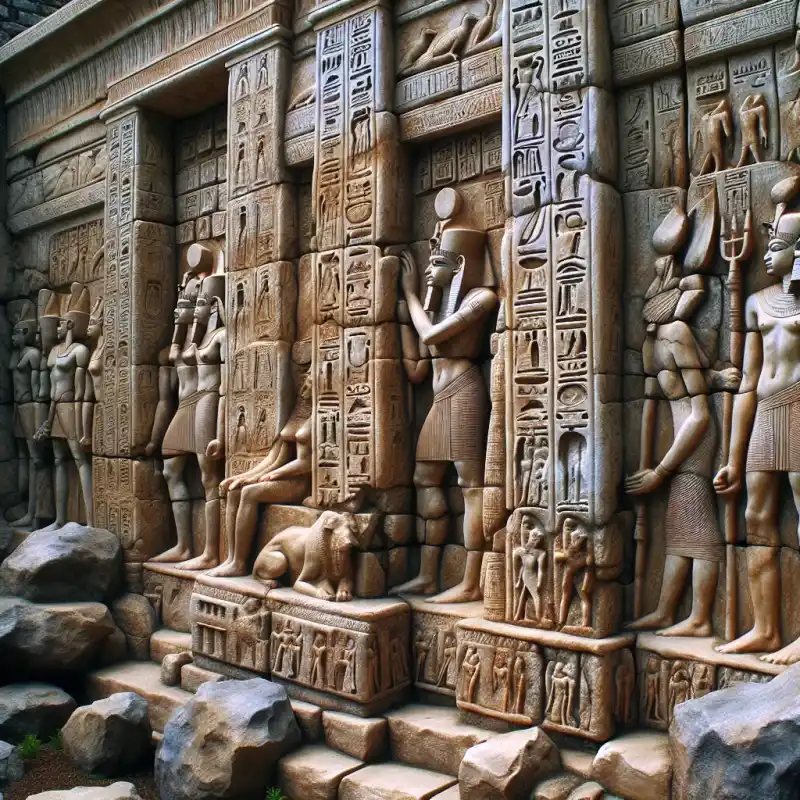
Abydos Temple Egypt Guide 2026: Temple of Seti I & King List
New Kingdom-PtolemaicAbydos Temple near Luxor: magnificent Temple of Seti I with war reliefs, ancient king list, and vibr...
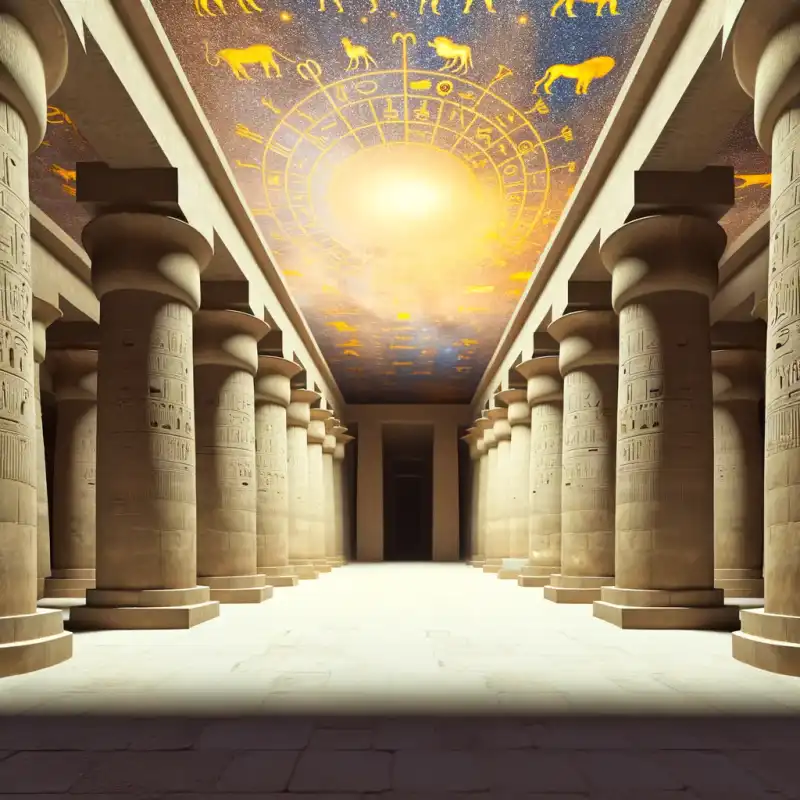
Dendera Temple Complex Egypt Guide 2026: Temple of Hathor & Zodiac Ceiling
Ptolemaic-RomanExplore Dendera's magnificent Temple of Hathor near Luxor. Star-mapped zodiac ceiling, Ptolemaic arc...
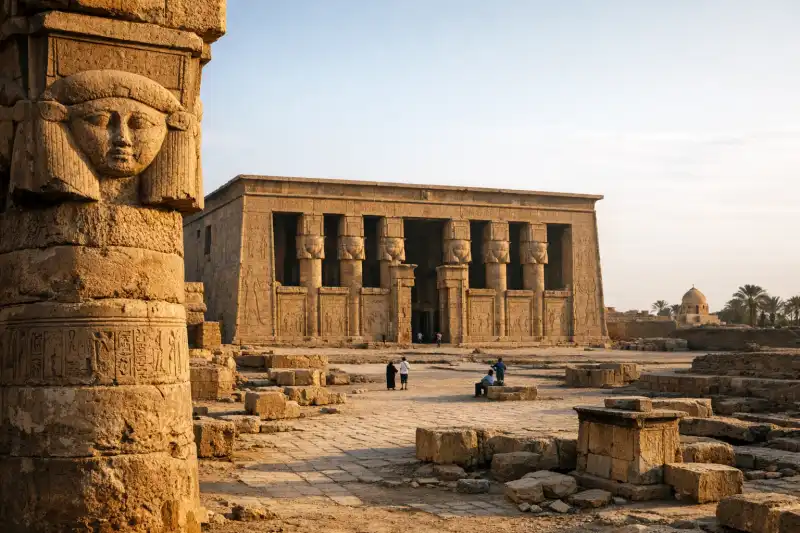
Dendera Temple Complex
The Dendera Temple Complex in Egypt is a remarkably preserved ancient site renowned for its grand Te...
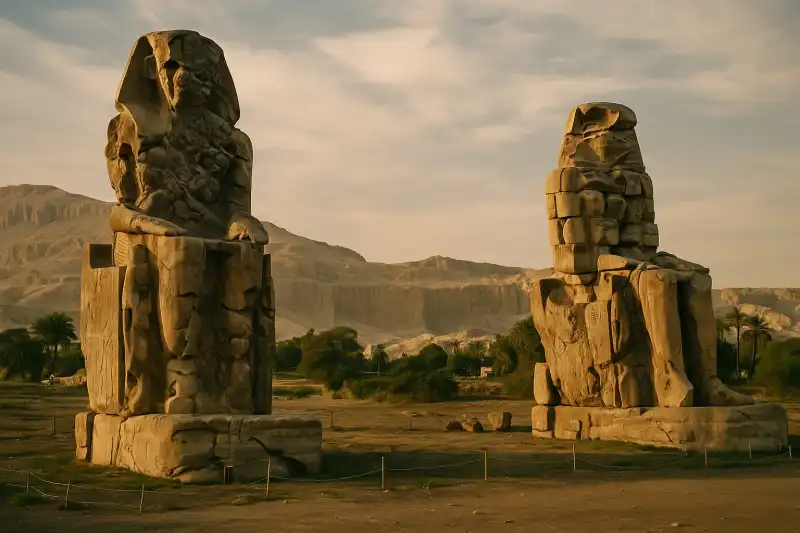
Colossi of Memnon
Ancient Egypt (New Kingdom)Twin colossal statues of Pharaoh Amenhotep III guarding the Theban necropolis on Luxor's West Bank, ...