Quick Info
At a glance
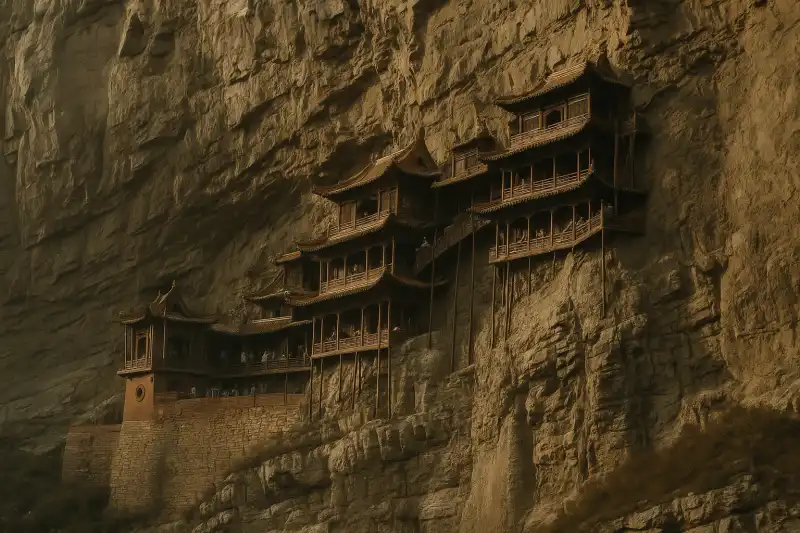
There are places in China so architecturally audacious that they seem to defy not just engineering logic but gravity itself. The Hanging Temple — known in Chinese as Xuankong Si (悬空寺), meaning literally “temple suspended in the void” — is exactly that kind of place. Clinging to a near-vertical cliff face on the western escarpment of Mount Hengshan in Shanxi Province, this remarkable monastery was first built around 491 CE during the Northern Wei Dynasty. More than fifteen centuries later, its lattice of wooden walkways, timber-framed halls, and miniature courtyards still juts out over a narrow mountain gorge, defying the elements and captivating everyone who rounds the bend in the road below and sees it for the first time. The Hanging Temple occupies a niche in the sandstone cliff roughly 50 meters above the valley floor — high enough to have escaped centuries of flooding in the Jinlong River gorge below, yet anchored into the rock with a precision that has outlasted dynasties, earthquakes, and the slow erosion of time. Few sites in all of China pack as much religious, architectural, and sensory impact into so concentrated a space.
History
Origins in the Northern Wei Dynasty
The Hanging Temple’s founding is conventionally dated to approximately 491 CE, during the reign of the Northern Wei Dynasty — one of the most artistically fertile eras in early Chinese Buddhist history. The same dynasty commissioned the great Yungang Grottoes near Datong, just 65 kilometers to the northwest, filling sandstone caverns with thousands of carved Buddha images in a burst of imperial piety. The Hanging Temple emerged from a parallel impulse: a desire to anchor sacred space in the landscape itself, to make the act of worship inseparable from the experience of nature at its most dramatic.
According to historical records and local tradition, a monk named Liao Ran is credited with the original construction. Working with a small community of laborers, he drove iron stakes and wooden beams deep into the cliff face, then built outward from those anchors to create the first modest halls. The location was chosen with spiritual care. Mount Hengshan is the Northern Sacred Mountain (Bei Yue) in the classical Chinese cosmology of the Five Sacred Mountains — a site already revered long before a single beam was hammered into its stone. To build a temple into its face was not merely an act of engineering but a declaration that the sacred mountain and the sacred community within it were one.
Expansion and the Three-Religion Vision
What makes the Hanging Temple singular even among China’s vast inventory of historic religious sites is its explicit synthesis of three distinct traditions: Buddhism, Taoism, and Confucianism. In most of Chinese history these three philosophical and religious systems coexisted, overlapped, and occasionally competed — but it was comparatively rare for a single complex to house all three on equal terms beneath the same roof. The Hanging Temple does exactly this. By the later dynasties, the complex had grown to forty halls and pavilions, their allocation deliberately balanced across the three traditions, and a dedicated Three Religions Hall had been added at the heart of the complex, where statues of Sakyamuni (the historical Buddha), Laozi (the founder of Taoism), and Confucius stand side by side — a theological statement in stone and gilt lacquer.
The Tang poet Li Bai, who visited during a period of imperial patronage for the site, was so awed that he carved two characters into the cliff: zhuang guan (壮观), meaning “magnificent sight.” Those two characters, now somewhat worn, can still be seen beside the main entrance approach.
Dynasties of Restoration
The temple was not static after its founding. Each major Chinese dynasty left its mark, expanding the complex, repairing flood or earthquake damage, and adding new halls. The Song Dynasty (960–1279 CE) saw significant rebuilding of the eastern wing. The Jin and Yuan periods brought new sculptural programs to the shrines. The Ming Dynasty (1368–1644 CE) undertook the most extensive structural overhaul in the temple’s history, reinforcing the beam-and-bracket system that carries the floors and rebuilding several pavilions that had deteriorated beyond repair. The Qing Dynasty continued this tradition of careful stewardship.
The most recent major restoration was completed in the late twentieth and early twenty-first centuries, with teams of engineers and traditional craftspeople working together to stabilize the cliff anchors and replace the most weathered timbers while preserving the historic fabric wherever possible. The result is a structure that reads as genuinely ancient — warped timbers, darkened lacquer, stones worn smooth by millions of pilgrims’ feet — while remaining structurally sound enough to receive the thousands of visitors who come each year.
Key Features
The Cliff Anchoring System
The engineering logic behind the Hanging Temple is more subtle than it first appears. From the valley road below, the complex looks as though it is balanced on a forest of slender wooden stilts projecting horizontally from the cliff. Those stilts are real — and they are load-bearing — but they are not the primary structural system. The essential support comes from horizontal oak beams driven directly into the sandstone, inserted into holes drilled or chiseled into the rock and wedged tight. The visible stilts below the walkways are largely secondary bracing, added to stabilize the structure against lateral forces and to provide a measure of psychological reassurance to visitors making their way along the narrow galleries. Craftspeople selected the insertion points to exploit naturally harder bands of stone within the cliff, giving the beams maximum grip. The result is a structure that has survived Shanxi’s seismic activity — the region sits near a major fault system — for over fifteen hundred years.
The Walkways and Galleries
Entering the complex from the approach path carved into the base of the cliff, visitors step onto a series of galleries that traverse the rock face horizontally, sometimes dipping into the cliff itself through doorways cut directly into the stone. The walkways are narrow — rarely more than a meter wide — with carved wooden balustrades on the outer edge and the rough cliff surface on the inner. The effect is immersive and slightly vertiginous: you are simultaneously inside a temple and standing on the face of a mountain, with the gorge dropping away below your feet and the overhang of rock curving above your head. The overhanging cliff is itself part of the temple’s survival strategy — it shields the wooden structures from direct rainfall, which is why the timber has endured as well as it has.
The Three Religions Hall and Sacred Statuary
The most famous interior space in the complex is the Three Religions Hall, a compact chamber where the three founding figures of China’s great philosophical traditions share equal billing on the same altar. The central placement of all three — without one elevated above the others — is an architectural argument for syncretic harmony that was quietly radical when first expressed and remains remarkable today. Throughout the rest of the complex, individual halls are dedicated to specific deities and figures from each tradition: the Jade Emperor and various Taoist immortals in the Taoist section, Guanyin and Sakyamuni in the Buddhist halls, and memorial shrines to figures associated with Confucian virtue in the Confucian wing. The statuary ranges in date from the Northern Wei originals — notably the bronze figures in the oldest halls, which share the elongated, serene aesthetic of the Yungang carvings — to Ming and Qing polychrome clay figures that are more naturalistic and warmly colored.
The Mountain Setting
Any account of the Hanging Temple that focuses only on the structure itself misses half the experience. Mount Hengshan rises sharply from the surrounding plateau, its cliffs streaked with iron-oxide reds and ochres, its ridgeline carrying a scatter of further Taoist and Buddhist structures connected by stone staircases cut into the rock. The gorge below the temple is narrow and dramatic; the Jinlong River runs through it in seasons of high water, and the sound of moving water mingles with incense smoke and the soft percussion of temple bells. On a clear autumn morning, with golden light catching the lacquered eaves and the valley air sharp with the scent of pine resin, the Hanging Temple lives up completely to every superlative that has been written about it.
Getting There
The Hanging Temple is located in Hunyuan County, approximately 65 kilometers southeast of Datong city center. Datong is the standard base for visiting the site and is well connected to the national rail network: high-speed trains from Beijing’s Zhangjiakou South station reach Datong North in approximately two hours, and slower conventional trains connect from Taiyuan in about three hours.
From Datong, several options reach the temple. Tourist buses depart from Datong’s long-distance bus station (云冈路汽车站) during the main tourist season (April through October), typically leaving in the morning and returning in the afternoon. Fares are roughly 25–40 CNY per person each way. Many visitors combine the journey with Yungang Grottoes, which lies on the same route out of the city; organized day tours bundling both sites are widely available through Datong hotels and online booking platforms for 200–400 CNY per person including transport and guide. Hiring a private taxi or car for the day costs approximately 300–450 CNY depending on the vehicle and whether Yungang is included; negotiate and confirm the rate and waiting time before departure. There is a small parking area near the base of the approach path for self-drivers arriving by private car.
Admission to the Hanging Temple itself costs 133 CNY per adult at the standard gate price (as of late 2025). Students and seniors receive discounts with valid documentation.
When to Visit
The temple is open year-round, but the experience varies considerably with the seasons. Late spring — particularly May and the first weeks of June — strikes an ideal balance: the weather is warm but not yet humid, wildflowers color the slopes above the gorge, and visitor numbers have not yet reached summer peak. The mountain air holds a clarity that makes the cliff colors exceptionally vivid in afternoon light.
September and October are equally rewarding and in some years even better. The summer crowds have thinned, temperatures on the cliff face are comfortable for the walk through the galleries, and the surrounding mountains take on autumnal golds and reds that frame the temple dramatically. Photographers consistently favor this window.
Summer (July and August) brings the heaviest visitor pressure. Chinese school holidays concentrate tens of thousands of tourists into the region, and the narrow walkways can become genuinely congested, with queues at the entrance to individual halls stretching back along the galleries. Early arrival — aiming to reach the site before 9:00 AM — significantly improves the experience in summer. Heavy rainfall can also temporarily close the walkways in this season.
Winter visits reward the patient traveler willing to dress warmly. Snow on the surrounding peaks and frost on the temple eaves create a landscape of quiet grandeur, and the complex is often nearly empty on weekday mornings. Temperatures in January regularly fall below –10°C (14°F) on the cliff face, so layering is essential.
| Quick Facts | |
|---|---|
| Location | Hunyuan County, Datong, Shanxi Province, China |
| Coordinates | 39.6678° N, 113.7289° E |
| Built | c. 491 CE (Northern Wei Dynasty) |
| Religions represented | Buddhism, Taoism, Confucianism |
| Number of halls | 40 halls and pavilions |
| Cliff height | ~50 m above valley floor |
| Admission | 133 CNY (standard adult, 2025) |
| Nearest city | Datong (~65 km northwest) |
| Nearest major transport | Datong North Railway Station |
| Opening hours | 8:00 AM – 6:00 PM (summer); 8:30 AM – 5:00 PM (winter) |
| Best season | May–June or September–October |
| UNESCO status | National Protected Monument (not independently inscribed) |
Guided tours: worth it?
Self-guided works here, but a guide can add real value if you want the ruins explained as a living place rather than just a sequence of monuments.
Best for
- First-time visitors who want context, not just photos
- Short visits where a planned route saves time
When to go self-guided
Go independently if you prefer setting your own pace, reading as you go, and checking official hours or ticket rules directly before you arrive.
What I’d avoid
Skip paid tours that bundle unrelated stops you do not actually want. The best option should either save meaningful planning time or add historical context you would miss on your own.
Hanging Temple & Mount Hengshan Day Tour from Datong
Useful when: transport or pickup logistics matter
Xuankong Temple Private Tour with Guide
Useful when: you want flexible timing or a private guide
Datong Highlights: Yungang Grottoes & Hanging Temple
Useful when: you want to compare guided formats before deciding
Some tour links are affiliate links, which may earn Ancient Travel a small commission at no extra cost to you. I try to surface options that make practical sense for the site—not just anything bookable.
Frequently Asked Questions
Where exactly is the Hanging Temple located?
The Hanging Temple (Xuankong Temple) is built into a cliff on Mount Hengshan in Hunyuan County, Datong, Shanxi Province, China — about 65 km southeast of Datong city center.
How do I get to the Hanging Temple from Datong?
The most common approach is to take a tourist bus or chartered taxi from Datong's central bus station. Buses run seasonally and take about 90 minutes each way. Taxis cost around 200–300 CNY for a round trip with waiting time. Many visitors combine the temple with nearby Yungang Grottoes on a single day trip.
How long should I plan for a visit?
Most visitors spend 1.5 to 2.5 hours at the temple complex itself. The walkways are narrow and progress is often slow due to crowds, especially at peak times. Combining the site with Yungang Grottoes makes a full-day itinerary.
Is the Hanging Temple safe to walk through?
The temple has been reinforced and restored multiple times and is considered structurally safe for visitors. The walkways are narrow — often less than a meter wide — with handrails. Anyone with a severe fear of heights may find the exposed galleries above the gorge challenging. Visitor numbers are managed on busy days.
Can you go inside the shrines and halls?
Yes, many of the 40 halls and pavilions are open to visitors. The Three Religions Hall, which uniquely houses statues of Buddha, Laozi, and Confucius side by side, is the centerpiece. Some chambers are small and only a few people can enter at a time, so patience is needed on busy days.
What is the best time of year to visit the Hanging Temple?
Late April through early June and September through mid-October offer the most comfortable temperatures and the clearest visibility of the cliff face. Summer (July–August) sees the heaviest crowds and occasional rain that can temporarily close the walkways. Winter is cold but quiet, and snow on the surrounding mountains creates dramatic scenery.
Does the Hanging Temple have UNESCO World Heritage status?
The Hanging Temple itself is not independently inscribed on the UNESCO World Heritage List, but it is a nationally protected monument and sits within the broader cultural landscape of Mount Hengshan, one of the Five Sacred Mountains of China. The nearby Yungang Grottoes, also reachable from Datong, do hold UNESCO inscription.
Nearby Ancient Sites
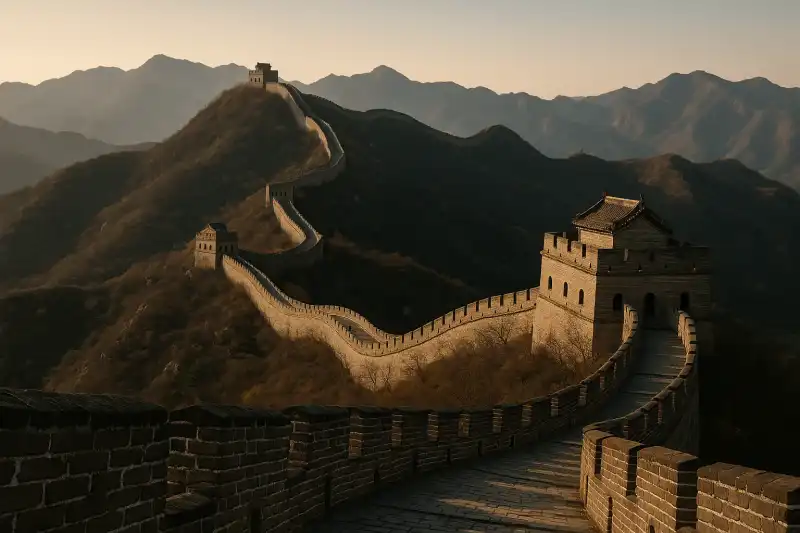
Great Wall of China Badaling Travel Guide 2026: Iconic Fortification
Chinese ImperialVisit Badaling, the most famous section of the Great Wall of China. Our guide covers tickets, cable ...
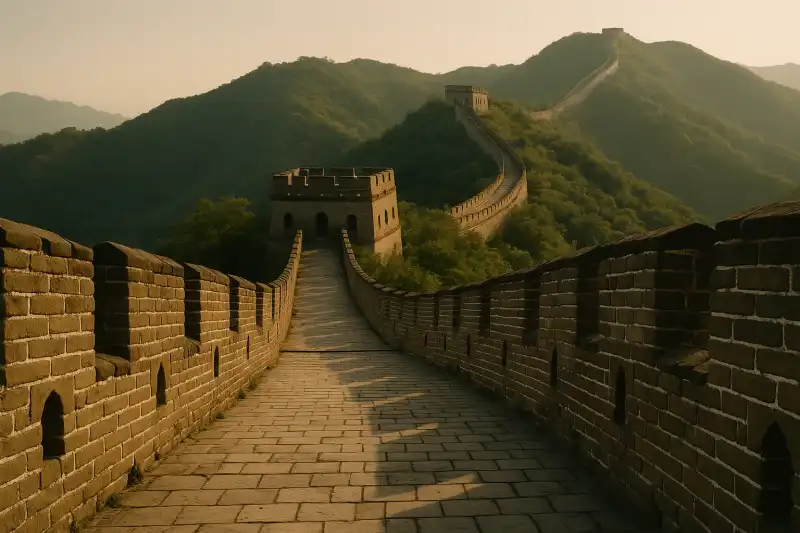
Great Wall of China (Mutianyu)
Explore Mutianyu — the Great Wall's most dramatic restored section, with 22 Ming-era watchtowers, mo...
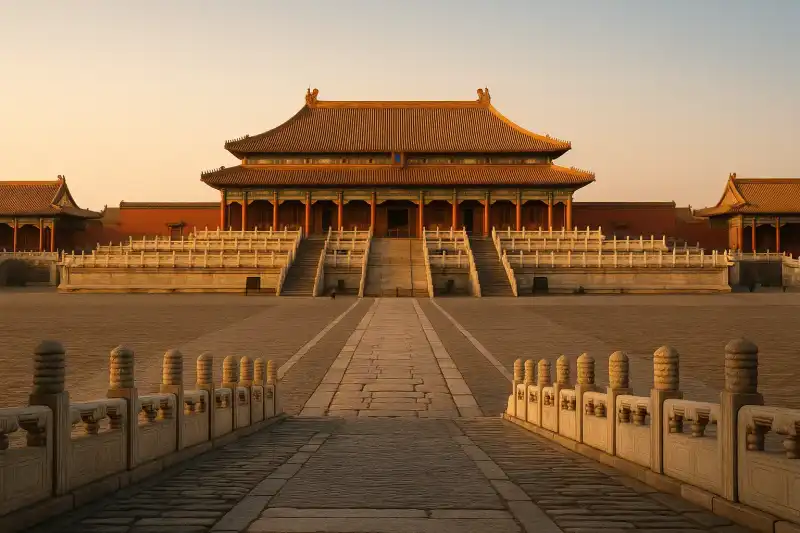
Forbidden City China Travel Guide 2026: Imperial Palace of Beijing
Chinese ImperialExplore the Forbidden City, China's imperial palace for 500 years. Discover the Hall of Supreme Harm...
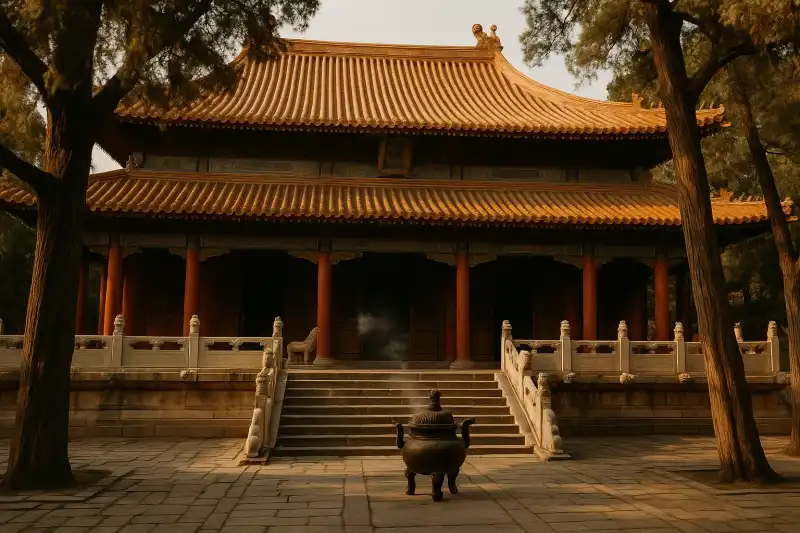
Confucius Temple (Qufu)
The ancient Temple of Confucius in Qufu, Shandong, is China's largest Confucian temple complex, a UN...