Quick Info
At a glance
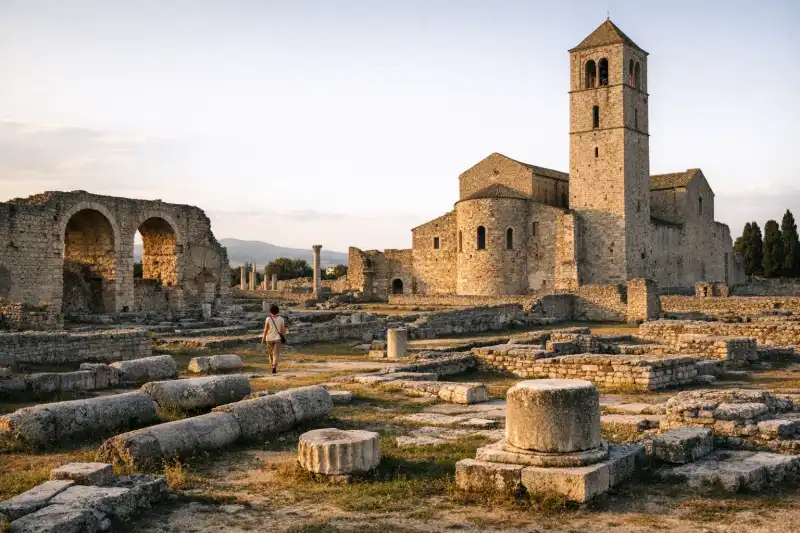
Venosa Archaeological Park in Italy sits quietly in the inland landscape of Basilicata, away from the country’s most crowded archaeological circuits yet rich with the deep time that makes southern Italy so compelling. Here, in and around the ancient settlement of Venusia, stone foundations, reused columns, Christian remains, and fragments of Roman urban life reveal a place that was never frozen in a single era. Instead, Venosa developed layer by layer: first as a Roman colony on a strategic route, then as a thriving provincial town, later as a center of Christian worship, and eventually as part of the medieval world that inherited and reshaped the classical past.
For travelers, this is part of the site’s special appeal. Venosa Archaeological Park is not a monumental ruin on the scale of Rome or Pompeii, but a more intimate landscape where history feels close to the ground. You walk among the outlines of streets, domestic and public structures, and sacred spaces that tell a long story of adaptation. The famous unfinished church of the Santissima Trinità nearby adds another dramatic architectural layer, while the surrounding town preserves a lived-in connection to antiquity rather than a museum-like separation from it. Visiting Venosa means stepping into a place where Roman administration, imperial culture, local religious life, and medieval memory all overlap. It rewards patient visitors who enjoy reading a site through its fragments, its setting, and the continuity between ancient ruins and the town that still surrounds them.
History
Roman foundation as Venusia
The story of Venosa Archaeological Park begins with ancient Venusia, a Roman colony founded in 291 BCE after Rome consolidated control over this part of southern Italy. Its position was strategically valuable. Located in the interior between Campania, Apulia, and Lucania, Venusia stood near important communication lines that connected the peninsula’s south to the wider Roman world. Colonies like this were not simply military outposts; they were instruments of Roman expansion, settlement, and cultural organization. Veterans and colonists helped anchor Roman authority, and over time such places developed into full urban centers.
Venusia became one of the most important Roman foundations in the region. Its wealth and status grew thanks to agriculture, trade, and its links to major roads, especially the broader network associated with the Via Appia. The poet Horace, one of Rome’s great literary voices, was born here in 65 BCE, and his connection alone signals the town’s cultural importance within the Roman world. Archaeological remains suggest a settlement with the expected features of a flourishing Roman municipality: baths, public buildings, residential areas, and spaces for entertainment and worship.
Imperial prosperity and urban development
During the late Republic and the imperial centuries, Venusia matured into a prosperous town integrated into Roman administrative and economic systems. As the empire stabilized and communication networks improved, settlements like Venusia benefited from the movement of people, goods, and ideas. The archaeological remains preserved in the park reflect this stage of development. Roman masonry, urban planning, and the traces of public architecture indicate a community that was not peripheral in a cultural sense, even if it was far from the capital.
This was the era in which the town’s built environment expanded and was regularly renewed. Bath complexes provided not only hygiene but social gathering space. Public monuments expressed civic identity. Residential quarters reflected changing tastes and economic fortunes. In many Roman towns, phases of rebuilding can be seen in the materials themselves, and Venosa is no exception. Stones were reused, structures altered, and older layouts adapted to new needs. The archaeological park captures this process rather than preserving a single idealized moment.
Christianity and late antique transformation
Like many towns across Italy, Venusia underwent major changes in late antiquity as Christianity took root and the Roman imperial order evolved. Pagan and civic spaces did not always vanish outright, but their role shifted. New religious buildings appeared, older ones were transformed, and sacred topography became increasingly important. The archaeological evidence at Venosa shows this transition clearly, making the site especially valuable for anyone interested in the passage from the classical world to Christian Europe.
Early Christian remains in and around the archaeological area point to a community adapting inherited Roman infrastructure to new devotional purposes. Burial practices changed, ecclesiastical buildings emerged, and ancient spaces gained fresh meaning. Rather than imagining a sudden break, it is more accurate to see Venosa as a town in gradual transformation. The Roman urban framework persisted, but it was reinterpreted by new social and religious priorities.
Medieval continuity and reuse
The medieval period did not erase the ancient city; it built on it. This is one of the defining qualities of Venosa. Stones from Roman monuments were reused in later structures. Sacred and civic memory remained attached to ancient locations. The nearby church complex of the Santissima Trinità, with its remarkable “Incompiuta,” or unfinished church, stands as the most visible sign of this medieval phase, but the broader archaeological landscape also reflects continuity rather than abandonment.
Norman influence in southern Italy added another important chapter. During the Middle Ages, Venosa became tied to the shifting political world of Lombards, Byzantines, and Normans, each contributing to the region’s layered identity. Ancient remains were not treated as isolated relics but as resources—material, symbolic, and practical. This long afterlife is part of what makes the archaeological park distinctive. Visitors are not simply looking at Roman ruins; they are seeing how Roman Venusia was remembered, altered, and absorbed into later centuries of Italian history.
Key Features
Venosa Archaeological Park is best appreciated as a layered urban landscape rather than a single monument. The remains spread across the area give visitors a sense of the ancient city’s texture: foundations of buildings, stretches of wall, fragments of paved surfaces, and the outlines of spaces that once organized everyday life. Unlike a site dominated by one spectacular structure, Venosa invites slow looking. You begin to notice how one era sits atop another, how Roman engineering underpins Christian worship, and how medieval builders reused ancient stone to make their own statements of continuity and power.
One of the most interesting aspects of the site is the evidence for Roman public life. Archaeological traces linked to baths and civic structures point to a settlement that enjoyed the amenities typical of a well-established Roman town. Even when only portions survive, they help reconstruct how the city functioned. Bath complexes, for instance, were social centers as much as practical facilities. Their remains suggest circulation, gathering, and the rhythms of daily life that connected citizens across class and profession. The surviving masonry, brickwork, and plan fragments allow visitors to imagine a place that was once full of movement and conversation.
Equally important are the early Christian layers. Venosa’s archaeological identity is not purely Roman, and this broadens its appeal. The remains associated with churches, burial areas, and later sacred reuse reveal how communities reshaped the inherited city in response to changing beliefs. These transitions are often visible in altered building plans, reused architectural pieces, and the proximity of Christian structures to older Roman remains. Such juxtapositions make the park especially rewarding for travelers interested in late antiquity, when Italy’s urban centers were negotiating a new religious and political reality.
The nearby Abbey and church complex of the Santissima Trinità deepens this experience, even if some visitors encounter it as part of the wider Venosa archaeological zone rather than a separate monument. The unfinished church known as the Incompiuta is one of southern Italy’s most atmospheric medieval structures. Its open arcades, incomplete walls, and incorporation of ancient spolia create a powerful visual dialogue between eras. Columns and carved elements from earlier Roman buildings reappear here, not hidden but openly embedded in a new sacred architecture. This blending of ancient and medieval material culture is one of Venosa’s most memorable sights.
Another key feature is the park’s manageable scale. For many travelers, large archaeological sites can feel overwhelming. Venosa offers something different: enough complexity to sustain a serious historical visit, but in a form that can still be absorbed in a half day. This encourages a more reflective pace. You can pause over inscriptions, observe construction techniques, and consider the relationship between the archaeological area and the living town without the pressure of crowds or long internal transit times.
The atmosphere also matters. Basilicata remains less visited than better-known Italian regions, and Venosa retains a strong sense of place. The surrounding landscape of rolling inland terrain, agricultural fields, and stone-built townscapes provides a fitting backdrop for the ruins. Light changes the site dramatically through the day, especially in the warmer months, when early morning and late afternoon can make the surviving stone glow. The visual impression is subtle rather than theatrical, but no less moving for that restraint.
For visitors with a literary interest, Venosa’s association with Horace adds yet another dimension. Although the archaeological park is not solely a literary pilgrimage site, the memory of the poet lends intellectual depth to the visit. This was not just any Roman colony; it was the birthplace of one of antiquity’s major writers. That connection can help anchor the ruins within the wider cultural world of the Roman Empire, reminding visitors that provincial towns were fully part of Rome’s artistic and political networks.
Getting There
Venosa Archaeological Park is located in the town of Venosa in Basilicata, in southern Italy’s interior. The easiest way to reach it is by car. From Matera, the drive usually takes around 1 hour 40 minutes to 2 hours, depending on route and traffic. From Bari, allow about 1 hour 30 minutes to 2 hours. From Potenza, travel time is typically around 1 hour 20 minutes. If you rent a car, expect daily rental prices from roughly €35 to €70, with fuel extra. Driving is the most practical option if you want flexibility to explore other inland sites and small towns.
Public transport is possible, though usually slower and less direct. Regional buses connect Venosa with nearby cities such as Potenza, Melfi, and sometimes Bari-area hubs, but schedules can be limited, especially on Sundays and holidays. One-way bus fares are often in the €4 to €12 range depending on distance. Travelers coming by train generally need to combine rail and bus, since Venosa is not on a major high-speed line. If you are arriving via Bari or Foggia, check regional connections in advance and build in extra time for transfers.
Taxis from larger transport nodes can be expensive but workable for small groups. A taxi from Melfi or a nearby station may cost roughly €30 to €60 depending on distance and time of day. Once in Venosa, the archaeological area is relatively easy to reach on foot from the town center. Comfortable shoes are essential, as surfaces can be uneven.
When to Visit
The best times to visit Venosa Archaeological Park are spring and early autumn, when temperatures are generally mild and the light is excellent for walking among the ruins. April to June is particularly pleasant, with green landscapes, blooming vegetation, and daytime conditions that are usually comfortable for extended exploration. September and October are similarly rewarding, especially for travelers who prefer fewer domestic holiday crowds and softer afternoon light.
Summer, especially July and August, can be very hot in inland Basilicata. Midday temperatures often make exposed archaeological areas tiring, so if you visit then, plan for an early morning start or a late-afternoon arrival. Bring water, sun protection, and a hat. The advantage of summer is long daylight and a lively atmosphere in town, but the heat can limit how long you want to remain outdoors.
Winter visits are possible and can be atmospheric, especially if you enjoy quieter historical sites. However, weather can be cooler, and opening schedules may be reduced. Rain can also make stone surfaces slippery. If you travel in the colder months, check official hours beforehand and dress in layers.
For photography, the shoulder seasons offer the best balance of light and comfort. Early morning is ideal if you want soft illumination and a peaceful setting. Late afternoon can also be beautiful, as warm light emphasizes the textures of the masonry and the relationship between the ruins and the surrounding town. If your interests include combining archaeology with local food and festivals, consider timing your trip with regional cultural events in Basilicata, while still avoiding the hottest central hours of the day.
| Quick Facts | Details |
|---|---|
| Location | Venosa, Basilicata, Italy |
| Ancient Name | Venusia |
| Founded | 291 BCE as a Roman colony |
| Main Periods | Roman, Late Antique, Early Christian, Medieval |
| Best For | Roman history, early Christian archaeology, quieter heritage travel |
| Suggested Visit Length | 1.5 to 3 hours |
| Closest Major Bases | Matera, Bari, Potenza |
| Best Seasons | Spring and early autumn |
| Access Style | Best reached by car; bus connections available |
| Notable Nearby Landmark | Santissima Trinità and the unfinished Incompiuta church |
Venosa Archaeological Park is one of those places that rewards travelers willing to look beyond Italy’s headline destinations. Its power lies not in overwhelming scale but in continuity. Roman colonial ambition, imperial urban life, Christian transformation, and medieval reuse all remain legible here, woven into a landscape that still feels local and grounded. For anyone interested in how ancient cities survived, changed, and were remembered over centuries, Venosa offers a thoughtful and deeply atmospheric visit. It is a site where fragments speak clearly, and where the story of Italy’s past unfolds not in a single chapter but across many connected lives.
Guided tours: worth it?
Self-guided works here, but a guide can add real value if you want the ruins explained as a living place rather than just a sequence of monuments.
Best for
- First-time visitors who want context, not just photos
- Short visits where a planned route saves time
When to go self-guided
Go independently if you prefer setting your own pace, reading as you go, and checking official hours or ticket rules directly before you arrive.
What I’d avoid
Skip paid tours that bundle unrelated stops you do not actually want. The best option should either save meaningful planning time or add historical context you would miss on your own.
Venosa archaeological park and Roman heritage tours
Useful when: you want to compare guided formats before deciding
Basilicata ancient sites and Venosa day tours
Useful when: you want to compare guided formats before deciding
Southern Italy Roman ruins tours from Matera
Useful when: transport or pickup logistics matter
Some tour links are affiliate links, which may earn Ancient Travel a small commission at no extra cost to you. I try to surface options that make practical sense for the site—not just anything bookable.
Frequently Asked Questions
What is Venosa Archaeological Park?
Venosa Archaeological Park is an archaeological area in Basilicata, Italy, preserving Roman, early Christian, and medieval remains linked to the ancient town of Venusia.
Where is Venosa Archaeological Park located?
The park is in Venosa in the Basilicata region of southern Italy, within the province of Potenza.
How much time should I allow for a visit?
Most visitors should allow 1.5 to 3 hours to explore the archaeological area, nearby church remains, and the associated museum spaces at a comfortable pace.
Can you visit Venosa Archaeological Park on a day trip?
Yes. Venosa can be visited as a day trip from Matera, Potenza, Bari, or other parts of Basilicata and Apulia, though having a car makes the journey easier.
What will I see at Venosa Archaeological Park?
Visitors can see Roman urban remains, ancient masonry, parts of an amphitheater and bath complex, early Christian structures, and layers of occupation extending into the medieval period.
Is Venosa Archaeological Park suitable for families?
Yes, the site is suitable for families interested in history, but surfaces can be uneven, so sturdy footwear and close supervision of children are recommended.
Nearby Ancient Sites
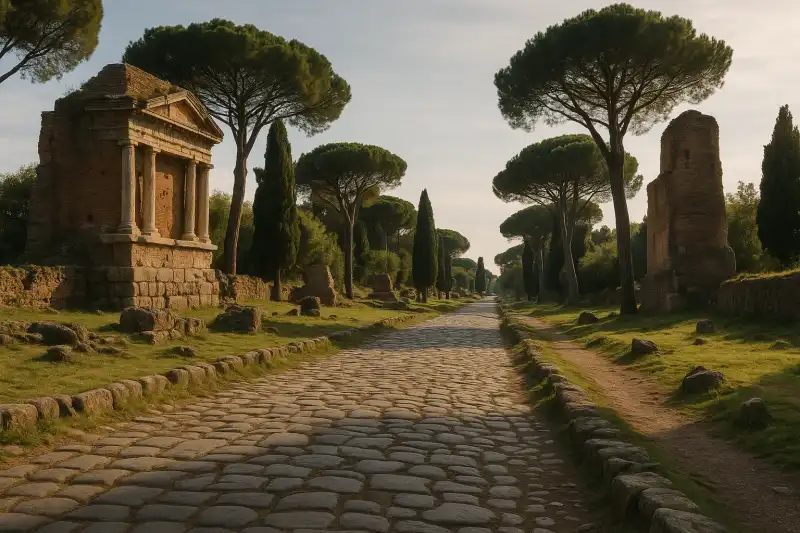
Appian Way Rome Guide 2026
RomanPlan a smart visit to the Appian Way with route choices, catacomb logistics, bike-vs-walk strategy, ...
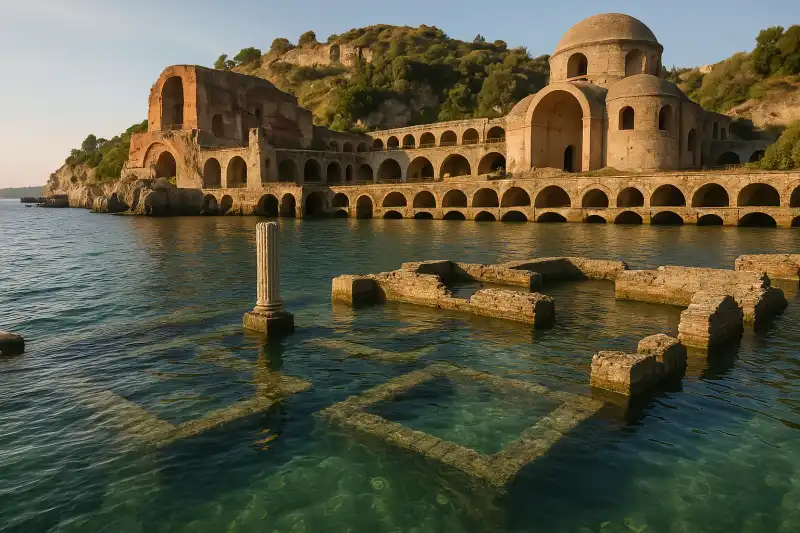
Baia Archaeological Park Guide 2026: Underwater Ruins, Thermal History, and Smart Visit Planning
RomanPlan a focused visit to Baia Archaeological Park near Naples with route strategy, what to prioritize...
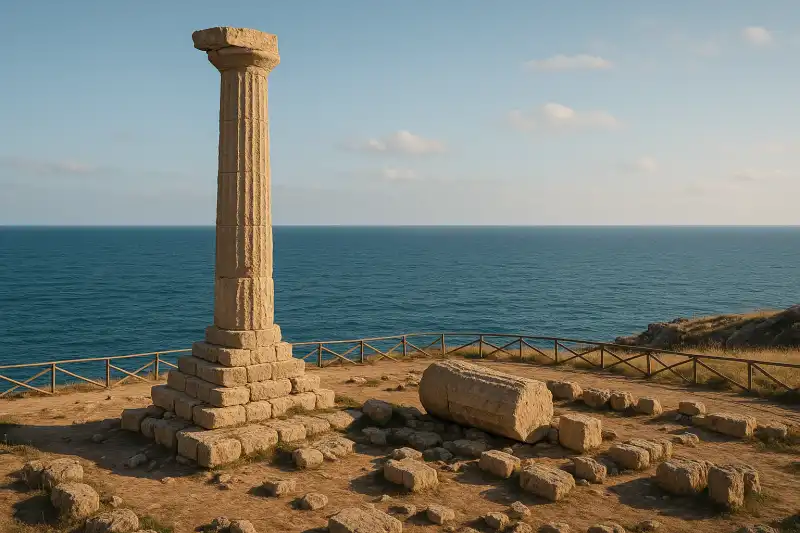
Capo Colonna Guide 2026: Calabria’s Coastal Temple Ruins
GreekVisit Capo Colonna with a practical plan: what remains to see, when to go, and how to pair this coas...