Quick Info
At a glance
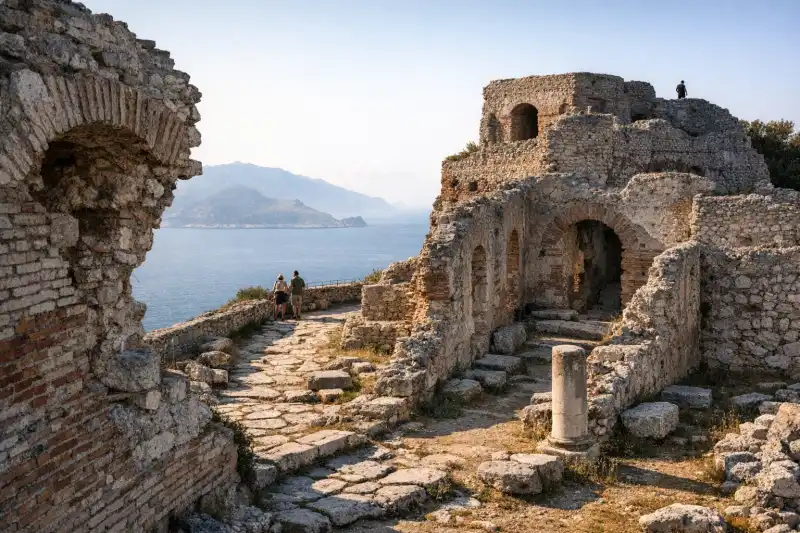
Villa Jovis (Capri) in Italy stands at the far eastern edge of the island like a statement of power carved into stone and sky. Reached by a winding uphill walk from Capri town, the ruins appear gradually: broken walls, vast terraces, cisterns, and lookout points suspended above a startling drop to the sea. Even before you understand its history, the setting explains why this place mattered. The palace occupies one of the most dramatic positions in the Bay of Naples, where the views stretch across water, cliffs, and distant mainland peaks, and where the natural isolation seems almost designed for an emperor who wanted command without constant company.
Today, Villa Jovis is both an archaeological site and an atmospheric landscape. Visitors come to see the remains of the residence associated with Emperor Tiberius, Rome’s second emperor, who spent much of the later part of his reign on Capri. What survives is not a neatly preserved palace but a fragmentary complex that rewards imagination. The broken masonry, vaulted rooms, service corridors, rainwater systems, and panoramic platforms still hint at how sophisticated and self-contained the villa once was. More than a scenic ruin, Villa Jovis reveals how Roman architecture adapted to difficult terrain and how imperial life could be projected far from the capital itself. It is one of the most evocative places on Capri, where natural grandeur and political history meet on the edge of the cliff.
History
H3: Capri before the imperial villa
Capri had been known and valued long before Villa Jovis rose above its eastern promontory. In antiquity, the island occupied a useful and alluring position in the Bay of Naples, close enough to the mainland to remain connected to the busy coastal world, yet distant enough to feel secluded. Greek influence had reached this part of southern Italy centuries earlier, and the region later became firmly integrated into Roman political and cultural life. By the late Republic and early Empire, the bay was already a favored landscape for elite villas. Wealthy Romans appreciated its mild climate, sea air, and dramatic scenery, while emperors recognized its strategic possibilities.
The emperor Augustus is said to have taken a particular interest in Capri, helping establish the island as an imperial retreat. That earlier connection prepared the ground for the more intense relationship his successor would have with the island.
H3: Tiberius and the construction of Villa Jovis
Villa Jovis is generally dated to the reign of Tiberius, likely in the first decades of the 1st century CE. Tiberius became emperor in 14 CE, succeeding Augustus, and by 27 CE he had effectively withdrawn from Rome to Capri. Ancient writers often portray this withdrawal as mysterious, political, or deeply personal, and while their accounts are colored by hostility and gossip, there is no doubt that Capri became a major center of imperial life during his later reign.
Villa Jovis was the grandest of several villas associated with Tiberius on the island. Its design responded to the difficult topography of the site, using a series of terraces, substructures, and retaining walls to create a vast residence on a narrow and elevated ridge. The palace likely included official rooms, residential quarters, service areas, baths, kitchens, storage spaces, and a sophisticated system for collecting and storing water. The complex functioned as more than a retreat. It was a seat of imperial administration, from which messages, orders, and reports could pass between Capri and the wider empire.
The choice of location was revealing. From this cliffside position, the emperor could enjoy security, privacy, and commanding views. The site was hard to approach, easy to control, and visually overwhelming. In a Roman context, architecture was a language of status, and Villa Jovis spoke in the tones of distance, dominance, and exclusivity.
H3: Imperial life and reputation
Tiberius’s years on Capri gave Villa Jovis an enduring notoriety. Ancient historians such as Suetonius and Tacitus wrote about the emperor’s final period with a mixture of political criticism, moral judgment, and sensational anecdote. Some stories linked the villa to cruelty, excess, and secretive behavior. Modern historians treat many of these accounts cautiously, since they were shaped by literary convention and elite hostility toward an emperor whose personality and rule were often viewed with suspicion.
What is more reliable is the broader fact that the emperor governed while absent from Rome, relying on correspondence, trusted officials, and imperial networks. This made Villa Jovis symbolically important. It demonstrated that Roman power did not depend solely on physical presence in the capital. The palace on Capri became a place where the empire was managed from afar, a reminder that the emperor’s residence itself could become a center of rule.
H3: Decline, survival, and archaeological interest
After Tiberius’s death in 37 CE, Villa Jovis lost the particular political significance it had enjoyed during his residence. Like many imperial properties, it may have remained in use for a time, but its prominence faded as imperial priorities shifted elsewhere. Over centuries, parts of the complex decayed, collapsed, or were stripped for building material. Exposure to weather, unstable slopes, and changing patterns of settlement gradually transformed the palace into ruin.
Yet its dramatic location ensured that the site was never fully forgotten. Antiquarians, travelers, and later archaeologists identified Villa Jovis as one of the most important survivals of Roman Capri. Excavations and studies in the modern era clarified the scale of the complex and the ingenuity of its construction. Though much has been lost, enough remains to show that this was no ordinary seaside villa. It was an imperial installation shaped by geography, engineering, and politics.
Today Villa Jovis stands as one of the key archaeological destinations on Capri, not because it is perfectly preserved, but because its fragments still convey the ambitions of the Roman Empire and the singular character of Tiberius’s island court.
Key Features
Villa Jovis is most striking as an architectural response to terrain. Rather than occupying a flat platform, the palace was built on a rugged headland where every wall had to negotiate rock, height, and slope. This gives the site a layered character. As you move through it, the experience is not of one single courtyard or façade, but of ascending and descending through terraces, edges, and connected spaces. The remains show how Roman engineers transformed a difficult natural setting into a functioning imperial residence.
One of the most important features is the system of substructures that supported the upper parts of the villa. These heavy masonry elements created level surfaces where none naturally existed. They also reveal how much of the palace depended on invisible engineering beneath the ceremonial and residential areas above. At Villa Jovis, the practical and the monumental were inseparable. Without the retaining walls, vaulted supports, and carefully distributed loads, the palace could not have stood at all.
Another essential feature is the water management system. Capri has no great rivers and limited natural freshwater resources, so any large settlement or residence required careful planning. The villa included cisterns for storing rainwater, and these remains are among the clearest signs of Roman foresight. An imperial household, its staff, and its guests would have needed a dependable supply of water for drinking, bathing, cooking, and cleaning. The existence of such infrastructure shows that Villa Jovis was designed for sustained occupation, not merely occasional leisure.
The surviving rooms and wall lines allow visitors to sense the division between public, private, and service areas, even if exact identifications remain debated. Some spaces would have been intended for formal audiences or administrative business, while others served the daily requirements of life at court. Kitchens, storage zones, corridors for movement, and likely bath facilities suggest a self-sufficient complex. This was an imperial residence, but also a machine for maintaining imperial presence.
The cliffside viewpoints are perhaps the most memorable feature for modern visitors. Standing at the edges of the site, you understand the psychological force of its placement. The sea spreads below in immense blue planes, while the mainland appears at once near and distant. On clear days, the Bay of Naples seems almost theatrical in scale. These vistas were not incidental. Roman elite architecture often used landscape as part of its design, framing views to heighten pleasure and prestige. At Villa Jovis, however, the effect goes beyond elegance. The setting creates a sense of remoteness and command. It is easy to imagine how Tiberius, looking out from this height, could feel both protected from and superior to the world below.
Visitors will also notice the austere quality of the ruins. Unlike sites rich in standing columns, mosaic floors, or sculptural decoration, Villa Jovis is more skeletal. Its power lies in mass, contour, and atmosphere. The roughness of the surviving masonry, the emptiness of former rooms, and the exposure to wind and light all contribute to the experience. The palace feels stripped back to structure and setting, which in some ways makes it easier to read as a feat of engineering and planning.
There is also an interpretive dimension to the visit because Villa Jovis is tied so closely to the reputation of Tiberius. The site invites questions about imperial privacy, political withdrawal, and the relationship between landscape and authority. Was this a refuge, a fortress, a luxury residence, or all three at once? The answer seems to be that it combined all of these roles. Its features show comfort and status, but also control, separation, and resilience.
For travelers interested in Roman architecture, the villa demonstrates how flexible Roman design could be outside urban settings. For those drawn by history, it offers direct contact with one of the most enigmatic reigns of the early empire. And for anyone visiting Capri, it provides a compelling contrast to the island’s glamorous modern image. Away from boutiques and marinas, Villa Jovis preserves a harsher, older Capri, where the island’s beauty is inseparable from its isolation.
Getting There
Most visitors reach Villa Jovis by first traveling to Capri Island from Naples or Sorrento. Ferries and hydrofoils run regularly, with one-way fares usually around €22 to €30 from Naples and roughly €20 to €28 from Sorrento, depending on season, vessel type, and operator. In high season, booking ahead is wise, especially for morning departures.
Once you arrive at Marina Grande on Capri, you can continue to Capri town by funicular or taxi. The funicular is the cheapest and easiest option, with tickets typically costing about €2.40 to €3 each way. A taxi is much faster door to door but can cost around €20 to €30 for short island routes, sometimes more during busy periods.
From Capri town, Villa Jovis is usually reached on foot. The walk takes about 35 to 45 minutes, though some people need longer because the route includes uphill stretches, uneven paving, and limited shade in warmer months. The route passes through quieter residential lanes and gradually becomes more scenic as you approach the eastern side of the island. Comfortable shoes, water, and sun protection are essential.
There is not a direct public bus to the archaeological entrance itself, so even visitors using island transport should expect to walk the final section. Admission to the site is generally modest, often in the range of €6 to €8, though official rates can change. Carry some cash or check current payment options before setting out. If you prefer more context, guided walks from Capri or combined island tours can help explain the history while simplifying logistics.
When to Visit
The best times to visit Villa Jovis are spring and early autumn, when Capri is lively but not at peak summer intensity. From April to June and from September to October, temperatures are usually pleasant for walking, often ranging between the high teens and upper twenties Celsius. During these months, the sea views are often clear, flowers and greenery add color to the route, and the island generally feels more manageable than in midsummer.
Summer offers long days and brilliant light, but it also brings the biggest crowds and the hottest conditions. July and August can be especially demanding because the approach to Villa Jovis includes exposed stretches with little shade. Midday visits at this time of year can feel exhausting, so an early morning start is the smartest choice. If you are coming in summer, bring plenty of water and expect higher ferry demand and longer waits.
Winter is quieter and can be deeply atmospheric. On calm, bright days, the site feels wonderfully remote, and you may have long stretches almost to yourself. However, ferry schedules may be reduced, weather can be less predictable, and some tourism services on Capri operate on limited hours. If your itinerary depends on smooth transport links, spring and autumn are usually safer choices.
In any season, aim to visit either early in the day or later in the afternoon. Morning light often gives the cleanest visibility across the bay, while late afternoon can make the ruins feel softer and more dramatic. Avoiding the hottest and busiest central hours will make the walk easier and the site more rewarding.
| Quick Facts | Details |
|---|---|
| Location | Eastern Capri, Campania, Italy |
| Ancient Name | Villa Iovis |
| Built | 1st century CE |
| Associated Figure | Emperor Tiberius |
| Civilization | Roman Empire |
| Site Type | Imperial villa and palace complex |
| Setting | Cliffside headland above the Bay of Naples |
| Best Access Point | Capri town via walking route |
| Visit Duration | 1–2 hours on site, plus walking time |
| Best Season | Spring and early autumn |
Villa Jovis remains one of the most memorable ancient sites in southern Italy because it offers more than ruins alone. It combines imperial history, engineering ingenuity, and one of the most dramatic landscapes in the Roman world. The broken palace walls may no longer display the luxury they once enclosed, but the site still communicates power through position and scale. Here, the Roman Empire feels both intimate and distant: intimate because you can walk through the spaces where an emperor lived and ruled, distant because the wind, cliffs, and sea emphasize how separated this world was from ordinary life below.
For travelers willing to make the uphill journey, Villa Jovis rewards effort with atmosphere. It is not Capri’s easiest attraction, nor its most polished, but that is part of its appeal. The walk creates anticipation, the ruins require imagination, and the views provide a final understanding of why this place was chosen in the first place. On Capri, where beauty is everywhere, Villa Jovis stands apart by showing how beauty could be turned into authority.
Guided tours: worth it?
Self-guided works here, but a guide can add real value if you want the ruins explained as a living place rather than just a sequence of monuments.
Best for
- First-time visitors who want context, not just photos
- Short visits where a planned route saves time
When to go self-guided
Go independently if you prefer setting your own pace, reading as you go, and checking official hours or ticket rules directly before you arrive.
What I’d avoid
Skip paid tours that bundle unrelated stops you do not actually want. The best option should either save meaningful planning time or add historical context you would miss on your own.
Capri Ancient History and Villa Jovis Tours
Useful when: you want to compare guided formats before deciding
Capri Day Trips from Naples
Useful when: transport or pickup logistics matter
Capri Boat Tours and Island Excursions
Useful when: you want to compare guided formats before deciding
Some tour links are affiliate links, which may earn Ancient Travel a small commission at no extra cost to you. I try to surface options that make practical sense for the site—not just anything bookable.
Frequently Asked Questions
What is Villa Jovis?
Villa Jovis is the largest of the imperial Roman villas on Capri, built for Emperor Tiberius in the 1st century CE and set on the island’s eastern cliffs.
How do you get to Villa Jovis on Capri?
Most visitors reach Capri by ferry from Naples or Sorrento, then walk from Capri town to the site in about 35 to 45 minutes, with a steady uphill section near the end.
Is there an entrance fee for Villa Jovis?
Yes, there is usually a modest archaeological site admission fee, though prices can change seasonally, so it is best to check official Capri or Italian cultural heritage sources before visiting.
How much time should I allow for a visit?
Allow around 1 to 2 hours on site, plus extra time for the walk there and back, especially if you want to linger at the viewpoints over the Bay of Naples.
Why is Villa Jovis historically important?
Villa Jovis is closely linked to Emperor Tiberius, who governed much of the Roman Empire from Capri, making the palace one of the most important imperial residences outside Rome.
Is Villa Jovis suitable for all visitors?
The approach involves uneven paths, stairs, and exposed areas, so it may be challenging for visitors with limited mobility or anyone uncomfortable with cliffside terrain.
Nearby Ancient Sites
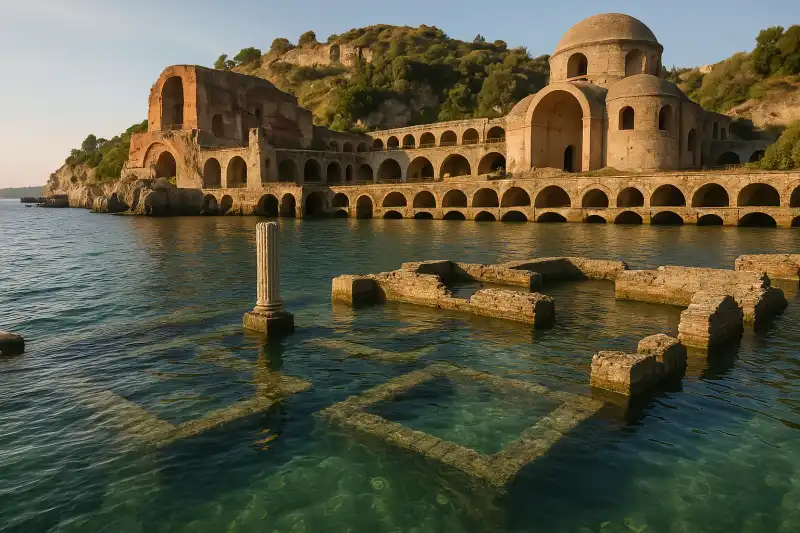
Baia Archaeological Park Guide 2026: Underwater Ruins, Thermal History, and Smart Visit Planning
RomanPlan a focused visit to Baia Archaeological Park near Naples with route strategy, what to prioritize...
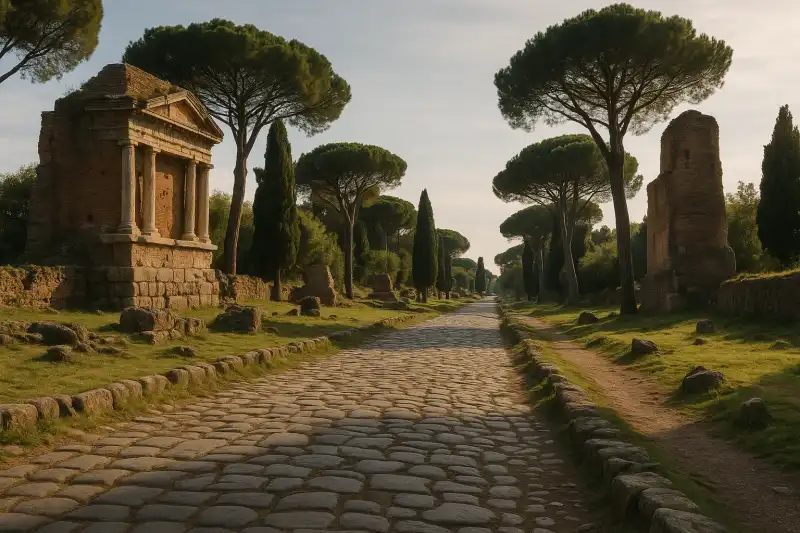
Appian Way Rome Guide 2026
RomanPlan a smart visit to the Appian Way with route choices, catacomb logistics, bike-vs-walk strategy, ...
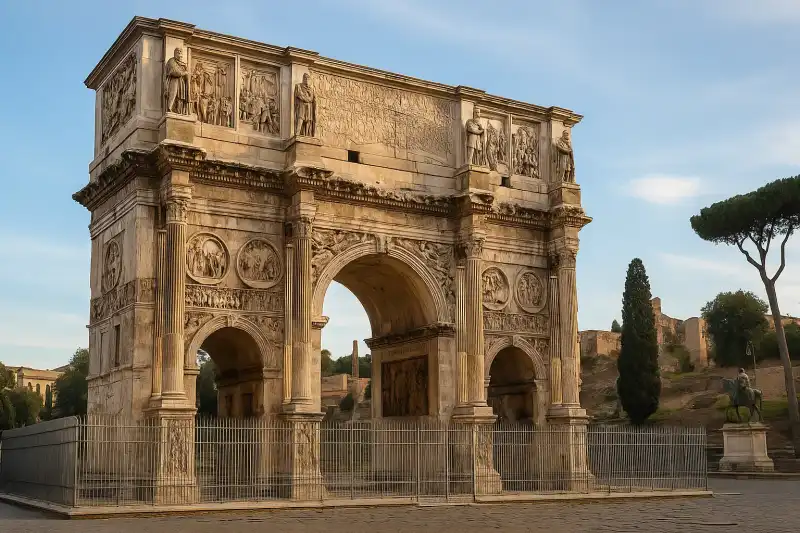
Arch of Constantine Rome: Triumph Over Maxentius Guide
Roman EmpireThe Arch of Constantine commemorates Constantine's 312 CE victory. Spolia details, best photo angles...
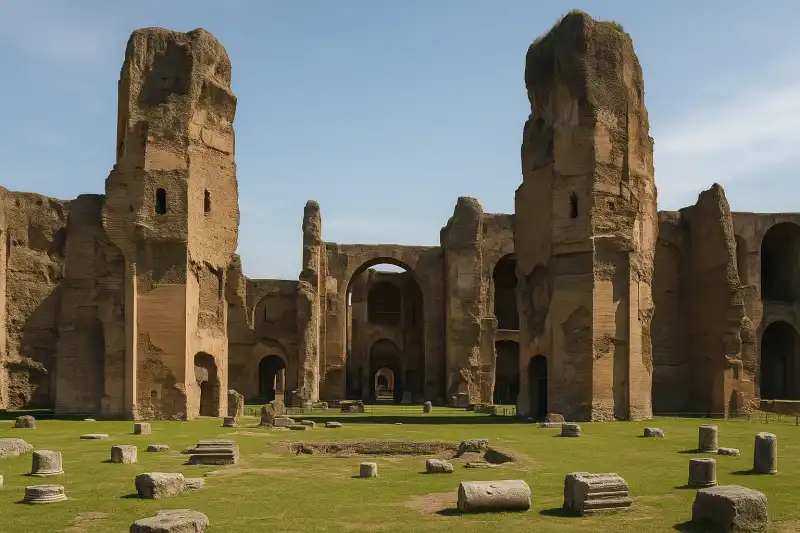
Baths of Caracalla Rome Guide 2026
RomanPlan your visit to the Baths of Caracalla with practical route advice, history context, timing, and ...