Quick Info
At a glance
Vulci Archaeological Park in Italy is one of those places that feels larger than a single monument, because what survives here is not just a ruin but the memory of an entire ancient landscape. Set in the countryside of northern Lazio, not far from the Tyrrhenian coast, Vulci combines open fields, deep ravines, funerary complexes, scattered structural remains, and one of the most photogenic medieval bridges in central Italy. Visitors arriving for the first time often expect a compact archaeological site in the style of a fenced city excavation. What they find instead is a broad, atmospheric terrain where Etruscan history unfolds in stages, from tombs and roads to sanctuaries, walls, and later Roman occupation.
That sense of scale is part of Vulci’s appeal. It was once among the leading cities of Etruria, wealthy through trade, influential in politics, and deeply connected to the wider Mediterranean. Today, the park preserves both the visible traces of that power and the quiet spaces around them. There are stretches where the countryside seems almost untouched, and then suddenly a monumental burial mound, a cut stone road, or the silhouette of the Castello dell’Abbadia appears in view. The result is a destination that rewards patient exploration. Vulci is ideal for travelers interested in the Etruscans beyond the better-known painted tombs of Tarquinia, and for anyone who wants to experience an ancient site where history, nature, and architecture remain closely intertwined.
History
Early Etruscan Origins
Vulci rose to prominence during the early first millennium BCE, becoming one of the major cities of the Etruscan world. The Etruscans, whose civilization flourished in central Italy before the expansion of Rome, developed a network of powerful urban centers across what is now Tuscany, Lazio, and parts of Umbria. Vulci’s position was especially advantageous. It stood inland but maintained access to coastal trade routes and river connections, allowing it to profit from exchange with other parts of Italy and with Greek and Near Eastern merchants.
By the 7th and 6th centuries BCE, Vulci had become notably wealthy. Archaeological finds from its necropolises show luxurious imported goods, finely worked metal objects, ceramics, and personal ornaments, all signals of an elite society with broad commercial contacts. The city was not isolated or provincial. It participated in the maritime and cultural currents of the Mediterranean, and its aristocratic tombs reveal both local identity and foreign influence. This was an era when Etruscan city-states competed, traded, and projected status through monumental burial customs.
The Height of Etruscan Power
During its peak, Vulci was one of the great centers of southern Etruria. Its elites accumulated wealth through agriculture, metalworking, and exchange, and they commemorated themselves through elaborate funerary monuments. Much of what we know about Vulci’s importance comes from these tombs and grave goods, many of which transformed scholarly understanding of Etruscan art and society.
Excavations in and around Vulci uncovered painted pottery, bronze vessels, jewelry, and ceremonial objects of exceptional quality. Some of the most famous artifacts found here entered museum collections in Italy and abroad during the 19th century, when interest in Etruscan archaeology accelerated. Although this early phase of excavation did not always meet modern archaeological standards, it confirmed Vulci’s status as one of the richest Etruscan sites ever discovered.
The city itself likely included temples, residential quarters, fortifications, and public spaces spread across a substantial area. Like other Etruscan centers, Vulci must have functioned as both a political community and a sacred landscape. The necropolises around it were extensions of urban identity, places where lineage, ritual, and social hierarchy were displayed over generations.
Roman Conquest and Transformation
Vulci’s fortunes changed as Roman power advanced through central Italy. The long process of Roman expansion reshaped the political balance of the peninsula, and Etruscan autonomy gradually declined. By the 3rd century BCE, Vulci had been absorbed into the Roman sphere. This did not mean immediate disappearance. Instead, the city entered a period of transformation, with Roman administration, infrastructure, and economic priorities altering the older Etruscan character of the settlement.
Archaeological evidence suggests continued occupation and adaptation during the Roman period. Roads, agricultural systems, and regional trade patterns tied Vulci more closely to Roman networks. Yet as happened with many ancient centers, prominence could shift elsewhere. New routes and changing political realities often reduced the strategic importance of older cities. Over time, urban vitality faded, and the monumental Etruscan past became increasingly layered beneath Roman and later medieval activity.
Decline, Reuse, and Medieval Continuity
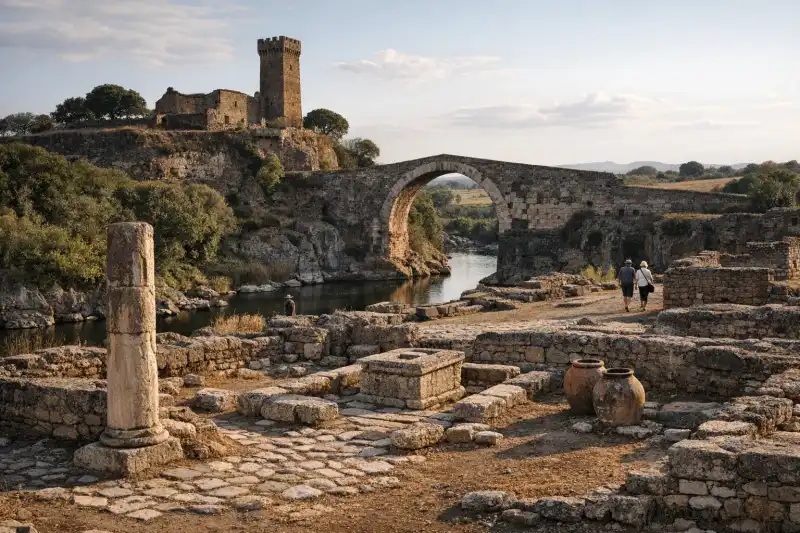
Late antiquity and the early medieval centuries brought further contraction. As centralized urban life weakened and settlement patterns changed, Vulci ceased to function as a major city. Nevertheless, the landscape was never entirely abandoned. One of the most striking later elements is the Castello dell’Abbadia, a medieval castle built near the Ponte dell’Abbadia, the dramatic bridge spanning the gorge of the Fiora River. This fortified complex reused the strategic advantages of the ancient site and helped preserve a visible focal point within the wider ruins.
The medieval presence reminds visitors that Vulci is not a site frozen in a single period. It is a palimpsest, where Etruscan, Roman, and medieval layers coexist. That continuity of occupation and reuse is part of what makes the park so compelling. The ancient city may have declined, but the place retained meaning across centuries.
Archaeology and Modern Preservation
From the 18th and especially the 19th century onward, Vulci attracted antiquarians, collectors, and archaeologists. Many important discoveries came to light during this era, though methods were often driven by the search for portable masterpieces rather than careful contextual study. In modern times, the emphasis shifted toward systematic excavation, conservation, and presentation of the wider archaeological landscape.
Today, Vulci Archaeological Park protects not just isolated finds but the relationship between monuments and terrain. Visitors can move through an environment where tombs, roads, and built remains are understood as part of a broader ancient system. The park, together with the museum housed in the castle, offers a more integrated experience of one of the most important Etruscan cities in Italy.
Key Features
What makes Vulci Archaeological Park memorable is its combination of iconic landmarks and expansive, less scripted spaces. The first visual centerpiece for many visitors is the Ponte dell’Abbadia, a striking bridge carried high over the Fiora gorge. Although the structure has medieval form, it stands in a setting shaped by far older patterns of movement and settlement. Seen together with the castle above the ravine, it creates one of the most dramatic entrances to any archaeological area in Italy. The bridge is not simply scenic; it also establishes the mood of the site, where architecture and landscape are inseparable.
Near it stands the Castello dell’Abbadia, which houses the archaeological museum. This is an essential stop because Vulci’s importance can be difficult to grasp from stone foundations alone. In the museum, grave goods, ceramics, bronzes, and other finds help restore the human scale of the site. They reveal the refinement of Etruscan craftsmanship and the wealth of the city’s elite. For visitors unfamiliar with Etruscan material culture, the museum provides the context needed to understand why Vulci mattered so much in antiquity.
Beyond the castle area, the archaeological park unfolds across a broad open zone. Rather than a single dense urban core, you encounter dispersed remains that encourage slow observation. The ancient roads are especially evocative. Some are cut through stone or marked by worn alignments that still suggest patterns of movement from more than two millennia ago. Walking these paths gives a sense of how the city connected its residential, sacred, and funerary sectors.
The necropolises are among Vulci’s most significant features. These burial areas contain tumuli, chamber tombs, and other funerary structures that illuminate Etruscan beliefs about status, ancestry, and the afterlife. Even where decoration has not survived in the way it has at other Etruscan sites, the architecture of the tombs remains powerful. Their scale suggests that the dead were commemorated in forms meant to endure, and that burial landscapes were integral to civic identity. Some tombs are monumental enough to resemble small built environments rather than simple graves.
Scattered architectural remains from the city itself also reward attention. Foundations, walls, and traces of public structures may appear understated when compared with more complete Roman ruins, but they are important evidence of a once-thriving center. Vulci is a place where imagination plays a larger role than at highly restored sites. You must read terrain, alignments, and surviving fragments to reconstruct the life of the city. For many travelers, that interpretive quality is precisely the attraction. It feels less theatrical and more archaeological.
Nature is another defining feature. The park includes grassland, river scenery, and ravines that have shaped settlement here since antiquity. In spring especially, the contrast between green fields and stone ruins is beautiful. Birdsong, open skies, and the sense of distance from modern urban noise make the site feel unusually calm. This natural setting is not decorative background; it is central to understanding Vulci. Ancient cities depended on water, defensible ground, and productive land, and all of those elements remain visible in the park.
Finally, Vulci stands out because it tells a specifically Etruscan story. Many famous destinations in Italy are interpreted primarily through Roman history, with earlier cultures pushed into the margins. Here, the Etruscan identity remains at the center. The tombs, artifacts, and urban traces together convey a civilization that was sophisticated, outward-looking, and influential long before Rome dominated the peninsula. Visiting Vulci therefore broadens any itinerary focused on ancient Italy, adding depth to the more familiar narrative of Roman expansion.
Getting There
Vulci Archaeological Park is easiest to reach by car. From Rome, the drive usually takes around 1 hour 45 minutes to 2 hours, depending on traffic and your route. Most travelers head north via the A12 or SS1 Aurelia corridor toward Montalto di Castro, then continue inland to the park. Fuel and toll costs from Rome are moderate, and if you are splitting a rental car between two or more people, this is usually the most practical and economical option. Parking is typically available on site or close to the entrance area.
Public transport is possible but less convenient. The nearest useful rail connection is generally to Montalto di Castro, served by regional trains from Rome. A one-way regional ticket from Rome can often cost roughly €8 to €14, depending on the service. From the station, however, you will usually need a taxi to reach the archaeological park, and taxi fares can add another €20 to €35 each way depending on availability and exact pickup point. Because local connections are limited, it is wise to arrange transport in advance if you are not driving.
Some visitors choose to join a guided day tour focused on Etruscan sites in northern Lazio. These can be a good option if you want interpretation along the way and do not want to manage logistics yourself. Tour prices vary widely, but day excursions from Rome often begin around €90 to €150 per person and rise significantly for private transport.
Once at the site, comfortable walking shoes are essential. Distances inside the park can be longer than they first appear, and some surfaces are uneven, grassy, or stony.
When to Visit
Spring is one of the best times to visit Vulci Archaeological Park. From roughly March to May, temperatures are usually mild, the fields are green, and wildflowers can brighten the landscape. This is the season when the combination of archaeology and countryside feels most balanced. Walking is pleasant, the light is often excellent for photography, and the open setting is more inviting than in the heat of summer.
Early autumn, especially September and October, is another strong choice. The intense heat of July and August usually eases, but days can still be warm and bright. This makes it easier to explore the wider park without exhaustion. Autumn also tends to bring softer light and fewer of the harsh midday contrasts that can flatten stone details in photographs.
Summer visits are certainly possible, but they require planning. Vulci offers relatively little continuous shade in many areas, and temperatures in inland Lazio can climb quickly. If you come between June and August, start early, carry plenty of water, and pace yourself. Midday heat can make long walks uncomfortable, especially for families with children or older travelers.
Winter has its own advantages. The site is quieter, the atmosphere can be dramatic, and cooler weather suits long walks. The tradeoff is that some days may be wet, windy, or overcast, and opening hours can be more limited than in peak season. Before traveling, it is wise to verify current schedules.
For the best overall experience, aim for a weekday morning in spring or autumn. You will have softer weather, better light, and more space to appreciate the silence and scale that make Vulci special.
| Quick Facts | Details |
|---|---|
| Location | Near Montalto di Castro, Lazio, Italy |
| Ancient Civilization | Etruscan, later Roman |
| Best Known For | Necropolises, Etruscan city remains, Ponte dell’Abbadia, Castello dell’Abbadia |
| Recommended Visit Length | Half day to full day |
| Nearest City | Montalto di Castro |
| Best Time to Visit | Spring and early autumn |
| Main Travel Option | Rental car from Rome or northern Lazio |
| Terrain | Open archaeological landscape with uneven paths and grassy areas |
| Family Friendly | Yes, with care in hot weather and on uneven surfaces |
| On-Site Highlight | The museum in the castle and views from the bridge over the Fiora gorge |
Vulci Archaeological Park is best approached with time, curiosity, and a willingness to look beyond the single headline monument. Its importance lies in the way an ancient city survives across a whole landscape rather than in one isolated ruin. Here, the grandeur of the Etruscans emerges through tomb architecture, museum finds, old routes, and the quiet logic of the terrain itself. The bridge and castle may provide the memorable postcard image, but the deeper reward comes from understanding how power, ritual, trade, and memory once shaped this corner of Italy. For travelers seeking a more spacious and reflective encounter with the ancient world, Vulci offers one of the richest archaeological experiences in Lazio.
Guided tours: worth it?
Self-guided works here, but a guide can add real value if you want the ruins explained as a living place rather than just a sequence of monuments.
Best for
- First-time visitors who want context, not just photos
- Short visits where a planned route saves time
When to go self-guided
Go independently if you prefer setting your own pace, reading as you go, and checking official hours or ticket rules directly before you arrive.
What I’d avoid
Skip paid tours that bundle unrelated stops you do not actually want. The best option should either save meaningful planning time or add historical context you would miss on your own.
Vulci Archaeological Park and Etruscan Italy Tours
Useful when: you want to compare guided formats before deciding
Tarquinia and Etruscan Heritage Day Tours
Useful when: you want to compare guided formats before deciding
Rome to Northern Lazio Archaeology Tours
Useful when: you want to compare guided formats before deciding
Some tour links are affiliate links, which may earn Ancient Travel a small commission at no extra cost to you. I try to surface options that make practical sense for the site—not just anything bookable.
Frequently Asked Questions
What is Vulci Archaeological Park?
Vulci Archaeological Park preserves the remains of one of the most important Etruscan cities in Italy, including necropolises, roads, bridges, temples, and the medieval Castello dell'Abbadia.
Where is Vulci Archaeological Park located?
The park is in the Lazio region of Italy, near the town of Montalto di Castro in the province of Viterbo, about two hours northwest of Rome by car.
How much time should I plan for a visit?
Most visitors should allow at least half a day to explore the main archaeological area, the bridge and castle, and the museum exhibits. A full day is better if you enjoy walking and photography.
Is Vulci Archaeological Park good for families?
Yes. The site has open spaces, dramatic scenery, and manageable walking routes, though some paths are uneven and summer heat can make longer visits harder for young children.
Do I need a car to reach Vulci Archaeological Park?
A car is the easiest option because public transport connections are limited. Some travelers combine train travel to nearby stations with a taxi, but driving offers the most flexibility.
What makes Vulci different from other ancient sites in Italy?
Unlike many Roman-focused sites, Vulci offers a strong Etruscan identity, extensive burial landscapes, and a striking setting where archaeology, countryside, and a medieval fortress come together.
Nearby Ancient Sites
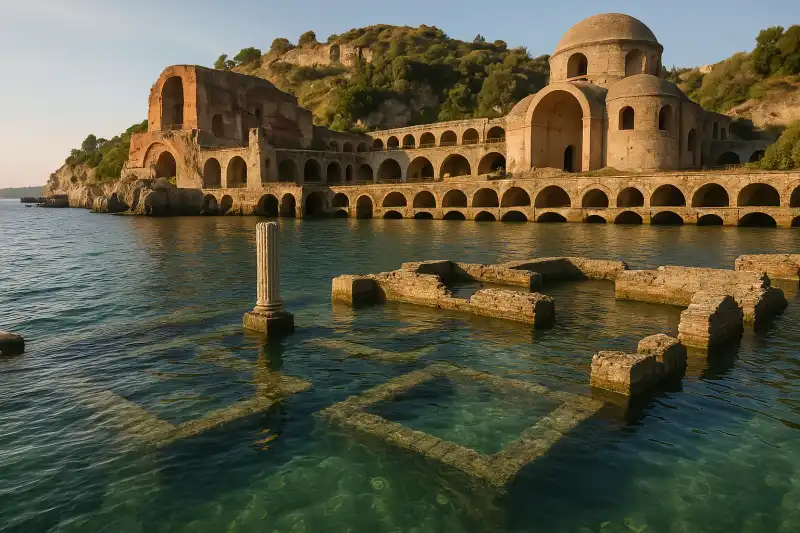
Baia Archaeological Park Guide 2026: Underwater Ruins, Thermal History, and Smart Visit Planning
RomanPlan a focused visit to Baia Archaeological Park near Naples with route strategy, what to prioritize...
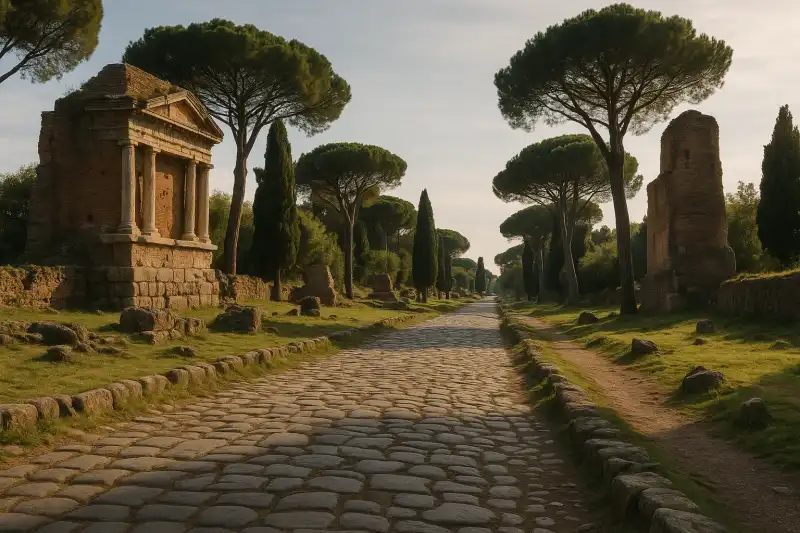
Appian Way Rome Guide 2026
RomanPlan a smart visit to the Appian Way with route choices, catacomb logistics, bike-vs-walk strategy, ...
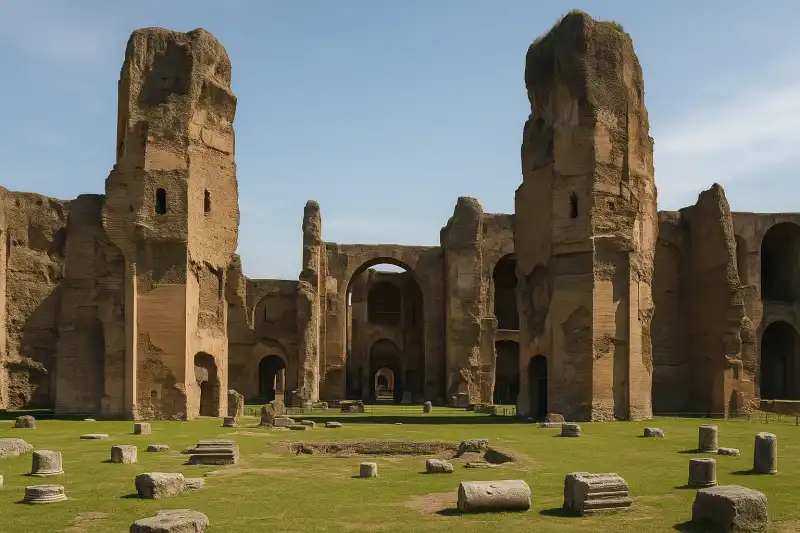
Baths of Caracalla Rome Guide 2026
RomanPlan your visit to the Baths of Caracalla with practical route advice, history context, timing, and ...