Quick Info
At a glance
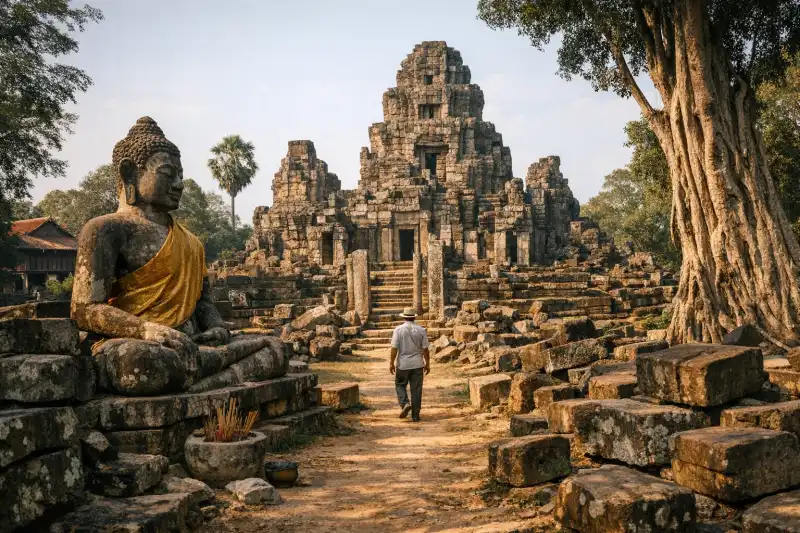
Wat Ek Phnom in Cambodia rises from the quiet plains north of Battambang with a mood that feels both devotional and weathered by time. The approach is gentle rather than dramatic: village roads, rice fields, patches of sugar palms, and a landscape that seems to flatten the horizon until the old temple and its modern Buddhist surroundings begin to emerge. Unlike Cambodia’s most famous monuments around Siem Reap, this site offers something more intimate. Here, ancient stonework, active worship, local life, and rural scenery overlap in a way that makes the visit feel less like checking off a landmark and more like stepping into a lived cultural landscape.
For many travelers, Wat Ek Phnom is one of the most rewarding short excursions from Battambang. The temple is old enough to belong to the great age of the Khmer Empire, yet small enough to be explored without crowds or hurry. Its ruined sanctuary, elaborate lintels, and partially collapsed galleries hint at the artistic ambition of the 11th century, while the adjacent monastery, colorful newer buildings, and giant seated Buddha show how the site continues to matter spiritually today. What makes Wat Ek Phnom memorable is precisely this layering of eras. It is not frozen in a single historical moment. Instead, it presents Cambodia’s past and present side by side, allowing visitors to appreciate both the grandeur of Khmer temple architecture and the everyday religious life that still animates the grounds.
History
Early Khmer foundations
Wat Ek Phnom dates to the 11th century, during the period of the Khmer Empire when temple building flourished across much of present-day Cambodia. It is generally associated with the reign of King Suryavarman I, who ruled in the early 1000s CE and helped consolidate the empire after a period of political instability. During this era, rulers sponsored temples not only as places of worship but also as statements of royal legitimacy, cosmic order, and control over agricultural landscapes. Temples were deeply connected to state power, religious devotion, and the organization of land and labor.
The location of Wat Ek Phnom reflects this broader Khmer pattern. It was built in a fertile region shaped by waterways, rice cultivation, and village settlement. Although not on the same monumental scale as Angkor’s later masterpieces, the temple formed part of the same civilizational world. Its design, use of sandstone and laterite, and decorative carving place it firmly within the artistic and religious traditions of the Angkor period. Originally, the temple would have functioned within a sacred Hindu framework, likely dedicated to Vishnu or another important deity of the Khmer courtly religion, though many Cambodian temples evolved in meaning over time.
Angkor-period significance
In architectural terms, Wat Ek Phnom belongs to a transitional moment in Khmer art. It predates the grand imperial constructions of the 12th century but already demonstrates a high level of planning and ornament. The temple complex once included an enclosure, causeway, central sanctuary, and subsidiary elements that would have structured the ritual approach to the sacred center. The surviving lintels and pediments display fine carvings that reveal the sophistication of Khmer craftsmen even at a provincial site.
Its scale suggests that it was an important local temple rather than one of the empire’s greatest state shrines. Yet this should not diminish its significance. Provincial temples like Wat Ek Phnom were crucial to understanding how Khmer rule extended across the countryside. They linked royal ideology to local geography, helping transform agricultural zones into sacred and politically integrated spaces. The temple would have served communities living in the surrounding plain and may also have stood as a marker of elite patronage in the Battambang region.
As the political heart of the Khmer Empire shifted and changed over the centuries, many temples outside the main centers gradually lost their original ritual centrality. Some were adapted for Buddhist use, others fell into partial ruin, and many remained spiritually potent even as formal structures deteriorated.
Decline, reuse, and Buddhist transformation
Like many Cambodian temple sites, Wat Ek Phnom did not simply disappear after its original Hindu purpose faded. Instead, it entered a long period of transformation. The decline of the Angkorian order, changes in religious practice, and the natural effects of climate and vegetation all contributed to the temple’s damaged state. Roofs collapsed, galleries broke apart, and masonry shifted under the pressure of roots and weather.
At the same time, sacred places in Cambodia often remained active even when their original buildings decayed. Over centuries, Theravada Buddhism became the dominant religious tradition in the region, and many older temple spaces were reinterpreted within this newer framework. Wat Ek Phnom eventually became associated with a living monastery and pagoda complex. This continuity is important: the site is not only an archaeological ruin but also a devotional environment in which local religious life continued and adapted.
The name “wat” itself indicates a Buddhist monastery, and today the temple’s identity reflects this blended heritage. Visitors encounter ancient Khmer stonework and modern Buddhist structures together, illustrating how Cambodian religious landscapes are frequently cumulative rather than exclusive.
Modern rediscovery and tourism
In the modern era, Wat Ek Phnom became known as one of the key historical attractions near Battambang. Archaeological interest, heritage awareness, and the growth of tourism helped bring wider attention to the site. While it remains far less visited than Angkor Wat or Angkor Thom, that relative quiet is part of its appeal.
Its accessibility from Battambang has made it a standard stop on countryside tours, often paired with village visits, local food experiences, or other cultural excursions. Conservation efforts have been limited compared with Cambodia’s most famous monuments, and the ruin still feels raw in places, but that very condition offers insight into the material fragility of old Khmer architecture. Today, Wat Ek Phnom stands as both a historical remnant and an active place of worship, valued by local residents, domestic pilgrims, and international travelers alike.
Key Features
The most striking aspect of Wat Ek Phnom is the contrast between the ancient temple ruin and the newer monastery complex beside it. The old sanctuary, built of sandstone and laterite, rises within a rectangular enclosure and immediately shows the marks of age. Sections have collapsed, some walls lean or gape open, and vegetation has at times found a foothold in the stone. Yet enough survives to communicate the temple’s original elegance. Door frames remain tall and precise, carved lintels still carry mythological detail, and fragments of pediments suggest scenes that once connected architecture with sacred storytelling.
As you move around the temple, the quality of the carving becomes one of the site’s most rewarding details. Even in worn condition, decorative motifs reveal the hand of accomplished Khmer artisans. Floral patterns, divine figures, and narrative compositions survive in places where the stone has not been too heavily eroded. These carvings invite slow looking rather than quick photography. Wat Ek Phnom is not overwhelming in size, so visitors have the chance to notice texture, damage, and craftsmanship at close range. The experience is more personal than at larger temple complexes, where scale can dominate attention.
Another notable feature is the site’s moated layout and relationship to the surrounding plain. Khmer temples often engaged with water both symbolically and practically, and Wat Ek Phnom’s setting reflects that tradition. Depending on the season, the area around the temple can feel lush and green or dry and open, but the sense of a temple positioned within a carefully ordered landscape remains. The approach across the grounds helps visitors understand that Khmer architecture was never just about a single building; it was about aligning sacred form with land, movement, and cosmology.
The active Buddhist structures nearby transform the atmosphere of the visit. A modern pagoda with bright colors and polished surfaces stands in deliberate contrast to the muted grays and browns of the ancient ruin. This juxtaposition can initially feel abrupt, but it is central to understanding the site. Wat Ek Phnom is not presented as a sealed archaeological park. It is a living religious compound where monks, worshippers, and local families continue to gather. During festivals or holy days, the modern temple area may be especially active, adding sound and movement to the old stones.
Perhaps the most visually conspicuous modern element is the large white seated Buddha that rises above the grounds. It is impossible to miss and often appears in photographs of the site. While it does not belong to the original Angkor-period structure, it speaks to the continuing spiritual importance of the place. For some visitors, this blending of eras is exactly what makes Wat Ek Phnom distinctive. Instead of separating the ancient from the modern, the site makes both visible at once.
The surrounding rural landscape also deserves attention as part of the destination’s character. The roads leading here pass through villages, rice fields, and small-scale farms, giving the trip a strong sense of place. Unlike temple sites approached through dense urban development, Wat Ek Phnom still feels tied to the rhythms of the countryside. Seasonal changes affect everything from the color of the fields to the quality of the light, making the same temple feel subtly different across the year.
Finally, the site rewards travelers who appreciate atmosphere over spectacle. There are no endless corridors to get lost in and no towering central spires on the scale of Angkor Wat. Instead, there is intimacy, weathering, and the quiet pleasure of seeing a temple that remains part of local life. This makes Wat Ek Phnom especially appealing for repeat Cambodia visitors, photographers, architecture enthusiasts, and anyone seeking a calmer heritage experience near Battambang.
Getting There
Wat Ek Phnom is located roughly 10 to 12 kilometers north of Battambang, making it one of the easiest historical excursions from the city. The most common way to reach it is by tuk-tuk. A return trip from central Battambang usually costs about $10 to $18 depending on your bargaining skills, waiting time, and whether you combine the temple with other countryside stops. For travelers who want more comfort, a private taxi or car can cost around $20 to $35 for a short half-day outing.
Renting a motorbike or scooter is another practical option if you are comfortable driving in Cambodia. Daily rentals in Battambang typically range from $8 to $15, plus fuel. The roads are generally manageable, though surface conditions can vary, especially after rain. Bicycles are also popular because the route is flat and scenic. Basic bike rental in Battambang often costs $2 to $6 per day, while higher-quality bicycles may cost more. Expect the ride to take around 45 minutes to an hour each way, depending on pace and stops.
Some travelers visit Wat Ek Phnom as part of a guided countryside tour from Battambang. These tours often include transport, an English-speaking guide, and additional stops such as local workshops or village markets. Prices vary widely, but shared experiences may start around $15 to $30 per person, while private tours cost more.
Carry small cash for entrance or maintenance fees, water, and any roadside snacks. Early departure is best, especially if you plan to cycle or want softer morning light for photography.
When to Visit
The best time to visit Wat Ek Phnom is during Cambodia’s dry season, generally from November to early April. At this time, roads are easier to navigate, skies are often clear, and the temple grounds are more comfortable to explore. Temperatures are usually most pleasant from November through January, when mornings are cooler and the countryside around Battambang can look especially fresh after the rains. This is an excellent window for cycling to the site or pairing it with other outdoor stops.
From February to April, the weather becomes hotter and drier. Visits are still very possible, but it is wise to arrive early in the day before the strongest midday heat. Bring water, sunscreen, and a hat, as shade can be limited in parts of the grounds. The harsher light of late morning and afternoon can flatten details in photographs, so sunrise to mid-morning is usually the most rewarding time visually.
The rainy season, from roughly May to October, gives the surrounding landscape a greener and more dramatic appearance. Rice fields brighten, moats and low-lying areas may hold more water, and the approach can feel especially atmospheric. However, heavy showers, muddy conditions, and occasional road issues can make travel less convenient. If you do visit in the wet season, flexible timing helps. Mornings often provide the best chance of clearer weather.
If your interests include local religious life, ask in Battambang whether any Buddhist festival days are taking place. Visiting during a local observance can make the modern monastery area especially lively, though it also means showing extra sensitivity and respect. In all seasons, modest clothing and quiet behavior are appreciated.
| Quick Facts | Details |
|---|---|
| Location | North of Battambang, Battambang Province, Cambodia |
| Historical Period | Angkor period, mainly 11th century CE |
| Associated Civilization | Khmer Empire |
| Religious Background | Originally Hindu, later integrated into a Buddhist monastery complex |
| Main Highlights | Sandstone ruins, carved lintels, modern pagoda, giant seated Buddha |
| Distance from Battambang | About 10–12 km |
| Typical Visit Length | 45 minutes to 1.5 hours |
| Best Time of Day | Early morning or late afternoon |
| Best Season | November to January for cooler, drier weather |
| Recommended Transport | Tuk-tuk, bicycle, motorbike, or private car |
Guided tours: worth it?
A guide can be genuinely useful at Wat Ek Phnom, especially if you want help with transport, timing, tickets, or understanding a large site without losing half the day to logistics.
Best for
- First-time visitors who want context, not just photos
- Travelers who want transport, timing, or entry logistics handled
- Trips where tickets, circuits, or timed entry can shape the day
- Short visits where a planned route saves time
When to go self-guided
Go independently if you already have transport and tickets sorted, enjoy moving at your own pace, and are comfortable checking the latest official rules before you arrive.
What I’d avoid
Skip paid tours that bundle unrelated stops you do not actually want. The best option should either save meaningful planning time or add historical context you would miss on your own.
Battambang Wat Ek Phnom tours
Useful when: you want to compare guided formats before deciding
Battambang ancient temples tours
Useful when: you want to compare guided formats before deciding
Battambang countryside and temple tours
Useful when: you want to compare guided formats before deciding
Some tour links are affiliate links, which may earn Ancient Travel a small commission at no extra cost to you. I try to surface options that make practical sense for the site—not just anything bookable.
Frequently Asked Questions
What is Wat Ek Phnom?
Wat Ek Phnom is an 11th-century Khmer temple and active Buddhist monastery located north of Battambang in Cambodia, known for its ruined sandstone sanctuary and modern pagoda.
How far is Wat Ek Phnom from Battambang?
Wat Ek Phnom is about 10 to 12 kilometers north of central Battambang, and the journey usually takes around 20 to 30 minutes by tuk-tuk, taxi, motorbike, or bicycle.
Is there an entrance fee at Wat Ek Phnom?
Visitors may be asked to pay a small entrance or maintenance fee, though the amount can change. It is best to carry small US dollar notes or Cambodian riel.
Can you visit Wat Ek Phnom independently?
Yes. Many travelers visit independently from Battambang by tuk-tuk, bicycle, scooter, or hired car, often combining it with other countryside stops.
What should you wear to Wat Ek Phnom?
Because the site includes an active monastery and sacred spaces, visitors should dress modestly with shoulders and knees covered and remove shoes where required.
How much time do you need at Wat Ek Phnom?
Most visitors spend 45 minutes to 1.5 hours exploring the ruins, modern temple grounds, and surrounding countryside.
Nearby Ancient Sites
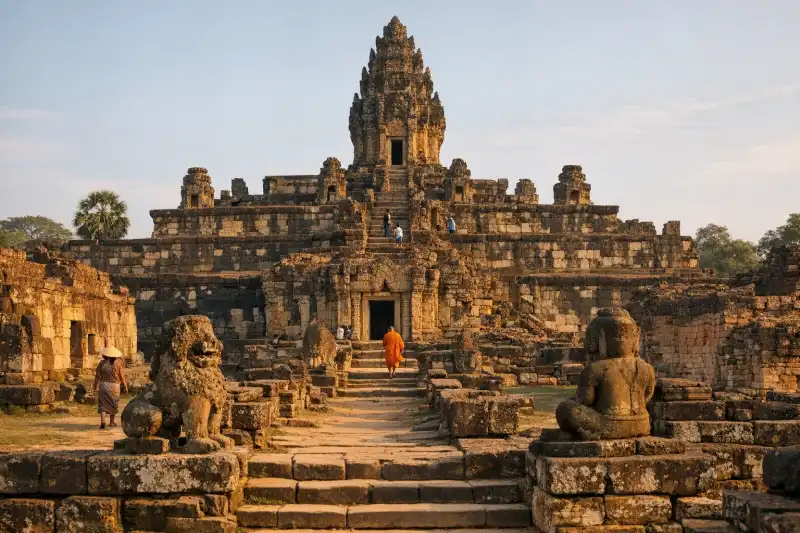
Bakong
Bakong is Cambodia's first major sandstone temple mountain, a stunning Khmer monument at the heart o...
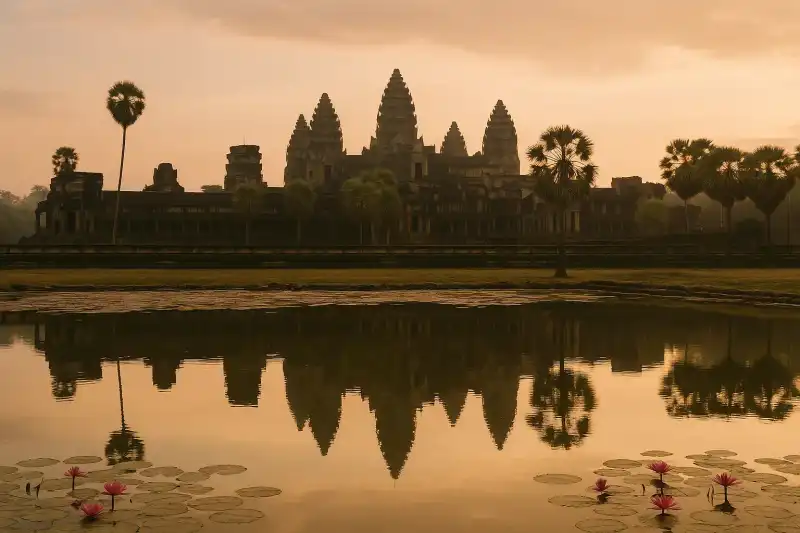
Angkor Wat Travel Guide 2026: Everything You Need to Know
KhmerAngkor Wat, the world's largest religious monument, spans over 400 acres in the heart of Cambodia. T...
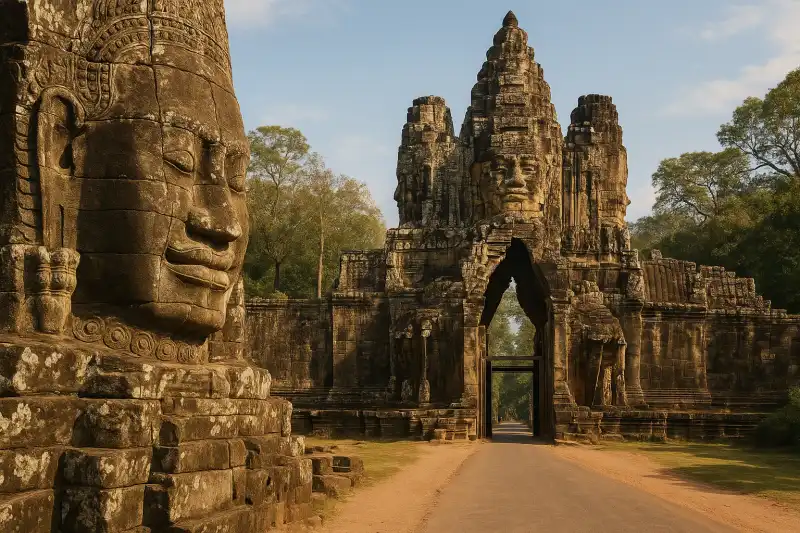
Angkor Thom Travel Guide 2026: Bayon Faces, Gates, and the Khmer Royal City
KhmerAngkor Thom was the last great capital of the Khmer Empire. This guide covers how to visit Bayon, th...
Banteay Srei Travel Guide 2026: Pink Sandstone Temple, Carvings, and Visit Tips
KhmerBanteay Srei is one of Cambodia’s most detailed Khmer temples, known for fine pink sandstone carving...