Quick Info
At a glance
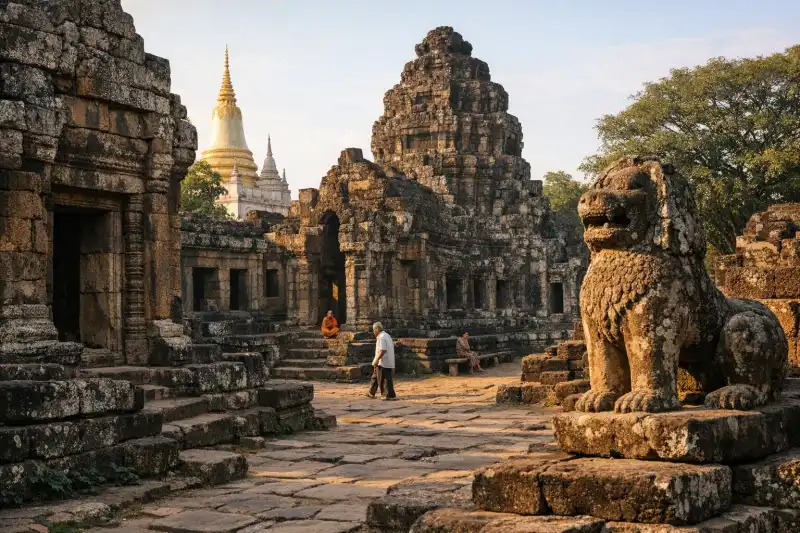
Wat Nokor in Cambodia feels at once ancient and lived-in, a place where weathered sandstone walls, devotional shrines, and the rhythm of contemporary worship all meet within the same sacred space. Located near Kampong Cham, this temple complex offers a different experience from Cambodia’s more famous monumental sites: less theatrical, more intimate, and deeply rooted in the continuity of Khmer religious life. Instead of approaching a ruin separated from the present, visitors arrive at a site where old gateways still frame movement, monks still pass through the courtyards, and incense still rises among stones that have stood for nearly a millennium.
For many travelers, Wat Nokor is a rewarding stop because it reveals another side of the Khmer architectural world beyond Angkor. Its scale is manageable, its carvings repay careful attention, and its atmosphere often feels calm compared with busier temple destinations. The complex is especially notable for the unusual coexistence of an Angkorian sanctuary and a newer Buddhist monastery built within the ancient enclosure. That juxtaposition gives Wat Nokor a layered identity: archaeological monument, active place of worship, local landmark, and historical bridge between Hindu-Buddhist court culture and present-day Cambodian spirituality. A visit here is not only about examining old stonework, but also about seeing how sacred landscapes remain meaningful across centuries.
History
Early Angkorian foundations
Wat Nokor belongs to the broad artistic and political world of the Khmer Empire, the powerful civilization that shaped much of mainland Southeast Asia during the Angkorian era. Although the site is outside the core Angkor region, its plan, masonry, and decorative language clearly place it within the orbit of Khmer state religion and temple building. Most historians date the principal remains to the 11th or 12th century, with many associating the surviving complex with the reign of Suryavarman II, the ruler best known for commissioning Angkor Wat.
Like many Khmer temples of the period, Wat Nokor was likely conceived as a sacred and symbolic structure as much as a practical one. Temple architecture in the empire often expressed royal authority, cosmological order, and religious devotion at the same time. Even provincial or regional temples could reflect central artistic trends, reproducing in smaller form the aesthetic language of the imperial heartland. At Wat Nokor, the sandstone towers, galleries, enclosure walls, and carved lintels suggest a sanctuary built with clear links to major Angkorian traditions.
The original religious dedication of the temple is still discussed, but it likely drew from the blended Hindu and Buddhist currents common in the Khmer world. This was a period when royal patronage, local devotional practice, and shifting religious preferences often overlapped rather than fitting into rigid categories. The temple’s surviving iconographic fragments point toward a sacred program that once would have been far richer than what remains visible today.
Medieval change and adaptation
As with many temples in Cambodia, Wat Nokor did not remain frozen in its original form. The decline of the Khmer imperial center and the gradual political transformations that followed affected regional sites in uneven ways. Some temples were abandoned, some repurposed, and some continued in quieter local use. Wat Nokor seems to have entered this long history of adaptation rather than total disappearance.
Throughout the late medieval and early modern periods, sacred sites in Cambodia were often reinterpreted through Theravada Buddhist practice. This process did not necessarily erase earlier meanings; instead, old temple compounds could be absorbed into new devotional landscapes. Ancient sanctuaries became places where local communities worshipped, offered merit, or connected with ancestral memory. Architectural fragments might lose their original ritual context yet gain new spiritual significance through continued use.
Wat Nokor appears to have followed this broader Cambodian pattern. Rather than becoming a completely deserted ruin, it remained part of the religious consciousness of the surrounding area. This continuity matters because it explains why the site today feels unlike an excavated monument isolated from local life. Its history includes not only royal construction and artistic achievement, but also community-level preservation through reverence and reuse.
French-era recording and modern recognition
During the colonial period, scholars and administrators associated with the French Protectorate documented many historic Khmer monuments, including temples beyond the Angkor core. Such recording helped place provincial sites like Wat Nokor into a wider narrative of Cambodian architectural heritage. Measurements, sketches, and early restoration interest contributed to later conservation awareness, even if interventions at Wat Nokor were less extensive than at the better-known temples around Siem Reap.
The 19th and 20th centuries were difficult for many historical monuments in Cambodia due to neglect, environmental wear, political instability, and conflict. Stone theft, vegetation growth, and shifting local building needs affected temple remains across the country. Yet Wat Nokor retained enough of its enclosure, towers, and decorative elements to remain legible as a significant Angkorian monument.
In more recent decades, improved domestic tourism, heritage interest, and local pride have given the site greater visibility. Kampong Cham’s accessibility from Phnom Penh has made Wat Nokor an appealing stop for independent travelers and Cambodian visitors alike. While it is not among the country’s most internationally famous ruins, that relative modesty is part of its appeal. The temple can still be experienced with a sense of place rather than spectacle.
Wat Nokor today
Today, Wat Nokor stands as a rare and vivid example of continuity in Cambodia’s sacred architecture. The ancient stone temple survives inside an active monastery complex, and the newer Buddhist structures built into or alongside the older enclosure have made the site visually distinctive. Some travelers find this contrast surprising at first, but it is in fact one of the clearest expressions of the temple’s long life.
What survives now is not a perfect reconstruction of the Angkorian past, but a layered environment shaped by centuries of devotion, decay, adaptation, and care. That complexity is precisely why Wat Nokor is historically important. It reveals not only how the Khmer Empire built, but also how Cambodia remembers, reuses, and lives with its ancient monuments.
Key Features
Wat Nokor’s most striking quality is the way it combines the language of an Angkorian temple with the daily reality of a working Buddhist monastery. As you approach, the first impression is often one of enclosure: old laterite and sandstone walls define a sacred precinct, while gateways and passages guide the eye inward. Even before examining the details, visitors can sense the order and geometry typical of Khmer temple planning. The complex is not immense, but it feels carefully composed, with each threshold deepening the sense of transition from ordinary space into a ritual landscape.
The ancient core includes sandstone towers and structural elements that preserve much of the elegance associated with Khmer craftsmanship. Lintels, pediments, and door frames reward close attention. Though many carvings are worn, the surviving ornament still shows the sculptors’ command of line, symmetry, and sacred imagery. Floral motifs, curving forms, and traces of mythological scenes appear in fragments, reminding visitors that the temple would once have been visually dense with symbolism. Light changes the mood dramatically across the day: in the morning, softer illumination brings out texture in the stone, while stronger midday sun emphasizes relief and shadow.
One of the most memorable aspects of Wat Nokor is the integration of the modern pagoda into the ancient temple precinct. Rather than standing apart, the newer monastery building occupies space within the historic enclosure, creating an unusual and sometimes dramatic juxtaposition. Painted surfaces, bright decorative details, and contemporary Buddhist iconography contrast with the muted tones of old sandstone. Yet the effect is not simply jarring. For many visitors, it illustrates how sacred sites in Cambodia are not only preserved as museum pieces but also absorbed into living religious practice.
This blend of old and new can shape how you move through the complex. At one moment you may be tracing the outline of an Angkorian wall or examining a weathered doorway; at the next, you may hear chanting, see offerings, or encounter monks and local worshippers. That coexistence gives the site a special atmosphere. It invites observation not only of architecture, but of continuity. The temple is not a dead relic; it remains part of the spiritual and social life of the region.
The enclosure itself is worth lingering in. Khmer architects understood how to create progression through space, and even a modest-sized temple can feel rich in rhythm and alignment. Repeated doorways frame views, towers rise beyond walls, and narrow passages suddenly open into broader courts. Photography enthusiasts often appreciate these layered sightlines. The weathering of the stones adds another dimension: patches of lichen, softened edges, and color variations from grey to warm brown create a tactile sense of age.
Wat Nokor also offers insight into regional temple building outside the monumental scale of Angkor. For travelers who have already seen the major temples near Siem Reap, the site can be especially rewarding because it reveals familiar Khmer design principles in a more local setting. For those who have not, it serves as a gentler introduction to the civilization’s architecture. The carvings may be less extensive than at headline sites, but the compound’s intimacy allows details to be appreciated without rush.
Another key feature is the site’s atmosphere of relative calm. Because Wat Nokor receives fewer international tour groups than Cambodia’s most famous monuments, visitors often find it easier to explore at a measured pace. That quieter environment makes it simpler to notice subtleties: the temperature shift inside stone corridors, the echo of footsteps, the smell of incense drifting from active shrine areas, or the contrast between ancient masonry and modern devotional color. These sensory elements are part of what makes the visit memorable.
Ultimately, Wat Nokor’s defining feature is not a single tower, sculpture, or façade, but the conversation between eras visible across the whole compound. Few places communicate so clearly that heritage in Cambodia is both historical and living. The site’s beauty lies in that layered identity.
Getting There
Wat Nokor is located a short distance from Kampong Cham city, making it one of the easiest ancient temple visits in eastern Cambodia. From central Kampong Cham, the temple is typically around 2 to 4 kilometers away depending on your starting point. A tuk-tuk is the most convenient option, and a one-way ride usually costs about $2 to $4, while a round trip with waiting time often falls in the $5 to $8 range. Motorbike taxis can be slightly cheaper, though they are less comfortable in hot weather.
If you are already staying in Kampong Cham, cycling to Wat Nokor is a pleasant choice in the cooler morning hours. Bicycle rentals in town generally cost around $2 to $5 per day. The roads are manageable, and the short distance makes the ride accessible for most travelers. Renting a scooter, where available through guesthouses or local contacts, can cost roughly $8 to $12 per day and gives flexibility to combine the temple with countryside stops.
From Phnom Penh, Kampong Cham is reachable by bus, minivan, or private car. Bus and van fares usually range from $6 to $12 one way, with travel times of about 2.5 to 4 hours depending on traffic and operator. A private taxi from Phnom Penh generally costs around $45 to $70 one way. Once in Kampong Cham, local transport to the temple is straightforward.
Some organized drivers and day-tour operators also offer Wat Nokor as part of a regional itinerary including Phnom Pros, Phnom Srei, or village visits. If you prefer historical context, hiring a local guide in Kampong Cham can add depth without greatly increasing cost.
When to Visit
Wat Nokor can be visited year-round, but the most comfortable period is Cambodia’s dry season, generally from November to February. During these months, temperatures are usually more moderate, skies are clearer, and the temple grounds are easier to explore on foot. Early morning is especially pleasant, with softer light for photography and a quieter atmosphere before the day grows hot.
The hot season, roughly March to May, is still manageable if you arrive early. Midday heat can be intense, and the stone surfaces radiate warmth, so carrying water, sun protection, and light but modest clothing is essential. The advantage of this season is that visitor numbers often remain low, allowing for an unhurried experience.
The rainy season, from about May to October, brings greener surroundings and a fresher landscape, which can make the temple visually appealing. Afternoon showers are common, and paths may become slick in places, but the site is still very visitable. Rain can also deepen the color of the old stone and create a more atmospheric mood. If visiting in these months, mornings are usually the safest bet before heavier clouds build.
To enjoy both comfort and good light, aim for a morning visit any time of year. Because Wat Nokor is an active religious site, avoiding the hottest and busiest parts of the day also makes the experience more respectful and peaceful. If a local festival or religious observance is taking place, the temple may feel especially vibrant, though you should be prepared for more worshippers and less access to some areas.
| Quick Facts | Details |
|---|---|
| Location | Near Kampong Cham city, Kampong Cham Province, Cambodia |
| Historical period | Angkorian period |
| Estimated date | 11th-12th century CE |
| Cultural tradition | Khmer Empire |
| Religious character | Ancient temple complex with active Buddhist monastery |
| Best visit length | 45 minutes to 1.5 hours |
| Best time of day | Early morning |
| Nearest city | Kampong Cham |
| Typical transport from Kampong Cham | Tuk-tuk, bicycle, scooter, or motorbike taxi |
| Dress code | Modest clothing suitable for an active religious site |
Wat Nokor may not have the global fame of Cambodia’s headline monuments, but that is part of what makes it so compelling. Here, the grandeur of the Khmer past is present in a more human scale, and history is not sealed off behind barriers of interpretation. Ancient walls still shape the experience of movement and reverence; modern Buddhist life continues within the same sacred bounds. For travelers interested in Cambodia beyond the standard circuit, the temple offers something rare: a direct encounter with continuity.
A visit to Wat Nokor is best approached slowly. Take time to look closely at worn carvings, to notice how thresholds frame light, and to observe how local worship transforms the old stone precinct into a living sanctuary. In doing so, you begin to see the site not only as an archaeological remnant, but as part of a long and unfinished story. That story—of empire, adaptation, devotion, and endurance—is what gives Wat Nokor its enduring power.
Guided tours: worth it?
A guide can be genuinely useful at Wat Nokor, especially if you want help with transport, timing, tickets, or understanding a large site without losing half the day to logistics.
Best for
- First-time visitors who want context, not just photos
- Travelers who want transport, timing, or entry logistics handled
- Trips where tickets, circuits, or timed entry can shape the day
- Short visits where a planned route saves time
When to go self-guided
Go independently if you already have transport and tickets sorted, enjoy moving at your own pace, and are comfortable checking the latest official rules before you arrive.
What I’d avoid
Skip paid tours that bundle unrelated stops you do not actually want. The best option should either save meaningful planning time or add historical context you would miss on your own.
Kampong Cham Temple and Countryside Tours
Useful when: you want to compare guided formats before deciding
Phnom Penh to Kampong Cham Day Trips
Useful when: transport or pickup logistics matter
Cambodia Cultural and Historical Tours
Useful when: you want to compare guided formats before deciding
Some tour links are affiliate links, which may earn Ancient Travel a small commission at no extra cost to you. I try to surface options that make practical sense for the site—not just anything bookable.
Frequently Asked Questions
Where is Wat Nokor located?
Wat Nokor is located just outside Kampong Cham city in Kampong Cham Province, Cambodia, on the east side of the Mekong River.
How old is Wat Nokor?
The temple dates to the Angkorian period, with most scholars placing its main construction in the 11th to 12th centuries, likely under the reign of Suryavarman II.
Is Wat Nokor still an active religious site?
Yes. Wat Nokor is both an archaeological monument and a functioning Buddhist monastery, so visitors should dress modestly and behave respectfully.
How much time do you need at Wat Nokor?
Most travelers spend 45 minutes to 1.5 hours exploring the temple compound, though photographers and history enthusiasts may want longer.
Can you visit Wat Nokor from Phnom Penh?
Yes. Wat Nokor can be visited on a long day trip from Phnom Penh, but many travelers prefer an overnight stay in Kampong Cham for a more relaxed visit.
What makes Wat Nokor unusual?
Its most distinctive feature is the way a modern Buddhist pagoda has been integrated into the ancient Khmer stone temple enclosure, creating a striking blend of past and present.
Nearby Ancient Sites
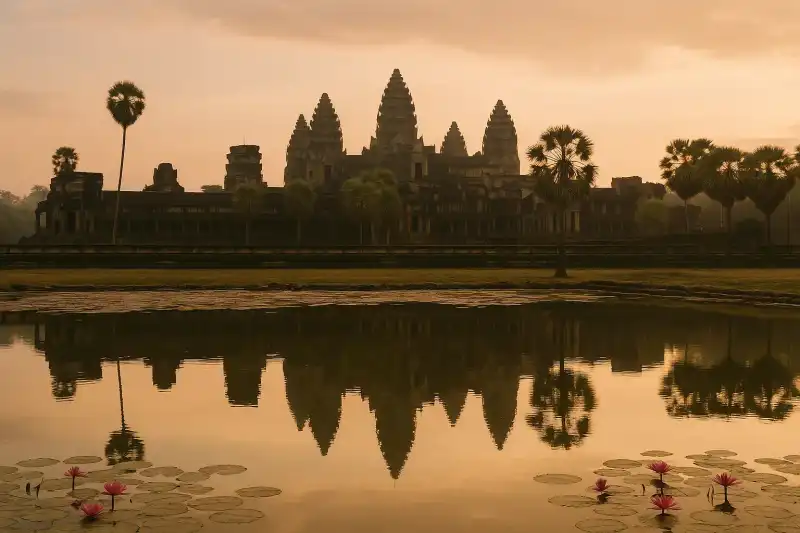
Angkor Wat Travel Guide 2026: Everything You Need to Know
KhmerAngkor Wat, the world's largest religious monument, spans over 400 acres in the heart of Cambodia. T...
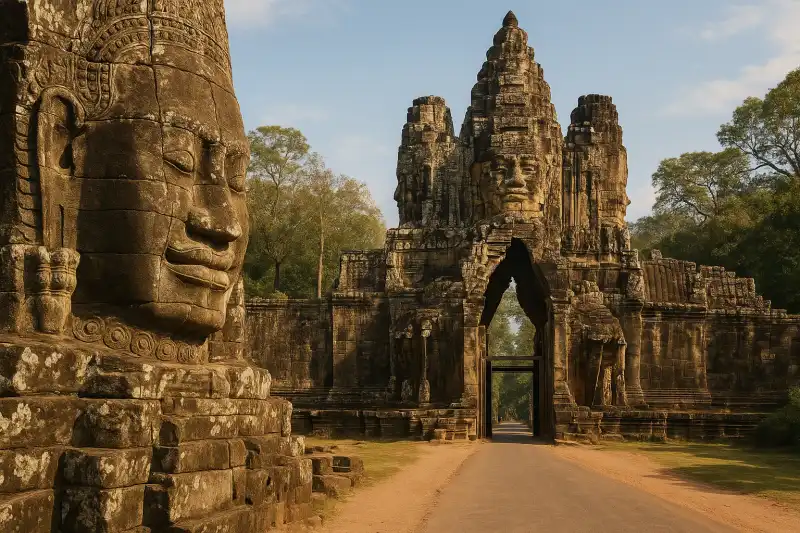
Angkor Thom Travel Guide 2026: Bayon Faces, Gates, and the Khmer Royal City
KhmerAngkor Thom was the last great capital of the Khmer Empire. This guide covers how to visit Bayon, th...
Bakong
Bakong is Cambodia's first major sandstone temple mountain, a stunning Khmer monument at the heart o...
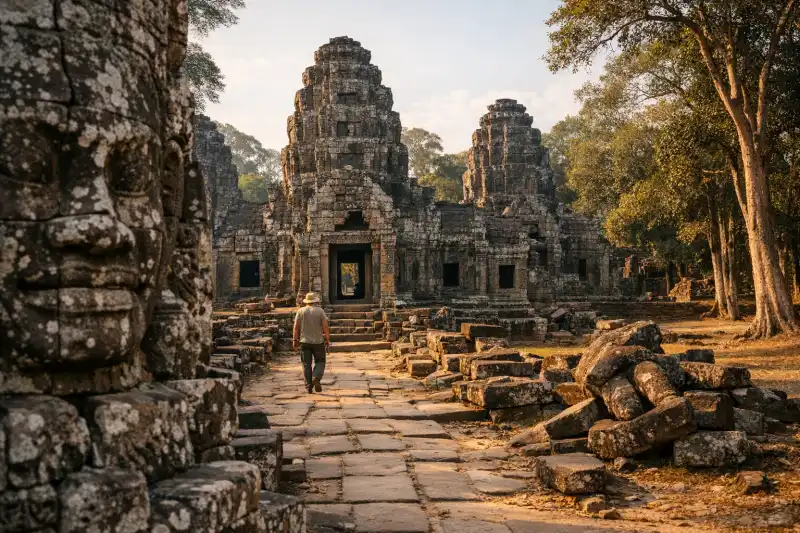
Banteay Kdei
KhmerExplore Cambodia’s Banteay Kdei, a atmospheric Angkor temple-monastery of quiet courtyards, worn car...
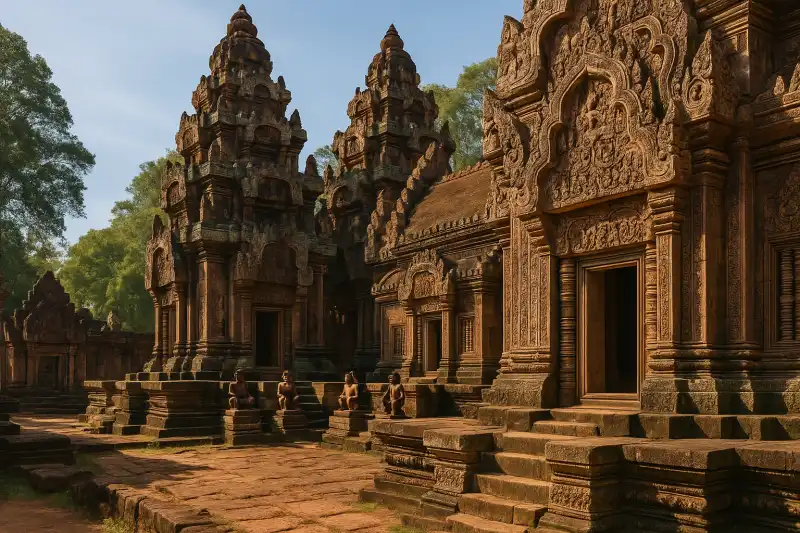
Banteay Srei Travel Guide 2026: Pink Sandstone Temple, Carvings, and Visit Tips
KhmerBanteay Srei is one of Cambodia’s most detailed Khmer temples, known for fine pink sandstone carving...