Quick Info
At a glance
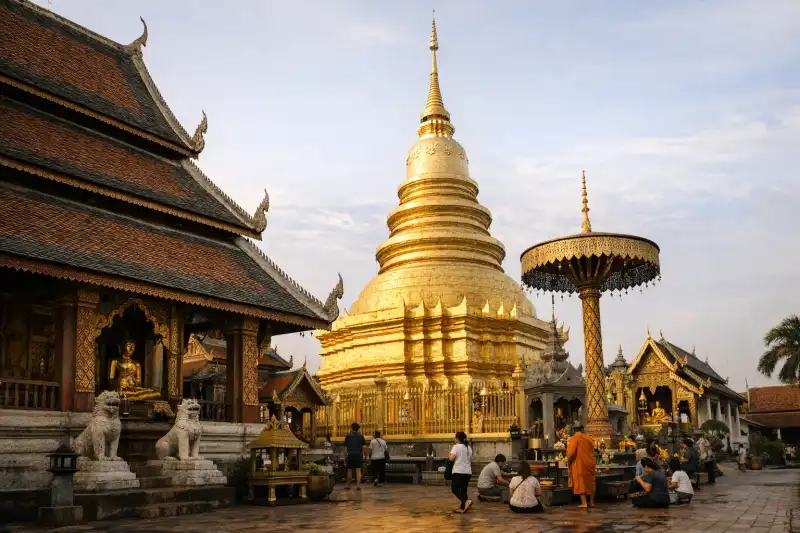
Nestled in the heart of Lamphun, a picturesque town in Northern Thailand, Wat Phra That Hariphunchai stands as a magnificent symbol of the region’s vibrant spiritual heritage and its rich connection with the ancient Lanna civilization. This revered Buddhist temple, whose golden chedi (stupa) glimmers irresistibly beneath the tropical sky, has long captivated visitors with its enchanting blend of history, architecture, and devotion. Dating back over nine centuries, Wat Phra That Hariphunchai is not just a religious monument, but a living testament to the enduring faith and artistic achievements of the people of what was once the kingdom of Hariphunchai.
The temple is set just north of the quiet Ping River, in Lamphun, a charming town less than 30 kilometers from Chiang Mai, Thailand’s northern metropolis. As you approach the sprawling complex, the intricate gates—layered with mythological motifs—hint at the rich tapestry of legend and history woven into every inch. From local devotees dressed in simple white bringing offerings to the monks, to groups of curious travelers drawn by the temple’s celebrated Lanna-style architecture, Wat Phra That Hariphunchai is a hub of culture and community for both locals and visitors from around the world.
Surrounded by the sounds of softly chiming bells, fluttering prayer flags, and the scent of incense, you’re transported into a spiritual oasis that feels worlds away from the bustle of modern life. The temple’s lush courtyards and serene walkways offer a tranquil respite, while the sheer scale and symmetry of its golden stupa command awe and reverence. Exploring Wat Phra That Hariphunchai is an immersive journey into Thailand’s heritage, making it a must-see destination for anyone seeking to uncover the roots of Lanna and Northern Thai civilization.
History
Ancient Roots: The Kingdom of Hariphunchai
Wat Phra That Hariphunchai’s story begins in the 9th century CE, intertwined with the mighty kingdom of Hariphunchai, founded by Mon people long before the rise of Lanna and the emergence of the great Thai kingdoms. According to chronicle legend, the temple was established around 897 CE by King Athitayaraj, who reigned over Hariphunchai. The region was then a center of power, culture, and Buddhism in the north, flourishing alongside other influential Mon cities in what is today’s Myanmar and Thailand.
The founding of the temple corresponded with Hariphunchai’s ambition to cement its stature as a Buddhist stronghold. However, archaeological surveys suggest the earliest structures may date even before this, with the site possibly serving as a sacred location since the 8th century. The most important feature—the majestic central stupa—was reputedly constructed to house a precious relic of the Buddha: a hair said to have been brought by monks from India via Sri Lanka and transmitted through successive generations of Buddhist followers.
Medieval Expansion and the Lanna Era
By the late 13th century, the political landscape of northern Thailand shifted with the rise of the Lanna Kingdom, founded by King Mengrai. In 1281, Lanna forces captured Hariphunchai, including its treasured temple, inheriting not just a city but a spiritual legacy. Rather than erasing the past, Lanna kings expanded and embellished Wat Phra That Hariphunchai, recognizing its potent role as a site of pilgrimage and prestige. Throughout the 14th and 15th centuries, the complex was enlarged and richly decorated, with new viharns, libraries, and gates echoing the distinctive Lanna style of steep, gabled roofs and elaborate stucco.
Pilgrims traveled from across the northern plains—some on foot for weeks—to worship at the stupa that housed the famed relic. Festivals celebrating the relic saw villagers converge in Lamphun for ritual processions, merit-making, and elaborate lantern offerings that continue today. During these centuries, Wat Phra That Hariphunchai’s fame only grew, cementing its place among the most sacred sites in what is now northern Thailand.
Modern Reverence and Conservation
The temple’s journey into modernity has been marked by both continuity and transformation. Through the turbulence of invading armies, changing dynasties, and colonial encroachment, Wat Phra That Hariphunchai has remained a vital center of faith. The chedi was restored and regilded several times, and in the early 20th century, a tall gilded umbrella was added to the summit, a gesture symbolizing the temple’s stature in Southern Buddhist tradition.
Today, Wat Phra That Hariphunchai is protected as an important national historic monument. It is a magnet for pilgrims, especially during the annual Visakha Bucha celebration, when the relic is honored with grand ceremonies and the air is illuminated by thousands of floating lanterns. The temple complex maintains its status not only as a religious site but as a focal point for northern Thai identity, art, and architecture. Ongoing conservation efforts ensure that its ancient murals, statues, and relic chambers remain intact for generations to come, while new generations continue to visit, offer prayers, and marvel at the enduring legacy of Hariphunchai’s golden chedi.
Key Features
Stepping inside Wat Phra That Hariphunchai is like entering a vividly painted chapter from a lost epic. The temple is arranged around its centerpiece: the soaring golden chedi, a mound-shaped stupa encased in brilliant gold leaf, rising almost 46 meters above the horizon. This iconic structure—the heart of the temple—reflects both Hariphunchai’s origins and centuries of continuous veneration. Its solid base is ringed with ornate niches containing gilded Buddha images, while the upper tiers are layered with intricate patterns recalling ancient Mon and Lanna motifs. Atop the chedi rests a nine-tiered parasol, a symbol of enlightenment and regal protection.
Surrounding the central stupa are a series of exquisitely decorated viharns, or assembly halls, each revealing the evolving artistry of the ages. Viharn Luang, the main prayer hall, is distinguished by immense teak pillars adorned in shimmering gold and red lacquers, supporting a tiered roof in classic Lanna style. The walls within are lined with murals depicting scenes from the Buddha’s life and from the region’s own Buddhist legends, while at the heart stands an imposing seated Buddha image, the object of daily local devotion.
Elsewhere in the courtyard, the Ho Trai (scripture library) stands on an elevated base, a dazzling fusion of brick, stucco, and finely carved wood panels. This structure, once housing rare palm-leaf manuscripts, is among the best preserved examples of Lanna bibliothecal architecture. Not far away, the Ang Kaew, a storied sacred pond, is believed to hold miraculous properties and features in tales about the founding of Lamphun itself.
The temple’s bell tower, festooned with ceremonial umbrellas and mobile lamps, signals both the time and the call to prayer. Near the entrance, elegant archways and naga serpent balustrades frame your passage, while votive shrines and satellite stupas provide opportunities for personal reflection. Ornate gateways—some decorated with colorful glass and tiles—guard the approaches, blending elements of myth and Buddhist symbolism.
Though busy during festivals, the temple rewards moments of stillness: the sound of monks chanting in the early morning, the flicker of candles at dusk, and the rhythmic sweep of brooms in the courtyards all add to the spiritual atmosphere. At every turn, you encounter traces of past kingdoms and living traditions, from intricate woodcarvings to painted banners hung for special ceremonies. The result is an unparalleled ensemble—harmonious, vibrant, and deeply rooted in the spiritual life of Northern Thailand.
Getting There
Reaching Wat Phra That Hariphunchai is a straightforward and rewarding trip, especially for those based in nearby Chiang Mai, northern Thailand’s most popular tourism hub. The temple sits in the heart of Lamphun, about 28 kilometers south of Chiang Mai city center, making it accessible for a day trip or as part of a wider exploration of the North.
The simplest way for most international travelers is by hiring a private car or taxi from Chiang Mai. Fares for a round-trip journey, including waiting time, range from 800 to 1,200 Thai Baht (approx. USD $22–$35), depending on negotiation and comfort level. This mode offers flexibility to visit Lamphun’s additional sites and sample the region’s peaceful rural roads.
For budget travelers, the white songthaew (shared taxi trucks) running between Chiang Mai and Lamphun offer a local, affordable, and colorful mode of transit. The journey takes around 45 minutes and costs 30–40 THB per person (under USD $2). Songthaews depart regularly from the Warorot Market area in Chiang Mai. There’s also the local train line, with multiple daily services between Chiang Mai and Lamphun; tickets are inexpensive (usually under 20 THB), and the train station lies a pleasant 1.5 km walk or short tuk-tuk ride from the temple.
Arriving by self-drive scooter or bicycle is another popular and scenic option for adventurous visitors; the rural roads provide an authentic glimpse into Northern Thai life, bordered by fields and villages. Parking is available near the temple entrance, though the central town area can be busy during festivals.
Once in Lamphun, the temple is easy to find: signage is clear in both Thai and English, and the golden chedi is visible from various points in the city center. Local tuk-tuks or bicycle taxis can take you the final distance if needed, for a modest fare of 30–50 THB. Whether arriving solo or as part of an organized tour, visiting Wat Phra That Hariphunchai opens up a tranquil but vivid world of spirituality and tradition.
When to Visit
Wat Phra That Hariphunchai welcomes visitors year-round, but seasonal changes in Northern Thailand influence both the temple’s atmosphere and the rhythm of local festivals. The most temperate and comfortable time to visit is during the cool, dry season from November through February. During these months, the skies are typically clear, humidity is low, and temperatures range from 18°C–28°C (65°F–83°F), which make for pleasant exploration of the temple grounds. This period coincides with Thailand’s peak tourism season, so expect a livelier atmosphere, especially during New Year and important Buddhist holidays.
The transitional months of March through early May bring increasing heat, with daytime highs sometimes exceeding 36°C (97°F). While the temple is open, sightseeing mid-day can be taxing; early morning or late afternoon visits are best if traveling during these months. Songkran, the Thai New Year (mid-April), is a major festival and sees special processions and ceremonial bathing of Buddha images at Wat Phra That Hariphunchai—a vibrant, if busier, time to experience local culture.
From late May through October, the green season arrives, characterized by regular afternoon and evening rains. While the surrounding landscapes are lush and temperatures cooler than in late spring, puddles and brief showers are common. The temple itself remains atmospheric in all weather; rainy mornings can be particularly tranquil and beautiful, as the golden chedi glistens against dramatic monsoon clouds. Visitors during the religious festival of Visakha Bucha (often in May) are treated to illuminations, candlelit processions, and heightened spiritual activity, though crowds swell during these celebrated periods.
No matter the season, visiting in the early morning hours is recommended to witness rituals, hear monks chanting, and enjoy the peace before the day’s bustle begins. With mindful timing and respect for ongoing ceremonies, Wat Phra That Hariphunchai is sure to reward any traveler, rain or shine.
Quick Facts
| Feature | Details |
|---|---|
| Location | Lamphun, Lamphun Province, Northern Thailand |
| Founded | Circa 897 CE, during the Mon kingdom of Hariphunchai |
| Religious Affiliation | Theravada Buddhism |
| Notable Structures | Central golden chedi, Viharn Luang (main hall), scripture library (Ho Trai), bell tower |
| Architectural Style | Lanna and Mon, featuring gold leaf stucco, teak wood, ornate murals |
| Significance | Enshrines Buddha relic (hair), historic site of pilgrimage and festivals |
| Entrance Fee | 20–50 THB (approx. USD $0.50–$1.50) for foreign visitors |
| Opening Hours | 07:00–18:00 daily |
| Nearby City | Chiang Mai (28 km north) |
| Annual Events | Visakha Bucha, Loy Krathong, Songkran (New Year) processions |
| UNESCO World Heritage | Not listed, but protected as a Thai national monument |
| Accessibility | Wheelchair accessible in main courtyards; some stairs in historic buildings |
| Dress Code | Modest clothing required (cover shoulders and knees; remove shoes in interiors) |
Guided tours: worth it?
Self-guided works here, but a guide can add real value if you want the ruins explained as a living place rather than just a sequence of monuments.
Best for
- First-time visitors who want context, not just photos
- Short visits where a planned route saves time
When to go self-guided
Go independently if you prefer setting your own pace, reading as you go, and checking official hours or ticket rules directly before you arrive.
What I’d avoid
Skip paid tours that bundle unrelated stops you do not actually want. The best option should either save meaningful planning time or add historical context you would miss on your own.
Lamphun and Wat Phra That Hariphunchai Private Day Tour from Chiang Mai
Useful when: you want flexible timing or a private guide
Northern Thailand Historical Temples Day Tour
Useful when: you want to compare guided formats before deciding
Lanna Kingdom Temples and Culture Discovery Tour
Useful when: you want to compare guided formats before deciding
Some tour links are affiliate links, which may earn Ancient Travel a small commission at no extra cost to you. I try to surface options that make practical sense for the site—not just anything bookable.
Frequently Asked Questions
What is the dress code when visiting Wat Phra That Hariphunchai?
Visitors should wear modest clothing, covering shoulders and knees, and remove shoes before entering temple buildings.
What are the opening hours for Wat Phra That Hariphunchai?
The temple is open daily from 7:00 AM to 6:00 PM.
Is there an entrance fee to Wat Phra That Hariphunchai?
Yes, there is a small entrance fee for foreign visitors, usually around 20–50 THB.
How long should I plan to spend at Wat Phra That Hariphunchai?
Most visitors spend 1–2 hours exploring the temple complex and its surroundings.
Are English-language guides available at Wat Phra That Hariphunchai?
Guides are not always on site, but some tours from Chiang Mai include English-speaking guides.
Nearby Ancient Sites
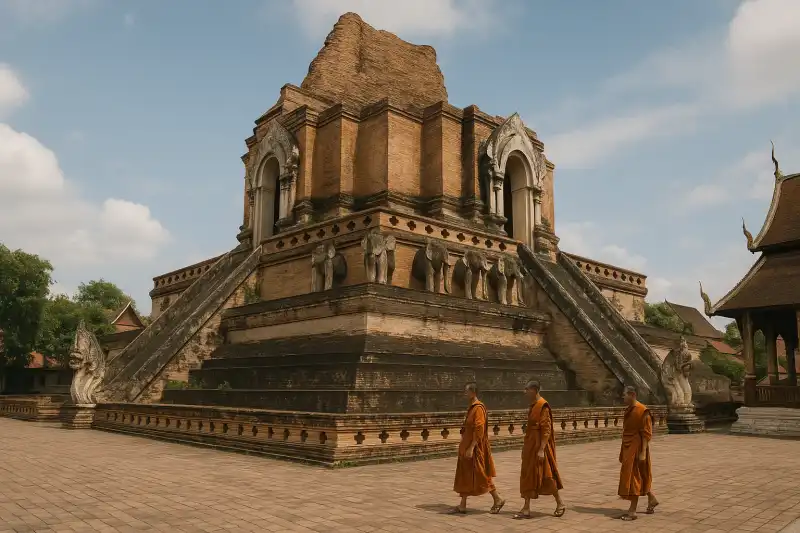
Wat Chedi Luang Travel Guide 2026: Chiang Mai's Ruined Stupa, Monks, and Visit Timing
Lanna KingdomPlan a focused Wat Chedi Luang visit with practical timing, temple etiquette, and old-city route tip...
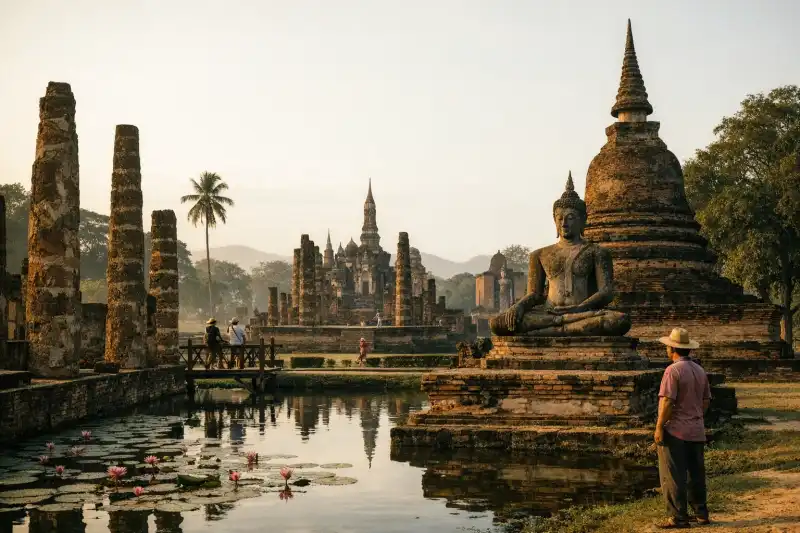
Sukhothai
Sukhothai, in northern Thailand's Sukhothai Province, is famed as the cradle of Thai civilization an...
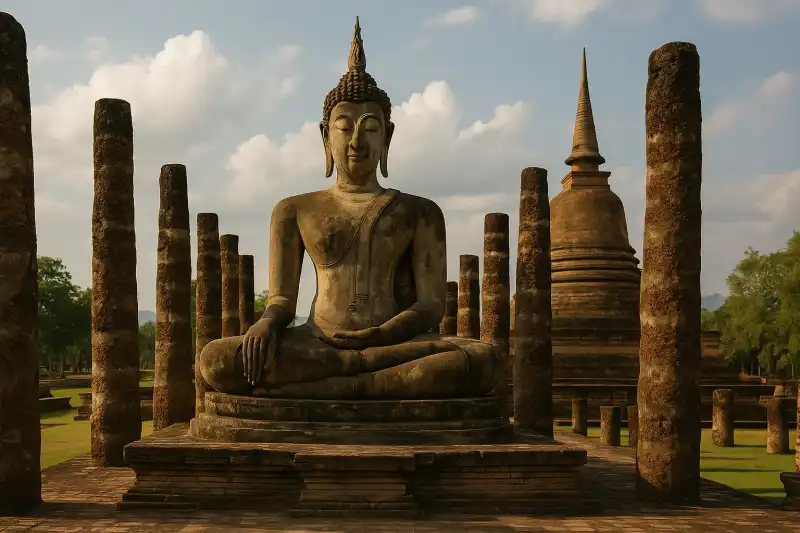
Sukhothai Historical Park Travel Guide 2026: Thailand’s First Capital Without the Crowds
Sukhothai KingdomPlan a smarter Sukhothai Historical Park visit with route tips, key ruins, and practical timing for ...