Quick Info
At a glance
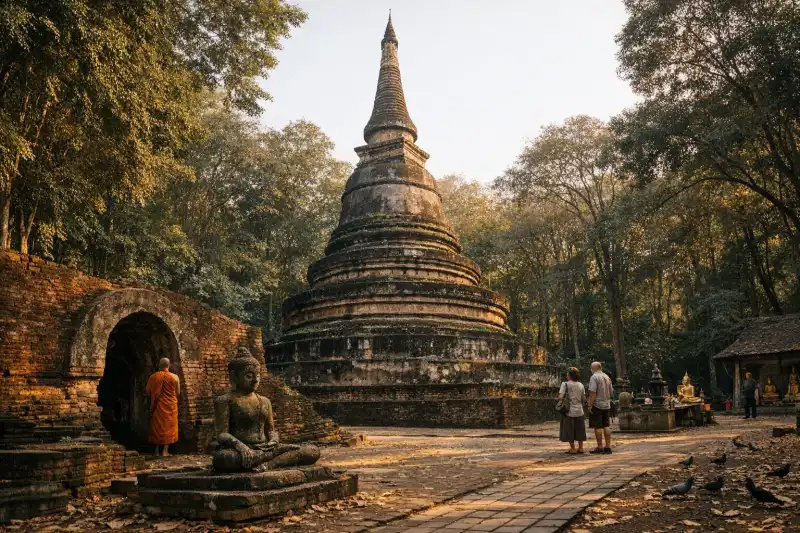
Wat Umong in Thailand feels less like a monumental temple complex designed for crowds and more like a place slowly reclaimed by contemplation. Set on the wooded western side of Chiang Mai, near the foothills leading toward Doi Suthep, this historic monastery invites visitors into a landscape of trees, moss-darkened bricks, quiet shrines, and pathways that seem made for unhurried thought. Unlike some of the city’s more gilded or highly frequented religious sites, Wat Umong is memorable for its subdued mood. The temple’s fame rests on its ancient tunnel system, but the real power of the place comes from the way architecture, forest, and Buddhist practice merge into a single atmosphere.
Arriving here, you notice immediately that the soundscape changes. Traffic fades, birds and rustling leaves take over, and the temple’s older surfaces appear in fragments through the greenery. The tunnels, the great chedi above them, and the broad grounds all hint at a monastery shaped by centuries of devotion rather than one dramatic moment of construction. For travelers interested in ancient religious landscapes, Wat Umong offers something especially valuable: not only a structure to admire, but an environment that still conveys its original function. It remains a working temple, a meditation site, and a living part of Chiang Mai’s spiritual geography. Visiting is therefore not simply about seeing old brickwork. It is about entering a place where northern Thailand’s Lanna Buddhist heritage still feels present in the air, the earth, and the silence.
History
Origins in the Lanna Kingdom
Wat Umong is generally associated with the 14th century, during the period when Chiang Mai was the flourishing capital of the Lanna Kingdom. The city itself was founded in 1296 by King Mangrai, and over the following centuries it became one of mainland Southeast Asia’s important centers of Theravada Buddhism. Temple building was central to royal legitimacy and urban culture, so monasteries of many scales were established across and beyond the city walls.
According to local tradition, Wat Umong was founded during the reign of King Kuena in the late 14th century. The story often repeated is that the king wished to provide a peaceful retreat for a respected monk known for meditative practice. To support this monk’s need for quiet, the temple was established in a forested location outside the more active urban core. The name “Umong” means “tunnel,” reflecting the underground brick passageways that became the temple’s defining feature. Whether the tunnels were part of the earliest phase or developed soon afterward, they represent an unusual architectural response to monastic practice in the region.
Development as a Forest Monastery
Wat Umong’s identity as a forest temple matters as much as its masonry. In Buddhist traditions across mainland Southeast Asia, forest monasteries have long been linked to stricter discipline, contemplation, and retreat from urban distractions. Even though Wat Umong was connected to the royal and religious life of Chiang Mai, it seems to have maintained a degree of separation from the city’s ceremonial center.
The tunnels may have served several purposes. They likely offered sheltered places for meditation and devotional movement, while also supporting religious imagery in a cool, dim environment. Their arched brick chambers contain Buddha images and niches, and the atmosphere inside differs sharply from the open courtyards of more conventional temple layouts. This made Wat Umong both practical and spiritually distinctive. Over time, the temple gained a reputation as a place suited to introspection rather than display.
The large bell-shaped chedi above the tunnel complex also reflects the architectural language of northern Thai Buddhism. While altered through repairs and reconstruction, it likely preserves the memory of an older sacred core. The combination of subterranean passages and elevated stupa created a symbolic vertical arrangement: inward movement below, reliquary monument above, and forest all around.
Decline, Survival, and Revival
Like many historic temples in northern Thailand, Wat Umong did not pass through history unchanged. Political instability, shifting patronage, and changing urban patterns affected monastic institutions across the region. Chiang Mai itself experienced periods of warfare, depopulation, and later recovery under Burmese and then Siamese influence. During less prosperous eras, some temples declined, and Wat Umong may have undergone stretches of neglect.
Yet sacred places often survive not because they remain continuously monumental, but because communities continue to value them. Wat Umong endured as a religious site, and its old structures remained embedded in local memory. In the modern era, especially during the 20th century, the temple saw renewed attention as both a monastic center and a destination for those seeking meditation or a quieter side of Chiang Mai’s spiritual heritage.
This revival included conservation efforts and the maintenance of the grounds, though Wat Umong still retains an intentionally rustic character. It does not feel overly restored. Instead, many parts of the site preserve a weathered, aged appearance that contributes to its authenticity. The temple also became associated with Buddhist study and modern spiritual teaching, broadening its appeal beyond traditional pilgrimage.
Wat Umong Today
Today, Wat Umong stands at an intersection of ancient heritage and living practice. It is visited by Thai worshippers, monks, international travelers, and meditation-minded visitors alike. The temple’s historic significance lies not only in its age, but also in the continuity of its role. It remains a place for prayer, reflection, and retreat, rather than a purely archaeological monument.
For historians of Lanna architecture, Wat Umong offers insight into regional temple forms beyond the better-known walled monasteries of central Chiang Mai. For general visitors, it shows how sacred landscapes can develop organically over centuries. And for those interested in Buddhism, it offers a rare chance to experience a site where spatial design still supports contemplation in much the same way it likely did generations ago. Its history is therefore best understood not as a sequence ending in the past, but as an unfolding tradition still visible in the present.
Key Features
The most famous feature of Wat Umong is its ancient tunnel complex, and for many visitors it is the emotional center of the site. Built from brick and coated in places with worn plaster, the tunnels form a network of arched passageways beneath the large chedi. Entering them is a sensory shift. Light dims, the air cools, and sounds become muted. Small Buddha images occupy niches, and incense or candlelight sometimes adds to the feeling that the space remains ritually active rather than merely preserved. The walls show age clearly, with darkened surfaces, patches of repair, and the soft irregularity that comes with centuries of use. Even a brief walk through the tunnels helps explain why Wat Umong is remembered less as a spectacle and more as an atmosphere.
Above the tunnels rises the great chedi, one of the temple’s most visually commanding elements. It is not the brightest or most ornate stupa in northern Thailand, but its scale and setting give it quiet authority. Surrounded by trees and open ground, the structure appears almost to emerge from the landscape. Its weathered form reflects multiple phases of restoration, yet it still communicates the religious importance of the monument. Walking around it, visitors can appreciate the relationship between the subterranean and elevated aspects of the temple: the introspective darkness below and the symbolic sacred summit above.
Wat Umong’s broader grounds are equally important. This is a temple best understood by walking slowly. Paths lead through wooded areas, past small shrines, bells, statues, and open spaces that invite pause. The forested setting is not ornamental in the way of a formal palace garden. Instead, it retains a natural quality that supports the temple’s identity as a retreat. Tree roots, leaf shade, and irregular clearings all contribute to the sense that monastic life here was meant to coexist with the environment rather than dominate it.
One especially memorable part of the grounds is the pond area, where visitors often see fish, turtles, and birds. This section has a gentler, almost local feel, reminding travelers that Wat Umong is woven into everyday life as well as historical tourism. Nearby, signs bearing Buddhist sayings and reflections are sometimes displayed in the grounds, adding a contemplative tone without turning the site into something overly curated. These details can feel modest, but together they help shape the temple’s distinctive character.
The temple also includes ordination and assembly structures used by the resident monastic community. These newer or maintained buildings may not be the oldest elements on site, but they are crucial to understanding Wat Umong as a living monastery. Monks still reside and practice here, and visitors should remember that the complex is not simply an ancient ruin in a forest. This living dimension changes how the site is experienced. You may encounter chanting, offerings, meditation sessions, or worshippers moving through the space with clear devotional purpose.
Another notable feature is the contrast between Wat Umong and Chiang Mai’s more famous urban temples. In the old city, temples such as Wat Chedi Luang impress through scale, decoration, and historical prominence within the city’s core. Wat Umong, by contrast, impresses through restraint. It is the temple’s understatement that makes it special. There are no overwhelming courtyards of polished symmetry here. Instead, you find layered spaces, partial views through trees, old brick softened by time, and a mood that rewards patience.
Photographers often appreciate the way light filters through the grounds, especially in the early morning or late afternoon. Historians value the rare tunnel architecture. Spiritual travelers come for the contemplative setting. Casual visitors often leave remembering the serenity more than any single monument. That is perhaps Wat Umong’s greatest feature of all: it remains coherent as a place. Its architecture, landscape, religious function, and emotional tone all support one another, making the temple more than a checklist stop on a Chiang Mai itinerary.
Getting There
Wat Umong is located southwest of Chiang Mai’s old city and is easy to reach without needing a full-day excursion. By car or taxi, the journey usually takes around 15 to 25 minutes depending on traffic. Ride-hailing apps are widely used in Chiang Mai, and a one-way trip from the old city often costs about 120 to 200 THB. From the Nimman area, fares can be slightly lower, often around 80 to 150 THB.
Red songthaews, Chiang Mai’s shared pickup taxis, are a budget-friendly option. If you negotiate a private ride from the old city, expect roughly 100 to 150 THB for the vehicle, though prices vary by time of day and demand. Shared rides can cost much less, sometimes around 30 to 50 THB per person if the route aligns well, but this is less predictable. Tuk-tuks are also available, typically in the 100 to 180 THB range for a short one-way trip from central Chiang Mai.
For independent travelers, renting a scooter is common in Chiang Mai, with daily rates often around 200 to 350 THB plus fuel. The roads to Wat Umong are straightforward by local standards, but only confident riders should choose this option. Cycling is also possible from central Chiang Mai, especially in cooler hours; the ride can take 25 to 40 minutes depending on your starting point.
Many visitors combine Wat Umong with Wat Phra That Doi Suthep, since both lie on the western side of the city. If hiring a driver for several hours, expect rates from roughly 800 to 1,500 THB depending on itinerary and vehicle type. Always carry small cash for transport, donations, and incidental purchases.
When to Visit
The best time to visit Wat Umong is during Chiang Mai’s cool and dry season, generally from November to February. At this time, mornings and late afternoons are especially pleasant for walking the wooded grounds, and the softer light suits the temple’s calm atmosphere. Daytime temperatures are usually comfortable compared with the hotter months, making it easier to explore both the tunnels and the wider monastery without fatigue.
March to May brings hotter weather, with afternoon temperatures that can feel intense. In some years, northern Thailand also experiences haze from regional agricultural burning during this period, which can affect air quality and reduce the pleasure of outdoor visits. If you travel in these months, aim for an early morning visit when conditions are cooler and quieter.
The rainy season, usually from June to October, transforms Wat Umong in an appealing way. The grounds become greener, the trees fuller, and the temple can feel even more secluded. Rain showers are often intermittent rather than constant, so a visit is still very possible with an umbrella or light rain jacket. Paths may be slippery in places, and the tunnels can feel darker and more humid, but the season offers a wonderfully atmospheric experience for those who do not mind wet weather.
In terms of time of day, early morning is ideal if you want a meditative mood and fewer visitors. Late afternoon is also attractive, with gentler light and cooler temperatures. Midday can be quieter in terms of crowds but less comfortable in the hot season. As with all active temples in Thailand, dress modestly and behave respectfully, especially if monks or worshippers are engaged in religious activities.
| Quick Facts | Details |
|---|---|
| Location | Chiang Mai, Chiang Mai Province, Thailand |
| Historical Background | Forest monastery associated with the Lanna Kingdom, with origins in the 14th century |
| Best Known For | Ancient brick meditation tunnels beneath a large chedi |
| Religious Tradition | Theravada Buddhism |
| Setting | Wooded temple grounds near the foothills of Doi Suthep |
| Time Needed | Around 1 to 2 hours |
| Entrance Fee | Usually free; donations appreciated |
| Best Time to Visit | November to February, or early morning year-round |
| Nearest Major City | Chiang Mai |
| Good Combined Visits | Wat Phra That Doi Suthep, Wat Chedi Luang, Chiang Mai old city temples |
Wat Umong rewards travelers who value mood as much as monumentality. It may not present the grand theatrical profile of Thailand’s most famous temple sites, yet that is exactly why it lingers in memory. The tunnels, weathered brickwork, and quiet forest setting create an experience that feels intimate and enduring. For anyone exploring Chiang Mai beyond its market streets and gilded temple halls, Wat Umong offers a different vision of sacred heritage: one rooted in retreat, reflection, and the long continuity of Buddhist life in northern Thailand.
Guided tours: worth it?
Self-guided works here, but a guide can add real value if you want the ruins explained as a living place rather than just a sequence of monuments.
Best for
- First-time visitors who want context, not just photos
- Short visits where a planned route saves time
When to go self-guided
Go independently if you prefer setting your own pace, reading as you go, and checking official hours or ticket rules directly before you arrive.
What I’d avoid
Skip paid tours that bundle unrelated stops you do not actually want. The best option should either save meaningful planning time or add historical context you would miss on your own.
Chiang Mai Temple Tours
Useful when: you want to compare guided formats before deciding
Chiang Mai Cultural Tours
Useful when: you want to compare guided formats before deciding
Wat Umong and Doi Suthep Tours
Useful when: you want to compare guided formats before deciding
Some tour links are affiliate links, which may earn Ancient Travel a small commission at no extra cost to you. I try to surface options that make practical sense for the site—not just anything bookable.
Frequently Asked Questions
What is Wat Umong known for?
Wat Umong is best known for its ancient brick meditation tunnels, forest setting, and tranquil atmosphere that reflects the monastic traditions of northern Thailand.
Where is Wat Umong located?
Wat Umong is located in Chiang Mai, in northern Thailand, at the base of Doi Suthep and a short drive from the old city.
How much time should I plan for a visit?
Most visitors spend 1 to 2 hours exploring the tunnels, stupa, ponds, wooded paths, and monastery grounds at a relaxed pace.
Is there an entrance fee to Wat Umong?
Wat Umong is generally free to enter, though donations are encouraged and some areas or museum spaces may request a small contribution.
What should I wear when visiting Wat Umong?
Wear modest clothing that covers shoulders and knees, and choose comfortable shoes suitable for walking on uneven temple paths.
Can I combine Wat Umong with other Chiang Mai temples?
Yes, Wat Umong is often combined with visits to Wat Phra That Doi Suthep and central Chiang Mai temples such as Wat Chedi Luang.
Nearby Ancient Sites
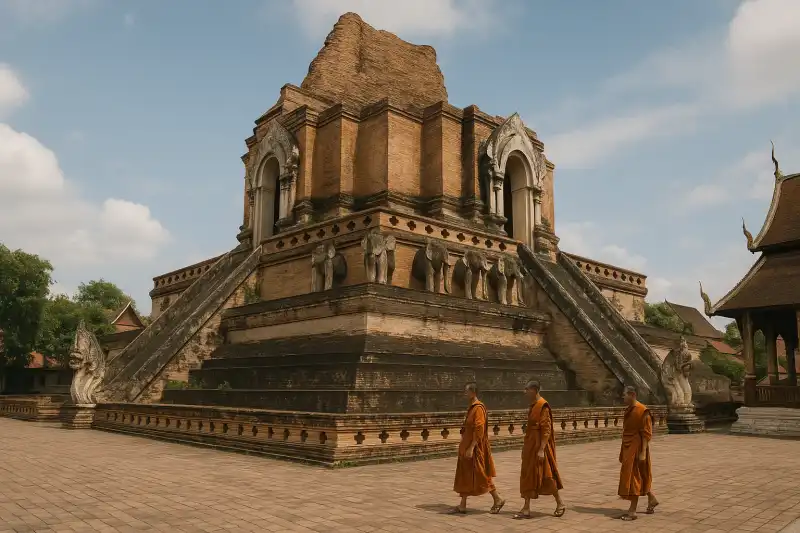
Wat Chedi Luang Travel Guide 2026: Chiang Mai's Ruined Stupa, Monks, and Visit Timing
Lanna KingdomPlan a focused Wat Chedi Luang visit with practical timing, temple etiquette, and old-city route tip...
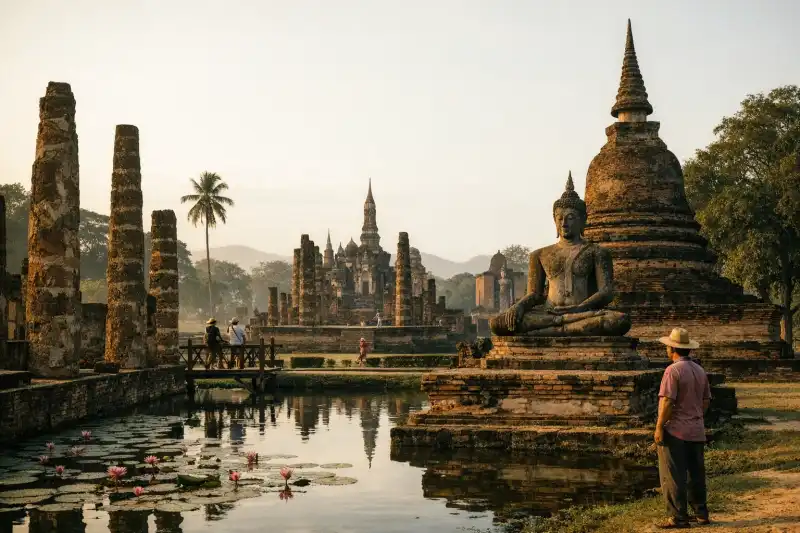
Sukhothai
Sukhothai, in northern Thailand's Sukhothai Province, is famed as the cradle of Thai civilization an...
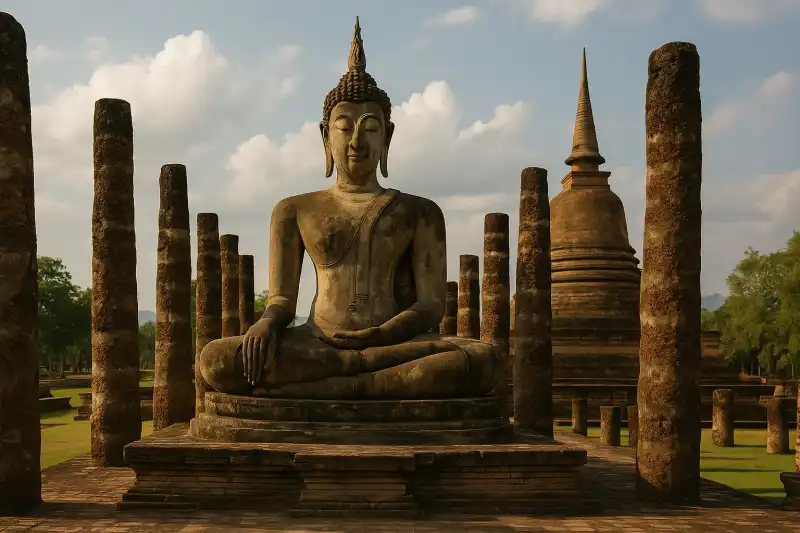
Sukhothai Historical Park Travel Guide 2026: Thailand’s First Capital Without the Crowds
Sukhothai KingdomPlan a smarter Sukhothai Historical Park visit with route tips, key ruins, and practical timing for ...