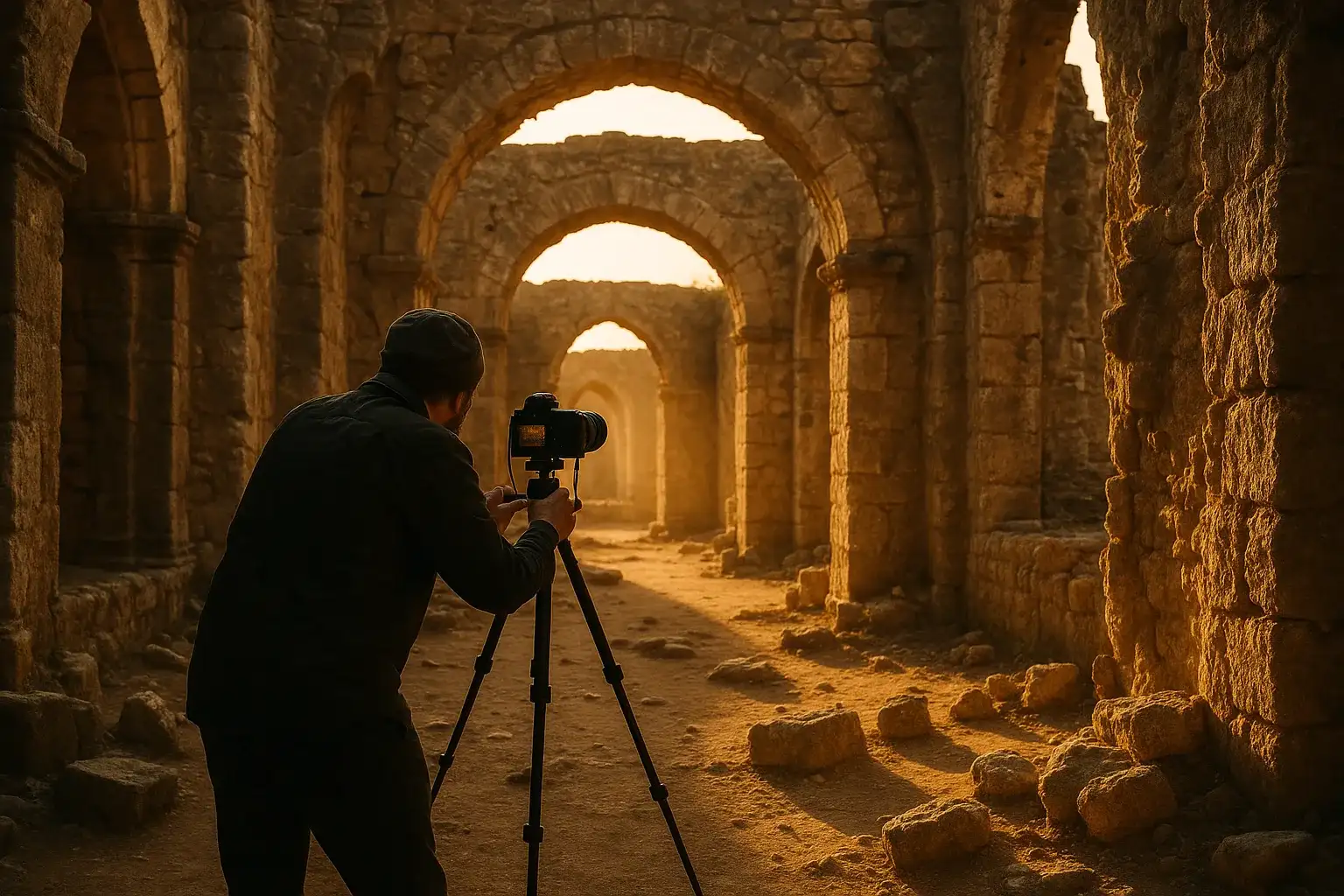
Ancient ruins present photographers with unique challenges and extraordinary opportunities. Weathered stone that has witnessed millennia of human history responds to light differently than modern architecture. The patina of age, the scale of fallen columns, the interplay of carved detail and natural erosion—these elements demand specific techniques to capture effectively.
Whether you’re shooting with a smartphone or professional DSLR, this guide will help you create compelling images that honor both the technical craft of photography and the profound historical significance of these sites. From the golden hour glow on the Acropolis to jungle-shrouded temples at Angkor Wat, ancient ruins reward the prepared photographer with images that transcend mere travel snapshots.
The Unique Challenge of Archaeological Photography
Photographing ancient sites differs fundamentally from other architectural or travel photography. You’re not just capturing structures—you’re documenting time itself. The same forces that created the ruins (earthquakes, erosion, human destruction) have also given the stones their character. Your challenge is to convey both the majesty of original design and the poignancy of decay.
Lighting poses particular challenges. Most ruins are exposed to harsh, uncontrolled natural light. Deep shadows pool within doorways while columns blaze white in direct sun. The stone itself varies dramatically—from pale marble that reflects light to dark volcanic stone that absorbs it. Metering for these high-contrast scenes requires careful thought.
Moreover, you’re working within strict ethical and practical constraints. Tripods are often prohibited. Flash photography may damage fragile pigments. And of course, you must never compromise the site’s integrity or inconvenience other visitors for the sake of a photograph.
Gear Essentials: From Smartphones to Professional Equipment
Smartphone Capabilities and Limitations
Modern smartphones are remarkably capable cameras, and their computational photography features can actually outperform traditional cameras in challenging lighting. Features like HDR, Night Mode, and Portrait Mode can create stunning results.
Smartphone advantages at ancient sites:
- Always accessible, no extra weight to carry
- Computational HDR handles high-contrast scenes automatically
- Discreet when sites prohibit conspicuous cameras
- Easy sharing and backup via cloud
Limitations to work around:
- Limited optical zoom (digital zoom degrades quality)
- Difficulty controlling depth of field
- Struggles with very low light without tripod
- Small sensors struggle with extreme dynamic range
Smartphone tips:
- Learn your phone’s manual/pro mode for control over exposure
- Use HDR for sunlit ruins with deep shadows
- Attach clip-on lenses for wider or closer perspectives
- Clean your lens frequently—dust is invisible to your eye but visible in photos
Recommended Camera and Lenses
If you’re serious about ruin photography, a DSLR or mirrorless camera with interchangeable lenses opens creative possibilities smartphones can’t match.
Camera body considerations:
- Good high-ISO performance (for handheld low light)
- Dynamic range (for high-contrast scenes)
- Weather sealing (for dusty or humid conditions)
Essential lenses:
- Wide-angle zoom (16-35mm equivalent): For establishing shots, architectural interiors, and dramatic perspectives
- Standard zoom (24-70mm): Versatile walk-around lens for most situations
- Telephoto (70-200mm or longer): For detail shots, compressing layers, and isolating elements
- Macro (90-105mm): For texture details, carvings, and architectural ornaments
Prime lenses offer superior sharpness and wider apertures for low light, but zooms provide flexibility when you can’t change position freely at crowded sites.
Tripods and Stabilizers
Since tripods are often prohibited at ancient sites, consider alternatives:
- Compact travel tripods: Some sites allow small tabletop tripods
- Bean bags: Stable camera support on walls or ledges
- Image stabilization: Modern cameras and lenses offer 5-7 stops of stabilization
- Higher ISO acceptance: Embrace some noise rather than fight it
When tripods are permitted, lightweight carbon fiber travel models are worth the investment for archaeological travel.
Filters and Accessories
- Polarizing filter: Reduces glare on stone surfaces, enhances sky contrast, increases color saturation
- ND filters: For long exposures to blur crowds or clouds
- Lens hood: Essential for preventing lens flare in bright sun
- Cleaning kit: Dust is everywhere at archaeological sites
Mastering Light: Golden Hour, Blue Hour, and Harsh Midday Sun
Golden Hour Planning Tools and Apps
Golden hour—that magical period shortly after sunrise and before sunset—provides warm, directional light that transforms stone ruins from washed-out to dimensional. The low-angle sun creates long shadows that reveal texture and form, while the warm color temperature (around 3500K) complements the earthy tones of ancient stone.
Use apps like PhotoPills or Sun Surveyor to plan your shoots:
- Determine exact sunrise/sunset times at your location
- Calculate sun position for specific dates
- Plan shadow directions and lengths
- Identify when sunlight will illuminate specific architectural features
Site-specific golden hour opportunities:
- Angkor Wat: Sunrise behind the central towers from the reflection pools
- Petra: Late afternoon sun hitting the Treasury through the Siq
- Acropolis: Evening light from Areopagus Hill or Philopappos Hill
- Bagan: Sunrise hot air balloons rising over temple silhouettes
Working with Directional Morning Light
Early morning typically offers the calmest atmosphere and cleanest air. At sites like Machu Picchu, morning mists create ethereal conditions that photographers dream of. The soft, directional light of early morning is forgiving and sculptural.
Morning light techniques:
- Position yourself so light rakes across surfaces to reveal texture
- Use side-lighting to emphasize carved reliefs and architectural details
- Capture long shadows for compositional depth
- Arrive before sunrise to set up and capture the transition from blue to golden hour
Blue Hour for Illuminated Monuments
After sunset, during the brief “blue hour” when there’s still light in the sky but artificial lights have been turned on, some sites become magical. The Acropolis and Colosseum are beautifully lit after dark.
Blue hour tips:
- Arrive early—you have maybe 30-40 minutes of optimal light
- Use a small aperture (f/8-f/11) for starburst effects on lights
- Higher ISO (800-3200) may be necessary for handheld shots
- White balance set to daylight preserves the blue tones
HDR Techniques for High-Contrast Scenes
Ancient ruins almost always present high dynamic range scenes: brilliant sunlit columns against deep shadowed doorways. HDR (High Dynamic Range) techniques capture detail throughout.
HDR approaches:
- In-camera HDR: Many cameras and smartphones automatically merge multiple exposures
- Bracket and merge later: Shoot -2, 0, +2 exposures and combine in post-processing
- Single-shot recovery: Modern sensors have remarkable dynamic range; shoot RAW and recover shadows/highlights
Use HDR judiciously—overdone HDR creates unnatural “cartoon” effects that cheapen the gravitas of ancient subjects.
Overcast Days: Hidden Advantages
Don’t despair if clouds obscure the sun. Overcast conditions provide soft, even lighting that eliminates harsh shadows and hotspots. This is ideal for:
- Detail photography of carvings and textures
- Evenly lit architectural studies
- Panoramas without exposure variations
- Moody, atmospheric images
Overcast light is especially effective at forest-shaded sites like Angkor Wat or jungle-covered ruins in Guatemala and Mexico.
Composition Techniques for Ancient Architecture
Leading Lines Through Columns and Paths
Ancient builders understood visual drama. Processional ways, columned halls, and temple axes create natural leading lines that draw viewers into your images. Use these intentionally:
- Frame shots looking down colonnades to create depth
- Position yourself at the end of processional ways (like the Sacred Way at Delphi)
- Use fallen columns or foundation lines as diagonal leading elements
- The Siq leading to Petra’s Treasury is the world’s most famous example
Framing with Architectural Elements
Use doorways, windows, archways, and even gaps between columns to frame distant subjects. This creates layers of interest and draws viewers into the scene. The Treasury at Petra is traditionally photographed through the narrow opening at the end of the Siq—a technique you can adapt at many sites.
Symmetry in Classical Architecture
Greek and Roman builders prized symmetry, and emphasizing it in your compositions creates powerful, balanced images. Center yourself carefully and use level horizons for maximum impact.
Sites with strong symmetry include:
- The Parthenon on the Acropolis
- The Temple at Segesta in Sicily
- The Treasury at Petra
- The Temple of Isis at Philae
Finding Foreground Interest
Avoid shooting only the monument itself. Include flowers, grasses, rocks, or low walls in the foreground to create depth and anchor your composition. This technique is especially effective at isolated sites where the landscape context matters.
Human Scale Elements
Including people in your ruin photographs serves multiple purposes: they provide scale (reminding viewers of the monumental size), add life to static scenes, and help communicate the site as a lived, visited place rather than just an architectural study.
Adding scale ethically:
- Photograph from behind to preserve anonymity
- Wait until visitors enter architecturally appropriate positions
- Use silhouettes for dramatic effect
- Consider self-portraits using a timer or remote trigger
Negative Space and Minimalism
Sometimes the most powerful ruin photographs are the simplest. Isolate a single column against sky. Capture a fragment of carved stone on bare ground. The weight of ancient history often speaks loudest through minimal compositions.
Capturing Scale and Context: Wide Shots vs Intimate Details
The Establishing Shot
Begin your coverage of any site with wide establishing shots that communicate the overall layout and setting. These images answer “where are we?” and provide context for tighter shots.
Establishing shot checklist:
- Capture the site in its landscape context
- Include sky for atmosphere
- Show the relationship between different structures
- Shoot from elevated viewpoints when available
At Machu Picchu, the classic establishing shot from the Guardian’s House shows the entire citadel against its stunning mountain backdrop. At Angkor Wat, shoot from across the moat to include the full temple profile.
Intimate Details: The Story in Small Things
After the wide shots, focus on details. Ancient sites reward close attention:
- Tool marks: Chisel strokes from ancient stonemasons
- Weathering patterns: How time, water, and wind have shaped stone
- Fragments: Fallen columns, broken carvings, scattered architectural elements
- Textures: Patina of lichen, moss, erosion patterns
- Nature reclaiming: Plants growing from ancient structures
These detail shots often become the most meaningful images from your trip—they require seeing rather than just looking.
Working with Stone, Shadow, and Texture
Photographing Stone Textures
Stone is the medium of ancient architecture, and different stones present different challenges:
Marble (Greek temples, Ephesus):
- Highly reflective in direct sun—use polarizers to reduce glare
- Cool white balance complements the stone
- Captures fine detail in carvings and fluting
Sandstone (Petra, Egyptian temples):
- Warm, accepting colors that glow in golden hour
- Soft enough to hold detailed carvings
- Shows stratification and erosion beautifully
Volcanic stone (Roman ruins, Pompeii):
- Dark, light-absorbing surfaces
- Require exposure compensation
- Often rough textures that catch side-lighting dramatically
Lava and tuff (Teotihuacan, Pompeii):
- Unique textures unlike quarried stone
- Often eroded into fascinating patterns
- Dark, requiring higher exposures
Using Shadow Creatively
Shadows aren’t obstacles—they’re compositional tools. Deep shadows within doorways frame subjects. Column shadows create rhythmic patterns. The transition from sun to shade creates mood and mystery.
Shadow techniques:
- Shoot when shadows are longest (early morning, late afternoon)
- Position yourself to capture shadows extending toward you
- Use shadow patterns as graphic elements
- Embrace deep blacks rather than trying to lift all shadows
Capturing Weathering and Patina
The aged appearance of ruins tells their history. Don’t try to “clean up” weathered surfaces in post-processing—the staining, vegetation, and wear patterns are the story. Shoot to emphasize:
- Color variations from mineral deposits
- Lichen and moss growth
- Erosion patterns showing water flow
- Reconstructed vs. original stone contrasts
Managing Crowds: Techniques for Clean Shots at Popular Sites
Timing Strategies for Empty Shots
The simplest crowd-avoidance technique is timing. At major sites:
- Arrive the moment gates open
- Stay through lunch when tour groups depart
- Remain until closing for evening light
- Visit on weekdays rather than weekends
- Choose shoulder season over peak season
Study tour group patterns—they often move predictably, leaving quiet gaps in their wake.
Long Exposure to Blur Crowds
If you can use a tripod (or rest your camera on a solid surface), long exposures can “erase” moving crowds from your images:
- Use ND filters to achieve 30+ second exposures in daylight
- Stationary tourists will remain visible but ghostly
- Moving people disappear entirely, leaving empty scenes
- This works best at sites with steady tourist flow rather than tour groups that stand still
Using Crowds Compositionally
Sometimes embracing crowds creates better images than fighting them:
- Use people as scale elements
- Capture the energy of tourism alongside ancient tranquility
- Photograph visitors interacting with the site (respectfully)
- Document the site’s contemporary life, not just its ancient state
Alternative Angles and Vantage Points
When the classic viewpoint is packed with photographers:
- Explore the perimeter for unusual angles
- Look for elevated positions (hills, walls where permitted)
- Shoot from behind rather than the standard approach
- Focus on details while ignoring the overall scene
At the Acropolis, everyone shoots the Parthenon from the east. The west side, though less complete, offers dramatic views with far fewer people.
Respectful Photography: Ethics and Conservation
Tripod and Equipment Restrictions
Most major ancient sites prohibit tripods because they:
- Block narrow pathways
- Pose tripping hazards
- Can damage fragile surfaces
- Create a professional impression that triggers permit requirements
Always check regulations, and never try to sneak prohibited equipment past security. Some sites allow small table-top tripods or offer photographer permits for a fee.
Flash Photography Prohibitions
Flash photography is often prohibited because:
- Intense light can fade pigments on painted surfaces
- It disturbs other visitors’ experience
- It can damage organic materials
- It triggers automatic closure systems at some sites
Even where not explicitly banned, avoid flash out of respect for preservation and other visitors.
Drone Regulations
Drones are almost universally prohibited at ancient sites. Most UNESCO World Heritage sites and national monuments ban drone flights entirely. The reasons include:
- Physical damage from crashes
- Disturbance of wildlife and nesting birds
- Privacy violations over archaeological areas
- Interference with ongoing research
The fines for illegal drone operation can be severe (thousands of dollars in some countries), and customs may confiscate drones at entry. Enjoy ancient sites from ground level.
Respecting Ceremonies and Worshippers
Some ancient sites remain active religious locations (Myanmar temples, Machu Picchu for Andean ceremonies, Angkor Wat for Buddhist worship). When photographing:
- Never interrupt or photograph private ceremonies without permission
- Observe local customs (removing shoes, covering shoulders)
- Be unobtrusive—your photo is not more important than someone’s spiritual practice
- Smile and be respectful when noticed
Avoiding Damage for the “Perfect Shot”
Never compromise the site for a photograph:
- Never climb on walls, columns, or structures
- Don’t move stones or artifacts
- Don’t pick flowers or disturb vegetation
- Don’t lean against carved surfaces
- Follow all barriers and signage
The perfect shot isn’t worth damaging something irreplaceable.
Post-Processing Tips for Ancient Site Photos
RAW Processing Priorities
When processing ruin photos from RAW files:
- White balance: Adjust to convey mood—warmer for sunset, cooler for shade
- Exposure recovery: Lift shadows subtly; don’t eliminate them entirely
- Highlights: Recover detail in bright stone without making it muddy
- Clarity/texture: Enhance stone texture without over-sharpening
Color Grading for Atmosphere
Ancient sites often benefit from subtle color grading:
- Add warmth to evoke golden hour even in midday shots
- Emphasize greens for jungle sites (Angkor Wat, Tikal)
- Boost blues for desert sites (Petra, the Pyramids)
- Maintain natural skin tones if people are present
Removing Distractions
Clean up your images ethically:
- Remove modern elements (signs, guardrails) when distracting
- Clone out litter from frame edges
- Spot correct sensor dust
- Remove unavoidable tourists from corners (but not for “empty” deception)
Creating Panoramas
Ancient sites often demand wider views than a single frame can capture. Shoot overlapping images and merge them in Lightroom or Photoshop. Key considerations:
- Use manual exposure to prevent banding
- Level your camera on a tripod or carefully handheld
- Overlap by 30-50% between frames
- Avoid moving subjects in overlap zones
Building a Coherent Ancient Sites Portfolio
Documenting the Journey
Think of your ruin photography as visual storytelling. Your final collection should include:
- Establishing wide shots
- Medium views showing architectural relationships
- Detail and texture shots
- Human scale elements
- Environmental context (landscape, weather, light)
- Abstract compositions
Developing Your Style
Over time, you’ll develop preferences:
- Some photographers emphasize monumental scale
- Others focus on romantic decay and nature reclamation
- Some pursue technical perfection of architectural lines
- Others embrace mood and atmosphere over sharpness
There’s no single “right” way to photograph ruins. Study photographers you admire, practice consistently, and let your style emerge organically.
Sharing and Protecting Your Work
When sharing ruin photographs:
- Tag sites respectfully, without revealing secret or protected locations
- Include historical context in captions
- Watermark or register copyright on your best work
- Consider submitting to stock agencies specializing in travel and archaeology
- Print your favorites—these images deserve physical form
The stones have waited millennia to be seen. Through thoughtful photography, you help others witness their enduring power and beauty for generations to come.