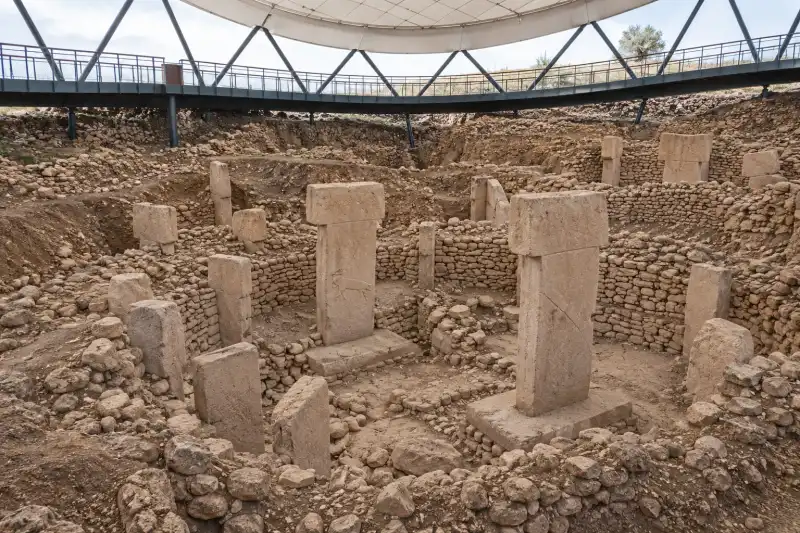
Southeastern Turkey holds some of the region’s most consequential archaeology, from the Neolithic enclosures at Göbekli Tepe to the mosaics associated with ancient Zeugma. It also requires a different planning mindset from an Aegean road trip. Current regional security advice, road conditions, museum access, and the distance from restricted border areas are part of the itinerary.
This route deliberately stays with established city bases and does not route travelers toward the Turkey-Syria border. The UK Foreign, Commonwealth & Development Office advises against all travel within 10 km of that border and notes specific regional risks. Check the current advisory for your nationality as well as local authority notices before booking and again before each overland leg.
Route overview
| Day | Base | Focus | Why it is realistic |
|---|---|---|---|
| 1 | Şanlıurfa | Arrival, museum, old city | Keeps the first day light and lets you confirm local conditions. |
| 2 | Şanlıurfa | Göbekli Tepe | A focused out-and-back day rather than a border detour. |
| 3 | Gaziantep | Intercity transfer and museum | Uses a major city base with services and a museum-centered afternoon. |
| 4 | Gaziantep | Zeugma and the mosaic museum | Treat the ancient city and museum as a dedicated day. |
| 5 | Gaziantep | Flexible departure or museum time | Gives room for changed hours, transport disruption, or an earlier onward connection. |
Day 1: arrive in Şanlıurfa and check the plan
Use the arrival day to settle in, confirm the next day’s transport, and inspect current local notices. A museum visit or old-city walk is a better first commitment than an immediate long excursion. Keep copies of accommodation addresses, passport information, and travel-insurance contacts accessible offline.
Avoid relying on an old blog for regional route advice. Conditions can shift faster than travel content updates, and an operator’s usual route may not be appropriate on your travel date.
Day 2: Göbekli Tepe as a focused day
Göbekli Tepe deserves time for the protective structures, viewing platforms, and visitor interpretation. Arrange the transport return before you leave town, carry water, and verify current opening and access information with the official operator or local authority. Do not bolt on a remote side trip just to make the day sound more adventurous.
Day 3: move to Gaziantep
Treat this as a transfer day. Confirm the exact rail, bus, flight, or driver arrangement directly with the carrier or provider, including pickup point and luggage policy. When you arrive, make the museum your main goal if opening hours permit. A flexible afternoon is useful if transport runs late.
Day 4: Zeugma and the museum
Zeugma’s archaeological story is best understood alongside the Gaziantep Zeugma Mosaic Museum. Verify the day’s site access, museum hours, and whether a vehicle is necessary for the precise visit you intend. Do not assume an online timetable, a tour listing, or a map pin proves that a route is operating.
Safety rules for the whole route
- Read current official travel advice before booking and immediately before travel.
- Do not travel within the restricted border zone or add a “quick look” at the Syrian frontier.
- Follow instructions from Turkish authorities, venue staff, and your transport provider.
- Avoid demonstrations and stay aware of local security updates.
- Share daily routing and accommodation details with a trusted contact.
- If advice changes, adjust, postpone, or leave rather than trying to salvage a prepaid plan.
A good southeastern Turkey archaeology itinerary is not the longest line you can draw on a map. It is a route that puts major sites in context while leaving enough margin to make sensible choices when the current situation says no.