Quick route summary
This 5-day route starts in Patan and ends in Lumbini, with two very different ancient Nepal experiences held together by craft, sacred space, and memory. You begin at Patan Durbar Square, where Newar royal architecture packs temples, courtyards, palace rooms, and metalwork into a walkable old city. Then you transfer west to Lumbini, the birthplace of the Buddha, for a slower look at the Sacred Garden, Ashoka’s pillar, and the modern monastic zones around the ancient pilgrimage core.
The pace is moderate if you fly between the Kathmandu Valley and Bhairahawa. It becomes tiring if you do the road transfer both ways. Give the route five days because Patan rewards close looking, and Lumbini is larger and quieter than many travelers expect.
Who this itinerary is for
This itinerary is for travelers who want ancient and sacred Nepal without trying to cover the whole country in one breath. It works well for people who like architecture, Buddhist history, old royal cities, and slow site wandering more than viewpoint chasing.
It is not ideal if you want a trekking trip, a packed Kathmandu Valley temple circuit, or a quick one-base holiday. The Patan to Lumbini transfer takes planning, and Lumbini’s best moments are not loud. If you need constant movement and big visual drama every hour, this route may feel too quiet. If you like places where details accumulate, it lands well.
Route at a glance
- Day 1: Overnight in Patan. Arrive in the Kathmandu Valley, settle in, and begin with Patan Durbar Square on foot.
- Day 2: Overnight in Patan. Return to the square for the museum, courtyards, shrines, and Newar craft details at a slower pace.
- Day 3: Overnight in Lumbini. Transfer to Lumbini by flight via Bhairahawa or by a long road journey from the valley.
- Day 4: Overnight in Lumbini. Visit the Maya Devi Temple area, Ashoka pillar, Sacred Garden, and nearby pilgrimage zones.
- Day 5: Overnight in Lumbini or depart. Use the morning for monasteries, a second quiet look at the Sacred Garden, then leave without overpacking the day.
Practical logistics before you go
Use Patan as your first base if you can. Kathmandu has more hotels, but Patan keeps you close to the old royal city and makes the first two days feel less like commuting. Once you are inside the historic core, walking is the best tool. Taxis or rideshares make sense for arrival, luggage, and transfers between Kathmandu and Patan.
The hardest practical choice is the Patan to Lumbini transfer. Flying from Kathmandu to Bhairahawa, then driving to Lumbini, is the cleanest version. The road journey can be long, slow, and tiring, especially if traffic, weather, or road work gets involved. Do not plan a full Lumbini sightseeing day after an overland transfer. That is how a sacred site turns into a logistics headache.
Guided tours make the most sense in Patan, where temple iconography, palace courtyards, and Newar artistic traditions are dense. A guided Patan Durbar Square or Kathmandu Valley tour can be useful on the first day if you want orientation without guessing your way through the old city.
Lumbini needs patience more than a guide, though a knowledgeable local guide can help connect the archaeological core, Ashokan memory, and Buddhist pilgrimage geography. The site area is spread out. Use a bicycle, rickshaw, taxi, or hotel-arranged transport rather than assuming you can comfortably walk everything in the heat.
Day 1: Patan Durbar Square and the old royal city
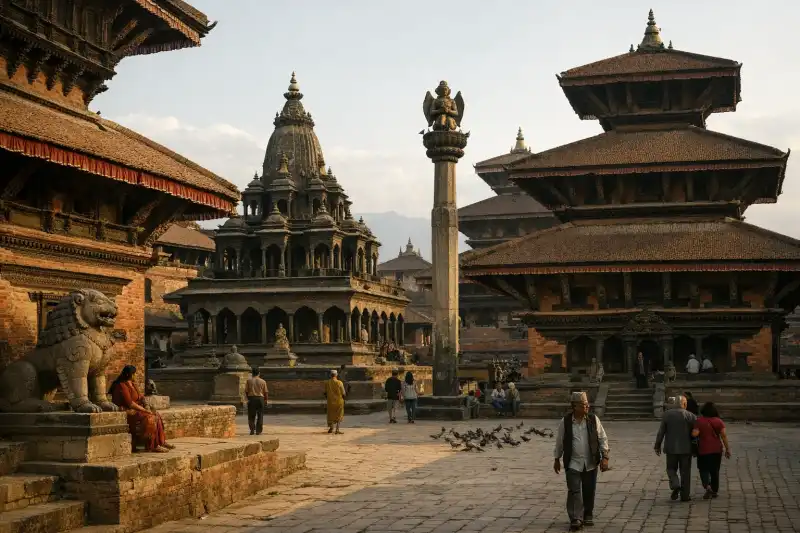
Start at Patan Durbar Square and resist the urge to treat it as a single photo stop. The square was the ceremonial heart of one of the old Kathmandu Valley kingdoms, and its architecture works best when you slow down enough to notice how royal power, religious life, and craft traditions sit almost on top of each other.
Patan is strongly associated with Newar artisans, especially metalworkers and woodcarvers. That matters on the ground. Look at the temple struts, bronze details, carved windows, and compact shrine forms rather than only the skyline. The city’s beauty is not just scale. It is precision.
Keep today simple. Arrive, check in, and walk the square in the late afternoon if timing allows. If you are coming from an international flight, do not book an ambitious guided route immediately. Patan deserves attention, and jet lag makes temple details blur together.
The square is walkable, but the old city streets are tight and busy in their own way. Wear shoes that can handle uneven paving, carry small cash for tickets or local stops, and leave time to sit somewhere nearby. The best first day here is not about coverage. It is about learning how the city is put together.
Day 2: Patan’s courtyards, museum, and Newar craft
Return to Patan Durbar Square in the morning, when your eyes are fresher. This is the day for the palace area, museum collections, and the smaller courtyards that make Patan more than a line of temples. The Patan Museum is especially useful because it gives shape to the Hindu and Buddhist imagery you see outside.
One historical detail to keep in mind: Patan’s royal and religious art was not isolated from everyday craft. Newar workshops supplied metal images, ritual objects, and architectural skill across the valley and beyond. That helps explain why the old city can feel so visually concentrated. It was not only a royal stage. It was also a working artistic environment.
Give the day a loose structure. Spend the morning around the square and museum, break for lunch, then use the afternoon for nearby lanes and courtyards. A guide can help here because many details are easy to pass: a shrine tucked into a courtyard, a restored beam, a Buddhist image in a largely Hindu-feeling urban space.
Do not add a full Kathmandu Valley circuit today unless you are comfortable with a much busier pace. Bhaktapur, Kathmandu Durbar Square, and the major stupas all deserve time, but this route is built around Patan and Lumbini. If you turn Day 2 into a checklist, Patan becomes background scenery, which would be a shame.
Day 3: Transfer from the Kathmandu Valley to Lumbini
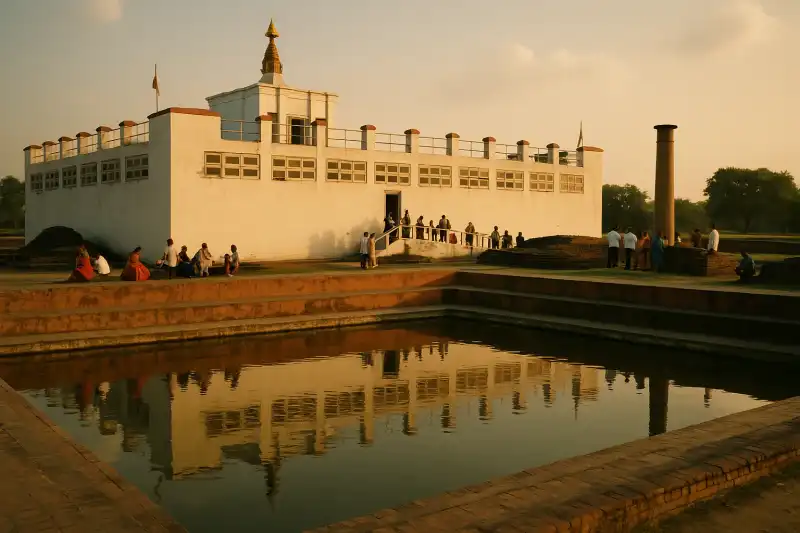
Today is mostly about movement. Leave Patan for Lumbini, either by flying from Kathmandu to Bhairahawa and continuing by road, or by taking the long overland route from the Kathmandu Valley. The flight version gives you a usable afternoon. The road version may consume the day.
Lumbini sits in Nepal’s Terai plains, and the change from the Kathmandu Valley is part of the story. You are moving from a dense Newar urban world to a pilgrimage landscape tied to the life of Siddhartha Gautama, later remembered as the Buddha. The geography feels different because it is different: flatter, warmer, more spread out, and less compressed than Patan.
If you arrive with energy, take a short orientation visit near the Lumbini site zone, but do not force the main Sacred Garden visit today. The ancient core deserves a clearer head. Use the afternoon to arrange transport for tomorrow, check opening times locally, and decide whether you want a guide, bicycle, rickshaw, or taxi.
This is the day where overpacking hurts most. A map may make Patan to Lumbini look simple because both are in Nepal. In practice, the transfer has enough friction that it should count as the day’s main event. Treat any sightseeing after arrival as a bonus.
Day 4: Lumbini Sacred Garden and Ashoka’s pillar
Give today to Lumbini, starting with the Sacred Garden and Maya Devi Temple area. Tradition identifies Lumbini as the birthplace of the Buddha, and the site’s power comes from that combination of archaeology, pilgrimage, and remembered geography. It is not a ruin that shouts. It asks you to pay attention.
The Ashoka pillar is one of the site’s most important anchors. Emperor Ashoka, the Mauryan ruler who promoted Buddhism across parts of South Asia in the 3rd century BCE, visited Lumbini and left an inscription marking the place connected with the Buddha’s birth. That inscription gives Lumbini a rare kind of historical grip: memory, imperial patronage, and sacred topography meet in one object.
Spend time around the Maya Devi Temple area, the marker stone tradition, and the archaeological remains nearby. Keep your pace respectful and practical. This is an active pilgrimage place, not only a heritage stop. Move slowly, dress modestly, and expect quiet moments to matter as much as visible monuments.
In the afternoon, explore part of the wider Lumbini development zone if heat and energy allow. The monastery zones are spread out by design, with different Buddhist communities represented through modern monastic architecture. Use transport rather than trying to walk everything. Lumbini looks deceptively simple on a map, then quietly wears you down.
Day 5: Lumbini monasteries and a slower departure
Use the final morning for a second pass through Lumbini or for the monastery zones you did not reach yesterday. A return visit to the Sacred Garden can be worthwhile because the first visit often goes toward orientation: where to enter, how the temple area works, how the pilgrimage flow moves. The second visit is calmer.
If you focus on the monasteries, choose a section rather than trying to see every building. The value is not in counting them. It is in seeing how different Buddhist traditions have built around a shared sacred geography. Lumbini is ancient in origin, but the modern site also shows how Buddhist memory keeps being rebuilt, sponsored, and reinterpreted.
Plan your departure carefully. If you fly from Bhairahawa, leave enough time for the road transfer and airport buffers. If you go by road, keep the day light and accept that the journey may take longer than you want. This is not the moment to add one more distant stop.
A good version of this itinerary ends quietly. Patan gives you dense urban artistry. Lumbini gives you space, heat, pilgrims, inscriptions, and a birth tradition that has pulled travelers across Asia for centuries. Let the contrast sit for a bit before moving on.
The historical thread: Newar artistry and Buddhist sacred memory
Patan and Lumbini do not belong together because they are close. They belong together because they show two different ways ancient and sacred memory survives in Nepal.
Patan is an urban world of royal courts, artisans, temples, and living ritual. Its history is carved into wood, cast into metal, and packed into courtyards where religious and civic life still overlap. The old city reminds you that heritage is not always isolated behind a fence. Sometimes it is the street pattern, the workshop, the shrine beside the shop.
Lumbini works differently. Its center of gravity is a remembered birth, an Ashokan inscription, and a pilgrimage landscape that has been interpreted across centuries. The ancient remains are quieter than Patan’s architecture, but the historical claim is enormous: this is the place where Buddhist tradition locates the Buddha’s birth.
Together, the route moves from crafted city to sacred plain. One day you are reading temple struts and palace courtyards. Two days later, you are standing near a pillar set up by a Mauryan emperor. The shift is logistically awkward, but historically satisfying.
Transportation notes
Use two bases: Patan for the Kathmandu Valley portion and Lumbini for the pilgrimage portion. Do not change hotels inside the valley unless you have a separate Kathmandu plan. It wastes time.
For Patan, taxis and walking are enough. The old core is best on foot, but arrival and luggage transfers are easier by car. A guide is useful if you want to understand Newar art and the palace area rather than simply admire the square.
For Lumbini, the simplest route is Kathmandu to Bhairahawa by air, then a road transfer to your hotel. The overland route from the Kathmandu Valley can work for budget travelers or slower trips, but it is a long travel day. Do not pair it with serious sightseeing.
Within Lumbini, use a bicycle, rickshaw, taxi, or hotel transport. The Sacred Garden and monastery zones are more spread out than many first-time visitors expect. Heat can be a real factor, especially in the Terai. Start early, pause during the hottest part of the day, and avoid treating the entire development zone like a casual city walk.
Optional add-ons and swaps
If you have more time in the Kathmandu Valley, add a separate valley day before leaving for Lumbini. The easiest swap is to reduce Day 2 in Patan and use part of it for another Kathmandu Valley site, but that comes at a cost. Patan is dense enough to deserve the full day if Newar architecture is one of your main reasons for taking this route.
If your main interest is Buddhist pilgrimage, add time around Lumbini rather than adding more valley sightseeing. A third night in Lumbini lets you move through the monastery zones more slowly and revisit the Sacred Garden at a quieter hour. Remove one Patan night only if you are comfortable giving the Newar royal city a lighter treatment.
If road travel sounds exhausting, shorten the route by flying both ways through Bhairahawa and keeping Lumbini to two nights. If flights are unreliable or schedules are awkward, add a buffer night rather than pretending the transfer will behave perfectly. Nepal rewards slack in the plan.
If you need to cut the route to four days, keep one full Patan day, one transfer day, and one full Lumbini day. The painful cut is the second Patan day or the slow Lumbini departure morning. Do not cut the transfer buffer unless you enjoy stress.
Shorter and longer itinerary options
There is not yet a shorter Ancient Travel Nepal itinerary in this route family. For a compact version, use this as a 4-day plan: Day 1 in Patan, Day 2 transfer to Lumbini, Day 3 Lumbini Sacred Garden, Day 4 depart. It works, but it leaves little room for delays.
For a slower 6-day version, add one extra Kathmandu Valley day before the Lumbini transfer. Keep it focused rather than trying to sweep up every famous site in the valley. Patan pairs best with places that deepen the Newar and Buddhist context, not with a frantic greatest-hits loop.
For a 7-day Nepal history route, keep these five days and add two Kathmandu Valley days at the front. That turns the trip into a broader valley-and-pilgrimage route while preserving the quiet finish in Lumbini.
Related ancient sites
FAQ
The most common planning questions for this route are answered below.